
Australia
Product Safety Tick Means Showtime Fun Is In Bag 2025 Surprise Revealed
Melbourne Royal Show showbags cleared after strict inspections ensuring kids’ safety comes first

The countdown to the Melbourne Royal Show has officially begun, and with it comes one of the most beloved traditions of the event — the showbags. This year, the excitement is not just about the goodies inside but the assurance that every product has been thoroughly vetted for safety.
On the eve of the 2025 festivities, Nick Staikos, Minister for Consumer Affairs, joined 20 thrilled children at the Victoria Pavilion to reveal what’s inside the showbags and, more importantly, to highlight the work behind making sure families can enjoy them without worry.
The event marks the culmination of months of preparation by Consumer Affairs Victoria (CAV), which has been inspecting showbags at the Royal Show since the mid-1980s. This year, inspectors carried out comprehensive safety checks across more than 320 showbags and 2,300 individual items.
Why product safety matters at showtime
For generations, the Melbourne Royal Show has been a cherished springtime tradition. Families flood into the showgrounds, kids run toward rides and food stalls, and parents know the trip wouldn’t be complete without the excitement of a showbag. But what many may not realize is that behind the fun lies a serious safety process.
CAV officers screened every toy, cosmetic, and novelty item against Australian Consumer Law. Their inspections found 15 products that breached standards — including unlabelled cosmetics, unsafe projectile toys, sunglasses lacking supplier details, and toys posing choking hazards. These items were either corrected or pulled from circulation before opening day.
“Showtime in Melbourne has been a cherished and enduring springtime tradition for Victorian families for 177 years, and our inspectors are on the ground working to ensure safety and peace of mind for both children and parents,” Staikos said during the preview.
Strict penalties for unsafe products
The safety team doesn’t stop after the initial inspections. Officers will continue to conduct random checks throughout the event. They hold the power to seize unsafe goods on the spot and can issue fines of up to AUD $5,000.
For companies or individuals that repeatedly break safety laws, the stakes are far higher: penalties can reach AUD $2.5 million for individuals and an eye-watering AUD $50 million for corporations.
Such strict measures reflect the seriousness of protecting families. It’s not only about fun — it’s about trust.
A proud partnership keeping traditions alive
The inspections are carried out in collaboration with the Royal Agricultural Society of Victoria (RASV), the body that organizes the Melbourne Royal Show. According to RASV CEO Brad Jenkins, the relationship with CAV has been vital in keeping the showbags tradition safe and enjoyable.
“We are proud of our ongoing partnership with Consumer Affairs Victoria and are grateful for the work they do in ensuring all showbags at the Melbourne Royal Show are safe for families to enjoy,” Jenkins noted.
This partnership, dating back nearly four decades, shows how community safety has evolved alongside the entertainment itself.
The tradition of the Melbourne Royal Show
First held in 1848, the Melbourne Royal Show has grown into one of Australia’s most iconic annual events. For 177 years, it has blended agriculture, entertainment, and family fun — with showbags becoming its most iconic feature.
From novelty toys and confectionery to exclusive branded merchandise, showbags are a cornerstone of childhood nostalgia in Victoria. Parents who once carried them as children now pass the tradition to their own kids.
The 2025 edition will run from Thursday, September 25 to Sunday, October 5 at the Melbourne Showgrounds.
Families can attend with confidence
With inspections wrapped up and non-compliant products addressed, visitors can head to the show knowing their fun is “in the bag.” This year’s safety tick assures parents that their children’s delight won’t be clouded by hidden risks.
Consumer Affairs Victoria continues to remind vendors and visitors alike that safety is everyone’s responsibility. And for the thousands expected to walk through the gates, the focus can remain on laughter, rides, food, and — of course — the thrill of ripping open a showbag.
For more updates on stories like this, visit our site for more news www.DailyGlobalDiary.com.
Melbourne Royal Show 2025 Showbags Get Safety Tick After Inspections


World News
7 Key Figures Who Helped Expose Australia’s ‘Cruel and Crude’ Robodebt Scheme
From whistleblowers to journalists, a new documentary reveals how the Robodebt scandal was finally brought down.
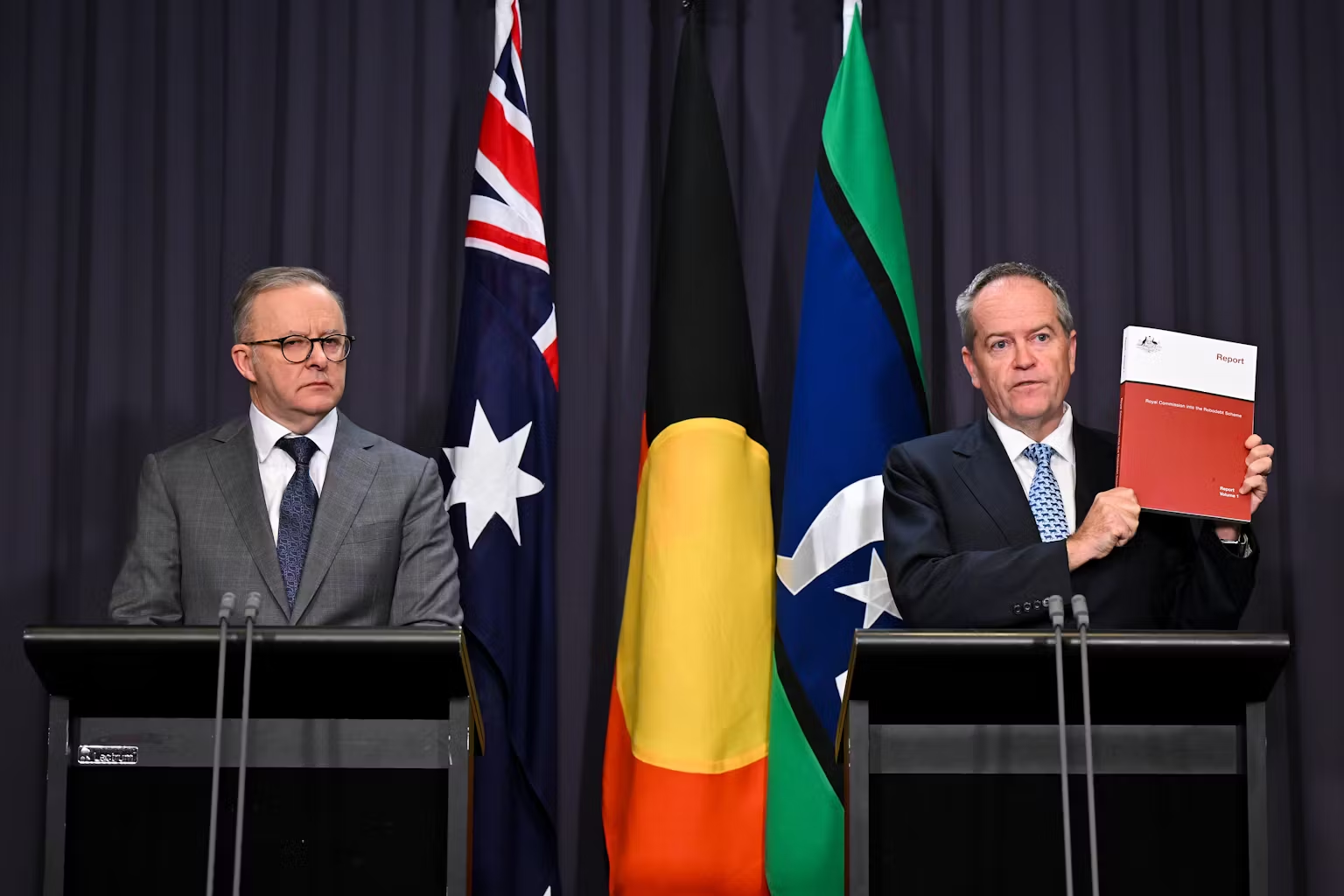
When Guardian Australia first broke the story in late 2016, the Robodebt scheme was just beginning to unravel. At the time, the Coalition government dismissed concerns, labeling the investigation as left-leaning journalism. Almost a decade later, those early warnings have now been immortalized in a powerful new documentary, The People vs Robodebt, airing on SBS.
The three-part hybrid documentary-drama goes beyond headlines. It highlights not only the illegal nature of the scheme but also the extraordinary people who risked their careers and reputations to expose it.
A Scheme Built on “Income Averaging”
The Robodebt program, formally introduced in 2015, used automated income averaging to calculate supposed debts owed to Centrelink recipients. Rather than using actual earnings data, the system averaged annual income, leading to incorrect—and often devastating—debt notices.
In July 2023, the Royal Commission condemned the scheme as “crude and cruel,” “neither fair nor legal,” and a “costly failure of public administration.” The fallout was immense: not only did it devastate thousands of welfare recipients, but it also shattered public trust in automated governance.
The Journalists Who Wouldn’t Let Go
At the center of the exposé was Christopher Knaus, a reporter for Guardian Australia. Branded as a “leftwing journo” by government strategists, Knaus persisted, publishing exclusives that revealed how deeply flawed the system was. His reporting was supported by tips from victims and whistleblowers within Centrelink itself.
Knaus was later joined by Luke Henriques-Gomes, whose sustained coverage helped keep the story in the spotlight. Together, they gave a voice to victims and challenged the government narrative pushed by more compliant media outlets.
A Media Insider Turns
The documentary also features Rachelle Miller, a former Liberal Party of Australia staffer. Initially responsible for framing Knaus as partisan, Miller later admitted she realized the scheme was unfair. She now acknowledges how government-friendly outlets, including News Corp tabloids and The Australian, were fed selective stories to protect the Coalition’s welfare crackdown.
Victims Who Refused to Be Silent
Behind the statistics are real human tragedies. Among the most heartbreaking is the story of Rhys Cauzzo, a 28-year-old part-time florist who took his own life after being pursued for $17,000 in alleged debts. His mother, Jenny Miller, has become one of the most powerful voices in the fight against Robodebt.
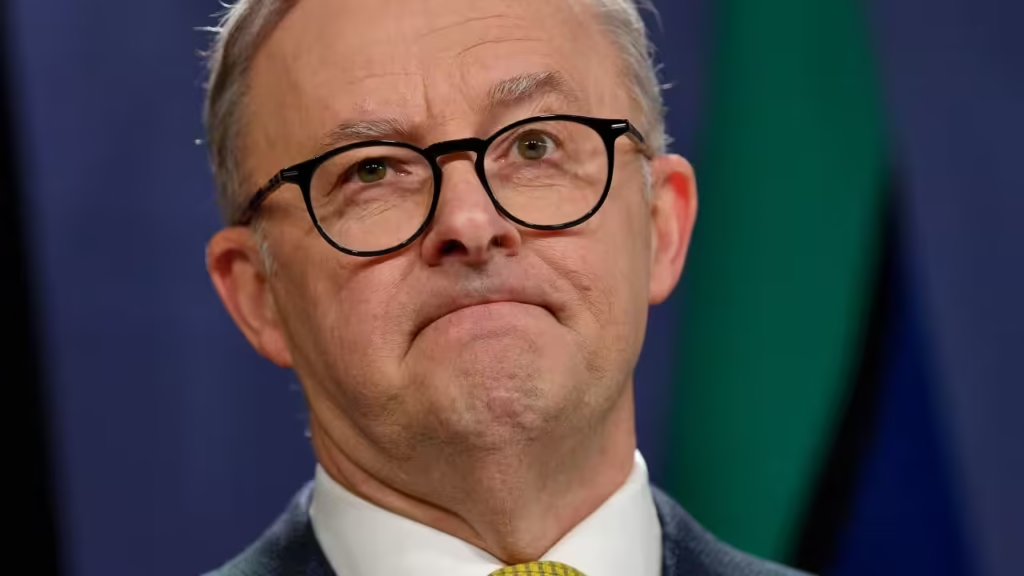
Shockingly, after Rhys’s death, the Department of Human Services released his personal Centrelink information to the media in an attempt to smear him. The royal commission later confirmed that Cauzzo’s debt was unlawfully calculated—just like the hundreds of thousands of others.
Activists and Lawyers
Digital activists and welfare advocacy groups amplified victim stories online, sparking grassroots outrage. Lawyers played a critical role too, spearheading a class action that ultimately forced the government to settle. Earlier this month, the government agreed to pay $475 million in additional compensation to around 450,000 victims, marking the largest class action settlement in Australian history.
The Role of Documentary Storytelling
Executive producer Michael Cordell explains why he felt compelled to revisit the scandal. “It was a morally bankrupt scheme,” he said. “But despite the devastation it caused, it hadn’t caught the wider public imagination. We wanted to change that.”
Using dramatized scenes alongside interviews, The People vs Robodebt ensures the human toll is front and center. It’s not just policy failure—it’s about empathy, or the lack thereof, in the political system.
Why This Story Still Matters
The Robodebt scandal is more than a cautionary tale about flawed automation. It’s a stark reminder of what happens when governments prioritize cost-cutting over compassion. It also shows the power of journalism, whistleblowing, and persistence in the face of official denial.
For Australians who endured harassment and wrongful debt collection, this documentary isn’t just about the past—it’s about justice, accountability, and preventing future failures.
Final Word
At its core, The People vs Robodebt is about ordinary people standing against a powerful government apparatus. From journalists like Knaus and Henriques-Gomes, to grieving parents like Jenny Miller, to insiders like Rachelle Miller, their courage collectively dismantled a system described as “neither fair nor legal.”
All three episodes of The People vs Robodebt are now streaming on SBS On Demand, airing weekly at 7.30 pm.
For the latest updates on this and other global stories, visit www.DailyGlobalDiary.com.
World News
Robodebt Scandal Victims Win Record $548.5m Deal Taking Total Payout to $2.4bn
The Albanese government settles historic appeal, marking justice for 450,000 Australians hit by the illegal Centrelink scheme.
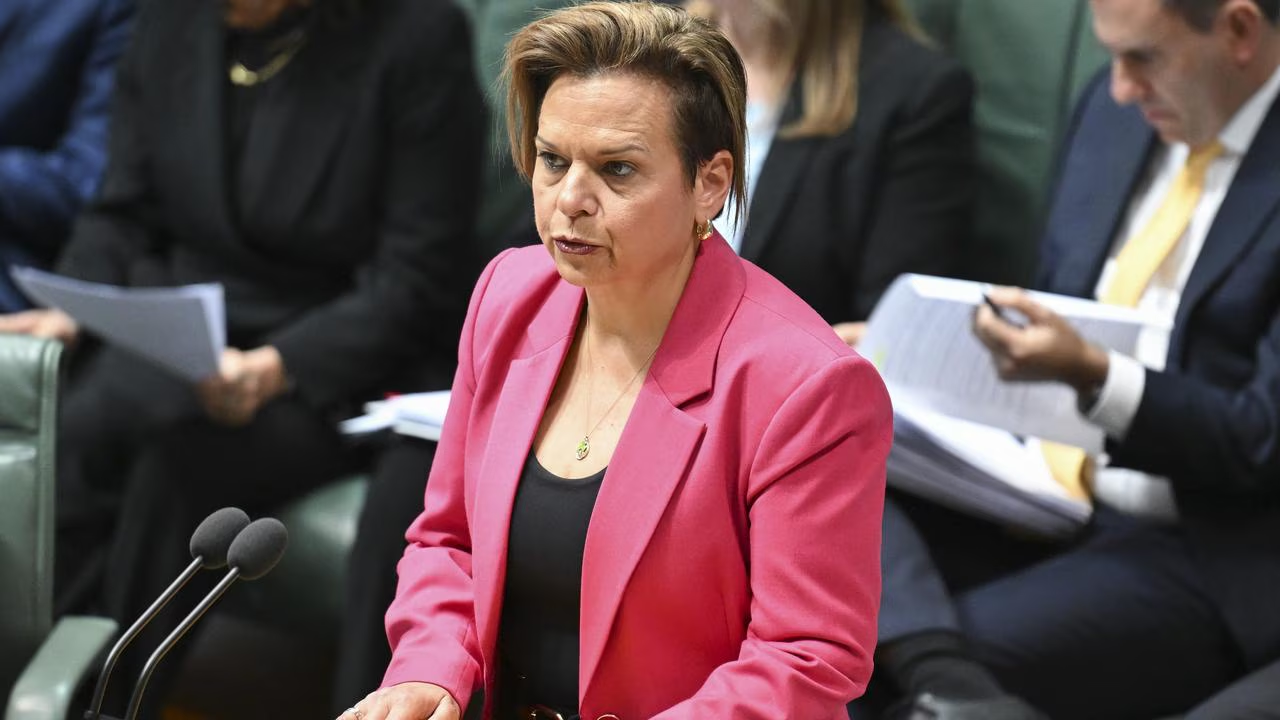
In what has been described as the largest class action settlement in Australian history, the federal government has agreed to pay $475 million in additional compensation to victims of the notorious Robodebt scandal. The deal, announced on Thursday, pushes the total financial redress for victims past an astonishing $2.4 billion.
The Robodebt scheme, launched under Australia’s Coalition government between 2015 and 2019, used automated technology to falsely accuse more than 443,000 welfare recipients of underreporting their income. Many were left traumatised, battling debt notices that were later found to be unlawful.
A Landmark Settlement
The new agreement settles Knox v Commonwealth, an appeal filed after the Royal Commission into Robodebt exposed fresh evidence that government officials knew the system was unlawful yet allowed it to continue.
The $548.5 million total package now includes:
- $475 million in fresh compensation.
- $112 million from the original 2020 settlement.
- $1.76 billion in debts that were forgiven, cancelled, or repaid by the government.
- $60 million allocated for administering the scheme.
- $13.5 million to cover reasonable legal costs.
For the roughly 450,000 Australians affected, the settlement is both financial relief and moral vindication.

Voices of the Victims
One of the applicants, Felicity Button, described the outcome as a turning point for fairness in Australia.
“For the first time, I think in my whole life, I can say that there was a bit of fairness – not just justice – in our system,” Button said.
Many victims endured years of stress, depression, and even financial ruin because of the automated notices. Some families linked the scheme to tragic outcomes, sparking nationwide outrage.
Government’s Response
The Attorney General Michelle Rowland, speaking on behalf of the Albanese Labor government, said settling was “the just and fair thing to do.”
She acknowledged that the Royal Commission led by Catherine Holmes had branded Robodebt a “crude and cruel mechanism” and a “costly failure of public administration.”
“Today’s settlement demonstrates the Albanese government’s ongoing commitment to addressing the harms caused to hundreds of thousands of vulnerable Australians by the former Liberal government’s disastrous scheme,” Rowland said.
Legal Victory
Peter Gordon of Gordon Legal, the firm that spearheaded the class action, called the settlement “vindication and validation.”
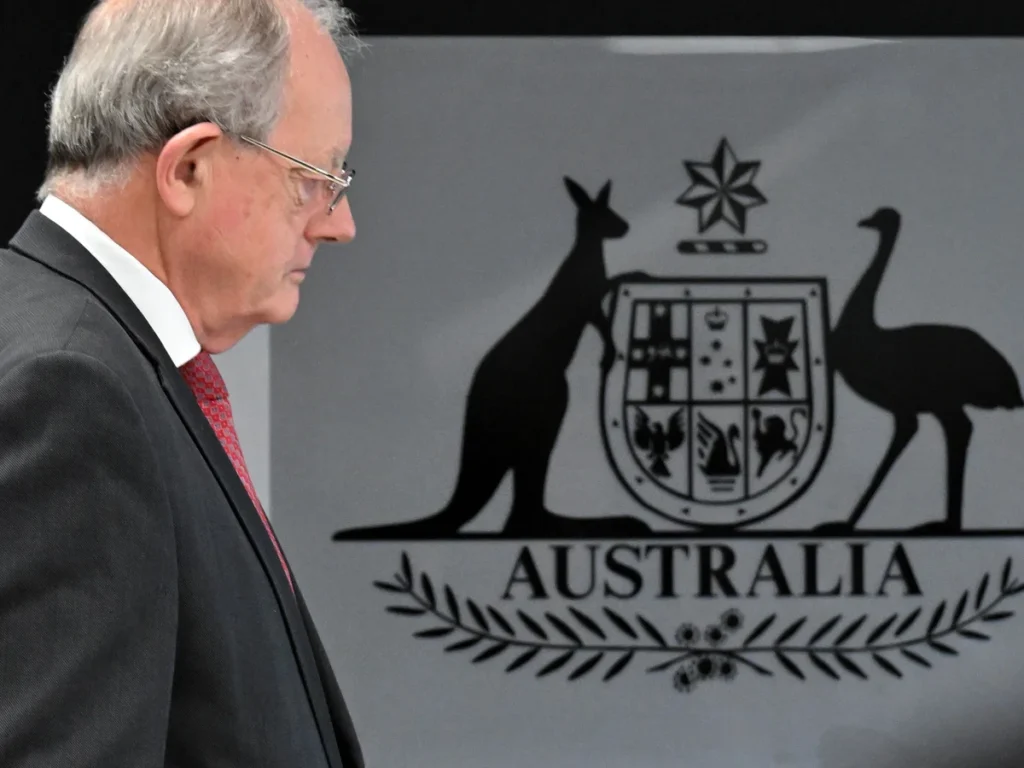
“Today is also one more vindication of the principle that Australia remains a nation ruled by laws and not by kings. Laws which even hold the government accountable,” Gordon said during a press conference.
He urged victims to register with the firm for updates, promising payments within six months of federal court approval.
Political Repercussions
The scandal has left deep political scars. The Greens spokesperson for social services, Penny Allman-Payne, welcomed the compensation but argued that the government should go further by abolishing what she described as “cruel compliance targets”.
The settlement comes just as new reforms were announced for Centrelink. Debts smaller than $250 will now be waived, and compensation of up to $600 will be offered to those affected by invalid income apportionment methods.
Human and Economic Cost
The Robodebt saga has been more than a legal or political scandal; it has been a humanitarian crisis. The Royal Commission’s findings laid bare how thousands of ordinary Australians were unfairly harassed.
Some victims reported that the constant debt letters made them feel like criminals. Others said the ordeal eroded trust in public institutions. The commission’s conclusion—that Robodebt was “neither fair nor legal”—is now permanently etched into Australian history.
Looking Ahead
The settlement closes one of the darkest chapters in Australia’s welfare policy. Yet for many victims, wounds remain raw. While compensation provides recognition, it cannot undo the stress and trauma caused.
Still, this record-breaking settlement sends a clear message: governments must be held accountable, and automation cannot replace fairness in dealing with society’s most vulnerable.
For now, the victims of Robodebt can finally breathe a sigh of relief knowing their voices have been heard, and their suffering formally acknowledged.
Stay updated with Daily Global Diary for more breaking news and in-depth analysis from Australia and beyond.
Australia
Freya Leach Sky News show cancelled after shocking guest sparks outrage with bacon shirt and anti Islam rant
The Freya Fires Up program lasted just six weeks before being axed after airing an offensive segment that has ignited debate on media responsibility and free speech.
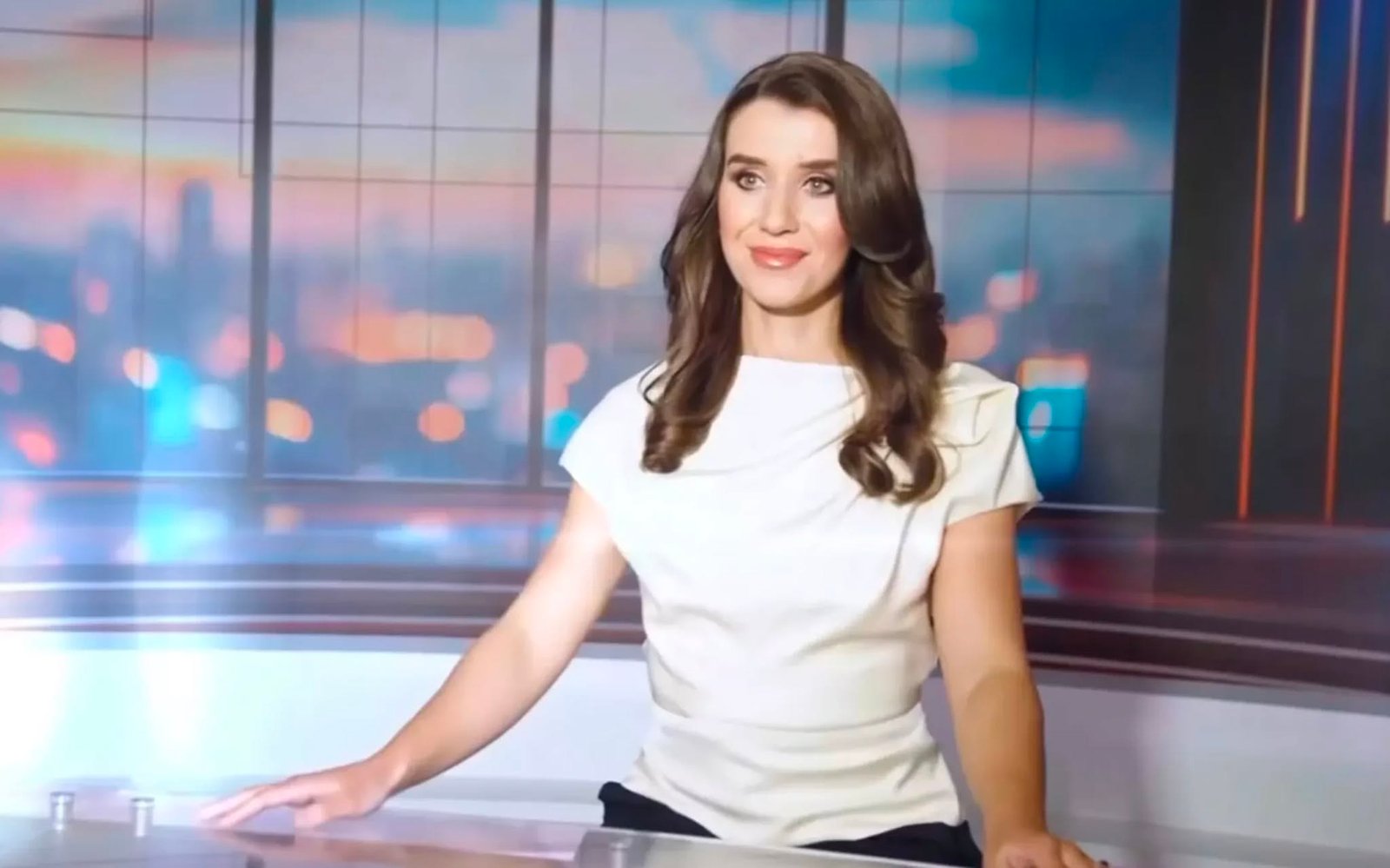
A storm has engulfed Sky News Australia after its controversial Sunday night program, Freya Fires Up, was abruptly cancelled just six weeks into its run. The decision came after the show hosted a Scottish guest who launched an explicit anti-Islam tirade while wearing a shirt covered in raw bacon rashers — an act that has been widely condemned as deliberately provocative and deeply offensive.
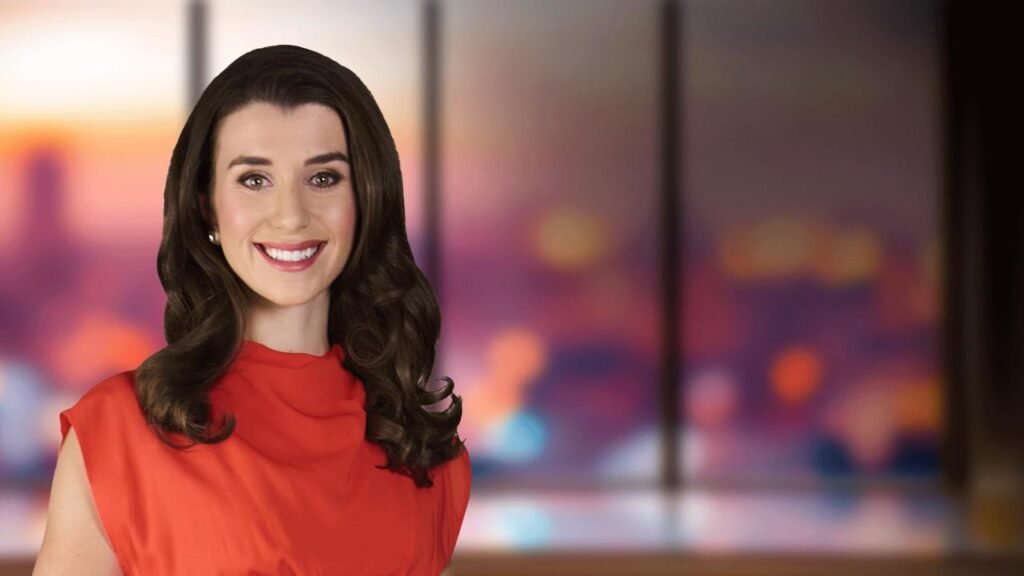
The show was hosted by Freya Leach, a rising conservative commentator, director of youth policy at the Menzies Research Centre, and a former Liberal Party of Australia candidate for the state seat of Balmain in New South Wales. While her program has now been scrapped, Sky confirmed she will remain on air as co-host of The Late Debate, which runs four nights a week.
The offensive broadcast
The guest in question was Scottish national Ryan Williams, who openly declared backstage that he had “enough balls to fight Islam” before his microphone was fitted. Footage posted online showed him casually joking with a studio assistant while already wearing his bacon-covered shirt. This clip suggested that producers were aware of his attire before the live segment began.
When introduced by Leach as a “social media sensation,” Williams quickly launched into a minute-long rant. He labelled Muslims as terrorists and claimed he wore bacon to protect himself from so-called “threats of beheading.” His statements, most of which were too inflammatory to repeat, were designed, he later admitted online, “to inflict maximum damage on Islam.”
Sky News cut the segment short and Leach issued an immediate apology on air. The broadcaster also confirmed that none of the remarks were republished on its digital platforms. A spokesperson said:
“We took immediate action during the live broadcast to cut off the guest, our host promptly apologised, and we ensured the content was not published or republished to any of our digital platforms.”
Sky News under fire again
The incident has reignited debate about editorial standards at Sky News Australia. The channel has faced criticism in the past for giving airtime to extremist figures. In 2018, it sparked outrage by inviting far-right activist Blair Cottrell, who has expressed admiration for Adolf Hitler, onto its platform to discuss immigration.
Adding fuel to the controversy, British far-right personality Tommy Robinson shared the Williams interview clip on X (formerly Twitter), calling him a “hero.” Critics argue that despite Sky’s quick actions, the damage was already done once the content circulated online.
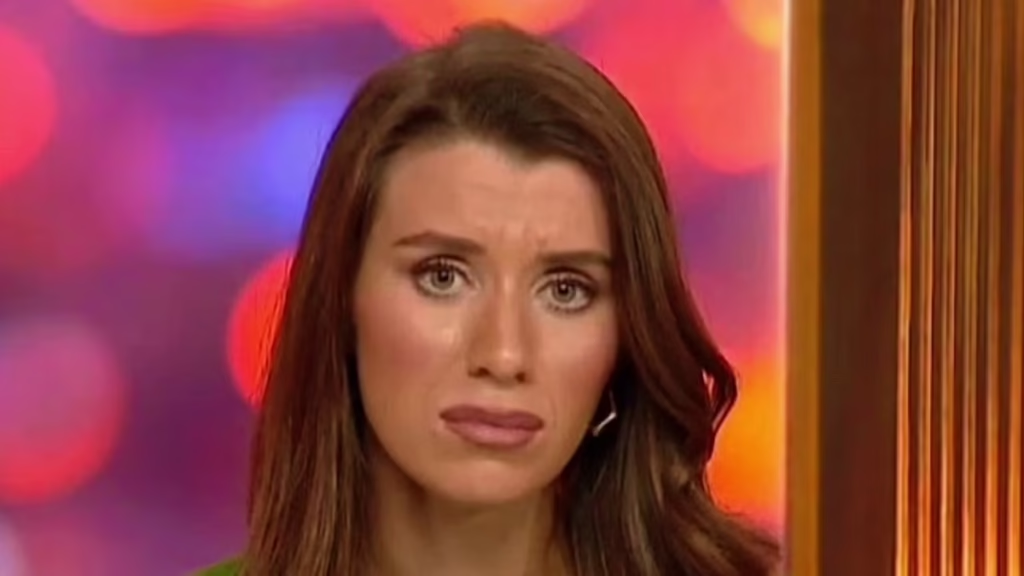
Internal review and accountability
Sky confirmed it had launched a “thorough internal review” following the incident and had “implemented its recommendations.” However, the network refused to comment on whether any employees had been dismissed over the debacle.
The role of guest booking has come under scrutiny, particularly after it was revealed that the staffer captured in Williams’s video was a “casual technical guest liaison” — someone who assists with microphones but is not responsible for editorial decisions. Sky insists this individual had no prior knowledge of the guest’s background.
Freya Leach’s future
While the cancellation of Freya Fires Up is a blow to Leach’s ambitions as a solo host, she remains a visible figure in Sky’s line-up. Her position as co-host of The Late Debate ensures she continues to influence discussions around politics, youth issues, and conservative commentary.
Leach’s political career began early. As a teenager, she was one of the youngest candidates to run for state parliament in NSW, contesting the seat of Balmain. She has since developed a strong presence as a policy director at the Menzies Research Centre, often speaking on issues affecting young Australians.
Wider implications
The controversy raises fresh questions about how broadcasters vet guests and manage live programming risks. With far-right figures increasingly seeking mainstream platforms, networks face mounting pressure to strike a balance between free expression and responsible journalism.
For Sky, the backlash underscores the fine line its “After Dark” programming often walks — appealing to conservative audiences while risking reputational damage from extremist rhetoric. Observers note that media companies worldwide must adapt faster to prevent their platforms from being hijacked by provocateurs chasing viral notoriety.
A pattern repeating
This is not the first time a high-profile broadcaster has been forced to apologise for extremist content. Similar controversies have plagued networks in the United Kingdom and the United States, where shock-value segments often generate short-term buzz but long-term credibility problems.
For Leach, the incident may serve as a pivotal moment. Whether she distances herself from this controversy or becomes further entangled in the debates around free speech and political correctness will likely shape her future in both media and politics.
Visit our site for more updates: www.DailyGlobalDiary.com

Russell T Davies Says ‘You’re Queer in 2026, You’re a Political Act’ — and His New Show ‘Tip Toe’ Is His Most Furious, Personal Work Yet…

Netflix’s Ted Sarandos Turns to Europe After Warner Deal Collapse… and Sends a Subtle Message to Regulators

The Writers of ‘Paradise’ Debated Hard Before Giving You That Jaw-Dropping Moment Early — Here’s Why They Finally Said ‘Do It…’

Rajasthan Royals Sold for Record $1.63 Billion — IPL’s First $1 Billion Franchise, Meet New Owner Kal Somani

Spencer Johnson Ditches PSL, Joins CSK for IPL 2026 — PCB Threatens Legal Action as Player Exodus Continues

1-Iran Issues Dire Warning to Israel and Defies Trump on Nukes: “We’re Ready to Strike Deep Inside”

Donald Trump’s net worth reveals the fortune behind the former US President and business mogul

“She Never Made It Out…” Albany House Fire Claims Woman’s Life as Family Pleads for Help to Bring Her Home

Caitlin Clark Sidelined with Quad Strain, Set to Miss Two Weeks of WNBA Action

“Tomás Rodríguez Net Worth 2025: Panama’s Gold Cup Goal‑Machine’s Surprising Fortune Revealed”

Miss Jamaica Suffers Terrifying Fall Off Miss Universe Stage; Rushed to Hospital on Stretcher in Viral Video

Moana Live-Action Teaser Sparks Outrage as Fans Call Disney’s Move a ‘Clear Money Grab’ — What Went Wrong?

Ryan Gosling’s Project Hail Mary Trailer Stuns Fans with a Mysterious Alien Ally and a Mission That Could Save Earth

Apple delays Jessica Chastain thriller The Savant about domestic extremism after recent US violence

Avatar 3, Fire and Ash trailer reveals Jake Sully’s family facing terrifying new Na’vi enemies with deadly fire powers
-

 Entertainment5 days ago
Cannes 2026 Hasn’t Announced a Single Film Yet — But the Whisper Network Is Already Pointing to These Names and It’s Exciting…
-

 Entertainment6 days ago
Amy Poehler and Sterlin Harjo Are Getting One of Television’s Highest Honours — and the Reason Why Says Everything About Where Storytelling Is Headed…
-

 Entertainment5 days ago
Almodóvar, Lars von Trier, Joel Coen and More — The Films That Could Own Cannes 2026 Are Already Generating Serious Buzz and the List Is…
-

 Entertainment1 week ago
Oscars 2026 Red Carpet Shockers: Zendaya’s Late Arrival, Jessie Buckley’s Grace Kelly Tribute… and Chase Infiniti Owning the Night
-
 Entertainment1 week ago
The Oscars Are Already Being Called Before They Happen and Scott’s Final Feinberg Forecast Reveals a Shocking Front-Runner That Nobody Saw Coming…
-

 Politics1 week ago
“Trump Reveals ‘Early Stage Breast Cancer’ Diagnosis of Susie Wiles… But Says Her ‘Strength Says Everything’”
-

 Entertainment5 days ago
Lollapalooza 2026 Just Dropped Its Most Surprising Lineup Yet — and the One Historic Thing Nobody Is Talking About Is the Real Story…
-

 Health1 week ago
“Kent Meningitis Tragedy: Second Student Dies as Outbreak Sparks Hospital Emergency…”