
World
Donald Trump’s ‘Big, Beautiful Bill’ Just Changed America Forever — But at What Cost
Donald Trump’s ‘Big, Beautiful Bill’ Just Changed America Forever — But at What Cost. The former president’s landmark legislation reshapes immigration, climate, and welfare—ushering in a new era of bold promises and deep divisions.


In a moment hailed by supporters and condemned by critics, Donald Trump has signed into law what he called his “big, beautiful bill” — a legislative package that doesn’t just check off his long-standing Make America Great Again (MAGA) pledges, but rewrites America’s future in dramatic and controversial ways.
The legislation touches on nearly every major political flashpoint — from immigration crackdowns to energy reforms and tax policies — sparking fierce debate about who truly benefits from this sweeping overhaul of domestic policy.
As Trump celebrated the bill’s passage at a rally in Iowa, dancing in front of a giant American flag, the symbolism was as loud as the politics: this wasn’t just about passing a law — it was about reshaping a nation.
Here are the three biggest ways Trump’s America 2.0 is already taking shape.
1. A Land of Less Hope: America’s Immigration Overhaul
For decades, the United States was seen as a beacon for migrants seeking better lives. With an estimated 8 million undocumented immigrants in the US workforce — many of them contributing to industries like agriculture and construction — prior administrations had opted for tolerance and sanctuary policies.
But Trump’s legislation changes all of that.
It injects more than $100 billion into enforcement, doubling detention center capacity, reviving construction on the Mexican border wall, and deploying thousands of new border agents. The era of sanctuary cities is effectively over.
In an unprecedented move, the bill introduces steep financial barriers to legal migration. Asylum seekers will now face minimum fees of $100 just to apply, while those seeking humanitarian protection must pay $1,000. Even work permits will cost $550 or more.
These measures reflect a brutal calculation: make migration harder, less appealing, and more expensive. Yet, there’s a twist. Trump has hinted at a potential exception for undocumented farm workers — if their employers vouch for them, some may stay. It’s a nod to practicality in an otherwise hardline policy shift.
Critics argue the bill strips the U.S. of its historic identity as a “land of hope.” Supporters, however, see it as a long-overdue tightening of a broken system.
2. Fossil Fuels Over the Future: Climate Takes a Backseat
Environmentalists may breathe a sigh of relief that the bill didn’t include a new tax on solar and wind projects, but they’re not celebrating.
The bill slashes clean energy tax credits — key incentives for electric vehicles, solar energy, and eco-friendly homes introduced under former President Joe Biden. Instead, Trump is doubling down on his energy mantra: “Drill, baby, drill.”
The new law simplifies leasing public lands for oil and gas drilling, cuts royalty payments for fossil fuel producers, and lifts restrictions on mining operations. In other words, coal is back — and so is the pollution.
According to a Princeton University study, the bill could add 470 million tonnes of greenhouse gas emissions annually by 2035 — more than Australia’s entire yearly output.
Donald Trump has long been vocal in his opposition to renewables. He’s called solar farms “ugly as hell” and wind turbines “bird-killers” that “destroy the place.” Now, those sentiments are no longer rhetoric — they’re national policy.
3. Widening the Wealth Gap: Tax Cuts, Medicaid Slashes, and Social Strain
At the heart of Trump’s bill is a tax reform package that he’s calling the “largest tax cut in U.S. history.” But while it keeps his 2017 tax cuts permanent, most of the benefits tilt toward the wealthiest Americans.
The bill is projected to cost $4.5 trillion over ten years. To offset this, Trump’s administration is pulling the plug on parts of the country’s already-thin social safety net.
About 12 million Americans are expected to lose Medicaid coverage, according to the Congressional Budget Office, saving the government $1 trillion. Additionally, funding for food stamp programs — lifelines for low-income families — will be slashed.
In return, there are minor benefits: tip-based workers will no longer be taxed on their tips, certain senior citizens and parents will receive tax credits, and — in a quirky twist — Alaskan whaling captains will get special tax exemptions, thanks to a Republican holdout senator from the state.
Still, the overall impact? Richer Americans gain, and the poor are told to work harder or get less. As one analyst put it, “Trump’s bill cements a future where the rich get richer — and the rest fend for themselves.”
Musk’s Fury and Republican Fallout
Interestingly, Elon Musk, once seen as aligned with Trump’s free-market ideology, took to X (formerly Twitter) to unleash a storm of criticism. “You’ve created a monster,” read one of his cryptic posts, referencing the economic burden on innovation and clean tech.
The tension between Trump and his billionaire backers could grow — but for now, Trump is focused on legacy. With one stroke of a pen, he may have done more to remake America than any president since Ronald Reagan.
But as the dust settles, the question lingers: at what cost?








World
Brace Yourself! A Powerful Western Disturbance Is Coming — Rain, Hailstorms and Cold Blast to Hit North and West India This Week
Weather experts warn of ‘U-shaped’ jet streams driving a severe Western Disturbance across Northwest India from April 3, bringing hailstorms, heavy rain, and a sharp drop in temperatures — while summer may only begin after April 15.


Just when parts of India were beginning to feel the first hints of summer, nature has thrown a curveball. A powerful Western Disturbance is heading toward Northwest India, and weather experts say it could bring some of the most intense unseasonal weather the region has seen this season — with hailstorms, heavy rain, thunderstorms, and a significant drop in temperatures all on the cards.
What Is Coming and When?
According to the India Meteorological Department (IMD), the active Western Disturbance is expected to hit peak activity on April 3 and 4, with isolated heavy rainfall over the Kashmir Valley on April 3 being the primary concern. The wet spell — accompanied by thunderstorms and lightning — is likely to extend across central parts of the country until April 6, with day temperatures expected to remain near normal to below normal across Northwest India during this period.
This comes on the heels of an already colder-than-usual stretch for many parts of the country, where rare weather systems have been bringing unseasonal rain since the second half of March — including a previous Western Disturbance that brought down temperatures sharply across Delhi-NCR and northwest India.
‘Powerful’ System With ‘U-Shaped’ Jet Streams
Climate scientist Dr. Pradeep, who is widely followed on X for his weather updates, described this as a “powerful Severe Western Disturbance” that will track critically close to the Gujarat and Rajasthan border. He warned it would “trigger a significant spell of extreme weather across multiple states.”
According to Dr. Pradeep, the primary impact zones will be:
- Jammu & Kashmir and Ladakh — Intense rain and heavy mountain snowfall
- Punjab and Rajasthan — Widespread thunderstorms and gusty winds
- Gujarat — Significant impact along northern borders and interior regions
Beyond these primary zones, isolated to scattered thunderstorms are also expected across north and central Haryana, Delhi NCR, West Uttar Pradesh, Himachal Pradesh, and West Madhya Pradesh. Even central and south Maharashtra (Vidarbha and Marathwada), Chhattisgarh, Telangana, parts of Odisha and West Bengal may see rain and thunderstorm activity as the system moves through.
Amateur weatherman Navdeep Dahiya added on X that the “jet streams [are] perfectly U-Shaped for the upcoming Western Disturbance starting from 3rd April.” He called it “too much weather action for the third driest month of the year” and noted that the entire north and west India would face cold front rains, hailstorms, and storms, while states in central and southern India brace for intense evening storms.
Wheat Farmers on Alert

The timing of this weather system has raised serious concern among farmers — particularly wheat growers in Haryana and Punjab, where rain and hailstorms already lashed several places on Tuesday. The wheat crop in these states is ripe and ready for harvesting, making it extremely vulnerable to hailstorm damage at this critical stage.
Why Is This Happening?
Mahesh Palawat, Vice President of Climate and Meteorology at Skymet Weather, explained that when the westerly jet stream becomes particularly wavy, it tends to increase the impact of Western Disturbances at lower latitudes. He linked this unusual waviness to the rapid warming of the Arctic — a climate pattern that is becoming more common and more disruptive.
Western Disturbances are moisture-laden cyclonic systems that originate over the Mediterranean Sea and travel eastward along the jet stream — the narrow, high-altitude band of fast-moving winds that circles the globe at around 30,000 feet. This March alone saw eight Western Disturbances against a normal of five to six, and at least three more are expected through mid-April. January and February, by contrast, had seen far fewer than usual, resulting in low snowfall across the Himalayas.
When Will Summer Finally Arrive?
Despite all this cold and stormy weather, Dr. Pradeep and Navdeep Dahiya both agree that summer will eventually make its presence felt — but not before mid-April. Dahiya specifically said the delayed summer season is “likely to pick up after April 15 only.”
So if you were hoping to put away your jacket and pull out the summer clothes, you might want to wait just a little longer. For now, the forecast is clear — it is going to get cold, stormy, and dramatic before it gets warm.
India
‘Indoor air is most important’: US woman reveals how she protects her family from Delhi pollution
Living in India for four years, American expat Kristen Fischer explains why multiple air purifiers are her survival tool during Delhi’s worst pollution months
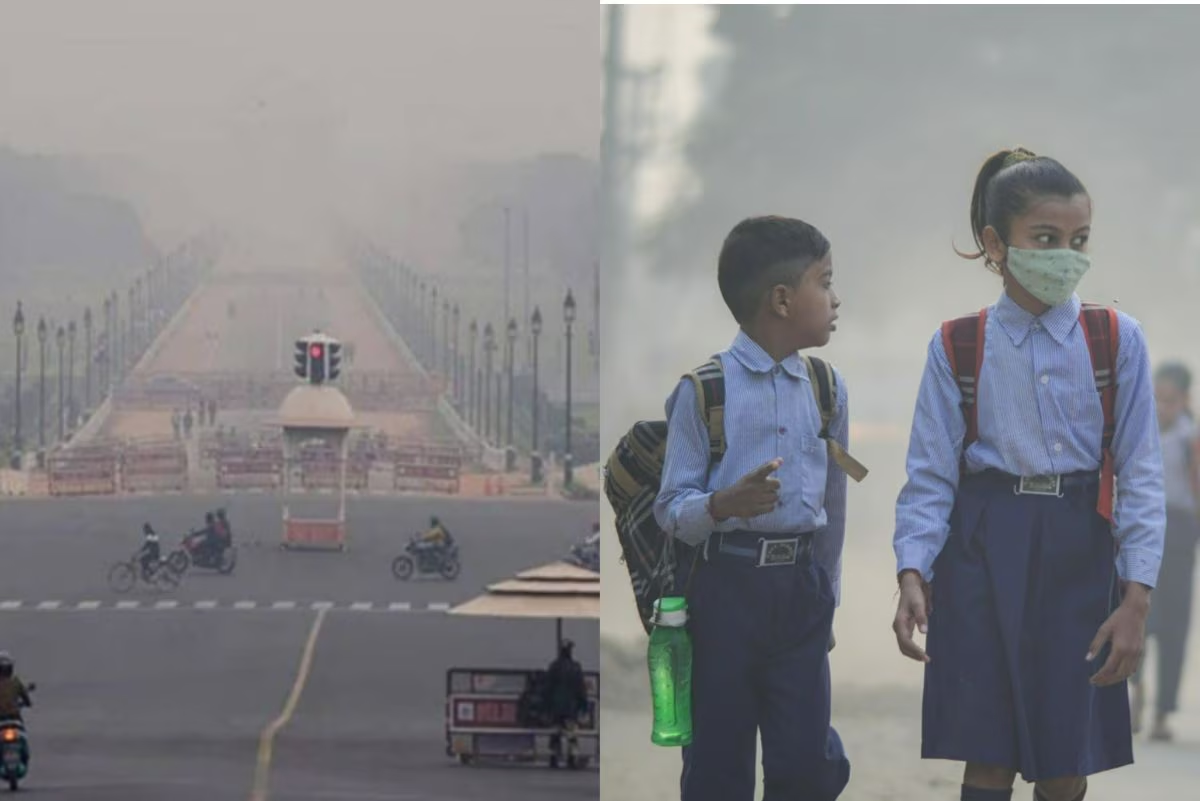
As Delhi grapples with its annual winter pollution crisis, an American woman living in the city has shared a practical and eye-opening account of how she keeps her family safe — by focusing on what she can control indoors.
US expat Kristen Fischer, who has been living in India for the past four years, recently took to Instagram to answer a question she says she is asked repeatedly: How do you manage Delhi’s air quality?
In her video, Fischer demonstrated the stark difference between outdoor and indoor air. Using an air quality monitor, she showed an outdoor AQI reading of 210, a level considered unhealthy. Moments later, she carried the same device inside her home, where the AQI dropped sharply to 48.
Explaining the reason, she said plainly, “This is because we have air purifiers in our house.”
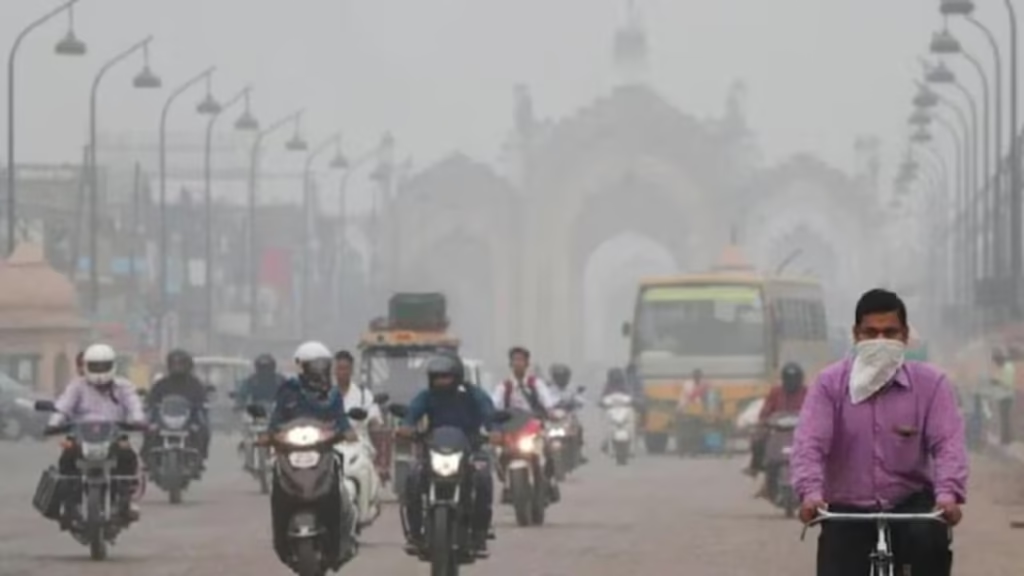
‘We run four air purifiers full time’
Fischer revealed that her family runs four air purifiers continuously, a decision she says has made a significant difference to their daily lives.
“They allow our indoor air quality to stay nice and clean,” she explained, adding that while Delhi’s outdoor pollution can be severe, especially in winter, controlling indoor air offers real protection.
“So we use air purifiers and our indoor air quality is usually quite good. This is how we handle the hard, high-pollution months living here in Delhi,” she said.
Her message struck a chord with many residents who struggle through the city’s smog season every year.
‘Indoor air is the most important’
In a detailed caption accompanying the post, Fischer emphasised that indoor air quality should be the top priority, especially for families.
“Indoor air is the most important,” she wrote. “While I can’t change the condition outside, I can maintain a safe indoor environment for my family.”
She noted that during winter months, her family spends more time indoors and ensures they sleep in what she described as “controlled and clean air.” According to Fischer, limiting outdoor exposure and keeping time outside brief helps manage the health risks associated with pollution.
Delhi pollution is seasonal, she says
Fischer also highlighted an important nuance often overlooked in discussions about Delhi’s air crisis — that the worst pollution is seasonal, not year-round.
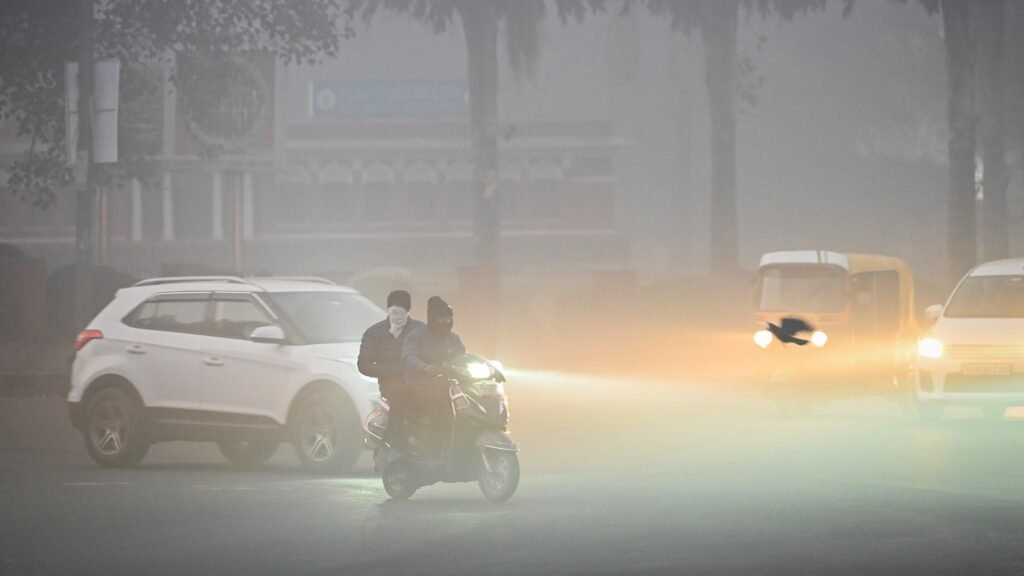
“The high pollution months are not all year,” she wrote. “Mostly just November through January is bad. Otherwise, the air is much better in Delhi the rest of the year.”
However, she was quick to caution that clean indoor air does not happen automatically.
“Indoor air quality is not always good like this,” Fischer explained. “It is only due to the air purifiers we run full time. Without those, the indoor air can be just as bad, or even worse than outside.”
She ended her post with a simple reminder to followers:
“Stay safe out there all.”
As Delhi residents continue to search for ways to cope with hazardous air during winter, Fischer’s experience adds a practical, lived-in perspective — one that underscores the importance of indoor air management when outdoor conditions remain beyond individual control.
World News
Wireless Hill Bushfire Warning Intensifies: ‘Lives at Risk’ as Firefighters Battle Raging Flames in Perth’s Suburbs
Residents of Alfred Cove, Ardross, and Booragoon urged to evacuate immediately as the Wireless Hill Park blaze grows uncontrollably, threatening homes and lives in Melville, Western Australia.
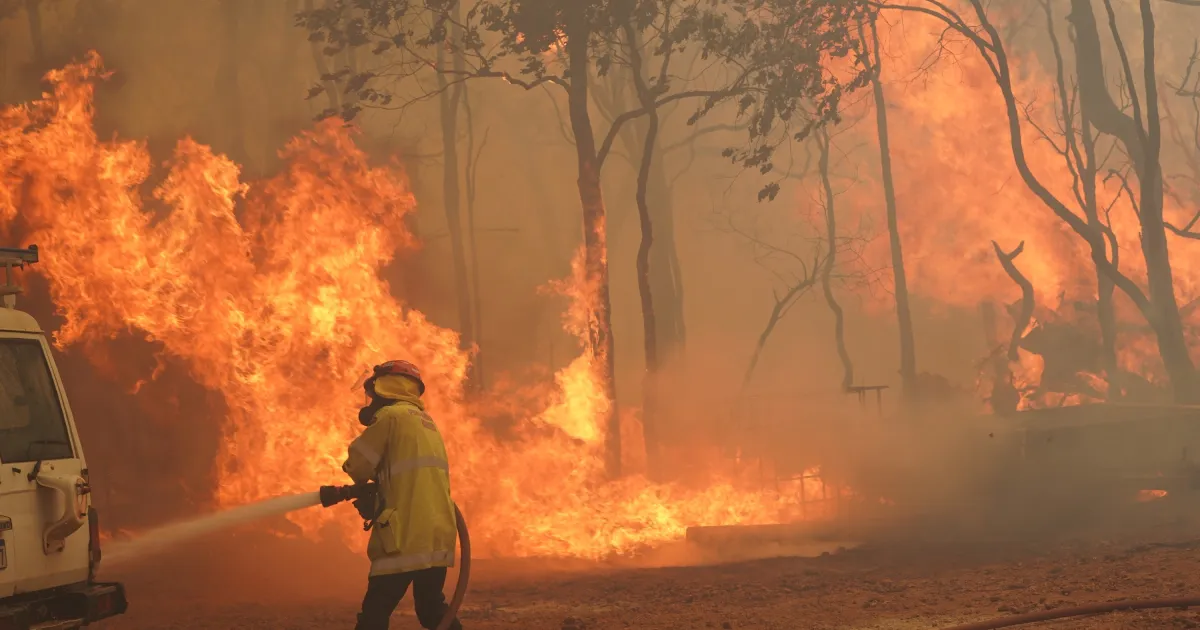
Wireless Hill Bushfire: Urgent Evacuation as Perth Suburbs Under Threat
A major bushfire has erupted at Wireless Hill Park in Applecross, sending panic through the neighbouring suburbs of Alfred Cove, Ardross, Booragoon, and Melville. The Department of Fire and Emergency Services (DFES) has issued a “Watch and Act” alert, warning residents that their lives and properties are in immediate danger.
The fire, which began on Saturday afternoon, has been described as “fast-moving and unpredictable.” Local officials say fire behaviour is increasing, and conditions are rapidly deteriorating due to gusty winds and high temperatures sweeping across the Perth metropolitan area.
“There is a possible threat to lives and homes as the fire continues to burn in the area and conditions are changing,” read the official DFES statement.
Authorities Urge Immediate Action
Residents living near Lilian Avenue, Helen Street, Troy Street, Collier Street, Links Road, Almondbury Road, Davey Street, Barnard Street, and Francis Road have been strongly advised to leave immediately. The affected region also includes the heart of Wireless Hill Park, a historic communications site turned nature reserve.
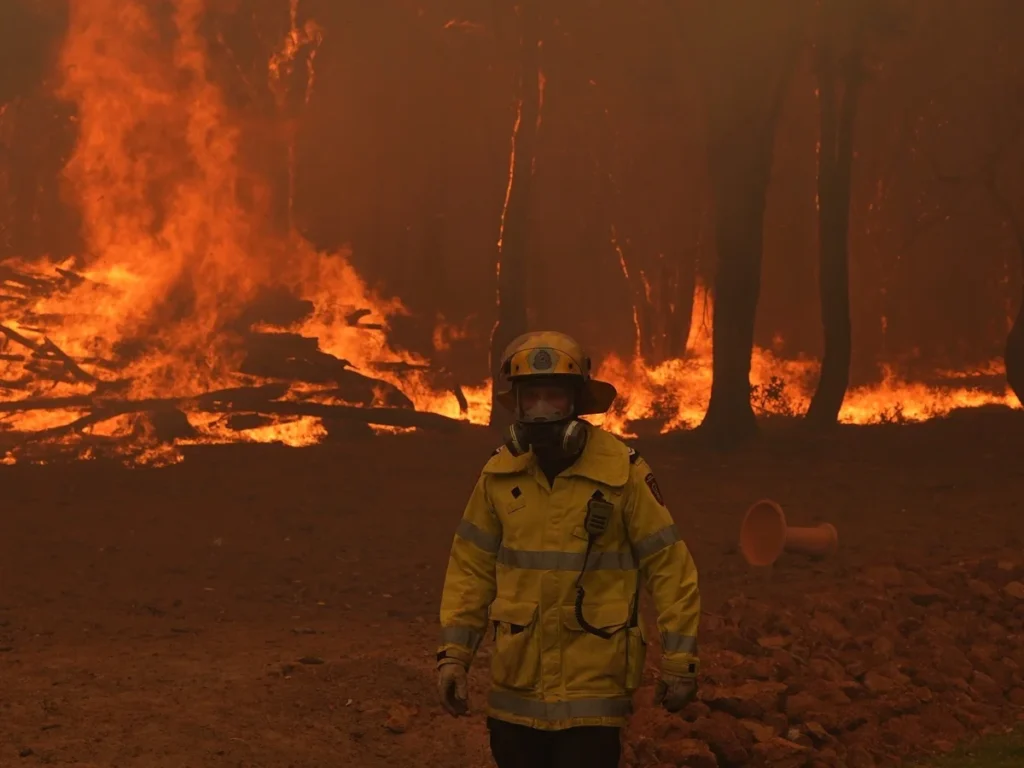
DFES has issued a clear and urgent message:
“If you are in the vicinity of Wireless Hill Park and you are considering leaving home, leave now. Decide where you will go and how you will get there.”
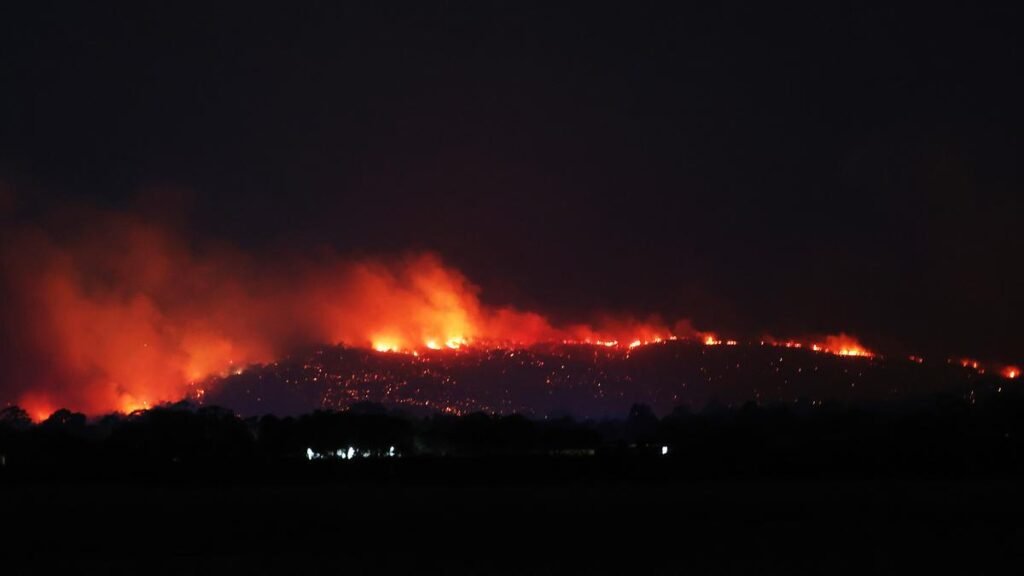
Locals have reported thick black smoke blanketing the skyline, and emergency sirens echoing across the suburbs. Fire crews are on the ground battling flames that have already scorched significant portions of bushland. Helicopters are making water drops to contain the blaze, but shifting winds continue to pose challenges.
Scenes of Chaos and Urgency
Witnesses shared images of firefighters battling roaring flames against a backdrop of orange skies. “It’s frightening—wind gusts are pushing the fire toward homes,” said one resident of Booragoon. Another described seeing ash falling “like rain” as they rushed to evacuate.
Photographs taken by Andrew Ritchie from The West Australian show walls of fire engulfing the trees near the Wireless Hill lookout point. The fire’s proximity to residential areas has heightened fears of property loss.
Local media reports confirm that multiple fire brigades from Western Australia have joined forces to contain the spread.
Drivers Warned: Poor Visibility and Dangerous Roads
Motorists traveling near the affected areas have been asked to exercise extreme caution. DFES has advised drivers to:
- Turn on headlights and reduce speed.
- Be alert for emergency personnel on the roads.
- Follow all instructions given by authorities.
- If visibility becomes too poor, pull over safely, keep hazard lights on, and wait until conditions improve.
Several roads around Applecross and Melville have been temporarily closed to assist firefighting efforts and prevent further accidents.
Community Response and Support
Local councils and community centers have begun opening evacuation shelters for displaced residents. Volunteers are providing food, water, and first aid to those affected.
Melville Mayor expressed deep concern for residents and commended emergency crews for their tireless work:
“Our community’s safety is our top priority. We urge everyone to stay calm, stay informed, and follow official advice.”
As the situation unfolds, authorities continue to monitor weather patterns closely. High winds and dry conditions have turned small flare-ups into major threats, sparking fears of further spread toward neighbouring suburbs.
Historic Significance and Environmental Loss
Wireless Hill Park, once the site of one of Australia’s first wireless communication stations, is a cultural landmark. The site houses rare flora and fauna, some of which may have been destroyed in the blaze. Environmental experts warn that such fires not only endanger human life but also disrupt local ecosystems and wildlife habitats.
According to Bureau of Meteorology data, the region has experienced a prolonged dry spell, making the bushland tinder-dry and highly combustible. The Australian fire season, which typically peaks during late spring and summer, appears to be arriving earlier and with greater intensity each year.
Residents Urged to Stay Informed
The DFES continues to provide real-time updates through its official channels. Residents are urged to remain vigilant, keep emergency kits ready, and prepare evacuation plans in advance.
For safety updates, people can tune into local radio broadcasts or check official government websites. Those unable to leave their homes are advised to:
- Close all doors and windows.
- Keep a safe distance from outer walls.
- Fill sinks and bathtubs with water.
- Keep a phone and emergency contacts ready.
A Reminder of Western Australia’s Fire Reality
This latest bushfire serves as a grim reminder of the increasing frequency and severity of wildfires across Australia. As climate patterns shift, authorities fear that such incidents could become more common in densely populated suburban zones like Melville and Applecross.
Emergency services continue to work around the clock. Residents have been urged not to return to their homes until given the all-clear by DFES.
For more updates and breaking stories, visit our website www.DailyGlobalDiary.com.

‘Sleepers’ at 30: Barry Levinson Still Questions the Controversy Around His Darkest Film… But Why Does It Refuse to Fade Away?

Inside the ‘Honoring Trump’ Dinner Party Hosted by David Ellison… What Did the Former President Speak for an Hour About?

‘Trump Is Killing the Climate’? Al Gore Says He Isn’t Worried… “Public Opinion Will Force the Solution”

What I Learned From Dean Tavoularis… Inside the Mind of the New Hollywood Legend Who Built Entire Cinematic Worlds

“Disgrace!” Donald Trump Clashes With Norah O’Donnell in Explosive ‘60 Minutes’ Interview Over Gunman Manifesto

1-Iran Issues Dire Warning to Israel and Defies Trump on Nukes: “We’re Ready to Strike Deep Inside”

Donald Trump’s net worth reveals the fortune behind the former US President and business mogul

“She Never Made It Out…” Albany House Fire Claims Woman’s Life as Family Pleads for Help to Bring Her Home

“Tomás Rodríguez Net Worth 2025: Panama’s Gold Cup Goal‑Machine’s Surprising Fortune Revealed”

Caitlin Clark Sidelined with Quad Strain, Set to Miss Two Weeks of WNBA Action

Miss Jamaica Suffers Terrifying Fall Off Miss Universe Stage; Rushed to Hospital on Stretcher in Viral Video

Moana Live-Action Teaser Sparks Outrage as Fans Call Disney’s Move a ‘Clear Money Grab’ — What Went Wrong?

Ryan Gosling’s Project Hail Mary Trailer Stuns Fans with a Mysterious Alien Ally and a Mission That Could Save Earth

Apple delays Jessica Chastain thriller The Savant about domestic extremism after recent US violence

Avatar 3, Fire and Ash trailer reveals Jake Sully’s family facing terrifying new Na’vi enemies with deadly fire powers
-

 Entertainment1 week ago
“Choosing the Next James Bond Isn’t Easy…” Amazon MGM Breaks Silence on 007 Casting Mystery
-

 Entertainment3 days ago
“Hulk Hogan: Real American” Review: Netflix Docu… is More About Donald Trump Than the Wrestling Legend Himself, Fans Ask ‘Where is Hulk Hogan in His Own Story?’
-

 Entertainment1 week ago
“All Hail the Queen…” Donna Langley’s Hollywood Power Play Stuns CinemaCon as Nolan, Spielberg and Snoop Dogg Rally Behind Universal
-

 Entertainment1 week ago
Christopher Nolan Unveils Jaw-Dropping ‘The Odyssey’ Footage… And That Trojan Horse Scene Has Everyone Talking
-

 Entertainment1 week ago
Dancing with the Stars Just Dropped Its First Two Season 35 Names — and Reality TV Fans Are Already Picking Their Winner…
-

 Entertainment4 days ago
“Half Man” Review: Richard Gadd’s ‘Baby Reindeer’ Follow-Up Turns Stepbrother Story Into a ‘Decades-Long Spiral’ That Leaves Viewers Drained…
-

 Entertainment1 week ago
“Dave Chappelle Floats ‘Chappelle’s Show’ Reboot Idea to Eddie Murphy at AFI Gala… as Comedy Legend Gets Emotional AFI Lifetime Honor”
-

 Entertainment4 days ago
“From White House to Hollywood… and Now Goodbye?” Obama-Netflix Deal Ends After 8 Years of Hits