
Politics
Barack Obama blasts Trump over Tylenol autism claim calling it ‘violence against truth’ but that’s not all he said…
At a London event, former President Barack Obama denounced the Trump administration’s statement linking Tylenol use to autism, warning it spreads dangerous misinformation.

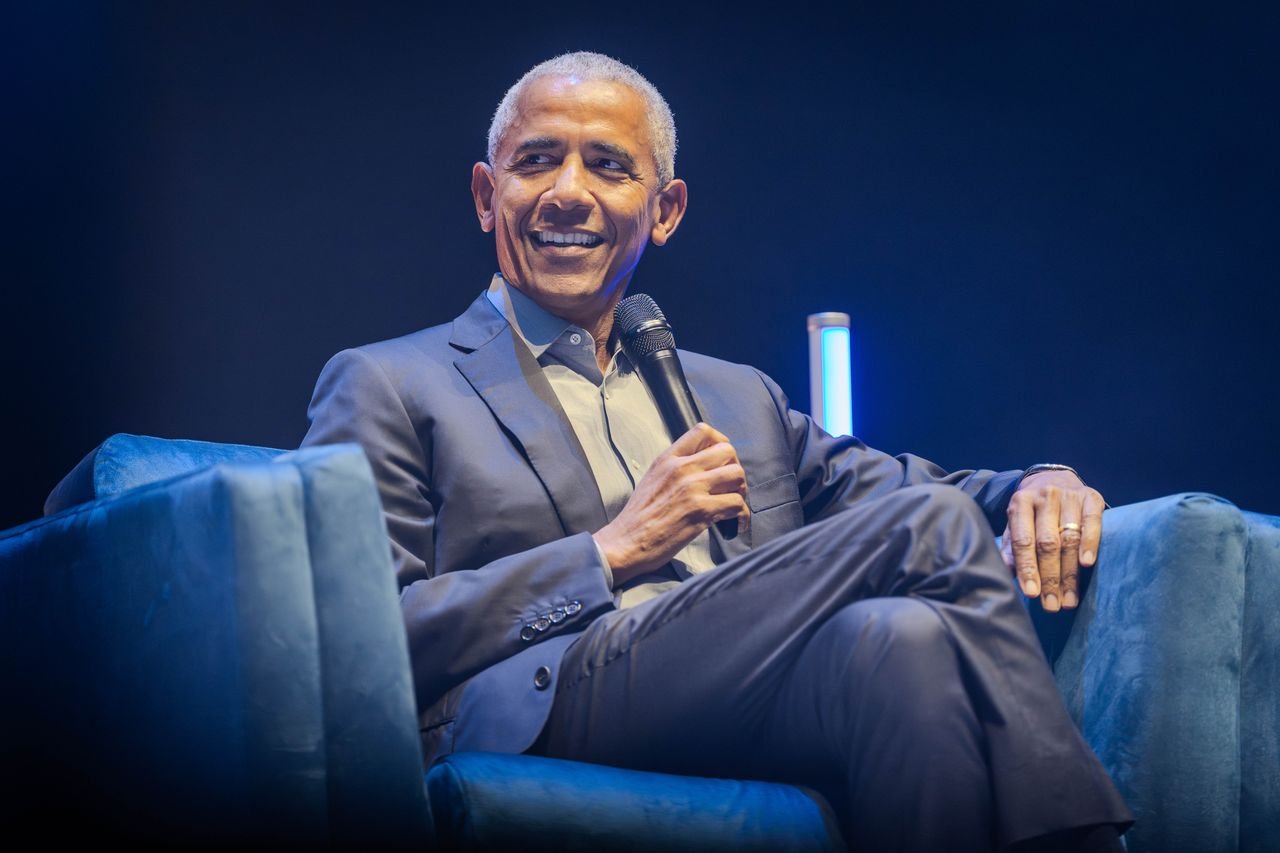
Former U.S. President Barack Obama has delivered one of his sharpest criticisms yet of the Trump administration, accusing officials of waging “violence against the truth” by linking autism to the use of Tylenol.
Speaking to an audience in London this week, Obama stressed that public health requires trust, science, and clarity — not political gamesmanship. “When people in positions of power push falsehoods that affect families’ health decisions,” Obama said, “it’s not just irresponsible. It’s violence against the truth itself.”
ALSO READ : Trump family linked American Bitcoin seals Nasdaq debut after merger with Gryphon shareholders say yes
A claim without science
The controversy stems from a recent announcement by the Donald Trump administration suggesting a potential connection between Tylenol use during pregnancy and autism spectrum disorders. The statement was met with immediate backlash from medical experts, who called it misleading and unsupported by credible evidence.
Health professionals, including leading voices at the American Academy of Pediatrics, emphasized that no such causal link has been scientifically proven. They warned that such rhetoric risks scaring parents away from safe and commonly used medications, undermining public confidence in health care.
Obama’s warning on misinformation
Obama, who has consistently championed science-based policy since his presidency, framed the issue as part of a larger battle against misinformation. He told the London crowd that when governments bend facts to fit political narratives, ordinary people pay the price.
Truth matters. If we lose our grip on what’s real, we lose our ability to solve real problems,” he said, drawing applause.
This isn’t the first time Obama has criticized Trump-era messaging. During the COVID-19 pandemic, he repeatedly urged Americans to listen to scientists like Dr. Anthony Fauci instead of “political noise.”
Trump camp responds
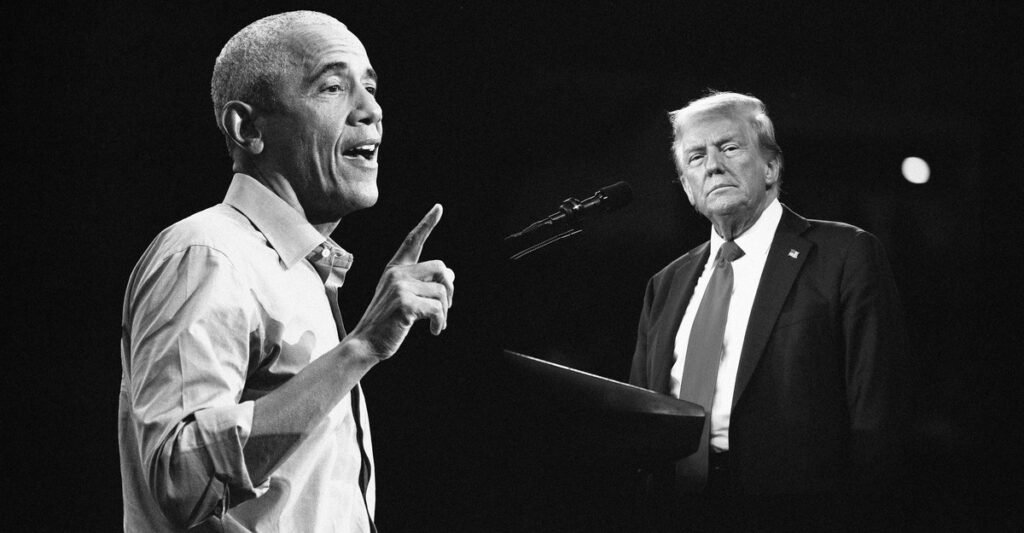
So far, Trump allies have defended the statement, saying it was intended to encourage “further research” rather than present a definitive conclusion. But critics argue the language used was reckless, especially given Trump’s history of amplifying conspiracy theories about vaccines and medicine.
Observers note that Trump’s base often embraces narratives that contradict mainstream science — something Obama hinted at directly:
If leaders encourage people to doubt science at every turn, society becomes weaker, not stronger,” he remarked.
Political undertones
Analysts believe Obama’s sharp rebuke is more than just about Tylenol. With the 2024 U.S. presidential race still fresh in public memory, his comments underscore the ongoing ideological clash between traditional Democratic respect for science and Trump’s populist skepticism.
Joe Biden, who succeeded Trump, has also warned about “truth decay” in American politics, pointing to health misinformation as a leading challenge of the digital age.
What it means for families
For parents already navigating the complex world of child health, the Tylenol controversy is yet another reminder of how politics can shape personal decisions. Experts urge families to seek guidance from licensed doctors rather than public figures.
Dr. Sarah Williams, a pediatric neurologist based in New York, told reporters, “Parents shouldn’t be afraid of Tylenol because of political soundbites. They should base their choices on medical advice and evidence, not headlines.”
The bigger picture
Obama’s words in London were not just about Tylenol or autism but about defending the very idea of truth. By calling the Trump administration’s claim “violence against the truth,” he framed misinformation as an attack on society’s ability to function.
As misinformation continues to ripple through health and politics alike, Obama’s intervention may reignite debates about the role of leaders in shaping narratives that affect millions of lives. For many, his comments were not just a defense of science but a reminder that truth itself is under siege.




Politics
Inside the ‘Honoring Trump’ Dinner Party Hosted by David Ellison… What Did the Former President Speak for an Hour About?
Hollywood power circles and political influence overlapped as David Ellison reportedly hosted an intimate dinner where Donald Trump delivered extended remarks, drawing attention across media and entertainment industries.

A private dinner gathering in elite Hollywood and political circles has sparked widespread discussion after reports emerged that film producer David Ellison hosted an evening “honoring” former U.S. President Donald Trump, during which Trump reportedly delivered an hour-long address to guests.
The dinner, described by attendees as an exclusive, invitation-only affair, is said to have brought together influential figures from the entertainment industry, business world, and political orbit. Ellison, who leads Skydance Media, has long been considered one of Hollywood’s most influential modern studio executives, known for his growing footprint in global film and streaming production.
A Hollywood-Politics Crossover Moment
According to accounts circulating within industry circles, the evening was framed as a “private honoring dinner,” though no formal public details were released by the host or guests. What stood out most was Trump’s extended remarks, which reportedly lasted close to an hour and covered a range of topics including leadership, media, and global affairs.
ALSO READ : Younghoe Koo Explains Botched Field Goal After Slip: “The Ball Was Moving So I Pulled Up”
While such gatherings between entertainment executives and political figures are not entirely unusual in Los Angeles and Washington networking ecosystems, the scale and tone of this particular event have drawn heightened attention.
Trump’s Continued Presence in Elite Circles
Donald Trump, whose political and public profile remains one of the most polarizing in modern American history, continues to maintain strong visibility across business, media, and political landscapes. His appearances at private events, especially within influential industry groups, often generate public curiosity and debate.
Supporters often view such engagements as a continuation of his strong ties with high-profile business leaders, while critics question the blending of entertainment influence with political messaging in private settings.
David Ellison’s Expanding Industry Influence
For David Ellison, son of Oracle co-founder Larry Ellison, this dinner adds another layer to his growing reputation as a key connector between Hollywood, technology, and global finance. Under his leadership, Skydance Media has become a major production force behind several high-budget films and franchise projects.

Industry observers note that Ellison’s network increasingly spans both entertainment and geopolitical spheres, reflecting a broader trend in Hollywood where media executives engage with political figures more directly than in previous decades.
A Private Dinner, Public Curiosity
Although the dinner itself was private, its implications are anything but. In today’s hyper-connected media environment, even closed-door gatherings between influential figures quickly become subjects of public speculation.
The combination of Hollywood leadership and a former U.S. president in the same room—especially one reportedly centered around extended political remarks—has naturally fueled discussion across media platforms.
As of now, neither Ellison nor Trump has issued detailed public statements about the nature of the dinner or the topics discussed. However, the event underscores the increasingly blurred lines between entertainment power structures and political influence.
Politics
‘Trump Is Killing the Climate’? Al Gore Says He Isn’t Worried… “Public Opinion Will Force the Solution”
Two decades after An Inconvenient Truth, former U.S. Vice President Al Gore remains confident that climate action is inevitable—despite political resistance and renewed global tensions over environmental policy.

Former U.S. Vice President Al Gore has once again ignited global discussion on climate change—this time with a bold message of optimism, even as political debates intensify in Washington.
In a recent reflection tied to the legacy of his landmark documentary An Inconvenient Truth, Gore made it clear that he is not alarmed by political setbacks, including the climate policy direction associated with former President Donald Trump.
“The fact that public opinion is so strongly on the side of doing something makes it inevitable that we will solve the climate crisis,” Gore stated, reinforcing his long-held belief that public pressure—not political cycles—will ultimately drive global environmental action.
ALSO READ : Younghoe Koo Explains Botched Field Goal After Slip: “The Ball Was Moving So I Pulled Up”
A 20-Year Legacy Still Shaping Climate Debate
When An Inconvenient Truth was released nearly two decades ago, it transformed Gore from a former presidential candidate into one of the world’s most visible climate advocates. The film played a major role in bringing global warming into mainstream political and public discourse.
Even today, environmental analysts credit the documentary for influencing climate education, corporate sustainability efforts, and international climate agreements.
Political Resistance vs Public Momentum
Despite Gore’s optimism, climate policy in the United States has remained deeply divided along political lines. The environmental rollback policies associated with the Trump administration continue to be a point of debate among scientists, policymakers, and activists.
However, Gore argues that this political friction does not reflect the broader direction of society. Instead, he believes public awareness has reached a tipping point that will eventually override political hesitation.
The Climate Debate in a New Era
Global climate discussions are now shaped by more than just government policy. Corporate commitments, youth-led climate movements, and international agreements have significantly increased pressure on governments to act.

Organizations like the United Nations have repeatedly warned that the window to limit global warming is narrowing, adding urgency to the conversation Gore helped popularize years ago.
Why Gore’s Confidence Matters Now
What makes Gore’s latest remarks notable is not just their optimism, but the timing. As extreme weather events intensify worldwide—from heatwaves to floods—public attention on climate issues has surged again.
Environmental experts suggest that while political leadership fluctuates, long-term public sentiment tends to move steadily toward sustainability and environmental protection.
Gore’s core argument remains unchanged: even if political resistance slows progress temporarily, societal demand will ultimately push climate solutions forward.
A Message of Long-Term Inevitability
Rather than framing climate action as dependent on any single administration, Gore continues to emphasize inevitability driven by collective awareness.
His position is clear: the climate crisis will not be solved overnight, but it will be solved because people increasingly demand action.
And in that belief, Gore sees not despair—but direction.
Politics
Al Gore Breaks Silence on Trump and Climate Crisis “It’s Inevitable We’ll Solve It…” But Is That Confidence Enough?
Two decades after An Inconvenient Truth, Al Gore says public opinion—not politics—will ultimately decide the fate of climate change

At a time when climate debates often feel louder—and more polarized—than ever, Al Gore is choosing a surprisingly calm tone.
The former U.S. Vice President, long regarded as one of the most influential voices in global environmental advocacy, isn’t sounding alarms about political setbacks. Instead, he’s expressing something that many might find unexpected: confidence.
And not just cautious optimism—but belief in inevitability.
“We Will Solve It”—A Statement That Turns Heads
Speaking nearly two decades after the release of his groundbreaking documentary An Inconvenient Truth, Gore made it clear that he doesn’t believe the climate crisis can be derailed by any one political figure—including Donald Trump.
“The fact that public opinion is so strongly on the side of doing something makes it inevitable that we will solve the climate crisis,” Gore said—a statement that has sparked both hope and debate.
ALSO READ : Younghoe Koo Explains Botched Field Goal After Slip: “The Ball Was Moving So I Pulled Up”
It’s a perspective rooted not in policy cycles, but in people power.
Why Gore Isn’t Focused on Politics
For years, climate discourse has often been framed through a political lens—policies passed, agreements signed, and leadership changes. But Gore’s latest remarks suggest a shift in thinking.
He’s betting on something deeper: public awareness.
From rising youth activism to increasing corporate commitments toward sustainability, there’s a growing sense that climate action is no longer a niche concern. It’s mainstream. It’s urgent. And, perhaps most importantly, it’s widely supported.
Gore believes that once public consensus reaches a tipping point, political systems will inevitably follow.
The Legacy of ‘An Inconvenient Truth’
When An Inconvenient Truth premiered in 2006, it wasn’t just a documentary—it was a wake-up call. It brought climate science into living rooms, classrooms, and conversations around the world.
At the time, the film played a critical role in shaping public understanding of global warming. Today, its legacy still lingers, especially as climate change becomes less of a prediction and more of a lived reality.
For Gore, the progress made since then is proof that awareness works.
But the question remains: Is awareness enough?
The Trump Factor—Real Threat or Temporary Setback?
Critics argue that political leadership still matters deeply, especially when it comes to environmental regulations, international agreements, and funding for climate initiatives.
During his presidency, Donald Trump took steps that many environmentalists viewed as setbacks, including withdrawing from key climate agreements and rolling back certain regulations.
Yet Gore’s stance suggests that such moves, while impactful, are not permanent barriers. In his view, they are temporary detours in a much longer journey.
It’s a perspective that reframes the conversation—not as a battle between administrations, but as a long-term global shift.
Public Opinion as the Driving Force
Perhaps the most compelling part of Gore’s argument is his faith in public opinion.

Across the world, climate concerns are influencing elections, shaping corporate strategies, and driving grassroots movements. From renewable energy adoption to climate-conscious consumer behavior, the signs of change are everywhere.
Gore sees this as the real engine of progress.
Not politicians. Not policies alone.
People.
A Message of Hope—or Overconfidence?
While many welcome Gore’s optimism, others question whether it might underestimate the scale and urgency of the crisis. Climate change is a complex issue, influenced by economic, political, and technological factors.
Can public opinion alone accelerate the pace of change needed?
Or does it risk creating a false sense of security?
These are questions that continue to divide experts and policymakers alike.
The Bigger Picture
What’s clear, however, is that the conversation around climate change is evolving. It’s no longer just about warnings—it’s about solutions, accountability, and collective action.
Gore’s message fits into this new narrative. It’s less about fear and more about momentum.
And perhaps that’s exactly what the world needs right now—a reminder that progress, while uneven, is still possible.
Final Thought
Whether one agrees with him or not, Al Gore’s confidence is hard to ignore.
In a world often dominated by uncertainty, his belief that the climate crisis will be solved offers a rare sense of direction.
But as history has shown, inevitability doesn’t mean immediacy.
The future may be moving toward a solution—but how fast we get there still depends on what happens next.

Dave Coulier Reveals Cancer Treatment Changed His Voice and Appearance… ‘Full House’ Fans Are Emotional Over His Honest Update

IATSE Goes on Strike Against ‘CoComelon: The Melon Patch’ Accuses Producers of Trying to Hire ‘Scabs’ Instead of Paying Fair Wages to Crew…

Harry Potter Returns Sooner Than Expected… HBO Quietly Greenlights Season 2 With ‘Chamber of Secrets’ Twist

Eric Dane’s Last ‘Euphoria’ Scene… What He Was Hiding Will Break You

She Saw It Coming…: Never-Heard Princess Diana Tapes Surface, Leaving Royal Watchers Stunned

1-Iran Issues Dire Warning to Israel and Defies Trump on Nukes: “We’re Ready to Strike Deep Inside”

Donald Trump’s net worth reveals the fortune behind the former US President and business mogul

“She Never Made It Out…” Albany House Fire Claims Woman’s Life as Family Pleads for Help to Bring Her Home

“Tomás Rodríguez Net Worth 2025: Panama’s Gold Cup Goal‑Machine’s Surprising Fortune Revealed”

Caitlin Clark Sidelined with Quad Strain, Set to Miss Two Weeks of WNBA Action

Miss Jamaica Suffers Terrifying Fall Off Miss Universe Stage; Rushed to Hospital on Stretcher in Viral Video

Moana Live-Action Teaser Sparks Outrage as Fans Call Disney’s Move a ‘Clear Money Grab’ — What Went Wrong?

Ryan Gosling’s Project Hail Mary Trailer Stuns Fans with a Mysterious Alien Ally and a Mission That Could Save Earth

Apple delays Jessica Chastain thriller The Savant about domestic extremism after recent US violence

Avatar 3, Fire and Ash trailer reveals Jake Sully’s family facing terrifying new Na’vi enemies with deadly fire powers
-

 Entertainment1 week ago
“He Fights Like Fire But Feels Cold…” Yahya Abdul-Mateen II’s Netflix Revenge Drama Leaves Fans Divided
-

 Entertainment1 week ago
Hollywood Buzz This Week: ‘Remarkably Bright Creatures’ Arrives… Michael B. Jordan’s ‘Swapped’ Premiere Has Everyone Talking
-

 Entertainment1 week ago
Jimmy Kimmel Refuses to Back Down on Melania Trump Joke… “They Know Exactly What I Meant”
-

 Entertainment1 week ago
Seth Meyers Questions Trump’s White House Ballroom Move… “After Everything That Happened?”
-

 Sports1 week ago
20 Years Later… Arsenal at the Brink of History: Arteta’s Men Storm into Champions League Final After 1-0 Thriller vs Atletico Madrid
-

 Sports1 week ago
Saka’s Moment of Glory Sends Arsenal to Champions League Final After 20 Years… but Can Arteta Finish the Job?
-

 Entertainment1 week ago
‘They Refuse to Stay Silent…’: Inside Hollywood’s Sustainability Warriors Defying Climate Rollbacks and Rewriting the Future
-

 Entertainment1 week ago
Prices Will Rise, Choices Will Shrink…: Paramount Faces Lawsuit That Could Shake Its Warner–Skydance Mega Deal