
Sports
Trey Yesavage’s Unbelievable World Series Masterclass Puts Toronto Blue Jays One Win from History — ‘From Dunedin to Destiny’
In a night for the ages, 22-year-old Trey Yesavage struck out 12 batters and carried the Toronto Blue Jays within one victory of their first World Series championship since 1993.


From pitching in front of just 327 fans in Class-A baseball to silencing more than 52,000 at Dodger Stadium, Trey Yesavage has written the kind of story that baseball romantics dream about.
The 22-year-old rookie delivered a once-in-a-generation performance in Game 5 of the 2025 World Series, striking out 12 and giving up only one run across seven dazzling innings as the Toronto Blue Jays defeated the Los Angeles Dodgers 6-1.
With the victory, the Blue Jays now lead 3-2 in the series — and are just one win away from their first championship in 32 years. Game 6 will be played Friday night at the Rogers Centre, where an entire nation will hold its breath.
From Class-A Dunedin to October Glory
Just months ago, Yesavage was pitching for the Dunedin Blue Jays, a small Class-A affiliate of Toronto’s organization. Fast forward to October 2025 — and he’s dominating the World Series with the poise of a seasoned ace.
ALSO READ : Rockets Guard Fred VanVleet Tears ACL and Likely to Miss 2025-26 Season
“It’s surreal,” Yesavage told reporters after the game. “Every time I step on that mound, I remember where I started.”
His 12 strikeouts were the most by any pitcher aged 23 or younger in World Series history, surpassing even legends like Madison Bumgarner and Fernando Valenzuela.
He also became the first rookie ever to record two postseason starts with 10-plus strikeouts — an achievement that immediately places him in the sport’s historical elite.
The Game That Changed Everything
From the first pitch, Yesavage made it clear that he owned the moment. His fastball touched 98 mph, his splitter was unhittable, and his slider danced on the corners. He allowed just three hits — and none after the fourth inning.
Meanwhile, Toronto’s offense did its part. Vladimir Guerrero Jr. and Davis Schneider opened the game with back-to-back home runs off Dodgers starter Blake Snell, instantly electrifying the Blue Jays’ dugout and stunning the home crowd.
By the time Toronto’s bullpen took over in the eighth, the Dodgers looked beaten — their bats muffled by a rookie who refused to blink.

A Nation on the Edge
For the Blue Jays and their fans, this moment feels like déjà vu — a throwback to 1993 when Joe Carter hit the famous walk-off home run to seal Toronto’s last World Series title.
Now, over three decades later, Canada finds itself on the verge of baseball ecstasy again. From Toronto to Vancouver, fans poured into bars and city squares to watch their new hero take the mound.
“If they win Friday, Trey Yesavage will never pay for a meal in Toronto again,” a fan tweeted on X (formerly Twitter) after the game.
Even former players like Josh Donaldson and Roy Halladay were trending as fans compared Yesavage’s dominance to the greatest pitching performances in Blue Jays history.
Baseball’s New Golden Boy
Yesavage’s meteoric rise is a reminder of why sports still matter — for the human stories that defy expectation. He began the year as a long-shot minor leaguer, made only a handful of major league starts, and yet has now authored the signature moment of Toronto’s postseason run.
His poise has even caught the attention of MLB legends like Pedro Martínez and Justin Verlander, who both praised him on X for his mechanics and maturity on the mound.
“He looks like he’s been doing this for ten years,” Martínez posted. “Toronto found its ace.”
Game 6 — The Moment of Truth
When the series returns to the Rogers Centre on Friday, the Blue Jays will have a chance to make history on home soil. Manager John Schneider praised his young pitcher’s focus, saying after the game:
“He doesn’t flinch. He doesn’t rattle. He just competes. That’s rare for a kid his age.”
Toronto’s bullpen is rested, the lineup is firing, and the city is ready. Should the Jays clinch Game 6, expect a celebration spilling out of Rogers Centre and onto Front Street — a party 32 years in the making.
Final Word
For now, the story belongs to Trey Yesavage — a rookie who refused to act like one, a pitcher who rose from obscurity to rewrite World Series history.
“If baseball is a game of moments,” one commentator remarked, “then this was Yesavage’s monument.”
From Dunedin to Dodger Stadium, from dream to destiny — Trey Yesavage has brought Toronto to the doorstep of immortality.










Sports
Vita Vea Wants Out of Tampa Bay: Two-Time Pro Bowl Star Requests Buccaneers Trade After Contract Talks Stall
The veteran defensive tackle is entering the final year of his four-year, $71 million deal, with his future in Tampa Bay now uncertain as training camp approaches.

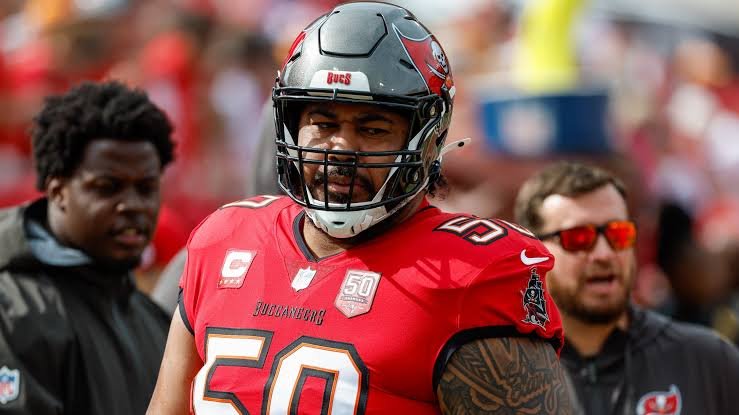
TAMPA, FLORIDA: The Tampa Bay Buccaneers could be facing a major defensive shake-up after two-time Pro Bowl defensive tackle Vita Vea requested a trade, according to his agent Collin Roberts.
The trade request comes after contract extension talks between Vea and the Buccaneers reportedly stalled, putting the future of one of Tampa Bay’s most important defensive players under the spotlight just as the team prepares to open training camp.
Vea is entering the final season of his current four-year, $71 million contract. The 31-year-old is scheduled to earn $17 million this season, although none of that money is guaranteed. His deal also includes a per-game roster bonus that can total up to $1 million.
The situation has been developing for some time.
Vea was a hold-in during the Buccaneers’ mandatory minicamp last month because of his contract situation. Unlike a traditional holdout, a hold-in involves a player reporting to team activities but not fully participating.
At the time, head coach Todd Bowles played down concerns surrounding the situation, describing it as “part of the business.”
Now, with veteran players scheduled to report for training camp, the contract dispute has taken a more serious turn.
Vita Vea Has Been a Key Part of Tampa Bay’s Defense
Since being selected by the Buccaneers with the 12th overall pick in the 2018 NFL Draft, Vea has established himself as a powerful force in the middle of Tampa Bay’s defensive line.
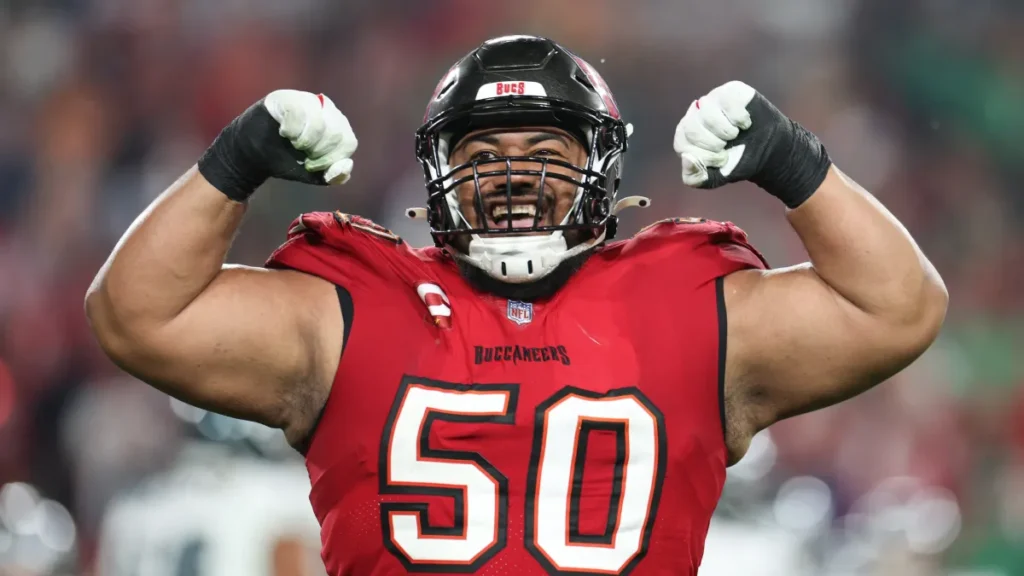
The 6-foot-4, 347-pound defensive tackle has played eight NFL seasons and has recorded 35 career sacks. His ability to occupy blockers and disrupt the interior of opposing offensive lines has made him a crucial part of the Buccaneers’ defensive identity.
Vea was named to the Pro Bowl in 2021 and again in 2024.
His most recent season was also one of his most durable. Vea appeared in all 17 games, finishing with 4.5 sacks, 13 quarterback hits and 34 tackles.
For Tampa Bay, losing him would create an immediate challenge.
Finding a player capable of replacing Vea’s combination of size, strength and experience would not be easy, particularly with the regular season approaching.
Contract Situation Puts Buccaneers in Difficult Position
The timing of Vea’s trade request is particularly significant because the Buccaneers have another major contract situation involving their quarterback.
Baker Mayfield, who is entering the final season of a three-year, $100 million contract, is also seeking an extension.
Mayfield participated fully in minicamp, but he acknowledged last month that negotiations were “anywhere close” to being completed. He also indicated that he would not continue contract discussions once training camp began.
That leaves Tampa Bay facing important decisions involving two of the team’s most recognizable players.
While Vea has now requested a trade, Mayfield remains with the team and is expected to lead the offense into the new season.
What Happens Next for Vita Vea?
The immediate question is whether the Buccaneers will attempt to repair the relationship with Vea or explore trade possibilities.
Vea’s age, contract status and recent production could all influence his market. A team acquiring him would have to consider not only the trade compensation but also the possibility of negotiating a new contract with the veteran defensive tackle.
For Tampa Bay, the decision could be even more complicated.
Trading Vea would potentially provide valuable draft compensation, but it would also remove a proven interior defender from a team that has relied heavily on his presence for years.
The Buccaneers now have to decide whether Vea remains part of their long-term plans or whether the stalled extension talks have pushed the relationship beyond repair.
With training camp arriving, the situation is likely to become one of the biggest storylines surrounding Tampa Bay.
Vea has already made his position clear.
Now, the ball is in the Buccaneers’ court.
Sports
Marlins End 12-Game Nightmare in Stunning Fashion: ‘Playoff-Type’ Comeback Stuns Phillies After Wheeler and Duran Fall
Miami erased a late three-run deficit with a dramatic ninth-inning rally, beating Philadelphia 8-7 and finally escaping the longest losing streak in franchise history.
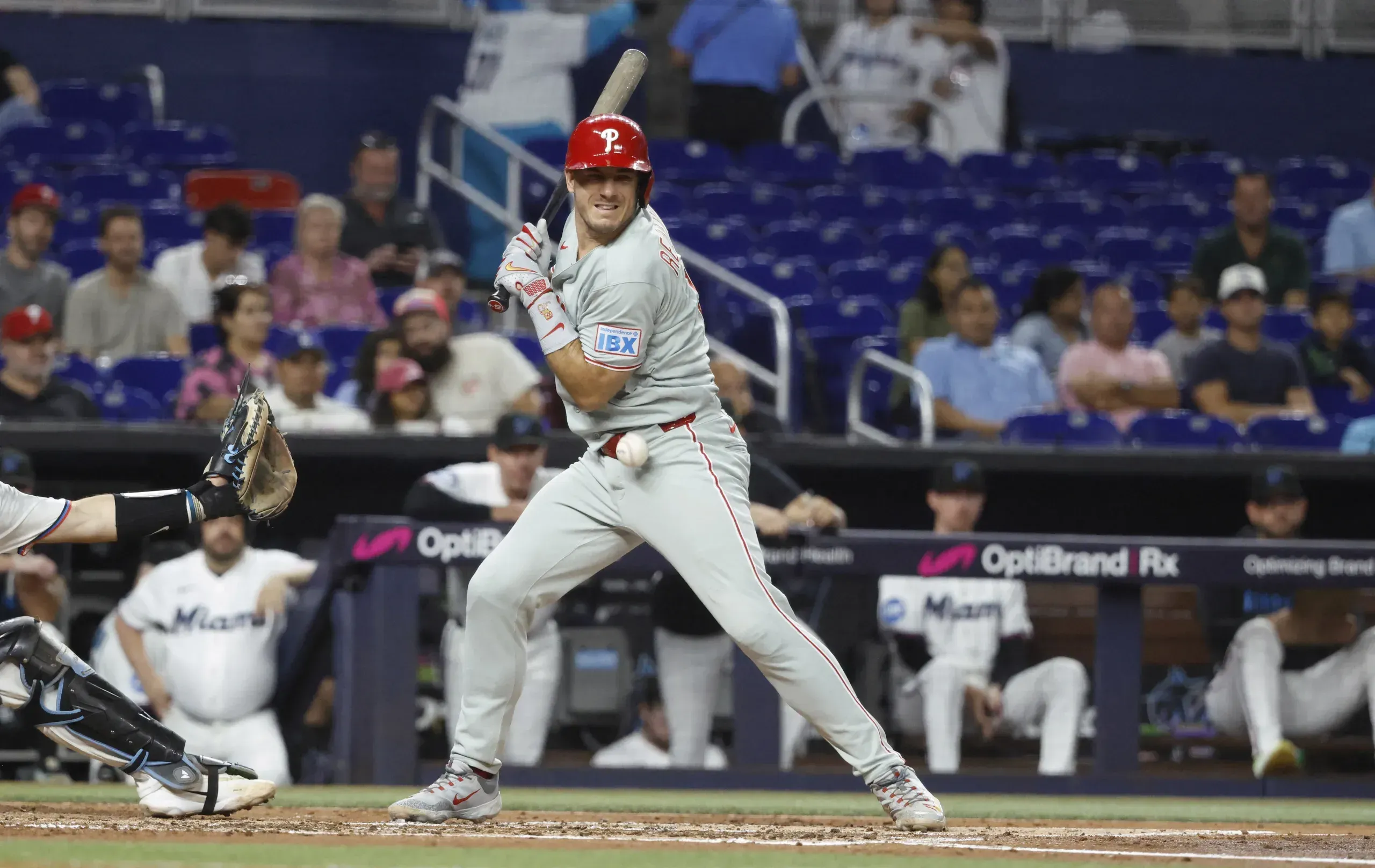
MIAMI: The Miami Marlins had tried almost everything to stop the bleeding. Nothing seemed to work.
Then, on Monday night, they found the most dramatic solution of all — a ninth-inning comeback against one of baseball’s best teams.
The Marlins snapped a franchise-record 12-game losing streak with an unforgettable 8-7 walk-off victory over the Philadelphia Phillies at loanDepot park, rallying from a three-run deficit in the final inning to turn what looked like another painful loss into a night of celebration.
And they did it against two of Philadelphia’s biggest weapons.
First, Miami chased Zack Wheeler after just three innings, tagging the Phillies ace for five runs. Wheeler had entered the game with a 5-0 record and a 2.87 ERA across his previous 10 starts against Miami dating back to 2022.
That streak ended abruptly.
But Miami’s problems were far from over.
The Marlins built a three-run advantage, only to watch it disappear as Philadelphia fought back. With the game heading into the ninth, Miami trailed 7-5 and appeared to be staring at another narrow defeat — the kind that had become painfully familiar during a 12-game skid in which the club scored only 30 runs.
Then came the comeback.
Jakob Marsee and Otto Lopez opened the ninth with consecutive singles before Kyle Stowers was hit by a pitch from All-Star closer Jhoan Duran.
Suddenly, the Marlins had the bases loaded with nobody out.
Up stepped Heriberto Hernández, who had already made his presence felt earlier in the game by hitting his team-leading 15th home run off Wheeler.
Hernández delivered again.
His single through the middle brought home two runs and tied the game at 7-7.
For a team that had spent nearly two weeks searching for answers, the momentum was suddenly unmistakable.
Miami loaded the bases once more after Xavier Edwards reached on a bunt single. Liam Hicks then hit into a force play at home, keeping the game alive.
That left the stage for Griffin Conine.
With two strikes, Conine lined a knuckle-curve past Phillies second baseman Bryson Stott, sending the ball into the outfield and bringing home the winning run.
The Marlins had done it.
After 12 straight defeats, Miami finally had a victory.
For Conine, the moment was even more special. It was the first walk-off hit of his Major League career, and according to the Elias Sports Bureau, he became just the fifth player since 2000 to record a walk-off hit for a team where his father had also delivered a walk-off hit.
The victory moved Miami’s record to 53-54 and kept the club’s postseason hopes alive. Just weeks earlier, the Marlins had been tied with Philadelphia for a National League Wild Card position. The 12-game skid sent them tumbling out of the playoff picture, but Monday’s comeback pulled them back to within two games of the third Wild Card spot.
Conine described the atmosphere as something resembling a postseason game.
“I think beating a good team like that, coming from behind in the ninth, like that’s a playoff-type game right there,” he said.
It was exactly the kind of win Miami desperately needed.

The Marlins’ losing streak had been especially frustrating because so many of the games had been close. The club averaged just 2.5 runs per game during the skid, and all but one of the 12 losses were decided by three runs or fewer.
Manager Clayton McCullough had repeatedly stressed that the turnaround would require contributions from the entire roster.
On Monday, he finally got them.
The pitching staff did its part, too. Right-hander Tyler Phillips limited Philadelphia to two runs over five innings, with Bryce Harper providing the Phillies’ only home run against him.
Phillips, who had previously allowed eight runs against his former team in June, even changed his routine in an attempt to bring some good fortune. He returned to the dugout for the seventh inning and turned his cap inside out — a rally trick he remembered from childhood.
The Marlins had already tried plenty of unusual methods during their losing streak, including bringing out a Jobu bobblehead inspired by the movie Major League.
This time, the baseball gods finally appeared to be listening.
The comeback also provided an emotional release for a clubhouse that had endured nearly two weeks of frustration.
Hernández admitted that the players had been asking themselves difficult questions during the skid.
“What was going on? What are we not doing?” he recalled.
On Monday, however, Miami found the answer: keep fighting.
The Marlins still have plenty of work ahead if they want to return to the postseason race. One win does not erase a 12-game losing streak, and the team remains below .500.
But the way this victory unfolded could prove far more valuable than a single mark in the win column.
They beat a team with championship ambitions.
They knocked out a Cy Young contender early.
They rallied against an All-Star closer.
And they won the game with three runs in the ninth inning.
After everything Miami had endured, there was perhaps no better way to finally end the skid.
As Phillips put it after the game, it was only one victory.
But for the Marlins, it was a very big one.
Sports
‘Go Ball, Please!’ Ceddanne Rafaela’s First Career Grand Slam Powers Red Sox to 10th Straight Road Win
Boston’s remarkable turnaround continues as Rafaela delivers a stunning four-run blast in the sixth inning, helping the Red Sox beat the Athletics 4-2 and extend their perfect road run to 10 games.
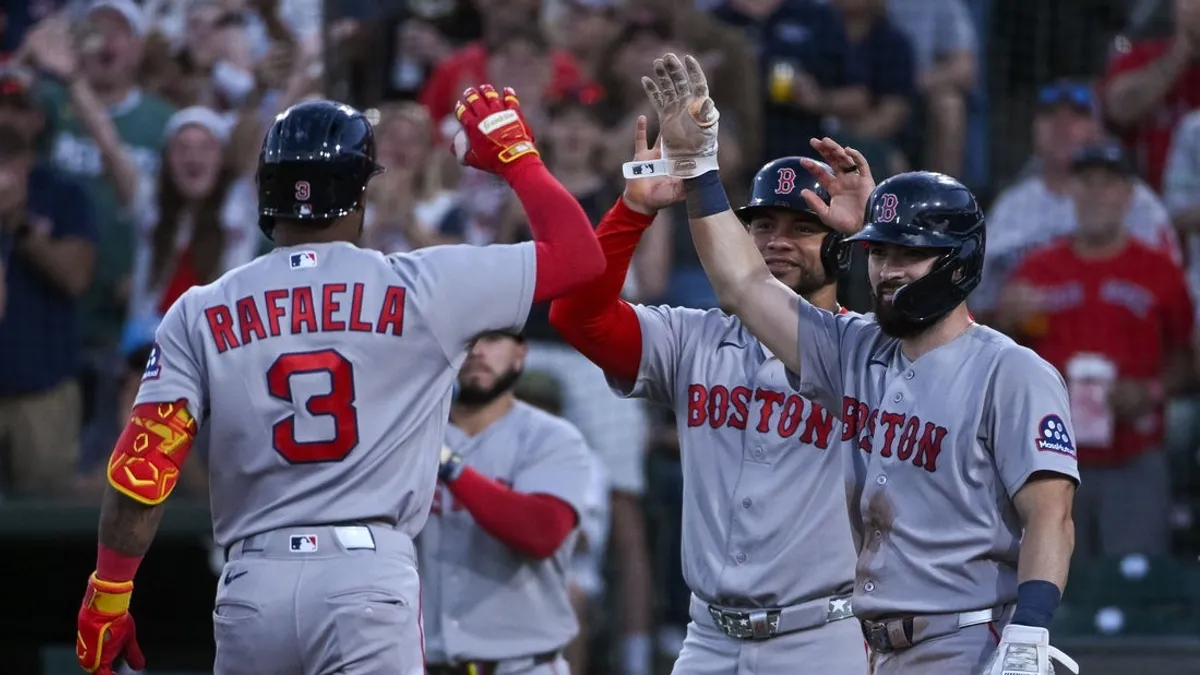
WEST SACRAMENTO: Sometimes, a home run does not look like a home run when it leaves the bat. For Ceddanne Rafaela, however, the ball had already become the biggest hit of his Major League career by the time it finally cleared the wall.
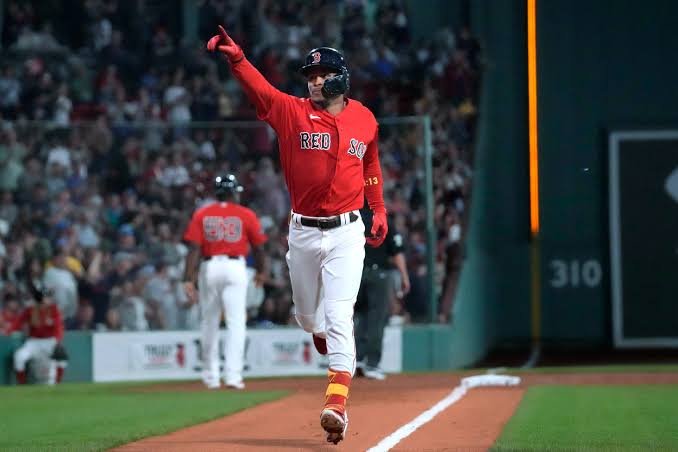
Rafaela smashed the first grand slam of his career in the sixth inning, turning a tight game on its head and giving the Boston Red Sox a 4-2 victory over the Athletics at Sutter Health Park. The result extended Boston’s remarkable run to 10 consecutive road victories.
The 29-year-old’s breakthrough moment was anything but routine. After connecting with a 2-0 slider from left-handed reliever José Suarez, Rafaela initially believed the ball would be caught. Athletics left fielder Colby Thomas appeared to have a chance, but the ball carried farther than expected, with Thomas’ glove only managing to tip it over the fence.
Rafaela’s reaction said it all.
“I thought it was a flyout,” he admitted after the game, explaining that he did not feel he had made particularly strong contact.
But as the ball continued to travel, Rafaela could only hope.
“Go ball, please,” he recalled thinking.
The ball went.
And with it went the momentum of the game.
Boston had been held without a hit through the first five innings and trailed 1-0. Everything changed in the sixth. Connor Wong opened the inning with a double, while Willson Contreras and Wilyer Abreu later drew walks to load the bases with two outs.
That brought Rafaela to the plate.
One swing later, the Red Sox had transformed a one-run deficit into a 4-1 advantage.
For Rafaela, the grand slam was the latest chapter in a growing reputation for producing in important situations. Entering the game, he had been a career .355 hitter with the bases loaded, posting an .827 OPS in those situations. The one thing missing from his résumé was a grand slam.
That box was finally checked.
“I want to be in those positions to help my team out,” Rafaela said. “I always want to be in those kind of situations.”
The victory also highlighted just how dramatically Boston’s season has changed.
The Red Sox began the campaign with a disappointing 32-46 record. Since June 25, however, the team has surged to 23-4, including a perfect 10-0 on the road during that stretch.
It is the kind of turnaround that can completely change the mood inside a clubhouse.
Left-hander Payton Tolle, who earned the win, summed up the atmosphere after Rafaela’s shot.
“Go, go, go, go! Keep going, keep going,” Tolle said, describing the reaction from the dugout as everyone watched the ball carry toward the fence.
Rafaela’s contribution was even more significant because he entered the night with a changed role in the batting order. Interim manager Chad Tracy moved him from second to fifth following the arrival of Curtis Mead, who made his Boston debut before leaving the game with a left wrist contusion.
With Mead, Abreu and Contreras potentially providing more opportunities in front of him, Rafaela could find himself in even more run-producing situations.
The change may also give him greater freedom on the basepaths. Rafaela already has 13 stolen bases this season, and Tracy pointed to that speed as another reason behind the lineup adjustment.
For now, though, Rafaela’s biggest moment came with his bat.
According to Statcast, his 11th home run of the season carried a 40-degree launch angle and stayed in the air for 5.9 seconds. The numbers may not have suggested a guaranteed home run when the ball left his bat, but Sutter Health Park proved once again that appearances can be deceiving.
Boston still had to survive some tense moments. The team was not flawless defensively, and the Athletics threatened to make things interesting. But the Red Sox held on to complete another road victory and continue their extraordinary midseason surge.
For a team that once looked buried at 32-46, Boston is suddenly playing with the confidence of a contender.
And at the center of the latest win was Rafaela, who finally got the moment he had been waiting for throughout his professional career.
His first Major League grand slam did not come with a dramatic bat flip. Instead, there was a simple swing, a little uncertainty and one desperate thought as the ball sailed into the night:
“Go ball, please.”
This time, the ball listened.

BFI Names Isabel Davis as Filmmaking Fund Director to Lead £20 Million Annual Investment

Ewan McGregor, Kenneth Branagh and Christine Vachon to Headline Edinburgh Film Festival Industry Talks

Casey Wasserman’s Ownership Plans Take an Unexpected Twist as Existing Investor Emerges as Leading Buyer

Crystal Methyd Reflects on Winning RuPaul’s Drag Race All Stars After Emotional Return

Robert Langdon Returns: Netflix Casts Morgan Spector for Dan Brown Adaptation

1-Iran Issues Dire Warning to Israel and Defies Trump on Nukes: “We’re Ready to Strike Deep Inside”

Donald Trump’s net worth reveals the fortune behind the former US President and business mogul

Sen. Elizabeth Warren Calls It a ‘Cesspool of Corruption’ — Here’s Why Senators Are Now Fighting Back Against the DOJ’s Live Nation Deal That Left Every Fan Betrayed…

“She Never Made It Out…” Albany House Fire Claims Woman’s Life as Family Pleads for Help to Bring Her Home

“Tomás Rodríguez Net Worth 2025: Panama’s Gold Cup Goal‑Machine’s Surprising Fortune Revealed”

Miss Jamaica Suffers Terrifying Fall Off Miss Universe Stage; Rushed to Hospital on Stretcher in Viral Video

Moana Live-Action Teaser Sparks Outrage as Fans Call Disney’s Move a ‘Clear Money Grab’ — What Went Wrong?

Ryan Gosling’s Project Hail Mary Trailer Stuns Fans with a Mysterious Alien Ally and a Mission That Could Save Earth

Apple delays Jessica Chastain thriller The Savant about domestic extremism after recent US violence

Avatar 3, Fire and Ash trailer reveals Jake Sully’s family facing terrifying new Na’vi enemies with deadly fire powers
-

 Sports1 week ago
Lionel Messi’s Last Dance? 2026 World Cup Final Could Rewrite Football History With These Records…
-

 Sports1 week ago
Where Is Lionel Messi? Argentina Return Home After FIFA World Cup Heartbreak, But Captain’s Absence Sparks Questions
-

 Sports1 week ago
India Spotted Him Before the World Did: How Ferran Torres’ Journey From Mumbai to World Cup Glory Came Full Circle…
-

 Entertainment1 week ago
‘Avengers: Doomsday’ Trailer Finally Unveils Robert Downey Jr. as Doctor Doom — Marvel Fans Spot Stunning First Look That Changes Everything
-

 Entertainment1 week ago
Will This End Sky-High Concert Ticket Prices? Massachusetts Introduces Noah Kahan-Backed Anti-Scalping Legislation
-

 Sports1 week ago
Spain Won the FIFA World Cup 2026 But the Biggest Story Wasn’t on the Pitch… Here’s What Football Lost Along the Way
-

 Entertainment6 days ago
Paramount-Warner Bros. Merger Faces Legal Setback as Court Temporarily Halts Deal
-

 Entertainment1 week ago
Washington, D.C. Cracks Down on Ticket Scalpers… New Law Could Change How Fans Buy Concert and Sports Tickets