
Automobile
Offers Employee Pricing to L87 V8 Recall Owners as Engine Failure Complaints Continue
General Motors has introduced a special pricing program for affected customers as regulators continue examining complaints involving the 6.2-liter L87 V8 engine—even after recall repairs.

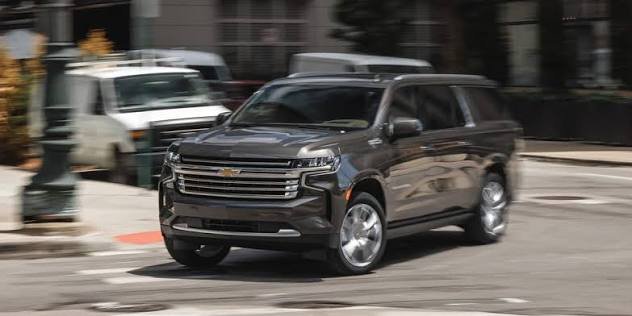
General Motors has launched a special Employee Pricing program for owners affected by its ongoing L87 6.2-liter V8 engine recall, offering eligible customers discounted pricing on selected newer vehicles as concerns surrounding the troubled engine continue.
The move comes at a difficult time for the American auto giant, with investigations and customer complaints continuing to raise questions about whether the recall repairs have fully resolved the problem.
Under the new GM Targeted Employee Pricing Program, eligible owners may receive Employee Pricing when purchasing or leasing certain 2026 and selected 2027 model-year vehicles. Customers who qualify are expected to receive an email or mail notification containing an authorization number.
For many owners dealing with repeated engine concerns, however, the announcement may feel less like a celebration and more like GM’s attempt to restore confidence after a long and frustrating recall saga.
NHTSA investigation adds new pressure on GM
The controversy surrounding the L87 engine has also drawn the attention of the National Highway Traffic Safety Administration (NHTSA).
According to the information available, the agency’s Office of Defects Investigation (ODI) opened an Engineering Analysis identified as EA26005 on August 20.
The investigation reportedly covers approximately 998,743 GM vehicles equipped with the L87 6.2-liter V8 engine produced between the 2021 and 2026 model years.
That is a significant number of vehicles—and the investigation has become even more serious because regulators reportedly received complaints involving engines that failed after recall-related work had already been completed.
Hundreds of complaints after recall repairs
According to reports, the ODI received 499 complaints involving L87 V8 engines that allegedly failed after undergoing GM’s recall repairs.
Of those cases, 473 vehicles reportedly received GM’s updated oil-viscosity remedy, while another 26 reportedly received complete engine replacements before subsequent complaints were recorded.
The figures have added another layer of concern for owners who believed the original recall work would permanently solve the problem.
GM’s repair process for engines that passed inspection involved changing the recommended oil from 0W-20 to 0W-40, along with replacing the oil filter and oil-fill cap.
Vehicles whose engines failed inspection were instead scheduled for engine replacement.
GM had estimated that around 3% of roughly 600,000 vehicles included in the original recall would require complete engine replacements.
But continued reports of engine problems have kept the issue firmly in the spotlight.
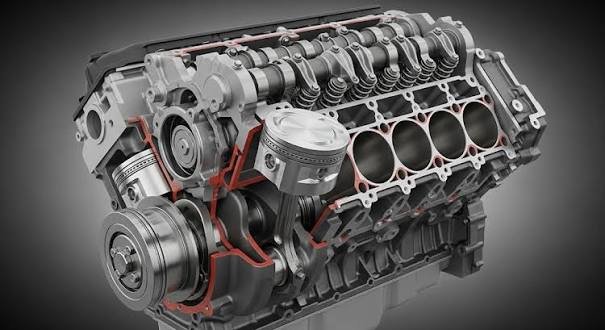
What is the problem with the L87 V8 engine?
The original recall covered approximately 597,630 SUVs and trucks in the United States equipped with the L87 6.2-liter V8.
The issue was linked to manufacturing defects involving critical engine components, including the connecting rods and crankshaft.
Such defects can potentially result in severe—and in some cases catastrophic—engine failure.
Reports indicate that GM has received thousands of complaints involving engine failures, while regulators have also examined additional failures involving vehicles outside the original recall production range.
For owners, the biggest concern is simple: whether the repair they received is enough to prevent another major engine problem in the future.
Which GM vehicles are affected?
The L87 6.2-liter V8 engine has been used in several of General Motors’ most popular and expensive trucks and SUVs.
Vehicles associated with the engine include:
- Chevrolet Silverado 1500
- Chevrolet Suburban
- Chevrolet Tahoe
- GMC Sierra 1500
- GMC Yukon
- GMC Yukon XL
- Cadillac Escalade
- Cadillac Escalade ESV
These are among GM’s most important full-size vehicles, making the scale of the issue particularly significant for the company.
Employee Pricing may offer relief—but questions remain
The new pricing initiative could provide some affected customers with an opportunity to move into a newer GM vehicle at a lower price.
But the bigger question remains whether the program will be enough to satisfy owners who have experienced engine problems, recall repairs and continued uncertainty.
The ongoing involvement of the NHTSA’s Office of Defects Investigation means the L87 V8 issue is far from disappearing from public attention.
For General Motors, the challenge now goes beyond repairing engines. The company also faces the much harder task of rebuilding trust among customers who bought some of its biggest and most popular vehicles expecting long-term reliability.
As the investigation continues, affected owners will be watching closely to see whether GM’s latest Employee Pricing offer marks the beginning of a solution—or simply another chapter in the long-running L87 V8 recall story.



Automobile
Tesla Cybercab Launches Without a Steering Wheel — But a US Safety Investigation Has Already Begun
Tesla’s futuristic two-seat Robotaxi is starting public rides in Austin, Texas, even as federal regulators examine whether a vehicle without traditional controls can meet existing safety standards.
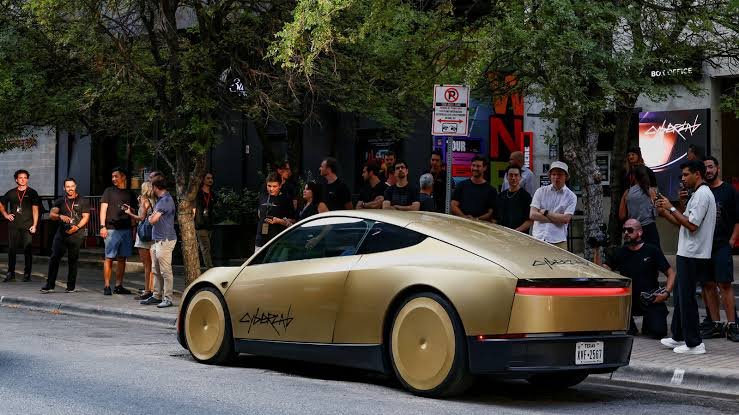
Tesla has taken another major step toward its autonomous driving ambitions with the Cybercab, a striking two-seat vehicle designed without one of the most familiar features of any car: a steering wheel.
The futuristic Tesla Cybercab also does away with traditional brake and accelerator pedals, placing the entire driving experience in the hands of autonomous technology. But just as the vehicle begins picking up members of the public in Austin, Texas, it has found itself facing an important question — does a car with no human driving controls meet current US safety rules?
The answer is now being examined by the National Highway Traffic Safety Administration (NHTSA).
Tesla Cybercab begins public rides in Austin
The Cybercab’s arrival marks a significant moment for Tesla, which has spent years promoting a future built around self-driving vehicles and autonomous ride-hailing services.
Tesla enthusiasts reportedly gathered in downtown Austin as the company introduced public rides in the driverless vehicle. The Cybercab is expected to play a central role in Tesla’s growing Robotaxi network, which is being developed across selected locations in Texas and Florida.
Unlike a conventional car, however, the Tesla Cybercab has been designed specifically for autonomous transportation. There is no steering wheel waiting for a human driver to take over and no pedals beneath the passenger compartment.
That bold design is exactly what makes the vehicle stand out — and what has now attracted regulatory attention.
US regulators investigate Tesla’s unusual design
The National Highway Traffic Safety Administration is examining whether the Cybercab complies with federal motor vehicle safety standards.
The challenge for Tesla is that many existing regulations were written for a world where every vehicle had a human sitting behind the wheel.
Traditional safety requirements include equipment that may appear unnecessary in a fully autonomous vehicle, including steering-related controls, brake pedals, windshield wipers and rearview mirrors.
For now, however, many of those long-standing rules remain in effect.
Federal regulators are working on updates to vehicle safety standards to make it easier for genuinely driverless vehicles to operate legally on public roads. The changes could eventually reshape how autonomous cars are designed and approved in the United States.

A big test for Tesla’s Robotaxi ambitions
For Tesla, the Cybercab is more than just another electric vehicle. It represents the company’s vision of a future where passengers can summon a car without needing anyone in the driver’s seat.
The vehicle is expected to operate as part of Tesla’s autonomous ride-hailing ecosystem, potentially competing with other companies working on driverless transportation services.
But the timing of the federal investigation shows just how difficult the transition to fully autonomous mobility could be.
Technology may be moving faster than regulations, and companies such as Tesla now face the challenge of proving that radically different vehicles can operate safely within rules originally designed for conventional cars.
The road ahead for the Cybercab
Tesla’s decision to launch the Cybercab publicly while regulators examine its compliance will make the vehicle one of the most closely watched autonomous transportation projects in the world.
Supporters see the Cybercab as a glimpse of the future — a purpose-built Robotaxi that could change urban transportation. Critics and regulators, meanwhile, are likely to focus on a simpler question: what happens when the technology encounters a situation where there is no steering wheel and no human driver ready to intervene?
The Cybercab’s journey has only just begun, but one thing is already clear: Tesla‘s most futuristic vehicle is entering the real world under intense scrutiny.
Whether it becomes a breakthrough moment for autonomous transport or a major regulatory challenge could shape the future of driverless cars far beyond Austin.
Automobile
Ford’s First Electrified Bronco Is Coming: Basecamp Promises Up to 900km Range Without Range Anxiety
Ford has confirmed the Bronco Basecamp for Australia and New Zealand, bringing a new range-extender electric powertrain that combines dual electric motors with a petrol generator for an impressive claimed range of up to 900km.

Ford is taking one of its most recognisable SUV names into electrified territory.
The American automaker has officially confirmed the Ford Bronco Basecamp, its first electrified Bronco, for Australia and New Zealand. The new SUV is scheduled to arrive in both markets during the second half of 2027.
But this is not a conventional hybrid—and it is not a typical petrol-powered SUV either.
The Bronco Basecamp will use what Ford describes as a “super-hybrid” system, built around electric motors and a large battery, with a petrol engine playing a very different role from the one buyers might expect.
A petrol engine that does not drive the wheels
The biggest talking point of the Bronco Basecamp is its range-extender electric powertrain.
The SUV uses dual electric motors powered by a usable 49kWh battery. Supporting the battery is a 1.5-litre turbocharged petrol engine, but there is an important difference—the petrol engine does not directly power the wheels.
Instead, it works purely as an onboard generator, producing electricity to help extend the vehicle’s overall driving range.
That means the driving experience remains fundamentally electric, while the petrol engine helps reduce concerns about running out of charge on longer journeys.
For drivers who like the idea of an EV but remain worried about charging infrastructure during road trips or remote travel, the concept could offer an interesting middle ground.
Up to 900km of claimed range
According to Ford, the Bronco Basecamp is expected to deliver a combined driving range of approximately 800km to 900km on the WLTP test cycle.
That is a substantial figure for an SUV carrying the Bronco badge, particularly considering the vehicle is designed around electrified propulsion rather than a traditional combustion-only setup.
Ford has not yet confirmed a separate official electric-only driving range for the Australian market.
However, overseas information suggests that the Bronco Basecamp could potentially travel more than 190km using electric power alone before the petrol generator is required to support the system.
The final specifications for Australia and New Zealand could differ, so buyers will have to wait for closer-to-launch confirmation.

Ford’s ‘super-hybrid’ could appeal to adventurous buyers
The Ford Bronco name has long been associated with adventure and rugged capability.
That makes the Basecamp’s powertrain particularly interesting.
Traditional electric vehicles can offer strong performance and quiet driving, but charging availability can become a concern when travelling far away from major cities. A range-extender setup attempts to address that problem by combining battery-powered driving with an onboard source of electricity.
For Australian and New Zealand buyers who regularly travel long distances, the Bronco Basecamp’s claimed 800-900km combined range could be one of its strongest selling points.
The system also represents a different approach to electrification from conventional hybrids, where a petrol engine can directly help drive the wheels.
Australia and New Zealand to get the new Bronco in 2027
Ford has confirmed that the Bronco Basecamp will become a new model line for the brand in Australia and New Zealand.
The local launch is currently planned for the second half of 2027.
While there is still plenty of time before the SUV reaches dealerships, Ford’s confirmation gives buyers an early look at how the company plans to expand the Bronco family.
Electrification is becoming increasingly important across the global automotive industry, but different markets have different needs. The Bronco Basecamp appears designed for customers who want the benefits of electric driving without relying entirely on public charging infrastructure for long-distance travel.
Is this the best of both worlds?
That may ultimately be the biggest question surrounding the new Bronco Basecamp.
A large 49kWh battery, dual electric motors and a petrol generator could provide an appealing compromise between conventional petrol SUVs and fully electric vehicles.
The electric motors handle the driving, while the petrol engine steps in only to generate electricity when additional range is needed.
On paper, that gives the SUV the quiet and responsive character associated with electric propulsion while also providing extra confidence for longer trips.
Of course, pricing, performance, off-road capability and final market specifications will play a major role in determining how successful the Bronco Basecamp becomes.
For now, one thing is clear: Ford is preparing to give the iconic Bronco a very different kind of powertrain—and a claimed range of up to 900km could make plenty of people take notice.
With its Australian and New Zealand arrival still more than a year away, the Ford Bronco Basecamp will be a vehicle worth watching as the industry searches for new ways to bridge the gap between petrol power and full electrification.
Automobile
Elon Musk’s Tesla Cybercab Hits the Road Without a Steering Wheel — But Regulators Are Already Asking Questions
Tesla has begun offering paid Cybercab rides in Austin, pushing its vision of a driverless future forward while the NHTSA examines whether the futuristic vehicle can meet federal safety standards.

Tesla has taken one of its boldest steps yet toward a fully autonomous future, rolling out paid rides in its futuristic Cybercab robotaxi—a vehicle designed without a conventional steering wheel, pedals or mirrors.
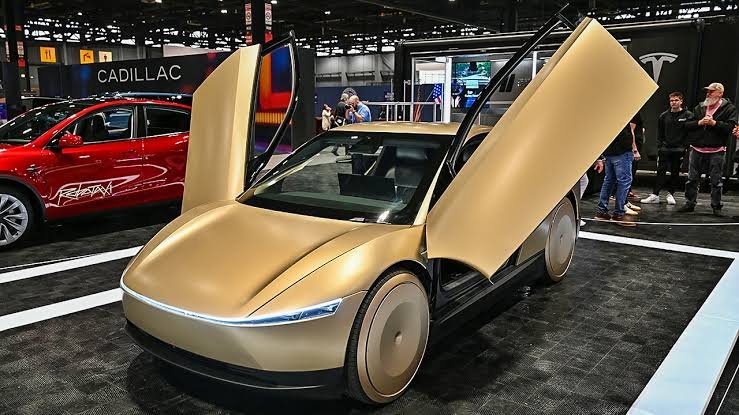
But just as the golden, butterfly-door vehicle began attracting attention on the streets of Austin, Texas, a major regulatory question emerged.
The National Highway Traffic Safety Administration (NHTSA) said it had opened an audit involving around 1,000 Cybercab vehicles to examine how Tesla determined that the unconventional cars comply with federal vehicle-safety requirements.
The development puts Elon Musk and Tesla on a potentially difficult collision course with regulators—and raises a much bigger question: Can a car built without traditional driving controls legally become a mainstream vehicle on American roads?
Tesla’s Cybercab arrives with a radically different design
The Cybercab is central to Musk’s ambitious plan to transform Tesla from primarily an electric-car manufacturer into a company focused heavily on artificial intelligence, robotics and autonomous transportation.
Unlike a conventional vehicle, the Cybercab has no steering wheel for a human driver to grab in an emergency. There are no pedals and no traditional mirrors either.
Instead, Tesla is betting that its autonomous driving technology can handle the entire journey.
The futuristic two-seat vehicle, with its distinctive golden exterior and butterfly-style doors, represents perhaps the clearest example yet of Musk’s long-standing belief that self-driving technology will eventually replace human drivers in many forms of transportation.
Tesla has already been operating a limited paid robotaxi service using its popular Tesla Model Y vehicles in Texas and Florida.
Those vehicles, however, still have conventional manual controls and, in some cases, human backup drivers.
The Cybercab takes the concept several steps further.
NHTSA moves quickly after Tesla’s rollout
Just hours after Tesla marked the Cybercab rollout in downtown Austin, the NHTSA announced that it was examining approximately 1,000 of the vehicles.
The issue lies in the fact that many existing federal vehicle-safety standards were created decades ago with human drivers in mind.
Those standards generally assume that vehicles will have equipment such as steering controls and other manual driving systems.
That creates a complicated regulatory challenge for Tesla.
In the United States, automakers generally have the ability to self-certify that their vehicles comply with federal safety requirements before placing them on public roads.
Unlike some countries, manufacturers do not necessarily need to receive advance approval from regulators for every new vehicle model.
Critics argue that this system could create a major grey area for a vehicle as unconventional as the Cybercab.
“Tesla historically has tested limits and pushed boundaries”
Autonomous-vehicle experts believe Tesla’s history of aggressively challenging conventional industry expectations could play an important role in what happens next.
Philip Koopman, an engineering professor at Carnegie Mellon University and an autonomous-vehicle safety expert, suggested that Tesla could test the limits of existing regulations.
“Tesla historically has tested limits and pushed boundaries on regulations,” Koopman said.
That approach has become a defining feature of Musk’s companies.
From electric vehicles and reusable rockets to satellite internet and artificial intelligence, Musk has repeatedly pursued technologies that move faster than the regulatory systems created to govern them.
The Cybercab could now become another major example.
Can a car without pedals legally meet safety standards?
The biggest challenge for Tesla is straightforward: federal safety regulations were largely written for vehicles operated by humans.
A car with no steering wheel or pedals appears fundamentally different from the vehicles those rules were originally designed to regulate.
Michael Brooks, executive director of the Center for Auto Safety, questioned whether the Cybercab could reasonably be considered compliant with the existing Federal Motor Vehicle Safety Standards.
Meanwhile, regulators are working on changes that could eventually make it easier for genuinely driverless vehicles to operate commercially.
However, creating and implementing new regulations can take years.
Tesla, on the other hand, appears eager to move now.
That difference in timing could become the heart of the coming battle.
Tesla says its self-driving technology is getting safer
Tesla has consistently defended its autonomous-driving technology and said versions of its Full Self-Driving software are designed to improve road safety.
The company has argued that its technology can perform significantly more safely than human drivers under certain conditions.
Tesla’s Austin robotaxi service has also operated without a reported fatal accident.
However, questions remain about how reliably autonomous systems can handle the enormous variety of situations encountered on public roads.
Former employees and safety experts have raised concerns about the challenges self-driving systems can face during complicated or unexpected driving situations.
Bryant Walker Smith, a law professor at the University of South Carolina who focuses on autonomous-driving regulation, questioned whether publicly available information demonstrates that Tesla is ready to deploy a fully automated vehicle without conventional controls across a broad range of conditions.
For Tesla, proving that the technology works consistently may be just as important as winning the regulatory argument.
A possible legal battle could be coming
Vehicles that do not fully comply with existing federal safety standards can apply for special exemptions through the NHTSA.
But those exemptions can limit how many vehicles an automaker is allowed to deploy each year.
Tesla’s engineering chief Lars Moravy has previously suggested that the Cybercab would not face such a deployment cap, though the details of Tesla’s regulatory strategy remain unclear.
That uncertainty has fueled speculation about whether Tesla is relying on self-certification to put the Cybercab on public roads.
The situation has similarities to another autonomous-vehicle company.
Zoox, owned by Amazon, previously faced regulatory scrutiny over its own driverless vehicle, which also lacks conventional driving controls.
Zoox initially attempted to self-certify its vehicle before regulatory intervention led to changes in its approach. The company later received federal approval for limited commercial deployment.
Tesla’s path could prove considerably more contentious.
Former NHTSA officials have suggested that a serious disagreement over Tesla’s self-certification could eventually end up in court.
And history shows that regulatory agencies do not always win those legal battles.
Elon Musk’s biggest transportation gamble yet?
The Cybercab is much more than another Tesla vehicle.
It represents a massive bet on Musk’s belief that the future of transportation will be dominated by autonomous machines.
Tesla’s market valuation—around $1.4 trillion according to the information surrounding the rollout—reflects the enormous expectations investors have placed on that future.
Musk has promised that Cybercab production will grow rapidly, and Tesla previously suggested the vehicle could eventually be sold for less than $30,000.
But before millions of driverless Cybercabs can realistically fill American streets, Tesla may first have to answer some difficult questions.
Are existing safety rules flexible enough to accommodate a vehicle without a steering wheel?
Can Tesla legally self-certify the Cybercab?
And perhaps most importantly: Is the technology truly ready for the unpredictable reality of public roads?
For now, Tesla’s Cybercab rollout has delivered exactly what many expected from Elon Musk—an ambitious technological leap, enormous public attention and a fresh confrontation with the limits of regulation.
The robotaxi revolution may have arrived in Austin, but the battle over who gets to decide when it is ready for the rest of America may only just be beginning.

How ‘Avengers: Endgame’ Returned to Cinemas and Reclaimed Box Office Glory

Tom Cruise’s ‘Digger’ Faces a Tough Opening: Could ‘Verity’ Take the Lead?

‘Verity’ Could Outopen ‘Digger’: Why Tom Cruise Faces a Tough Contest

‘Endgame’ Returns to No. 1 ‘Avatar’ Loses Its Box Office Throne

Mark Zuckerberg Faces a New Hollywood Reckoning Why Aaron Sorkin’s Film Hits Closer to Home

1-Iran Issues Dire Warning to Israel and Defies Trump on Nukes: “We’re Ready to Strike Deep Inside”

Sen. Elizabeth Warren Calls It a ‘Cesspool of Corruption’ — Here’s Why Senators Are Now Fighting Back Against the DOJ’s Live Nation Deal That Left Every Fan Betrayed…

Gucci bets on Demna to revive fading glamour as Milan fashion week opens with bold film surprise

Donald Trump’s net worth reveals the fortune behind the former US President and business mogul

“Tomás Rodríguez Net Worth 2025: Panama’s Gold Cup Goal‑Machine’s Surprising Fortune Revealed”

Miss Jamaica Suffers Terrifying Fall Off Miss Universe Stage; Rushed to Hospital on Stretcher in Viral Video

Moana Live-Action Teaser Sparks Outrage as Fans Call Disney’s Move a ‘Clear Money Grab’ — What Went Wrong?

Ryan Gosling’s Project Hail Mary Trailer Stuns Fans with a Mysterious Alien Ally and a Mission That Could Save Earth

Apple delays Jessica Chastain thriller The Savant about domestic extremism after recent US violence

Avatar 3, Fire and Ash trailer reveals Jake Sully’s family facing terrifying new Na’vi enemies with deadly fire powers
-

 Entertainment1 week ago
The Story Behind ‘Artificial’: Amazon’s Withdrawal and Neon’s Rescue
-

 Entertainment1 week ago
Why Neon Stepped In to Save Andrew Garfield’s ‘Artificial’
-

 Entertainment1 week ago
‘Avatar’ Overtaken: ‘Avengers: Endgame’ Is Back on Top
-

 Entertainment1 week ago
Aaron Sorkin Takes On Mark Zuckerberg Again in ‘The Social Reckoning’
-

 Entertainment1 week ago
Meet David Ellison’s Leadership Picks for Hollywood’s New Giant
-

 Entertainment1 week ago
Years after ‘The Social Network,’ Zuckerberg’s story offers Hollywood a different set of questions about power.
-

 Entertainment1 week ago
David Ellison Sets the Leadership Direction for Paramount–Warner Bros.
-

 Entertainment1 week ago
The Social Reckoning: Sorkin Takes On Mark Zuckerberg