
World
Trump admits he ‘didn’t make any progress’ with Putin: Hours later, Russia rains drones on Kyiv – What’s really happening behind the scenes
US President Donald Trump fails to break the deadlock in a high-stakes call with Vladimir Putin, as Russia launches a fresh wave of drone strikes on Ukraine’s capital — and the silence on U.S. weapons aid grows louder.


Day 1,227 of the Ukraine War has dawned with little hope and rising flames — both literal and geopolitical. Just hours after a much-anticipated call between Donald Trump and Vladimir Putin, drone strikes lit up the skies over Kyiv, injuring civilians, destroying homes, and signaling yet another ominous turn in Europe’s most devastating war since World War II.
“I didn’t make any progress with him at all,” Trump told reporters at a Washington airbase before jetting off to a campaign-style rally in Iowa. The blunt admission punctuated an almost hour-long conversation that, according to both U.S. and Kremlin sources, yielded no breakthroughs — not even a discussion about the controversial pause in American weapons deliveries to Ukraine.
Meanwhile, Vladimir Putin reportedly reiterated Russia’s hardline stance: the war will only end once what he terms the “root causes” are addressed — a not-so-subtle code for issues such as NATO expansion and Western support for Ukraine.
But what’s more chilling than words is action.
Just hours after the Trump-Putin phone call, Russian drones set Kyiv ablaze, with multiple explosions and fires reported throughout the capital. According to Tymur Tkachenko, head of Kyiv’s military administration, 13 drone strikes hit five separate districts on both sides of the Dnipro River. Fires broke out in Svyatoshynskyi and Solomanskyi districts, with injuries likely, and critical infrastructure damaged.
As the United States grapples with depleted stockpiles, the pause in weapons shipments has become a flashpoint. Ukrainian President Volodymyr Zelenskyy, speaking from Denmark, said he hopes to speak directly with Trump to address the issue. His comments come at a time when Ukrainian cities face an intensifying barrage of drone and missile attacks, including those targeting civilian recruitment offices and public buildings.
One of the most tragic symbols of Ukraine’s increasing desperation came with the death of pilot Maksym Ustymenko, a seasoned F-16 fighter pilot, who was killed during combat with Russian drones. At his funeral, deputy western air commander Oleh Zakharchuk issued a stark warning: “There is no such thing as enough weapons. If we cannot use the missiles because we do not get them, then it will be very difficult.”
Meanwhile, Poltava, a central Ukrainian city, was the target of yet another Russian airstrike on Thursday, killing two and injuring 47. Striking a military draft office, officials believe the attack is part of a broader Russian strategy to disrupt Ukraine’s recruitment and mobilization processes. This follows a similar drone strike earlier in the week on Kryvyi Rih, another Ukrainian regional capital.
Adding to Ukraine’s military challenges, Russia has claimed the capture of Milove, a previously untouched border village in northeastern Kharkiv region. While Ukraine has not officially commented, the development suggests Moscow may be opening a new front, further stretching Ukrainian defenses.
Away from the battlefield but still within the context of war, U.S. private sector involvement in Ukraine’s future took a significant turn. The U.S. company Techmet is preparing to bid in the first pilot project of the US-Ukraine Reconstruction Investment Fund, targeting a lithium mine in the Kirovohrad region. First Deputy Prime Minister Yulia Svyrydenko confirmed that three mineral projects, including this lithium mine, are expected to launch within 18 months — signaling a Western economic foothold in Ukraine’s post-war reconstruction.
In a separate incident, Maj Gen Mikhail Gudkov, deputy commander of Russia’s navy and a controversial figure linked with some of the Kremlin’s most brutal ground operations, was reportedly killed in a Ukrainian missile strike near the frontline in Kursk. Moscow confirmed his death on Thursday, amid reports that Russian carelessness in securing strategic locations may have contributed to the attack.
And in Russian-occupied Luhansk, an explosion on Thursday claimed the life of Manolis Pilavov, a former city administrator. Russian-backed officials called the incident a “vile attack” and blamed Ukrainian security forces. The region has seen an increase in targeted assassinations since the war began, often striking figures tied closely to the occupation administration.
From strategic mines to frontlines, drone strikes to diplomatic deadlocks, the Ukraine war remains as volatile and unresolved as ever. What’s clear after Trump’s candid admission is that even top-level diplomacy may not be enough to stop what has become a grinding, multi-front conflict fueled by drones, disinformation, and dwindling trust.
As Kyiv burns and Washington hesitates, the world watches — waiting for more than just another phone call.







World
Brace Yourself! A Powerful Western Disturbance Is Coming — Rain, Hailstorms and Cold Blast to Hit North and West India This Week
Weather experts warn of ‘U-shaped’ jet streams driving a severe Western Disturbance across Northwest India from April 3, bringing hailstorms, heavy rain, and a sharp drop in temperatures — while summer may only begin after April 15.


Just when parts of India were beginning to feel the first hints of summer, nature has thrown a curveball. A powerful Western Disturbance is heading toward Northwest India, and weather experts say it could bring some of the most intense unseasonal weather the region has seen this season — with hailstorms, heavy rain, thunderstorms, and a significant drop in temperatures all on the cards.
What Is Coming and When?
According to the India Meteorological Department (IMD), the active Western Disturbance is expected to hit peak activity on April 3 and 4, with isolated heavy rainfall over the Kashmir Valley on April 3 being the primary concern. The wet spell — accompanied by thunderstorms and lightning — is likely to extend across central parts of the country until April 6, with day temperatures expected to remain near normal to below normal across Northwest India during this period.
This comes on the heels of an already colder-than-usual stretch for many parts of the country, where rare weather systems have been bringing unseasonal rain since the second half of March — including a previous Western Disturbance that brought down temperatures sharply across Delhi-NCR and northwest India.
‘Powerful’ System With ‘U-Shaped’ Jet Streams
Climate scientist Dr. Pradeep, who is widely followed on X for his weather updates, described this as a “powerful Severe Western Disturbance” that will track critically close to the Gujarat and Rajasthan border. He warned it would “trigger a significant spell of extreme weather across multiple states.”
According to Dr. Pradeep, the primary impact zones will be:
- Jammu & Kashmir and Ladakh — Intense rain and heavy mountain snowfall
- Punjab and Rajasthan — Widespread thunderstorms and gusty winds
- Gujarat — Significant impact along northern borders and interior regions
Beyond these primary zones, isolated to scattered thunderstorms are also expected across north and central Haryana, Delhi NCR, West Uttar Pradesh, Himachal Pradesh, and West Madhya Pradesh. Even central and south Maharashtra (Vidarbha and Marathwada), Chhattisgarh, Telangana, parts of Odisha and West Bengal may see rain and thunderstorm activity as the system moves through.
Amateur weatherman Navdeep Dahiya added on X that the “jet streams [are] perfectly U-Shaped for the upcoming Western Disturbance starting from 3rd April.” He called it “too much weather action for the third driest month of the year” and noted that the entire north and west India would face cold front rains, hailstorms, and storms, while states in central and southern India brace for intense evening storms.
Wheat Farmers on Alert

The timing of this weather system has raised serious concern among farmers — particularly wheat growers in Haryana and Punjab, where rain and hailstorms already lashed several places on Tuesday. The wheat crop in these states is ripe and ready for harvesting, making it extremely vulnerable to hailstorm damage at this critical stage.
Why Is This Happening?
Mahesh Palawat, Vice President of Climate and Meteorology at Skymet Weather, explained that when the westerly jet stream becomes particularly wavy, it tends to increase the impact of Western Disturbances at lower latitudes. He linked this unusual waviness to the rapid warming of the Arctic — a climate pattern that is becoming more common and more disruptive.
Western Disturbances are moisture-laden cyclonic systems that originate over the Mediterranean Sea and travel eastward along the jet stream — the narrow, high-altitude band of fast-moving winds that circles the globe at around 30,000 feet. This March alone saw eight Western Disturbances against a normal of five to six, and at least three more are expected through mid-April. January and February, by contrast, had seen far fewer than usual, resulting in low snowfall across the Himalayas.
When Will Summer Finally Arrive?
Despite all this cold and stormy weather, Dr. Pradeep and Navdeep Dahiya both agree that summer will eventually make its presence felt — but not before mid-April. Dahiya specifically said the delayed summer season is “likely to pick up after April 15 only.”
So if you were hoping to put away your jacket and pull out the summer clothes, you might want to wait just a little longer. For now, the forecast is clear — it is going to get cold, stormy, and dramatic before it gets warm.
India
‘Indoor air is most important’: US woman reveals how she protects her family from Delhi pollution
Living in India for four years, American expat Kristen Fischer explains why multiple air purifiers are her survival tool during Delhi’s worst pollution months
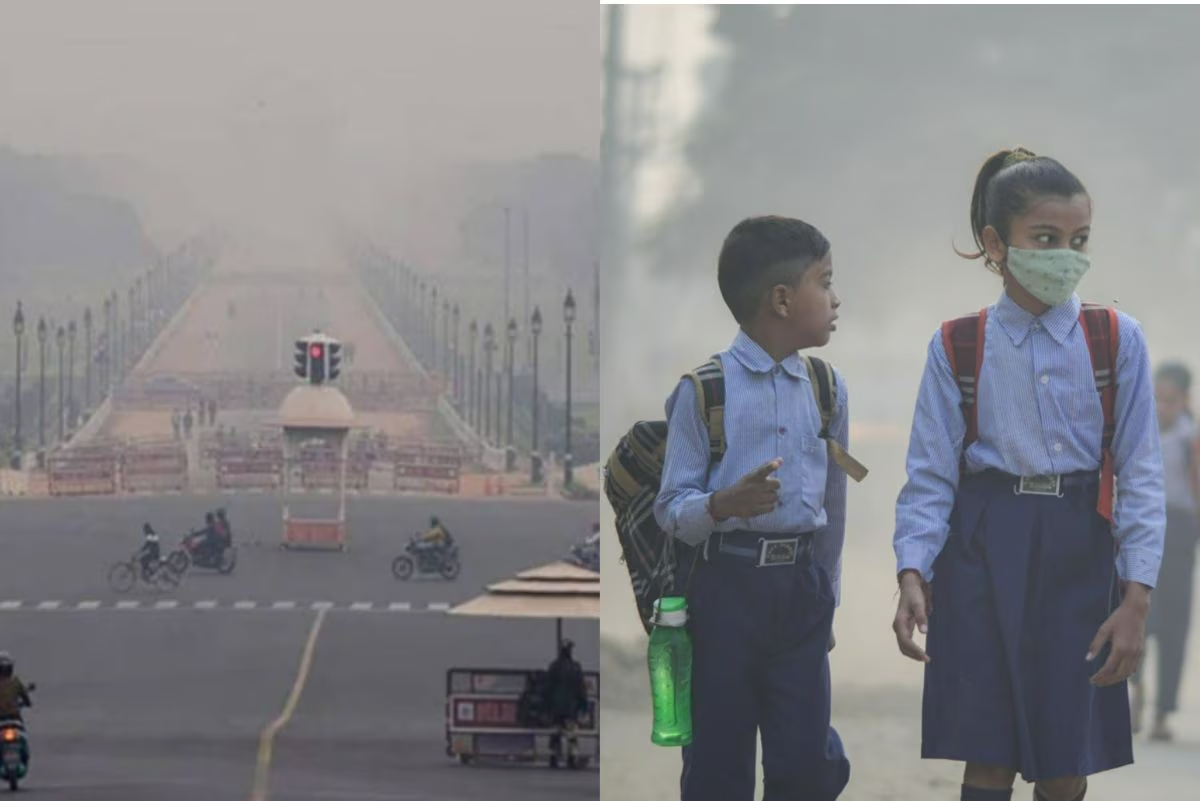
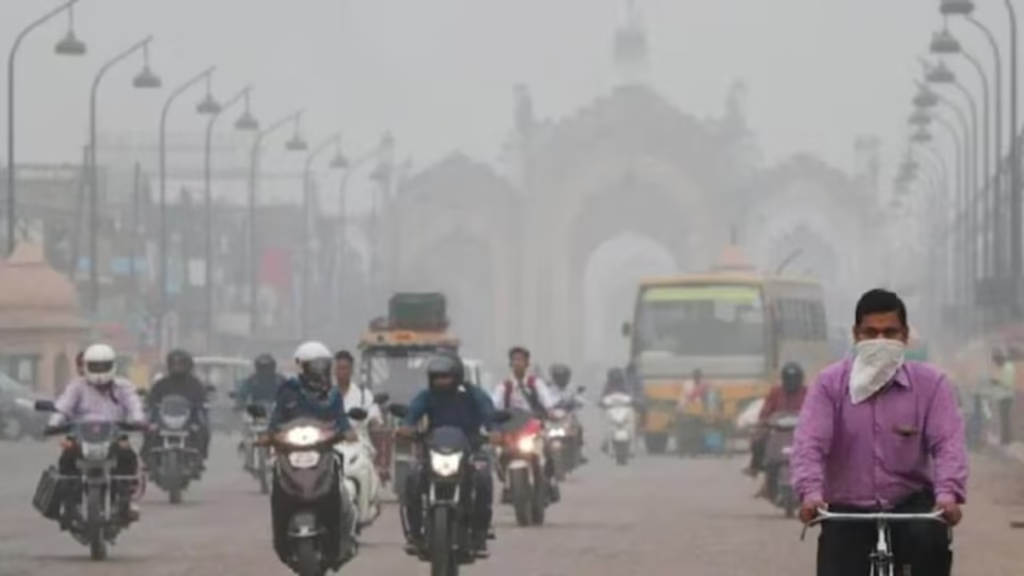
As Delhi grapples with its annual winter pollution crisis, an American woman living in the city has shared a practical and eye-opening account of how she keeps her family safe — by focusing on what she can control indoors.
US expat Kristen Fischer, who has been living in India for the past four years, recently took to Instagram to answer a question she says she is asked repeatedly: How do you manage Delhi’s air quality?
In her video, Fischer demonstrated the stark difference between outdoor and indoor air. Using an air quality monitor, she showed an outdoor AQI reading of 210, a level considered unhealthy. Moments later, she carried the same device inside her home, where the AQI dropped sharply to 48.
Explaining the reason, she said plainly, “This is because we have air purifiers in our house.”
‘We run four air purifiers full time’
Fischer revealed that her family runs four air purifiers continuously, a decision she says has made a significant difference to their daily lives.
“They allow our indoor air quality to stay nice and clean,” she explained, adding that while Delhi’s outdoor pollution can be severe, especially in winter, controlling indoor air offers real protection.
“So we use air purifiers and our indoor air quality is usually quite good. This is how we handle the hard, high-pollution months living here in Delhi,” she said.
Her message struck a chord with many residents who struggle through the city’s smog season every year.
‘Indoor air is the most important’
In a detailed caption accompanying the post, Fischer emphasised that indoor air quality should be the top priority, especially for families.
“Indoor air is the most important,” she wrote. “While I can’t change the condition outside, I can maintain a safe indoor environment for my family.”
She noted that during winter months, her family spends more time indoors and ensures they sleep in what she described as “controlled and clean air.” According to Fischer, limiting outdoor exposure and keeping time outside brief helps manage the health risks associated with pollution.
Delhi pollution is seasonal, she says
Fischer also highlighted an important nuance often overlooked in discussions about Delhi’s air crisis — that the worst pollution is seasonal, not year-round.
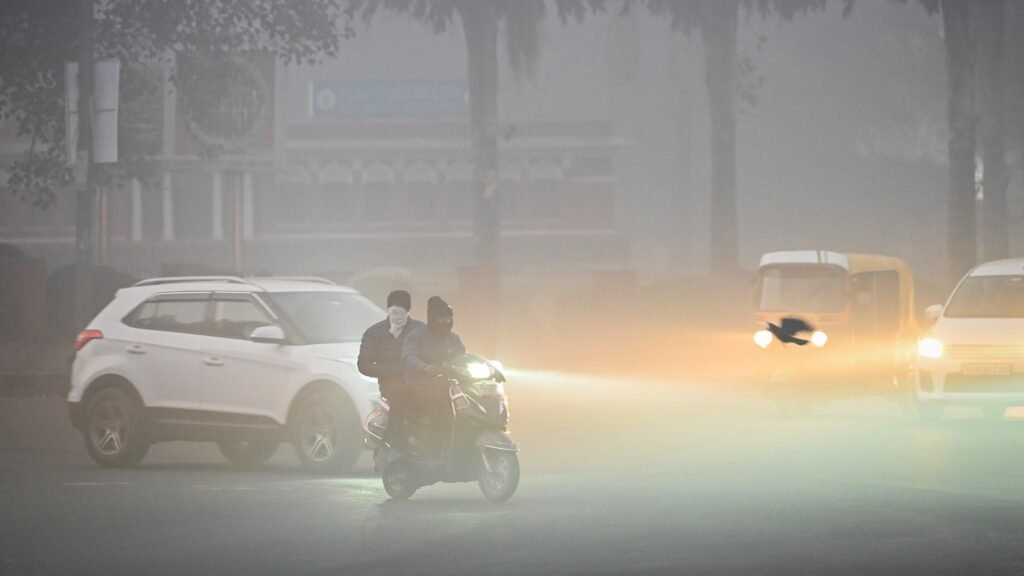
“The high pollution months are not all year,” she wrote. “Mostly just November through January is bad. Otherwise, the air is much better in Delhi the rest of the year.”
However, she was quick to caution that clean indoor air does not happen automatically.
“Indoor air quality is not always good like this,” Fischer explained. “It is only due to the air purifiers we run full time. Without those, the indoor air can be just as bad, or even worse than outside.”
She ended her post with a simple reminder to followers:
“Stay safe out there all.”
As Delhi residents continue to search for ways to cope with hazardous air during winter, Fischer’s experience adds a practical, lived-in perspective — one that underscores the importance of indoor air management when outdoor conditions remain beyond individual control.
World News
Wireless Hill Bushfire Warning Intensifies: ‘Lives at Risk’ as Firefighters Battle Raging Flames in Perth’s Suburbs
Residents of Alfred Cove, Ardross, and Booragoon urged to evacuate immediately as the Wireless Hill Park blaze grows uncontrollably, threatening homes and lives in Melville, Western Australia.
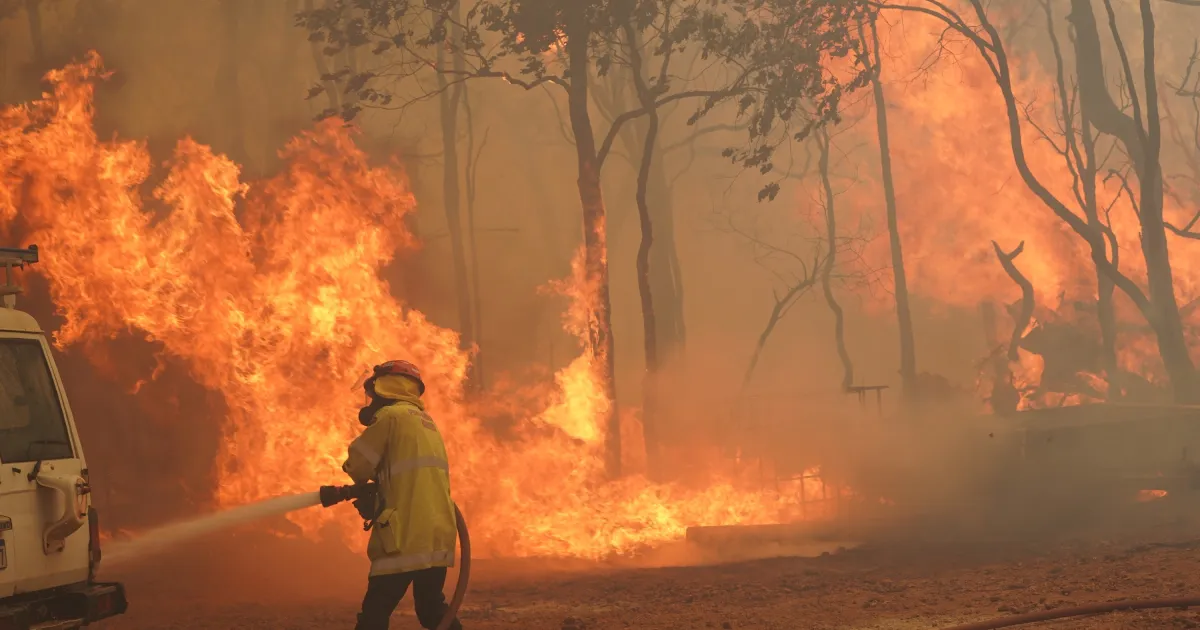
Wireless Hill Bushfire: Urgent Evacuation as Perth Suburbs Under Threat
A major bushfire has erupted at Wireless Hill Park in Applecross, sending panic through the neighbouring suburbs of Alfred Cove, Ardross, Booragoon, and Melville. The Department of Fire and Emergency Services (DFES) has issued a “Watch and Act” alert, warning residents that their lives and properties are in immediate danger.
The fire, which began on Saturday afternoon, has been described as “fast-moving and unpredictable.” Local officials say fire behaviour is increasing, and conditions are rapidly deteriorating due to gusty winds and high temperatures sweeping across the Perth metropolitan area.
“There is a possible threat to lives and homes as the fire continues to burn in the area and conditions are changing,” read the official DFES statement.
Authorities Urge Immediate Action
Residents living near Lilian Avenue, Helen Street, Troy Street, Collier Street, Links Road, Almondbury Road, Davey Street, Barnard Street, and Francis Road have been strongly advised to leave immediately. The affected region also includes the heart of Wireless Hill Park, a historic communications site turned nature reserve.
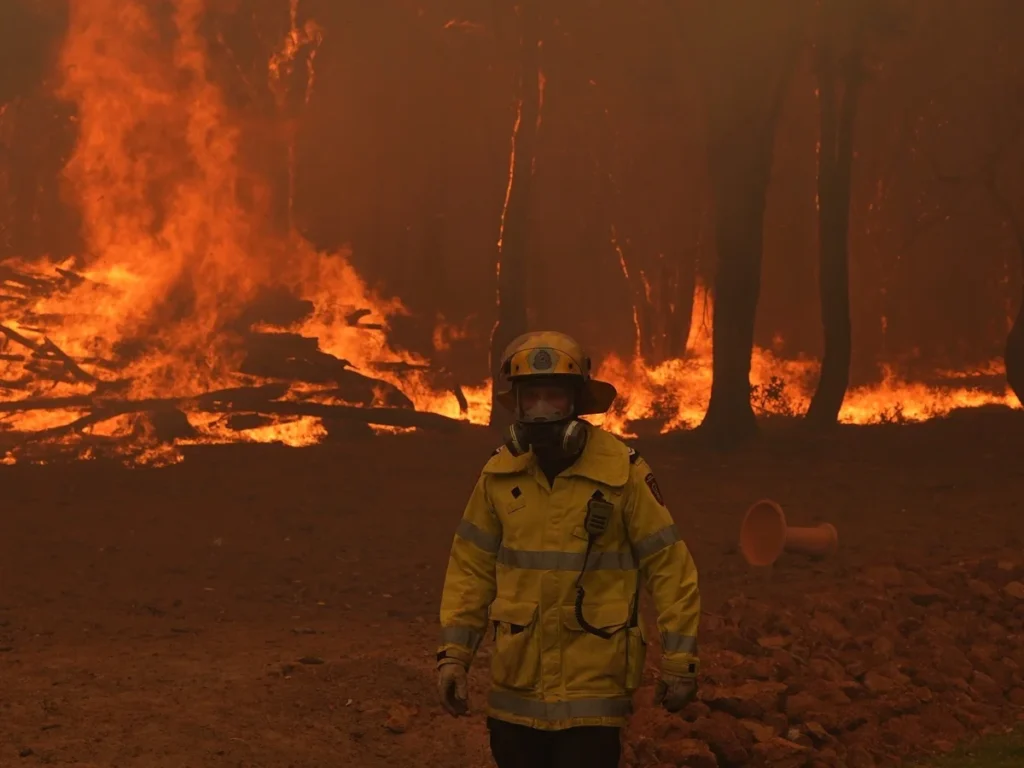
DFES has issued a clear and urgent message:
“If you are in the vicinity of Wireless Hill Park and you are considering leaving home, leave now. Decide where you will go and how you will get there.”
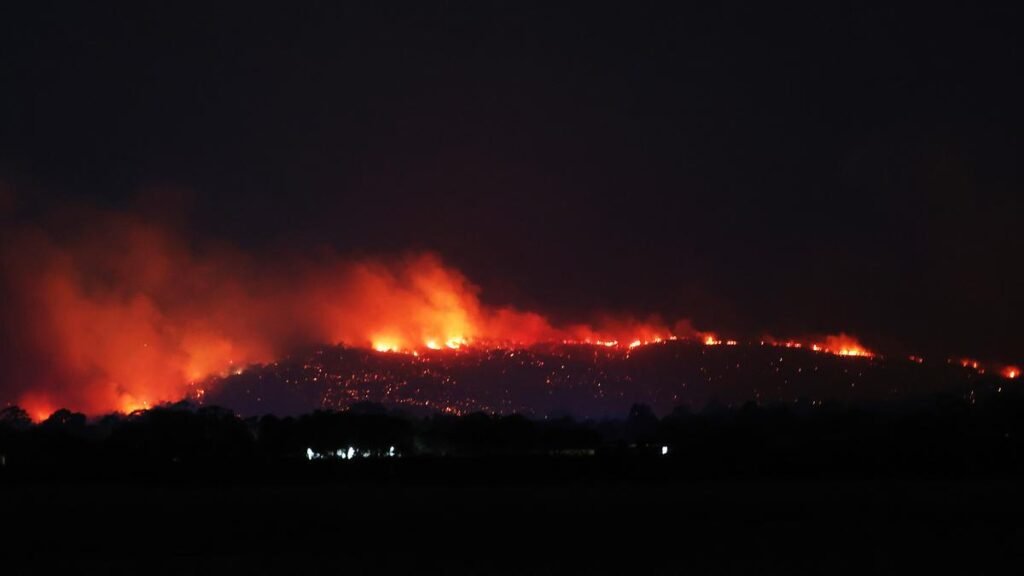
Locals have reported thick black smoke blanketing the skyline, and emergency sirens echoing across the suburbs. Fire crews are on the ground battling flames that have already scorched significant portions of bushland. Helicopters are making water drops to contain the blaze, but shifting winds continue to pose challenges.
Scenes of Chaos and Urgency
Witnesses shared images of firefighters battling roaring flames against a backdrop of orange skies. “It’s frightening—wind gusts are pushing the fire toward homes,” said one resident of Booragoon. Another described seeing ash falling “like rain” as they rushed to evacuate.
Photographs taken by Andrew Ritchie from The West Australian show walls of fire engulfing the trees near the Wireless Hill lookout point. The fire’s proximity to residential areas has heightened fears of property loss.
Local media reports confirm that multiple fire brigades from Western Australia have joined forces to contain the spread.
Drivers Warned: Poor Visibility and Dangerous Roads
Motorists traveling near the affected areas have been asked to exercise extreme caution. DFES has advised drivers to:
- Turn on headlights and reduce speed.
- Be alert for emergency personnel on the roads.
- Follow all instructions given by authorities.
- If visibility becomes too poor, pull over safely, keep hazard lights on, and wait until conditions improve.
Several roads around Applecross and Melville have been temporarily closed to assist firefighting efforts and prevent further accidents.
Community Response and Support
Local councils and community centers have begun opening evacuation shelters for displaced residents. Volunteers are providing food, water, and first aid to those affected.
Melville Mayor expressed deep concern for residents and commended emergency crews for their tireless work:
“Our community’s safety is our top priority. We urge everyone to stay calm, stay informed, and follow official advice.”
As the situation unfolds, authorities continue to monitor weather patterns closely. High winds and dry conditions have turned small flare-ups into major threats, sparking fears of further spread toward neighbouring suburbs.
Historic Significance and Environmental Loss
Wireless Hill Park, once the site of one of Australia’s first wireless communication stations, is a cultural landmark. The site houses rare flora and fauna, some of which may have been destroyed in the blaze. Environmental experts warn that such fires not only endanger human life but also disrupt local ecosystems and wildlife habitats.
According to Bureau of Meteorology data, the region has experienced a prolonged dry spell, making the bushland tinder-dry and highly combustible. The Australian fire season, which typically peaks during late spring and summer, appears to be arriving earlier and with greater intensity each year.
Residents Urged to Stay Informed
The DFES continues to provide real-time updates through its official channels. Residents are urged to remain vigilant, keep emergency kits ready, and prepare evacuation plans in advance.
For safety updates, people can tune into local radio broadcasts or check official government websites. Those unable to leave their homes are advised to:
- Close all doors and windows.
- Keep a safe distance from outer walls.
- Fill sinks and bathtubs with water.
- Keep a phone and emergency contacts ready.
A Reminder of Western Australia’s Fire Reality
This latest bushfire serves as a grim reminder of the increasing frequency and severity of wildfires across Australia. As climate patterns shift, authorities fear that such incidents could become more common in densely populated suburban zones like Melville and Applecross.
Emergency services continue to work around the clock. Residents have been urged not to return to their homes until given the all-clear by DFES.
For more updates and breaking stories, visit our website www.DailyGlobalDiary.com.

‘Euphoria’ Without Labrinth? Fans Think HBO Almost Lost the Soul of the Show… and the Internet Agrees

Why Kevin Hart’s Roast Turned Into Netflix’s Wildest Night Yet… From Katt Williams Peace Talks to Brutal Height Jokes

Why Is ‘Wuthering Heights’ Bringing Back VistaVision? DP Linus Sandgren Hints at an IMAX Future That Could Change Cinema Again…

Why Is ‘Wuthering Heights’ Bringing Back VistaVision? DP Linus Sandgren Hints at an IMAX Future That Could Change Cinema Again…

Why Is Renée Zellweger Returning With ‘A Woman in the Sun’? The Cast Behind the Mystery Has Hollywood Talking…

1-Iran Issues Dire Warning to Israel and Defies Trump on Nukes: “We’re Ready to Strike Deep Inside”

Donald Trump’s net worth reveals the fortune behind the former US President and business mogul

“She Never Made It Out…” Albany House Fire Claims Woman’s Life as Family Pleads for Help to Bring Her Home

“Tomás Rodríguez Net Worth 2025: Panama’s Gold Cup Goal‑Machine’s Surprising Fortune Revealed”

Caitlin Clark Sidelined with Quad Strain, Set to Miss Two Weeks of WNBA Action

Miss Jamaica Suffers Terrifying Fall Off Miss Universe Stage; Rushed to Hospital on Stretcher in Viral Video

Moana Live-Action Teaser Sparks Outrage as Fans Call Disney’s Move a ‘Clear Money Grab’ — What Went Wrong?

Ryan Gosling’s Project Hail Mary Trailer Stuns Fans with a Mysterious Alien Ally and a Mission That Could Save Earth

Apple delays Jessica Chastain thriller The Savant about domestic extremism after recent US violence

Avatar 3, Fire and Ash trailer reveals Jake Sully’s family facing terrifying new Na’vi enemies with deadly fire powers
-

 World News7 days ago
Orbs Launching Orbs and a Strange Moon Landing Sighting? Pentagon UFO Files Spark Fresh Alien Debate
-

 Entertainment3 days ago
Why Are Theaters Backing Nate Bargatze’s “Cheap Tickets” Idea for ‘The Breadwinner’? The Answer Could Change Hollywood…
-

 Entertainment7 days ago
Failure’s ‘Location Lost’ Might Be Their Last “Are the ’90s Alt-Rock Pioneers Saying Goodbye…?”
-
 Entertainment2 days ago
‘Euphoria’ Without Labrinth? Fans Think HBO Almost Lost the Soul of the Show… and the Internet Agrees
-

 Entertainment1 week ago
“Be Good to the Roxy!” How Ryan Murphy’s ‘Love Story’ Recreates the Magic of ’90s New York… and Why Fans Are Obsessed
-

 Entertainment1 week ago
Kanye West Was in Court to Fight for His $35M Mansion But Witnesses Say He Could Barely Keep His Eyes Open While Testifying, and the Reason Why Is…
-

 Entertainment1 week ago
When Wonder Woman Gave Primetime a Shockwave… The Superhero Who Quietly Changed TV History
-

 Sports1 week ago
Arsenal End 22 Year Premier League Curse as Man City Slip Up and Arteta Finally Delivers Glory