
Entertainment
Carl Cox Returns To Sydney With Deborah De Luca And The Presets As Field Day 2026 Turns 25 — Lineup That’s Set To Shake The Domain!
Celebrating 25 glorious years, Field Day 2026 brings together international icons like Carl Cox, Jamie Jones, Deborah De Luca, and Australian legends The Presets for a New Year’s Day bash that promises to redefine dance music in Sydney.


The wait is finally over — Field Day 2026 has just revealed its electrifying lineup, and it’s nothing short of a dance music dream. Celebrating its 25th anniversary, the iconic New Year’s Day festival returns to The Domain in Sydney, promising an unforgettable start to 2026.
At the heart of this year’s spectacle is none other than Carl Cox — the legendary British DJ who has shaped the global dance music landscape for over three decades. Known for his infectious energy and deep love for techno and house, Cox is set to perform both solo and back-to-back with fellow UK artist Jamie Jones, ensuring the Sydney crowd grooves well into the night.
“I’ll never forget seeing in the year 2000 on Bondi Beach. It’s great to be back with Fuzzy for another milestone, celebrating 25 years of Field Day,” Cox said, reminiscing about his early Sydney shows.
For the uninitiated, Carl Cox isn’t just a DJ — he’s a movement. With five studio albums, remixes for legends like Fatboy Slim, Sofi Tukker, and Deadmau5, and countless global performances at Tomorrowland and Ultra Music Festival, Cox’s influence spans generations.
Jamie Jones — The Ibiza Icon
Joining him is Jamie Jones, one of the most innovative figures in electronic music. The Welsh producer rose to fame in the late 2000s and has since built a worldwide following through his Paradise residency in Ibiza, a concept that redefined club culture on the island. Jones’ distinctive sound — blending deep grooves with melodic textures — has graced the stages of Coachella, Glastonbury Festival, and Creamfields. His return to Australia signals one of Field Day’s most anticipated moments yet.

Deborah De Luca And Kölsch Bring European Energy
Adding international depth to the lineup is Deborah De Luca, the Italian techno powerhouse celebrated for her energetic sets and raw emotion. De Luca will perform tracks from her acclaimed album Hard Pop Vol. 2, bringing a dark, hypnotic pulse to Sydney’s Domain. Her performances at festivals across Europe have made her one of the most sought-after names in global techno.
Meanwhile, Danish producer Kölsch is set to mesmerize the crowd with tracks from his 2025 album KINEMA, a follow-up to his genre-defining releases on Kompakt. Known for combining cinematic melodies with deep beats, Kölsch’s live set is expected to be one of the most emotional performances of the festival.
Patrick Topping, STÜM, And Patrick Mason — The New Wave
British DJ Patrick Topping, the man behind the Trick label, is making his Field Day debut. Renowned for his remixes of Calvin Harris and Robyn, Topping will showcase his chart-topping single “Want U” alongside a string of underground hits.
Joining him is STÜM, the rising Australian producer whose Solar Safari Tour sold out in minutes, and Patrick Mason, a Berlin-based sensation known for his high-energy performances that blend fashion, dance, and music into one explosive package.
The Presets — Homegrown Heroes Return
No Field Day celebration would be complete without local legends, and The Presets are making sure of that. The ARIA-winning duo, consisting of Julian Hamilton and Kim Moyes, have defined Australia’s electronic scene for over a decade with hits like “My People” and “This Boy’s in Love.” Their upcoming Field Day performance is expected to be a nostalgic yet forward-looking journey through Australian dance music history.
Also on the 2026 roster are the “Shooting Stars” hitmakers Bag Raiders, Irish chart-toppers Belters Only, and London’s rising electronic collective BL3SS.

Charlotte Plank, CYRIL, and Global Fresh Faces
British singer and producer Charlotte Plank returns to Sydney with her ClubLiminal EP, while CYRIL, the ARIA-nominated talent from Australia, will debut new material from To the World and From Down Under. Other acts like Fish56Octagon, SOTA, and Swimming Paul will inject diversity, with influences spanning drum and bass, house, and experimental electronic music.
Supporting Local and Queer Talent
As part of its 25th-anniversary celebrations, Field Day 2026 introduces a brand-new stage: CAMP GROUND — dedicated to celebrating Sydney’s LGBTQIA+ community. Organisers highlighted that the festival has always been an inclusive space and that CAMP GROUND will spotlight queer artists, DJs, and performers from Sydney’s thriving creative scene.
“Queer artists and revellers have been a big part of Field Day’s 25 years of success, we’re thrilled to honour that by introducing CAMP GROUND to the festival in 2026 – curated by and for LGBTQIA+ communities,” the organisers said.
The local lineup also includes Australian talents Atomic Kiss, Chase Zera, Djanaba, Eva Charley, Jessi Lowkey, and Yemi Sul — each adding a unique flavor to the daylong celebration of music and unity.
Ticket Details
Presale for Field Day 2026 begins at 12 PM on Wednesday, October 29, followed by the general ticket sale on Thursday, October 30. Fans eager to kick off their New Year with world-class beats can register for presale tickets on the festival’s official website.
With international heavyweights, homegrown heroes, and a celebration of inclusivity, Field Day 2026 isn’t just another music festival — it’s a milestone moment in Australia’s cultural calendar.
Visit our site for more news www.DailyGlobalDiary.com


Entertainment
Street Fighter Trailer Drops: Jason Momoa as Blanka, 50 Cent as Balrog and Noah Centineo Lead Massive Video Game Reboot
The new Street Fighter movie brings an all-star cast including Noah Centineo, Jason Momoa, 50 Cent, and WWE stars like Roman Reigns and Cody Rhodes in a high-stakes global tournament set for October release.


The legendary fighting video game franchise is stepping back into cinemas with a bold new reboot. Paramount Pictures and Legendary have officially released the trailer for “Street Fighter”, a fresh adaptation of the iconic Japanese game series, set to hit theaters on October 16.
The new film brings together an unexpectedly massive ensemble cast led by Noah Centineo, Jason Momoa, and rapper-actor Curtis “50 Cent” Jackson, alongside a mix of Hollywood stars, wrestlers, and musicians.
A global tournament returns to the big screen
According to the official synopsis, the story is set in 1993 and follows estranged fighters Ryu and Ken Masters, played by Andrew Koji and Noah Centineo. The duo is pulled back into combat when Chun-Li recruits them for the brutal World Warrior Tournament.
But the tournament is not just about fighting—behind the battles lies a hidden conspiracy that forces competitors to confront both their enemies and their personal pasts.
The film teases high-intensity martial arts sequences, special abilities like Hadouken, and classic arcade-inspired action designed to bring the game’s universe fully to life.
Jason Momoa, 50 Cent and WWE stars join the fight
One of the biggest talking points from the trailer is the unexpected casting choices.
Jason Momoa takes on the role of Blanka, while 50 Cent portrays Balrog, adding star power from both Hollywood and music industries.
The cast also includes WWE superstars:
- Joe “Roman Reigns” Anoa’i as Akuma
- Cody Rhodes as Guile
These additions bring a physical authenticity to the film’s fight sequences, blending professional wrestling with cinematic martial arts.
Other notable roles include:
- David Dastmalchian as M. Bison
- Andrew Schulz as Dan Hibiki
- Vidyut Jammwal as Dhalsim
- Eric André as Don Sauvage
- Musician Orville Peck as Vega
- UFC fighter Alexander Volkanovski as Joe
- SNL alum Kyle Mooney as Marvin
- Mel Jarnson as Cammy
A reboot decades in the making
This new adaptation marks the third major attempt to bring Street Fighter to the big screen.
The first film released in 1994 starred Jean-Claude Van Damme and Raul Julia, becoming a cult classic despite mixed reviews. A second reboot, Street Fighter: The Legend of Chun-Li, arrived in 2009 with Kristin Kreuk in the lead role but failed to make a strong impact at the box office.
Now, nearly 15 years later, studios are betting big on a modern reboot that blends nostalgia with blockbuster spectacle.
Directed for a new generation of fans
The film is directed by Kitao Sakurai, known for his unconventional storytelling style. The trailer suggests a fast-paced, chaotic energy that mirrors the original arcade gameplay—packed with iconic moves, dramatic rivalries, and global fighting arenas.
The production aims to balance long-time fans of the video game with a new generation of audiences who know the franchise mainly through pop culture references and esports legacy.
High expectations for October release
With its ensemble cast and high-budget action design, Street Fighter is shaping up to be one of the most anticipated video game adaptations of the year.
However, expectations remain mixed, as previous adaptations struggled to fully capture the depth and energy of the original game universe.
Still, the trailer’s mix of star power, nostalgia, and over-the-top action has already sparked massive online discussion.
As the October 16 release approaches, fans are waiting to see whether this reboot can finally deliver a definitive cinematic version of the legendary fighting franchise.
Entertainment
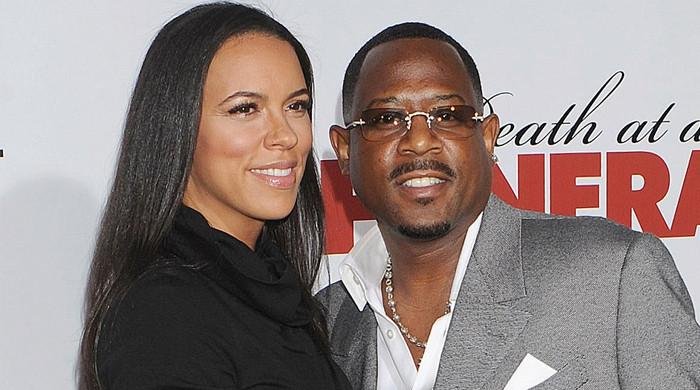
Martin Lawrence’s weight loss transformation brings ex-wife Shamicka Gibbs back into spotlight… inside their long 15-year love story and family life
As the Bad Boys star turns 61 and shows off a noticeably slimmer look, fans are revisiting his past relationship with Shamicka Gibbs and his life with his children.

Hollywood icon Martin Lawrence has been making headlines again—not for a new film, but for his striking physical transformation that has surprised fans across social media.
The Bad Boys star, who recently turned 61, has reportedly undergone a noticeable weight loss journey after focusing on his health. According to Lawrence, the change came after medical advice pushed him to adopt a more disciplined lifestyle, including regular meals, no snacking, and consistent physical activity. His refreshed appearance during his stand-up tour “Y’all Still Know What It Is!” has sparked widespread praise from fans, many saying he looks “healthier” and “years younger.”
While his transformation continues to trend online, attention has also shifted back to his personal life—especially his past relationship with ex-wife Shamicka Gibbs.
Who is Shamicka Gibbs?
Shamicka Gibbs is an American entrepreneur, chef, and television personality known for her appearance on the reality show Hollywood Exes. Beyond her television presence, she has built a strong identity as a businesswoman in the wellness and lifestyle space.
She has founded multiple ventures, including spa franchises and a health-focused food brand, while also hosting lifestyle events that promote cooking and wellness awareness.
Shamicka has also been open about her health journey, particularly her battle with autoimmune conditions such as lupus and celiac disease. She has spoken publicly about how dietary changes—especially cutting gluten—helped improve her well-being and energy levels.
She has often encouraged others to take control of their health, emphasizing discipline, balance, and mental strength in dealing with long-term illness.
A long relationship that shaped a chapter of Martin’s life
Martin Lawrence and Shamicka Gibbs reportedly began dating in the late 1990s, shortly after his divorce from his first wife, Patricia Southall, who is also the mother of his daughter Jasmin Page Lawrence.
Their relationship lasted for many years before they eventually tied the knot. The couple shared a long-term bond that included raising a family and building a life together before later separating through divorce after more than 15 years of being together.
Despite their split, their relationship remains one of the most significant chapters in Lawrence’s personal life, often revisited by fans whenever the actor trends online.
Martin Lawrence’s family life and children
Martin Lawrence is a father of three daughters. His eldest, Jasmin Page Lawrence, has also stepped into the entertainment spotlight, occasionally appearing at industry events and gaining attention for her connection to Hollywood royalty.
His family life has often remained relatively private compared to his public career, though moments like his recent transformation have brought renewed attention to his personal journey beyond comedy and film.
Health transformation sparks public reflection
Lawrence’s recent appearance has sparked conversations not only about fitness but also about aging, discipline, and lifestyle changes in Hollywood.
Fans have praised his commitment to health, especially given the physically demanding nature of his long-running career in comedy and action films like the Bad Boys franchise alongside Will Smith.
While speculation about his personal life continues online, Lawrence himself has focused publicly on wellness and performing, choosing to highlight positivity rather than controversy.
A life beyond headlines
From blockbuster films to stand-up comedy stages, Martin Lawrence has remained a familiar name in entertainment for nearly four decades. Now, with his renewed focus on health, fans are seeing a different side of the actor—one that reflects longevity, recovery, and personal discipline.
As discussions around his transformation continue, his past relationship with Shamicka Gibbs and his family life are once again being viewed as part of the broader story of a Hollywood veteran still evolving with time.
Entertainment
David Geffen’s Quiet Settlement Ends Explosive Lawsuit: What Really Happened Behind the Billionaire’s Divorce Battle…
After a contentious split, the entertainment mogul resolves a breach of contract dispute with estranged husband Donavan Michaels, closing a chapter marked by legal tension and personal fallout.

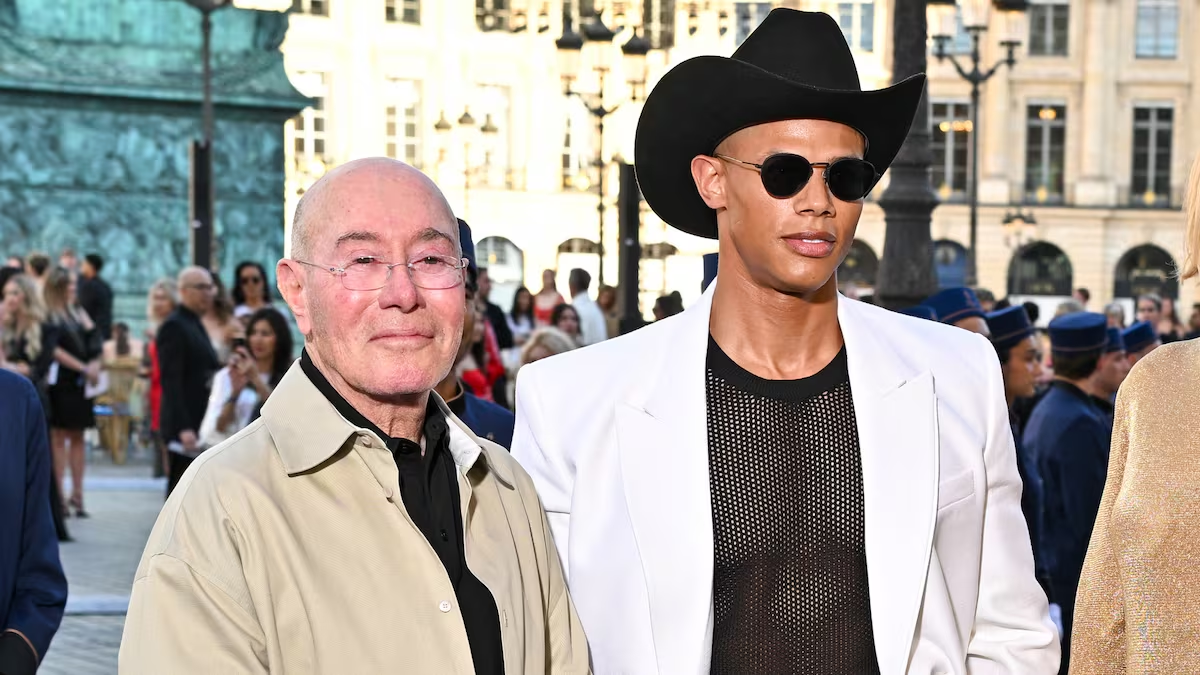
In a development that brings an end to one of the more closely watched personal legal disputes in Hollywood’s inner circles, David Geffen—the billionaire music and film mogul—has reached a settlement in a breach of contract lawsuit filed by his estranged husband, Donavan Michaels.
While the exact terms of the agreement remain confidential, the resolution follows months of legal friction that unfolded alongside a deeply personal and highly publicized divorce.
A Lawsuit Rooted in Broken Promises
The dispute centered on allegations from Michaels that Geffen failed to provide financial support promised under a prior agreement. According to claims made during the proceedings, Michaels argued that he was left without the support he had been assured—raising questions not only about personal commitments but also about enforceable agreements in high-net-worth relationships.
ALSO READ : Younghoe Koo Explains Botched Field Goal After Slip: “The Ball Was Moving So I Pulled Up”
Legal experts note that such cases often hinge on the fine print of pre-existing contracts, especially in relationships involving significant wealth and assets.
A High-Profile Figure in a Private Storm
For decades, Geffen has remained one of the most influential figures in the entertainment industry. As a co-founder of DreamWorks alongside Steven Spielberg and Jeffrey Katzenberg, and the force behind Geffen Records, his professional legacy is firmly cemented.
But this case pulled him into a different kind of spotlight—one far removed from blockbuster films and chart-topping albums.
The legal battle exposed the complexities that can arise when personal relationships intersect with immense financial power. For someone known for maintaining a relatively private personal life, the dispute marked an unusual moment of public scrutiny.
Divorce, Disputes, and Discretion
The settlement suggests both parties were eager to avoid a prolonged courtroom battle that could have revealed further details about their relationship and financial arrangements.
In high-profile separations, especially those involving billionaires, settlements often serve as a pragmatic solution—balancing reputational concerns with legal risk.

While neither Geffen nor Michaels has publicly commented in detail following the agreement, the resolution effectively puts an end to the breach of contract claims that had added another layer of tension to their separation.
The Broader Picture
Cases like this highlight the evolving legal landscape surrounding marriage, partnerships, and financial agreements—particularly among the ultra-wealthy. They also underscore the importance of clearly defined terms in personal contracts, especially when significant fortunes are involved.
For observers, the story is as much about the human side of wealth as it is about legal technicalities. Behind the headlines and billion-dollar valuations lies a narrative of expectations, disagreements, and ultimately, closure.
A Chapter Closed
With the lawsuit now settled, David Geffen appears ready to move forward, drawing a line under a period that blended personal upheaval with legal confrontation.
For one of Hollywood’s most powerful figures, the episode serves as a reminder: even the most influential names are not immune to the complexities of relationships—and the consequences when agreements unravel.

Street Fighter Trailer Drops: Jason Momoa as Blanka, 50 Cent as Balrog and Noah Centineo Lead Massive Video Game Reboot

Martin Lawrence’s weight loss transformation brings ex-wife Shamicka Gibbs back into spotlight… inside their long 15-year love story and family life

Rapper d4vd arrested over suspicion of murdering 14-year-old Celeste Rivas… body found inside Tesla registered to him

“Former Virginia Lt. Gov. Justin Fairfax Dies After Killing Wife in Tragic Domestic Incident… What Court Records Revealed About Their ‘Messy Divorce’”

David Geffen’s Quiet Settlement Ends Explosive Lawsuit: What Really Happened Behind the Billionaire’s Divorce Battle…

1-Iran Issues Dire Warning to Israel and Defies Trump on Nukes: “We’re Ready to Strike Deep Inside”

Donald Trump’s net worth reveals the fortune behind the former US President and business mogul

“She Never Made It Out…” Albany House Fire Claims Woman’s Life as Family Pleads for Help to Bring Her Home

“Tomás Rodríguez Net Worth 2025: Panama’s Gold Cup Goal‑Machine’s Surprising Fortune Revealed”

Caitlin Clark Sidelined with Quad Strain, Set to Miss Two Weeks of WNBA Action

Miss Jamaica Suffers Terrifying Fall Off Miss Universe Stage; Rushed to Hospital on Stretcher in Viral Video

Moana Live-Action Teaser Sparks Outrage as Fans Call Disney’s Move a ‘Clear Money Grab’ — What Went Wrong?

Ryan Gosling’s Project Hail Mary Trailer Stuns Fans with a Mysterious Alien Ally and a Mission That Could Save Earth

Apple delays Jessica Chastain thriller The Savant about domestic extremism after recent US violence

Avatar 3, Fire and Ash trailer reveals Jake Sully’s family facing terrifying new Na’vi enemies with deadly fire powers
-
 Entertainment6 days ago
Nick Cannon Just Called the Democratic Party ‘the Party of the KKK’ on Camera and What He Said About Trump Next Made It Even More Controversial…
-

 Entertainment1 week ago
He’s Back! John Hannah Is Returning to ‘The Mummy’ Universe And What He Just Revealed About Reprising His Role Has Fans of the Original Completely Losing It…
-

 Entertainment1 week ago
Kim Novak Finally Speaks on Sydney Sweeney Playing Her in ‘Scandalous!’ — And What She Said About the Casting Will Leave You Speechless…
-
 Entertainment4 days ago
Dark Winds Season 4 Finale Just Solved the Big Case Then Dropped a Murder Bombshell in the Final Seconds That No One Saw Coming…
-
 Entertainment7 days ago
Noah Wyle Breaks Silence on The Pitt ICE Episode Edits… What HBO Changed and Why It Matters
-

 Entertainment1 week ago
The Oscar Ballot Nobody Was Meant to See Has Leaked And One Voter’s Confession About ‘Sentimental Value’ Is Turning Heads…
-

 Entertainment6 days ago
Hollywood Just Revealed Where the World Is Vacationing Next and the List Will Shock You…
-

 Entertainment1 week ago
“After an emotional year”: Aubrey Plaza expecting first child with partner Chris Abbott following husband Jeff Baena’s tragic death