
Entertainment
Oscars Go Global in a Big Way as This Year’s Nominations Signal a New Era: ‘The Academy Is Finally Looking Beyond Hollywood…’
A record-breaking presence of non-English-language films highlights how the Academy’s decade-long reform journey after #OscarsSoWhite is reshaping the world’s most influential film awards.


For decades, the Academy Awards were seen as the ultimate celebration of Hollywood—English-speaking, Los Angeles-centric, and deeply rooted in the American studio system. This year, that long-standing image feels unmistakably different. The latest Oscar nominations mark a historic moment, with an unprecedented number of non-English-language films earning major nods, signaling that the Academy has finally begun to look—and listen—far beyond the borders of the United States.
This shift did not happen overnight. It has been nearly ten years since the viral #OscarsSoWhite controversy forced the Academy of Motion Picture Arts and Sciences to confront its lack of diversity, both on screen and within its own voting body. The criticism was sharp, public, and impossible to ignore. In response, the Academy pledged sweeping reforms, including expanding its membership to include more women, people of color, and crucially, film professionals from outside the U.S.
Today, the results of that effort are finally visible where it matters most—on Oscar nomination morning.
ALSO READ : “She Never Made It Out…” Albany House Fire Claims Woman’s Life as Family Pleads for Help to Bring Her Home
This year’s shortlist reads like a map of global cinema rather than a roll call of Hollywood insiders. Films from Asia, Europe, Latin America, and the Middle East are no longer confined to the “International Feature Film” category; they are competing in top-tier races once dominated almost exclusively by English-language productions. For filmmakers working outside the American system, this represents more than recognition—it is validation.
Industry observers say the Academy’s evolving membership has played a central role in this transformation. Since 2016, thousands of new members have been invited, many of them acclaimed directors, writers, and producers from global film industries. With those new voices came new tastes, cultural perspectives, and storytelling traditions—qualities now clearly reflected in the nominations.

The impact of this global turn can be traced back to watershed moments in recent Oscar history. When Bong Joon-ho’s Parasite made history by winning Best Picture in 2020, it was widely seen as a turning point. At the time, Bong famously remarked that once audiences “overcome the one-inch-tall barrier of subtitles,” they would discover many more incredible films. The Academy, it seems, took that message to heart.
What makes this year especially striking is not just the presence of international films, but the confidence with which they are embraced. These are not “token” nominations or symbolic gestures. Many of the nominated films are considered serious contenders—praised for bold storytelling, technical innovation, and emotional depth that transcends language barriers.
Streaming platforms have also played a quiet but powerful role in this evolution. Global distribution has become easier than ever, allowing international films to reach Academy voters who may never have seen such work a decade ago. As audiences worldwide grow more comfortable watching subtitled content, the line between “foreign” and “mainstream” cinema continues to blur.
Still, challenges remain. Critics caution that while the Oscars are becoming more international, true equity requires sustained commitment—not just celebratory headlines. Representation behind the camera, access to funding, and fair marketing budgets for non-English films remain ongoing issues. The Academy’s progress, while real, is still a work in motion.
Yet, for now, this year’s nominations feel like a milestone worth acknowledging. They suggest an Academy that is slowly shedding its insular past and redefining itself as a genuinely global institution—one that recognizes excellence wherever it originates.
As Oscar night approaches, the message is clear: world cinema is no longer knocking at Hollywood’s door. It has already stepped inside.






Entertainment
How ‘Southern Hospitality’ Quietly Became Bravo’s Secret Powerhouse and Why Everyone Is Talking About Season 4 Drama
From Charleston chaos to rising ratings, Bravo executive Kemar Bassaragh reveals why the reality series is becoming one of the network’s most unexpected success stories
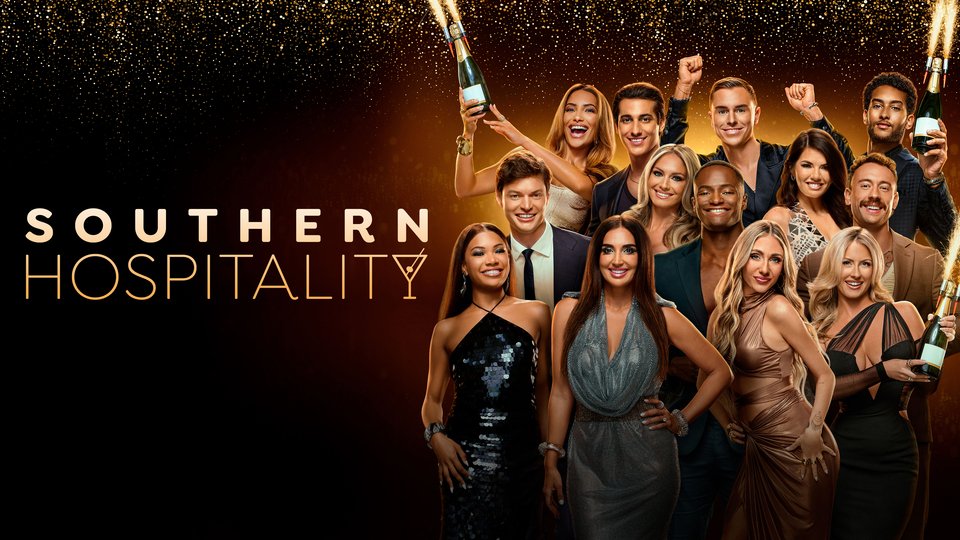
What started as a relatively low-key reality experiment set in Charleston has now evolved into one of Bravo’s most talked-about unscripted hits. The series “Southern Hospitality” is no longer just another entry in the network’s reality lineup—it is rapidly becoming a cultural talking point and a steady ratings performer.
According to The Hollywood Reporter, Kemar Bassaragh, Vice President of Unscripted Lifestyle Programming at Bravo, opened up about why the Charleston-based series has quietly turned into what many inside the network now call a “hidden heavyweight.”
Bassaragh credited the show’s rise to its authentic storytelling, evolving cast dynamics, and the emotional unpredictability that continues to keep audiences engaged season after season.
A Reality Show That Found Its Own Lane
Unlike many reality shows that rely heavily on manufactured drama, “Southern Hospitality” has built its identity around workplace relationships, friendships, and personal ambition inside Charleston’s nightlife scene.
The series follows a group of young staff working in high-energy hospitality environments, blending personal drama with professional struggles in a way that feels both relatable and addictive.
ALSO READ : Sen. Elizabeth Warren Calls It a ‘Cesspool of Corruption’ — Here’s Why Senators Are Now Fighting Back Against the DOJ’s Live Nation Deal That Left Every Fan Betrayed…
What makes the show stand out in Bravo’s ecosystem is its ability to grow organically without losing its core identity—something even long-running franchises struggle to maintain.
Season 4 Drama Raises the Stakes
Much of the current buzz revolves around Season 4, which introduces a more emotionally charged storyline between cast members Emmy Sharrett and Bradley Carter.
While Bravo has kept specific plot details under wraps, early discussions suggest that their evolving relationship forms one of the emotional anchors of the new season. The tension, shifting loyalties, and unresolved personal dynamics are expected to push the show into deeper, more character-driven territory.
Industry insiders believe this shift could mark a turning point for the series, moving it beyond light reality entertainment into more layered storytelling that still retains Bravo’s signature style.
Inside Bravo’s Strategy
At the heart of this success is Bravo’s broader unscripted strategy—developing shows that feel authentic while still delivering consistent entertainment value.
Kemar Bassaragh emphasized that shows like Southern Hospitality succeed because they are built on “real people in real environments,” rather than heavily structured reality formats.
This approach has allowed Bravo to strengthen its position in a competitive streaming and cable landscape, where audiences increasingly prefer character-driven unscripted content over formulaic reality tropes.
Why Charleston Works as the Perfect Setting
One of the most underrated aspects of the show’s success is its setting. Charleston, South Carolina, offers a unique blend of Southern charm, tourism-driven nightlife, and tight-knit social circles.
This environment naturally creates overlapping relationships and emotional tension—key ingredients for reality television.
The city itself almost becomes a character in the series, shaping decisions, conflicts, and alliances among the cast.
The Rise of Bravo’s New Generation of Stars
Much like earlier Bravo franchises that launched cultural icons, Southern Hospitality is beginning to carve out its own generation of recognizable personalities.

Cast members like Emmy Sharrett and Bradley Carter are increasingly becoming central figures in fan discussions and social media debates, with viewers closely following their personal and professional journeys.
If the trajectory continues, the show could soon join Bravo’s long list of breakout reality hits that include Vanderpump Rules and Southern Charm.
The Future of ‘Southern Hospitality’
While Bravo has not officially confirmed long-term renewal plans, internal momentum suggests confidence in the show’s future.
With growing audience engagement, stronger storyline arcs, and increasing media attention, Southern Hospitality appears poised to expand further within Bravo’s unscripted universe.
Industry watchers also speculate that crossovers with other Bravo franchises could eventually be on the table, further boosting its visibility.
For now, the series continues to build quietly but steadily—proving that in the crowded world of reality television, sometimes the most unexpected shows become the biggest success stories.
Entertainment
Steven Spielberg’s ‘Disclosure Day’ Sparks Massive Debate Critics Say It Is ‘Bold… but Divisive’ as Early Reactions Pour In
As Steven Spielberg’s latest project draws first reviews, critics are sharply divided over its tone, ambition, and storytelling approach, calling it one of his most unusual modern works yet

Hollywood legend Steven Spielberg is once again at the centre of global film discussion, this time with his latest project “Disclosure Day”, a film that has already sparked intense debate among critics and early viewers.
Known for shaping modern cinema through classics like Jurassic Park, Schindler’s List, and E.T., Spielberg’s return to a high-profile narrative feature has drawn significant attention across the entertainment industry.
However, early critical reactions suggest that Disclosure Day may be one of his most polarising films in recent years.
Critics Divided Over Tone and Execution
Initial reviews describe Disclosure Day as a “bold creative swing” that experiments heavily with narrative structure and emotional pacing. Some critics have praised Spielberg’s willingness to step outside his comfort zone, while others argue that the film’s ambition occasionally overshadows its clarity.
ALSO READ : Sen. Elizabeth Warren Calls It a ‘Cesspool of Corruption’ — Here’s Why Senators Are Now Fighting Back Against the DOJ’s Live Nation Deal That Left Every Fan Betrayed…
According to early commentary circulating in industry circles, the film attempts to explore themes of transparency, truth, and institutional secrecy—though not always in a straightforward manner.
One critic reportedly described it as “a film that demands patience, but rewards interpretation,” while another called it “Spielberg at his most unpredictable.”
A Story Wrapped in Mystery
While official plot details remain limited, Disclosure Day is believed to revolve around a high-stakes revelation that forces political and media institutions to confront buried truths.
The title itself suggests a moment of public reckoning—where hidden information is finally brought into the open, triggering widespread consequences.
This thematic direction aligns with Spielberg’s long-standing interest in power structures, journalism, and moral conflict, seen in earlier works such as The Post.
Spielberg’s Evolution Continues
At this stage of his career, Spielberg continues to evolve rather than repeat himself. Industry analysts note that few directors in Hollywood history have successfully balanced commercial storytelling with experimental narrative shifts for as long as he has.
His ability to reinvent tone and genre has kept him relevant across decades, and Disclosure Day appears to continue that pattern of reinvention.
The film also reinforces his partnership with major studios and long-standing collaborators across Universal Pictures and other major production houses that have supported his recent work.

Mixed Early Reactions Fuel Online Debate
Social media platforms and film forums have already become battlegrounds for opinion. Some viewers praise Spielberg for refusing to play safe, while others feel the film’s structure may alienate mainstream audiences expecting a more traditional narrative flow.
Film analysts suggest that this divide is not necessarily a negative sign. In fact, some of Spielberg’s most respected works initially faced mixed reception before gaining critical appreciation over time.
A Film That Demands Interpretation
What is clear from early reactions is that Disclosure Day is not designed as a conventional blockbuster. Instead, it appears to be a thought-provoking narrative that encourages discussion, interpretation, and repeated viewing.
This approach aligns with Spielberg’s recent interest in more introspective storytelling, focusing on human systems rather than purely spectacle-driven cinema.
Final Verdict Still Pending
With full reviews yet to be released, the final critical consensus on Disclosure Day remains uncertain. However, one thing is already clear—the film has succeeded in generating conversation, which in today’s fragmented media landscape is often a measure of impact in itself.
Whether Disclosure Day will be remembered as a misunderstood experiment or a late-career masterpiece for Spielberg will depend on how audiences respond in the weeks ahead.
Entertainment
Paramount+ Makes Power Move Signing Matt Shakman to Direct Legal Thriller ‘Discretion’ as Hollywood Buzz Intensifies
‘WandaVision’ director Matt Shakman teams up with Paramount+ for a high-stakes courtroom thriller as industry insiders call it one of the platform’s most ambitious projects yet

Streaming giant Paramount+ has made a significant creative push by bringing acclaimed filmmaker Matt Shakman on board to direct its upcoming legal thriller titled “Discretion”, a project already generating strong buzz across Hollywood.
The move signals Paramount+’s continued investment in high-concept prestige storytelling as competition among streaming platforms intensifies.
A Big-Name Director for a High-Stakes Thriller
Matt Shakman, best known for directing Marvel Studios’ critically acclaimed series WandaVision, has built a reputation for blending cinematic visual storytelling with emotionally layered narratives.
His involvement in Discretion immediately positions the project as one of Paramount+’s most closely watched upcoming originals.
Industry observers note that Shakman’s transition from superhero fantasy storytelling to grounded legal drama could bring a fresh tonal balance to the genre.
ALSO READ : Sen. Elizabeth Warren Calls It a ‘Cesspool of Corruption’ — Here’s Why Senators Are Now Fighting Back Against the DOJ’s Live Nation Deal That Left Every Fan Betrayed…
What We Know About ‘Discretion’
While official plot details remain tightly under wraps, Discretion is described as a legal thriller that explores themes of power, morality, and hidden truths within the justice system.
The title itself hints at secrecy, confidential decisions, and the blurred line between legal obligation and ethical compromise—classic ingredients for a gripping courtroom narrative.
Sources close to development suggest that the series aims to combine procedural tension with character-driven storytelling, a format that has historically performed well on prestige streaming platforms.
Paramount+ Expands Its Prestige Slate
The project underscores Paramount Global’s broader strategy of building a stronger foothold in the premium streaming space.
With increasing competition from platforms like Netflix, Amazon Prime Video, and Apple TV+, Paramount+ has been actively investing in original content that can stand out both critically and commercially.
Legal dramas, in particular, have proven to be a consistent audience draw, and Discretion appears designed to tap into that long-standing viewer interest while adding a modern, cinematic edge.
Matt Shakman’s Rising Industry Influence
Before becoming one of Hollywood’s most sought-after directors, Matt Shakman built an extensive career in television, directing episodes of acclaimed series such as Game of Thrones, Fargo, and Succession.
However, it was WandaVision that elevated his profile globally, earning praise for its genre experimentation and bold storytelling structure.

That success has now opened doors to high-profile streaming collaborations, with Discretion marking another major step in his evolving career trajectory.
Why Legal Thrillers Still Dominate Streaming
Legal dramas remain one of the most reliable genres in television because they naturally combine suspense, moral conflict, and human drama.
From courtroom confrontations to behind-the-scenes legal maneuvering, the genre allows writers and directors to explore complex ethical questions while maintaining high narrative tension.
With Shakman at the helm, Discretion is expected to push beyond traditional courtroom storytelling and introduce a more cinematic, emotionally driven approach.
Industry Buzz and Expectations
Although Paramount+ has not yet announced casting details or a release timeline, early industry reaction suggests strong anticipation.
Streaming analysts believe that pairing a director of Shakman’s calibre with a tightly written legal thriller could position Discretion as a breakout original for the platform.
If successful, the series may also strengthen Paramount+’s reputation for delivering prestige dramas that can compete with top-tier streaming content globally.

How ‘Southern Hospitality’ Quietly Became Bravo’s Secret Powerhouse and Why Everyone Is Talking About Season 4 Drama

Steven Spielberg’s ‘Disclosure Day’ Sparks Massive Debate Critics Say It Is ‘Bold… but Divisive’ as Early Reactions Pour In

Paramount+ Makes Power Move Signing Matt Shakman to Direct Legal Thriller ‘Discretion’ as Hollywood Buzz Intensifies

Is 24 Jump Street Finally Happening… Jonah Hill and Channing Tatum Set to Return as Ice Cube Talks Heat Up

Himesh Patel’s Unexpected Journey From ‘Yesterday’ to Christopher Nolan’s Next Big Adventure

1-Iran Issues Dire Warning to Israel and Defies Trump on Nukes: “We’re Ready to Strike Deep Inside”

Sen. Elizabeth Warren Calls It a ‘Cesspool of Corruption’ — Here’s Why Senators Are Now Fighting Back Against the DOJ’s Live Nation Deal That Left Every Fan Betrayed…

Donald Trump’s net worth reveals the fortune behind the former US President and business mogul

“She Never Made It Out…” Albany House Fire Claims Woman’s Life as Family Pleads for Help to Bring Her Home

“Tomás Rodríguez Net Worth 2025: Panama’s Gold Cup Goal‑Machine’s Surprising Fortune Revealed”

Miss Jamaica Suffers Terrifying Fall Off Miss Universe Stage; Rushed to Hospital on Stretcher in Viral Video

Moana Live-Action Teaser Sparks Outrage as Fans Call Disney’s Move a ‘Clear Money Grab’ — What Went Wrong?

Ryan Gosling’s Project Hail Mary Trailer Stuns Fans with a Mysterious Alien Ally and a Mission That Could Save Earth

Apple delays Jessica Chastain thriller The Savant about domestic extremism after recent US violence

Avatar 3, Fire and Ash trailer reveals Jake Sully’s family facing terrifying new Na’vi enemies with deadly fire powers
-

 Politics1 week ago
Todd Blanche Clears Major Senate Hurdle After Scrapping $1.8 Billion Fund—Will Confirmation Finally Move Forward?
-

 Entertainment1 week ago
Netflix’s Below Starring Josh Hartnett Debuts First Teaser Packed With Ocean Horror
-

 Entertainment1 week ago
Michael C. Hall’s Dexter Faces His Most Unpredictable Battle Yet in Dexter: Resurrection Season 2
-

 Politics1 week ago
James Carville Warns “I’m Out of Here” If Hasan Piker Becomes Democratic Party’s New Face…
-

 Entertainment1 week ago
Hollywood’s Biggest Union Opposes Paramount-Warner Bros. Merger, Calls for Stronger Worker Protections
-

 Entertainment1 week ago
Megan Moroney Has Seen Every TikTok Comment About Her… Country Star Reveals Why Online Opinions No Longer Affect Her
-

 Entertainment1 week ago
Greta Lee Reflects on Her Rise to Stardom and the Opportunities Shaping Her Future
-

 Entertainment1 week ago
Pedro Pascal’s Behemoth! Earns Prestigious New York Film Festival Premiere