
Technology News
OpenAI reverses course after Hollywood backlash — Sam Altman promises “granular IP control” and potential revenue share for creators in Sora
Following criticism over the use of Hollywood characters and likenesses in its viral AI video app Sora, OpenAI CEO Sam Altman announced plans for stricter IP controls and a new revenue-sharing model for rightsholders.


The explosive rise of Sora — OpenAI’s text-to-video generation app — has captured global attention for its astonishing realism and creativity. But as users began flooding social media with AI-generated clips featuring familiar Hollywood characters, the app also ignited an intense backlash from studios, actors, and copyright holders concerned about the unauthorized use of their intellectual property.
ALSO READ : Dutch firm Amdax raises $23M to chase 1% of Bitcoin supply what it means for global markets
Now, Sam Altman, OpenAI’s CEO, is stepping in to address those concerns. In a late-night blog post on Friday, Altman announced that the company will introduce “more granular control” for rightsholders and is actively exploring a revenue-sharing program for creators whose IP appears in user-generated Sora videos.
“First, we will give rightsholders more granular control over generation of characters, similar to the opt-in model for likeness but with additional controls,” Altman wrote. “We are hearing from a lot of rightsholders who are very excited for this new kind of ‘interactive fan fiction,’ but they want the ability to specify how their characters can be used — including not at all.”
From “opt-out” to “opt-in” — a major policy shift
The move represents a notable reversal from OpenAI’s earlier “opt-out” policy, which allowed characters, brands, and other copyrighted material to appear in user-generated videos unless the owners explicitly requested removal. Under the new rules, OpenAI will adopt a “stricter opt-in model”, meaning that creators and companies must grant permission before their IP can be generated within Sora.
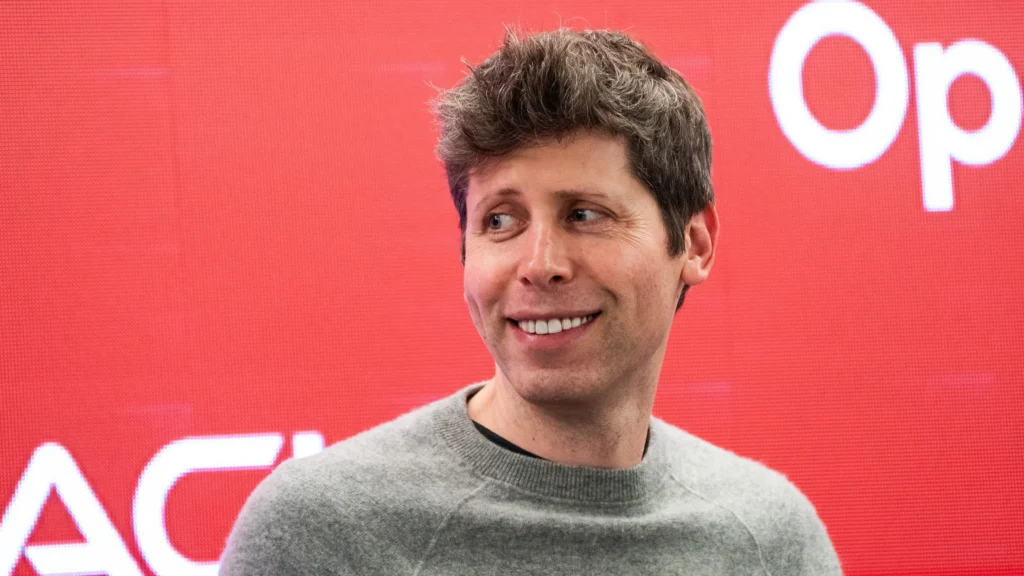
This shift mirrors OpenAI’s existing system for individuals, which allows users to control whether their likeness or voice can be used in generative AI content. However, the company is extending these protections to fictional characters, trademarks, and franchise IP, in response to growing pressure from entertainment giants like Disney, Warner Bros. Discovery, and Sony Pictures.
Altman’s statement also suggests that while Sora’s output policies are changing, the system may still be trained on media containing known characters or copyrighted visuals — a gray area that is likely to fuel further debate about AI training data and copyright law.
Hollywood’s reaction and the IP dilemma
The announcement comes amid rising tensions between Silicon Valley and Hollywood, as generative AI technology increasingly intersects with the entertainment industry.
Major studios and guilds — including the Screen Actors Guild-American Federation of Television and Radio Artists (SAG-AFTRA) and the Writers Guild of America (WGA) — have voiced concerns that AI tools like Sora could be used to replicate actors, writers, and creative works without consent or compensation.
Altman’s statement appears to be a direct response to those concerns. By offering an opt-in framework and potential profit-sharing system, OpenAI aims to appease rightsholders while keeping creators engaged.
“People are generating much more than we expected per user, and a lot of videos are being generated for very small audiences,” Altman wrote. “We are going to try sharing some of this revenue with rightsholders who want their characters generated by users.”
He added that the revenue model is still in development and will likely undergo “trial and error” before it becomes standardized.
A new frontier: “interactive fan fiction”
Despite the controversy, Altman’s tone suggested cautious optimism about what Sora represents for storytelling and fandom. He described a growing community of creators using AI to remix familiar universes — not for exploitation, but for creative expression.
“We’re hearing from rightsholders who see this as a new kind of interactive fan fiction,” Altman said. “They believe this kind of engagement will accrue a lot of value — if it’s done ethically.”
That perspective aligns with a larger cultural shift in online creativity. Sora’s users have produced everything from reimagined Marvel storylines to Star Wars fan films, blurring the boundary between fan art and studio IP.
But the same tools that empower fans also threaten established creative industries, raising urgent questions about ownership, consent, and monetization in the AI era.
The road ahead for OpenAI and Sora
Sora remains in its early-access phase, with select creators and developers experimenting under limited release. Still, the platform has already demonstrated how generative AI could revolutionize filmmaking — and, in the process, disrupt traditional media production models.
OpenAI’s promise of more transparent IP governance and potential revenue sharing could set a precedent for how tech companies collaborate with — rather than compete against — creative industries.
Analysts believe the company’s next major challenge will be ensuring copyright compliance across billions of generated videos while maintaining creative freedom for users.
As the entertainment industry grapples with the implications of AI, one thing is certain: tools like Sora are redefining what it means to create, share, and profit from visual storytelling.
“This is new territory for everyone,” Altman concluded. “We want to build a system that rewards creativity — both human and artificial — without crossing ethical or legal lines.”







Technology News
Inside the Mind of the Man Who Trusts Dogs to Lead Movies
From AI labs to film sets, BARK innovation chief Mikkel Holm has a radical idea — what if dogs weren’t just stars, but storytellers?

In an era where artificial intelligence is already writing scripts, composing music, and generating entire films, one creative mind is asking a question that feels equal parts absurd and oddly profound: Why shouldn’t dogs be directors?
That mind belongs to Mikkel Holm, the Chief AI & Innovation Officer at BARK, the pet brand best known for turning dog culture into a billion-dollar business. Holm isn’t pitching a gimmick. He’s questioning how creativity itself is defined — and who gets to own it.
From Fetch to Final Cut
Holm’s thinking sits at the crossroads of AI, storytelling, and animal behavior. With generative tools becoming more intuitive, he believes creativity no longer needs to start with a human idea. A dog’s reactions — what excites them, what scares them, what keeps their attention — could become the raw data that shapes narratives.
“Dogs already tell us what they like,” Holm has suggested in industry conversations. “We just haven’t been listening in a cinematic way.”
ALSO READ : Younghoe Koo Explains Botched Field Goal After Slip: “The Ball Was Moving So I Pulled Up”
Using sensors, computer vision, and behavioral AI models, a dog’s gaze, movement, or excitement could guide editing decisions, pacing, or even story arcs. The result wouldn’t be about dogs — it would be cinema filtered through a non-human perspective.
The Birth of the First Park Chan-Woof?
Holm jokingly refers to the possibility of minting the next Park Chan-wook — except this auteur would wag instead of walk the red carpet. The joke lands because it highlights something serious: great directors don’t just tell stories, they feel them. And dogs, arguably, are pure instinct.
Unlike human creators shaped by trends, algorithms, or box-office anxiety, dogs respond honestly. They don’t care about three-act structures or Rotten Tomatoes scores. They react in real time — and Holm believes that authenticity is something modern storytelling desperately needs.
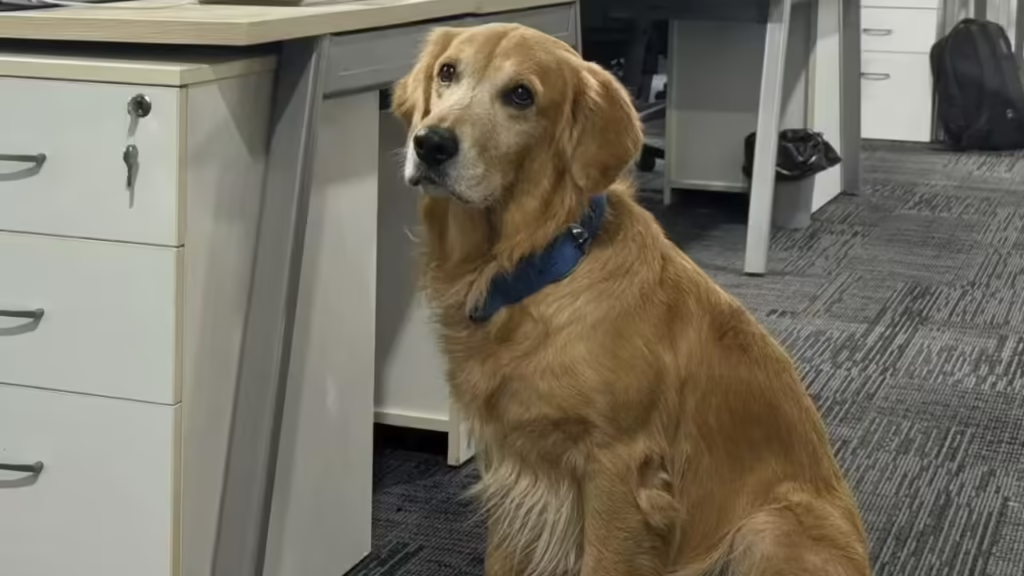
Why BARK Is the Perfect Place for This Idea
At BARK, data about canine behavior isn’t abstract. It’s central to the business. Millions of interactions — toys chewed, treats rejected, boxes loved — already inform product design. Translating that behavioral intelligence into creative output feels like a natural extension.
Holm’s role isn’t about replacing human creators. Instead, it’s about collaboration — humans setting the framework, AI translating signals, and dogs influencing the final creative choices in ways we’ve never seen before.
Is This Art or Absurdity?
Skeptics, of course, will laugh. Dogs as directors sounds like a headline built for clicks. But then again, so did AI-written novels, virtual influencers, and fully synthetic pop stars — until they weren’t jokes anymore.
Holm’s idea taps into a deeper cultural shift: creativity is no longer exclusively human. As tools evolve, authorship becomes shared — between humans, machines, and perhaps, one day, animals.
And if the result is strange, emotional, or unexpectedly beautiful? That might be the point.
A Future Where Creativity Isn’t Just Human
Cinema has always evolved with technology — from silent films to sound, black-and-white to color, analog to digital. Holm’s vision suggests the next leap might not be technical, but philosophical.
What happens when we stop asking who is allowed to create?
If the first dog-directed short film ever premieres at a festival someday, don’t be surprised if it doesn’t explain itself. Dogs, after all, have never felt the need to justify their instincts. Maybe storytellers shouldn’t either.
Technology News
Inside the Vision of the Man Who Trusts Dogs to Tell Stories on the Big Screen
From AI labs to film sets, BARK innovation chief Mikkel Holm has a radical idea — what if dogs weren’t just stars, but storytellers?
In an era where artificial intelligence is already writing scripts, composing music, and generating entire films, one creative mind is asking a question that feels equal parts absurd and oddly profound: Why shouldn’t dogs be directors?
That mind belongs to Mikkel Holm, the Chief AI & Innovation Officer at BARK, the pet brand best known for turning dog culture into a billion-dollar business. Holm isn’t pitching a gimmick. He’s questioning how creativity itself is defined — and who gets to own it.
From Fetch to Final Cut
Holm’s thinking sits at the crossroads of AI, storytelling, and animal behavior. With generative tools becoming more intuitive, he believes creativity no longer needs to start with a human idea. A dog’s reactions — what excites them, what scares them, what keeps their attention — could become the raw data that shapes narratives.
“Dogs already tell us what they like,” Holm has suggested in industry conversations. “We just haven’t been listening in a cinematic way.”
ALSO READ : Younghoe Koo Explains Botched Field Goal After Slip: “The Ball Was Moving So I Pulled Up”
Using sensors, computer vision, and behavioral AI models, a dog’s gaze, movement, or excitement could guide editing decisions, pacing, or even story arcs. The result wouldn’t be about dogs — it would be cinema filtered through a non-human perspective.
The Birth of the First Park Chan-Woof?
Holm jokingly refers to the possibility of minting the next Park Chan-wook — except this auteur would wag instead of walk the red carpet. The joke lands because it highlights something serious: great directors don’t just tell stories, they feel them. And dogs, arguably, are pure instinct.
Unlike human creators shaped by trends, algorithms, or box-office anxiety, dogs respond honestly. They don’t care about three-act structures or Rotten Tomatoes scores. They react in real time — and Holm believes that authenticity is something modern storytelling desperately needs.
Why BARK Is the Perfect Place for This Idea
At BARK, data about canine behavior isn’t abstract. It’s central to the business. Millions of interactions — toys chewed, treats rejected, boxes loved — already inform product design. Translating that behavioral intelligence into creative output feels like a natural extension.
Holm’s role isn’t about replacing human creators. Instead, it’s about collaboration — humans setting the framework, AI translating signals, and dogs influencing the final creative choices in ways we’ve never seen before.
Is This Art or Absurdity?
Skeptics, of course, will laugh. Dogs as directors sounds like a headline built for clicks. But then again, so did AI-written novels, virtual influencers, and fully synthetic pop stars — until they weren’t jokes anymore.
Holm’s idea taps into a deeper cultural shift: creativity is no longer exclusively human. As tools evolve, authorship becomes shared — between humans, machines, and perhaps, one day, animals.
And if the result is strange, emotional, or unexpectedly beautiful? That might be the point.
A Future Where Creativity Isn’t Just Human
Cinema has always evolved with technology — from silent films to sound, black-and-white to color, analog to digital. Holm’s vision suggests the next leap might not be technical, but philosophical.
What happens when we stop asking who is allowed to create?
If the first dog-directed short film ever premieres at a festival someday, don’t be surprised if it doesn’t explain itself. Dogs, after all, have never felt the need to justify their instincts. Maybe storytellers shouldn’t either.
Technology News
Meet the Man Who Wants Dogs in the Director’s Chair and Thinks Cinema Needs a Bark Side
From AI labs to film sets, BARK innovation chief Mikkel Holm has a radical idea — what if dogs weren’t just stars, but storytellers?
In an era where artificial intelligence is already writing scripts, composing music, and generating entire films, one creative mind is asking a question that feels equal parts absurd and oddly profound: Why shouldn’t dogs be directors?
That mind belongs to Mikkel Holm, the Chief AI & Innovation Officer at BARK, the pet brand best known for turning dog culture into a billion-dollar business. Holm isn’t pitching a gimmick. He’s questioning how creativity itself is defined — and who gets to own it.
From Fetch to Final Cut
Holm’s thinking sits at the crossroads of AI, storytelling, and animal behavior. With generative tools becoming more intuitive, he believes creativity no longer needs to start with a human idea. A dog’s reactions — what excites them, what scares them, what keeps their attention — could become the raw data that shapes narratives.
“Dogs already tell us what they like,” Holm has suggested in industry conversations. “We just haven’t been listening in a cinematic way.”
ALSO READ : Younghoe Koo Explains Botched Field Goal After Slip: “The Ball Was Moving So I Pulled Up”
Using sensors, computer vision, and behavioral AI models, a dog’s gaze, movement, or excitement could guide editing decisions, pacing, or even story arcs. The result wouldn’t be about dogs — it would be cinema filtered through a non-human perspective.
The Birth of the First Park Chan-Woof?
Holm jokingly refers to the possibility of minting the next Park Chan-wook — except this auteur would wag instead of walk the red carpet. The joke lands because it highlights something serious: great directors don’t just tell stories, they feel them. And dogs, arguably, are pure instinct.
Unlike human creators shaped by trends, algorithms, or box-office anxiety, dogs respond honestly. They don’t care about three-act structures or Rotten Tomatoes scores. They react in real time — and Holm believes that authenticity is something modern storytelling desperately needs.
Why BARK Is the Perfect Place for This Idea
At BARK, data about canine behavior isn’t abstract. It’s central to the business. Millions of interactions — toys chewed, treats rejected, boxes loved — already inform product design. Translating that behavioral intelligence into creative output feels like a natural extension.
Holm’s role isn’t about replacing human creators. Instead, it’s about collaboration — humans setting the framework, AI translating signals, and dogs influencing the final creative choices in ways we’ve never seen before.
Is This Art or Absurdity?
Skeptics, of course, will laugh. Dogs as directors sounds like a headline built for clicks. But then again, so did AI-written novels, virtual influencers, and fully synthetic pop stars — until they weren’t jokes anymore.
Holm’s idea taps into a deeper cultural shift: creativity is no longer exclusively human. As tools evolve, authorship becomes shared — between humans, machines, and perhaps, one day, animals.
And if the result is strange, emotional, or unexpectedly beautiful? That might be the point.
A Future Where Creativity Isn’t Just Human
Cinema has always evolved with technology — from silent films to sound, black-and-white to color, analog to digital. Holm’s vision suggests the next leap might not be technical, but philosophical.
What happens when we stop asking who is allowed to create?
If the first dog-directed short film ever premieres at a festival someday, don’t be surprised if it doesn’t explain itself. Dogs, after all, have never felt the need to justify their instincts. Maybe storytellers shouldn’t either.

“He-Man Wears a Suit…”: Why Nicholas Galitzine’s Masters of the Universe Trailer Has Fans Talking

Camilla Läckberg Isn’t Done Yet… The Queen of Swedish Noir Eyes Film, TV and a Bold Plan to ‘Conquer America’

“Screaming, Crying, Almost Throwing Up”… Sundance Insiders Reveal the Untold Chaos Behind America’s Most Influential Film Festival
From Swedish Noir to Hollywood Dreams Camilla Läckberg Has a Bigger Plan in Motion
When Sundance Nearly Fell Apart Insiders Recall the Chaos Behind the World’s Most Influential Film Festival

1-Iran Issues Dire Warning to Israel and Defies Trump on Nukes: “We’re Ready to Strike Deep Inside”

Donald Trump’s net worth reveals the fortune behind the former US President and business mogul

Caitlin Clark Sidelined with Quad Strain, Set to Miss Two Weeks of WNBA Action

Elon Musk Breaks Ranks with Trump Over ‘Big, Beautiful’ Tax Bill

“Tomás Rodríguez Net Worth 2025: Panama’s Gold Cup Goal‑Machine’s Surprising Fortune Revealed”

Miss Jamaica Suffers Terrifying Fall Off Miss Universe Stage; Rushed to Hospital on Stretcher in Viral Video

Moana Live-Action Teaser Sparks Outrage as Fans Call Disney’s Move a ‘Clear Money Grab’ — What Went Wrong?

Ryan Gosling’s Project Hail Mary Trailer Stuns Fans with a Mysterious Alien Ally and a Mission That Could Save Earth

Apple delays Jessica Chastain thriller The Savant about domestic extremism after recent US violence

Avatar 3, Fire and Ash trailer reveals Jake Sully’s family facing terrifying new Na’vi enemies with deadly fire powers
-
 Entertainment6 days ago
He-Man Wears a Suit Now… Nicholas Galitzine’s ‘Masters of the Universe’ Trailer Drops a Shock Fans Didn’t See Coming
-
 Entertainment1 week ago
Brazil Eyes Oscar History Again… ‘The Secret Agent’ Scores Best Picture Nomination as Wagner Moura Stuns Hollywood
-

 Entertainment4 days ago
“Comedy Needs Courage Again…”: Judd Apatow Opens Up on Mel Brooks, Talking to Rob Reiner, and Why Studio Laughs Have Vanished
-

 Entertainment1 week ago
Box Office Shocker as Chris Pratt’s ‘Mercy’ Knocks ‘Avatar 3’ Off the Top but Nature Had Other Plans…
-

 Entertainment6 days ago
Oscars Go Global in a Big Way as This Year’s Nominations Signal a New Era: ‘The Academy Is Finally Looking Beyond Hollywood…’
-
 Entertainment1 week ago
Michael Bay Makes a Power Move… Blockbuster Director Signs with CAA in a Deal That’s Turning Heads
-

 Entertainment6 days ago
“Dangerously Kinky… and Darkly Funny”: Olivia Wilde and Cooper Hoffman Push Boundaries in ‘I Want Your Sex’
-
Entertainment1 week ago
Fans Didn’t Expect This Look… Nicholas Galitzine’s Masters of the Universe Trailer Sparks Debate