
Politics
Donald Trump loses again Judge says National Guard deployment to LA protests was illegal
A federal judge ruled that Donald Trump “wilfully” violated the law when deploying National Guard troops to Los Angeles protests, sparking fresh political fire from California Governor Gavin Newsom.


When Donald Trump sent thousands of National Guard troops into the streets of Los Angeles earlier this summer, the move drew immediate backlash from local leaders and the state of California. Now, a federal judge has dealt a stinging legal blow, ruling that the deployment was illegal and saying the Trump administration “wilfully” ignored federal law.
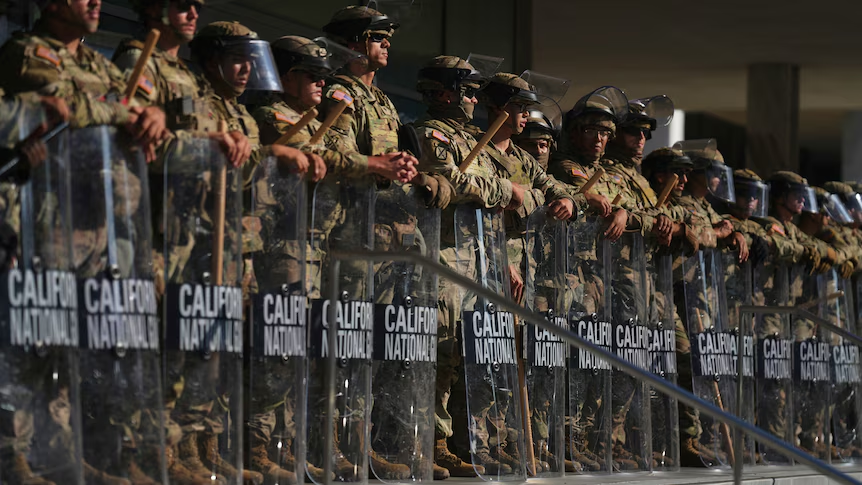
The ruling, issued by US District Judge Charles Breyer, concluded that the administration violated the Posse Comitatus Act, a statute designed to prevent the military from enforcing domestic law. The court found that the troops, many of them clad in camouflage fatigues with shields and vehicles, were not merely protecting federal officers—as Trump’s lawyers argued—but actively engaged in crowd control and traffic blockades during the protests.
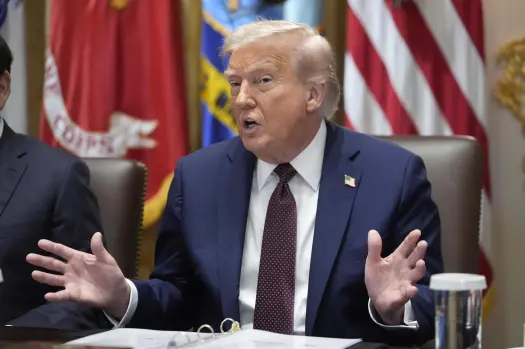
“Defendants knew they were ordering troops to execute domestic law beyond their usual authority,” Judge Breyer wrote, accusing the administration of coaching federal agencies to disguise their requests for military involvement.
California vs. Trump showdown
The protests in Los Angeles were ignited by controversial Immigration and Customs Enforcement (ICE) raids, which triggered waves of demonstrations across the city. As tensions grew, Trump federalised members of the California National Guard and deployed nearly 4,000 soldiers alongside 700 Marines in early June.
But Democratic Governor Gavin Newsom and city leaders objected fiercely, warning that the move risked militarising America’s second-largest city. Newsom even mocked the president after the ruling, posting in all caps on X:
“DONALD TRUMP LOSES AGAIN. The courts agree — his militarisation of our streets and use of the military against US citizens is ILLEGAL.”
By late July, most of the troops had been pulled back, though around 250 remained in San Francisco. The judge noted that many had been improperly trained on what they could legally do.
Trump’s expanding use of troops
The decision comes at a time when Trump has openly floated the idea of sending the National Guard into other Democratic-led cities like Chicago, Baltimore, and New York City. In Washington, D.C., where the president has direct legal authority, Trump has already used federalised forces to create militarised perimeters.
Critics say these moves are part of a broader pattern of Trump pushing the boundaries of presidential authority, citing his efforts to build militarised zones along the US–Mexico border.
Trump’s lawyers defended the Los Angeles deployment by arguing that the president was acting under statutory authority to respond to rebellion or invasion threats. However, Judge Breyer dismissed that reasoning, saying the evidence showed troops were used for domestic policing in violation of federal law.
What the ruling means
While the judge did not order the immediate withdrawal of all remaining troops from San Francisco, the ruling casts doubt on Trump’s ability to use federalised Guard units in similar situations going forward. Legal scholars say the decision reinforces limits on presidential power, especially when it comes to deploying the military on domestic soil.
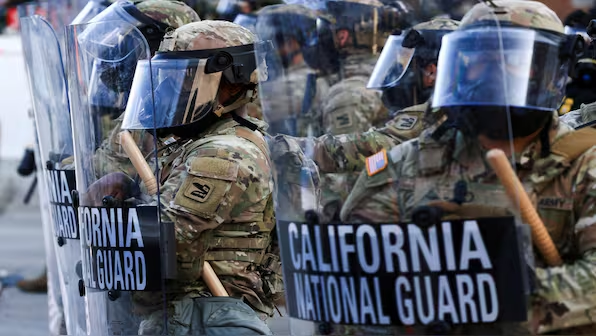
“The court made clear that this wasn’t about protecting federal buildings—it was about using soldiers to police American streets, and that crosses the line,” said one constitutional expert.
Political fallout
For Newsom, who has positioned himself as one of Trump’s loudest critics on issues ranging from immigration to climate policy, the ruling was a political victory. It also added fuel to the ongoing feud between Trump and Democratic governors who accuse him of turning the military into a political weapon.
The White House and the Defense Department did not immediately respond to requests for comment. But Trump, who has often relished legal and political clashes, may well use the ruling to rally his base, framing it as yet another example of courts standing in his way.
Still, the language of the decision—particularly the accusation that the administration “wilfully” violated the law—could haunt his legacy. It underscores a recurring theme of Trump’s presidency: testing and often exceeding the traditional boundaries of executive power.
The bigger picture
The Los Angeles protests, sparked by immigration raids, were not an isolated flashpoint. They came amid months of tension over Trump’s immigration policies, which included attempts to expand detention facilities, accelerate deportations, and restrict asylum. Critics argue that deploying troops only escalated the situation and eroded public trust.
For residents of Los Angeles, the sight of armed soldiers on city streets served as a chilling reminder of the fragile balance between security and liberty. For the rest of the country, the ruling may serve as a warning shot about the dangers of politicising military force.
As Newsom put it: “This is not who we are as a nation. The courts have spoken, and Trump loses again.”
For more updates on global politics, Visit our site for more news www.DailyGlobalDiary.com.




Politics
Al Gore Breaks Silence on Trump and Climate Crisis “It’s Inevitable We’ll Solve It…” But Is That Confidence Enough?
Two decades after An Inconvenient Truth, Al Gore says public opinion—not politics—will ultimately decide the fate of climate change


At a time when climate debates often feel louder—and more polarized—than ever, Al Gore is choosing a surprisingly calm tone.
The former U.S. Vice President, long regarded as one of the most influential voices in global environmental advocacy, isn’t sounding alarms about political setbacks. Instead, he’s expressing something that many might find unexpected: confidence.
And not just cautious optimism—but belief in inevitability.
“We Will Solve It”—A Statement That Turns Heads
Speaking nearly two decades after the release of his groundbreaking documentary An Inconvenient Truth, Gore made it clear that he doesn’t believe the climate crisis can be derailed by any one political figure—including Donald Trump.
“The fact that public opinion is so strongly on the side of doing something makes it inevitable that we will solve the climate crisis,” Gore said—a statement that has sparked both hope and debate.
ALSO READ : Younghoe Koo Explains Botched Field Goal After Slip: “The Ball Was Moving So I Pulled Up”
It’s a perspective rooted not in policy cycles, but in people power.
Why Gore Isn’t Focused on Politics
For years, climate discourse has often been framed through a political lens—policies passed, agreements signed, and leadership changes. But Gore’s latest remarks suggest a shift in thinking.
He’s betting on something deeper: public awareness.
From rising youth activism to increasing corporate commitments toward sustainability, there’s a growing sense that climate action is no longer a niche concern. It’s mainstream. It’s urgent. And, perhaps most importantly, it’s widely supported.
Gore believes that once public consensus reaches a tipping point, political systems will inevitably follow.
The Legacy of ‘An Inconvenient Truth’
When An Inconvenient Truth premiered in 2006, it wasn’t just a documentary—it was a wake-up call. It brought climate science into living rooms, classrooms, and conversations around the world.
At the time, the film played a critical role in shaping public understanding of global warming. Today, its legacy still lingers, especially as climate change becomes less of a prediction and more of a lived reality.
For Gore, the progress made since then is proof that awareness works.
But the question remains: Is awareness enough?
The Trump Factor—Real Threat or Temporary Setback?
Critics argue that political leadership still matters deeply, especially when it comes to environmental regulations, international agreements, and funding for climate initiatives.
During his presidency, Donald Trump took steps that many environmentalists viewed as setbacks, including withdrawing from key climate agreements and rolling back certain regulations.
Yet Gore’s stance suggests that such moves, while impactful, are not permanent barriers. In his view, they are temporary detours in a much longer journey.
It’s a perspective that reframes the conversation—not as a battle between administrations, but as a long-term global shift.
Public Opinion as the Driving Force
Perhaps the most compelling part of Gore’s argument is his faith in public opinion.

Across the world, climate concerns are influencing elections, shaping corporate strategies, and driving grassroots movements. From renewable energy adoption to climate-conscious consumer behavior, the signs of change are everywhere.
Gore sees this as the real engine of progress.
Not politicians. Not policies alone.
People.
A Message of Hope—or Overconfidence?
While many welcome Gore’s optimism, others question whether it might underestimate the scale and urgency of the crisis. Climate change is a complex issue, influenced by economic, political, and technological factors.
Can public opinion alone accelerate the pace of change needed?
Or does it risk creating a false sense of security?
These are questions that continue to divide experts and policymakers alike.
The Bigger Picture
What’s clear, however, is that the conversation around climate change is evolving. It’s no longer just about warnings—it’s about solutions, accountability, and collective action.
Gore’s message fits into this new narrative. It’s less about fear and more about momentum.
And perhaps that’s exactly what the world needs right now—a reminder that progress, while uneven, is still possible.
Final Thought
Whether one agrees with him or not, Al Gore’s confidence is hard to ignore.
In a world often dominated by uncertainty, his belief that the climate crisis will be solved offers a rare sense of direction.
But as history has shown, inevitability doesn’t mean immediacy.
The future may be moving toward a solution—but how fast we get there still depends on what happens next.
Politics
“I’m not going anywhere”: Army Secretary defies Pete Hegseth firing rumors after ‘paranoia’ triggers Gen. Randy George dismissal—but is he next?
Dan Driscoll insists he’s ‘laser focused’ on his role despite reported clashes with Defense Secretary over blocked promotions and general’s removal, as Trump’s cabinet shakeup continues


Army Secretary Dan Driscoll is publicly declaring he’s staying put—but behind the scenes at the Pentagon, a power struggle is unfolding that could determine not just his future, but the future of Defense Secretary Pete Hegseth as well.
In a statement to The Washington Post, Driscoll attempted to shut down mounting speculation about his departure, saying: “Serving under President Trump has been the honor of a lifetime and I remain laser focused on providing America with the strongest land fighting force the world has ever seen. I have no plans to depart or resign as the secretary of the Army.”
But that reassurance comes amid reports of escalating tensions with Hegseth, shocking dismissals of top Army leadership, and whispers throughout Washington that Driscoll himself could be tapped to replace his current boss if the Iran conflict doesn’t resolve favorably.
Welcome to the latest episode of chaos in President Donald Trump’s increasingly volatile administration.
The Paranoia That Led to a Purge
According to The New York Post, Hegseth’s surprise decision last week to force out Army Chief of Staff Gen. Randy George, Gen. David Hodne, and Maj. Gen. William Green Jr. wasn’t driven by performance concerns or strategic disagreements.
It was driven by “paranoia” that he could be replaced by Driscoll.
Think about that for a moment: the Defense Secretary of the United States allegedly fired the Army’s top general not because of military necessity, but because he feared his own subordinate might take his job.
This is the level of dysfunction currently plaguing America’s defense leadership at a time when U.S. forces are engaged in active conflict with Iran.
The Gen. Randy George Factor
Gen. Randy George wasn’t just another military officer—he was widely admired within the Pentagon as a reformer, someone working to modernize the Army and eliminate bureaucratic obstacles. Driscoll, according to Defense Department officials, was a strong supporter of George and had previously clashed with Hegseth over earlier attempts to remove the general.
The final straw appears to have been a New York Times report revealing that Hegseth had blocked the promotion of four Army officers, including two Black officers and two women. Driscoll and George reportedly confronted Hegseth over this decision, sparking a confrontation that may have sealed George’s fate.
If true, this means a decorated general was dismissed not for military incompetence, but for defending the promotion process and standing up for qualified officers who happened to be minorities or women.
The JD Vance Connection
What makes Driscoll particularly interesting—and potentially untouchable—is his close relationship with Vice President JD Vance.
The two men have been friends since their days together at Yale Law School. Driscoll is a military veteran, and his friendship with Vance predates both men’s entry into Trump’s political orbit.
According to the Post, Driscoll has reached out to Vance for support as he sought to bolster his own position amid the growing tensions with Hegseth. Whether the Vice President actually intervened on Driscoll’s behalf remains unknown, but the connection itself provides Driscoll with a direct line to power that most cabinet officials don’t have.
White House Backs Driscoll… For Now
In what appears to be a carefully worded show of support, White House spokeswoman Anna Kelly praised Driscoll’s leadership, saying Trump had “effectively restored a focus on readiness and lethality across our military with the help of leaders like Secretary Driscoll.”
She added: “The extraordinary talent of the United States Army is on full display as our warfighters meet or exceed all of their benchmarks under Operation Epic Fury and Iran’s military capabilities diminish more every day.”
Notice what’s missing? Any mention of Pete Hegseth.
The statement supports Driscoll without defending his boss, which in Washington terms is about as subtle as a neon sign.
The ‘Excellent Working Relationship’ Nobody Believes
When speculation about the Hegseth-Driscoll rift first emerged, Pentagon spokesperson Sean Parnell insisted to The Independent: “Secretary Hegseth maintains excellent working relationships with the secretaries of every military service branch, including Army Secretary Dan Driscoll.”
But other officials within the Department of Defense have directly disputed that characterization, saying Hegseth has been wary of Driscoll ever since he was floated as a possible successor during the Signalgate scandal that erupted last March.
For those who don’t remember, Signalgate involved allegations that Hegseth had improperly shared classified information via the Signal messaging app. The scandal put him “on thin ice,” according to administration insiders, and Driscoll’s name immediately began circulating as a potential replacement.
Hegseth survived that crisis, but he apparently hasn’t forgotten—or forgiven.
Trump’s Cabinet Shakeup Continues
The paranoia within the Pentagon isn’t happening in isolation. Over the last month, President Trump has demonstrated an increased willingness to shake up his cabinet, firing both Homeland Security Secretary Kristi Noem and Attorney General Pam Bondi.
This pattern has prompted widespread speculation that Hegseth could be next if the Iran war is not resolved satisfactorily. The conflict, which began with Iranian closure of the Strait of Hormuz, has already resulted in a fragile two-week cease-fire, but the ultimate outcome remains uncertain.
If the cease-fire collapses or American casualties mount, Hegseth could find himself the scapegoat—and Driscoll could find himself promoted from potential victim to successor.

Sean Parnell: The Next Man Up?
In yet another twist, if Driscoll ultimately leaves his position—whether by being fired, resigning, or being promoted to Defense Secretary—Pentagon spokesperson Sean Parnell has been tipped as his likely successor as Army Secretary.
A senior department official told The Independent: “It wouldn’t be out of line to speculate that Sean would be considered as a successor as he is one of the highest profile Army veterans serving at the top of department right now, but both men are focused on serving the president and doing the job they have now.”
Translation: Yes, succession planning is happening, but nobody wants to say it out loud yet.
A Pentagon in Crisis
Step back and look at the bigger picture: America’s defense leadership is consumed by internal power struggles at a moment when U.S. forces are engaged in active military operations against a major regional power.
The Defense Secretary is allegedly firing generals out of paranoia about being replaced. The Army Secretary is having to publicly declare he’s not resigning. Top military officers are being dismissed not for performance issues but for defending the promotion process.
This isn’t normal. This isn’t healthy. And it’s certainly not conducive to effective military operations.
What Happens Next?
Several scenarios are now in play:
Scenario 1: Driscoll’s public statement and White House backing stabilize his position, Hegseth backs off, and both men continue in an uneasy détente.
Scenario 2: The Iran conflict escalates or the cease-fire collapses, Hegseth is fired, and Driscoll is promoted to Defense Secretary with Parnell becoming Army Secretary.
Scenario 3: Trump decides both men are creating too much drama and cleans house entirely, bringing in outside replacements.
Scenario 4: Hegseth consolidates power, forces Driscoll out, and installs a more compliant Army Secretary.
Given Trump’s track record and the current volatility within the administration, literally any of these outcomes is possible.
The Real Victims
Lost in all this palace intrigue are the real victims: dedicated military professionals like Gen. Randy George, who was widely respected as a reformer, and the four officers—including two Black officers and two women—whose promotions were blocked for reasons that appear to have nothing to do with their qualifications.
When political paranoia and personal feuds determine military personnel decisions instead of merit and readiness, everyone loses—especially the service members who deserve leadership focused on the mission, not infighting.
The Bottom Line
Dan Driscoll says he’s “laser focused” on his current role and has “no plans to depart or resign.”
But in Trump’s Washington, such statements have an increasingly short shelf life. Just ask Kristi Noem and Pam Bondi.
The real question isn’t whether Driscoll is going anywhere—it’s whether Pete Hegseth will still be there to work with him in a month.
And given the current dysfunction at the Pentagon, that’s a question nobody seems able to answer.
Politics
JD Vance Secretly Spoke to Pakistan About Iran War — Trump Is ‘Impatient’, Ceasefire Signals Sent: Report
US Vice President JD Vance has quietly been in contact with Pakistani intermediaries over the Iran conflict, delivering a stern message that President Trump wants results fast — while privately signaling openness to a ceasefire deal.

Behind the scenes of President Donald Trump‘s loud and combative public statements on the Iran war, a quieter diplomatic operation appears to be taking shape — and it has a surprising new face at its centre: US Vice President JD Vance.
Vance Reaches Out Through Pakistan
According to a report by news agency Reuters, citing a person familiar with the matter, Vance has held communications with intermediaries from Pakistan regarding the ongoing US-Iran conflict. The outreach signals that the Vice President is stepping into a more prominent role in what could become one of the most consequential diplomatic efforts of the Trump administration.
The report also revealed that Vance delivered a “stern” message to these intermediaries — that Trump is “impatient” with how the war is progressing — while simultaneously signaling privately that the President would be open to a ceasefire, provided certain US demands are met.
Pakistan’s Growing Role in the Negotiations
Pakistan’s involvement in this developing diplomatic picture is not entirely surprising. Pakistani Prime Minister Shehbaz Sharif had recently stated publicly that his country was ready to host a dialogue between the warring parties. Multiple reports have since suggested that Islamabad could potentially serve as a neutral venue for any formal ceasefire talks — a significant role for a nation that has often positioned itself as a bridge between the West and the Islamic world.
Vance: Iran’s Preferred Negotiator?
The Vice President is not the only American official reportedly involved in back-channel efforts. Secretary of State Marco Rubio, along with US envoys Steve Witkoff and Jared Kushner, are also said to be part of the broader diplomatic effort.
However, what sets Vance apart is a crucial detail reported by CNN, citing regional sources familiar with the issue. Iranian representatives reportedly communicated to Washington that talks with other US officials — particularly Rubio and the envoys — would be “unlikely to succeed” due to a deep and entrenched deficit of trust following the collapse of earlier negotiations before the outbreak of hostilities. Vance, it seems, may be viewed as a cleaner slate.
This also adds a layer of political intrigue: Vance is widely regarded as a leading potential successor to Trump, and a successful diplomatic outcome in the Iran conflict would significantly boost his standing on the world stage.
Trump’s Fiery Speech Raises Escalation Fears
While Vance appears to be working the diplomatic back-channels, Trump’s own public posture has been anything but conciliatory. In a prime-time address to the nation, the President doubled down on his military threats, saying: “We are going to hit them extremely hard over the next two to three weeks. We are going to bring them back to the stone ages, where they belong. In the meantime, discussions are ongoing.”

He simultaneously reiterated that the war could end within two to three weeks and that military objectives would be achieved “shortly” — a combination of messaging that left global markets and analysts deeply unsettled.
The impact was immediate. Oil prices spiked sharply following Trump’s remarks, with Brent crude climbing above $106 a barrel and West Texas Intermediate approaching $105, according to Bloomberg. For a world already grappling with energy price pressures, the prospect of further escalation in a region that controls a critical share of global oil supply is deeply alarming.
A War Being Fought on Two Fronts
What is emerging from these reports is a picture of an administration running a dual-track strategy — Trump maintaining maximum public pressure on Iran while Vance quietly explores an off-ramp through Pakistan and other intermediaries.
Whether these two tracks can coexist without undermining each other is the central question. Diplomatic negotiations require a degree of predictability and trust — both of which are in short supply when the public face of the operation is threatening to bomb a nation “back to the stone ages.”
For now, the war continues. Oil prices remain elevated. And the world watches to see whether JD Vance’s quiet diplomacy can deliver what Trump’s loud threats have so far not — a path to peace.

“All Former U.S. Presidents Gather in Philadelphia for ‘HISTORYTalks 2026’… Alongside Michelle Obama, Hillary Clinton, Nicole Kidman & Tom Brady in a Historic Mega Conclave”
“Nicole Kidman Reveals ‘Harrowing’ Moment She Learned About Her Mother’s Death… and Why She Is Now Training as a Death Doula: ‘It’s Very Important to Me’”

“Dylan Sprouse Confronts Trespasser at Hollywood Hills Home… Holds Suspect Until Police Arrive After Early Morning Burglary Scare”

“Bezos Met Gala Sponsorship Row Erupts Underground… NYC Subway ‘DIY Ads’ Blast Billionaire With Claims of ‘Buying Influence’”

“‘White Chicks 2’ Could Finally Happen… But Only If THIS Condition Is Met, Reveal Wayans Brothers: ‘We’re Not Doing It Any Other Way’”

1-Iran Issues Dire Warning to Israel and Defies Trump on Nukes: “We’re Ready to Strike Deep Inside”

Donald Trump’s net worth reveals the fortune behind the former US President and business mogul

“She Never Made It Out…” Albany House Fire Claims Woman’s Life as Family Pleads for Help to Bring Her Home

“Tomás Rodríguez Net Worth 2025: Panama’s Gold Cup Goal‑Machine’s Surprising Fortune Revealed”

Caitlin Clark Sidelined with Quad Strain, Set to Miss Two Weeks of WNBA Action

Miss Jamaica Suffers Terrifying Fall Off Miss Universe Stage; Rushed to Hospital on Stretcher in Viral Video

Moana Live-Action Teaser Sparks Outrage as Fans Call Disney’s Move a ‘Clear Money Grab’ — What Went Wrong?

Ryan Gosling’s Project Hail Mary Trailer Stuns Fans with a Mysterious Alien Ally and a Mission That Could Save Earth

Apple delays Jessica Chastain thriller The Savant about domestic extremism after recent US violence

Avatar 3, Fire and Ash trailer reveals Jake Sully’s family facing terrifying new Na’vi enemies with deadly fire powers
-

 Entertainment1 week ago
“Evolve or Die…” Sam Levinson Reveals How ‘Euphoria’ Season 3 Was Rebuilt After ‘The Idol’ Experiment
-
 Entertainment1 week ago
“Evolve or Die…” Sam Levinson Explains Shocking Creative Shift Behind ‘Euphoria’ Season 3 Return
-
 Entertainment1 week ago
‘Beast’ Director Tyler Atkins Breaks Silence on MMA Drama Exploring Identity, Family… and the Raw Fight for Survival
-

 Entertainment1 week ago
“Choosing the Next James Bond Isn’t Easy…” Amazon MGM Breaks Silence on 007 Casting Mystery
-

 Entertainment1 week ago
Justin Bieber’s “Low-Key” Coachella Set Sparks Heated Debate… Fans Accuse Double Standards After Sabrina Carpenter Comparison
-

 Entertainment1 week ago
Lisa Kudrow Reveals Unexpected Reason Behind Casting Her Son in ‘The Comeback’ Final Season… Fans Call It ‘Most Personal Twist Yet’
-

 Entertainment3 days ago
“Hulk Hogan: Real American” Review: Netflix Docu… is More About Donald Trump Than the Wrestling Legend Himself, Fans Ask ‘Where is Hulk Hogan in His Own Story?’
-

 Entertainment1 week ago
“All Hail the Queen…” Donna Langley’s Hollywood Power Play Stuns CinemaCon as Nolan, Spielberg and Snoop Dogg Rally Behind Universal