
Sports
“The tradition unlike any other returns”: Masters 2026 Round 1 tee times, odds, predictions—everything you need to know as Augusta awakens
Golf’s most prestigious tournament kicks off today at Augusta National with defending champion and top contenders battling for the iconic Green Jacket—here’s your complete guide to watching Round 1 unfold


The azaleas are in bloom, the pimento cheese sandwiches are ready, and the most hallowed ground in golf is once again center stage. The 2026 Masters Tournament has arrived, and Augusta National Golf Club is preparing to crown another champion worthy of the iconic Green Jacket.
Round 1 begins today, kicking off four days of drama, brilliance, and heartbreak on what many consider golf’s greatest stage. Whether you’re a die-hard fan who watches every shot or a casual viewer who tunes in for the back nine on Sunday, here’s everything you need to know about the Masters Tournament as it gets underway.
The Tournament That Defines Golf
The Masters isn’t just another tournament on the PGA Tour calendar—it’s the tournament. Since 1934, when Bobby Jones and Clifford Roberts founded what would become golf’s most prestigious event, the Masters has represented the pinnacle of the sport.
Played annually at Augusta National in Georgia, the tournament is the first major championship of the year and the only major played at the same course every year. This consistency has created a cathedral-like atmosphere where history echoes through the pine trees and past champions walk the same fairways as first-time competitors.
“A tradition unlike any other” isn’t just a tagline—it’s the truth.
Who’s Teeing Off: The Field
The 2026 Masters field brings together the world’s best golfers, from rising stars to seasoned veterans chasing one more Green Jacket. While the Masters maintains one of the smallest fields in professional golf—typically around 90 players compared to 156 at most PGA Tour events—the quality is unmatched.
Defending champion status belongs to last year’s winner, who will be hoping to join the elite club of back-to-back Masters champions—a feat last accomplished by Tiger Woods in 2001-2002.
Among the favorites this year are perennial contenders who know Augusta National’s treacherous greens and unforgiving rough like the back of their hands. Past champions return with the experience and confidence that only comes from having already conquered this course, while young guns arrive hungry to make their mark on golf history.
Scottie Scheffler, Rory McIlroy (still chasing that elusive Masters win to complete the career Grand Slam), Jon Rahm, and other top-ranked players will be under intense scrutiny as they navigate the first round.
The Amateurs to Watch
The Masters has always maintained a special relationship with amateur golf, inviting the U.S. Amateur champion, British Amateur champion, and other top amateurs to compete alongside the professionals.
These young players often provide some of the tournament’s most compelling storylines. Who can forget Tiger Woods playing as an amateur before turning pro and dominating the game? Or more recently, amateur competitors making the cut and earning the low amateur honors?
This year’s amateur field includes promising young talents who dream of one day returning to Augusta as professionals—and champions.
Round 1 Tee Times: When the Action Begins
The first round typically begins early in the morning, with tee times staggered to allow all competitors to complete 18 holes before darkness falls over Augusta.
Early morning groups (approximately 8:00 AM ET start) usually feature a mix of amateurs, past champions, and players who earned their invitation through various qualifying criteria. These groups often play in relative calm before the Georgia heat intensifies.
Mid-morning to early afternoon groups (10:00 AM – 1:00 PM ET) include many of the tournament favorites and marquee pairings that draw the largest galleries and television audiences.
Late afternoon groups (2:00 PM – 3:30 PM ET) will finish under pressure as the sun begins to set, potentially facing tricky wind conditions that pick up later in the day at Augusta.
The Masters website provides real-time tee times and pairings, allowing fans to follow their favorite players throughout the day.
The Betting Odds: Who the Bookmakers Favor
While golf purists may cringe at the commercialization of their beloved sport, betting odds provide an interesting snapshot of who the experts believe has the best chance of slipping on the Green Jacket come Sunday evening.
Top favorites typically include the world’s top-ranked players, recent major champions, and golfers who have performed well at Augusta in previous years. Course history matters immensely at the Masters—players who understand Augusta’s subtleties hold a significant advantage.
Mid-range odds often go to talented players who haven’t quite broken through at a major but possess the skills to contend, as well as past Masters champions who might be slightly past their prime but know how to win at Augusta.
Long shots include younger players making their Masters debut, veterans looking for one last hurrah, and players who simply haven’t shown recent form but could get hot for four days.
Historical note: the Masters has seen its share of surprise winners over the years, proving that Augusta National can humble favorites and elevate underdogs in equal measure.
Expert Predictions: What the Analysts Are Saying
Golf analysts and former champions have weighed in with their predictions for the 2026 Masters, and opinions vary widely—as they should for a tournament as unpredictable as this one.
Common themes in predictions include:
Course knowledge is critical: Players who have competed at Augusta multiple times and understand the speed and break of the greens hold a massive advantage. First-timers often struggle simply because there’s no way to prepare for Augusta’s unique challenges without experiencing them firsthand.
Putting will decide the tournament: As the saying goes, “You drive for show, but putt for dough.” Nowhere is this truer than at Augusta, where the lightning-fast, severely sloped greens can make or break a round. Players who get hot with the putter tend to contend; those who struggle on the greens quickly fade.
Weather will play a factor: Spring weather in Georgia can be unpredictable. Wind, rain, and temperature swings can dramatically change course conditions from one day to the next, rewarding players who can adapt quickly.
Experience under pressure matters: The Masters is unique in that the back nine on Sunday has broken more hearts than perhaps any stretch of golf in the world. Amen Corner (holes 11, 12, and 13) has ended countless dreams, while the par-5 15th has offered salvation to those brave—or desperate—enough to go for the green in two.
How to Watch: Your Viewing Guide
For American audiences, CBS Sports and ESPN share broadcast duties, with extensive coverage beginning early in Round 1 and continuing through the final putt on Sunday.
Traditional TV coverage typically begins mid-morning and continues through the afternoon, showcasing featured groups and key moments as they unfold.
Streaming options have expanded dramatically in recent years. The Masters app and Masters.com offer featured group coverage, allowing fans to follow specific players throughout their entire round. Paramount+ also streams coverage for subscribers.
International viewers can check their local sports networks, as the Masters is broadcast in nearly every country around the world. The tournament’s global appeal has only grown over the years, with fans from Europe to Asia to Australia tuning in to watch.
Radio coverage remains popular for fans who want to listen while working or driving, with Masters Radio providing shot-by-shot commentary throughout the tournament.
The Augusta National Experience
What makes the Masters special isn’t just the golf—it’s the entire Augusta National experience.
The course itself is a masterpiece, with holes named after the flora that surrounds them: Tea Olive, Pink Dogwood, Flowering Peach, Flowering Crab Apple, Magnolia, Juniper, and so on. Each hole tells a story, and collectively they create a challenge unlike any other in golf.
Amen Corner (holes 11-13) is where dreams die and legends are born. The par-4 11th with its treacherous green, the iconic par-3 12th where swirling winds make club selection a nightmare, and the risk-reward par-5 13th that tempts players to go for the green across Rae’s Creek.
The par-3 16th hole, with its island green and roaring galleries, has produced some of the tournament’s most memorable moments—from hole-in-ones to balls skipping across the water.
And then there’s the 18th hole, a uphill par-4 that leads to the clubhouse where champions are crowned and Green Jackets are awarded.
The Green Jacket: Golf’s Most Coveted Prize
While other majors award trophies, the Masters presents the Green Jacket—a symbol so iconic it transcends sports. Winners get to keep the jacket for one year before returning it to Augusta, though they can wear it anytime they’re on the club grounds.
The tradition began in 1949, and past champions include golf’s greatest names: Jack Nicklaus (six-time winner), Tiger Woods (five-time winner), Arnold Palmer (four-time winner), and dozens of other legends.
Winning the Masters doesn’t just mean joining an elite club—it means a lifetime invitation to return to Augusta every year, walking the grounds as both a competitor and a champion.
The Traditions That Make It Special
Beyond the Green Jacket, the Masters is defined by its traditions:
The Champions Dinner on Tuesday night, where past winners gather and the defending champion chooses the menu.
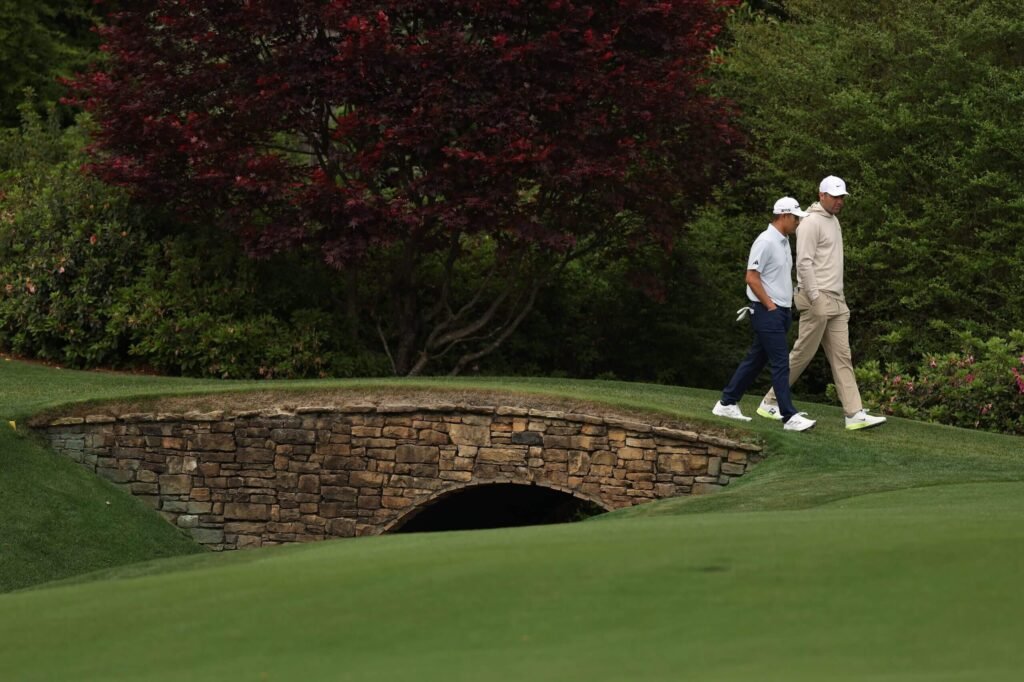
The Par-3 Contest on Wednesday, a light-hearted competition that no winner has ever gone on to claim the tournament (though many have tried to break the “curse”).
Pimento cheese sandwiches and other concession items sold at prices that seem frozen in time compared to other sporting events.
No running, a rule strictly enforced by the gallery marshals to maintain the tournament’s dignified atmosphere.
Limited commercials during broadcasts, creating a viewing experience focused on golf rather than constant advertising.
What to Watch For in Round 1
As the first round unfolds today, several storylines will dominate coverage:
Can the favorites hold serve? Top-ranked players are expected to get off to strong starts, but Augusta has humbled many favorites on Day 1.
Which dark horses will emerge? Every Masters sees unexpected players post low scores early, putting themselves in position to contend.
How will first-timers handle the pressure? Players making their Masters debut often struggle with the enormity of the moment and the difficulty of the course.
Weather conditions: Any wind or rain could separate the field quickly, rewarding players who handle adversity better than their competitors.
The Journey Begins
Round 1 of the 2026 Masters is more than just 18 holes of golf—it’s the beginning of a four-day journey that will test skill, mental toughness, and nerves in equal measure.
By the time the sun sets over Augusta National today, we’ll have a clearer picture of who’s positioned to contend and who’s already fighting to make the cut.
But we’ll also be reminded why the Masters remains golf’s crown jewel: the beauty of the course, the weight of history, and the knowledge that anything can happen on these hallowed grounds.
“A tradition unlike any other” isn’t just marketing—it’s a promise that for four days each April, golf will be played at its highest level, in its most beautiful setting, with the entire world watching.
The 2026 Masters has begun.
Let the tradition continue.






Sports
Australia held Brazil to a draw after Nestory Irankunda’s stunning free kick — then Rayan struck at the very end…
The Socceroos were seconds away from a memorable victory over five-time world champions Brazil before Rayan’s stoppage-time header rescued a 1-1 draw in Townsville.

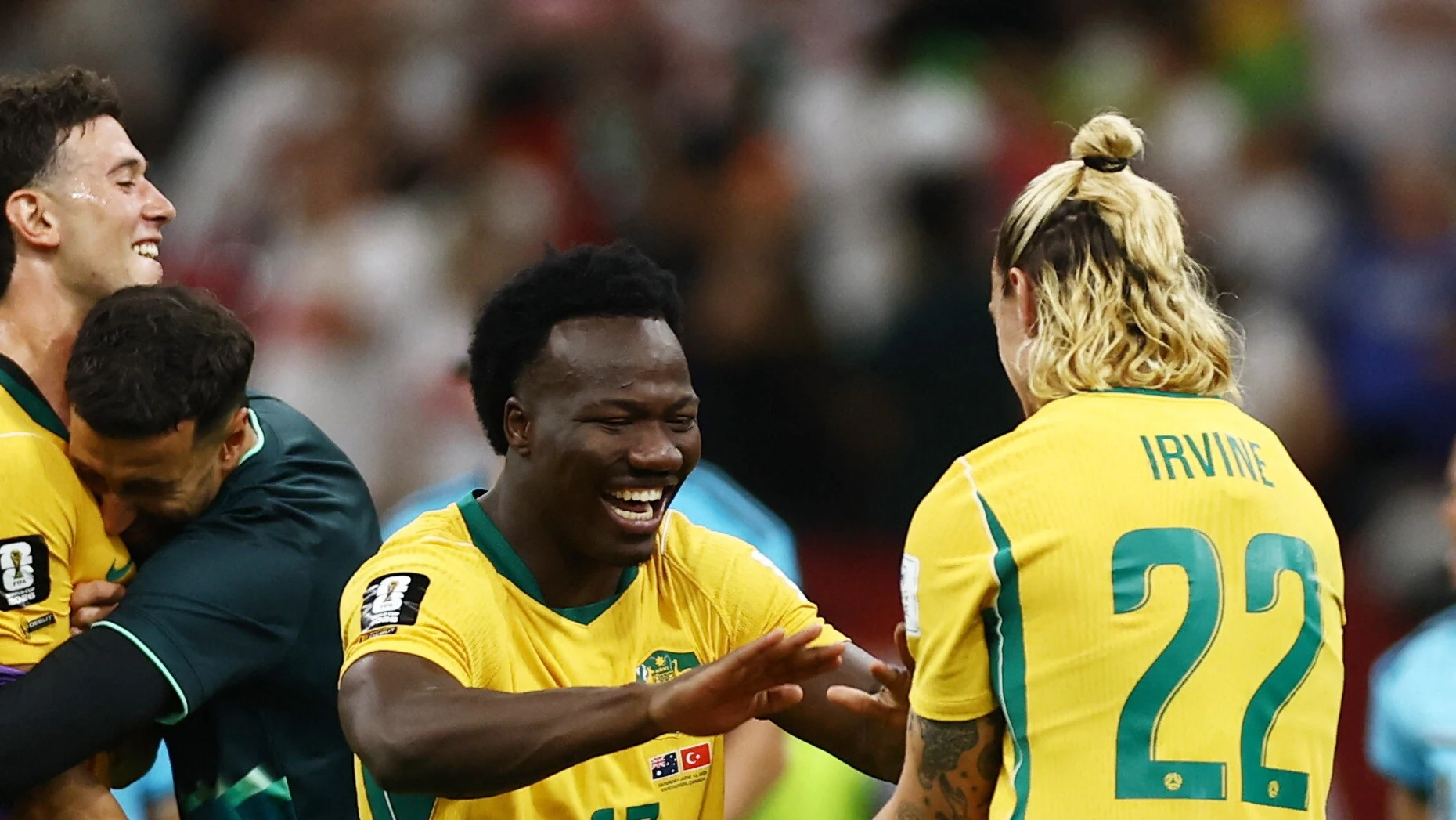
For almost the entire night, Australia looked ready to pull off one of the biggest results in recent Socceroos history.
Then, right at the death, Brazil found a way through.
The Socceroos were held to a 1-1 draw by Brazil in Townsville after a dramatic finish saw Rayan score a stoppage-time equaliser, cancelling out a spectacular goal from Nestory Irankunda. The result was particularly painful for Australia after the home side had defended its lead deep into added time.
Still, the performance offered plenty for Australia to take forward.
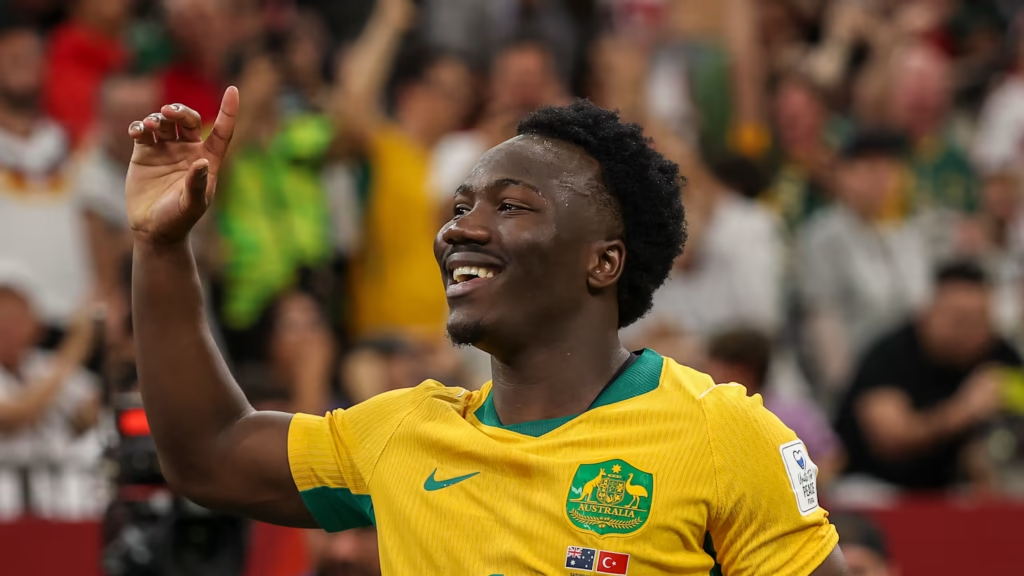
Irankunda produces another moment of magic
The game was heading towards a tense final stretch when Nestory Irankunda delivered the moment Australian fans had been waiting for.
The young forward produced a spectacular free kick to put the Socceroos ahead and gave the home crowd genuine belief that Brazil could be beaten.
Irankunda has become one of the most exciting young attacking players associated with Australian football. His pace, confidence and ability to strike the ball from distance have made him a player capable of changing a match with a single moment.
Against Brazil, he produced exactly that kind of moment.
For Australia, the goal looked as though it might be enough to secure a famous victory.
Brazil refuse to go quietly
Five-time world champions Brazil were never going to accept defeat without a fight.
The visitors pushed forward as Australia dropped deeper, searching for one final opening. The Socceroos managed to withstand the pressure for much of the closing period, but the decisive moment arrived in stoppage time.
Rayan rose to meet a pinpoint delivery and powered his header beyond the Australian defence, sending the ball into the net in the final moments of the match.
It was almost the last meaningful action of the contest.
For Australia, it was a brutal way to lose the chance of a famous win. For Brazil, it was a dramatic escape.
Irvine sees the bigger picture
Australian midfielder and captain Jackson Irvine was clearly disappointed by the late equaliser, but his reaction after the game reflected how much the Socceroos could still take from the performance.
Australia competed against one of international football’s most decorated nations and showed enough composure to lead for much of the second half.
Irvine also highlighted the atmosphere around the match and the support from the Australian crowd, underlining how significant the occasion was for a team facing one of the biggest names in world football.
A draw that felt like a defeat
On paper, a draw against Brazil is a result Australia can take plenty of confidence from.
But football is rarely played on paper.
The Socceroos were within seconds of beating one of the most decorated national teams in the sport. Instead, they had to settle for a point after Rayan’s late header.
That frustration was visible at the final whistle.
Yet the bigger picture remains encouraging. Australia showed it could stay organised, compete physically and create problems against a Brazil side packed with elite-level talent.
For Nestory Irankunda, meanwhile, the night provided another reminder of his growing importance to Australia’s next generation.
His spectacular free kick deserved to be the winning goal.
Instead, Brazil had the final word.
Another chance is coming
The story is not finished yet.
Australia and Brazil are scheduled to meet again in Brisbane, giving the Socceroos another opportunity to test themselves against the five-time world champions.
For Australia, the challenge will be turning the promise of this performance into another strong showing.
For Irankunda, another big stage awaits.
His spectacular goal may ultimately have been overshadowed by Brazil’s last-gasp equaliser, but the young attacker once again showed why he is becoming one of the most exciting faces of Australian football.
The Socceroos wanted a historic win.
They came painfully close.
Then, with almost the final kick of the night, Brazil changed the story.
Sports
Packers booed at Lambeau after Falcons blowout: Green Bay’s home opener turns into a nightmare…
Green Bay’s 35-14 loss to Atlanta exposed major problems on both sides of the ball, with injuries, penalties and a struggling rushing attack leaving the Packers facing serious questions early in the season.
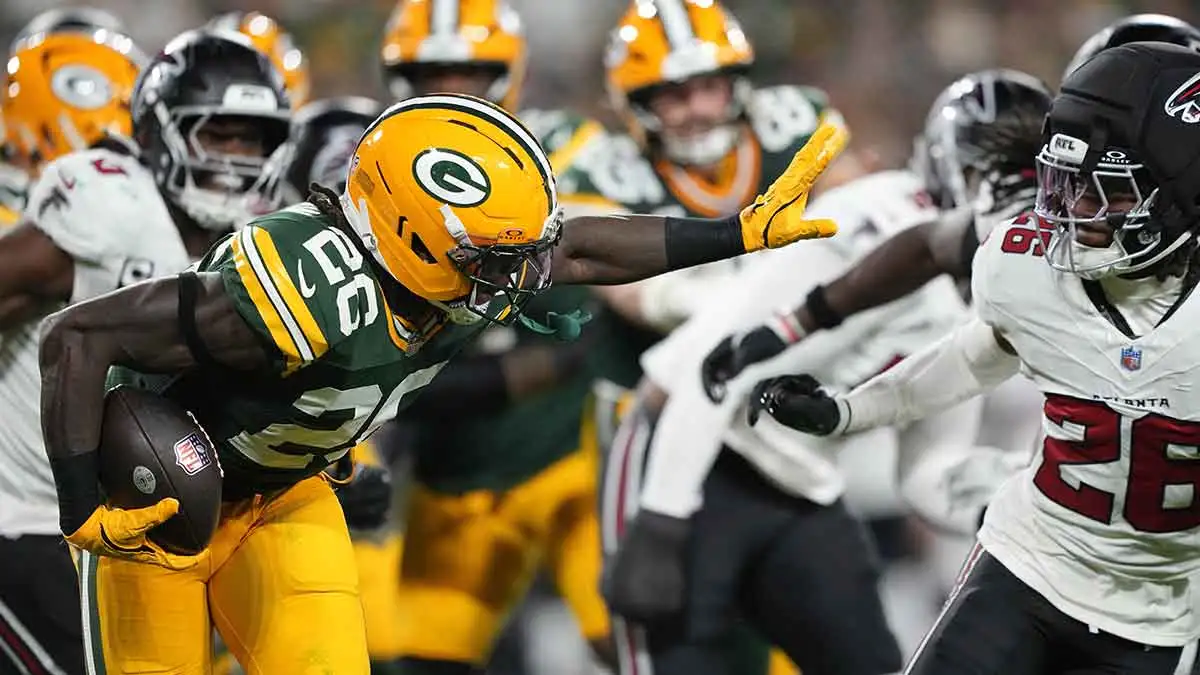
The atmosphere at Lambeau Field was supposed to be one of celebration. Instead, the home opener turned into a long night for the Green Bay Packers.
The Packers were beaten 35-14 by the Atlanta Falcons on Thursday night, suffering a defeat that was far more one-sided than the final score might suggest.
Green Bay entered the game already dealing with major absences. Josh Jacobs was unavailable, while star defensive player Micah Parsons continued to recover from the torn ACL that ended his 2025 season.
But few expected the Packers to struggle this badly against an Atlanta Falcons team that had entered the game without a win.
By the second half, sections of the Lambeau crowd were booing the Packers as Atlanta took complete control.
Jordan Love under pressure all night
Jordan Love spent much of the evening under pressure as Green Bay’s makeshift offensive line struggled to protect him.
The Packers were missing two starters up front. Left guard Aaron Banks was sidelined after suffering a toe injury in the previous week’s overtime victory over the New York Jets, while right tackle Zach Bako-Bewele suffered a season-ending patellar tendon injury in that game.
Bako-Bewele’s absence is particularly significant for Green Bay. The offensive lineman had established himself as one of the team’s most important blockers when healthy.
Without that stability, the Packers struggled to create running lanes or give Love enough time to consistently operate the passing game.
Atlanta completely dominated the ground game
If there was one statistic that summed up Green Bay’s night, it was the rushing yardage.
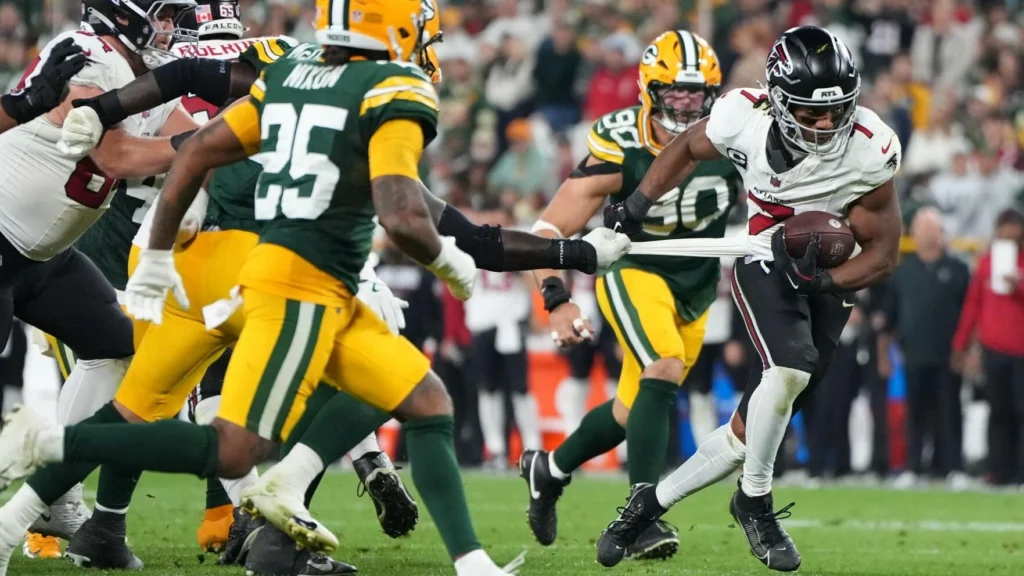
The Falcons ran for 242 yards, while the Packers managed just 17 rushing yards.
Atlanta averaged 5.9 yards per carry, turning what had been one of Green Bay’s defensive strengths into a major weakness.
The star of the night was Bijan Robinson, who exploded for 194 rushing yards and two touchdowns.
Just one week earlier, Green Bay’s defense had been allowing only 2.9 yards per carry, one of the best figures in the NFL. Against Atlanta, that resistance disappeared.
Packers’ replacement running backs couldn’t find space
With Jacobs unavailable, Green Bay needed MarShawn Lloyd and Kaleb Johnson to carry more of the workload.
Instead, both struggled to make an impact.
Lloyd received four carries for just 11 yards, while Johnson also had four carries but gained only six yards.
That gave the Packers almost no rushing threat, allowing Atlanta’s defense to focus heavily on the passing game.
For head coach Matt LaFleur, finding a way to generate production from the ground game now becomes one of the team’s most urgent challenges.
Penalties continue to hurt Green Bay
The Packers also brought another familiar problem into Thursday night’s game: discipline.
Green Bay had already committed an NFL-high 26 penalties through its first two games.
One of the most damaging moments against Atlanta came when Brenton Cox Jr. was called for roughing the passer on a third-down incompletion.
Instead of forcing Atlanta to punt, Green Bay gave the Falcons another chance.
Atlanta capitalised, scoring a touchdown to tie the game and shifting the momentum firmly in its favour.
Those mistakes are particularly costly for a team already struggling with injuries and offensive inconsistency.
Another difficult chapter for the Packers
The defeat leaves Green Bay at 1-2, and the timing could hardly be worse.
The Packers had made the playoffs in three consecutive seasons, but the previous campaign ended with five straight losses, including a wild-card defeat to the Chicago Bears after Green Bay had built a 21-3 lead.
Despite that disappointing finish, team president and CEO Ed Policy had backed LaFleur and general manager Brian Gutekunst with contract extensions.
Thursday’s performance will inevitably increase the pressure surrounding those decisions.
It is still early in the season, but Green Bay now has several problems to solve simultaneously.
Injuries are making an already difficult situation worse
The absence of Parsons remains a major issue for the Packers’ defense.
The star defender is still recovering from the ACL injury that ended his 2025 All-Pro season and is expected to miss at least one more game.
Jacobs’ situation is different. He was placed on the commissioner’s exempt list after pleading no contest to misdemeanor battery and criminal-damage charges related to a May altercation with his then-girlfriend.
With key players unavailable and offensive-line injuries piling up, Green Bay has little margin for error.
What happens next for Green Bay?
The Packers are not out of the season after three games, but Thursday night’s performance exposed problems that cannot simply be ignored.
The rushing attack needs an answer. The offensive line needs to stabilise. The defense must rediscover the form it showed during the opening weeks, and the team’s penalty problems have to stop turning manageable situations into scoring opportunities for opponents.
Most importantly, Green Bay needs to protect Jordan Love and give its quarterback a functioning ground game around him.
The Packers have plenty of time to recover, but after being thoroughly outplayed at their own stadium by a previously winless Atlanta team, the message from Lambeau was unmistakable.
Sports
Seahawks survive quarterback scare to beat Patriots 13-10: Drake Maye throws three picks in a dramatic fourth quarter…
The defending champion Seattle Seahawks overcame an early injury to quarterback Sam Darnold and a 10-point deficit as their defence produced three crucial fourth-quarter interceptions against Drake Maye.
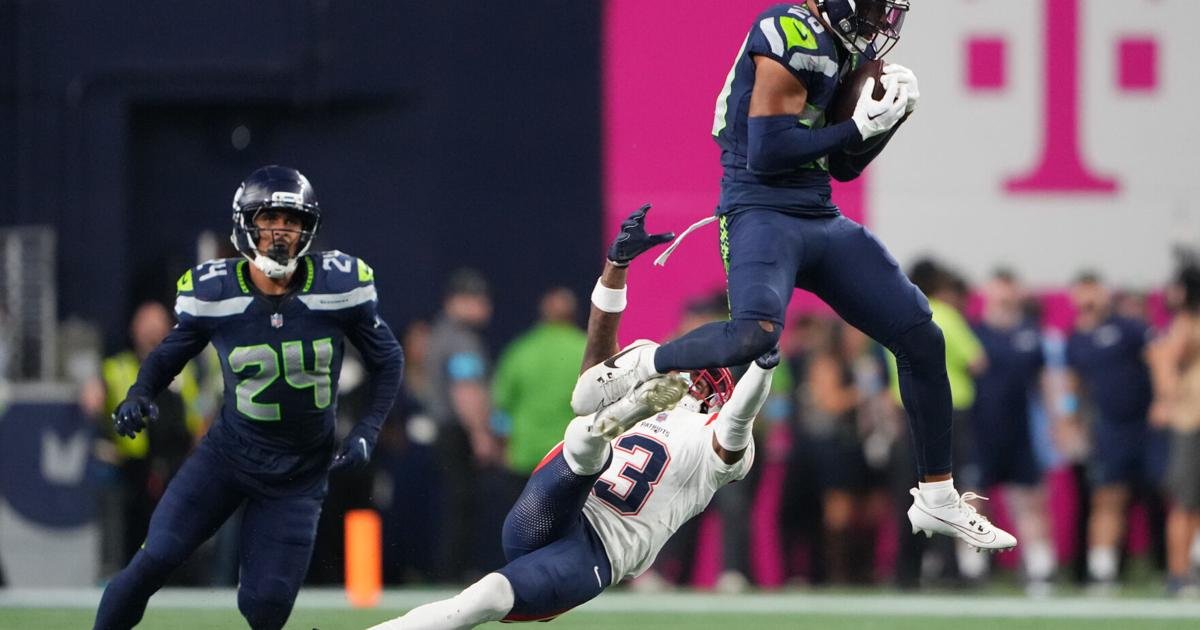
The Seattle Seahawks opened their title defence with a reminder that championship teams do not always need perfect performances to find a way to win.
In a tense opening-night clash against the New England Patriots, Seattle recovered from an early 10-0 deficit and the loss of starting quarterback Sam Darnold to secure a gritty 13-10 victory.
The game quickly turned into a test of resilience for the defending champions. Seattle’s offence struggled for long stretches, but a determined defensive performance and a late game-winning field goal ensured the Seahawks began the 2026 regular season with a victory.
And for Patriots quarterback Drake Maye, the final quarter became one he will want to forget.
Sam Darnold exits early as Seahawks face immediate adversity
Seattle’s night took an unexpected turn almost immediately when starting quarterback Sam Darnold was forced out after the team’s first offensive series.
The Seahawks suddenly had to turn to backup quarterback Drew Lock, putting additional pressure on an offence that was already struggling to find rhythm.
For much of the first half, Seattle could not generate consistent momentum. The Seahawks either punted or saw the half end on each of their first six possessions, allowing New England to build a 10-0 advantage.
But the defending champions refused to panic.
Drew Lock finds Jaxon Smith-Njigba as Seattle fights back
The breakthrough finally came in the second half.
Backup quarterback Drew Lock connected with reigning Offensive Player of the Year Jaxon Smith-Njigba for a touchdown that brought the Seahawks back into the contest.
Smith-Njigba was the clear standout for Seattle’s offence, finishing the game with eight receptions for 122 yards and a touchdown.
His contribution was particularly important considering how quiet the rest of Seattle’s receiving group was. The remaining Seahawks pass catchers combined for just nine receptions and 78 yards.
Rookie running back Jadarian Price also provided useful support on the ground, rushing for 52 yards on 10 carries.
Seattle finished with only 285 total offensive yards, but on a difficult night, efficiency in the biggest moments proved more valuable than spectacular numbers.
Jason Myers delivers the decisive kick
With the game hanging in the balance, veteran kicker Jason Myers delivered when Seattle needed him most.
Myers converted two field goals during the contest, including the decisive kick with 5:50 remaining, giving the Seahawks the lead they would ultimately protect.
From that point, the pressure shifted completely onto the Patriots and their young quarterback.
And Seattle’s defence took over.
Three fourth-quarter interceptions change everything
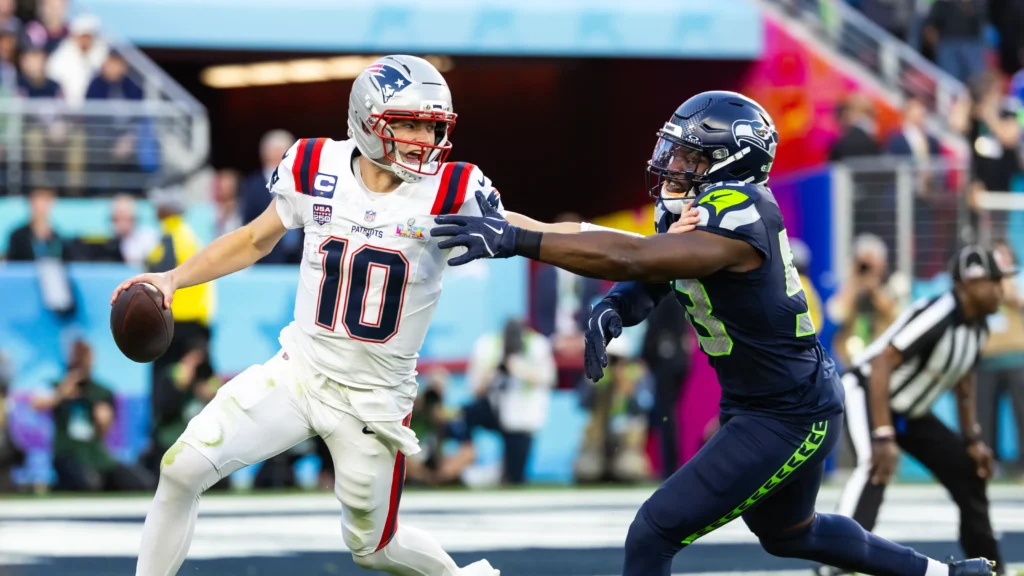
The Patriots still had opportunities to win the game, but Drake Maye endured a disastrous fourth quarter.
Seattle intercepted him on three consecutive possessions, completely changing the complexion of the closing stages.
The final turnover was the most dramatic.
With New England threatening to produce a late winning drive, Josh Jobe intercepted Maye in the end zone with just 21 seconds remaining.
That play effectively sealed the victory and sent Seattle into Week 2 with a hard-earned win.
The Seahawks’ defensive statistics told the story of the night: three interceptions, three sacks, nine tackles for loss and six pass breakups.
It was a championship-level response from a defence that repeatedly stepped up when the game was on the line.
Seattle’s defence makes an early statement
The Seahawks may not have produced their most impressive offensive performance, but their defence showed why the team remains one of the sides to watch this season.
Holding the New England Patriots to 277 total yards while forcing three crucial turnovers in the final quarter was no small achievement.
More importantly, Seattle demonstrated that it can survive adversity.
Losing a starting quarterback early in the game could have easily derailed the defending champions’ opening night. Instead, the Seahawks relied on their backup quarterback, their star receiver, their kicker and, above all, their defence.
That combination was enough.
What comes next for the Seahawks?
The victory gives the Seattle Seahawks an early advantage as they begin another campaign with championship expectations.
Seattle will next face the Arizona Cardinals in Week 2, where the team will hope for more clarity regarding the condition of Sam Darnold.
For now, though, the defending champions have made their first statement of the season.
It was not pretty. It was not easy.
But when the fourth quarter demanded big plays, Seattle’s defence delivered three of them.
And that was enough to turn a difficult opening night into a 13-10 victory.

How ‘Avengers: Endgame’ Returned to Cinemas and Reclaimed Box Office Glory

Tom Cruise’s ‘Digger’ Faces a Tough Opening: Could ‘Verity’ Take the Lead?

‘Verity’ Could Outopen ‘Digger’: Why Tom Cruise Faces a Tough Contest

‘Endgame’ Returns to No. 1 ‘Avatar’ Loses Its Box Office Throne

Mark Zuckerberg Faces a New Hollywood Reckoning Why Aaron Sorkin’s Film Hits Closer to Home

1-Iran Issues Dire Warning to Israel and Defies Trump on Nukes: “We’re Ready to Strike Deep Inside”

Sen. Elizabeth Warren Calls It a ‘Cesspool of Corruption’ — Here’s Why Senators Are Now Fighting Back Against the DOJ’s Live Nation Deal That Left Every Fan Betrayed…

Gucci bets on Demna to revive fading glamour as Milan fashion week opens with bold film surprise

Donald Trump’s net worth reveals the fortune behind the former US President and business mogul

“Tomás Rodríguez Net Worth 2025: Panama’s Gold Cup Goal‑Machine’s Surprising Fortune Revealed”

Miss Jamaica Suffers Terrifying Fall Off Miss Universe Stage; Rushed to Hospital on Stretcher in Viral Video

Moana Live-Action Teaser Sparks Outrage as Fans Call Disney’s Move a ‘Clear Money Grab’ — What Went Wrong?

Ryan Gosling’s Project Hail Mary Trailer Stuns Fans with a Mysterious Alien Ally and a Mission That Could Save Earth

Apple delays Jessica Chastain thriller The Savant about domestic extremism after recent US violence
