
Entertainment
AKA Charlie Sheen review 7 shocking truths he reveals but shows no real remorse
Netflix’s two-part documentary on Charlie Sheen exposes decades of addiction and chaos but leaves little room for self-reflection.

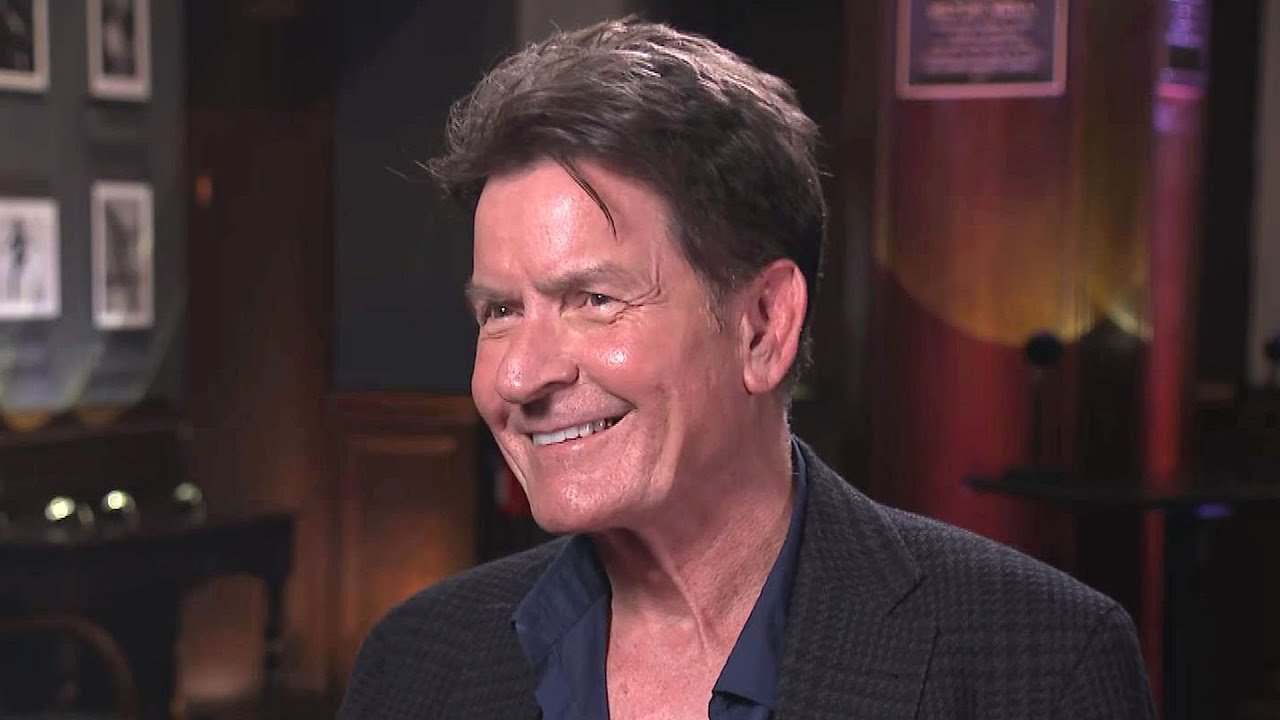
The release of AKA Charlie Sheen on Netflix was supposed to be a raw, unflinching look into the turbulent life of actor Charlie Sheen. Instead, what audiences got was a glossy, controlled narrative where Sheen, though seven years sober, still seems reluctant to take full responsibility for the terrifying chaos he inflicted on those around him.
For decades, Sheen’s life has been splashed across tabloids and entertainment news. From public meltdowns to the infamous “tiger blood” and “Adonis DNA” rants on YouTube, the actor’s addiction to pills, alcohol, and crack cocaine was lived in public view. His father, Martin Sheen, often called press conferences to manage the circus, while his ex-wife Denise Richards battled through divorce proceedings that made headlines worldwide.
A Life Already Documented
What makes AKA Charlie Sheen feel underwhelming is that nothing in it feels truly new. Sheen himself breaks his life into three acts: “Partying,” “Partying with problems,” and finally “Just problems.” Each phase was already documented in real time—sometimes through salacious gossip sold by party companions, sometimes through hospitalisations, and sometimes through Sheen’s own unhinged interviews on shows like Alex Jones’s Infowars.
The documentary barely scratches the surface of the darker allegations: domestic violence, restraining orders, exposing partners to HIV, and neglecting his children. The gentle ride given by director Andrew Renzi allows Sheen too much control, softening the edges of his past.
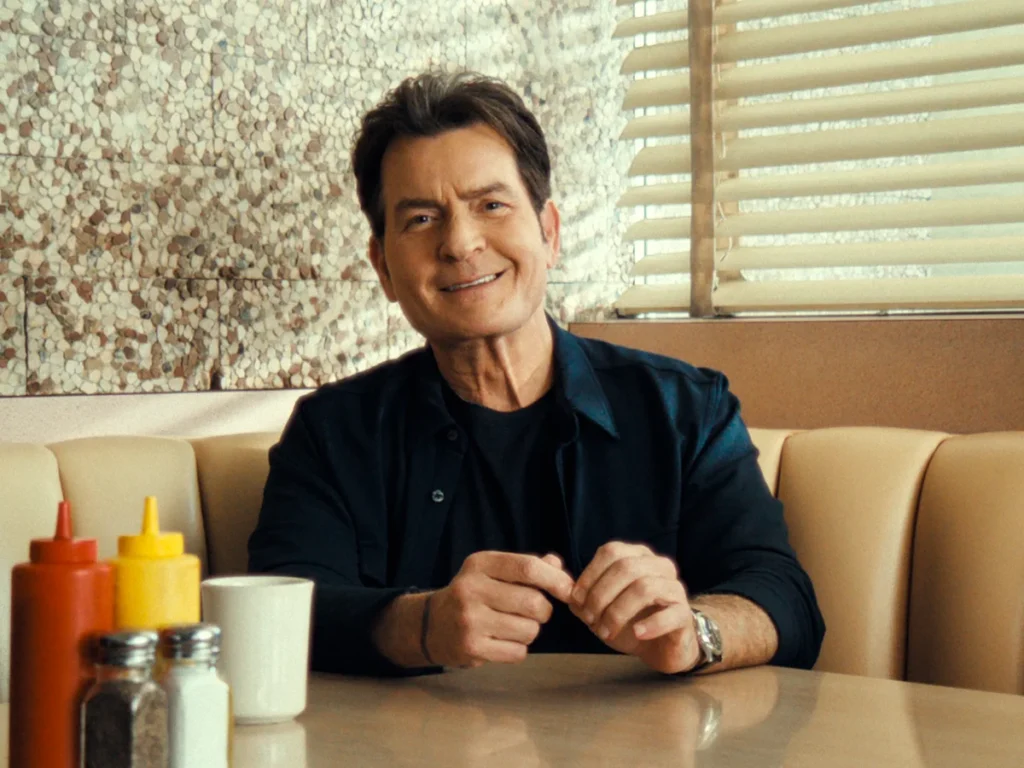
The Family’s Pain and Loyalty
Notably absent from the documentary are Martin Sheen and Sheen’s brother Emilio Estevez. Their silence speaks volumes. Yet his other brother, Ramon Sheen, participates, as do his daughter Lola Sheen, son Bob Sheen, and the mothers of his children, Denise Richards and Brooke Mueller.
The women speak candidly, with Richards delivering the toughest honesty, yet still tempered by lingering love. Despite the wreckage, Sheen’s charisma continues to explain why people remain loyal—even when he was at his most destructive.
Hollywood Colleagues Weigh In
The most bracing voices come from outsiders who lived through Sheen’s destructive orbit. Heidi Fleiss, the infamous “Hollywood Madam,” unleashes her rage, calling Sheen “the crybaby pussy bitch” for testifying against her while other celebrity clients remained silent. Her bitterness is almost refreshing in a documentary otherwise too polished.
Then there’s Jon Cryer, Sheen’s co-star on Two and a Half Men. His bone-deep weariness when recounting Sheen’s tantrums and drug-fueled chaos is sobering. “He had everything and then he lost it,” Cryer says of Sheen’s meltdown after being fired from the show. It’s a reminder that Sheen’s recklessness didn’t just destroy his life but disrupted countless others.
Glimpses of Remorse—But Not Enough
There are fleeting moments when the glossy façade cracks. Sheen acknowledges the patience of his family and lifelong friends, particularly Tony Todd, a childhood friend who abstained from drugs and alcohol but spent nights worrying Sheen wouldn’t survive until morning. Yet even these recollections feel more like tributes to others’ loyalty than genuine remorse for the pain he caused.
Instead, viewers are left with wistful smiles as Sheen recalls his partying days, a nostalgia that undermines any claims of reflection. For a man who exposed girlfriends to HIV, terrorised co-stars, and left emotional scars on his family, the lack of contrition is glaring.

A Documentary That Protects the Star
The problem with AKA Charlie Sheen is not Sheen’s charm—it’s the filmmaker’s reluctance to push harder. By placing narrative control in Sheen’s hands, Renzi produces something closer to image management than revelation. The audience is left pitying those around him rather than the man himself.
Perhaps Sheen saves his real self-examination for therapy. Perhaps he’s simply not ready to confront the depths of his actions. Either way, this documentary offers surface-level storytelling when viewers deserved something more honest.
Final Verdict
AKA Charlie Sheen is more about nostalgia than accountability. It showcases Sheen’s undeniable charisma but glosses over the terror he inflicted on others. His fans may enjoy the ride, but critics will find themselves asking the same question: when will Charlie Sheen finally face himself?
The two-part series is streaming now on Netflix.
For more global reviews and entertainment coverage, visit www.DailyGlobalDiary.com







Entertainment
‘Sleepers’ at 30: Barry Levinson Still Questions the Controversy Around His Darkest Film… But Why Does It Refuse to Fade Away?
Three decades later, director Barry Levinson reflects on the moral storm, public backlash, and emotional weight behind Sleepers—a film that still divides audiences and critics alike.


Thirty years after its release, Sleepers remains one of Hollywood’s most emotionally charged and debated films—and its director is still trying to make sense of the controversy it sparked.
Acclaimed filmmaker Barry Levinson, known for classics like Rain Man and Good Morning, Vietnam, recently revisited the legacy of his 1996 courtroom drama Sleepers (1996 film). Despite its powerful cast and strong box office performance at the time, the film continues to raise difficult moral and ethical questions even three decades later.
A Film That Refused to Stay Quiet
Based on Lorenzo Carcaterra’s controversial semi-autobiographical book, Sleepers follows four childhood friends who suffer abuse in a juvenile detention center and later seek revenge as adults. The story, though gripping, immediately divided critics upon release.
ALSO READ : Younghoe Koo Explains Botched Field Goal After Slip: “The Ball Was Moving So I Pulled Up”
The film featured a heavyweight ensemble including Robert De Niro, Brad Pitt, and Kevin Bacon, adding significant emotional and commercial weight to the project.
Yet, even with its star power, Sleepers became a lightning rod for debate—particularly over whether its narrative was a true account or a heavily dramatized fictionalization.
Levinson’s Lingering Question
In recent reflections, Levinson has expressed that what still puzzles him is not the film’s success, but the intensity of the backlash. Critics at the time questioned the ethical responsibility of presenting a story that blurred the line between fact and fiction.
Levinson has often maintained that his focus was never on literal accuracy, but on emotional truth—the psychological scars and consequences carried by survivors of abuse. Still, the debate never fully settled.

Why the Controversy Never Died
Unlike many 1990s courtroom dramas that faded into nostalgia, Sleepers continues to resurface in discussions about storytelling ethics in cinema. In today’s media environment—where audiences scrutinize “based on a true story” labels more closely than ever—the film feels unexpectedly relevant again.
Film historians often cite Sleepers as a turning point in how Hollywood handles sensitive real-world subject matter, especially when adapting controversial books into mainstream entertainment.
A Legacy That Still Feels Unfinished
Even after 30 years, Levinson’s film remains emotionally heavy and culturally unsettled. For some viewers, it is a powerful exploration of trauma and justice. For others, it remains a problematic example of blurred truth in cinema.
What is undeniable, however, is its endurance. Few films from the 1990s continue to generate such layered debate in modern discussions about filmmaking responsibility.
And perhaps that is why Sleepers refuses to disappear—it never gave audiences a comfortable place to rest.
Entertainment
What I Learned From Dean Tavoularis… Inside the Mind of the New Hollywood Legend Who Built Entire Cinematic Worlds
A rare look into the creative philosophy of legendary production designer Dean Tavoularis, the visual architect behind The Godfather films and a defining force of New Hollywood cinema.

There are film designers who build sets—and then there is Dean Tavoularis, a man widely credited with shaping the visual language of modern cinema itself.
For decades, Tavoularis has remained one of Hollywood’s most influential yet quietly spoken creative forces. His work with director Francis Ford Coppola on The Godfather trilogy redefined how audiences perceive cinematic realism, turning film sets into immersive worlds rather than constructed spaces.
A Lesson in “Invisible Design”
What stands out most when studying Tavoularis’s approach is a philosophy that seems almost paradoxical: the best production design should never be noticed.
Rather than overwhelming audiences with visual spectacle, Tavoularis built environments that feel lived-in, historically grounded, and emotionally authentic. Whether it was the dimly lit interiors of The Godfather or the sprawling political landscapes in Apocalypse Now, his goal was always the same—truth through texture.
ALSO READ : Younghoe Koo Explains Botched Field Goal After Slip: “The Ball Was Moving So I Pulled Up”
This approach became a cornerstone of what critics now call New Hollywood cinema, a movement that emphasized realism, character depth, and atmospheric storytelling over studio gloss.
Building Worlds, Not Sets
In collaboration with filmmakers like Coppola, Tavoularis transformed production design into a narrative force. His work didn’t just support storytelling—it actively shaped it.
Industry historians often point out that without his architectural precision and obsessive attention to detail, many iconic scenes in The Godfather films would not carry the same emotional weight.
The influence of his work can still be seen today in modern filmmakers who prioritize grounded realism over digital excess.
The Discipline Behind the Art
One of the most striking lessons from Tavoularis’s career is his discipline. Production design, in his philosophy, is not decoration—it is storytelling architecture.
He has often emphasized that every object in a frame must serve a purpose, whether emotional, historical, or psychological. Nothing exists by accident.

This mindset has influenced generations of designers and directors, including those working in major studios such as Paramount Pictures, where The Godfather remains one of the most studied visual achievements in cinema history.
Why His Legacy Still Matters Today
In an era dominated by CGI-heavy blockbusters, Tavoularis’s work feels increasingly relevant. Filmmakers and audiences alike are rediscovering the power of tangible environments—real textures, physical spaces, and grounded aesthetics.
His legacy serves as a reminder that cinematic immersion does not always come from technology. Sometimes, it comes from restraint, observation, and an almost architectural understanding of human emotion.
A Quiet Architect of Film History
Unlike many Hollywood figures, Dean Tavoularis never sought the spotlight. Yet his influence is embedded in some of the most iconic films ever made.
His contribution to cinema is not just visual—it is philosophical. He changed how stories are physically constructed, how emotions are visually supported, and how audiences experience realism on screen.
And perhaps the greatest lesson from his work is this: the best film worlds don’t announce themselves—they simply feel real enough to believe.
Entertainment
“Nicole Kidman Reveals ‘Harrowing’ Moment She Learned About Her Mother’s Death… and Why She Is Now Training as a Death Doula: ‘It’s Very Important to Me’”
The Oscar-winning actress opens up at HISTORYTalks about grief, healing, and her unexpected journey into end-of-life care, while also reflecting on women’s representation and her evolving role as a producer.

In a deeply emotional and reflective appearance at HISTORYTalks 2026, acclaimed actress Nicole Kidman shared one of the most personal chapters of her life—describing the moment she learned about her mother’s death as “harrowing,” and revealing her growing commitment to becoming a trained death doula.
The Oscar-winning star of films like The Hours and Moulin Rouge! opened up during a 20-minute panel discussion about grief, purpose, and transformation. Kidman’s candid remarks stood out in an event otherwise filled with public figures, cultural icons, and political leaders.
A Personal Loss That Changed Everything
Kidman spoke with quiet intensity about receiving the devastating news of her mother’s passing, describing it as a moment that reshaped her emotional understanding of life and death.
“It’s very important to me,” she said, referring to her decision to explore training as a death doula—someone who supports individuals and families during end-of-life transitions.
ALSO READ : Younghoe Koo Explains Botched Field Goal After Slip: “The Ball Was Moving So I Pulled Up”
The concept of a death doula, though still relatively unfamiliar to many, is gaining recognition in holistic care communities. Kidman’s openness about this path has sparked widespread conversation about grief support and emotional care in modern society.
From Hollywood Star to Producer and Storyteller
Beyond her personal revelations, Kidman also reflected on her evolving role in the entertainment industry as a producer, emphasizing her desire to create more meaningful and diverse narratives for women in film and television.
Her production work through Blossom Films has been widely recognized for championing complex female-led stories, aligning with her long-standing advocacy for stronger representation of women in Hollywood.
Kidman has often spoken about breaking traditional boundaries in the industry, and her latest comments reinforced her belief that storytelling should extend beyond entertainment into emotional and social impact.
Her Relationship with America and Cultural Identity
During the discussion, Kidman also touched on her relationship with the United States, where she has built a significant portion of her career and personal life.

As an Australian-born actor, she noted the cultural shift she experienced while working in Hollywood, reflecting on how America shaped her artistic journey while also challenging her perspectives.
Kidman’s presence at HISTORYTalks 2026, produced by History Channel, underscored the event’s broader theme of identity, legacy, and storytelling across generations.
A Voice for Women in Hollywood
One of the key highlights of her panel was her continued advocacy for women’s representation in the entertainment industry. Kidman emphasized the importance of creating space for female voices not only in front of the camera but also behind it.
Her comments resonated strongly with ongoing global discussions about gender equity in film and media, reinforcing her role as both an artist and an industry influencer.
A Rare Moment of Vulnerability
What made Kidman’s appearance particularly impactful was her willingness to blend personal grief with public discourse. In an industry often defined by image and performance, her vulnerability offered a rare glimpse into the emotional realities behind fame.
As the audience listened, the conversation shifted from celebrity status to human experience—grief, healing, and purpose.
For many attendees, Kidman’s reflections stood out as one of the most emotionally resonant moments of the event.

‘Sleepers’ at 30: Barry Levinson Still Questions the Controversy Around His Darkest Film… But Why Does It Refuse to Fade Away?

Inside the ‘Honoring Trump’ Dinner Party Hosted by David Ellison… What Did the Former President Speak for an Hour About?

‘Trump Is Killing the Climate’? Al Gore Says He Isn’t Worried… “Public Opinion Will Force the Solution”

What I Learned From Dean Tavoularis… Inside the Mind of the New Hollywood Legend Who Built Entire Cinematic Worlds

“Disgrace!” Donald Trump Clashes With Norah O’Donnell in Explosive ‘60 Minutes’ Interview Over Gunman Manifesto

1-Iran Issues Dire Warning to Israel and Defies Trump on Nukes: “We’re Ready to Strike Deep Inside”

Donald Trump’s net worth reveals the fortune behind the former US President and business mogul

“She Never Made It Out…” Albany House Fire Claims Woman’s Life as Family Pleads for Help to Bring Her Home

“Tomás Rodríguez Net Worth 2025: Panama’s Gold Cup Goal‑Machine’s Surprising Fortune Revealed”

Caitlin Clark Sidelined with Quad Strain, Set to Miss Two Weeks of WNBA Action

Miss Jamaica Suffers Terrifying Fall Off Miss Universe Stage; Rushed to Hospital on Stretcher in Viral Video

Moana Live-Action Teaser Sparks Outrage as Fans Call Disney’s Move a ‘Clear Money Grab’ — What Went Wrong?

Ryan Gosling’s Project Hail Mary Trailer Stuns Fans with a Mysterious Alien Ally and a Mission That Could Save Earth

Apple delays Jessica Chastain thriller The Savant about domestic extremism after recent US violence

Avatar 3, Fire and Ash trailer reveals Jake Sully’s family facing terrifying new Na’vi enemies with deadly fire powers
-

 Entertainment1 week ago
“Choosing the Next James Bond Isn’t Easy…” Amazon MGM Breaks Silence on 007 Casting Mystery
-

 Entertainment3 days ago
“Hulk Hogan: Real American” Review: Netflix Docu… is More About Donald Trump Than the Wrestling Legend Himself, Fans Ask ‘Where is Hulk Hogan in His Own Story?’
-

 Entertainment1 week ago
“All Hail the Queen…” Donna Langley’s Hollywood Power Play Stuns CinemaCon as Nolan, Spielberg and Snoop Dogg Rally Behind Universal
-

 Entertainment1 week ago
Christopher Nolan Unveils Jaw-Dropping ‘The Odyssey’ Footage… And That Trojan Horse Scene Has Everyone Talking
-

 Entertainment1 week ago
Dancing with the Stars Just Dropped Its First Two Season 35 Names — and Reality TV Fans Are Already Picking Their Winner…
-

 Entertainment4 days ago
“Half Man” Review: Richard Gadd’s ‘Baby Reindeer’ Follow-Up Turns Stepbrother Story Into a ‘Decades-Long Spiral’ That Leaves Viewers Drained…
-

 Entertainment1 week ago
“Dave Chappelle Floats ‘Chappelle’s Show’ Reboot Idea to Eddie Murphy at AFI Gala… as Comedy Legend Gets Emotional AFI Lifetime Honor”
-

 Entertainment4 days ago
“From White House to Hollywood… and Now Goodbye?” Obama-Netflix Deal Ends After 8 Years of Hits