
Sports
Sean McVay admits costly mistake after Rams’ overtime loss to 49ers with just three words…
The Los Angeles Rams head coach owned up to a critical fourth-down call that sealed San Francisco’s victory in a tense NFC West battle.


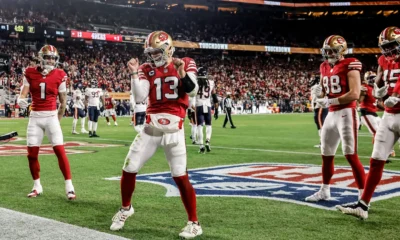
On Thursday Night Football, the Los Angeles Rams came heartbreakingly close to a statement win over their divisional rivals, the San Francisco 49ers. Instead, a single fourth-and-1 decision in overtime turned the game into a gut-punch loss.
The Rams, powered by nearly 400 yards of passing, had momentum surging in the second half. But when the game reached its defining moment — a fourth-and-1 at midfield in overtime — head coach Sean McVay dialed up a run to the right with star running back Kyren Williams.
ALSO READ : Tottenham’s Champions League wake-up call… why Spurs must stop looking like a Europa League side
Williams, who had been solid throughout the night with 65 yards on 13 carries, was stuffed short. The 49ers took over, and moments later walked out of SoFi Stadium with a 26-23 overtime win, a result that could have major implications in the NFC West race.
McVay takes the blame
After the game, McVay faced reporters with a level of honesty that’s become part of his coaching DNA.
“Bad call by me,” McVay admitted. “Thought about maybe trying to draw them offsides, I took one timeout, they took the other, and it was a poor decision by me right there. I’m pretty sick right now. I’m sick of this spot I put our group in to end the game.”

The candid reflection is classic McVay, who has built a reputation for accountability since becoming the youngest head coach in NFL history back in 2017. Still, this moment stung — not only for him, but for a Rams team fighting to keep pace in one of football’s toughest divisions.
A game of missed opportunities
The loss overshadowed what had been a promising offensive display. Quarterback Matthew Stafford kept the Rams in the contest with sharp throws that pushed the team close to 400 yards passing. The receiving corps moved the chains with precision, but ultimately, it was the short-yardage play call that defined the night.
The 49ers’ defense, led by stars like Nick Bosa and Fred Warner, stepped up in the clutch, proving why San Francisco remains one of the NFC’s elite teams.
Learning from tough losses
For the Rams, the frustration is real, but McVay is determined to turn the page.
“These are the tough beats you have to learn from and move forward,” McVay said. “And that’s what we’re going to do.”
The Rams remain a dangerous team, but in a competitive NFC West that features the 49ers and Seattle Seahawks, mistakes like this can be costly. Every decision — and every yard — matters.
As the season continues, all eyes will be on McVay to see how he bounces back from this high-profile misstep. For now, Thursday night will be remembered as the game where the Rams nearly had it all — until one play call changed everything.




Sports
Australia held Brazil to a draw after Nestory Irankunda’s stunning free kick — then Rayan struck at the very end…
The Socceroos were seconds away from a memorable victory over five-time world champions Brazil before Rayan’s stoppage-time header rescued a 1-1 draw in Townsville.

For almost the entire night, Australia looked ready to pull off one of the biggest results in recent Socceroos history.
Then, right at the death, Brazil found a way through.
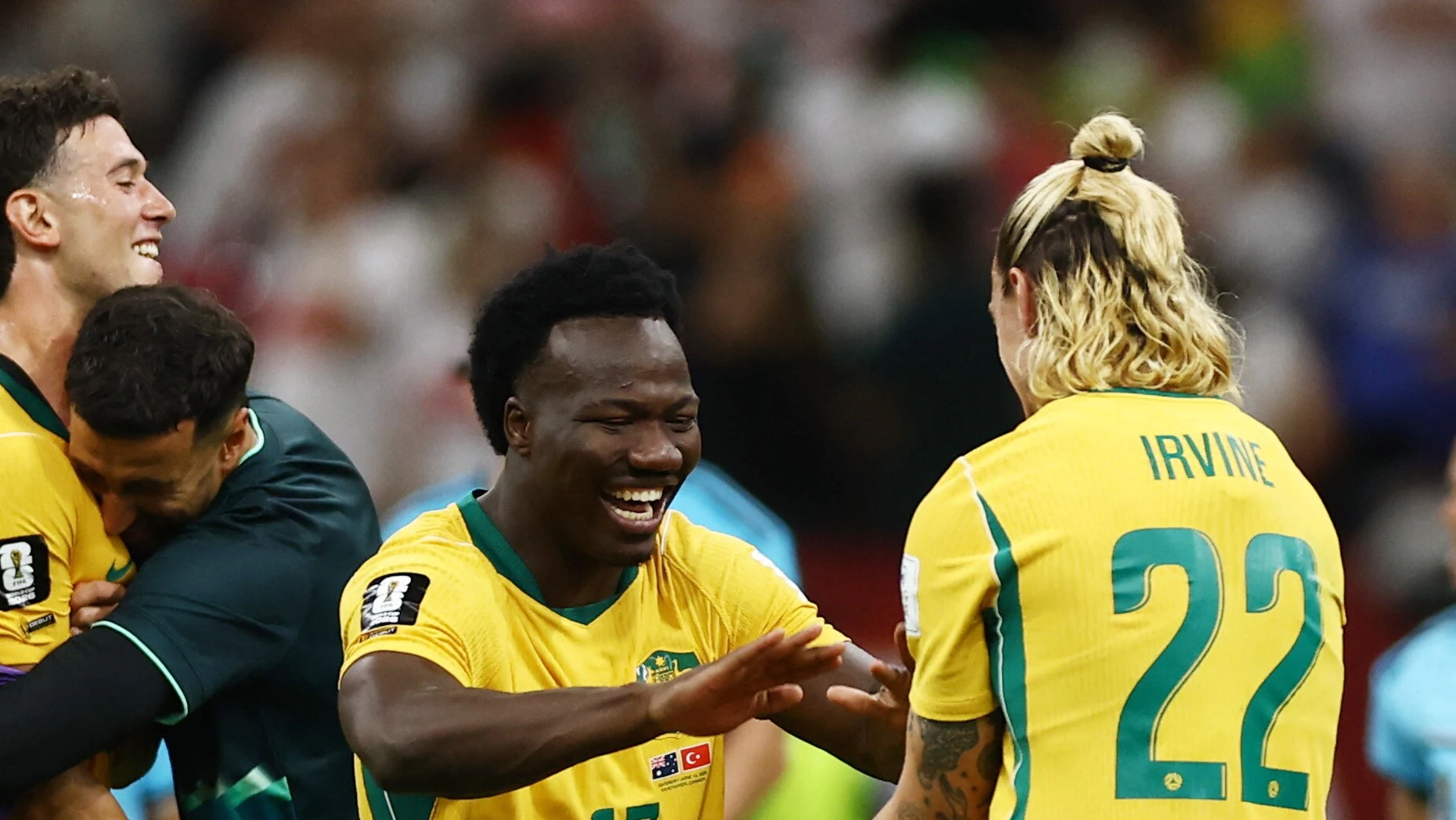
The Socceroos were held to a 1-1 draw by Brazil in Townsville after a dramatic finish saw Rayan score a stoppage-time equaliser, cancelling out a spectacular goal from Nestory Irankunda. The result was particularly painful for Australia after the home side had defended its lead deep into added time.
Still, the performance offered plenty for Australia to take forward.
Irankunda produces another moment of magic
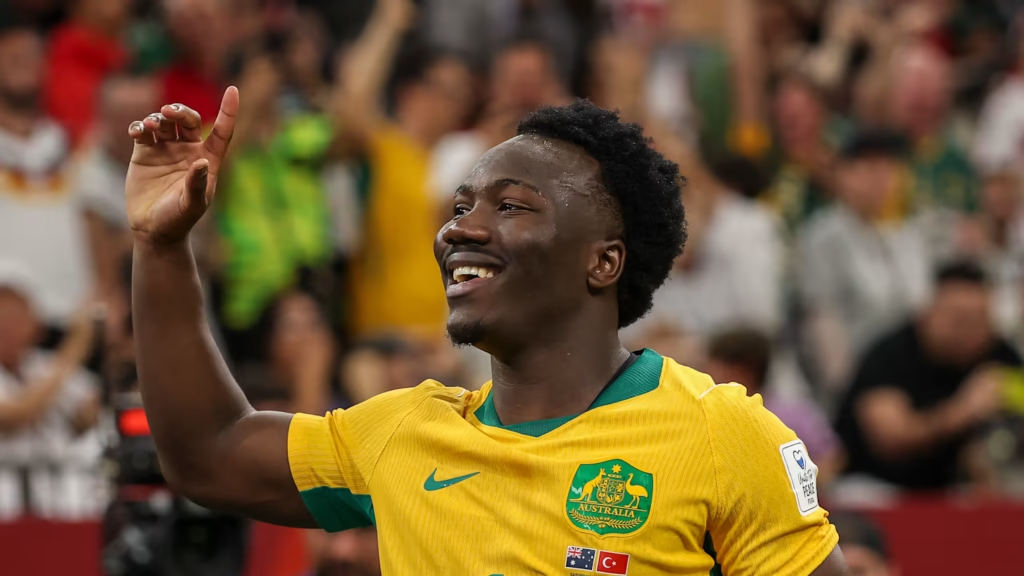
The game was heading towards a tense final stretch when Nestory Irankunda delivered the moment Australian fans had been waiting for.
The young forward produced a spectacular free kick to put the Socceroos ahead and gave the home crowd genuine belief that Brazil could be beaten.
Irankunda has become one of the most exciting young attacking players associated with Australian football. His pace, confidence and ability to strike the ball from distance have made him a player capable of changing a match with a single moment.
Against Brazil, he produced exactly that kind of moment.
For Australia, the goal looked as though it might be enough to secure a famous victory.
Brazil refuse to go quietly
Five-time world champions Brazil were never going to accept defeat without a fight.
The visitors pushed forward as Australia dropped deeper, searching for one final opening. The Socceroos managed to withstand the pressure for much of the closing period, but the decisive moment arrived in stoppage time.
Rayan rose to meet a pinpoint delivery and powered his header beyond the Australian defence, sending the ball into the net in the final moments of the match.
It was almost the last meaningful action of the contest.
For Australia, it was a brutal way to lose the chance of a famous win. For Brazil, it was a dramatic escape.
Irvine sees the bigger picture
Australian midfielder and captain Jackson Irvine was clearly disappointed by the late equaliser, but his reaction after the game reflected how much the Socceroos could still take from the performance.
Australia competed against one of international football’s most decorated nations and showed enough composure to lead for much of the second half.
Irvine also highlighted the atmosphere around the match and the support from the Australian crowd, underlining how significant the occasion was for a team facing one of the biggest names in world football.
A draw that felt like a defeat
On paper, a draw against Brazil is a result Australia can take plenty of confidence from.
But football is rarely played on paper.
The Socceroos were within seconds of beating one of the most decorated national teams in the sport. Instead, they had to settle for a point after Rayan’s late header.
That frustration was visible at the final whistle.
Yet the bigger picture remains encouraging. Australia showed it could stay organised, compete physically and create problems against a Brazil side packed with elite-level talent.
For Nestory Irankunda, meanwhile, the night provided another reminder of his growing importance to Australia’s next generation.
His spectacular free kick deserved to be the winning goal.
Instead, Brazil had the final word.
Another chance is coming
The story is not finished yet.
Australia and Brazil are scheduled to meet again in Brisbane, giving the Socceroos another opportunity to test themselves against the five-time world champions.
For Australia, the challenge will be turning the promise of this performance into another strong showing.
For Irankunda, another big stage awaits.
His spectacular goal may ultimately have been overshadowed by Brazil’s last-gasp equaliser, but the young attacker once again showed why he is becoming one of the most exciting faces of Australian football.
The Socceroos wanted a historic win.
They came painfully close.
Then, with almost the final kick of the night, Brazil changed the story.
Sports
Packers booed at Lambeau after Falcons blowout: Green Bay’s home opener turns into a nightmare…
Green Bay’s 35-14 loss to Atlanta exposed major problems on both sides of the ball, with injuries, penalties and a struggling rushing attack leaving the Packers facing serious questions early in the season.
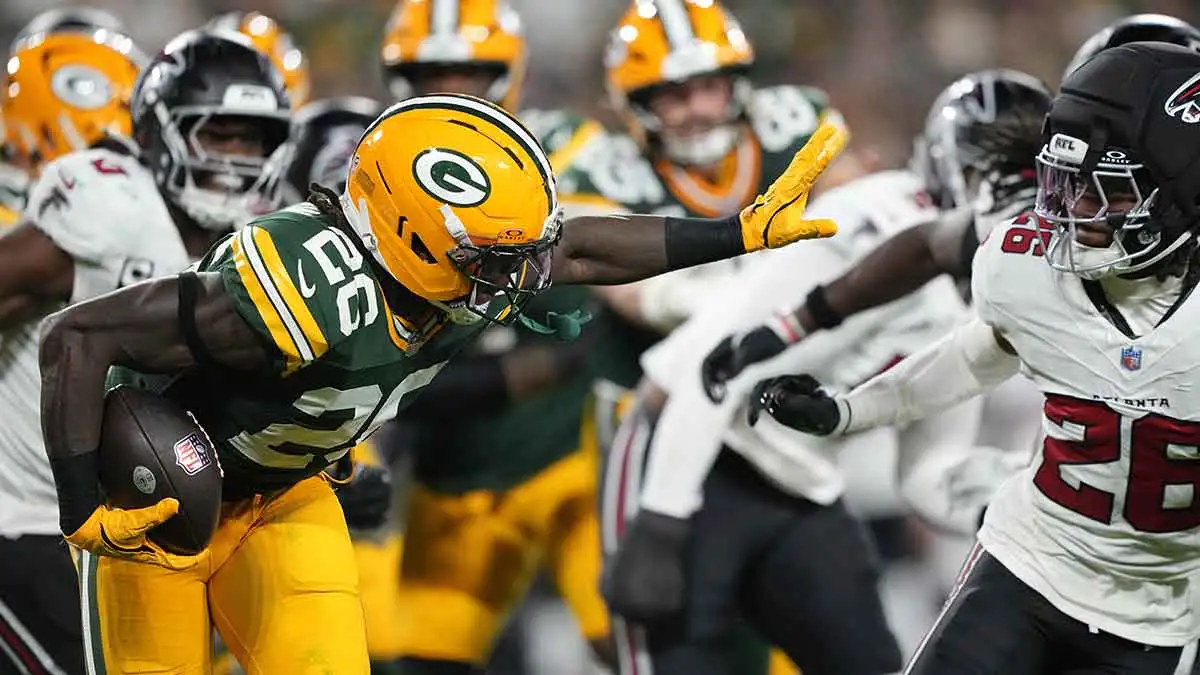
The atmosphere at Lambeau Field was supposed to be one of celebration. Instead, the home opener turned into a long night for the Green Bay Packers.
The Packers were beaten 35-14 by the Atlanta Falcons on Thursday night, suffering a defeat that was far more one-sided than the final score might suggest.
Green Bay entered the game already dealing with major absences. Josh Jacobs was unavailable, while star defensive player Micah Parsons continued to recover from the torn ACL that ended his 2025 season.
But few expected the Packers to struggle this badly against an Atlanta Falcons team that had entered the game without a win.
By the second half, sections of the Lambeau crowd were booing the Packers as Atlanta took complete control.
Jordan Love under pressure all night
Jordan Love spent much of the evening under pressure as Green Bay’s makeshift offensive line struggled to protect him.
The Packers were missing two starters up front. Left guard Aaron Banks was sidelined after suffering a toe injury in the previous week’s overtime victory over the New York Jets, while right tackle Zach Bako-Bewele suffered a season-ending patellar tendon injury in that game.
Bako-Bewele’s absence is particularly significant for Green Bay. The offensive lineman had established himself as one of the team’s most important blockers when healthy.
Without that stability, the Packers struggled to create running lanes or give Love enough time to consistently operate the passing game.
Atlanta completely dominated the ground game
If there was one statistic that summed up Green Bay’s night, it was the rushing yardage.
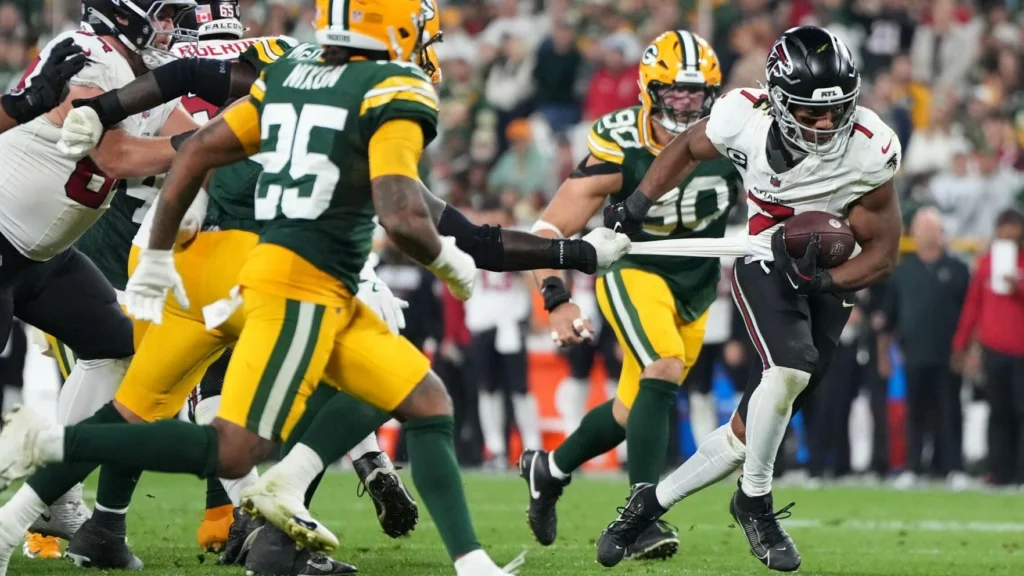
The Falcons ran for 242 yards, while the Packers managed just 17 rushing yards.
Atlanta averaged 5.9 yards per carry, turning what had been one of Green Bay’s defensive strengths into a major weakness.
The star of the night was Bijan Robinson, who exploded for 194 rushing yards and two touchdowns.
Just one week earlier, Green Bay’s defense had been allowing only 2.9 yards per carry, one of the best figures in the NFL. Against Atlanta, that resistance disappeared.
Packers’ replacement running backs couldn’t find space
With Jacobs unavailable, Green Bay needed MarShawn Lloyd and Kaleb Johnson to carry more of the workload.
Instead, both struggled to make an impact.
Lloyd received four carries for just 11 yards, while Johnson also had four carries but gained only six yards.
That gave the Packers almost no rushing threat, allowing Atlanta’s defense to focus heavily on the passing game.
For head coach Matt LaFleur, finding a way to generate production from the ground game now becomes one of the team’s most urgent challenges.
Penalties continue to hurt Green Bay
The Packers also brought another familiar problem into Thursday night’s game: discipline.
Green Bay had already committed an NFL-high 26 penalties through its first two games.
One of the most damaging moments against Atlanta came when Brenton Cox Jr. was called for roughing the passer on a third-down incompletion.
Instead of forcing Atlanta to punt, Green Bay gave the Falcons another chance.
Atlanta capitalised, scoring a touchdown to tie the game and shifting the momentum firmly in its favour.
Those mistakes are particularly costly for a team already struggling with injuries and offensive inconsistency.
Another difficult chapter for the Packers
The defeat leaves Green Bay at 1-2, and the timing could hardly be worse.
The Packers had made the playoffs in three consecutive seasons, but the previous campaign ended with five straight losses, including a wild-card defeat to the Chicago Bears after Green Bay had built a 21-3 lead.
Despite that disappointing finish, team president and CEO Ed Policy had backed LaFleur and general manager Brian Gutekunst with contract extensions.
Thursday’s performance will inevitably increase the pressure surrounding those decisions.
It is still early in the season, but Green Bay now has several problems to solve simultaneously.
Injuries are making an already difficult situation worse
The absence of Parsons remains a major issue for the Packers’ defense.
The star defender is still recovering from the ACL injury that ended his 2025 All-Pro season and is expected to miss at least one more game.
Jacobs’ situation is different. He was placed on the commissioner’s exempt list after pleading no contest to misdemeanor battery and criminal-damage charges related to a May altercation with his then-girlfriend.
With key players unavailable and offensive-line injuries piling up, Green Bay has little margin for error.
What happens next for Green Bay?
The Packers are not out of the season after three games, but Thursday night’s performance exposed problems that cannot simply be ignored.
The rushing attack needs an answer. The offensive line needs to stabilise. The defense must rediscover the form it showed during the opening weeks, and the team’s penalty problems have to stop turning manageable situations into scoring opportunities for opponents.
Most importantly, Green Bay needs to protect Jordan Love and give its quarterback a functioning ground game around him.
The Packers have plenty of time to recover, but after being thoroughly outplayed at their own stadium by a previously winless Atlanta team, the message from Lambeau was unmistakable.
Sports
Seahawks survive quarterback scare to beat Patriots 13-10: Drake Maye throws three picks in a dramatic fourth quarter…
The defending champion Seattle Seahawks overcame an early injury to quarterback Sam Darnold and a 10-point deficit as their defence produced three crucial fourth-quarter interceptions against Drake Maye.
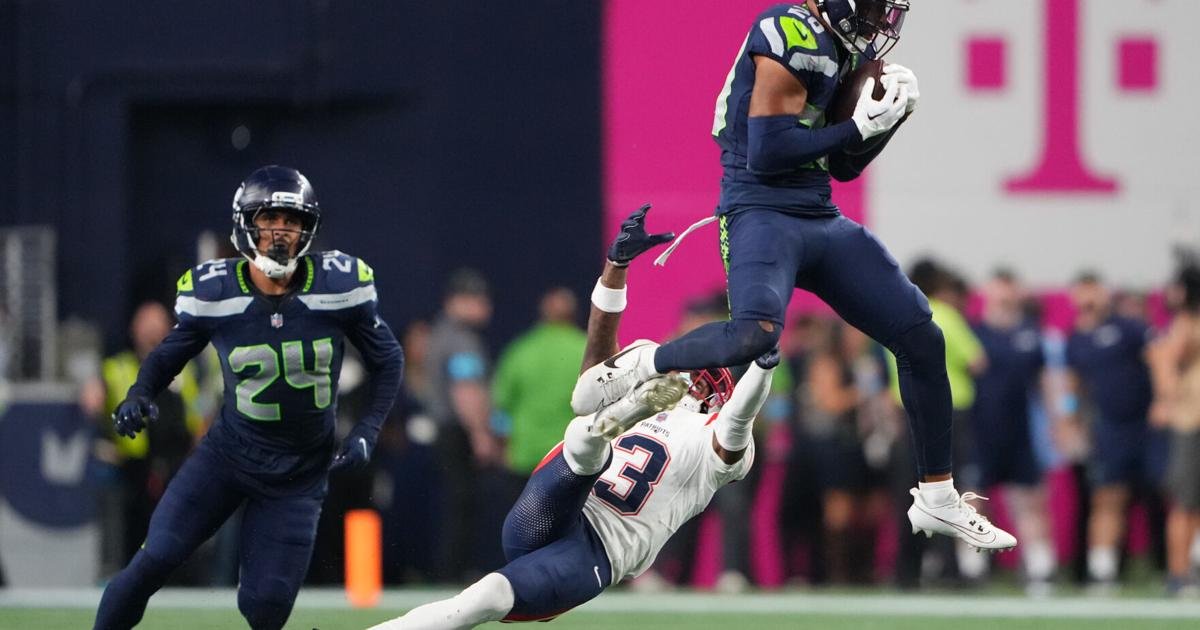
The Seattle Seahawks opened their title defence with a reminder that championship teams do not always need perfect performances to find a way to win.
In a tense opening-night clash against the New England Patriots, Seattle recovered from an early 10-0 deficit and the loss of starting quarterback Sam Darnold to secure a gritty 13-10 victory.
The game quickly turned into a test of resilience for the defending champions. Seattle’s offence struggled for long stretches, but a determined defensive performance and a late game-winning field goal ensured the Seahawks began the 2026 regular season with a victory.
And for Patriots quarterback Drake Maye, the final quarter became one he will want to forget.
Sam Darnold exits early as Seahawks face immediate adversity
Seattle’s night took an unexpected turn almost immediately when starting quarterback Sam Darnold was forced out after the team’s first offensive series.
The Seahawks suddenly had to turn to backup quarterback Drew Lock, putting additional pressure on an offence that was already struggling to find rhythm.
For much of the first half, Seattle could not generate consistent momentum. The Seahawks either punted or saw the half end on each of their first six possessions, allowing New England to build a 10-0 advantage.
But the defending champions refused to panic.
Drew Lock finds Jaxon Smith-Njigba as Seattle fights back
The breakthrough finally came in the second half.
Backup quarterback Drew Lock connected with reigning Offensive Player of the Year Jaxon Smith-Njigba for a touchdown that brought the Seahawks back into the contest.
Smith-Njigba was the clear standout for Seattle’s offence, finishing the game with eight receptions for 122 yards and a touchdown.
His contribution was particularly important considering how quiet the rest of Seattle’s receiving group was. The remaining Seahawks pass catchers combined for just nine receptions and 78 yards.
Rookie running back Jadarian Price also provided useful support on the ground, rushing for 52 yards on 10 carries.
Seattle finished with only 285 total offensive yards, but on a difficult night, efficiency in the biggest moments proved more valuable than spectacular numbers.
Jason Myers delivers the decisive kick
With the game hanging in the balance, veteran kicker Jason Myers delivered when Seattle needed him most.
Myers converted two field goals during the contest, including the decisive kick with 5:50 remaining, giving the Seahawks the lead they would ultimately protect.
From that point, the pressure shifted completely onto the Patriots and their young quarterback.
And Seattle’s defence took over.
Three fourth-quarter interceptions change everything
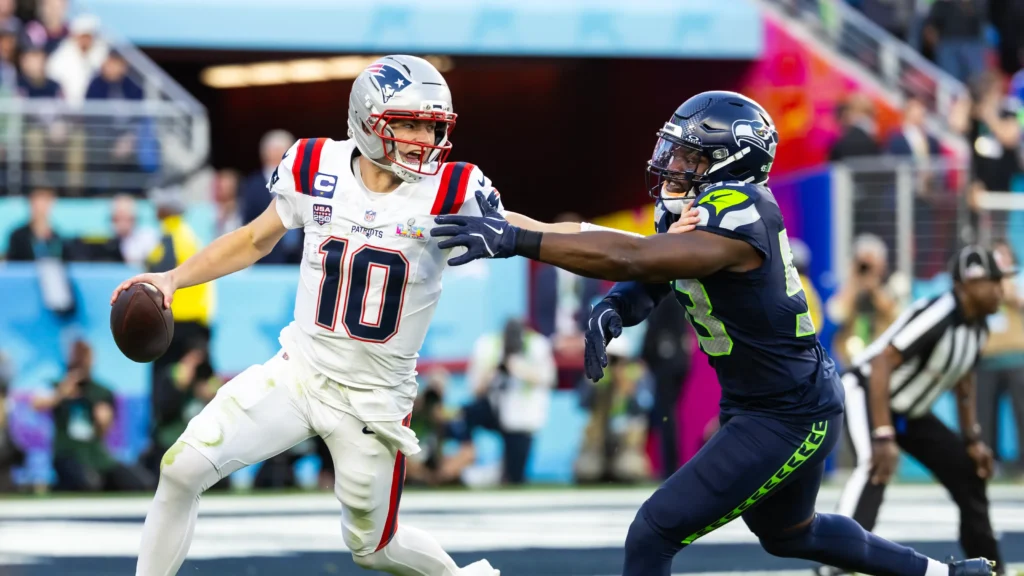
The Patriots still had opportunities to win the game, but Drake Maye endured a disastrous fourth quarter.
Seattle intercepted him on three consecutive possessions, completely changing the complexion of the closing stages.
The final turnover was the most dramatic.
With New England threatening to produce a late winning drive, Josh Jobe intercepted Maye in the end zone with just 21 seconds remaining.
That play effectively sealed the victory and sent Seattle into Week 2 with a hard-earned win.
The Seahawks’ defensive statistics told the story of the night: three interceptions, three sacks, nine tackles for loss and six pass breakups.
It was a championship-level response from a defence that repeatedly stepped up when the game was on the line.
Seattle’s defence makes an early statement
The Seahawks may not have produced their most impressive offensive performance, but their defence showed why the team remains one of the sides to watch this season.
Holding the New England Patriots to 277 total yards while forcing three crucial turnovers in the final quarter was no small achievement.
More importantly, Seattle demonstrated that it can survive adversity.
Losing a starting quarterback early in the game could have easily derailed the defending champions’ opening night. Instead, the Seahawks relied on their backup quarterback, their star receiver, their kicker and, above all, their defence.
That combination was enough.
What comes next for the Seahawks?
The victory gives the Seattle Seahawks an early advantage as they begin another campaign with championship expectations.
Seattle will next face the Arizona Cardinals in Week 2, where the team will hope for more clarity regarding the condition of Sam Darnold.
For now, though, the defending champions have made their first statement of the season.
It was not pretty. It was not easy.
But when the fourth quarter demanded big plays, Seattle’s defence delivered three of them.
And that was enough to turn a difficult opening night into a 13-10 victory.

How ‘Avengers: Endgame’ Returned to Cinemas and Reclaimed Box Office Glory

Tom Cruise’s ‘Digger’ Faces a Tough Opening: Could ‘Verity’ Take the Lead?

‘Verity’ Could Outopen ‘Digger’: Why Tom Cruise Faces a Tough Contest

‘Endgame’ Returns to No. 1 ‘Avatar’ Loses Its Box Office Throne

Mark Zuckerberg Faces a New Hollywood Reckoning Why Aaron Sorkin’s Film Hits Closer to Home

1-Iran Issues Dire Warning to Israel and Defies Trump on Nukes: “We’re Ready to Strike Deep Inside”

Sen. Elizabeth Warren Calls It a ‘Cesspool of Corruption’ — Here’s Why Senators Are Now Fighting Back Against the DOJ’s Live Nation Deal That Left Every Fan Betrayed…

Gucci bets on Demna to revive fading glamour as Milan fashion week opens with bold film surprise

Donald Trump’s net worth reveals the fortune behind the former US President and business mogul

“Tomás Rodríguez Net Worth 2025: Panama’s Gold Cup Goal‑Machine’s Surprising Fortune Revealed”

Miss Jamaica Suffers Terrifying Fall Off Miss Universe Stage; Rushed to Hospital on Stretcher in Viral Video

Moana Live-Action Teaser Sparks Outrage as Fans Call Disney’s Move a ‘Clear Money Grab’ — What Went Wrong?

Ryan Gosling’s Project Hail Mary Trailer Stuns Fans with a Mysterious Alien Ally and a Mission That Could Save Earth

Apple delays Jessica Chastain thriller The Savant about domestic extremism after recent US violence

Avatar 3, Fire and Ash trailer reveals Jake Sully’s family facing terrifying new Na’vi enemies with deadly fire powers
-

 Entertainment1 week ago
The Story Behind ‘Artificial’: Amazon’s Withdrawal and Neon’s Rescue
-

 Entertainment1 week ago
‘Avatar’ Overtaken: ‘Avengers: Endgame’ Is Back on Top
-
 Entertainment1 week ago
Aaron Sorkin Takes On Mark Zuckerberg Again in ‘The Social Reckoning’
-

 Entertainment1 week ago
Meet David Ellison’s Leadership Picks for Hollywood’s New Giant
-
 Entertainment7 days ago
Mark Zuckerberg Faces a New Hollywood Reckoning Why Aaron Sorkin’s Film Hits Closer to Home
-
 Entertainment7 days ago
How ‘Avengers: Endgame’ Returned to Cinemas and Reclaimed Box Office Glory
-
 Entertainment1 week ago
Years after ‘The Social Network,’ Zuckerberg’s story offers Hollywood a different set of questions about power.
-

 Entertainment1 week ago
Olivia Rodrigo’s Happiest Chapter Is Becoming Her Biggest Story