
Politics
Big Cities, Bigger Stakes: Which Mayors Are Up for Grabs on November 4?
From New York City to Boston and Seattle — the 2025 mayoral elections could reshape leadership across America’s most powerful urban centers.


The Battle for America’s City Halls Begins
The 2025 municipal election season is heating up — and while it’s not a presidential or midterm year, the political consequences could ripple far beyond city limits. On Tuesday, November 4, millions of voters will cast their ballots in mayoral races that define the future of some of the country’s most influential cities — from New York City to Atlanta.
These elections span seven major metropolitan areas — New York City, Boston, Seattle, Cleveland, Detroit, Minneapolis, and Atlanta — together home to more than 11.8 million people.
Let’s take a closer look at the cities — and the leaders — shaping this pivotal local election season.
ALSO READ : Rockets Guard Fred VanVleet Tears ACL and Likely to Miss 2025-26 Season
The New York City mayoral race has grabbed national headlines, largely thanks to the clash between progressive newcomer Zohran Mamdani and establishment heavyweight Andrew Cuomo.
Which U.S. Cities Are Electing New Mayors in 2025? Inside the Races in NYC, Boston, and Seattle
Mamdani, a Democratic Socialist and current New York State Assembly member, is leading most polls with roughly 45 percent support. His campaign has captured the imagination of younger and working-class voters, framing itself as a fight for affordable housing, transit reform, and economic equity.
Cuomo, the former Governor of New York, is running as an independent in what analysts call a “political redemption tour.” Despite scandals that led to his 2021 resignation, Cuomo has found traction among moderate Democrats and older New Yorkers nostalgic for his leadership.
Meanwhile, Republican candidate Curtis Sliwa — founder of the Guardian Angels — continues to appeal to law-and-order conservatives, polling around 15 percent.
“We’re witnessing a generational and ideological realignment of urban politics,” said Mark Levine, Manhattan Borough President, in an interview with local media.
Early voting began October 25, and turnout has already surpassed expectations.
Boston: Michelle Wu’s Near-Certain Second Term
In Boston, Mayor Michelle Wu is cruising toward reelection, facing little serious opposition.
Her closest challenger, Josh Kraft, a nonprofit executive and son of Robert Kraft — owner of the New England Patriots — withdrew after the preliminary round, virtually guaranteeing Wu’s victory.
Wu’s administration has been praised for tackling housing affordability and public transit issues while maintaining strong ties with Boston’s tech and education sectors. Her unopposed run speaks volumes about her approval ratings — but also raises questions about local competition in the city’s political ecosystem.
Seattle: A Progressive Tide in the Pacific Northwest
In Seattle, the race between incumbent Mayor Bruce Harrell and challenger Katie Wilson is tightening by the day.

Harrell, a centrist Democrat, has highlighted his record on public safety and homelessness, while Wilson — a community organizer — has energized grassroots supporters by promising bold housing reforms and climate-forward city planning.
The primary election in August shocked many when Wilson narrowly outpolled Harrell, setting up what observers call a “progressive vs. pragmatist” showdown.
“This race reflects a generational divide in how cities approach progressivism,” noted Norm Rice, Seattle’s first Black mayor.
Cleveland and Atlanta: Local Leadership in Transition
In Cleveland, Mayor Justin Bibb — one of the youngest big-city mayors in the U.S. — faces a re-election challenge from businesswoman LaVerne Gore.
Meanwhile, Atlanta Mayor Andre Dickens seeks a second term amid debates over crime reduction, affordable housing, and Atlanta’s controversial “Cop City” training facility project.
Both races are seen as referendums on urban reform: can progressive mayors maintain momentum when voters demand stronger safety and economic results?
Minneapolis and Detroit: Battling for Community Trust
In Minneapolis, the race between incumbent Jacob Frey and activist Sheila Nezhad is once again dominated by public-safety reform, five years after the George Floyd protests transformed city politics.
Detroit, under Mayor Mike Duggan, faces an economic-revival test — with challengers promising to deliver more equitable redevelopment in post-industrial neighborhoods.
Why These Mayoral Races Matter Nationwide
Although these are local contests, the outcomes may shape national Democratic Party strategy ahead of 2026 midterms. Urban mayors often serve as testing grounds for new policies — from housing and public transit to policing and climate resilience.
Political analyst Van Jones wrote on X that “City Halls are where the next generation of national leaders are born — or broken.”
With cities now at the forefront of America’s cultural and economic debates, the November 4 elections promise not just new mayors — but new directions for how U.S. cities define leadership itself.





Politics
Trump Warns Canada ‘No More!!!’ After Carney’s ‘Dollar-for-Dollar’ Tariff Threat; Leaked JD Vance Audio Adds Fuel
The US-Canada trade standoff has taken a sharper turn after Mark Carney rejected Washington’s latest terms and promised matching tariffs, while Donald Trump revived his “51st state” jibe. A leaked recording of JD Vance mocking Carney’s negotiating posture has added another layer of tension.

The already strained relationship between Washington and Ottawa has entered a more confrontational phase, with US President Donald Trump and Canadian Prime Minister Mark Carney trading sharp words following the collapse of crucial trade negotiations.
The latest escalation came after Carney announced that Canada was walking away from what he described as a bad deal and would answer new US tariffs with its own “dollar-for-dollar” countermeasures.
Trump responded on Sunday with a characteristically combative message, accusing Canada of seeking the advantages of closer integration with the United States without actually becoming part of it.
“Canada wants the benefits of being a State, without being one!!!”
Trump also accused Canada of imposing heavy tariffs on American farmers for years before ending his message with a blunt warning: “No more!!!”
ALSO READ: MAGA Revolt Erupts Against Trump’s DHS Chief Markwayne Mullin: “Wrong Guy at the Wrong Time”…
Carney says Washington ‘asked too much and offered too little’
The clash follows Carney’s decision to suspend negotiations after his government concluded that the latest US proposal was no longer economically acceptable.
In an official statement on Saturday, Carney said negotiations had initially made meaningful progress. But according to the Canadian leader, Washington introduced new demands in the final stages that fundamentally changed the calculation for Ottawa.
Carney described those terms as “uneconomic” and “unfair”, arguing that they undermined the benefits Canada could expect from any agreement.
His summary of the breakdown was even more pointed: “They asked too much and offered too little.”
Canada had been prepared to make concessions in areas including retaliatory tariffs and the return of US alcohol to provincial shelves if Washington substantially reduced tariffs affecting strategically important Canadian industries. However, Carney said his government would not compromise on issues involving Canadian sovereignty, key industries, culture or the French language.
Canada promises ‘dollar-for-dollar’ retaliation
The dispute is no longer limited to angry statements.
The United States has imposed a 50% tariff on roughly $20 billion worth of Canadian goods, affecting a range of exports. Canada is now preparing retaliatory measures scheduled to take effect on September 8.
Carney said Ottawa would match Washington’s new tariffs “dollar for dollar”, with counter-tariffs concentrated in areas including steel, dairy, appliances, agricultural equipment, pulp and paper, and electronics.
The Canadian prime minister acknowledged that retaliation could increase prices and reduce choices for Canadian consumers, but argued that accepting Washington’s demands would carry greater long-term costs.
His language also reflected just how dramatically relations between the longtime allies have deteriorated. Discussing the confrontation, Carney said Canada had effectively been attacked economically, describing the situation as a trade “war.”
Leaked JD Vance audio creates another headache
While Trump and Carney were publicly sparring, another controversy was unfolding behind the scenes.
US Vice President JD Vance was reportedly recorded speaking about Carney during a private fundraising event in Southampton, New York.
According to audio provided to The Canadian Press, Vance described Carney as a “very sweet guy” and said the two get along well. But his assessment of the Canadian prime minister’s negotiating strategy was considerably less flattering.
Vance reportedly mocked the idea that Carney could “out-tough Donald Trump”, suggesting that the Canadian leader publicly projected strength while Canada had quietly backed down on several issues during negotiations.

The leaked remarks are particularly awkward because they emerged while both governments were engaged in sensitive negotiations over one of the world’s largest bilateral trading relationships.
Rather than calming the dispute, the recording risks reinforcing the perception that the battle has become personal as well as economic.
What happens next?
For decades, the US-Canada economic relationship has been defined by deeply integrated supply chains and enormous volumes of cross-border commerce. The latest tariff confrontation threatens to test that relationship in ways that extend far beyond individual products.
For Ottawa, the argument is increasingly about sovereignty and its ability to make independent economic decisions. For the Trump administration, the tariffs are being presented as a response to Canadian trade practices Washington considers discriminatory.
Neither side currently appears eager to publicly retreat.
Canada’s counter-tariffs are expected to begin on September 8, while Carney’s government says additional support will be provided to Canadian businesses and workers affected by the dispute.
What began as another difficult round of trade bargaining has therefore become something much larger: a political test for Carney, another demonstration of Trump’s tariff-driven negotiating strategy, and a serious challenge to relations between two neighbours whose economies have been intertwined for generations.
With Trump declaring “No more!!!”, Carney promising to respond “dollar for dollar”, and Vance’s private remarks now public, the next move could determine whether Washington and Ottawa find their way back to negotiations — or settle in for a prolonged trade fight.
Politics
James Carville Warns “I’m Out of Here” If Hasan Piker Becomes Democratic Party’s New Face…
The veteran Democratic strategist clashes with rising progressive voices as debates over the future direction of the party intensify after recent primary victories.


James Carville Draws a Line Over Hasan Piker as Democratic Party Faces Internal Identity Battle
A fresh ideological battle is shaking the Democratic Party as veteran strategist James Carville takes aim at rising progressive voices, warning that he does not see himself sharing a political home with influential left-wing commentator Hasan Piker if Piker becomes a major force within the party.
During an appearance on Fox News’s “The Sunday Briefing,” Carville delivered a sharp message about the growing divide between traditional Democratic leadership and younger progressive activists.
“I’m not going to be in the same party with Hasan Piker,” Carville said while discussing the future of the Democratic Party and the political changes emerging after recent primary contests.
The comments highlight a larger struggle inside the party: whether Democrats should continue following a more traditional electoral strategy or embrace a more aggressive progressive movement.
Carville Challenges Progressive Direction
Carville specifically pointed toward the rise of democratic socialist candidates and progressive activists who have gained momentum in several recent elections.
He compared the internal Democratic debate to similar ideological shifts that have occurred within the Republican Party, where figures such as Tucker Carlson and Marjorie Taylor Greene have represented a more populist direction.
The longtime Democratic strategist argued that winning elections should remain the party’s primary focus.
“I have one simple philosophy about politics: Winning is everything,” Carville said while discussing the challenges facing Democrats.
Hasan Piker Represents a New Progressive Era
Hasan Piker, one of the most popular political streamers on platforms such as Twitch, has built a large audience among younger progressive voters.
Piker has become an outspoken supporter of progressive candidates, including Michigan Senate candidate Abdul El-Sayed, whose campaign has energized many younger and left-leaning voters.
Speaking with CNN, Piker argued that frustration with traditional Democratic and Republican politics has pushed many voters to search for alternatives.
He pointed to recent Democratic losses, including the defeats of Hillary Clinton in 2016 and Kamala Harris in 2024, as examples of why some voters believe a different approach is necessary.
The Battle Over the Democratic Party’s Future
The disagreement between Carville and Piker represents a much broader conversation happening among Democrats.
Progressive candidates have recently achieved notable primary victories against establishment-backed opponents, creating concerns among some party strategists that a sharper ideological shift could make it harder to win competitive congressional races.
However, supporters of the progressive movement argue that traditional Democratic strategies have failed to inspire enough voters.
Senator Bernie Sanders defended progressive candidates like El-Sayed, suggesting that they could attract independent and even some Republican voters by focusing on issues such as healthcare and economic concerns.
“If you’re a working-class Republican in Michigan, I think you’re going to listen to what El-Sayed says,” Sanders said during an appearance on NBC News’s “Meet the Press.”

A Defining Moment for Democrats
The clash between Carville and Piker is not simply a disagreement between two political personalities—it reflects a larger question facing Democrats heading into future elections.
Should the party prioritize broad electoral appeal and moderate messaging, or should it embrace a more activist-driven progressive identity?
As younger voices gain influence and traditional strategists push back, the Democratic Party’s internal debate appears far from over.
For now, Carville’s warning has added another headline to a growing conversation about who will define the next generation of Democratic politics.
Politics
MAGA Revolt Erupts Against Trump’s DHS Chief Markwayne Mullin: “Wrong Guy at the Wrong Time”…
A growing clash inside Donald Trump’s political movement puts Homeland Security Secretary Markwayne Mullin under pressure as hardline immigration activists demand a tougher deportation approach.

Trump’s DHS Secretary Markwayne Mullin Faces MAGA Backlash as Immigration Debate Explodes
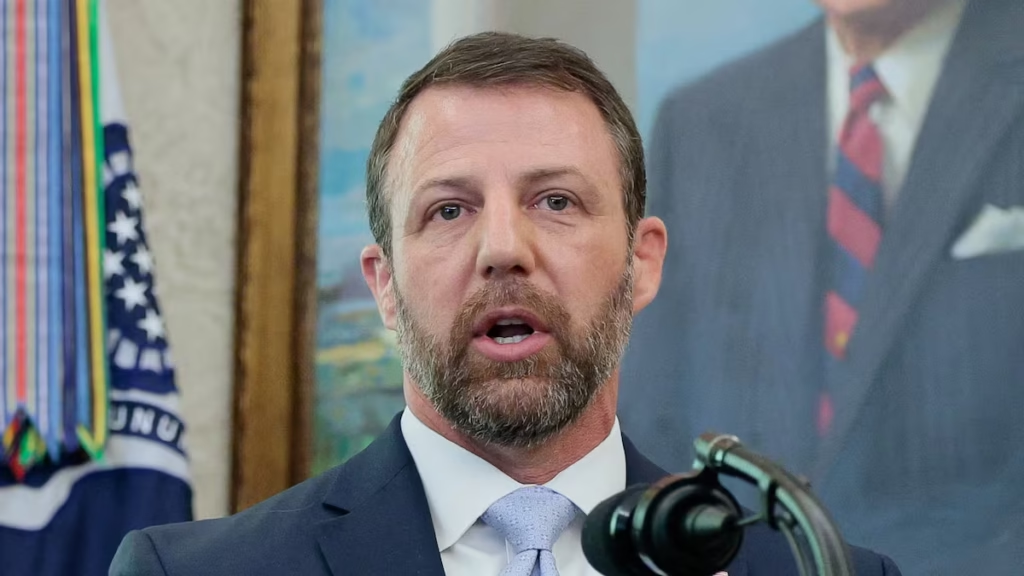
A new political battle is unfolding inside the Donald Trump administration, with a section of the MAGA movement turning against Homeland Security Secretary Markwayne Mullin over accusations that he is taking a softer approach toward immigration policy.
Mullin, who became Secretary of the U.S. Department of Homeland Security (DHS) earlier this year after replacing Kristi Noem, is facing criticism from some of Trump’s strongest supporters who believe the department should focus almost entirely on aggressive deportation efforts.
The controversy has created an unusual political divide, with some MAGA influencers questioning whether Mullin fully represents the immigration agenda that helped define Trump’s campaign.
Immigration Comments Trigger Anger Among Trump Supporters
The backlash intensified after Mullin spoke about immigration reform during the National Governors Association Summer Meeting in Oklahoma.
During his remarks, Mullin argued that immigration policy requires separating legal immigration from illegal immigration while also addressing workforce challenges through employment visa reforms.
“There is a difference between immigrants pursuing legal status and those who aren’t,” Mullin said while discussing the need to balance border security with economic realities.
His comments that some immigrant workers fill labor shortages angered several conservative activists who interpreted the remarks as moving away from a strict deportation-first strategy.
MAGA Influencers Demand a Change at DHS
Several prominent voices within Trump’s political base have publicly criticized Mullin.
Former Border Patrol official Gregory Bovino attacked Mullin after the secretary highlighted the number of people who had legally become U.S. citizens over the past year.
Bovino argued that celebrating legal immigration was inconsistent with the priorities of the movement’s most hardline supporters.
Meanwhile, conservative commentator Jake Posobiec told Politico that there is growing frustration among MAGA activists who want a DHS secretary focused more directly on mass deportations.
Steve Bannon Joins the Criticism
Former Trump adviser Steve Bannon also joined the criticism, suggesting that some Trump allies would prefer acting Director of National Intelligence Bill Pulte to lead the Department of Homeland Security.
Bannon argued that the current moment requires someone who prioritizes aggressive immigration enforcement rather than policies viewed by some conservatives as accommodating.
The criticism highlights a larger ideological struggle within Trump’s coalition over how strictly the administration should approach immigration enforcement.
Laura Loomer Calls for Mullin’s Removal
Political activist Laura Loomer, who has frequently been described as an influential conservative voice close to Trump, openly called for Mullin to be removed from his position.
Loomer criticized Mullin on social media, claiming he was not aligned with the administration’s immigration goals.
Her comments reflected growing frustration among some activists who believe DHS leadership should adopt a more aggressive posture.
Previous Controversies Added More Pressure
The latest dispute follows earlier criticism involving DHS immigration enforcement policies.
Mullin faced backlash after federal immigration officers were reportedly instructed to temporarily pause certain vehicle stops following incidents involving armed encounters and deaths.
The decision triggered opposition from some conservative supporters, leading Trump to publicly intervene and reaffirm his administration’s commitment to strict immigration enforcement.
White House Defends Mullin
Despite the criticism, the White House has pushed back against claims that Mullin’s position is in danger.
Deputy Press Secretary Abigail Jackson said Trump remains confident in Mullin’s ability to execute the administration’s agenda.
A DHS spokesperson also rejected claims of internal chaos, stating that the department remains focused on protecting the homeland and carrying out the president’s immigration priorities.
A Bigger Fight Over Trump’s Immigration Vision
The controversy surrounding Markwayne Mullin reflects a deeper challenge within the Trump movement: balancing campaign promises of mass deportations with the practical realities of governing a complex immigration system.
For now, Mullin remains in his role, but the growing criticism from influential MAGA voices shows that immigration policy remains one of the most sensitive issues inside Trump’s political coalition.

How ‘Avengers: Endgame’ Returned to Cinemas and Reclaimed Box Office Glory

Tom Cruise’s ‘Digger’ Faces a Tough Opening: Could ‘Verity’ Take the Lead?

‘Verity’ Could Outopen ‘Digger’: Why Tom Cruise Faces a Tough Contest

‘Endgame’ Returns to No. 1 ‘Avatar’ Loses Its Box Office Throne

Mark Zuckerberg Faces a New Hollywood Reckoning Why Aaron Sorkin’s Film Hits Closer to Home

1-Iran Issues Dire Warning to Israel and Defies Trump on Nukes: “We’re Ready to Strike Deep Inside”

Sen. Elizabeth Warren Calls It a ‘Cesspool of Corruption’ — Here’s Why Senators Are Now Fighting Back Against the DOJ’s Live Nation Deal That Left Every Fan Betrayed…

Gucci bets on Demna to revive fading glamour as Milan fashion week opens with bold film surprise

Donald Trump’s net worth reveals the fortune behind the former US President and business mogul

“Tomás Rodríguez Net Worth 2025: Panama’s Gold Cup Goal‑Machine’s Surprising Fortune Revealed”

Miss Jamaica Suffers Terrifying Fall Off Miss Universe Stage; Rushed to Hospital on Stretcher in Viral Video

Moana Live-Action Teaser Sparks Outrage as Fans Call Disney’s Move a ‘Clear Money Grab’ — What Went Wrong?

Ryan Gosling’s Project Hail Mary Trailer Stuns Fans with a Mysterious Alien Ally and a Mission That Could Save Earth

Apple delays Jessica Chastain thriller The Savant about domestic extremism after recent US violence
