
Sports
Kiké Hernández saves the Dodgers with unreal game-ending double play, forces World Series Game 7
With two runners in scoring position and the World Series on the line, Kiké Hernández pulled off one of the most clutch defensive plays in Dodgers history to seal a 3–1 Game 6 win over the Blue Jays in Toronto.


TORONTO — It was the kind of moment that defines October baseball — a blur of panic, precision, and pure instinct.
The Los Angeles Dodgers were clinging to a 3–1 lead in the bottom of the ninth at Rogers Centre, two runners in scoring position, one out, and the Toronto Blue Jays on the brink of their first World Series title in decades. Then came Kiké Hernández, the postseason hero who always seems to find the spotlight when the stakes are highest.
When Andrés Giménez sliced a broken-bat blooper into shallow left field, the stadium gasped. The ball seemed destined to drop. But Hernández — perfectly positioned and running full throttle — turned the impossible into unforgettable.
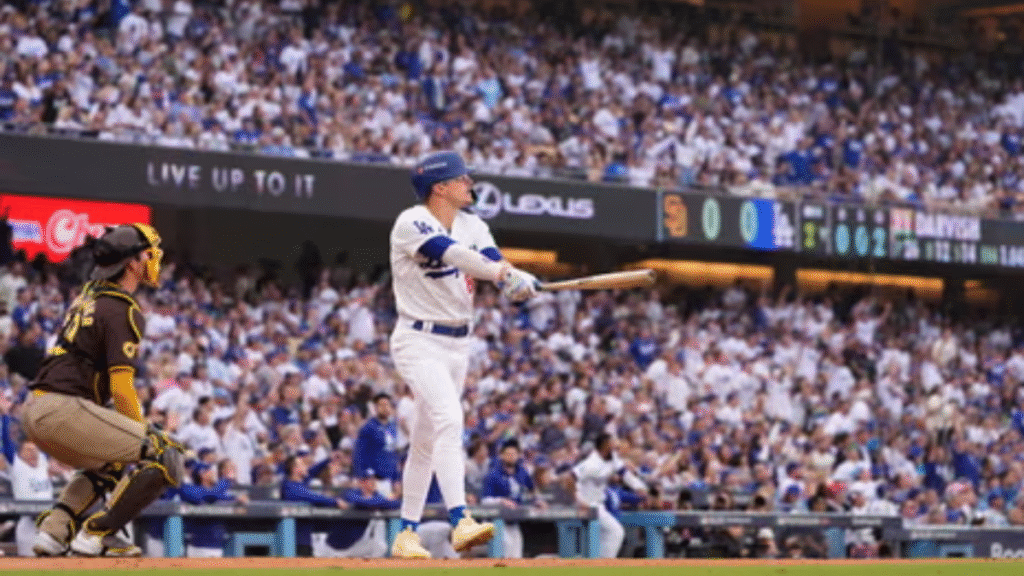
“Stay up in the air,” Dodgers manager Dave Roberts recalled thinking. “Stay up in the air.”
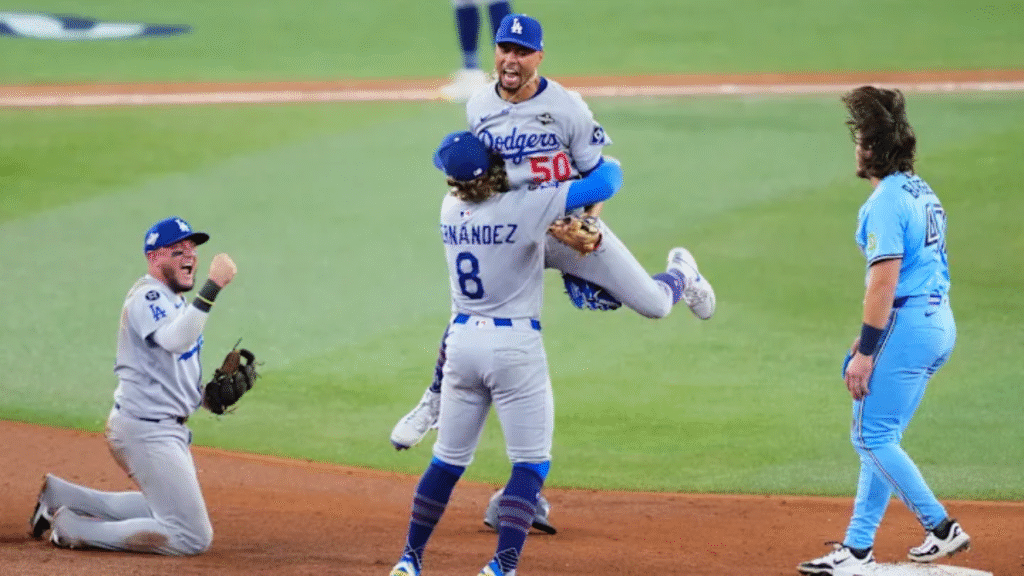
The ball did — just long enough for Hernández to make a full-speed grab, then uncork a one-hop rocket to second base. Miguel Rojas made a clean pick and tagged the bag just before Addison Barger could scramble back. Double play. Game over.
The Dodgers lived to fight another night — and baseball fans got their wish: a winner-take-all Game 7.
The anatomy of a masterpiece
Hernández, known affectionately by fans as Playoff Kiké, has delivered countless October moments, but this one might top them all.
His field positioning — 272 feet from home plate, 26 feet shallower than the league average — proved decisive.
“With Glasnow’s stuff, I was expecting something to the left side,” Hernández explained. “Tying run was on second. I wanted to be shallow enough to keep that guy from scoring.”
When Giménez connected, Hernández broke instantly — covering 52 feet in just 3.4 seconds. According to Statcast, his jump was 7.3 feet better than league average. If he’s even a half-step slower, the ball drops and the Blue Jays are celebrating a championship.
Perfection from start to finish
After the catch, Hernández never hesitated. Charging in at full speed, he threw across his body on one hop to second — a daring move that risked an overthrow but landed perfectly in Rojas’s glove.
“When he threw the ball to second, I said, ‘No way this ball is getting past me,’” Rojas said.
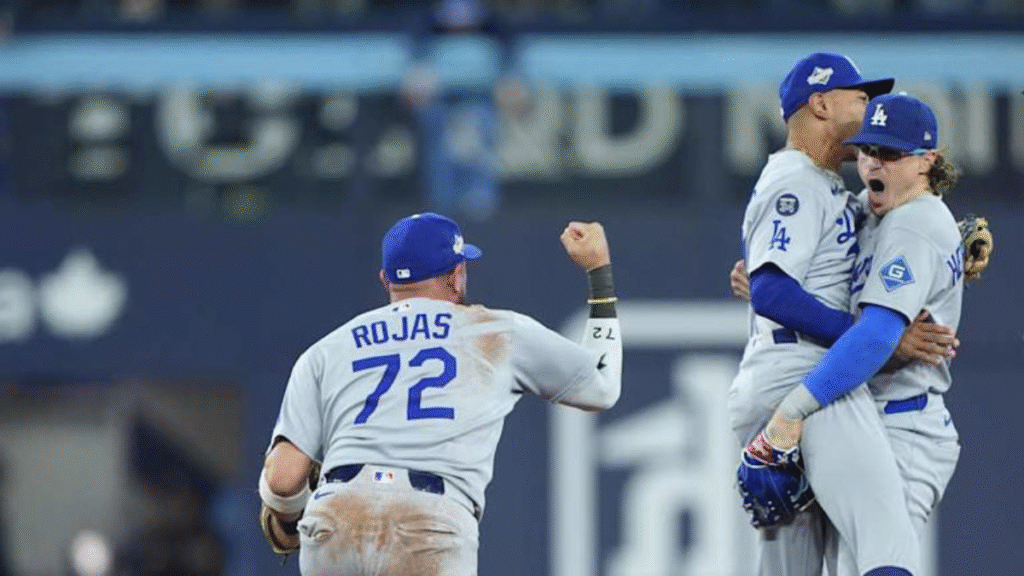
Rojas kept his left foot on the bag, letting the hop travel toward him, and made the tag a split second before Barger’s fingertips touched second base.
The Dodgers bench erupted. Mookie Betts sprinted in from shortstop to leap into Hernández’s arms as the team stormed the field.
“Pretty epic ending,” Rojas grinned.
A defensive gem for the ages
Hernández’s play instantly joins the pantheon of iconic postseason moments — a defensive gem worthy of comparison to Willie Mays’s 1954 catch or Endy Chavez’s 2006 grab.
For Hernández, though, it was simply about execution.
“I just wanted to make the play,” he said. “It’s the World Series — you don’t think, you react.”
Dodgers force Game 7
The Dodgers’ 3–1 win means the 2025 World Series will be decided in a Game 7 showdown on Saturday night. Tyler Glasnow, who pitched brilliantly into the ninth, credited his defense for bailing him out.
“That’s why we trust Kiké,” Glasnow said. “He’s fearless.”
As for Hernández, he downplayed the heroics in typical fashion.
“This has been a great World Series,” he said. “The fact that we’re getting a Game 7 is well-deserved.”
And as manager Dave Roberts summed it up perfectly:
“Heck of a baseball player. Heck of a play.”





Sports
Sue Bird and Megan Rapinoe Break Up After 10 Years… Power Couple Ends Relationship but Leaves Fans With One Last Surprise
The iconic sports duo announce their split and the end of their podcast “A Touch More,” promising a heartfelt farewell to fans.

In a moment that has left fans emotional across the sports world, legendary athletes Sue Bird and Megan Rapinoe have officially announced the end of their relationship after nearly a decade together.
The couple shared the news in a deeply personal way—through their own podcast, A Touch More—a platform where they had openly shared their journey, thoughts, and life beyond sports.
A Decade-Long Relationship Comes to an End
For 10 years, Bird and Rapinoe weren’t just partners—they were one of the most admired power couples in sports.
Their relationship symbolized more than love. It stood for equality, representation, and strength—especially within women’s sports and the LGBTQ+ community.
Announcing the split, Rapinoe emphasized that the decision was mutual and made with care:
“It’s a decision that we made together… We’re still going to be there for each other. It’s just going to look a little bit different.”
It wasn’t dramatic. It wasn’t messy. Instead, it reflected maturity—two people evolving in different directions while maintaining respect.
The End of ‘A Touch More’—But Not Without Goodbye
Alongside their breakup, the duo also confirmed they will be phasing out their popular podcast A Touch More.
The podcast had become a fan-favorite space where the couple discussed everything—from sports and culture to personal growth after retirement.
Bird shared how meaningful the platform had been:
“We have shared so much of our life… launching this podcast has been one of our favorite things.”
But they’re not disappearing overnight.

Fans can expect six final special episodes, which the duo described as a heartfelt farewell—not just to the show, but to the shared chapter of their lives.
Two Legendary Careers, One Powerful Story
Even beyond their relationship, both Bird and Rapinoe are icons in their respective sports.
- Sue Bird is widely regarded as one of the greatest players in WNBA history, winning four championships and earning 13 All-Star selections across a 20-year career.
- Megan Rapinoe, a global face of women’s soccer, led the United States Women’s National Soccer Team to multiple FIFA Women’s World Cup victories (2015 and 2019), becoming a symbol of activism and excellence.
Together, they were more than athletes—they were cultural figures.
What Happens Next?
While their romantic relationship is ending, both are stepping into new individual journeys.
Rapinoe revealed she is planning to launch her own podcast, while Bird is continuing her project, Bird’s Eye View, for a second season.
Their message is clear: this is not an ending—it’s a transition.
More Than a Breakup
What makes this story stand out is how it’s being handled.
There’s no controversy. No blame. Just honesty.
The two emphasized that while their relationship is changing, their connection and mutual respect remain intact.
And perhaps that’s why this news feels different—it’s not just about a breakup, but about growth.
A Farewell Fans Didn’t Expect
For millions of fans who followed their journey, this announcement marks the end of an era.
But Bird and Rapinoe are making sure it’s not a sudden goodbye.
With a few final podcast episodes still to come, they’re giving fans one last chance to celebrate what they built together.
And maybe that’s the most fitting ending of all—not silence, but a meaningful goodbye.
Sports
“Angels Icon Garret Anderson Dies at 53… The Silent Hero Behind 2002 World Series Glory Gone Too Soon”
The legendary Los Angeles Angels outfielder, known for his quiet dominance and historic 2002 performance, leaves behind a legacy that shaped a franchise forever.

The baseball world is in mourning after the heartbreaking news that Garret Anderson, one of the most beloved figures in Los Angeles Angels history, has passed away at the age of 53. The team confirmed his death on Friday, though no official cause has been disclosed.
For fans who watched the Angels rise from underdogs to champions, Anderson wasn’t just another player—he was the backbone of an era. Quiet, consistent, and fiercely loyal, he defined what it meant to wear an Angels jersey.
A Career Built on Loyalty and Consistency
Drafted in 1990, Anderson made his Major League debut in 1994 with the then California Angels. What followed was a remarkable journey spanning 17 MLB seasons—15 of which were spent with the Angels organization.
In an era filled with flashy superstars, Anderson stood apart. He wasn’t loud. He didn’t chase headlines. Instead, he delivered—game after game, season after season.
By the time he retired, Anderson had etched his name across the Angels’ record books:
- Franchise leader in games played (2,013)
- Most RBIs (1,292)
- Record total bases (3,743)
- Nearly 500 doubles and 796 extra-base hits
His 272 home runs rank just behind modern greats like Mike Trout and Tim Salmon, placing him firmly among the franchise’s all-time elite.
2002: The Year That Defined a Legacy
If there is one chapter that immortalized Anderson, it was the unforgettable 2002 World Series.
That season, Anderson batted an impressive .306 and drove in 123 runs, leading the Angels into the postseason. But the real magic happened in October.
Facing the mighty San Francisco Giants—led by the legendary Barry Bonds—the Angels found themselves on the brink of elimination.
What followed became one of baseball’s greatest comeback stories.
In Game 7, with everything on the line, Anderson delivered the defining moment of his career—a clutch three-run double that sealed a 4-1 victory and secured the Angels’ first and only World Series title.
It wasn’t just a hit. It was history.
More Than Just Numbers
Beyond stats and trophies, Anderson’s impact was deeply personal.
He was a three-time All-Star and even took home MVP honors during the 2003 All-Star Game, along with winning the Home Run Derby. But what truly set him apart was his humility.
Former teammates and fans often described him as “the quiet leader”—a player who led not with words, but with unwavering professionalism.
After retiring, Anderson remained close to the game, working as a television analyst for Angels broadcasts, continuing to share his insights with the same calm presence fans had come to admire.
Tributes Pour In
The Angels organization expressed profound grief in an official statement, calling Anderson “one of the most beloved icons in franchise history.”
Team owner Arte Moreno said:

“Garret was a cornerstone of our organization… his professionalism, class, and loyalty made him unforgettable.”
Current superstar Mike Trout also shared an emotional message on social media, saying Anderson inspired generations of players who followed.
To honor his legacy, the Angels will wear a memorial patch for the rest of the season, alongside a moment of silence and a tribute video before their next game.
A Life Beyond Baseball
Born on June 30, 1972, in Los Angeles, Anderson remained deeply connected to his roots. Despite achieving fame, he always carried himself with humility and grace.
He is survived by his wife Teresa, daughters Brianne and Bailey, and his son, Garret “Trey” Anderson III.
The End of an Era
In a sport often dominated by loud personalities and larger-than-life figures, Garret Anderson was something different—a steady force, a silent achiever, a true team player.
His story reminds us that greatness doesn’t always shout. Sometimes, it simply shows up… every single day… and delivers.
And now, as the Angels and the baseball world say goodbye, one thing is certain—his legacy will never fade.
FootBall
Toluca’s Coach Breaks Silence After 7-2 Demolition of LA Galaxy: ‘We Don’t Shy Away From the Pressure of…
Antonio Mohamed says his team set the Concacaf Champions Cup as their main goal from day one — and now they are just two steps away from making history.

There is no hiding it anymore. Toluca is coming for the title — and their coach is not afraid to say it out loud.
After a thunderous 7-2 aggregate demolition of LA Galaxy in the quarterfinals of the Concacaf Champions Cup, head coach Antonio “Turco” Mohamed stepped in front of the cameras and embraced what everyone in the football world was already thinking — his team is the favorite to lift the trophy.
“The obligation is to ourselves, not to anyone else. We embraced the role of contenders and we don’t shy away from the pressure of winning the title. We said it was the main objective and we’re two steps away,” said Mohamed in a post-match press conference following the victory on U.S. soil.
It was the kind of statement that turns a tournament run into a statement of intent.
The Argentine coach, known for his direct personality and tactical discipline, made clear that this was never an accident. From the very start of the campaign, Toluca locked in the Concacaf Champions Cup as their primary target for the season — a bold call that is now looking like a prophecy.
What made the performance even more impressive was the context surrounding it. Mohamed was candid about the challenges his squad faced heading into the tie, revealing that several key players were unavailable.
“We really have a lot of players out and weren’t in great form, but today we showed intensity, we were the better team,” he said, also pushing back against narratives that Toluca’s dominant first-leg result was somehow influenced by altitude at their home ground. “I heard it was because of the altitude and that’s not it. We’re a serious team that deserves respect.”

With a semifinal berth now confirmed, Toluca will face LAFC in the next round — a significantly tougher test. But Mohamed showed no signs of concern, stressing that the coaching staff will study their upcoming opponents thoroughly before a single ball is kicked.
“We know that in 15 days we have to return. It’s a different opponent, but we will study them well and play a good game because it’s a semifinal. We have the advantage of playing the second leg at home, which is very important,” the ‘Turco’ added.
As for whether Toluca can juggle their continental ambitions with a Liga MX title challenge simultaneously, Mohamed kept his answer measured and focused.
“The playoffs in Mexico are still a ways off. Here we’re at a more decisive stage. We’ll see when the time comes. We’re in the semifinals here, and we’re almost in the playoffs,” he said — a man clearly taking it one battle at a time.
Right now, all roads lead to the Concacaf Champions Cup. And if Toluca keeps playing like this, those roads might just end with a trophy in their hands.

Lisa Kudrow Reveals Unexpected Reason Behind Casting Her Son in ‘The Comeback’ Final Season… Fans Call It ‘Most Personal Twist Yet’

‘Beast’ Director Tyler Atkins Breaks Silence on MMA Drama Exploring Identity, Family… and the Raw Fight for Survival

“Evolve or Die…” Sam Levinson Explains Shocking Creative Shift Behind ‘Euphoria’ Season 3 Return

Justin Bieber’s “Low-Key” Coachella Set Sparks Heated Debate… Fans Accuse Double Standards After Sabrina Carpenter Comparison

“Evolve or Die…” Sam Levinson Reveals How ‘Euphoria’ Season 3 Was Rebuilt After ‘The Idol’ Experiment

1-Iran Issues Dire Warning to Israel and Defies Trump on Nukes: “We’re Ready to Strike Deep Inside”

Donald Trump’s net worth reveals the fortune behind the former US President and business mogul

“She Never Made It Out…” Albany House Fire Claims Woman’s Life as Family Pleads for Help to Bring Her Home

“Tomás Rodríguez Net Worth 2025: Panama’s Gold Cup Goal‑Machine’s Surprising Fortune Revealed”

Caitlin Clark Sidelined with Quad Strain, Set to Miss Two Weeks of WNBA Action

Miss Jamaica Suffers Terrifying Fall Off Miss Universe Stage; Rushed to Hospital on Stretcher in Viral Video

Moana Live-Action Teaser Sparks Outrage as Fans Call Disney’s Move a ‘Clear Money Grab’ — What Went Wrong?

Ryan Gosling’s Project Hail Mary Trailer Stuns Fans with a Mysterious Alien Ally and a Mission That Could Save Earth

Apple delays Jessica Chastain thriller The Savant about domestic extremism after recent US violence

Avatar 3, Fire and Ash trailer reveals Jake Sully’s family facing terrifying new Na’vi enemies with deadly fire powers
-
 Entertainment1 week ago
Dark Winds Season 4 Finale Just Solved the Big Case Then Dropped a Murder Bombshell in the Final Seconds That No One Saw Coming…
-

 Entertainment1 week ago
Dan Levy Breaks Down in Tears Revealing He Was ‘Thinking About’ a Schitt’s Creek Sequel Until Catherine O’Hara’s Death Changed Everything…
-

 Entertainment6 days ago
Phoebe Dynevor Battles Sharks While Giving Birth ‘Thrash’ Review Reveals Netflix’s Wildest Survival Drama Yet
-

 Entertainment5 days ago
‘By Any Means’ Locks Release Date: Mark Wahlberg & Yahya Abdul-Mateen II Team Up for a Crime Thriller That Could Shake 2026…
-

 Entertainment1 week ago
No Superheroes No Problem The Devil Wears Prada 2 Set to Rule Summer Box Office With Pure Style Power
-

 Entertainment5 days ago
Justin Bieber Turns Coachella Into a ‘Swag-Fueled’ Spectacle… Surprise Guests Set the Stage on Fire
-

 Entertainment6 days ago
Dan Levy Finally Admits He Had a Schitt’s Creek Sequel in Mind — Then He Said Her Name and the Room Went Silent…
-
 Entertainment5 days ago
Natasha Lyonne Reveals Airport Ordeal: “ICE Had Other Plans…” After Being Escorted Off Plane Post ‘Euphoria’ Premiere