
Entertainment
Euphoria Season 3 First Photos Drop After Four-Year Wait — Zendaya, Sydney Sweeney and Jacob Elordi Return Older and Darker
HBO unveils new Season 3 images as Euphoria jumps five years ahead, revealing adult lives, broken ties, and shocking futures


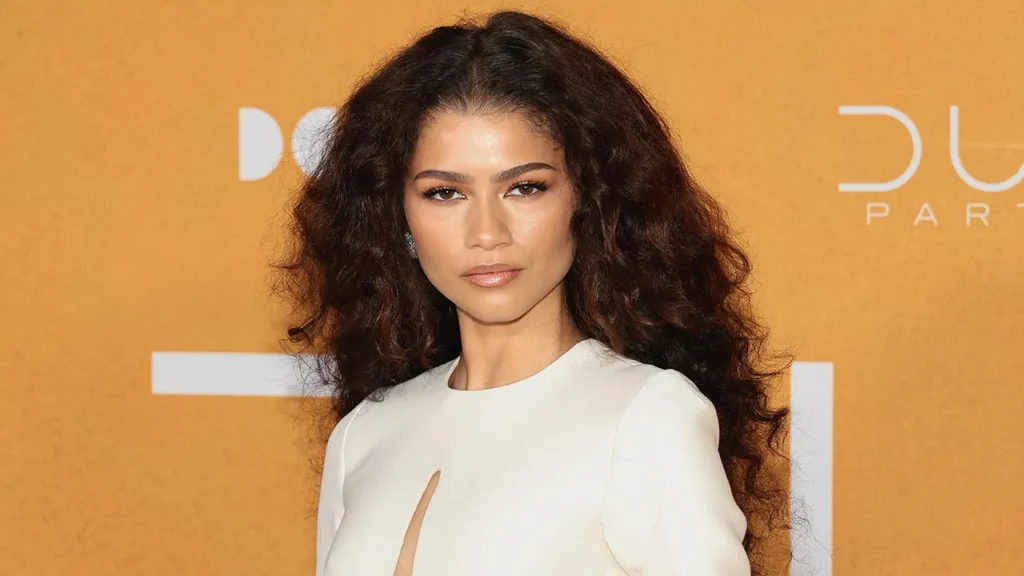
After nearly four years of silence, HBO’s Euphoria is finally back in focus. On Friday, the network released the first official photos from Euphoria Season 3, giving fans their first glimpse at where the beloved — and deeply troubled — characters have landed after a dramatic five-year time jump.
The images confirm what creator Sam Levinson has been hinting at for months: Euphoria is no longer a high school story. The former teens are now adults, navigating careers, relationships, addiction, ambition, and consequences that didn’t fit inside lockers and classrooms.
Zendaya’s Rue Enters a New, Dangerous Phase
At the center of the series remains Zendaya, returning as Rue Bennett. In the newly released photos, Rue appears isolated and solemn — sitting alone in a church in one image, and riding in a truck in another.

Across the first two seasons, Rue’s struggle with substance abuse — fueled by grief over her father’s death — defined the emotional core of Euphoria. Season 3 takes that struggle even further.
According to Sam Levinson, Rue is now “south of the border in Mexico,” deeply in debt to drug dealer Laurie, played by Martha Kelly. The new season will follow Rue as she searches for “very innovative ways” to survive and pay off what she owes — a storyline that suggests the show is entering its darkest territory yet.
Nate and Cassie’s Shocking Future
One of the biggest reveals from Levinson confirms a jaw-dropping arc: Nate Jacobs (Jacob Elordi) and Cassie Howard (Sydney Sweeney) are now living together in the suburbs — and they’re engaged.
In the Season 3 photos, Nate is seen in a suburban kitchen making hamburgers, a quiet image that contrasts sharply with his violent and manipulative past. Cassie, meanwhile, stands outside a house as an ice cream cone melts in her hand — a visual metaphor for her unraveling emotional state.
Levinson revealed that Cassie is now addicted to social media and obsessed with the illusion of success surrounding her former classmates. He also confirmed that Nate and Cassie will get married before the end of the season, a development that is already dividing fans online.
Jules, Maddy and Lexi Find New Worlds
Jules Vaughn, played by Hunter Schafer, is now attending art school. A new image shows her working in an art studio, with Levinson describing her as “nervous” about her future as a painter.
Maddy Perez (Alexa Demie) has moved to Hollywood, working at a talent agency while juggling undisclosed “side hustles.” In one of the most striking photos, Maddy appears fully glam on a film set — a far cry from her high school chaos.
Interestingly, Maddy appears alongside Lexi Howard (Maude Apatow) in multiple images. Lexi is now working as an assistant to a showrunner, played by Sharon Stone, and is seen wearing a “crew” pass on what looks like a large-scale production set, complete with gladiator costumes in the background.
The Losses Still Linger
Season 3 also carries the weight of real-life and fictional loss.
At the end of Season 2, Fezco (Angus Cloud) watched helplessly as his younger brother Ashtray (Javon Walton) was killed during a SWAT raid. Tragically, Angus Cloud himself died of an accidental overdose in 2023, and his absence looms large over the new season.
Not all characters are returning. Barbie Ferreira, who played Kat Hernandez, previously exited the show, citing creative differences and a lack of direction for her character. Storm Reid, who portrayed Rue’s sister Gia, will also not return for Season 3.
A Grown-Up Euphoria
Speaking earlier this month at an HBO presentation, Sam Levinson explained why the five-year leap felt necessary.
“It felt natural,” he said. “It allows the characters to not only leave high school behind, but college as well.”
The new photos hint at adulthood without spoiling key plot points — solitude, ambition, domesticity, and identity all quietly woven into the visuals.
If Seasons 1 and 2 were about chaos in youth, Euphoria Season 3 looks poised to explore something more unsettling: what happens when trauma grows up with you.









Entertainment
Emma Roberts Marries Cody John in Intimate Idaho Wedding: ‘Scream Queens’ Star Says I Do in Front of Julia Roberts and Close Family
The actress and Cody John reportedly exchanged vows in Sun Valley after four years together, with family members—including Emma’s famous aunt Julia Roberts—joining the intimate celebration.

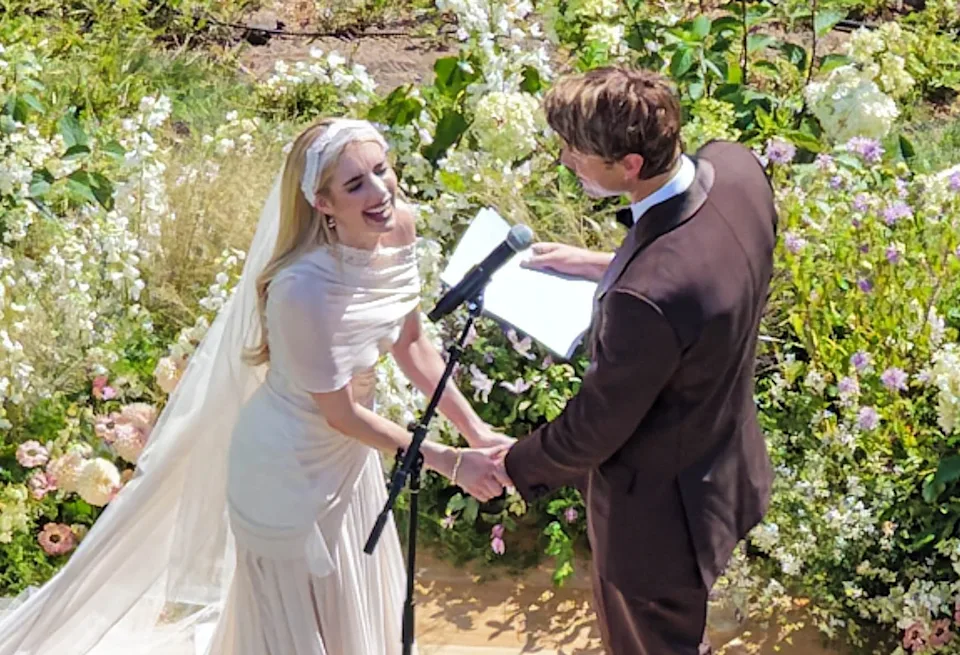
Wedding bells are ringing for Emma Roberts and Cody John.
The actress and actor reportedly exchanged vows in an intimate ceremony in Sun Valley, Idaho, on Saturday, surrounded by close friends and family. The couple, who have been together for around four years, chose a private celebration for their big day, according to reports.
The wedding also brought together some familiar Hollywood faces, with Emma’s famous aunt, Julia Roberts, reportedly among those present to celebrate the couple’s special moment.
The ceremony was said to have lasted around 45 minutes, taking place in warm weather with temperatures reportedly reaching 95 degrees. Despite the heat, the setting remained romantic and personal, with the couple keeping the occasion focused on their closest loved ones.
Emma Roberts Stuns in White as She Walks Down the Aisle
For her wedding day, Emma Roberts reportedly wore a white chiffon gown featuring a high slit, paired with a matching headband. Cody John, meanwhile, opted for a classic black tuxedo.
In one particularly touching moment, Emma was photographed holding the hand of her young son, Rhodes, as she made her way down the aisle.
The intimate nature of the ceremony was reportedly in keeping with the couple’s plans. Before the wedding, reports had suggested that Roberts and John were preparing to exchange vows at John’s family estate in a private celebration attended by their loved ones.
The Couple’s Engagement Came in 2024
Roberts and John made their engagement public in July 2024, when the actress shared the news with her followers on social media.
In the photograph, Emma proudly displayed a large round diamond on her left hand while posing alongside John. The couple appeared delighted as they announced the next chapter of their relationship.
Her playful caption read: “putting this here before my mom tells everyone.”
The post quickly attracted attention from fans and friends, marking a major milestone in the couple’s relationship.
How Emma Roberts and Cody John First Connected
Roberts and John were first publicly linked in August 2022, when John shared a photograph of the pair appearing affectionate.
According to reports at the time, the two were introduced through mutual friends working in the entertainment industry. Their relationship reportedly developed gradually, with the couple initially taking things slowly.
A source previously described John as someone who made Roberts laugh and said the actress enjoyed his personality.
Over time, the relationship grew more serious, eventually leading to their engagement and now marriage.
Emma’s Journey to Finding Love Again
The relationship with John came after a significant period in Roberts’ personal life.
The actress previously dated actor Garrett Hedlund, with whom she shares her son Rhodes. The pair welcomed their child in December 2020 before ending their relationship in late 2021.
Reports at the time suggested Roberts had been careful about introducing new people into her son’s life. As a mother, she was reportedly conscious of protecting her child while navigating a new relationship.

Her journey with John appears to have taken a different path, with the couple eventually building a relationship that has now reached the wedding altar.
From Hollywood Relationships to a New Chapter
Before her relationship with John, Roberts was romantically linked to several well-known names from Hollywood, including Alex Pettyfer, Chord Overstreet, Evan Peters and Hayden Christensen.
Roberts has also remained a familiar face on screen, known for projects including Scream Queens, American Horror Story and We’re the Millers.
Now, away from the spotlight surrounding her past relationships, the actress appears to be beginning a new chapter with John.
For Emma Roberts and Cody John, the Idaho wedding was less about a grand Hollywood spectacle and more about celebrating their commitment with the people closest to them.
And with their four-year relationship now culminating in marriage, the couple’s quiet wedding may have marked the beginning of an even bigger story ahead.
Entertainment
Apple TV+ Is One Tony Away From Entertainment History Could ‘Schmigadoon!’ Complete a Record-Breaking EGOT Journey?
The streaming giant’s unexpected Broadway success has positioned it on the verge of an extraordinary milestone, potentially making Apple TV+ the fastest streamer ever to achieve EGOT status.

In the highly competitive streaming era, platforms are constantly searching for new ways to distinguish themselves. Some focus on blockbuster films. Others invest heavily in prestige television. But Apple TV+ may be on the verge of accomplishing something far more remarkable—securing a place in entertainment history through one of the industry’s most prestigious achievements.
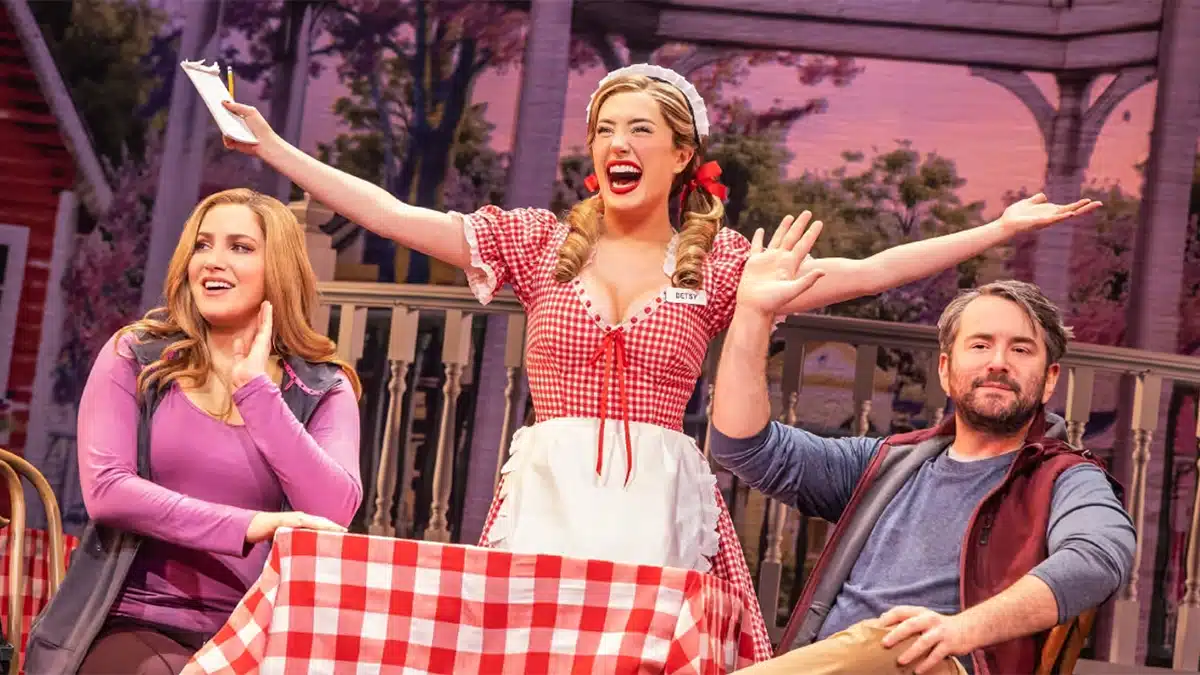
As the Tony Awards approach, Apple’s involvement with the Broadway adaptation of Schmigadoon! has positioned the company for a potential milestone that few media organizations have ever achieved: EGOT status.
If the stars align on Broadway’s biggest night, Apple TV+ could become the fastest streaming platform ever associated with winning an Emmy, Grammy, Oscar, and Tony—the four awards that collectively form the legendary EGOT.
From Streaming Series to Broadway Stage
When “Schmigadoon!” debuted on Apple TV+, it quickly attracted attention for its clever blend of comedy, romance, and musical theater satire.
Created by Cinco Paul and featuring a cast packed with musical talent, the series paid tribute to classic Broadway productions while simultaneously poking fun at the conventions that define them.
ALSO READ : Sen. Elizabeth Warren Calls It a ‘Cesspool of Corruption’ — Here’s Why Senators Are Now Fighting Back Against the DOJ’s Live Nation Deal That Left Every Fan Betrayed…
The show’s unique concept resonated with audiences and critics alike, earning praise for its writing, performances, and original songs.
What few expected, however, was that the project would eventually expand beyond streaming and find new life on the Broadway stage.
That transition highlights the growing connection between digital entertainment platforms and traditional performing arts institutions.
Understanding the Prestige of EGOT
The term EGOT refers to winning all four of the entertainment industry’s most coveted awards:
- Emmy Award (television)
- Grammy Award (music)
- Oscar or Academy Award (film)
- Tony Award (theater)
Only a small group of individuals and organizations have achieved the distinction.
For decades, the achievement has been viewed as the ultimate symbol of creative excellence across multiple entertainment disciplines.
While individual performers often spend entire careers pursuing the honor, Apple’s rapid rise across television, film, music, and theater has been particularly striking.
Apple’s Unconventional Entertainment Strategy
Unlike many streaming competitors that initially focused on building massive content libraries, Apple TV+ pursued a different path.
The platform emphasized quality over quantity, investing in prestige projects capable of generating critical acclaim and industry recognition.
That strategy quickly produced results.
Apple became the first streaming service to win the Academy Award for Best Picture through CODA, a landmark moment that demonstrated the platform’s growing influence in Hollywood.
Its original programming has also secured multiple Emmy Awards, while music-related projects have contributed to Grammy recognition.
Now, the company finds itself within reach of completing the final stage of the EGOT puzzle.
Why ‘Schmigadoon!’ Matters Beyond Awards
The success of “Schmigadoon!” represents more than a single production’s achievements.
It reflects a broader transformation occurring throughout the entertainment industry.
Streaming services are increasingly investing in live events, theater productions, concerts, and immersive experiences. The boundaries that once separated television, film, music, and stage productions are becoming increasingly blurred.

Apple’s support for a project that successfully transitioned from streaming screens to theatrical stages demonstrates how intellectual property can evolve across multiple platforms.
This model may become increasingly common as entertainment companies seek new ways to maximize audience engagement.
Broadway and Streaming Continue to Converge
For years, Broadway and Hollywood maintained distinct identities.
Today, however, collaborations between theater creators and streaming platforms are becoming more frequent.
Services such as Netflix, Disney+, and Apple TV+ have shown growing interest in musical storytelling, live-performance content, and stage-inspired productions.
The relationship benefits both sides.
Streaming platforms gain prestige and creative diversity, while theater productions receive broader exposure and access to global audiences.
“Schmigadoon!” has become one of the clearest examples of this evolving partnership.
A Potentially Historic Night at the Tonys
As anticipation builds ahead of the Tony Awards ceremony, industry observers are watching closely to see whether Apple can complete its remarkable awards journey.
A Tony win would not simply add another trophy to the company’s collection. It would symbolize the success of a long-term strategy centered on creative excellence and cross-platform storytelling.
For Apple TV+, the moment would further validate its position as one of the entertainment industry’s most influential players despite being one of the younger entrants in the streaming landscape.
Whether or not the company secures the final piece of the EGOT puzzle this year, its rapid ascent has already rewritten expectations for what a streaming platform can achieve.
And if “Schmigadoon!” helps deliver that final honor, it could become one of the most significant success stories in modern entertainment history.
Entertainment
Madonna Unveils ‘Confessions II’ at Tribeca—Benedict Cumberbatch, Julia Garner and a Wild Visual Twist Have Fans Asking Questions
The Queen of Pop returned to the spotlight at the Tribeca Festival with an ambitious short film packed with celebrity talent, surreal imagery, and the kind of artistic spectacle only Madonna could deliver.

Few artists have mastered reinvention quite like Madonna. Over four decades into her career, the global music icon continues to surprise audiences, challenge expectations, and blur the lines between music, cinema, fashion, and visual art.
Her latest creative venture, “Confessions II,” made waves at the prestigious Tribeca Festival, drawing attention not only because of Madonna’s involvement but also because of its star-studded cast and visually ambitious storytelling.
Featuring acclaimed actors Benedict Cumberbatch and Julia Garner, the short film immediately became one of the festival’s most talked-about premieres. Attendees described a project packed with bold imagery, futuristic themes, and the type of larger-than-life creative vision that has long defined Madonna’s artistic identity.
A Return to the World of “Confessions”
The title “Confessions II” naturally evokes memories of Madonna’s landmark 2005 album Confessions on a Dance Floor, a project widely regarded as one of the most influential dance-pop releases of the 21st century.
ALSO READ : Sen. Elizabeth Warren Calls It a ‘Cesspool of Corruption’ — Here’s Why Senators Are Now Fighting Back Against the DOJ’s Live Nation Deal That Left Every Fan Betrayed…
While the new short film is not simply a continuation of that album, it draws upon similar themes of transformation, self-expression, identity, and spectacle.
Festival audiences quickly recognized familiar elements of Madonna’s artistic language: dramatic visuals, layered symbolism, and a willingness to embrace the unexpected.
For longtime fans, the project felt like another chapter in an ever-evolving creative journey rather than a nostalgic attempt to recreate past success.
Benedict Cumberbatch and Julia Garner Add Star Power
One reason the project generated immediate excitement was its impressive cast.
Oscar-nominated actor Benedict Cumberbatch has earned international recognition through performances in films such as The Imitation Game, The Power of the Dog, and as Doctor Strange in the Marvel Cinematic Universe.
Joining him is Emmy-winning actress Julia Garner, whose acclaimed work in Ozark and other high-profile projects has established her as one of Hollywood’s most sought-after performers.
Their involvement signals Madonna’s continued ability to attract elite talent from across the entertainment industry.
Rather than serving as simple celebrity cameos, both actors contribute to the film’s surreal and cinematic atmosphere, helping elevate the project beyond a conventional music-related production.
Visuals That Demand Attention
Perhaps the most discussed aspect of “Confessions II” has been its unapologetically extravagant visual style.
Festival attendees described sequences featuring futuristic aesthetics, dreamlike imagery, and surreal visual effects designed to leave a lasting impression.
One particularly memorable description referenced “lasers coming out of every orifice,” a phrase that quickly circulated among festival-goers and entertainment reporters.
The comment perfectly captures the film’s embrace of excess, absurdity, and visual experimentation.
For Madonna, however, such creative boldness is nothing new.
Throughout her career, she has consistently pushed artistic boundaries through groundbreaking music videos, elaborate stage productions, and provocative imagery that challenges conventional expectations.

Why Tribeca Was the Perfect Stage
The Tribeca Festival has become one of the world’s leading platforms for innovative storytelling, attracting filmmakers, musicians, and artists eager to showcase unconventional projects.
Unlike traditional film festivals that focus primarily on mainstream cinema, Tribeca encourages experimentation across multiple forms of media.
That environment made it an ideal venue for “Confessions II.”
The project exists somewhere between short film, visual art installation, cinematic experience, and music-inspired storytelling—a combination that aligns perfectly with the festival’s creative spirit.
Madonna’s Influence Still Shapes Pop Culture
More than forty years after launching her career, Madonna remains one of the most influential figures in modern entertainment.
Her official presence on X continues to engage millions of fans worldwide, while her cultural impact extends far beyond music.
Generations of performers have cited Madonna as a major inspiration, crediting her with redefining what it means to be a pop star. Her influence can be seen across fashion, music videos, live performances, social media branding, and artistic self-expression.
Projects like “Confessions II” demonstrate that she remains committed to innovation rather than simply relying on past achievements.
A Festival Premiere That Sparked Conversation
The strongest artistic works often provoke discussion, interpretation, and debate.
Judging by the reaction at Tribeca, “Confessions II” appears to have achieved exactly that.
Some viewers were captivated by its visual ambition. Others were intrigued by its symbolism and celebrity cast. Many simply appreciated witnessing another example of Madonna’s refusal to play by conventional rules.
Whether audiences ultimately view the project as a masterpiece, an experiment, or something in between, one fact remains undeniable: it succeeded in becoming one of the most talked-about premieres at the festival.
In an entertainment landscape crowded with predictable content, Madonna once again found a way to surprise people—and perhaps that is her greatest talent of all.

Trump Turns Up Pressure as Senate Returns: John Thune Faces Election Bill Fight, Funding Deadline and GOP Rebellion

Emma Roberts Marries Cody John in Intimate Idaho Wedding: ‘Scream Queens’ Star Says I Do in Front of Julia Roberts and Close Family

BMW iX1, iX2 Get a Major Price Shock in UK: Electric SUVs Now Cost Less Than Petrol Models After £3,750 Grant

Land Rover Freelander 8 EREV Interior Revealed: 6 Seats, ‘Zero-Gravity’ Captain Chairs and a Luxury Cabin That Looks Like a Private Jet…

Apple TV+ Is One Tony Away From Entertainment History Could ‘Schmigadoon!’ Complete a Record-Breaking EGOT Journey?

1-Iran Issues Dire Warning to Israel and Defies Trump on Nukes: “We’re Ready to Strike Deep Inside”

Donald Trump’s net worth reveals the fortune behind the former US President and business mogul

Sen. Elizabeth Warren Calls It a ‘Cesspool of Corruption’ — Here’s Why Senators Are Now Fighting Back Against the DOJ’s Live Nation Deal That Left Every Fan Betrayed…

“She Never Made It Out…” Albany House Fire Claims Woman’s Life as Family Pleads for Help to Bring Her Home

“Tomás Rodríguez Net Worth 2025: Panama’s Gold Cup Goal‑Machine’s Surprising Fortune Revealed”

Miss Jamaica Suffers Terrifying Fall Off Miss Universe Stage; Rushed to Hospital on Stretcher in Viral Video

Moana Live-Action Teaser Sparks Outrage as Fans Call Disney’s Move a ‘Clear Money Grab’ — What Went Wrong?

Ryan Gosling’s Project Hail Mary Trailer Stuns Fans with a Mysterious Alien Ally and a Mission That Could Save Earth

Apple delays Jessica Chastain thriller The Savant about domestic extremism after recent US violence

Avatar 3, Fire and Ash trailer reveals Jake Sully’s family facing terrifying new Na’vi enemies with deadly fire powers
-

 Sports1 week ago
Lionel Messi vs Diego Maradona: Is Argentina’s World Cup Hero Finally Above The Legend? Bhaichung Bhutia Gives His Verdict…
-

 Sports1 week ago
FIFA World Cup 2026 Final Referee Revealed: Why Slavko Vinčić Could Be Argentina’s Biggest Concern Against Spain
-

 Sports1 week ago
“Stopping Harry Kane Will Be France’s Biggest Challenge…” Gurpreet Singh Sandhu Warns Ahead of World Cup Clash
-

 Entertainment1 week ago
James Wright Named UTA U.K. Music Group Co-Head, Expanding Leadership Role Representing Top Artists
-

 Sports1 week ago
FIFA World Cup 2026 Closing Ceremony: IShowSpeed, Robbie Williams, Shakira & Global Stars Set To Light Up Final Night…
-

 Sports7 days ago
India Spotted Him Before the World Did: How Ferran Torres’ Journey From Mumbai to World Cup Glory Came Full Circle…
-

 Sports1 week ago
Argentina Under Fire After World Cup Final: Why Did Lionel Messi and Teammates Walk Away During Spain’s Trophy Celebration?
-

 Sports1 week ago
Jude Bellingham Finally Explains Viral Lionel Messi Clash After World Cup Semifinal Defeat: ‘It Was Nothing Like People Thought…’