
World News
Strong Winds Topple Statue of Liberty Replica in Brazil, Massive Structure Collapses in Guaíba
Nearly 40-metre-tall replica outside a Havan store crashes during violent storm; no injuries reported


A towering replica of the Statue of Liberty collapsed in southern Brazil after powerful winds battered the city of Guaíba on Monday afternoon, triggering widespread damage across the region. Local authorities confirmed that no injuries were reported in the incident, which unfolded at the peak of a severe storm system.
The nearly 40-metre-tall structure was installed in the car park of a Havan retail megastore, close to a fast-food outlet, when intense wind gusts struck the area. Dramatic footage shared online shows the replica tilting under the pressure of the wind before crashing to the ground and breaking apart. The statue’s head was crushed on impact.

What collapsed and what remained intact
According to company officials and local reports, only the upper portion of the statue, measuring approximately 24 metres (78 feet), collapsed. The 11-metre-high pedestal remained standing and did not suffer structural damage. The replica was one of several similar installations placed outside Havan stores across Brazil as part of the retailer’s branding.
Havan confirms certification and swift response
In an official statement, Havan said the statue had been installed when the store opened in 2020 and possessed all required technical and safety certifications. The company confirmed that the surrounding area was immediately cordoned off following the collapse, and specialist teams were deployed to remove debris within hours.
Store operations continued in unaffected sections of the property, though access to the area around the fallen structure remains restricted pending further inspections.
Mayor and civil defence react
Guaíba mayor Marcelo Maranata confirmed that there were no casualties and praised the rapid response by emergency teams. He said municipal workers coordinated closely with state Civil Defence officials to secure the perimeter and assess potential risks to nearby structures.
The incident occurred at around 3 pm, when the storm was at its most intense.
Extreme weather behind the collapse
Meteorological authorities reported wind gusts exceeding 90 kmph, with some areas recording speeds close to 100 kmph. The National Institute of Meteorology attributed the sudden and violent winds to a passing cold front, which triggered severe weather across much of Rio Grande do Sul.
The storm caused widespread disruption in the region, including fallen trees, damaged roofs, hailstorms, temporary power outages, and localized flooding in several neighbourhoods. Emergency weather alerts had earlier been sent directly to residents’ mobile phones, warning of strong winds and heavy rainfall.
Technical inspection ordered
Havan confirmed that a technical inspection will be conducted to determine whether factors beyond extreme weather may have contributed to the collapse. Authorities will also assess other similar structures to ensure safety standards are met.
Weather officials said conditions are expected to gradually improve from Tuesday, though intermittent rain may persist in parts of southern Brazil.







World News
This Film Will Make You Uncomfortable And That’s Exactly Why America Needs to See Torn
A documentary about torn-down hostage posters becomes a chilling mirror of grief, identity, and how the Israel–Hamas war fractured everyday life in New York City

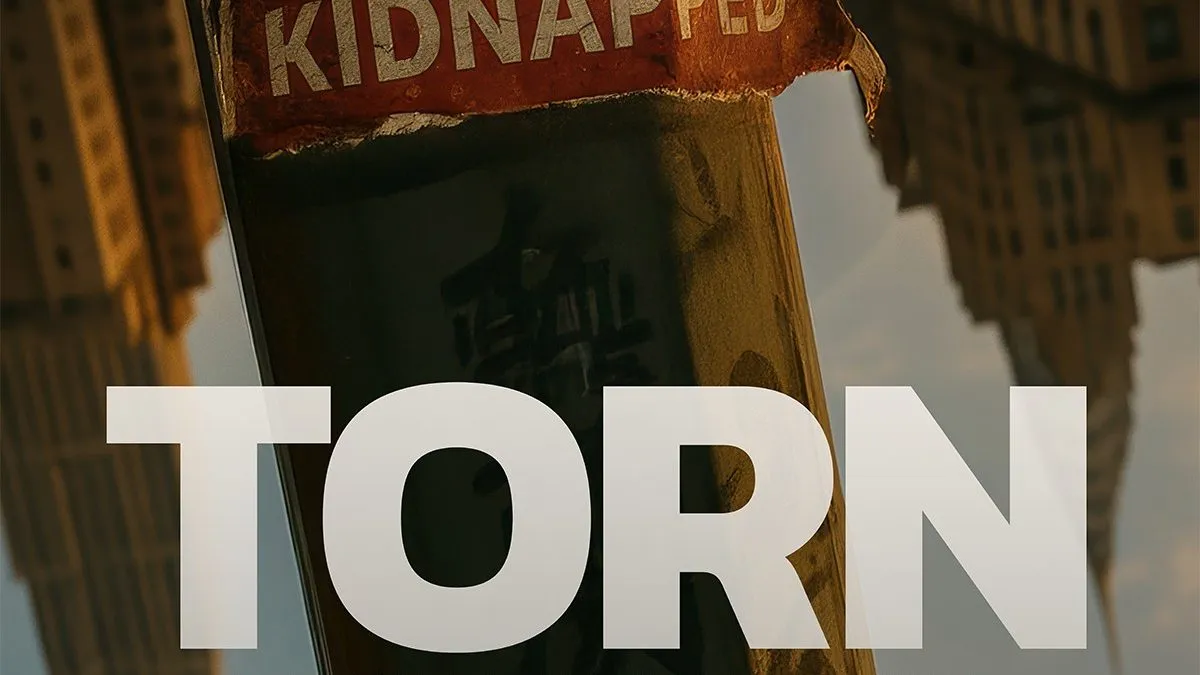
There are films that reassure you. Then there are films that refuse to. Torn belongs firmly in the second category — and that’s precisely why it matters.
“If you want a film that confirms your beliefs, Torn isn’t it,” says executive producer Jane Rosenthal, and she’s right. This documentary does not hand out comfort. It asks uncomfortable questions and then sits quietly while the audience wrestles with them.
Days after the October 7 Hamas attacks on Israel, as war erupted in Gaza and a humanitarian crisis unfolded, something seemingly simple appeared across New York City. Posters. Faces. Names. Stories.
At the top, printed in red, a single word: KIDNAPPED.
The posters showed the faces of 251 people abducted by Hamas — children, grandparents, Hindus, Buddhists, Christians, Muslims, and Jews. A deliberate reminder that terror did not discriminate.
And then, just as suddenly, the posters began to disappear.
ALSO READ : Younghoe Koo Explains Botched Field Goal After Slip: “The Ball Was Moving So I Pulled Up”
Videos flooded TikTok and Instagram. People were filmed tearing the posters down, while others filmed themselves putting them back up. Heated street arguments followed. Students were doxxed, employees were fired, politicians weighed in, and friendships collapsed — all over pieces of paper stapled to lampposts.
But Torn makes one thing painfully clear: this was never really about posters.
It was about identity.
It was about grief.
It was about who gets to be seen — and who doesn’t.
As Jane Rosenthal — co-founder of Tribeca Enterprises and longtime producing partner of Robert De Niro — explains, Torn is not a film about the Middle East. It’s a film about America. About how the emotional aftershocks of a distant war cracked open daily life in one of the most diverse cities on Earth.
New York, a city that prides itself on coexistence, suddenly couldn’t agree on whose pain mattered.
Art became protest.
Protest became confrontation.
And a lamppost became too politically charged to touch.

What began as a grassroots awareness campaign quickly turned into a symbolic battlefield. Some people ripped the posters down in anger. Others taped them back up with shaking hands. Most simply walked past — not out of cruelty, but confusion. They no longer knew how to respond to grief that wasn’t their own.
That may be Torn’s most unsettling truth.
We have lost the ability to sit with someone else’s pain.
The film captures how reactions themselves became performances — curated for social media, filtered for ideology, amplified for likes. Grief turned into content. Outrage became identity. Silence became suspect.
And yet, Torn never tells the viewer what to think. It refuses to flatten the complexity of the moment. Instead, it documents how quickly empathy collapses when politics enters the room — and how fragile coexistence truly is when people stop seeing each other as human first.
In a media landscape overflowing with hot takes and moral certainty, Torn dares to do something radical: it asks the audience to feel uncomfortable — and stay there.
Because discomfort, the film suggests, is not the enemy. Indifference is.
This is not a documentary that will leave everyone satisfied. Some will be angry. Some defensive. Some deeply unsettled. But very few will walk away unchanged.
And that may be its greatest achievement.
World News
“Trump hints America may ‘never pay income tax again’… but experts warn the math tells a very different story”
As President Donald Trump floats a dramatic plan to replace federal income taxes with tariff revenue, economists say the idea could reshape — and even destabilize — the U.S. financial system.

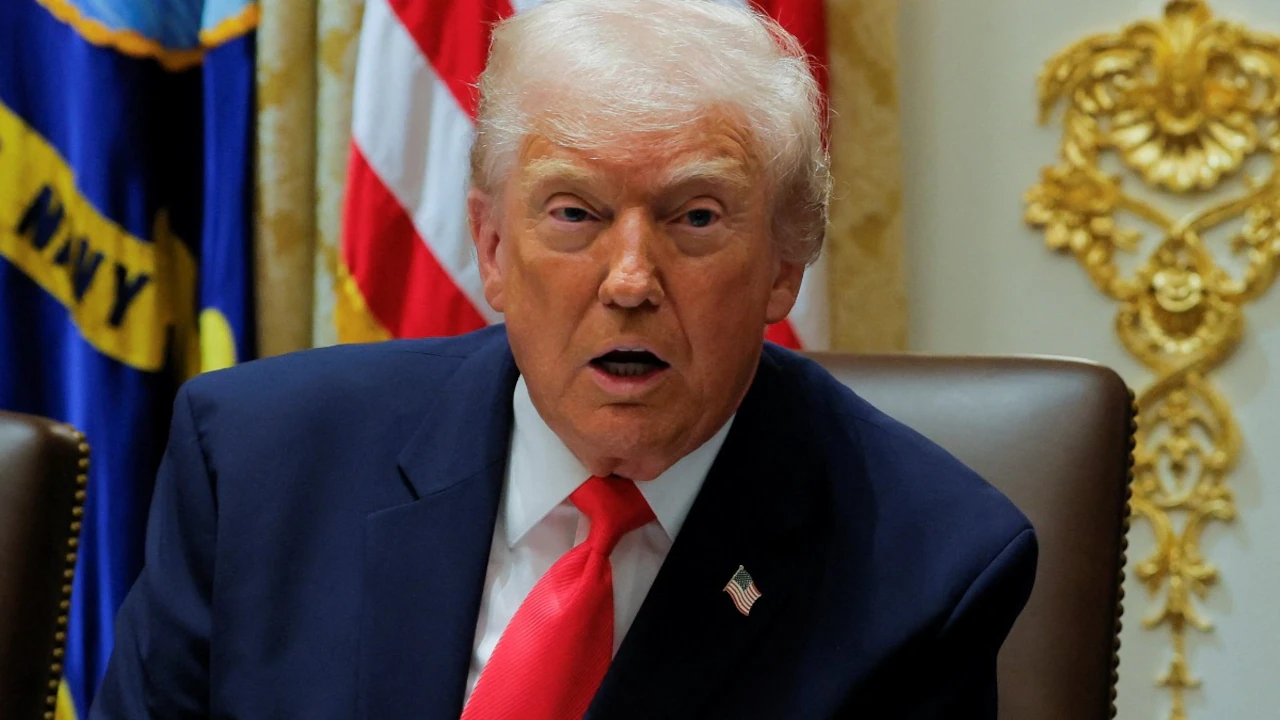
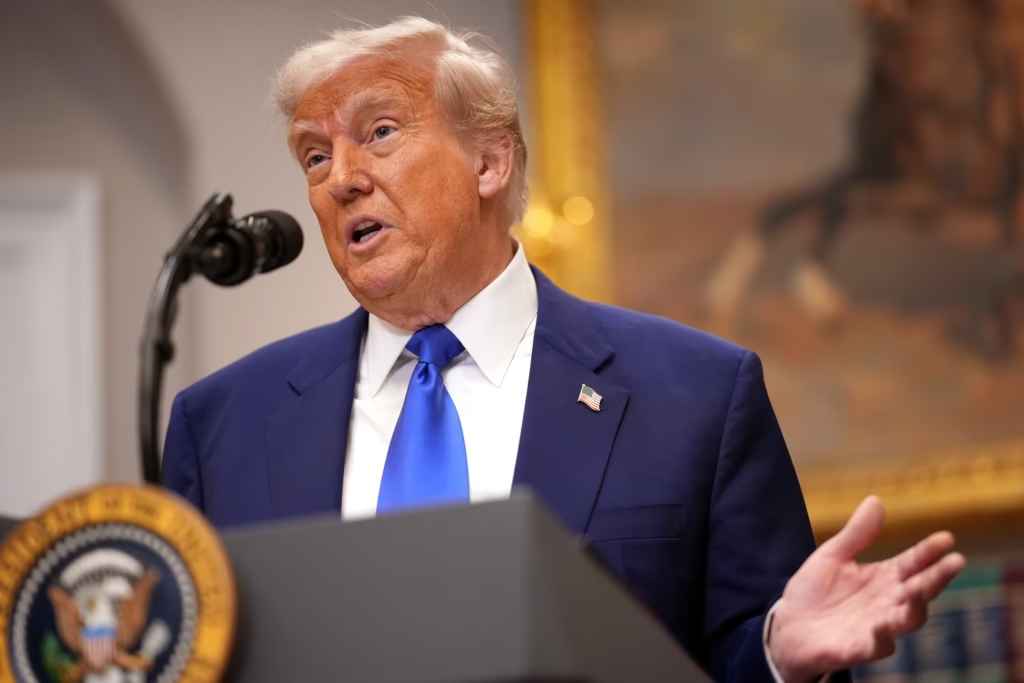
For millions of Americans struggling with rising bills, the idea sounded almost too good to be true. At a recent Cabinet meeting, President Donald Trump suggested that the country might soon reach a point where citizens “won’t even have income tax to pay”, claiming booming tariff collections could eventually replace the federal individual income tax system altogether.
The comment instantly sparked national debate — not just because of its boldness, but because it challenges one of the core pillars of the U.S. fiscal framework.
But tax experts, economists, and policy analysts tell a very different story.
Tariffs vs. Income Tax: Why Experts Say the Numbers Don’t Add Up
According to Erica York, a leading tax policy expert at the Tax Foundation , the proposal is “mechanically impossible.”
York estimates that even if the current tariff structure under the Trump administration were kept in place for the next decade, it would generate only about $2.1 trillion. In contrast, federal individual income taxes are projected to bring in more than $32 trillion over the same period.
“The U.S. simply doesn’t import enough goods to generate that kind of money,” she noted. “Replacing income tax with tariffs would not just be unrealistic — it would be economically harmful.”
Federal income taxes currently bring in $2.7 trillion annually, while tariff revenue in 2025 totaled just $195 billion, according to Treasury data.
Why Economists Say Tariffs Would Hit Working Families the Hardest
Another major concern raised by experts is who pays the real price.
Although the administration argues that foreign exporters absorb the cost, economists say the majority of tariff burdens fall on U.S. companies and consumers, who then face higher prices for everyday products — from electronics to clothing to food.
Scott Lincicome, an economist at the Cato Institute , warns that replacing income tax with tariffs would shift the burden disproportionately onto low- and middle-income households.
“Tariffs are effectively a flat consumption tax,” he explained. “Income tax is progressive. Switching systems would help high earners and hurt the working class.”
According to the Tax Foundation, the top 10% of earners currently pay 72% of all federal income taxes — meaning any switch to tariff-based funding would reduce their tax responsibility while increasing the financial load on the remaining population.
Trump’s “Tariff Dividend”: Another Expensive Promise
President Trump has also floated the idea of sending Americans a one-time $2,000 “tariff dividend” check funded by tariff revenue.
But Lincicome calls this “mathematically impossible” under current conditions.
Issuing such a check nationwide would cost between $300 billion and $600 billion, far exceeding the annual tariff revenue.
“It’s simple arithmetic,” he said. “The revenue just isn’t there.”
Congressional Reality Check
Even if the numbers worked — and experts say they don’t — the proposal faces another hurdle: Congress.
Changing the federal tax code, whether to eliminate income tax or to introduce dividend checks, requires legislative approval. And early responses from lawmakers show sharp divisions.
Sen. Ron Johnson recently dismissed the $2,000 payout idea, stating the country “can’t afford it.”
Could Tariffs Ever Generate Enough? History Says No.
A report from the Yale Budget Lab found that the current average effective tariff rate has reached 17%, the highest since 1935.
Economists warn that increasing tariffs further — to the 20–30% level needed to even approach income-tax replacement — would cause Americans to stop buying imports, collapsing tariff revenue entirely.
“There is a ceiling,” Lincicome explained. “Push tariffs too high, and revenue collapses. Push them even higher, and the economy collapses.”
A Vision or a Warning?
President Trump’s bold claim has energized supporters who see tariffs as a way to rebalance global trade and reward American workers. But experts caution that the plan could dramatically shift the economic burden toward the very households the government aims to help.
As the Supreme Court continues evaluating the constitutionality of Trump’s tariff policies, and as the 2026 fiscal debate intensifies, one thing is clear:
The idea of a tariff-funded America may be politically appealing — but economically, it is deeply complicated.
For more Update – DAILY GLOBAL DIARY
World News
Why 44 U.S. Lawmakers Just Took a Stunning Stand Against Pakistan’s Asim Munir — And What They Asked Marco Rubio Will Shock You
A rare bipartisan letter demands Global Magnitsky sanctions, raises questions about Donald Trump’s closeness with Asim Munir, and warns of a democratic breakdown in Pakistan.

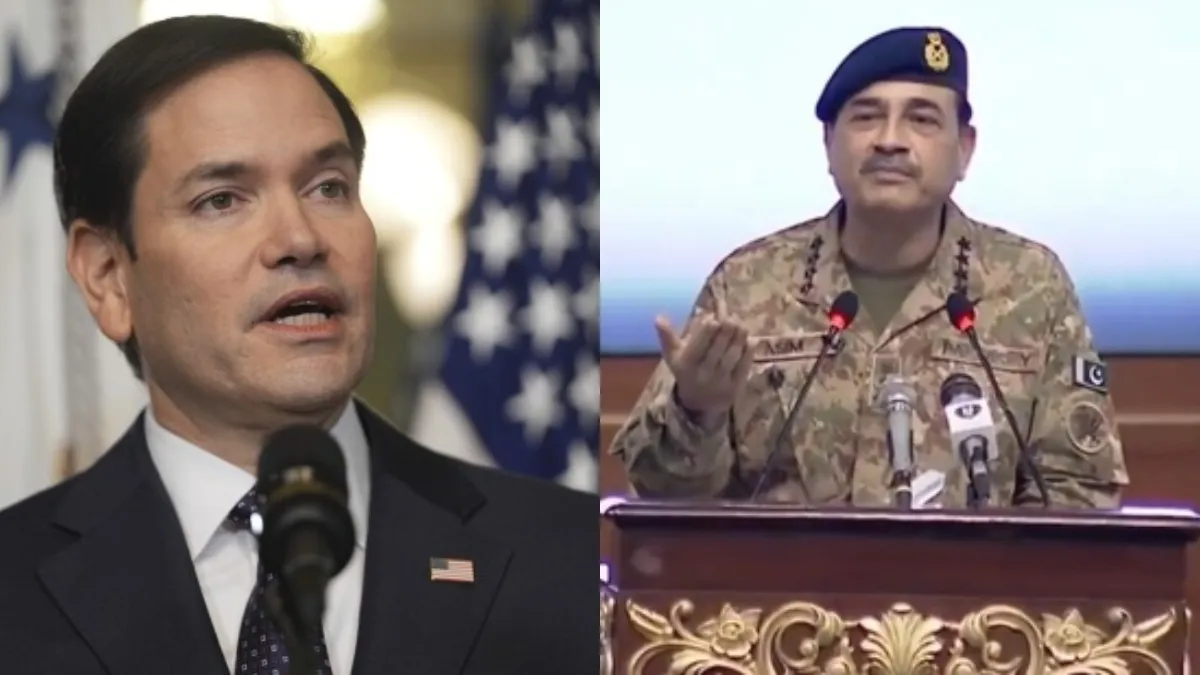
In a dramatic political moment that few in Washington saw coming, 44 members of the U.S. Congress — cutting across party lines — have demanded tough action against Pakistan’s Army Chief General Asim Munir. Led by Representative Pramila Jayapal and Representative Greg Casar, the lawmakers sent a detailed letter on December 3, 2025, urging Secretary of State Marco Rubio to impose Global Magnitsky sanctions on Munir and other senior Pakistani officials.
The tone of the letter is unusually sharp. It accuses General Munir of overseeing a sweeping campaign of transnational repression, intimidation of political opponents, and alleged human-rights violations that extend beyond Pakistan’s borders.
Allegations: From abducted brothers to threatened U.S. citizens
Members of Congress highlight shocking cases involving U.S.-based Pakistanis — including journalist Ahmed Noorani and world-renowned musician Salman Ahmad.
According to the letter:
- Noorani’s brothers were abducted and tortured in Pakistan after he published reports exposing military corruption.

- Salman Ahmad’s family allegedly faced kidnapping threats, and intervention from U.S. authorities was required to ensure their safety.
The lawmakers argue that these acts show a pattern of systematic retaliation against voices critical of Pakistan’s military leadership — even when those voices live on American soil.
They also cite:
- civilians tried in military courts,
- the suppression of anti-government protests,
- intimidation of women activists,
- harassment of ethnic minorities, including Baloch activists.
All these, they argue, form part of a “deeply worrying collapse of democratic norms” inside Pakistan.
Congress demands sanctions — and tough answers
Under the Global Magnitsky Act, the U.S. can freeze assets, ban travel, and block financial transactions of foreign officials implicated in serious human-rights abuses or corruption.

Congress has asked Marco Rubio five pointed questions, to be answered by December 17, 2025:
- Why have there been no sanctions against General Munir, despite substantial evidence?
- How has the State Department responded to threats made against U.S. citizens?
- Is the U.S. evaluating Pakistan’s reported military trials of civilians?
- What action is planned regarding the treatment of women, religious minorities, and Baloch activists?
- How did recent meetings between Donald Trump and Pakistan’s military leadership affect U.S. foreign-policy assessments?
So far — as of December 4, 2025 — no sanctions have been placed.
A spotlight on Pakistan’s controversial 2024 elections
The lawmakers revisit concerns raised after Pakistan’s 2024 national elections, which independent watchdogs described as:
- “irregular”,
- “non-transparent”, and
- heavily influenced by the military establishment.
Dozens of candidates from the Pakistan Tehreek-e-Insaf (PTI) party — founded by former Prime Minister Imran Khan — were jailed or prevented from campaigning.
Cities across Pakistan reportedly suffered internet shutdowns, allegedly timed to disrupt live vote counting. Media houses complained of censorship, intimidation, and pressure to avoid coverage critical of the Army.
The Trump–Munir equation: A new geopolitical twist
The congressional letter also raises eyebrows about the warming relationship between Donald Trump and General Asim Munir. Their June 2025 meeting was seen by many diplomats as a surprising reset in U.S.–Pakistan relations.
Trump publicly claimed credit for a “ceasefire between India and Pakistan” and praised Munir as a leader he could “work with.”
This newfound closeness has irritated India, where leaders rejected Trump’s claim of mediation and emphasized that New Delhi does not accept third-party involvement on matters related to Kashmir.
Some analysts fear this shift could push India to strengthen ties with China and Russia — countries eager to rebalance U.S. influence in South Asia.
Imran Khan’s imprisonment and the rise of Asim Munir’s power
Central to this political storm is the plight of Imran Khan, who remains behind bars after a series of convictions his supporters insist are politically motivated.
His prison sentences include:
- 3 years in the Toshakhana case,
- 14 years in the Al-Qadir Trust case,
- additional charges involving state secrets and alleged marriage-law violations.
Then came the 27th Constitutional Amendment, passed in November 2025, which dramatically expanded Munir’s control.
Under the amendment:
- Munir was elevated to Chief of Defence Forces, gaining authority over all military branches.
- The position now enjoys lifetime immunity.
- A new Federal Constitutional Court was created, limiting the power of the Supreme Court of Pakistan.
- Civilian oversight decreased significantly.
Critics say Pakistan’s democracy has entered an alarming phase — one where civilian institutions appear overshadowed by a military establishment insulated from accountability.
Why this congressional move matters globally
If imposed, Global Magnitsky sanctions on Pakistan’s top military leaders would:
- freeze U.S.-held assets,
- ban travel to the United States,
- cut access to global financial networks,
- damage Pakistan’s military-diplomatic standing.
Such action would be unprecedented in modern U.S.-Pakistan relations.
With growing bipartisan support — including the Pakistan Democracy Act currently under review — Washington is signaling that democratic regression in Pakistan may no longer be met with silence.
For now, all eyes remain on Marco Rubio and whether he will take the historic step Congress is urging.
Visit our site for more news www.DailyGlobalDiary.com

Cade Cunningham, Bench Unit Power Pistons to Statement Win Over Celtics

Trump Announces Donald Trump Jr.’s Engagement at White House Holiday Party

Teenager Cooper Flagg Makes NBA History Despite Mavericks’ Overtime Loss to Jazz

Nikola Jokic, Jamal Murray Go Nuclear on Jokmas as Nuggets Beat Rockets in OT Thriller

TikTok Influencer Tucker Genal Dies at 31, Brothers Say “We Love You and Will Miss You Eternally”

1-Iran Issues Dire Warning to Israel and Defies Trump on Nukes: “We’re Ready to Strike Deep Inside”

Donald Trump’s net worth reveals the fortune behind the former US President and business mogul

Caitlin Clark Sidelined with Quad Strain, Set to Miss Two Weeks of WNBA Action

Elon Musk Breaks Ranks with Trump Over ‘Big, Beautiful’ Tax Bill

Golden Glory: Team USA Wins First Standalone Ice Hockey World Championship in 91 Years

Miss Jamaica Suffers Terrifying Fall Off Miss Universe Stage; Rushed to Hospital on Stretcher in Viral Video

Moana Live-Action Teaser Sparks Outrage as Fans Call Disney’s Move a ‘Clear Money Grab’ — What Went Wrong?

Ryan Gosling’s Project Hail Mary Trailer Stuns Fans with a Mysterious Alien Ally and a Mission That Could Save Earth

Apple delays Jessica Chastain thriller The Savant about domestic extremism after recent US violence

Avatar 3, Fire and Ash trailer reveals Jake Sully’s family facing terrifying new Na’vi enemies with deadly fire powers
-

 US News1 week ago
“She Never Made It Out…” Albany House Fire Claims Woman’s Life as Family Pleads for Help to Bring Her Home
-

 Entertainment1 week ago
XG Star Cocona Shares a Brave Truth at 20 — “I Was Born Female, But That Label Never Represented Who I Truly Am…”
-

 Entertainment1 week ago
Samba Schutte Reveals the Surprise Cameo in Pluribus That “Nobody Saw Coming”… and Why John Cena Was Perfect for the Role
-

 Entertainment5 days ago
Saudi Arabia’s entertainment revolution… Red Sea Film Foundation CEO Faisal Baltyuor says he ‘wears many hats’ — but one mission drives them all
-

 Entertainment1 week ago
Mandy Moore Signs On for a Bold New Peacock Erotic Thriller — “A Twisted Game Where the Student Becomes the Teacher…”
-

 Entertainment3 days ago
Amy Schumer and Chris Fischer Split After 7 Years of Marriage — Inside Their ‘Cohesive’ and Amicable Divorce
-

 Politics6 days ago
“If I Can’t Beat Jimmy Kimmel, I Shouldn’t Be President…” Trump Drops Bold Claim Ahead of Hosting Kennedy Center Honors
-

 Entertainment6 days ago
“Heartbreaking… Devastating… Deaths”: ‘It—Welcome to Derry’ Creators Hint at a Finale Fans Aren’t Ready For