
Entertainment
“Secret Lives of Mormon Wives” Returns After Sudden Filming Pause Amid Taylor Frankie Paul Investigation Sparks Industry Questions ‘What Really Happened Behind the Cameras?’
The reality series resumes production after a temporary halt, as attention remains fixed on Taylor Frankie Paul and the circumstances surrounding the pause…

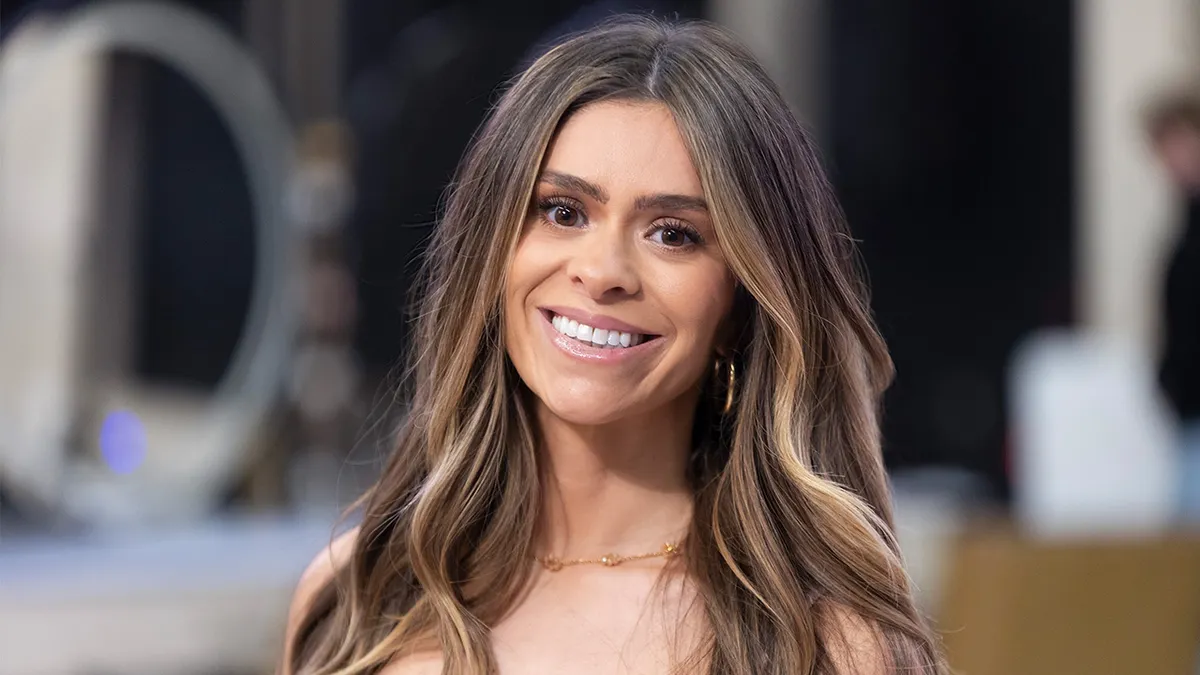
Production on the popular reality series Secret Lives of Mormon Wives is officially back on track following a brief but widely discussed filming pause that has drawn significant online speculation.
The halt in production reportedly came amid developments involving cast member Taylor Frankie Paul, whose name has been at the centre of public conversation in recent weeks due to an ongoing investigation. While official details remain limited, the situation was serious enough to temporarily disrupt filming schedules and prompt internal reviews by the production team.
Now, sources close to the production confirm that filming has resumed, signalling that the show is moving forward despite the controversy.
A Reality Show Under the Spotlight
Secret Lives of Mormon Wives, which gained attention for its intimate portrayal of relationships, community expectations, and personal struggles within modern Mormon life, has quickly become one of the more talked-about reality series in recent memory.
The show, distributed through Hulu, has been praised for its candid storytelling style, offering viewers a rare glimpse into a tightly knit cultural world that is often misunderstood or simplified in mainstream media.
ALSO READ : Sen. Elizabeth Warren Calls It a ‘Cesspool of Corruption’ — Here’s Why Senators Are Now Fighting Back Against the DOJ’s Live Nation Deal That Left Every Fan Betrayed…
However, the recent pause has shifted focus away from its storytelling and toward off-screen developments.
Taylor Frankie Paul at the Center of Attention
At the heart of the current conversation is Taylor Frankie Paul, one of the show’s most recognizable personalities. Known for her strong social media presence and emotionally charged story arcs, Paul has been a central figure in the series’ popularity.
While reports referencing an investigation involving her have circulated, neither the production company nor official representatives have released detailed public statements clarifying the scope or outcome of the matter.
This lack of clarity has fueled speculation across social media platforms, with fans questioning whether the pause was purely logistical or directly related to the ongoing situation.
Production Resumes, But Questions Remain
The decision to resume filming suggests that producers are confident in continuing the series’ trajectory without long-term disruption. Still, the pause itself has left a noticeable mark on public perception.
Industry observers note that reality television productions often face unexpected interruptions, especially when cast members become involved in external controversies. However, what makes this situation stand out is the timing—occurring while the series was gaining strong momentum among viewers.
For Secret Lives of Mormon Wives, the challenge now is balancing audience interest in real-life developments with the integrity of its narrative direction.

Reality TV and Real-Life Consequences
The situation also highlights a recurring tension in reality television: the blurred boundary between on-screen storytelling and off-screen reality.
Shows like Secret Lives of Mormon Wives thrive on authenticity and personal exposure, but that same openness often means cast members’ private lives inevitably influence production.
With Taylor Frankie Paul remaining a central figure in public discussion, the series now finds itself navigating both storytelling continuity and audience curiosity about real-world developments.
What Happens Next?
While production has resumed, it remains unclear whether the recent events will be addressed directly within the upcoming episodes or kept outside the show’s narrative structure.
For now, the focus appears to be on stabilizing production and continuing filming without further interruption.
What is certain, however, is that interest in Secret Lives of Mormon Wives has only intensified. The combination of personal drama, cultural insight, and real-world controversy has kept the series firmly in the public conversation.
As filming continues, viewers will be watching closely—not just for what unfolds on screen, but for how the production chooses to navigate the realities behind it.







Entertainment
Susan Sarandon Says Her Palestine Support Has Cost Her Major Hollywood Roles
The veteran actress alleges that films were taken away and some agencies continue discouraging people from hiring her.
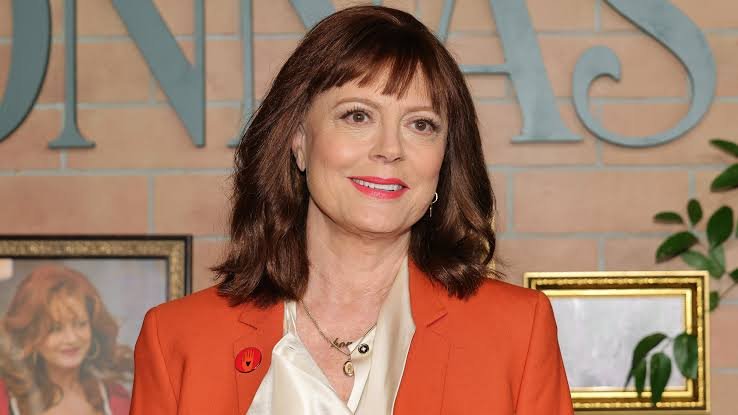
Oscar-winning actress Susan Sarandon has claimed that her outspoken support for Palestinians continues to affect her career, revealing that film roles have recently been withdrawn and some agencies are still advising people not to hire her.
The 79-year-old actress addressed the professional consequences of her political activism during a press conference at the Venice Film Festival. Sarandon was attending the festival to promote her latest Italian film, The Echo Chamber.
“I’ve still had movies taken away recently,” Sarandon told reporters, adding that agencies were telling people not to hire her. She described the situation as part of the entertainment industry’s existing “power structure.” Reuters reported her remarks from the Venice press conference.
Sarandon says she feels more welcome internationally
Although Sarandon believes resistance to hiring her remains strong within sections of Hollywood, she said her experience outside the United States has been noticeably different.
ALSO READ : Sen. Elizabeth Warren Calls It a ‘Cesspool of Corruption’ — Here’s Why Senators Are Now Fighting Back Against the DOJ’s Live Nation Deal That Left Every Fan Betrayed…
The actress suggested that public understanding of the conflict and America’s relationship with Israel had changed considerably since 2023. However, according to Sarandon, that broader shift has not necessarily been reflected within major Hollywood studios and talent agencies.
She claimed that the barriers were not limited to her alone, indicating that other entertainment figures had also encountered professional difficulties after publicly criticising Israel or supporting Palestinian rights.
Despite those challenges, Sarandon said she continues to feel welcomed by international audiences and filmmakers.
Why was Susan Sarandon dropped by UTA?
The controversy dates back to November 2023, when Sarandon participated in a pro-Palestine rally in New York City following the October 7 Hamas attack on Israel and the beginning of the war in Gaza.
During the rally, she made remarks comparing the fear experienced by Jewish Americans at the time with the discrimination and violence faced by Muslims in the United States.
The comments drew intense criticism, with many arguing that her wording appeared to minimise the long history of antisemitic persecution. Soon afterwards, United Talent Agency confirmed that it was no longer representing the actress. The agency’s decision was widely reported in November 2023.
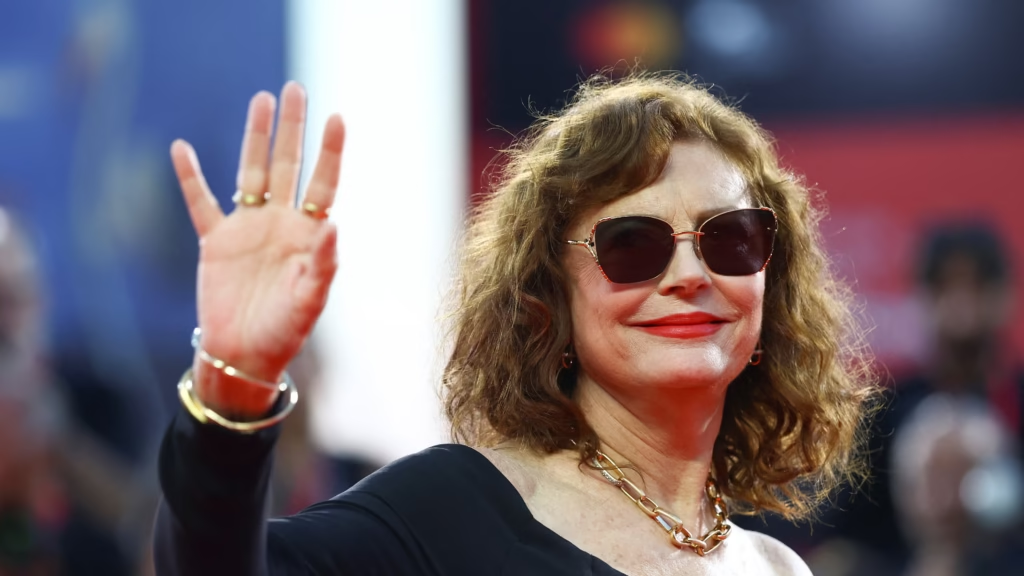
Sarandon later apologised for the phrasing of her statement, describing it as a serious mistake. She acknowledged that her words could have wrongly suggested Jewish people had not previously experienced persecution.
Her apology, however, did not amount to a withdrawal of her support for Palestinian civilians. She reiterated her commitment to peace, justice and compassion while calling for dialogue between people holding opposing views.
‘The Echo Chamber’ director reportedly ignored warnings
Sarandon is now appearing in The Echo Chamber, directed by Italian filmmaker Andrea Pallaoro.
At the Venice press conference, she thanked Pallaoro for casting her despite what she described as warnings against working with her. The actress suggested that the director had chosen to judge her on her work rather than the pressure surrounding her political views.
The film has additional significance because it was adapted from the final screenplay written by acclaimed Italian filmmaker Bernardo Bertolucci, who died in 2018.
In The Echo Chamber, Sarandon portrays an ageing singer attempting to revive her career. Her character hires a music producer recovering from drug addiction to help create a comeback album.
The film is among the titles competing for the prestigious Golden Lion at the 83rd Venice International Film Festival. Its Italian theatrical release is scheduled for September 10.
Political controversy follows Sarandon’s long career
Sarandon has maintained a politically outspoken public profile for decades, frequently involving herself in anti-war movements, election campaigns and human-rights causes.
Her film career includes celebrated performances in Thelma & Louise, Bull Durham, The Rocky Horror Picture Show and Stepmom. She won the Academy Award for Best Actress for her portrayal of Sister Helen Prejean in the 1995 drama Dead Man Walking.
Her latest comments have once again revived the debate over whether actors should face professional consequences for their political statements.
Supporters argue that performers should not be denied opportunities for expressing political opinions, while critics maintain that public figures must remain accountable when their words are considered offensive or harmful.
Sarandon, for her part, appears determined to continue working without distancing herself from her broader political beliefs. Her presence at Venice—and the applause that reportedly followed her remarks—suggests that while some Hollywood doors may have closed, she continues to find support elsewhere.
Entertainment
Beatty Vows to Fight Kennedy Center Shutdown
The congresswoman questions the abrupt closure following a major court ruling on Trump’s name.
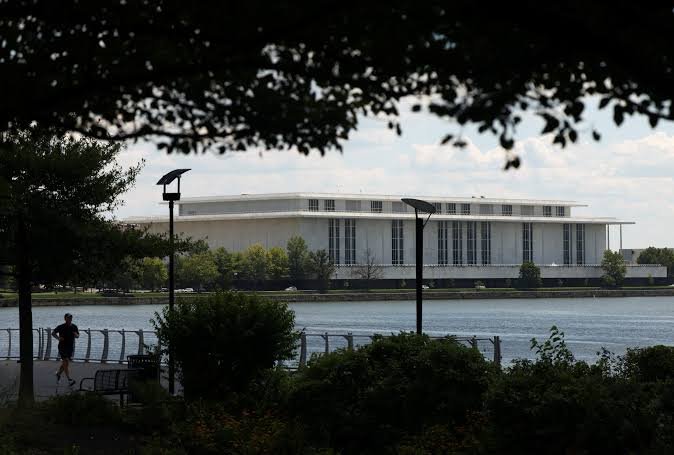
A sudden decision to close most of Washington’s John F. Kennedy Center for the Performing Arts has opened a fresh and potentially explosive chapter in the legal battle surrounding one of America’s most prominent cultural institutions.
The Kennedy Center’s board voted on Tuesday to close most of the venue immediately, citing safety concerns and the need for extensive renovations. The vote came only hours after US District Judge Christopher Cooper issued an injunction preventing the board from putting President Donald Trump’s name on the building or its grounds without approval from Congress.
According to the court, the board does not have the authority to install a memorial honouring Trump—or any other person—at the Kennedy Center without congressional approval. The US Department of Justice has appealed the decision.
The timing of the closure vote immediately raised questions about whether renovations were the sole reason for the move or whether the decision was connected to the courtroom setback.
ALSO READ : Sen. Elizabeth Warren Calls It a ‘Cesspool of Corruption’ — Here’s Why Senators Are Now Fighting Back Against the DOJ’s Live Nation Deal That Left Every Fan Betrayed…
Joyce Beatty challenges the closure decision
Representative Joyce Beatty, an ex-officio member of the Kennedy Center’s board, strongly criticised the abrupt shutdown. The Ohio Democrat has been leading the legal challenge against attempts to rename or alter the identity of the institution.
Beatty suggested that the closure decision could now be brought before the court as part of the continuing dispute.
“For years, the Kennedy Center has planned to undergo phased renovations,” Beatty said, arguing that performances could have continued while repairs were carried out section by section.
She accused Trump of treating the institution as a personal branding project and described the board’s actions as a possible breach of its responsibility to protect the centre.
“Donald Trump only cares about the Kennedy Center for his vanity,” Beatty said. She added that Congress created the venue as a “living memorial” to President John F. Kennedy and vowed to continue defending it.
Trump’s name remains at the centre of the dispute
The board previously approved plans to recognise Trump on the Kennedy Center’s facade, including an inscription crediting him with restoring and renovating the building. It also proposed renaming the surrounding plaza in his honour.
However, Judge Cooper has repeatedly concluded that the institution’s legally established identity cannot be changed by its trustees acting alone. In an earlier ruling, the judge ordered Trump’s name removed after it had been placed on the building.
The latest court order again reinforced a simple but important point: because Congress named the centre, only Congress can authorise a change that memorialises another individual there.
Trump, who chairs the board, has maintained that the ageing building needs urgent repairs. He said the closure was required to address serious safety problems and claimed that he had contributed millions of dollars to an endowment supporting the institution.

The board has also pointed to a recent partial ceiling collapse as evidence that the building requires immediate attention. Congress has allocated approximately $257 million for renovation work, according to the Associated Press.
Why the shutdown could return to court
The legal issue is no longer limited to what name appears on the Kennedy Center’s facade. Lawyers may now examine whether the closure was approved through a lawful and independent process—and whether it was influenced by the ruling against Trump’s proposed recognition.
Renovating a major performing arts venue is not unusual. What makes this case different is the sequence of events: a judge blocked the naming plan, and the board approved an immediate shutdown only hours later.
Beatty’s side is likely to argue that the centre could be renovated in phases, allowing at least some performances and public programmes to continue. The board, meanwhile, is expected to maintain that closing most of the building is necessary to protect visitors, employees and performers.
The dispute leaves artists, workers, audiences and donors facing considerable uncertainty. Performances may be disrupted, renovation timelines remain unclear and another request for judicial intervention could arrive quickly.
For an institution created to honour a president and bring Americans together through the arts, the Kennedy Center has instead become the stage for a deeply political confrontation. Its next major performance may now take place not inside a concert hall, but inside a federal courtroom.
Entertainment
TIFF Debut of ‘Musk’ Comes With a Defiant Message
Alex Gibney calls on viewers to question concentrated power and “stand up and resist.”
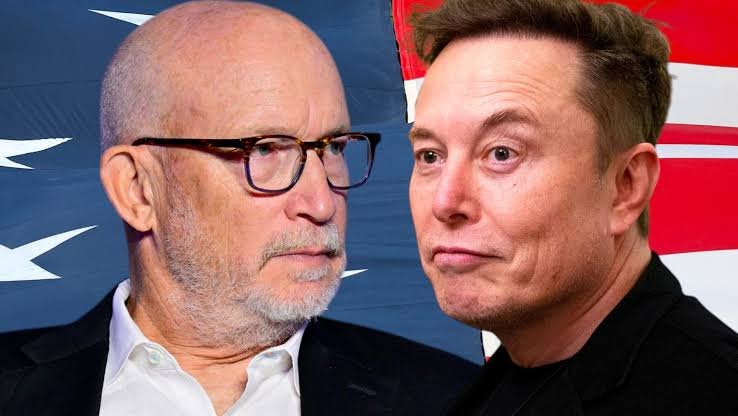
Oscar-winning filmmaker Alex Gibney brought his ambitious documentary Musk to North America on Monday evening, using its Toronto International Film Festival premiere to deliver a forceful message about the unchecked power of technology billionaires.
The documentary, which runs for approximately three hours and 45 minutes with a 10-minute intermission, examines the extraordinary rise and increasingly controversial influence of Elon Musk.
During the festival appearance, Gibney urged audiences to look beyond the mythology surrounding the billionaire and question how much power society has allowed technology executives to accumulate.
His message was direct: ordinary people must be prepared to “stand up and resist” when private wealth begins to exercise influence traditionally held by democratic institutions.
ALSO READ : Sen. Elizabeth Warren Calls It a ‘Cesspool of Corruption’ — Here’s Why Senators Are Now Fighting Back Against the DOJ’s Live Nation Deal That Left Every Fan Betrayed…
What does Alex Gibney’s ‘Musk’ explore?
Musk follows its subject from his childhood in South Africa and early years in Silicon Valley to his leadership roles at Tesla and SpaceX, as well as his turbulent acquisition of Twitter, which he later renamed X.
Rather than presenting a conventional biography, the documentary studies the construction of Musk’s public image—the visionary entrepreneur, space pioneer and self-described defender of free expression.
Gibney then examines the people, companies and political relationships hidden behind that carefully maintained persona.
The filmmaker said the documentary is ultimately about power: how it can corrupt, how it can expose a person’s character and how easily the public can surrender it to charismatic business leaders.
Musk was initially planned as a considerably shorter production. Gibney expanded its scope after Musk endorsed Donald Trump and became more deeply involved in American politics.
What began as a two-hour examination of an influential businessman eventually grew into a far broader investigation of wealth, government and technological control.
Documentary includes voices from Musk’s personal and professional life
Musk declined to participate directly in the production, despite what Gibney described as numerous formal attempts to contact him.
To build the portrait without direct access, the filmmakers interviewed people who had witnessed different stages of Musk’s personal and professional journey.
The participants include his former wife Justine Musk, his father Errol Musk, former Tesla chief executive and co-founder Martin Eberhard, technology journalist Kara Swisher and artificial-intelligence researcher Geoffrey Hinton.
The film also features Ashley St. Clair, who has publicly discussed her personal relationship with Musk.
Their interviews allow the documentary to approach its central figure from several directions rather than accepting the version of events presented through corporate publicity, social media or sympathetic biographies.
Gibney challenges the mythology of individual genius
During a question-and-answer session following the TIFF screening, an audience member asked Gibney whether he would prefer a world without Musk’s accomplishments.
The director challenged the wording of the question.
He argued that major companies such as Tesla and SpaceX were built by teams of engineers, executives and early founders whose contributions are frequently overshadowed by Musk’s personal brand.
Gibney acknowledged Musk’s ability to promote ambitious ideas and attract talent and investment. However, he questioned the popular belief that every breakthrough associated with his companies should automatically be treated as his personal invention.
The exchange reportedly drew applause from the Toronto audience and reflected one of the documentary’s larger themes: modern business culture often turns corporate leaders into near-mythical figures while thousands of employees disappear from the story.
Musk rejected the film without participating
Although Musk did not sit for an interview, he has not remained completely silent about the project.
After the documentary’s premiere at the Venice Film Festival, Musk criticised Gibney on X and dismissed the production as a “hit piece.” His attorney also sent a letter challenging the filmmakers’ approach and suggesting that Musk’s perspective had not been fairly represented.
Gibney disputed that account, saying his team repeatedly sought Musk’s participation but received no meaningful response during production.
The director also noted the contradiction of someone closely associated with free-speech arguments threatening legal action against a critical documentary.
The film uses an animated version of Musk, constructed from statements he has previously made in public. The unconventional device allows the documentary to create the impression of a conversation without fabricating new comments or claiming Musk participated.
From Venice to North American theatres
Musk received its world premiere at the Venice Film Festival before making its North American debut at TIFF.
The documentary was produced by Jigsaw Productions alongside Closer Media, Anonymous Content and Double Agent. It includes music by Daniel Pemberton and carries a running time of 225 minutes.
Distributor Bleecker Street moved its theatrical release forward amid growing interest in the documentary. It is scheduled to open in New York and Los Angeles on October 9, followed by a wider release.
For Gibney, however, the documentary is not intended to provide the final word on Musk. He hopes it will start a larger international conversation about who controls essential technology, public communications and political decision-making.
The director’s argument reaches beyond one billionaire. Musk may be the subject on screen, but the film’s real question is aimed at the audience: How much power should any private individual be allowed to hold—and what happens when the public finally decides to take some of it back?

Susan Sarandon Says Her Palestine Support Has Cost Her Major Hollywood Roles

Beatty Vows to Fight Kennedy Center Shutdown

TIFF Debut of ‘Musk’ Comes With a Defiant Message

‘Spider-Man: Brand New Day’ Swings to No. 1 at the Domestic Box Office

California Vowed to Stop the Paramount–Warner Bros. Merger—Why Did It Back Down?

1-Iran Issues Dire Warning to Israel and Defies Trump on Nukes: “We’re Ready to Strike Deep Inside”

Sen. Elizabeth Warren Calls It a ‘Cesspool of Corruption’ — Here’s Why Senators Are Now Fighting Back Against the DOJ’s Live Nation Deal That Left Every Fan Betrayed…

Donald Trump’s net worth reveals the fortune behind the former US President and business mogul

“Tomás Rodríguez Net Worth 2025: Panama’s Gold Cup Goal‑Machine’s Surprising Fortune Revealed”

“She Never Made It Out…” Albany House Fire Claims Woman’s Life as Family Pleads for Help to Bring Her Home

Miss Jamaica Suffers Terrifying Fall Off Miss Universe Stage; Rushed to Hospital on Stretcher in Viral Video

Moana Live-Action Teaser Sparks Outrage as Fans Call Disney’s Move a ‘Clear Money Grab’ — What Went Wrong?

Ryan Gosling’s Project Hail Mary Trailer Stuns Fans with a Mysterious Alien Ally and a Mission That Could Save Earth

Apple delays Jessica Chastain thriller The Savant about domestic extremism after recent US violence

Avatar 3, Fire and Ash trailer reveals Jake Sully’s family facing terrifying new Na’vi enemies with deadly fire powers
-
 Entertainment1 week ago
Telluride’s Mystery Screening Revealed as Nathan Fielder’s Elizabeth Holmes Documentary
-

 Entertainment1 week ago
‘They’re Still Telling People Not to Hire Me’: Susan Sarandon Opens Up About Hollywood Backlash
-
 Entertainment1 week ago
‘Freddy the 13th’ Is Bringing Horror and Laughs Together… Dan Trachtenberg’s Animated Surprise Finally Gets a 2028 Release Window
-

 Entertainment1 week ago
‘Love Island USA’ Continues Streaming Dominance as Week Two Viewership Soars
-
 Entertainment1 week ago
Netflix Q2 Earnings: Can Advertising Save the Streaming Giant, or Is a Bigger Challenge About to Surface…?
-

 Entertainment1 week ago
‘Summer House’ Cast Left Speechless by Emmy Nomination… “It Feels Surreal” After a Decade of Reality TV
-
 Entertainment1 week ago
Susan Sarandon Says Hollywood Is Still Shutting Her Out: ‘I’ve Had Movies Taken Away…’
-
 Entertainment2 days ago
Cynthia Nixon’s Support Draws Attention as Christine Marinoni Secures NYC Education Post