
Entertainment
Spotify’s New AI Remix Tool Could Change Music Forever… But Only If Artists Say Yes
Spotify and Universal Music Group have unveiled a groundbreaking AI-powered feature that will allow fans to create licensed covers and remixes of songs — while artists and songwriters earn a share of the revenue.


The future of music streaming may have just taken a dramatic turn.
In a move that could reshape how fans interact with music online, Spotify and Universal Music Group announced a landmark agreement that will allow users to create AI-generated covers and remixes of licensed songs directly on Spotify’s platform.
But there’s a major twist: artists will have control over whether their music can be used.
The new feature, revealed Thursday, will launch as a paid add-on for Spotify Premium subscribers and is being positioned as a completely new revenue stream for artists and songwriters — beyond the traditional royalties already generated through streaming.
The companies say the initiative is rooted in “consent, credit, and compensation,” signaling a major attempt to bring generative AI into the music business without repeating the copyright chaos that has plagued the tech world over the last two years.
Spotify Wants Fans to Become Creators
For years, fans have unofficially uploaded mashups, remixes, and AI-generated covers across the internet. Many of those creations operated in legal gray areas, often leading to takedowns and copyright disputes.
ALSO READ : Younghoe Koo Explains Botched Field Goal After Slip: “The Ball Was Moving So I Pulled Up”
Now, Spotify appears ready to make fan-made AI music an official part of the streaming experience.
According to the announcement, Premium users will soon be able to generate AI-powered versions of songs — including covers and remixes — using licensed music from participating artists and songwriters.
Every created track will still be playable across the platform for all Spotify listeners, even if they don’t pay for the AI add-on.
While Spotify did not reveal the exact technology behind the tool, nor confirm pricing or launch dates, the announcement suggests the streaming giant has finally solved one of the biggest barriers in AI music: rights management.
Alex Norström, Co-CEO of Spotify, described the feature as the next major evolution in music fandom.
“Solving hard problems for music is what Spotify does, and fan-made covers and remixes are next,” Norström said.
“What we’re building is grounded in consent, credit, and compensation for the artists and songwriters that take part.”
That message is particularly important at a time when musicians around the world remain deeply divided over artificial intelligence and creative ownership.
Universal Music Group Pushes an ‘Artist-Centric’ AI Future
For Universal Music Group, the agreement represents another major step in its aggressive strategy to control how AI enters the music ecosystem.
Rather than fighting every AI platform outright, UMG has increasingly embraced what executives call a “responsible AI” model — one where artists approve participation, licensing remains protected, and revenue is distributed transparently.
Sir Lucian Grainge, Chairman and CEO of UMG, framed the partnership as a way to deepen fan engagement while protecting human creativity.
“The most valuable innovations in the music business always bring artists and fans closer together,” Grainge said.
“This pioneering AI-enabled superfan initiative is designed to support human artistry, deepen fan relationships, and create additional revenue opportunities for artists and songwriters.”
The system will reportedly operate on an opt-in basis, meaning only artists and songwriters who explicitly agree will allow their music to be used in AI-generated creations.
That detail could prove critical in easing fears among musicians who worry AI may eventually replace original artistry.
Spotify’s AI Ambitions Were Waiting for One Thing
Interestingly, Spotify executives hinted months ago that this exact feature was already technologically ready.
Back in February during Spotify’s Q4 2025 earnings call, Co-CEO Gustav Söderström said the company’s AI remix technology existed but lacked a legal framework.
At the time, Söderström called AI-generated “derivatives” of songs an “untapped opportunity” for artists to monetize their intellectual property in entirely new ways.
Thursday’s announcement strongly suggests that framework has finally arrived — at least through Spotify’s deal with Universal Music Group, the world’s largest music rights company.
The agreement spans both recorded music and publishing rights, making it one of the most comprehensive AI music licensing arrangements announced so far.
A Paid AI Music Era May Be Starting
The launch also fits neatly into Spotify’s growing push toward “superfan” monetization.
Earlier reports suggested Spotify was exploring a premium “Music Pro” subscription tier that could cost up to $5.99 more per month and include exclusive perks for hardcore fans.
One of the rumored features? AI remixing tools.
Now, those plans appear to be becoming reality.
Instead of relying solely on standard streaming subscriptions, Spotify is clearly betting that fans will pay extra to actively participate in music creation.
That strategy could open a massive new business category — one where listeners are no longer just consumers but collaborators.

Industry insiders believe this may eventually lead to personalized versions of songs, alternate-language remixes, fan-generated duets, and even AI-assisted collaborations between artists and audiences.
UMG’s AI Deals Are Expanding Rapidly
The Spotify partnership is only the latest move in Universal Music Group’s expanding AI strategy.
In late 2025, UMG settled a high-profile copyright lawsuit against AI music startup Udio and agreed to work on a licensed AI music platform.
That agreement reportedly supported a “walled garden” approach, meaning AI-generated songs could not easily leave the platform where they were created.
Meanwhile, reports last month revealed that UMG-linked patents are exploring systems for artist approvals, automated royalty sharing, and digital watermarking technology to track AI-generated music usage.
Together, these developments show that the world’s largest music companies are no longer simply resisting AI — they are building the infrastructure to profit from it.
Spotify’s Massive Scale Could Make This Explode
The timing of the announcement is significant.
Spotify ended the first quarter of 2026 with 761 million monthly active users and 293 million paying subscribers across 184 markets.
That reach gives Spotify a unique advantage if AI-generated fan content becomes mainstream.
Unlike experimental AI music startups, Spotify already has global distribution, licensing relationships, and one of the world’s largest music audiences.
If users embrace the feature, the streaming platform could potentially create an entirely new category of interactive entertainment — one where fans help reshape the music they love.
And for artists willing to participate, the financial upside could become difficult to ignore.





Entertainment
‘Vegas Went Back in Time’: New Kids on the Block Bring ‘You Got It (The Right Stuff)’ Magic to 2026 AMAs Stage
The iconic boy band lit up the American Music Awards with a nostalgia-packed performance that had fans singing every word in Las Vegas.

Las Vegas turned into a full-blown nostalgia machine at the 2026 American Music Awards, as legendary pop group New Kids on the Block delivered a high-energy performance of their classic hit “You Got It (The Right Stuff)” — a moment that instantly transported fans back to the golden era of boy bands.
The performance wasn’t just another stage appearance; it felt like a celebration of pop history. From the moment the beat dropped, the crowd inside the venue erupted, many visibly reacting as if they had been waiting decades to relive that exact moment.
Dressed in a modern yet retro-inspired stage look, the group balanced their signature choreography with updated production elements that fit seamlessly into the flashy Vegas setting. The performance reminded everyone why New Kids on the Block remain one of the most influential pop acts of their era.
ALSO READ : Younghoe Koo Explains Botched Field Goal After Slip: “The Ball Was Moving So I Pulled Up”
Originally rising to fame in the late 1980s, New Kids on the Block helped define the boy band blueprint that later inspired generations of groups across the world. Their AMAs appearance was a reminder that nostalgia, when done right, still has the power to dominate a live audience.
Fans on social media quickly turned the performance into one of the night’s biggest talking points, sharing clips, reactions, and throwback memories tied to the group’s original rise. For many, it wasn’t just a performance — it was a reunion with their teenage years.
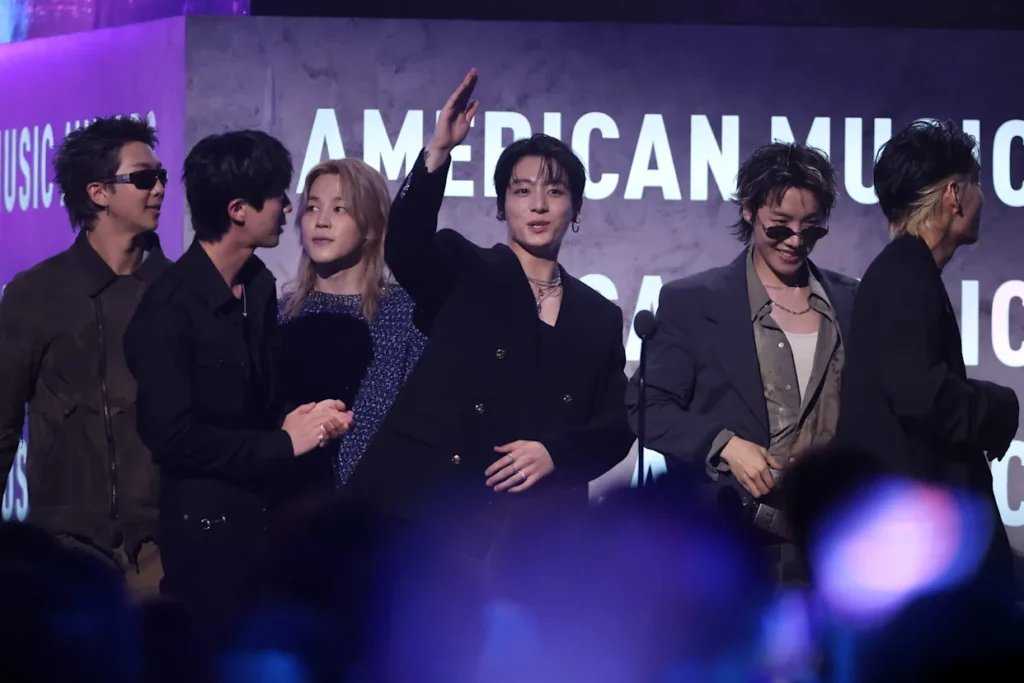
The American Music Awards, known for its fan-driven voting system, once again proved why it remains one of the most unpredictable and emotionally charged award shows in the industry. Unlike traditional award ceremonies, the AMAs reflect what audiences actually listen to, stream, and celebrate in real time.
This year’s Vegas edition leaned heavily into that mix of legacy and modern pop culture, with performances like New Kids on the Block standing alongside newer global acts. It created a unique contrast — past and present sharing the same spotlight without competing, but complementing each other.
As the lights dimmed after the performance, one thing was clear: some songs don’t age — they evolve with the audience. And in that moment, “You Got It (The Right Stuff)” wasn’t just a hit from the past; it was a reminder of pop music’s enduring emotional pull.
Entertainment
Why Was Stephen Colbert’s TV Cameo ‘Missing’ Online? Viral Paramount Rumors Spark Chaos Before Truth Emerges…
A surprise appearance by Stephen Colbert on a Michigan public-access comedy show triggered wild internet speculation, with social media users accusing Paramount of “suppressing” the episode before the real story finally surfaced.

The internet loves a conspiracy — especially when late-night television, corporate media giants, and a beloved comedian collide in one bizarre situation.
That’s exactly what happened after unexpectedly appeared on a Michigan-based public-access television show, sending social media into a frenzy and igniting rumors that was attempting to quietly “bury” the episode online.
What started as a quirky cameo quickly transformed into a full-blown digital controversy, with fans flooding platforms like Reddit, and TikTok trying to figure out why clips from the appearance seemed difficult to find.
But according to reports and insiders familiar with the situation, the truth turned out to be far less dramatic than the internet initially believed.
A Surprise Appearance Nobody Saw Coming
The chaos began after viewers discovered that Stephen Colbert, host of CBS’s hugely successful late-night program <a had appeared on a small Michigan public-access comedy broadcast.
ALSO READ : Younghoe Koo Explains Botched Field Goal After Slip: “The Ball Was Moving So I Pulled Up”
The unexpected cameo instantly became a hot topic online because the appearance felt completely random. Fans were fascinated by why one of America’s most recognizable television personalities would suddenly pop up on a low-budget local-access program far removed from mainstream entertainment networks.
Within hours, screenshots and blurry snippets from the episode began circulating online. However, many users claimed the full segment was difficult to access, which fueled speculation that the content had been removed intentionally.
Soon, social media posts accusing Paramount of trying to suppress or erase the appearance exploded across the internet.
Some users even suggested the segment contained jokes or commentary that network executives wanted hidden from the public — despite no evidence supporting those claims.
The Internet Turned a Technical Issue Into a Media Storm
As often happens in the modern digital age, confusion spread faster than facts.
Fans searching for the episode reportedly encountered unavailable links, delayed uploads, or missing clips, leading many to jump to conclusions before understanding the actual situation.
The online discourse escalated dramatically after viral posts claimed that Paramount lawyers had intervened behind the scenes. Several creators and influencers repeated the theory without verification, causing the rumor to gain even more traction.
But media insiders later clarified that the episode’s limited availability was reportedly connected to ordinary licensing and distribution issues rather than corporate censorship.
Public-access television programs often operate with inconsistent archiving systems, delayed digital uploads, and limited streaming infrastructure. In other words, the missing clips likely had more to do with technical handling than a calculated media cover-up.
Still, that explanation did little to calm the online uproar initially.
Why Fans Became So Obsessed
Part of the fascination comes from the unique cultural position Stephen Colbert holds in American entertainment.
Over the years, Colbert has evolved from a satirical political comedian on into one of television’s most influential late-night hosts. His audience is deeply engaged online, and even small moments involving him tend to generate massive conversation.
That influence made the mystery surrounding the public-access appearance feel much larger than it actually was.
The situation also tapped into growing public distrust toward large entertainment corporations. Many internet users today are quick to assume media companies manipulate visibility, suppress content, or quietly remove controversial material.

In this case, however, there appears to be no confirmed evidence that Paramount attempted to censor the episode.
Public-Access TV Suddenly Finds Itself in the Spotlight
Ironically, the viral controversy ended up giving enormous attention to local-access television — a format many viewers rarely discuss anymore.
Public-access programs were once a major part of American local culture, offering community-driven entertainment and experimental comedy that traditional broadcasters often ignored.
Now, thanks to one unexpected celebrity cameo, younger audiences who had never watched public-access television suddenly became curious about the genre.
Clips, memes, and discussions surrounding the appearance continued spreading online throughout the weekend, with many viewers praising the chaotic charm of local broadcasting.
Some fans even joked that Colbert’s appearance felt like “performance art,” while others called it “the weirdest crossover event of the year.”
Social Media Reactions Continue to Pour In
Even after the rumors were clarified, debate continued online.
Some users insisted the controversy itself revealed how quickly misinformation spreads in modern media culture. Others argued the confusion demonstrated how corporate distrust has become deeply embedded in internet communities.
Meanwhile, supporters of Stephen Colbert largely treated the situation humorously, celebrating the absurdity of a late-night superstar unexpectedly becoming the center of a public-access television conspiracy theory.
As clips continue circulating online, the cameo has now achieved something nobody expected — turning a small local broadcast into a nationally discussed media moment.
And perhaps that’s the most internet-era outcome possible.
Entertainment
Alfred Molina Gives ‘The Boroughs’ Its Soul… But Netflix’s New Supernatural Gamble Still Feels Uneven
With an all-star cast, supernatural mystery, and eerie small-town tension, Netflix’s The Boroughs aims high — yet many viewers may leave wondering whether the ambitious series loses itself in its own strange world.

When a streaming platform finds a formula that works, it rarely lets go of it.
That reality feels impossible to ignore while watching The Boroughs, the latest mystery-driven supernatural drama from Netflix. Packed with atmospheric suspense, aging heroes, paranormal secrets, and emotional trauma, the series clearly wants to capture the same cultural lightning that once made Stranger Things a global phenomenon.
But while The Boroughs delivers moments of intrigue and features an undeniably impressive cast led by Alfred Molina, the show often struggles under the weight of its own ambition.
Alfred Molina Carries the Emotional Core
At the center of the series is Alfred Molina, whose commanding screen presence once again proves why he remains one of Hollywood’s most respected performers.
Known for unforgettable roles in films such as Spider-Man 2, Frida, and Raiders of the Lost Ark, Molina brings warmth, exhaustion, vulnerability, and quiet intelligence to a character navigating bizarre supernatural events late in life.
Unlike many mystery-thrillers that focus on teenagers or young adults, The Boroughs takes a different route by centering older characters dealing with fear, regret, mortality, and isolation. On paper, that concept feels refreshing — almost like a “geriatric version” of Stranger Things.
ALSO READ : Younghoe Koo Explains Botched Field Goal After Slip: “The Ball Was Moving So I Pulled Up”
And in its strongest moments, the show genuinely taps into something emotionally unique.
Watching older characters confront impossible horrors while carrying decades of emotional baggage gives the series a different kind of melancholy rarely explored in mainstream genre television.
A Strong Cast Trapped Inside an Uneven Story
The series also features a respected ensemble cast whose performances consistently elevate the material.
However, despite the talent involved, The Boroughs often feels unsure about what kind of show it truly wants to be.
At times, it leans heavily into horror. In other moments, it shifts toward emotional family drama, nostalgic mystery, dark comedy, or philosophical reflection about aging and memory. Those tonal shifts can occasionally feel compelling, but more often they create a frustrating sense of inconsistency.
Some episodes move with genuine suspense, while others become tangled in exposition, confusing mythology, and slow pacing.
That uneven structure may frustrate viewers expecting the sharp narrative momentum that helped Stranger Things dominate pop culture.
Netflix’s Ongoing Obsession With Nostalgia
There’s also a larger conversation happening around The Boroughs — one tied directly to Netflix’s evolving creative strategy.
Over the past several years, streaming platforms have increasingly leaned into nostalgia-driven genre storytelling. Audiences have shown enormous enthusiasm for retro aesthetics, eerie mysteries, and emotionally damaged characters confronting supernatural threats.
Series like Stranger Things proved that combining horror, science fiction, emotional trauma, and small-town paranoia could create global streaming phenomena.
Now, many viewers believe The Boroughs feels like another attempt to recreate that formula — just with older protagonists and darker emotional themes.
The problem is that comparisons to Stranger Things may ultimately hurt the series more than help it.
The Show’s Biggest Strength Is Also Its Biggest Risk
What separates The Boroughs from many streaming competitors is its willingness to focus on aging.

Television rarely allows older characters to occupy the center of supernatural adventures. Here, the fear isn’t simply monsters or alternate dimensions — it’s also loneliness, fading relevance, physical decline, grief, and the terrifying realization that time may be running out.
That emotional layer gives the series a depth many genre shows lack.
Yet the show sometimes becomes so consumed by symbolism, atmosphere, and mystery-building that it forgets to maintain narrative clarity. Viewers may admire the performances and visual mood while still struggling to emotionally connect with the story itself.
Why Alfred Molina Remains the Reason to Watch
Even critics divided on the series seem to agree on one thing: Alfred Molina is exceptional.
His performance grounds the show whenever the story drifts too far into confusion. He brings emotional credibility to scenes that might otherwise collapse under heavy exposition or abstract supernatural concepts.
For longtime fans of Molina, The Boroughs serves as another reminder of the actor’s remarkable range and consistency.
Whether portraying villains, scholars, grieving fathers, or exhausted survivors, he continues to deliver performances filled with humanity.
Can ‘The Boroughs’ Become Netflix’s Next Big Hit?
That remains the biggest question.
The streaming landscape has become brutally competitive, with audiences quickly abandoning shows that fail to immediately capture attention. While The Boroughs certainly offers atmosphere, talent, and ambition, it may struggle to generate the widespread cultural obsession Netflix likely hopes for.
Still, some viewers may deeply connect with its slower emotional pacing and mature themes.
And despite its flaws, the show deserves credit for attempting something different in a genre increasingly dominated by repetition.
Whether The Boroughs evolves into a sleeper hit or fades beneath the massive shadow of Stranger Things, one thing is certain — Alfred Molina gives the series far more heart than its chaotic storytelling sometimes deserves.

‘Vegas Went Back in Time’: New Kids on the Block Bring ‘You Got It (The Right Stuff)’ Magic to 2026 AMAs Stage

Why Was Stephen Colbert’s TV Cameo ‘Missing’ Online? Viral Paramount Rumors Spark Chaos Before Truth Emerges…

Alfred Molina Gives ‘The Boroughs’ Its Soul… But Netflix’s New Supernatural Gamble Still Feels Uneven

Netflix’s ‘The Boroughs’ Tries to Become the Next ‘Stranger Things’… But Alfred Molina’s Brilliant Performance Can’t Hide the Chaos

Ruben Östlund Quietly Adds a New Twist to ‘The Entertainment System Is Down’… And Nicholas Braun May Change Everything

1-Iran Issues Dire Warning to Israel and Defies Trump on Nukes: “We’re Ready to Strike Deep Inside”

Donald Trump’s net worth reveals the fortune behind the former US President and business mogul

“She Never Made It Out…” Albany House Fire Claims Woman’s Life as Family Pleads for Help to Bring Her Home

“Tomás Rodríguez Net Worth 2025: Panama’s Gold Cup Goal‑Machine’s Surprising Fortune Revealed”

Caitlin Clark Sidelined with Quad Strain, Set to Miss Two Weeks of WNBA Action

Miss Jamaica Suffers Terrifying Fall Off Miss Universe Stage; Rushed to Hospital on Stretcher in Viral Video

Moana Live-Action Teaser Sparks Outrage as Fans Call Disney’s Move a ‘Clear Money Grab’ — What Went Wrong?

Ryan Gosling’s Project Hail Mary Trailer Stuns Fans with a Mysterious Alien Ally and a Mission That Could Save Earth

Apple delays Jessica Chastain thriller The Savant about domestic extremism after recent US violence

Avatar 3, Fire and Ash trailer reveals Jake Sully’s family facing terrifying new Na’vi enemies with deadly fire powers
-

 Entertainment1 week ago
Jennifer Aniston Suddenly Appears on ‘The Comeback’ Podcast… and Valerie Cherish’s Reaction Has Fans Talking
-

 World News1 week ago
“Pentagon, Do Better…”: Why the Latest UFO Videos Are Raising More Frustration Than Fear
-

 World News1 week ago
Cannes 2026 Faces a Political Storm: Will Gaza, Iran and Trump Overshadow the Movies Again?
-

 Entertainment4 days ago
NBC Finally Reclaims TV’s Biggest Crown After 22 Years and Hollywood Didn’t See This Ratings Comeback Coming
-

 Entertainment6 days ago
Amazon’s ‘Off Campus’ Tries to Deliver the Next Big Hockey Romance… But Fans Say One Thing Is Missing
-

 Entertainment1 week ago
After ‘Emilia Pérez’ Storm, Karla Sofía Gascón Returns as a Ruthless Villain in ‘Trinidad’… and Cannes Is Already Watching
-

 Entertainment1 week ago
Rossy de Palma Turns Airport Glam Into High Fashion in New Rimowa Campaign And Fashion Fans Can’t Stop Talking About It
-

 Entertainment6 days ago
Dua Lipa’s $15 Million Legal Fight Against Samsung Revealed… Pop Star Says Her Image Was Used Without Consent