
Automobile
Land Rover Freelander 8 EREV Interior Revealed: 6 Seats, ‘Zero-Gravity’ Captain Chairs and a Luxury Cabin That Looks Like a Private Jet…
The upcoming Freelander 8 EREV is shaping up to be far more than another premium SUV, with a six-seat cabin featuring reclining massage seats, multiple giant screens, a refrigerator and a 60.3kWh battery promising more than 135 miles of electric range on the Chinese test cycle.

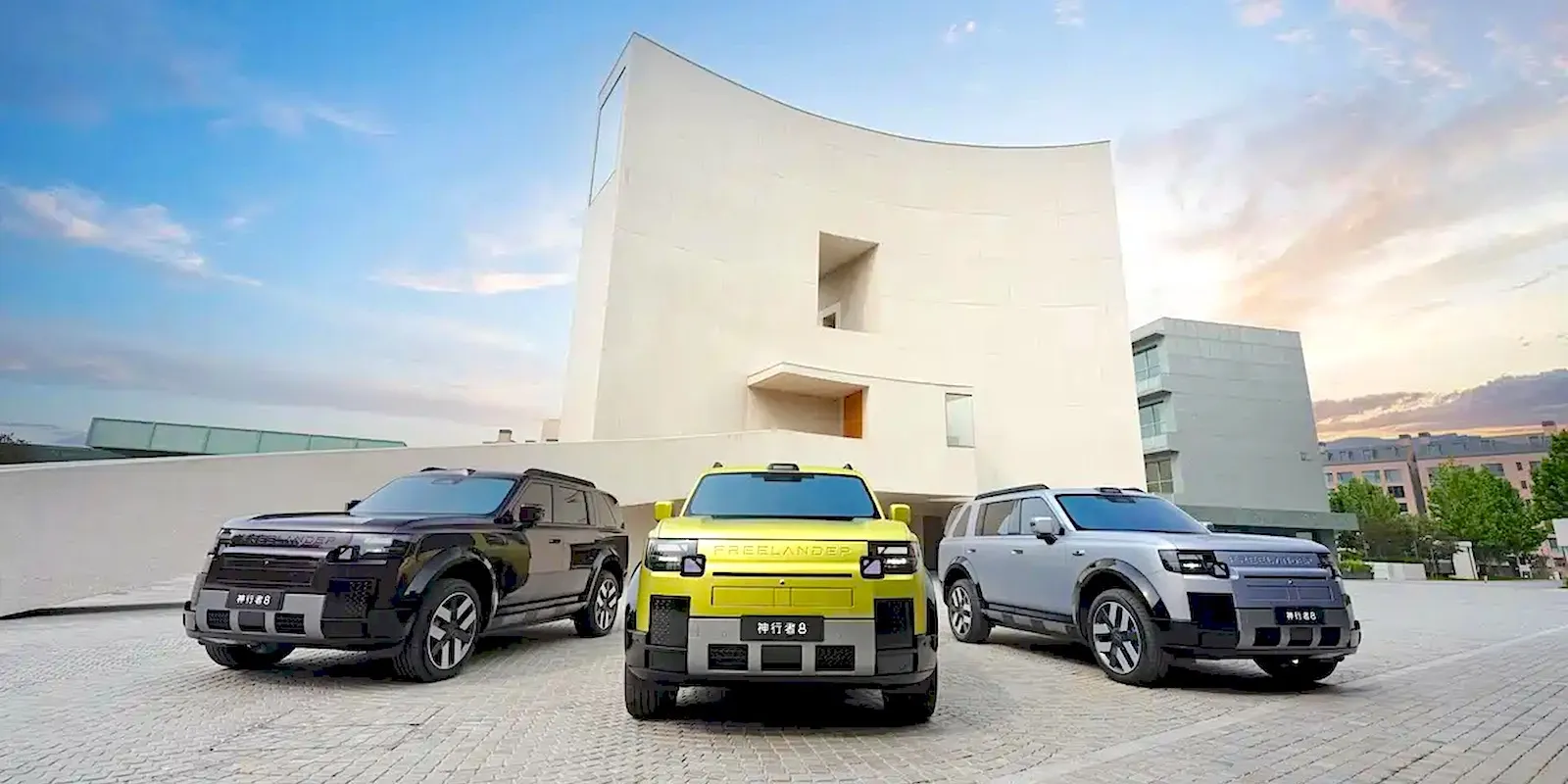
Land Rover‘s upcoming Freelander 8 EREV appears to be taking the luxury SUV game in an interesting direction. While the exterior design of the new model has already attracted attention, newly surfaced interior images from Chinese social media suggest that the cabin could be where this SUV truly tries to stand apart.
The images, reportedly shared on Weibo, show a six-seat interior with an unusually luxurious second row. Instead of treating rear passengers as an afterthought, the Freelander 8 EREV appears designed to make them the stars of the show.
And there is one feature that immediately grabs attention: the so-called “zero-gravity” captain’s chairs.
The Second Row Could Be the Best Seat in the House
For a vehicle positioned in the premium SUV space, comfortable rear seating is nothing new. But the Freelander 8 EREV seems determined to push the experience several steps further.
The second-row captain’s chairs are reportedly equipped with heating, ventilation and massage functions, along with reclining capabilities designed to offer a more relaxed seating position.
The result is a cabin that feels closer to a high-end lounge than a conventional family SUV.
Adding to the experience are aircraft-style tables, a refrigerator and ambient lighting that reportedly shifts toward vivid purple and pink shades.
It may sound extravagant—and perhaps even a little excessive—but that is precisely the point. In a market where luxury SUVs increasingly compete on the experience they offer passengers rather than simply their performance figures, the Freelander 8 EREV appears to be aiming high.
A Ceiling-Mounted Screen Adds Another Layer of Luxury
The luxury treatment reportedly continues for passengers in the rear.
According to reports, the Freelander 8 EREV could feature a ceiling-mounted entertainment display, giving rear occupants another way to watch content during long journeys.
The idea is simple: passengers can settle into their reclining seats, turn on the entertainment system and enjoy the journey without necessarily having to stare out of the side windows.
For chauffeur-driven customers, particularly those who spend hours travelling between meetings or across large cities, features like these could become a major selling point.
The Dashboard Is Dominated by Screens
The front cabin is no less dramatic.
Reports indicate that the Freelander 8 EREV could feature a massive 46.3-inch far-end display stretching across much of the dashboard, complemented by a 15.6-inch central touchscreen.
The technology-heavy dashboard is reportedly paired with physical controls and faceted crystal-style knobs. The design inspiration is said to come from the intricate “Clous de Paris” pattern associated with premium watchmaking.
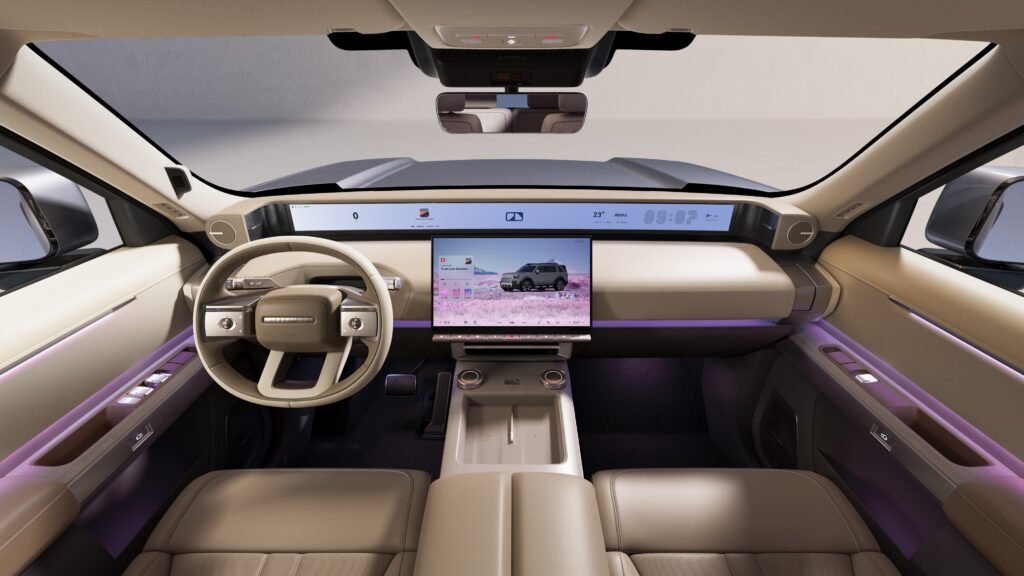
That combination of large displays and physical controls could give the interior a more tactile character than the increasingly screen-only cabins found in many modern electric vehicles.
Freelander 8 EREV: More Than Just a Luxury SUV
The new Freelander is not being positioned simply as another Land Rover model.
The vehicle represents an important step for the Freelander name as it returns in a new global form. First shown in March, the model is expected to target the fast-growing premium SUV market, particularly in China.
Its styling is expected to feature a distinctive, retro-inspired character combined with futuristic proportions. The goal appears to be finding a middle ground between heritage-inspired design and the technology-focused expectations of modern luxury buyers.
The Freelander 8 EREV, in particular, seems to be aimed at customers who want the practicality and presence of a large SUV but are also increasingly interested in electrified driving.
More Than 135 Miles of Electric Range
Underneath the luxury-focused cabin, the Freelander 8 EREV is expected to use an extended-range electric vehicle setup.
Reports indicate that the SUV will be equipped with a 60.3kWh battery, delivering more than 135 miles of all-electric range under the Chinese testing cycle.
Once the battery charge is depleted, an internal-combustion engine range extender can reportedly provide additional driving range.
The setup means the Freelander 8 EREV is technically a hybrid vehicle, but its driving experience could still focus heavily on electric power.
For buyers who are not yet ready to move completely to a battery-electric vehicle, an EREV configuration could offer a useful compromise—electric driving for everyday trips with a combustion engine available for longer journeys.
Could the Freelander 8 EREV Challenge Germany’s Luxury SUVs?
The premium SUV market is already packed with strong competition from established German luxury brands. The Freelander 8 will therefore need more than attractive styling to make a lasting impression.
Its biggest advantage could be the way it approaches luxury.
Instead of focusing solely on driver-oriented performance, the Freelander 8 appears to be placing significant emphasis on passenger comfort, particularly in the second row. The reclining captain’s chairs, massage functions, refrigerator and entertainment screens could help it appeal to buyers who see their SUV as a mobile luxury lounge.
The EREV powertrain could also give the model another point of differentiation as the global automotive industry moves gradually toward electrification.
A Luxury SUV That Puts Passengers First?
If the reported interior specifications make it into production, the Freelander 8 EREV could be one of the more interesting luxury SUVs to emerge from the current wave of electrified vehicles.
The combination of six seats, zero-gravity-style captain’s chairs, multiple large screens and extended electric driving capability suggests that this is not simply a conventional SUV with a few luxury touches added later.
Instead, Land Rover appears to be exploring a different idea of premium mobility—one where the person sitting in the second row may have just as much to enjoy as the person behind the wheel.
The Freelander 8 EREV is still an upcoming model, and final specifications and equipment may vary by market. But if these newly revealed interior details are any indication, the newest Freelander could have a very different answer to one simple question: Who gets the best seat in a luxury SUV?






Automobile
Lexus RX Facelift Spotted Testing: Best-Selling Luxury SUV Could Get a Major Design Makeover…
The Lexus RX facelift is reportedly being prepared for a possible reveal by late 2026 or early 2027, with the brand’s new ES-inspired design language potentially making its way to the luxury SUV.

The Lexus RX may be heading for a significant update, and the next version could look noticeably different from the luxury SUV that buyers know today.
The RX has been one of the strongest performers in the midsize luxury crossover segment for years, consistently finding buyers despite fierce competition from established rivals. But with the current generation now approaching its fourth model year, attention is beginning to turn toward its first major facelift.
According to a report from Japanese publication MotorFan, the updated RX could be revealed as early as the end of 2026 or sometime in the first quarter of 2027. Lexus itself has not officially announced a reveal date, so the timeline should be treated as an early report rather than confirmed information.
Still, recent prototype sightings suggest that development of the updated luxury SUV is already underway.
Lexus RX Facelift: When Could It Arrive?
The current-generation Lexus RX was introduced in 2022 as a 2023 model-year vehicle, bringing a sharper design and updated technology to the luxury crossover.
Four years into its lifecycle, a facelift would not come as a surprise.
The exact timing, however, could have an impact on the future of the RX.
If the facelift arrives by the end of 2026 or in early 2027, the updated model could potentially remain on sale for several years before Lexus introduces an entirely new generation.
That could mean the next-generation RX may not appear until around the end of the decade.
On the other hand, if Lexus moves quickly with the facelift, the company could use the updated SUV to maintain its momentum in a segment where design, technology and electrification are becoming increasingly important.
For now, there is no official confirmation from Lexus, so the reported timeline remains speculative.
Prototype Spotted With a Covered Front End
The biggest clues about the facelift have come from prototype sightings in Europe.
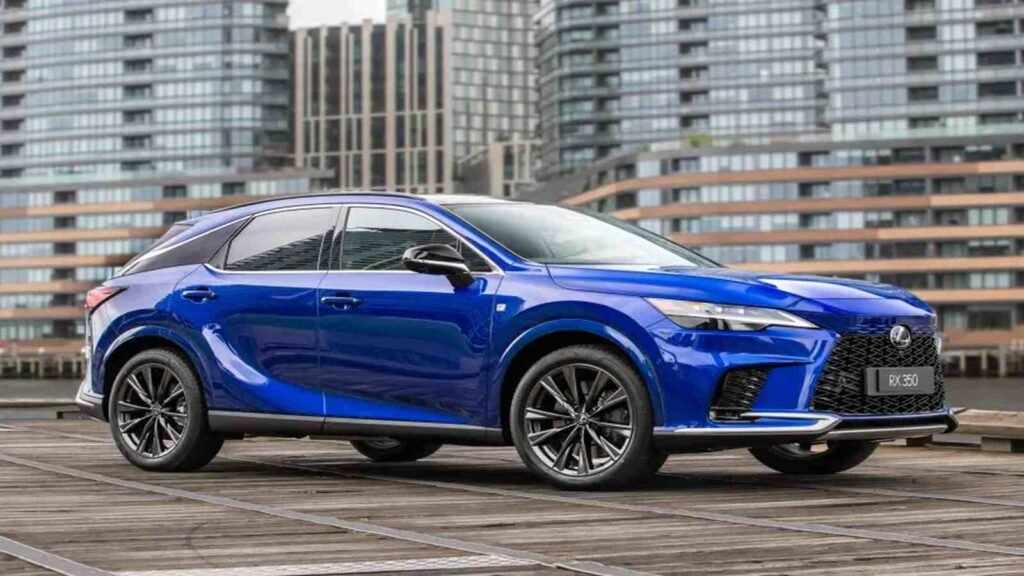
Images of test vehicles reportedly show the front bumper heavily covered in camouflage, while the headlights appear to be largely exposed.
That combination has sparked speculation that the front-end changes could be more substantial than a typical mid-cycle update.
The RX is already a recognisable model, so Lexus is unlikely to completely reinvent its identity with a facelift.
However, the company has recently started moving in a new styling direction, and that could have a major influence on the updated SUV.
Could the Lexus RX Borrow Design Ideas From the New ES?
The redesigned Lexus ES has introduced a fresh visual identity for the Japanese luxury brand.
One of the most noticeable elements is the move toward a cleaner front-end design, with the traditional grille treatment becoming less visually dominant.
That design philosophy could eventually influence other Lexus models.
The facelifted RX may therefore adopt some of the ES’s styling cues, although it is unlikely to receive an identical front-end design.
The grille could become slimmer or more integrated into the overall shape of the nose, while the bumper and lighting elements may be redesigned to give the SUV a more modern appearance.
The updated Lexus IS could also provide additional clues about how the company intends to evolve its design language across its wider lineup.
For RX buyers, the most interesting question will be whether Lexus decides to make the facelift visually conservative or takes a bigger risk with the SUV’s appearance.
Bigger Changes Could Be Waiting Inside
While the exterior is expected to receive some updates, the cabin could be where Lexus makes some of the more meaningful improvements.
The current RX already offers a modern interior, but technology is evolving quickly in the luxury car market.
The facelift could therefore introduce an updated infotainment system or a larger touchscreen inspired by the new ES.
The interface could also receive software improvements, making the system easier and faster to use.
However, there is a possibility that Lexus may choose not to introduce a completely new infotainment architecture until the next-generation RX arrives.
Automakers often reserve major technology changes for a full model change rather than a mid-cycle facelift.
As a result, the facelifted RX could receive an upgraded version of the existing system rather than an entirely new digital ecosystem.
Powertrains Could Remain Unchanged
The available information suggests that the RX’s powertrain lineup could largely carry over to the facelift.
That would make sense given the current model’s relatively modern mechanical package.
The RX is available with a range of electrified powertrain options depending on the market, including hybrid and plug-in hybrid technology.
Lexus has increasingly focused on electrification across its global lineup, so the company may continue refining these existing systems rather than introducing an entirely new powertrain with the facelift.
Any significant mechanical changes could instead be saved for the next-generation RX.
However, Lexus could still make small improvements to efficiency, software calibration or driving refinement before the next full redesign.
Why the Lexus RX Matters So Much
The RX is not just another model in the Lexus lineup.
It has become one of the brand’s most important global products and has played a major role in establishing Lexus as a serious competitor in the luxury SUV market.
The segment is now packed with strong rivals, including the BMW X5 and Mercedes-Benz GLE, but the RX has maintained a strong position thanks to its combination of comfort, reliability, hybrid technology and relatively understated luxury.
That makes the upcoming facelift particularly important.
Lexus does not necessarily need to reinvent the RX. Instead, the company needs to make sure the SUV remains competitive as buyers increasingly expect advanced digital technology, distinctive styling and electrified powertrains.
A New Look Could Be on the Way…
If the reports prove accurate, the Lexus RX facelift could represent an interesting middle ground between the current generation and the next major redesign.
The exterior may adopt subtle elements of the new ES and upcoming Lexus design language, while the interior could receive technology upgrades to keep the SUV competitive.
The powertrain lineup, meanwhile, is expected to remain largely familiar.
For buyers considering a luxury midsize SUV, the facelift could be worth waiting for—especially if Lexus introduces a more distinctive exterior and a significantly improved infotainment system.
For now, Lexus has not officially confirmed the launch or reveal date.
But with prototypes reportedly already being tested, the next chapter for the RX may be closer than it appears.
And if the new ES is any indication of where the brand’s design is heading, the facelifted RX could look very different from the familiar luxury SUV currently sitting in Lexus showrooms.
Automobile
BMW iX1, iX2 Get a Major Price Shock in UK: Electric SUVs Now Cost Less Than Petrol Models After £3,750 Grant
BMW becomes the first premium German automaker to qualify for the UK’s full Electric Car Grant, sharply lowering the effective price of selected iX1 and iX2 variants.
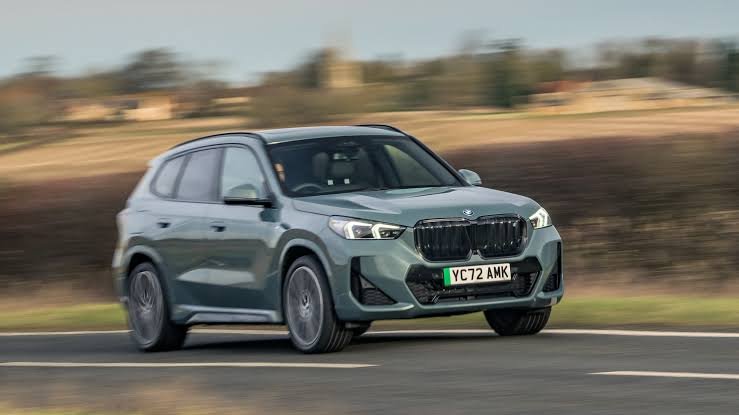
The electric vehicle market in the UK has just become a little more interesting, especially for buyers who have been waiting for premium EVs to become more affordable.
BMW has announced that selected versions of its all-electric BMW iX1 and BMW iX2 are now eligible for the UK’s maximum £3,750 Electric Car Grant (ECG). The incentive, combined with updated manufacturer pricing, brings the effective starting price of some models down to £33,315.
The bigger surprise? In one of the most notable comparisons, the electric BMW iX1 eDrive20 Sport can now be purchased for less than the similarly positioned petrol-powered BMW X1 sDrive20i Sport.
That could give BMW a fresh advantage at a time when more British motorists are weighing up whether to make the switch from conventional petrol and diesel vehicles to electric mobility.
Electric BMW iX1 Becomes Cheaper Than Petrol X1
The entry-level BMW iX1 eDrive20 Sport now starts at £33,315 on the road after the full government grant is applied. The comparable petrol-powered BMW X1 sDrive20i Sport, meanwhile, starts at £37,540.
The difference makes the electric SUV £4,225 cheaper at the listed starting prices.
For buyers who may have previously considered premium EVs too expensive, this could change the equation. The iX1 combines BMW’s familiar premium positioning with an all-electric powertrain, while the government incentive helps reduce the upfront cost.
The iX2 has also received a more accessible entry point. The newly introduced BMW iX2 eDrive20 Sport is available at an effective price of £33,315 after the grant.
BMW iX2 Gets a New Sport Variant
BMW has also expanded the iX2 range with the new iX2 eDrive20 Sport, giving customers another option below the more expensive M Sport specification.
The new variant comes equipped with features including 17-inch alloy wheels, High-gloss Shadowline exterior detailing and front Sport seats.
The move appears designed to make the iX2 more accessible without taking away the premium design and character that buyers expect from the BMW brand.
Here’s How Much the BMW iX1 and iX2 Now Cost
The revised pricing makes a noticeable difference across the qualifying range.
| Model | Previous Price | New Price | Price After £3,750 Grant |
|---|---|---|---|
| BMW iX1 eDrive20 Sport | £43,555 | £37,065 | £33,315 |
| BMW iX1 eDrive20 xLine | £45,555 | £39,065 | £35,315 |
| BMW iX1 eDrive20 M Sport | £48,305 | £41,815 | £38,065 |
| BMW iX2 eDrive20 Sport | N/A | £37,065 | £33,315 |
| BMW iX2 eDrive20 M Sport | £49,705 | £41,815 | £38,065 |
The pricing changes could make a significant difference for customers comparing electric SUVs in the compact premium segment, where purchase price remains one of the biggest barriers to EV adoption.
Why the UK Electric Car Grant Matters
The UK’s Electric Car Grant is aimed at supporting the purchase of eligible battery-electric vehicles that meet government requirements, including environmental and sustainability criteria.
BMW’s successful eligibility for the maximum £3,750 grant means qualifying customers can benefit directly from the incentive when purchasing selected versions of the iX1 and iX2.
For BMW, the approval also provides an opportunity to highlight its wider sustainability efforts and manufacturing practices. The company has pointed to its commitment to the Science Based Targets initiative (SBTi) as part of its broader environmental strategy.
BMW UK Sales Director Debbie McIntosh described the grant as an important step towards making premium electric mobility more accessible to British customers.
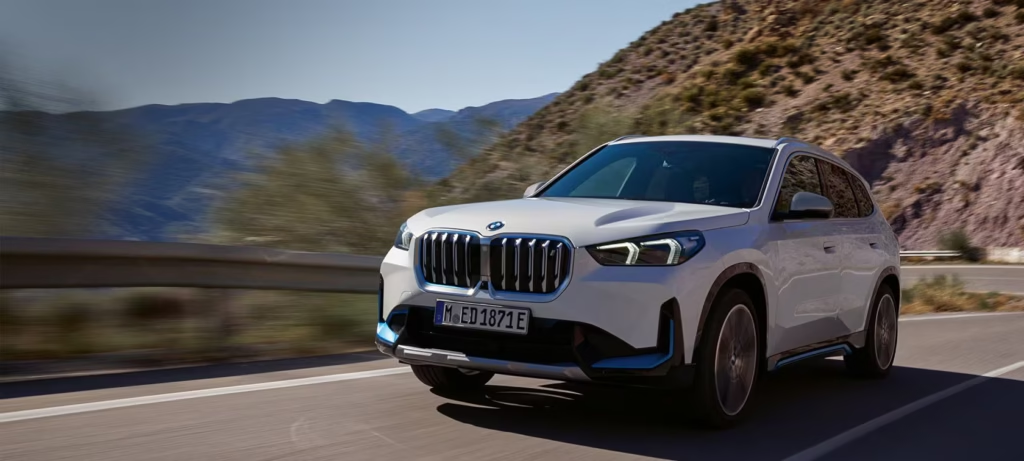
The company believes the iX1 and iX2 offer a combination of everyday practicality, premium quality and electric performance that could appeal to buyers looking to move away from traditional combustion engines.
Could This Push More Buyers Towards Electric SUVs?
The timing is significant. EV buyers in the UK now have more choice than ever, but price remains a major factor in the decision to switch.
With the government grant reducing the effective purchase price and BMW simultaneously lowering listed prices on qualifying models, the iX1 and iX2 now present a considerably stronger value proposition.
The fact that an electric BMW iX1 can cost less than a comparable petrol X1 may also encourage buyers to reconsider the assumption that going electric automatically means paying more upfront.
Of course, the final ownership cost will depend on factors such as insurance, charging, electricity prices, servicing and individual driving patterns. But the lower entry price removes one of the biggest hurdles facing premium EVs.
For BMW, meanwhile, the latest move strengthens its position in the increasingly competitive electric SUV market. As more manufacturers compete on price, range and technology, making EVs financially attractive could prove just as important as the vehicles’ performance and luxury credentials.
With the BMW iX1 and BMW iX2 now benefiting from the UK’s full Electric Car Grant, the premium EV conversation may be changing faster than many expected.
Automobile
Tesla’s FSD Hits a European Roadblock: France Says ‘Not Yet’ Over Safety Concerns as EU Decision Looms…
France has become the first EU government to publicly oppose Tesla’s Full Self-Driving system in its current form, raising fresh questions over whether the technology can secure wider approval across Europe.
A major roadblock has emerged for Tesla’s ambitious driver-assistance technology in Europe.
France has publicly opposed the use of Tesla’s Full Self-Driving (FSD) system on European Union roads in its current form, citing concerns over safety and the balance between technological progress and road risk.
The decision marks the first known public rejection by an EU government of a Dutch-led effort to secure broader European approval for the technology.
The development could become a significant hurdle for Elon Musk‘s electric vehicle company as it attempts to expand the reach of its advanced driver-assistance software across one of the world’s most tightly regulated automotive markets.
France’s position comes at a crucial time, with a possible EU-wide decision reportedly expected later this year.
France Says Tesla FSD Is Not Ready Yet
France’s Transport Minister Philippe Tabarot said the country recognises the technological advances offered by Tesla’s system but believes the current safety trade-offs are not sufficient to justify approval.
The French government has therefore taken the position that Tesla’s FSD should not yet be authorised in its present form.
The concerns are significant because the system is designed to handle several driving functions, including accelerating, braking and steering.
However, the technology remains a driver-assistance system, rather than a fully autonomous driving solution.
The human driver is still expected to remain alert and ready to take control whenever necessary.
That distinction is likely to be at the centre of the debate as European regulators assess whether the system is safe enough for wider deployment.
France Becomes First Public EU Opponent
France’s opposition is particularly notable because several other European countries have already moved in the opposite direction.
The Netherlands provisionally approved Tesla’s FSD technology for use on Dutch roads in April.
That decision was followed by similar moves from Belgium, Denmark, Estonia and Lithuania, all of which reportedly backed the technology ahead of a potential vote on broader EU approval.
France’s rejection now introduces a significant disagreement within the bloc.
While the Netherlands has taken the lead in pushing the technology forward, France believes more work is required before the system can be considered safe enough.
French officials have also indicated that other European countries may share similar concerns, although they have not publicly identified those nations.
Sweden has previously been reported as another country that could oppose approval.
If more EU members adopt France’s position, the path toward bloc-wide approval could become considerably more complicated.

Tesla CEO Elon Musk Pushes Back
Tesla CEO Elon Musk responded strongly to France’s position.
In a statement on X, Musk argued that delaying approval of FSD in France would “cost lives”.
The response highlights the fundamentally different positions being taken by Tesla and regulators.
Tesla has long argued that advanced driver-assistance technologies can improve road safety by reducing human error.
Regulators, however, must assess not only the potential benefits but also how drivers interact with increasingly sophisticated automated systems.
The central question is therefore not simply whether the technology works.
It is whether drivers can safely rely on it, understand its limitations and intervene when necessary.
That debate is becoming increasingly important as driver-assistance systems become more capable.
What Exactly Does Tesla’s FSD Do?
Despite its name, Tesla’s Full Self-Driving system does not currently make a vehicle completely autonomous.
Instead, it is an advanced driver-assistance technology that can perform several driving tasks while the driver remains responsible for supervising the vehicle.
Depending on the system’s capabilities and local regulations, FSD can assist with functions such as steering, acceleration and braking.
The driver must still be prepared to intervene.
This distinction has created an ongoing debate around the terminology used by the automotive industry.
Safety authorities in different countries have increasingly focused on ensuring that drivers do not mistakenly believe that advanced assistance systems allow them to stop paying attention to the road.
That issue could become one of the biggest factors influencing the European regulatory debate.
Why Europe Matters So Much to Tesla
The European market is strategically important for Tesla.
The company’s electric vehicles have faced a challenging period in the region, with registrations experiencing a significant decline before showing signs of recovery.
FSD is therefore seen as more than just a technological feature.
For Tesla, advanced software could become an important selling point and a potentially valuable source of recurring revenue.
If the company can secure wider regulatory approval in Europe, it could strengthen the appeal of its vehicles and potentially generate additional software-related income.
But regulatory resistance could slow down that expansion.
EU Vote Could Decide the Next Chapter
The Netherlands-led approval process could eventually lead to a wider European decision.
A possible EU vote is expected to take place later this year, although the exact timing and outcome remain uncertain.
France’s opposition means the debate is unlikely to be straightforward.
The country is continuing technical discussions with the Netherlands and other European governments, suggesting that the door to further negotiations remains open.
For Tesla, that could provide an opportunity to address regulators’ concerns.
But the company will likely face increasing pressure to demonstrate that its technology can deliver meaningful safety benefits without encouraging drivers to become overly reliant on automated assistance.
The Bigger Battle Over Self-Driving Technology
The disagreement over Tesla FSD reflects a much larger debate unfolding across the automotive industry.
Car manufacturers are racing to develop increasingly sophisticated systems that can handle more aspects of driving.
At the same time, governments and safety authorities are trying to determine where the line should be drawn between driver assistance and genuine autonomous driving.
Tesla is one of the most prominent companies in this race, making every regulatory decision involving its technology closely watched by the industry.
France’s message is clear for now: technological progress alone is not enough.
The safety case must also be convincing.
As Europe moves toward a possible decision on Tesla’s FSD technology, the outcome could have consequences well beyond the French market.
For Tesla, the question is no longer simply how advanced its software can become.
It is whether European regulators believe the technology is ready for the roads — and France has made its answer clear, at least for now: not yet…

Vita Vea Wants Out of Tampa Bay: Two-Time Pro Bowl Star Requests Buccaneers Trade After Contract Talks Stall

Marlins End 12-Game Nightmare in Stunning Fashion: ‘Playoff-Type’ Comeback Stuns Phillies After Wheeler and Duran Fall

‘Go Ball, Please!’ Ceddanne Rafaela’s First Career Grand Slam Powers Red Sox to 10th Straight Road Win

Lindsay Clancy Trial: Could Postpartum Psychosis Lead to an Insanity Verdict? ‘This Case Is About This Defendant’

Chelsea Begin Xabi Alonso Era in Style: Joao Pedro Hat-Trick Powers Blues Past Western Sydney Wanderers

1-Iran Issues Dire Warning to Israel and Defies Trump on Nukes: “We’re Ready to Strike Deep Inside”

Donald Trump’s net worth reveals the fortune behind the former US President and business mogul

Sen. Elizabeth Warren Calls It a ‘Cesspool of Corruption’ — Here’s Why Senators Are Now Fighting Back Against the DOJ’s Live Nation Deal That Left Every Fan Betrayed…

“She Never Made It Out…” Albany House Fire Claims Woman’s Life as Family Pleads for Help to Bring Her Home

“Tomás Rodríguez Net Worth 2025: Panama’s Gold Cup Goal‑Machine’s Surprising Fortune Revealed”

Miss Jamaica Suffers Terrifying Fall Off Miss Universe Stage; Rushed to Hospital on Stretcher in Viral Video

Moana Live-Action Teaser Sparks Outrage as Fans Call Disney’s Move a ‘Clear Money Grab’ — What Went Wrong?

Ryan Gosling’s Project Hail Mary Trailer Stuns Fans with a Mysterious Alien Ally and a Mission That Could Save Earth

Apple delays Jessica Chastain thriller The Savant about domestic extremism after recent US violence

Avatar 3, Fire and Ash trailer reveals Jake Sully’s family facing terrifying new Na’vi enemies with deadly fire powers
-

 Sports1 week ago
Lionel Messi’s Last Dance? 2026 World Cup Final Could Rewrite Football History With These Records…
-

 Sports1 week ago
India Spotted Him Before the World Did: How Ferran Torres’ Journey From Mumbai to World Cup Glory Came Full Circle…
-

 Sports1 week ago
Where Is Lionel Messi? Argentina Return Home After FIFA World Cup Heartbreak, But Captain’s Absence Sparks Questions
-
 Sports1 week ago
Spain Won the FIFA World Cup 2026 But the Biggest Story Wasn’t on the Pitch… Here’s What Football Lost Along the Way
-

 Entertainment1 week ago
Washington, D.C. Cracks Down on Ticket Scalpers… New Law Could Change How Fans Buy Concert and Sports Tickets
-

 Entertainment1 week ago
Will This End Sky-High Concert Ticket Prices? Massachusetts Introduces Noah Kahan-Backed Anti-Scalping Legislation
-

 Sports1 week ago
Argentina Under Fire After World Cup Final: Why Did Lionel Messi and Teammates Walk Away During Spain’s Trophy Celebration?
-

 Entertainment1 week ago
Lorde Criticizes Spotify’s AI Features, Questions the Future of Music Interpretation