
Politics
Netanyahu says Iran’s regime is ‘very weak’ and ripe for change — but do Iranians really agree?
Israel’s deadly strikes spark bold talk of regime collapse — but voices inside Iran say bombs won’t bring democracy overnight.


When Benjamin Netanyahu looked straight into the camera and declared that Israel’s military operation against Iran “could certainly” bring down the ruling clerics, it was vintage Bibi: defiant, theatrical — and guaranteed to dominate headlines.
But behind the soundbite, the mood on Iran’s streets tells a more complicated tale.
Speaking to Fox News this weekend, Israel’s longest-serving prime minister painted a vivid picture: a “very weak” Islamic Republic, hated by “80%” of its own people, ripe for revolt if only given the right push. He described Iran’s rulers as “theological thugs” who “shoot women because their hair is uncovered” — a reminder of global outrage after Mahsa Amini’s death ignited mass protests in 2022 and 2023.
Yet today, under the roar of missiles and the constant dread of explosions, many Iranians say a foreign airstrike is the last thing that will deliver freedom.
“The people of Iran have fought against the Islamic Republic for years,” said a Tehran-based journalist, who asked not to be named for safety. “But when you’re terrified under missiles, you don’t have the mental or physical strength to protest. The streets, which once saw uprisings, are now emptier than ever.”
Since Friday, Israel has pounded Iranian cities, claiming it must cripple Tehran’s nuclear ambitions. The cost has been staggering: at least 224 Iranians dead, dozens of homes flattened, daily life thrown into chaos. In response, Iran has fired over 370 missiles and hundreds of drones back at Israel, escalating a regional tinderbox few believe can be controlled for long.
For some in the Iranian diaspora, like Reza Pahlavi — the US-based son of the last Shah — Netanyahu’s gamble looks like an opportunity. He told BBC News that this is the moment to “liberate our country.”
But inside Iran, and among human rights defenders who have endured prison cells and death threats, the idea that Israeli bombs will win hearts is wishful thinking at best.
Narges Mohammadi, the Nobel Peace Prize laureate, posted simply: “Iranian Civil Society Says No to War!” She joined fellow dissidents in urging an end to fighting while still demanding regime change — but on Iranian terms, not Netanyahu’s.
Iran watchers warn that history rarely bends neatly to foreign plans. Mohammad Ali Shabani, editor of Amwaj, bluntly predicted: “Regime change is possible — just not the kind Netanyahu has in mind. A military-led state, maybe even nuclear-armed, is a real risk.”
Even Israel’s regional allies look uneasy. Anwar Gargash, top adviser to the UAE president, cautioned that “the region cannot be reshaped through force and confrontation” — and that for many Iranians, bombs only harden nationalist pride.
Perhaps Netanyahu knows this too. After all, even if Iranians topple Supreme Leader Ali Khamenei, there’s no guarantee they’ll trade him for a system friendly to Israel. And with the Gaza war unresolved, Netanyahu’s claim to a clean, lasting victory looks far from certain.
For now, the missiles keep flying — and the question lingers: can a regime built to crush dissent crumble in the middle of a foreign assault? Most Iranians seem to have an answer already.
“We want freedom, but not with Israeli missiles over our heads,” one local journalist said bitterly. “We want to build our future — not have it bombed into the ground.”









Politics
James Carville Warns “I’m Out of Here” If Hasan Piker Becomes Democratic Party’s New Face…
The veteran Democratic strategist clashes with rising progressive voices as debates over the future direction of the party intensify after recent primary victories.


James Carville Draws a Line Over Hasan Piker as Democratic Party Faces Internal Identity Battle
A fresh ideological battle is shaking the Democratic Party as veteran strategist James Carville takes aim at rising progressive voices, warning that he does not see himself sharing a political home with influential left-wing commentator Hasan Piker if Piker becomes a major force within the party.
During an appearance on Fox News’s “The Sunday Briefing,” Carville delivered a sharp message about the growing divide between traditional Democratic leadership and younger progressive activists.
“I’m not going to be in the same party with Hasan Piker,” Carville said while discussing the future of the Democratic Party and the political changes emerging after recent primary contests.
The comments highlight a larger struggle inside the party: whether Democrats should continue following a more traditional electoral strategy or embrace a more aggressive progressive movement.
Carville Challenges Progressive Direction
Carville specifically pointed toward the rise of democratic socialist candidates and progressive activists who have gained momentum in several recent elections.
He compared the internal Democratic debate to similar ideological shifts that have occurred within the Republican Party, where figures such as Tucker Carlson and Marjorie Taylor Greene have represented a more populist direction.
The longtime Democratic strategist argued that winning elections should remain the party’s primary focus.
“I have one simple philosophy about politics: Winning is everything,” Carville said while discussing the challenges facing Democrats.
Hasan Piker Represents a New Progressive Era
Hasan Piker, one of the most popular political streamers on platforms such as Twitch, has built a large audience among younger progressive voters.
Piker has become an outspoken supporter of progressive candidates, including Michigan Senate candidate Abdul El-Sayed, whose campaign has energized many younger and left-leaning voters.
Speaking with CNN, Piker argued that frustration with traditional Democratic and Republican politics has pushed many voters to search for alternatives.
He pointed to recent Democratic losses, including the defeats of Hillary Clinton in 2016 and Kamala Harris in 2024, as examples of why some voters believe a different approach is necessary.
The Battle Over the Democratic Party’s Future
The disagreement between Carville and Piker represents a much broader conversation happening among Democrats.
Progressive candidates have recently achieved notable primary victories against establishment-backed opponents, creating concerns among some party strategists that a sharper ideological shift could make it harder to win competitive congressional races.
However, supporters of the progressive movement argue that traditional Democratic strategies have failed to inspire enough voters.
Senator Bernie Sanders defended progressive candidates like El-Sayed, suggesting that they could attract independent and even some Republican voters by focusing on issues such as healthcare and economic concerns.
“If you’re a working-class Republican in Michigan, I think you’re going to listen to what El-Sayed says,” Sanders said during an appearance on NBC News’s “Meet the Press.”

A Defining Moment for Democrats
The clash between Carville and Piker is not simply a disagreement between two political personalities—it reflects a larger question facing Democrats heading into future elections.
Should the party prioritize broad electoral appeal and moderate messaging, or should it embrace a more activist-driven progressive identity?
As younger voices gain influence and traditional strategists push back, the Democratic Party’s internal debate appears far from over.
For now, Carville’s warning has added another headline to a growing conversation about who will define the next generation of Democratic politics.
Politics
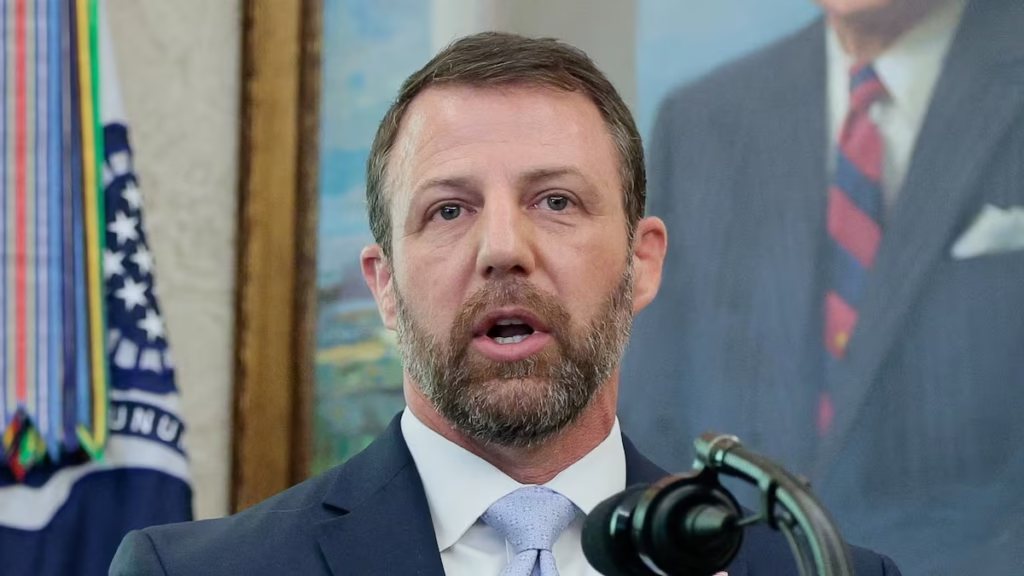
MAGA Revolt Erupts Against Trump’s DHS Chief Markwayne Mullin: “Wrong Guy at the Wrong Time”…
A growing clash inside Donald Trump’s political movement puts Homeland Security Secretary Markwayne Mullin under pressure as hardline immigration activists demand a tougher deportation approach.

Trump’s DHS Secretary Markwayne Mullin Faces MAGA Backlash as Immigration Debate Explodes
A new political battle is unfolding inside the Donald Trump administration, with a section of the MAGA movement turning against Homeland Security Secretary Markwayne Mullin over accusations that he is taking a softer approach toward immigration policy.
Mullin, who became Secretary of the U.S. Department of Homeland Security (DHS) earlier this year after replacing Kristi Noem, is facing criticism from some of Trump’s strongest supporters who believe the department should focus almost entirely on aggressive deportation efforts.
The controversy has created an unusual political divide, with some MAGA influencers questioning whether Mullin fully represents the immigration agenda that helped define Trump’s campaign.
Immigration Comments Trigger Anger Among Trump Supporters
The backlash intensified after Mullin spoke about immigration reform during the National Governors Association Summer Meeting in Oklahoma.
During his remarks, Mullin argued that immigration policy requires separating legal immigration from illegal immigration while also addressing workforce challenges through employment visa reforms.
“There is a difference between immigrants pursuing legal status and those who aren’t,” Mullin said while discussing the need to balance border security with economic realities.
His comments that some immigrant workers fill labor shortages angered several conservative activists who interpreted the remarks as moving away from a strict deportation-first strategy.
MAGA Influencers Demand a Change at DHS
Several prominent voices within Trump’s political base have publicly criticized Mullin.
Former Border Patrol official Gregory Bovino attacked Mullin after the secretary highlighted the number of people who had legally become U.S. citizens over the past year.
Bovino argued that celebrating legal immigration was inconsistent with the priorities of the movement’s most hardline supporters.
Meanwhile, conservative commentator Jake Posobiec told Politico that there is growing frustration among MAGA activists who want a DHS secretary focused more directly on mass deportations.
Steve Bannon Joins the Criticism
Former Trump adviser Steve Bannon also joined the criticism, suggesting that some Trump allies would prefer acting Director of National Intelligence Bill Pulte to lead the Department of Homeland Security.
Bannon argued that the current moment requires someone who prioritizes aggressive immigration enforcement rather than policies viewed by some conservatives as accommodating.
The criticism highlights a larger ideological struggle within Trump’s coalition over how strictly the administration should approach immigration enforcement.
Laura Loomer Calls for Mullin’s Removal
Political activist Laura Loomer, who has frequently been described as an influential conservative voice close to Trump, openly called for Mullin to be removed from his position.
Loomer criticized Mullin on social media, claiming he was not aligned with the administration’s immigration goals.
Her comments reflected growing frustration among some activists who believe DHS leadership should adopt a more aggressive posture.
Previous Controversies Added More Pressure
The latest dispute follows earlier criticism involving DHS immigration enforcement policies.
Mullin faced backlash after federal immigration officers were reportedly instructed to temporarily pause certain vehicle stops following incidents involving armed encounters and deaths.
The decision triggered opposition from some conservative supporters, leading Trump to publicly intervene and reaffirm his administration’s commitment to strict immigration enforcement.
White House Defends Mullin
Despite the criticism, the White House has pushed back against claims that Mullin’s position is in danger.
Deputy Press Secretary Abigail Jackson said Trump remains confident in Mullin’s ability to execute the administration’s agenda.
A DHS spokesperson also rejected claims of internal chaos, stating that the department remains focused on protecting the homeland and carrying out the president’s immigration priorities.
A Bigger Fight Over Trump’s Immigration Vision
The controversy surrounding Markwayne Mullin reflects a deeper challenge within the Trump movement: balancing campaign promises of mass deportations with the practical realities of governing a complex immigration system.
For now, Mullin remains in his role, but the growing criticism from influential MAGA voices shows that immigration policy remains one of the most sensitive issues inside Trump’s political coalition.
Politics
Todd Blanche Clears Major Senate Hurdle After Scrapping $1.8 Billion Fund—Will Confirmation Finally Move Forward?
The acting attorney general rescinded a controversial DOJ fund and narrowed an IRS settlement, addressing key concerns raised by Republican senators ahead of a crucial confirmation vote.

Todd Blanche Takes Key Step Toward Senate Confirmation After Dropping Controversial DOJ Fund
WASHINGTON, D.C. — Todd Blanche has moved significantly closer to securing Senate confirmation as the next U.S. Attorney General after formally eliminating a controversial $1.8 billion anti-weaponization fund and revising provisions tied to an Internal Revenue Service (IRS) settlement involving President Donald Trump and his family.
The move comes after Republican Senators John Cornyn of Texas and Thom Tillis of North Carolina expressed concerns over the Justice Department’s earlier proposal, delaying Blanche’s nomination until additional legal assurances were provided.
According to congressional aides, Blanche has now fulfilled those requests through a formal order that permanently rescinds the proposed fund and clarifies the scope of tax protections included in the earlier settlement.
A Fund That Never Became Operational
The now-cancelled fund had sparked controversy despite never becoming active.
According to the U.S. Department of Justice, no governing board was appointed, no public claims process was created, no money was distributed, and no federal funds were transferred before the initiative was terminated.
Lawmakers had voiced concerns that, if revived, the program could potentially allow payments to individuals convicted in connection with the January 6 United States Capitol attack—an issue that generated strong political opposition among several Senate Republicans.

IRS Settlement Narrowed
Another key issue involved the scope of an IRS audit settlement connected to President Trump and other plaintiffs.
Blanche’s updated order makes it clear that the agreement applies only to previous tax matters involving the original parties and does not provide protection for future IRS filings or future audits.
The clarification was considered an important concession for senators seeking written guarantees before advancing the nomination.
Republican Support Appears to Grow
A spokesperson for Senator John Cornyn confirmed that an agreement had been reached with the Justice Department, suggesting the Texas Republican is now prepared to support Blanche’s confirmation when the Senate Judiciary Committee votes on the nomination.
Senator Thom Tillis had not officially announced his position following the agreement, though earlier comments suggested he viewed Blanche as qualified while objecting to the proposed fund.
With Democrats expected to unanimously oppose the nomination, Republican unity will be critical during Tuesday’s committee vote.
Blanche Responds Publicly
Following the announcement, Blanche addressed the development on his official X account, saying his team had spent weeks working with senators to answer questions surrounding the nomination.
He stated that the Justice Department welcomed constructive discussions with members of Congress and confirmed that the department had issued an updated order regarding the previous IRS settlement.
What’s Next?
Blanche has served as Acting Attorney General since assuming the role after Pam Bondi stepped down earlier this year.
With the controversial fund now formally cancelled and legal language revised, attention shifts to Tuesday’s Senate Judiciary Committee vote, where Republicans are expected to determine whether Blanche’s nomination advances to the full Senate.
The outcome could shape the leadership of the Justice Department at a politically sensitive time, as Washington continues to grapple with legal disputes involving the Trump administration and broader debates over federal law enforcement.

How ‘Southern Hospitality’ Quietly Became Bravo’s Secret Powerhouse and Why Everyone Is Talking About Season 4 Drama

Steven Spielberg’s ‘Disclosure Day’ Sparks Massive Debate Critics Say It Is ‘Bold… but Divisive’ as Early Reactions Pour In

Paramount+ Makes Power Move Signing Matt Shakman to Direct Legal Thriller ‘Discretion’ as Hollywood Buzz Intensifies

Is 24 Jump Street Finally Happening… Jonah Hill and Channing Tatum Set to Return as Ice Cube Talks Heat Up

Himesh Patel’s Unexpected Journey From ‘Yesterday’ to Christopher Nolan’s Next Big Adventure

1-Iran Issues Dire Warning to Israel and Defies Trump on Nukes: “We’re Ready to Strike Deep Inside”

Sen. Elizabeth Warren Calls It a ‘Cesspool of Corruption’ — Here’s Why Senators Are Now Fighting Back Against the DOJ’s Live Nation Deal That Left Every Fan Betrayed…

Donald Trump’s net worth reveals the fortune behind the former US President and business mogul

“She Never Made It Out…” Albany House Fire Claims Woman’s Life as Family Pleads for Help to Bring Her Home

“Tomás Rodríguez Net Worth 2025: Panama’s Gold Cup Goal‑Machine’s Surprising Fortune Revealed”

Miss Jamaica Suffers Terrifying Fall Off Miss Universe Stage; Rushed to Hospital on Stretcher in Viral Video

Moana Live-Action Teaser Sparks Outrage as Fans Call Disney’s Move a ‘Clear Money Grab’ — What Went Wrong?

Ryan Gosling’s Project Hail Mary Trailer Stuns Fans with a Mysterious Alien Ally and a Mission That Could Save Earth

Apple delays Jessica Chastain thriller The Savant about domestic extremism after recent US violence

Avatar 3, Fire and Ash trailer reveals Jake Sully’s family facing terrifying new Na’vi enemies with deadly fire powers
-

 Entertainment1 week ago
Netflix’s Below Starring Josh Hartnett Debuts First Teaser Packed With Ocean Horror
-

 Entertainment1 week ago
Hollywood’s Biggest Union Opposes Paramount-Warner Bros. Merger, Calls for Stronger Worker Protections
-

 Entertainment1 week ago
Megan Moroney Has Seen Every TikTok Comment About Her… Country Star Reveals Why Online Opinions No Longer Affect Her
-

 Entertainment1 week ago
Greta Lee Reflects on Her Rise to Stardom and the Opportunities Shaping Her Future
-

 Entertainment1 week ago
Michael C. Hall’s Dexter Faces His Most Unpredictable Battle Yet in Dexter: Resurrection Season 2
-

 Entertainment1 week ago
Michael B. Jordan Reacts to David Jonsson’s Black Panther 3 Casting, Fueling Marvel Buzz
-

 Entertainment1 week ago
Rachel Zegler’s Thriller NDA Adds Sweet Magnolias Star Carson Rowland
-

 Entertainment1 week ago
Pedro Pascal’s Behemoth! Earns Prestigious New York Film Festival Premiere