
Health
Woman Born Without a Brain Defies Science Turns 20 in Miracle Story That Doctors Called Impossible
Against all medical odds, Nebraska’s Alex Simpson — born with almost no brain — celebrates her 20th birthday as her parents call her “a fighter fueled by love.”

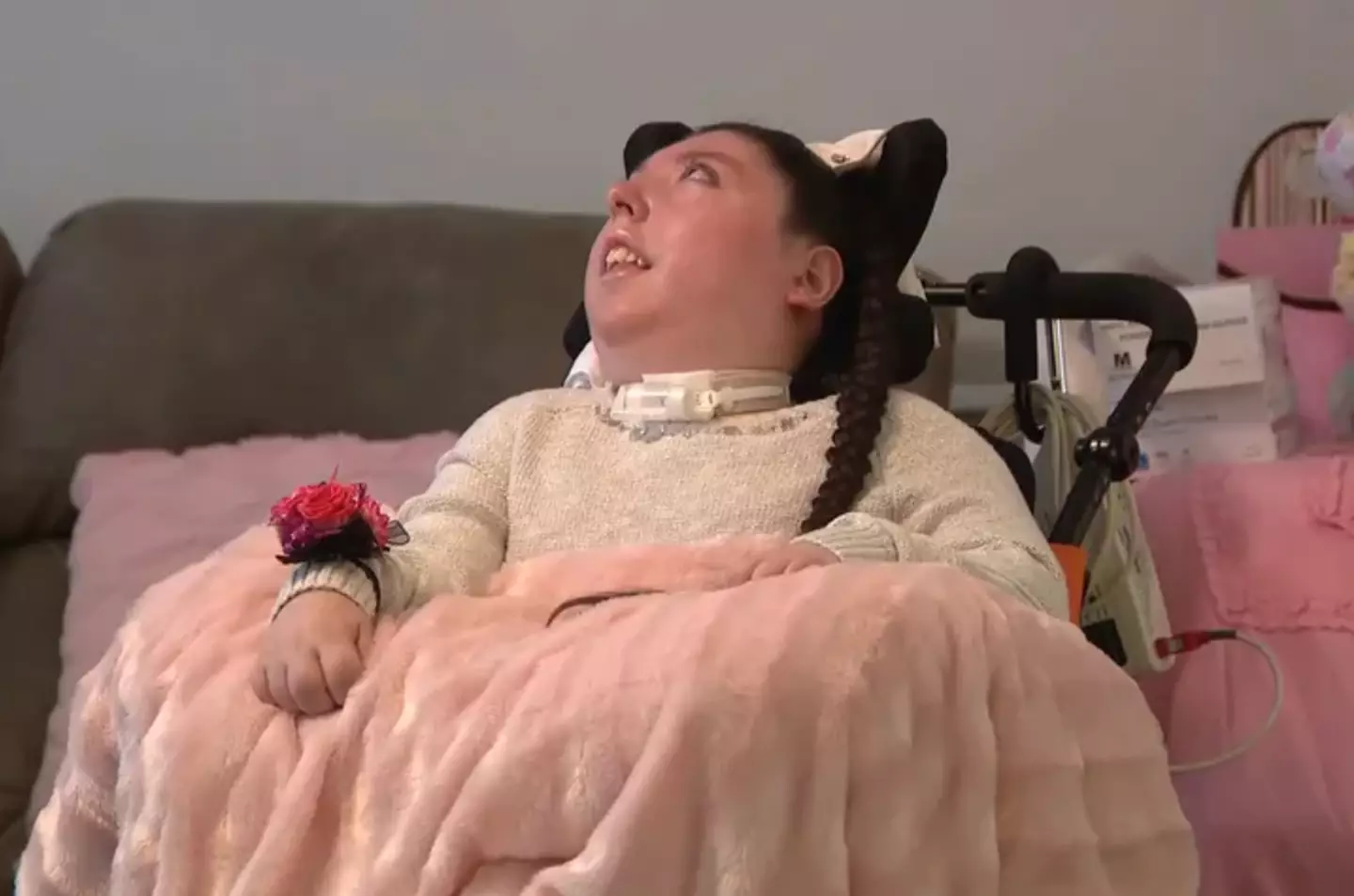
Woman Born Without a Brain Defies Science, Turns 20 in Miracle Story Doctors Never Expected
When Alex Simpson, a young woman from Omaha, Nebraska, was born, doctors told her parents she might not survive more than a few weeks — certainly not past age 4. Yet here she is, celebrating her 20th birthday, surrounded by family, love, and an unshakable spirit that continues to baffle medical science.
Born with an extremely rare neurological condition known as Hydranencephaly, Alex’s brain never fully developed. According to her father Shawn Simpson, she has only a tiny fragment of her cerebellum — “about half the size of my pinky finger.” The rest of her cranial cavity is filled with fluid.
“She has no brain, technically,” Shawn told KETV News in a heartfelt interview. “But she has something that science can’t measure — love, willpower, and faith.”
A Life Doctors Said Would Be Impossible
When Alex was born, doctors prepared her parents, Shawn and Lorena Simpson, for the worst. They said she might not make it through infancy, and certainly not beyond four years. But as her parents recall, “Alex has always been different.”

“Every year with her felt like a gift,” said Lorena. “We stopped counting how long she’d live — and started counting blessings instead.”
Her condition, Hydranencephaly, occurs in roughly one in 5,000 to 10,000 pregnancies. Most infants born with it do not survive the first year, according to the Cleveland Clinic. Yet Alex has reached two full decades — a medical miracle that even her doctors can’t fully explain.
Love, Faith, and Family: The Secret Behind the Miracle
When asked what has kept their daughter alive and thriving all these years, both Shawn and Lorena answered without hesitation — love.
“She may not see or hear us,” said Lorena softly, “but she knows we’re there. You can see it in her eyes, in the way she reacts when her father talks to her.”
Indeed, Shawn recalls a moment when he spoke to Alex, and she turned her gaze toward his voice — searching for him. “She was looking for me,” he said with a smile. “It’s something that science can’t explain.”
Faith also plays a crucial role in their journey. “Twenty years ago, we were scared,” Shawn recalled. “But faith is what kept us alive. Faith, love, and her fighting spirit.”
The Brother Who Calls Her His Hero
Alex’s younger brother, 14-year-old SJ, says he couldn’t imagine life without her. “When people ask about my family, the first thing I say is, ‘I have a disabled sister named Alex,’” he told the reporter.
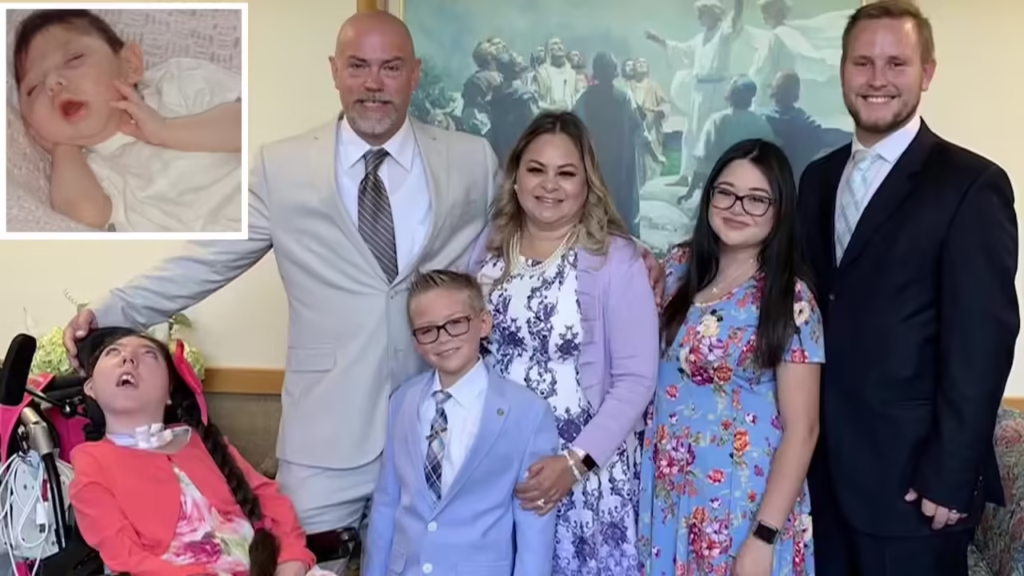
He believes Alex has a unique ability to “feel” emotions around her — even when no words are spoken. “Say somebody’s stressed near her,” SJ explained. “It could be totally silent, but Alex will sense it. She’ll just know.”
Their home in Omaha is filled with warmth, laughter, and resilience — a reflection of how Alex’s presence continues to shape everyone around her.
Defying the Odds: A Story Beyond Science
Medical experts agree that Alex’s case is virtually unprecedented. Hydranencephaly usually leads to death within months or years, as the absence of brain tissue makes basic functions like breathing, swallowing, and heartbeat regulation impossible without intervention.
Yet Alex has defied all of it — living, smiling, and existing far beyond what anyone predicted. Her parents call it “a divine exception.”
“She’s a fighter,” Lorena said proudly. “That’s what we’ve always told everyone. She fights every day.”
Their story has drawn attention from around the world — including doctors who once doubted her survival but now study her case for new insights into brain plasticity and resilience.
Faith Over Fear: A Message to the World
Shawn and Lorena say they hope Alex’s journey inspires others who are struggling — especially parents facing devastating diagnoses for their children.
“We were told every terrible thing you could imagine,” said Shawn. “But Alex taught us that the human spirit doesn’t have limits. Doctors said she wouldn’t make it. God said otherwise.”
Their advice to other families is simple yet profound: “Don’t lose hope. Love is medicine too.”
A Celebration of 20 Miraculous Years
On her birthday, friends and relatives gathered to celebrate Alex — balloons, cake, music, and laughter filling the room. Her parents say she may not understand birthdays, but she recognizes love.
“She feels it,” Lorena said. “Every hug, every song, every hand she holds.”
And as the world marvels at her survival, one truth stands tall: Alex Simpson is living proof that miracles still exist — and sometimes, love does what science cannot.
Visit our site for more heartwarming human stories and global news — www.DailyGlobalDiary.com


Health
‘A New COVID Variant Enters the US…’ Mutated BA.3.2 Strain Detected at San Francisco Airport Raises Fresh Questions
First identified in an international traveler, the evolving variant is now spreading quietly—experts warn it may evade immunity but not necessarily cause severe illness


A new chapter in the ongoing COVID-19 story may be unfolding—quietly, but significantly.
A mutated strain of the virus, known as BA.3.2, has now been detected in the United States for the first time, after initially being identified in a traveler arriving at San Francisco International Airport.
According to findings released by the Centers for Disease Control and Prevention (CDC), this variant is not just another minor mutation—it carries genetic changes that could potentially allow it to evade parts of the immune system, even among vaccinated individuals.
How the Variant Was Discovered
The BA.3.2 variant first entered the US radar in June 2025, when a traveler from the Netherlands tested positive at San Francisco airport. The detection was part of the CDC’s global traveler-based genomic surveillance program—an effort designed to catch emerging threats before they spread widely.
Since then, the variant has been found in multiple locations. It has already been detected in 23 countries and, within the US, traces have appeared across 25 states, primarily through wastewater monitoring.
What Makes BA.3.2 Different?
Experts say the concern lies in the variant’s spike protein mutations—the part of the virus responsible for entering human cells.
“These mutations have the potential to reduce protection from previous infection or vaccination,” CDC researchers noted in their report.
In simpler terms, this means that the virus may slip past antibodies more easily—a phenomenon often referred to as “immune escape.”
However, that doesn’t automatically mean it’s more dangerous.

What Experts Are Saying
Renowned infectious disease specialist William Schaffner from Vanderbilt University Medical Center described the variant as “substantially different” from earlier strains—but urged caution rather than panic.
According to Schaffner, early lab studies suggest that BA.3.2 may not infect lung cells as efficiently as previous variants, which could mean less severe illness in many cases.
Still, he emphasized the need for vigilance:
“We will have to watch this very carefully in the real world.”
Meanwhile, Monica Gandhi of University of California San Francisco has warned of a possible “spring surge”, noting a gradual rise in positive cases during routine screenings.
Should You Be Worried?
At this stage, health experts are not sounding the alarm—but they are watching closely.
The key takeaway:
- The variant may spread more easily
- It may reduce vaccine protection against infection
- But vaccines are still expected to protect against severe illness
Gandhi explained that while antibodies might not work as effectively, the body’s deeper immune defenses—like T cells—remain strong.
The Bigger Reality: A Global Virus
One of the most striking reminders from this development is how interconnected the world remains.
“What’s over there can be over here in 24 hours,” Schaffner noted—a reality that continues to define pandemic-era public health.
Despite lower current COVID levels in regions like California, the emergence of BA.3.2 reinforces a familiar lesson: the virus is still evolving, and surveillance remains critical.

What Comes Next?
For now, health officials are doubling down on monitoring and data collection. If the variant begins to spread more widely or significantly alters disease patterns, it could influence future vaccine updates.
For individuals—especially those at higher risk—experts recommend staying updated with vaccinations and considering booster doses when advised.
Because while the world may have moved on from the peak pandemic mindset, the virus hasn’t stopped adapting.
For More Update- DAILY GLOBAL DIARY
Health
“Tragic Loss: 6-Year-Old Dies From Meningitis Within 24 Hours — Parents Demand Vaccine Access…”
Oliver Hall’s sudden death highlights the urgent need for broader MenB vaccination for children across the UK.

The UK is mourning the heartbreaking death of Oliver Hall, a 6-year-old boy from Halesworth, Suffolk, who succumbed to bacterial meningitis (MenB) within 24 hours of first showing symptoms. His parents, Georgie Hall and Bryan Hall, have given a poignant account of their son’s final day, urging authorities to make vaccines accessible to all children.
Oliver, described by his parents as a bright and loving boy, fell ill during the first day of his half-term holiday. Georgie recounted that although Oliver initially showed no symptoms, within hours he developed sensitivity to light, rashes, and breathing difficulties. Despite calling emergency services and traveling to hospital themselves, Oliver tragically passed away at 2:07 a.m. in the intensive care unit, just five hours after being admitted.
“It’s just changed our whole future. We had hopes for Oliver, for his future… He was a bright, popular lovely boy, and our whole lives have changed,” Georgie said.
Vaccine Controversy and Public Outcry
The MenB vaccine, available through the NHS for infants under 12 months since 2015, protects against meningococcal group B bacteria, the leading cause of bacterial meningitis in young children. However, children older than one year are not routinely vaccinated, a policy that has sparked outrage after tragedies like Oliver’s.
Oliver’s mother explained:
“It’s shocking… children are dying from a disease that can be prevented for as little as £12. Had we known about the private vaccine option, we would have protected both our boys.”
Private clinics and pharmacies, including Boots and Superdrug, offer the MenB vaccine for around £210 for a two-dose course. Yet, the cost barrier leaves many families without access.
Meningitis Now founder Steve Dayman emphasized the devastation caused by the disease:
“We see time and time again the impact of meningitis on families. With no changes to the vaccine programme imminent, it is crucial parents are aware of the symptoms and seek urgent medical attention.”

Symptoms Every Parent Should Know
Meningitis can escalate quickly, often proving fatal within hours. Parents are urged to monitor for:
- Blotchy rashes that don’t fade under pressure
- High fever (38°C or above)
- Headache and neck stiffness
- Nausea, vomiting, and drowsiness
- Muscle and joint aches
Mary Ramsay, Head of Immunisations at UK Health Security Agency, urged vigilance:
“Vaccinating babies at 2, 4, and 12 months helps protect them when they are most at risk. But parents must remain alert — rapid medical attention can save lives.”
Legacy and Advocacy
In honor of Oliver, the Oliver Hall Forever Fund has been established, raising over £4,000 for Meningitis Now. Georgie and Bryan hope their campaign will pressure the government to expand the vaccine programme and protect children nationwide.
“Our main goal is to help Meningitis Now get this vaccination rolled out to more children,” Georgie said, highlighting the urgent public health implications.
Oliver’s tragic story is a stark reminder that meningitis can strike suddenly and fatally, even in modern healthcare systems, and that awareness, vaccination, and swift medical response are vital to saving young lives.
For More Update- DAILY GLOBAL DIARY
Health
“Kent Meningitis Tragedy: Second Student Dies as Outbreak Sparks Hospital Emergency…”
A Year 13 pupil joins a University of Kent student in death after contracting meningitis, while authorities race to contain the outbreak.

The county of Kent is reeling from a sudden meningitis outbreak that has now claimed a second life. A Year 13 pupil from a local school has tragically died, following the death of a University of Kent student earlier this weekend.
According to Kevin Rawlinson of The Guardian, the outbreak has left 11 other people seriously ill in hospital, highlighting the urgent public health challenge facing Kent.
The Deadly Spread
Meningitis, an inflammation of the membranes surrounding the brain and spinal cord, can progress rapidly and is particularly dangerous among young adults and teenagers. Public health officials in Kent have confirmed that both fatalities were caused by bacterial meningitis, a form of the disease known for its fast onset and severe complications.
An MP from the region, who spoke on the condition of urgency, stated:
“This is a tragic time for the community. Our thoughts are with the families affected. It is crucial that everyone recognizes the symptoms early and seeks immediate medical attention.”
Symptoms of meningitis can include high fever, severe headache, stiff neck, nausea, and sensitivity to light, often escalating to more severe conditions within hours.
Students and Young Adults at Risk
The first death involved a student from the University of Kent, and the second was a Year 13 school pupil, highlighting the vulnerability of young adults in shared environments such as campuses and schools.
Health officials have already mobilized vaccination campaigns and awareness programs in local schools and universities to prevent further spread. Hospital wards have increased monitoring for suspected cases, and medical teams are urging students and parents to remain vigilant.

Public Health Response
The Kent Public Health Department has confirmed that they are actively tracing contacts of the infected individuals and providing prophylactic antibiotics to those at risk. Community health centers are also disseminating information on the early warning signs of meningitis, emphasizing rapid medical intervention as critical to survival.
Local MPs and health authorities are urging parents, teachers, and students to report unusual symptoms immediately, as prompt treatment can significantly improve outcomes.
“We are doing everything possible to contain this outbreak and protect our young people,” said a spokesperson for the Kent County Council.
Community Impact
The deaths have sent shockwaves through local communities and the University of Kent, with vigils being held to remember the victims. Authorities have stressed the importance of maintaining calm while following official health guidance.
As the situation develops, Kent residents are being reminded of the severity of meningitis and the importance of vaccination, hygiene, and early medical attention.
The tragic loss of a second young person in Kent underscores the devastating potential of meningitis outbreaks and the need for heightened awareness and immediate response in schools and universities nationwide.
For More Update- DAILY GLOBAL DIARY

‘Elle’ Season 2: Maitreyi Ramakrishnan Promises Her Most Challenging Role Yet

Vincent Mason Opens Up About New Song “What You Want” and Morgan Wallen’s Influence

‘Onwards and Sideways’ Unveils First Images of Laura Linney and Rhys Ifans’ Powerful New Drama

Ryan Reynolds Confirms Another ‘Deadpool’ Movie After Record-Breaking Success… Here’s What Fans Can Expect

Lucky Review: Anya Taylor-Joy Leads a Gripping Yet Uncertain Thriller

1-Iran Issues Dire Warning to Israel and Defies Trump on Nukes: “We’re Ready to Strike Deep Inside”

Sen. Elizabeth Warren Calls It a ‘Cesspool of Corruption’ — Here’s Why Senators Are Now Fighting Back Against the DOJ’s Live Nation Deal That Left Every Fan Betrayed…

Donald Trump’s net worth reveals the fortune behind the former US President and business mogul

“She Never Made It Out…” Albany House Fire Claims Woman’s Life as Family Pleads for Help to Bring Her Home

“Tomás Rodríguez Net Worth 2025: Panama’s Gold Cup Goal‑Machine’s Surprising Fortune Revealed”

Miss Jamaica Suffers Terrifying Fall Off Miss Universe Stage; Rushed to Hospital on Stretcher in Viral Video

Moana Live-Action Teaser Sparks Outrage as Fans Call Disney’s Move a ‘Clear Money Grab’ — What Went Wrong?

Ryan Gosling’s Project Hail Mary Trailer Stuns Fans with a Mysterious Alien Ally and a Mission That Could Save Earth

Apple delays Jessica Chastain thriller The Savant about domestic extremism after recent US violence

Avatar 3, Fire and Ash trailer reveals Jake Sully’s family facing terrifying new Na’vi enemies with deadly fire powers
-

 Entertainment1 week ago
Pedro Pascal’s Behemoth! Joins the New York Film Festival Lineup
-

 Entertainment1 week ago
‘Doomsday’ Era Begins: Marvel Studios Delivers Epic Comic-Con Reveal
-

 Entertainment1 week ago
A Knight of the Seven Kingdoms’ Creator Opens Up About Season 2’s Tough Production Journey
-

 Entertainment3 days ago
How ‘Southern Hospitality’ Quietly Became Bravo’s Secret Powerhouse and Why Everyone Is Talking About Season 4 Drama
-

 Entertainment3 days ago
Quentin Tarantino Refused to Watch Beyond Toy Story 3… So Why Does Toy Story 5 Believe the Story Isn’t Over Yet?
-

 Entertainment3 days ago
Himesh Patel’s Unexpected Journey From ‘Yesterday’ to Christopher Nolan’s Next Big Adventure
-

 Entertainment1 week ago
Why Patrick Dempsey Is Suddenly Being Mentioned in Maine’s U.S. Senate Race
-

 Entertainment1 week ago
Matt Rife Unveils 2027 Comedy Cruise Featuring Stand-Up, Music, and Fan Events