
Automobile
This rare 1969 Dodge Charger Daytona hides a NASCAR doctor’s secret and it’s up for grabs now
A legendary winged Mopar once awarded to a record-breaking physician racer is now turning heads on Bring a Trailer — and its backstory is pure American racing gold.

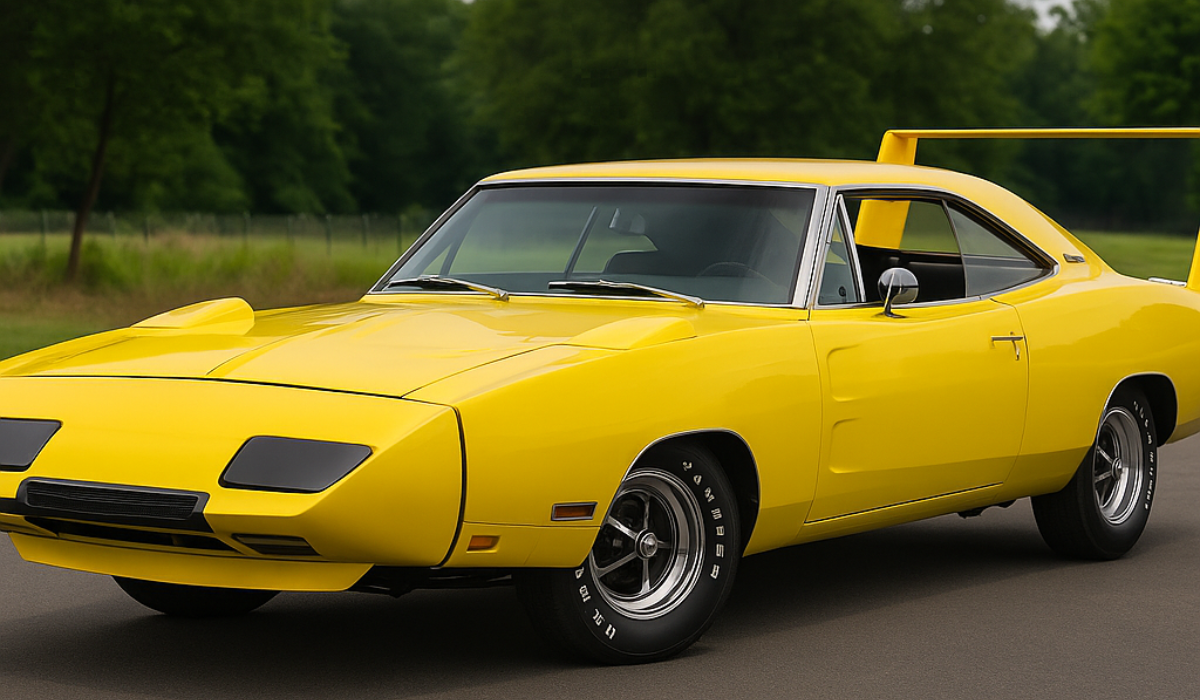
If you think every yellow winged Mopar is just another Plymouth Superbird, think again. A stunning 1969 Dodge Charger Daytona — the original “winged warrior” that ruled NASCAR’s high-speed ovals — is now up for auction on Bring a Trailer, and this particular machine carries a backstory that even die-hard muscle-car fans might not know.
Long before memes and influencer hype, the Charger Daytona was all about speed. Dodge crafted just over 500 units of this slippery beast to homologate an aerodynamic package for stock car racing — a radical move that made it the first stock car to shatter the 200 mph barrier, outpacing even Plymouth’s famous Superbird.
But what makes this Daytona so special isn’t just its swooping nose cone or skyscraper rear wing — it’s the man who owned it. Dr. Don Tarr, a NASCAR-driving physician, earned this very car as a reward for setting a qualifying record at the Alabama International Motor Speedway in 1969. That’s right: this wasn’t just a showroom piece, but a prize for bravery and raw speed.
Born in California but raised in Africa, Tarr returned to the US to become a doctor — only to get hooked on the thrill of oval racing. He wheeled big-block Fords, Chevys, and finally Dodges through 48 NASCAR events in the late ‘60s and early ‘70s. His best finish was a hard-earned sixth place at Charlotte’s Coca-Cola 600, proving he was more than just a weekend warrior.
And get this: Don Tarr made broadcast history as the first driver to go live on air from inside the cockpit during an actual race, thanks to ABC’s Wide World of Sports in 1970 at Daytona. Imagine NASCAR radio chatter before in-car cams were even a thing!
Tarr cherished this Charger Daytona until 2016. Rumor has it he still gave it the occasional neighborhood blast well into his eighties — the odometer shows 77,000 miles, which says this piece of racing history didn’t just sit in a climate-controlled vault.

Today, the car remains largely original, sporting its mighty 440-cubic-inch V-8 under the long yellow hood. From the factory, it pumped out 375 horsepower to the rear wheels through a tough-as-nails three-speed TorqueFlite automatic and limited-slip diff — serious muscle for its day.
For a spell in the mid-1990s, this very Daytona stood proudly at the International Motorsports Hall of Fame at Talladega, an icon among icons. Now refreshed with new cooling parts, plugs, and wires, it’s ready for a new chapter with a lucky collector who appreciates its blend of NASCAR legend and personal grit.





Automobile
2027 Rivian R2 Stuns in 117°F Heat: This Electric SUV Kept Launching at Full Speed Without Breaking a Sweat
The 2027 Rivian R2 Performance delivered blistering acceleration and remarkable consistency during repeated high-temperature testing, proving that extreme heat is no obstacle for the new electric SUV.

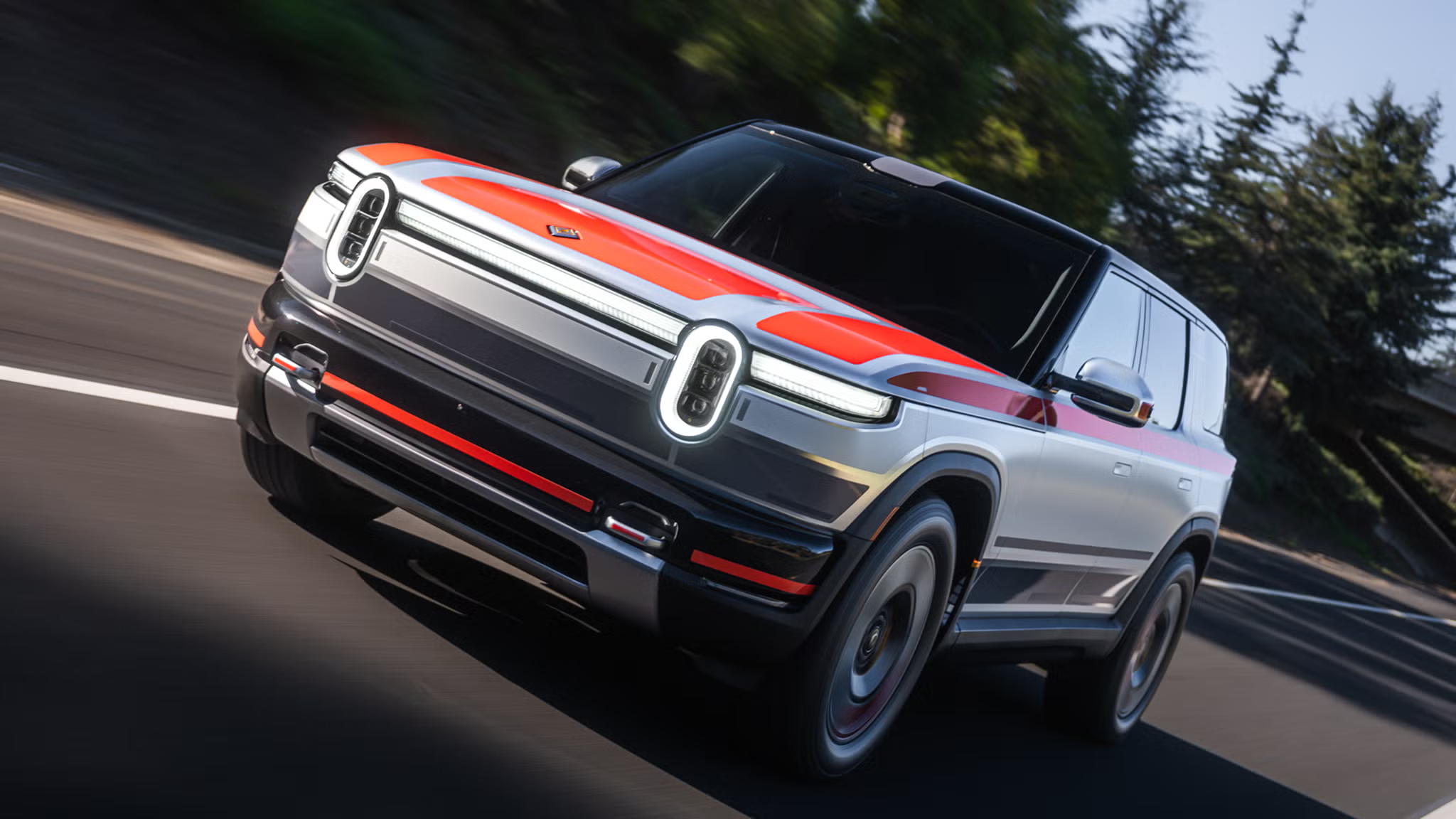
2027 Rivian R2 Delivers Supercar-Like Acceleration Even in Desert Heat
The upcoming Rivian R2 Performance is shaping up to be one of the most exciting electric SUVs on the horizon. Fresh acceleration testing has revealed that the all-electric SUV maintains impressive performance even after multiple launch-control runs in scorching desert temperatures.
Tested in the Mojave Desert, where the outside temperature climbed to a blistering 117°F (47°C), the 2027 Rivian R2 consistently delivered rapid acceleration with virtually no signs of performance degradation.
Lightning-Fast Performance
Equipped with a dual-motor all-wheel-drive setup, the Rivian R2 Performance produces an impressive 656 horsepower and 609 lb-ft of torque.
During testing, the electric SUV sprinted from 0 to 60 mph in just 3.4 seconds, placing it among the quickest electric SUVs in its segment.
Quarter-mile performance was equally impressive, with the R2 completing the run in:
- 0–60 mph: 3.4 seconds
- Quarter mile: 11.6 seconds at 128.6 mph
Rather than delivering a sudden jolt, the SUV’s acceleration was described as smooth and relentless, providing continuous power throughout the run.

Launch Control Designed for Performance
Preparing the R2 for launch is straightforward. Drivers simply activate Sport Mode, disable traction and stability control, and engage Launch Control through the infotainment system.
One playful touch comes from Rivian’s animated character Gary, who appears on the display with wind-blown hair while launch mode is activated.
Once both pedals are pressed and the brake is released, the R2 unleashes its full electric performance almost instantly.
How the Rivian R2 Compares Against Its Rivals
The latest performance figures put the Rivian R2 in direct competition with some of the fastest electric SUVs currently available.
| Vehicle | 0–60 mph | Quarter Mile |
|---|---|---|
| 2027 Rivian R2 Performance | 3.4 sec | 11.6 sec @ 128.6 mph |
| Tesla Model Y Performance (2026) | 3.3 sec | 11.8 sec @ 122.3 mph |
| Ford Mustang Mach-E GT (2023) | 3.6 sec | 12.4 sec @ 103.8 mph |
While the Tesla edges ahead by a tenth of a second in the 0–60 mph sprint, the Rivian posts a faster quarter-mile time and significantly higher trap speed, highlighting its strong power delivery at higher speeds.
Consistency Is the Real Story
Raw speed is only part of the equation for an electric performance vehicle. Sustaining that performance repeatedly can be far more challenging, especially under extreme weather conditions.
During six consecutive launch-control tests, the Rivian R2 recorded an astonishing 0.08-second variation between runs.
Such consistency is particularly noteworthy considering the vehicle was tested under one of the harshest environments for battery-powered vehicles.
To ensure maximum performance, testers also switched off the air conditioning during every acceleration run, allowing the SUV to utilize its full available power.
Electric Motors Provide Their Own Soundtrack
Unlike several modern performance EVs that generate artificial engine sounds through speakers, the Rivian R2 keeps things authentic.
Instead of digital sound effects, occupants hear the natural high-pitched whir of the dual electric motors working under full load, creating an experience many EV enthusiasts are likely to appreciate.
A Strong Statement Ahead of Launch
The latest testing reinforces Rivian’s ambitions in the rapidly growing electric SUV market. Beyond outright speed, the R2 demonstrates the kind of thermal management and performance consistency that buyers increasingly expect from next-generation EVs.
If these early figures translate into production models, the 2027 Rivian R2 Performance could emerge as one of the most capable electric SUVs available, offering sports-car acceleration while maintaining dependable performance even in some of the hottest conditions imaginable.
Automobile
2027 Chevy Silverado EV Lineup Gets a Major Shake-Up: Chevrolet Drops Three Variants, Retires RST Trim Again
Chevrolet has streamlined the 2027 Silverado EV range by reducing the number of configurations from 10 to seven, while preparing the electric pickup for production with updated charging technology.

Chevrolet Simplifies the 2027 Silverado EV Lineup
Detroit: Chevrolet is reshaping its electric truck strategy for the 2027 model year by simplifying the Chevy Silverado EV lineup. The company has confirmed that the all-electric pickup will now be available in seven configurations, down from the 10 variants offered previously.
The move reflects Chevrolet’s effort to streamline customer choices while continuing to expand its electric vehicle portfolio in the highly competitive EV pickup market.
Three Silverado EV Variants Discontinued
As part of the updated lineup, Chevrolet has removed three configurations from the Silverado EV range:
- LT Max Range (4LT)
- RST Extended Range (2SP)
- RST Max Range (3SP)
The biggest change is the departure of the RST trim, which had briefly returned for the 2026 model year as part of the limited Stars & Steel Special Edition. That edition featured exclusive styling enhancements inspired by the American flag, but the trim will no longer continue into the 2027 lineup.
Here’s the Complete 2027 Silverado EV Lineup
For the 2027 model year, buyers will be able to choose from the following variants:
- Work Truck Standard Range (4WT)
- Work Truck Extended Range (5WT)
- Work Truck Max Range (8WT)
- LT Standard Range (2LT)
- LT Extended Range (3LT)
- Trail Boss Extended Range (2TR)
- Trail Boss Max Range (3TR)
The updated strategy means the LT trim will now be offered only with Standard Range and Extended Range battery options. Meanwhile, the Trail Boss variant continues to cater to customers seeking higher-capacity battery packs with both Extended Range and Max Range options.
Production Timeline Already Confirmed
Chevrolet has also confirmed its production schedule for the new model.
Production of the 2027 Chevy Silverado EV is scheduled to begin on October 12, 2026, while dealer order books are expected to open this week.
Meanwhile, production of the outgoing 2026 Silverado EV is expected to conclude on October 9, 2026, allowing for a smooth transition to the updated model.
Charging Upgrade Coming for 2027 Model
Another significant update expected for the 2027 Silverado EV is the adoption of the North American Charging Standard (NACS).
The move will align the Silverado EV with other General Motors electric vehicles, giving owners access to a broader charging ecosystem and improving long-distance usability.
As charging infrastructure continues to expand across North America, compatibility with the industry-standard connector is expected to become an important advantage for EV buyers.

Built on GM’s Dedicated EV Platform
Every version of the 2027 Silverado EV continues to ride on GM’s BT1 electric truck platform, which was developed specifically for battery-powered pickup trucks.
The vehicle will also continue to be manufactured at Factory Zero in Michigan, General Motors’ flagship electric vehicle production facility dedicated to next-generation EVs.
A Leaner Strategy for a Competitive EV Market
The decision to reduce the number of available configurations signals Chevrolet’s intention to simplify its electric truck portfolio while focusing on the variants with the strongest market demand.
As competition intensifies in the electric pickup segment, manufacturers are increasingly refining their lineups to improve production efficiency and reduce complexity.
With updated charging support, a more focused range of variants and production set to begin later this year, the 2027 Chevy Silverado EV represents Chevrolet’s latest step in strengthening its position in the rapidly evolving electric truck market.
Automobile
Lexus RX Facelift Spotted Testing: Best-Selling Luxury SUV Could Get a Major Design Makeover…
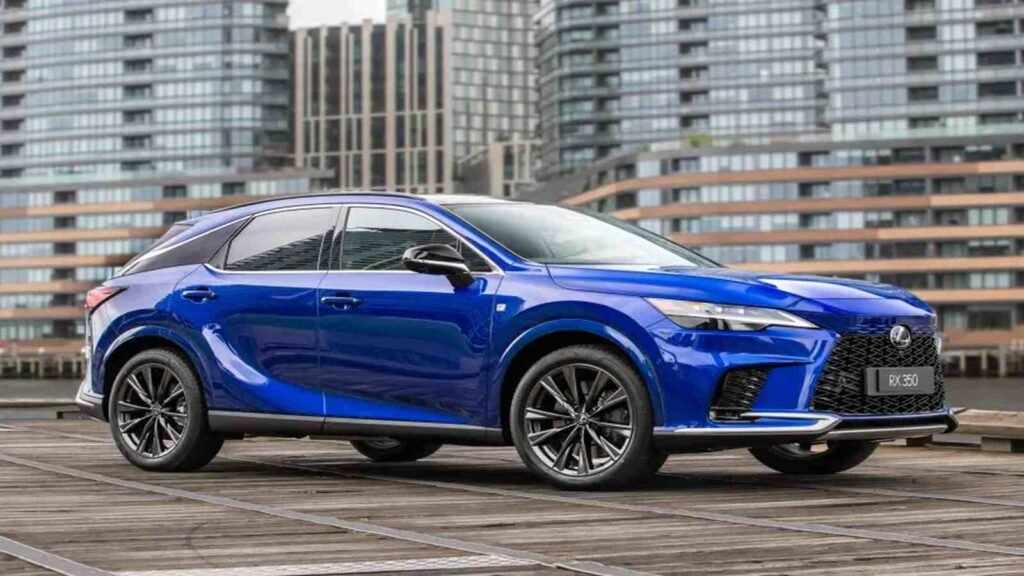
The Lexus RX facelift is reportedly being prepared for a possible reveal by late 2026 or early 2027, with the brand’s new ES-inspired design language potentially making its way to the luxury SUV.

The Lexus RX may be heading for a significant update, and the next version could look noticeably different from the luxury SUV that buyers know today.
The RX has been one of the strongest performers in the midsize luxury crossover segment for years, consistently finding buyers despite fierce competition from established rivals. But with the current generation now approaching its fourth model year, attention is beginning to turn toward its first major facelift.
According to a report from Japanese publication MotorFan, the updated RX could be revealed as early as the end of 2026 or sometime in the first quarter of 2027. Lexus itself has not officially announced a reveal date, so the timeline should be treated as an early report rather than confirmed information.
Still, recent prototype sightings suggest that development of the updated luxury SUV is already underway.
Lexus RX Facelift: When Could It Arrive?
The current-generation Lexus RX was introduced in 2022 as a 2023 model-year vehicle, bringing a sharper design and updated technology to the luxury crossover.
Four years into its lifecycle, a facelift would not come as a surprise.
The exact timing, however, could have an impact on the future of the RX.
If the facelift arrives by the end of 2026 or in early 2027, the updated model could potentially remain on sale for several years before Lexus introduces an entirely new generation.
That could mean the next-generation RX may not appear until around the end of the decade.
On the other hand, if Lexus moves quickly with the facelift, the company could use the updated SUV to maintain its momentum in a segment where design, technology and electrification are becoming increasingly important.
For now, there is no official confirmation from Lexus, so the reported timeline remains speculative.
Prototype Spotted With a Covered Front End
The biggest clues about the facelift have come from prototype sightings in Europe.
Images of test vehicles reportedly show the front bumper heavily covered in camouflage, while the headlights appear to be largely exposed.
That combination has sparked speculation that the front-end changes could be more substantial than a typical mid-cycle update.
The RX is already a recognisable model, so Lexus is unlikely to completely reinvent its identity with a facelift.
However, the company has recently started moving in a new styling direction, and that could have a major influence on the updated SUV.
Could the Lexus RX Borrow Design Ideas From the New ES?
The redesigned Lexus ES has introduced a fresh visual identity for the Japanese luxury brand.
One of the most noticeable elements is the move toward a cleaner front-end design, with the traditional grille treatment becoming less visually dominant.
That design philosophy could eventually influence other Lexus models.
The facelifted RX may therefore adopt some of the ES’s styling cues, although it is unlikely to receive an identical front-end design.
The grille could become slimmer or more integrated into the overall shape of the nose, while the bumper and lighting elements may be redesigned to give the SUV a more modern appearance.
The updated Lexus IS could also provide additional clues about how the company intends to evolve its design language across its wider lineup.
For RX buyers, the most interesting question will be whether Lexus decides to make the facelift visually conservative or takes a bigger risk with the SUV’s appearance.
Bigger Changes Could Be Waiting Inside
While the exterior is expected to receive some updates, the cabin could be where Lexus makes some of the more meaningful improvements.
The current RX already offers a modern interior, but technology is evolving quickly in the luxury car market.
The facelift could therefore introduce an updated infotainment system or a larger touchscreen inspired by the new ES.
The interface could also receive software improvements, making the system easier and faster to use.
However, there is a possibility that Lexus may choose not to introduce a completely new infotainment architecture until the next-generation RX arrives.
Automakers often reserve major technology changes for a full model change rather than a mid-cycle facelift.
As a result, the facelifted RX could receive an upgraded version of the existing system rather than an entirely new digital ecosystem.
Powertrains Could Remain Unchanged
The available information suggests that the RX’s powertrain lineup could largely carry over to the facelift.
That would make sense given the current model’s relatively modern mechanical package.
The RX is available with a range of electrified powertrain options depending on the market, including hybrid and plug-in hybrid technology.
Lexus has increasingly focused on electrification across its global lineup, so the company may continue refining these existing systems rather than introducing an entirely new powertrain with the facelift.
Any significant mechanical changes could instead be saved for the next-generation RX.
However, Lexus could still make small improvements to efficiency, software calibration or driving refinement before the next full redesign.
Why the Lexus RX Matters So Much
The RX is not just another model in the Lexus lineup.
It has become one of the brand’s most important global products and has played a major role in establishing Lexus as a serious competitor in the luxury SUV market.
The segment is now packed with strong rivals, including the BMW X5 and Mercedes-Benz GLE, but the RX has maintained a strong position thanks to its combination of comfort, reliability, hybrid technology and relatively understated luxury.
That makes the upcoming facelift particularly important.
Lexus does not necessarily need to reinvent the RX. Instead, the company needs to make sure the SUV remains competitive as buyers increasingly expect advanced digital technology, distinctive styling and electrified powertrains.
A New Look Could Be on the Way…
If the reports prove accurate, the Lexus RX facelift could represent an interesting middle ground between the current generation and the next major redesign.
The exterior may adopt subtle elements of the new ES and upcoming Lexus design language, while the interior could receive technology upgrades to keep the SUV competitive.
The powertrain lineup, meanwhile, is expected to remain largely familiar.
For buyers considering a luxury midsize SUV, the facelift could be worth waiting for—especially if Lexus introduces a more distinctive exterior and a significantly improved infotainment system.
For now, Lexus has not officially confirmed the launch or reveal date.
But with prototypes reportedly already being tested, the next chapter for the RX may be closer than it appears.
And if the new ES is any indication of where the brand’s design is heading, the facelifted RX could look very different from the familiar luxury SUV currently sitting in Lexus showrooms.

Harry Styles Scraps São Paulo Concert Following Tour Illness

Inside Venice Film Festival’s Biggest Talking Points: Hollywood, AI and the Fight for Gender Equality

Venice Film Festival to Close With Giovanni Veronesi’s Historical Drama ‘Dio Ride’

Paramount–Warner Bros. Merger Pause Extended Amid Ongoing Legal Proceedings

Pedro Pascal’s ‘Behemoth!’ Set for Prestigious NY Film Festival Premiere… Tony Gilroy’s Mystery Drama Is Already Building Awards Buzz

1-Iran Issues Dire Warning to Israel and Defies Trump on Nukes: “We’re Ready to Strike Deep Inside”

Donald Trump’s net worth reveals the fortune behind the former US President and business mogul

Sen. Elizabeth Warren Calls It a ‘Cesspool of Corruption’ — Here’s Why Senators Are Now Fighting Back Against the DOJ’s Live Nation Deal That Left Every Fan Betrayed…

“She Never Made It Out…” Albany House Fire Claims Woman’s Life as Family Pleads for Help to Bring Her Home

“Tomás Rodríguez Net Worth 2025: Panama’s Gold Cup Goal‑Machine’s Surprising Fortune Revealed”

Miss Jamaica Suffers Terrifying Fall Off Miss Universe Stage; Rushed to Hospital on Stretcher in Viral Video

Moana Live-Action Teaser Sparks Outrage as Fans Call Disney’s Move a ‘Clear Money Grab’ — What Went Wrong?

Ryan Gosling’s Project Hail Mary Trailer Stuns Fans with a Mysterious Alien Ally and a Mission That Could Save Earth

Apple delays Jessica Chastain thriller The Savant about domestic extremism after recent US violence

Avatar 3, Fire and Ash trailer reveals Jake Sully’s family facing terrifying new Na’vi enemies with deadly fire powers
-

 Entertainment1 week ago
Himesh Patel Lands Christopher Nolan Project After Yesterday Breakthrough
-

 Entertainment1 week ago
Taylor Swift and Travis Kelce’s Rumored Madison Square Garden Wedding Has Fans Asking: ‘Could This Really Be Happening?’
-

 Entertainment1 week ago
Spencer Pratt Slams Gavin Newsom and Rob Bonta Over Paramount Lawsuit
-

 Politics5 days ago
Todd Blanche Clears Major Senate Hurdle After Scrapping $1.8 Billion Fund—Will Confirmation Finally Move Forward?
-

 Sports1 week ago
Lionel Messi Returns Home After Argentina’s Heartbreaking World Cup Final Defeat to Spain
-

 Entertainment1 week ago
Nicholas Duvernay Opens Up About Life After The White Lotus
-

 Entertainment1 week ago
Jesus’ Final Path Begins as The Chosen Season 6 Teaser Sparks Fan Emotions
-

 Entertainment1 week ago
‘Call of Duty’ Movie Moves Forward as Taylor Sheridan and Peter Berg Adapt ‘Modern Warfare’