
Astronomy & Science
Next Blood Moon 2025 Date Revealed NASA Confirms Rare Lunar Eclipse This Weekend
The final Blood Moon of 2025 will light up skies across parts of the world this weekend — here’s when and where to watch the dramatic lunar eclipse.


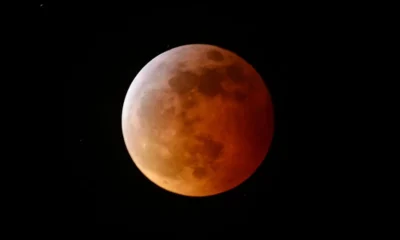
For centuries, people have looked up at the night sky in awe when the moon takes on a deep reddish glow. This celestial spectacle, often called the Blood Moon, is more than just a poetic phrase — it’s the result of a rare total lunar eclipse. And now, skywatchers have something to look forward to again: the second and final blood moon of 2025 will appear this weekend.
The last time millions witnessed this mesmerizing event was on March 13–14, 2025, when a dramatic eclipse painted the moon rusty red. Images from San Salvador, El Salvador, taken by photographers such as Marvin Recinos of AFP/Getty Images, went viral as astronomy enthusiasts marveled at the glowing orb.
What is a Blood Moon?
According to NASA, a blood moon occurs when the Earth perfectly aligns between the sun and the moon, casting its shadow on the lunar surface. The central part of Earth’s shadow is called the umbra. Instead of going completely dark, the moon appears red because Earth’s atmosphere filters sunlight — bending the red wavelengths toward the moon. This effect, similar to a sunset, gives rise to the nickname “blood moon.”
As astronomers explain, these events typically occur twice a year thanks to the moon’s slightly tilted orbit. Each one draws millions of stargazers who either step outside or follow online streams hosted by institutions like NASA and the European Space Agency (ESA).
When is the Next Blood Moon in 2025?
Mark your calendars: the next blood moon will occur on the night of September 7–8, 2025. This will be the second and final lunar eclipse of the year, making it a must-see for sky enthusiasts.

The first eclipse in March was visible across parts of North America, South America, and Europe, leaving many wondering when they would get another chance. Now, September’s eclipse brings a similar spectacle — but with one caveat for viewers in the United States.
Where Will the Blood Moon Be Visible?
If you’re in the U.S., you may be disappointed to learn that the timing of this eclipse means it will occur during daylight hours, making it invisible to the naked eye across most states. However, observers in regions such as South America, parts of Africa, and Western Europe will have front-row seats to the show.
For those outside the visibility zone, astronomy lovers can still experience the event via live streams on platforms hosted by NASA TV, the Griffith Observatory in Los Angeles, or astronomy-focused YouTube channels.
The Timeline of the Eclipse
According to NASA’s official data, here’s the breakdown of September’s lunar eclipse in Central Daylight Time (CDT) on Sunday, September 7:
- Penumbral Eclipse Begins: 6:41 p.m. CDT
- Partial Eclipse Begins: 7:44 p.m. CDT
- Total Eclipse Begins: 9:12 p.m. CDT
- Maximum Eclipse (Moon Fully Red): 9:53 p.m. CDT
- Total Eclipse Ends: 10:34 p.m. CDT
- Partial Eclipse Ends: 12:02 a.m. CDT (Sept. 8)
- Penumbral Eclipse Ends: 1:09 a.m. CDT
The entire event will last 3 hours and 29 minutes, with the total phase of the blood moon stretching about 1 hour and 22 minutes.
Why Does the Blood Moon Fascinate So Many?
Throughout history, blood moons have been shrouded in mythology and mystery. Ancient cultures often interpreted the red hue as an omen — sometimes of disaster, sometimes of renewal. Even today, in a world dominated by technology and science, millions still step outside to watch in silence as the moon transforms.

Renowned astrophysicist Neil deGrasse Tyson once remarked that events like these “remind us of our smallness in the universe and our connection to celestial rhythms.”
Tips for Watching the Eclipse
If you’re lucky enough to be in a region where the blood moon will be visible, here are some quick tips to make the most of it:
- Find a Dark Spot: Urban light pollution can wash out the sky. Try to find a park, open field, or hillside.
- Bring Binoculars or a Telescope: While the eclipse is visible to the naked eye, magnification brings out incredible detail on the lunar surface.
- Join a Community Event: Many local astronomy clubs and observatories host watch parties where enthusiasts gather to share the moment.
- Prepare Your Camera: Lunar eclipses are slow enough to photograph with even modest cameras. Tripods help keep images sharp.
What’s Next After 2025?
The next series of eclipses will occur in 2026, with more opportunities for Americans to witness them directly. For now, September 7–8 marks the final chance in 2025 to see this celestial wonder.
So, whether you’re watching from your backyard, tuning in online, or scrolling through images the next morning, don’t miss this reminder of the beauty and mystery of our solar system.
For more updates on space and world news, Visit our site for more news www.DailyGlobalDiary.com.








Hollywood Doors Remain Closed for Susan Sarandon, Actress Claims

Telluride’s Mystery Screening Revealed as Nathan Fielder’s Elizabeth Holmes Documentary

Emmys 2026: First Post-Nominations Forecast Reveals the New Front-Runners… But the Biggest Surprises May Still Be Ahead

Juliette Binoche Looks Back at Her Oscar Shock And Finally Reveals the Dream She’s Ready to Chase

‘Love Island USA’ Continues Streaming Dominance as Week Two Viewership Soars

1-Iran Issues Dire Warning to Israel and Defies Trump on Nukes: “We’re Ready to Strike Deep Inside”

Sen. Elizabeth Warren Calls It a ‘Cesspool of Corruption’ — Here’s Why Senators Are Now Fighting Back Against the DOJ’s Live Nation Deal That Left Every Fan Betrayed…

Donald Trump’s net worth reveals the fortune behind the former US President and business mogul

“Tomás Rodríguez Net Worth 2025: Panama’s Gold Cup Goal‑Machine’s Surprising Fortune Revealed”

“She Never Made It Out…” Albany House Fire Claims Woman’s Life as Family Pleads for Help to Bring Her Home

Miss Jamaica Suffers Terrifying Fall Off Miss Universe Stage; Rushed to Hospital on Stretcher in Viral Video

Moana Live-Action Teaser Sparks Outrage as Fans Call Disney’s Move a ‘Clear Money Grab’ — What Went Wrong?

Ryan Gosling’s Project Hail Mary Trailer Stuns Fans with a Mysterious Alien Ally and a Mission That Could Save Earth

Apple delays Jessica Chastain thriller The Savant about domestic extremism after recent US violence

Avatar 3, Fire and Ash trailer reveals Jake Sully’s family facing terrifying new Na’vi enemies with deadly fire powers
-

 Entertainment1 week ago
Hollywood’s New Box-Office Saviours Revealed: How Curry Barker Joined Guillermo del Toro’s Elite Circle
-

 Tech5 days ago
Apple unveils iPhone 18 Pro series with a camera upgrade users have waited years for: Here’s what changed
-

 Entertainment1 week ago
Why Is America Celebrating Dolly Parton Day on 9/25? The Sweet Meaning Revealed
-

 Entertainment6 days ago
Creative Arts Emmys Night Two Winners: ‘Widow’s Bay’ Dominates, but Rob Reiner’s Emotional Victory Steals the Spotlight
-

 Entertainment3 days ago
Summer House Cast Celebrates First Emmy Nomination, Calls It Surreal
-

 Entertainment1 week ago
Dan Trachtenberg’s Animated Horror-Comedy ‘Freddy the 13th’ Lands 2028 Release Date
-

 Entertainment1 week ago
Elizabeth Holmes Opens Her Home to Cameras Before Prison in New Documentary Trailer: ‘I’m Always Being Real’…
-

 Entertainment6 days ago
‘Buddy’ Trailer Starts Like a Children’s Show… Then Cristin Milioti and Keegan-Michael Key Lead a Chilling Nightmare