
Entertainment
Fan Who Grabbed Ariana Grande on Red Carpet Deported From Singapore… What Really Happened?
Authorities confirm the Australian man who startled Ariana Grande at the Wicked: For Good premiere has been banned from re-entering Singapore.


What began as a glamorous movie premiere in Singapore last week quickly turned into international news — and now, legal consequences.
A 26-year-old Australian identified as Johnson Wen has been deported and permanently barred from entering Singapore after rushing toward pop superstar Ariana Grande on the Wicked: For Good red carpet. The incident, captured on video and widely shared online, left fans stunned and raised renewed concerns about celebrity safety.
According to reporting from the BBC, Wen was initially charged with “being a public nuisance” and sentenced to nine days in prison. The Immigration and Checkpoints Authority of Singapore has now confirmed that Wen has been removed from the country and will not be allowed to return.
The moment unfolded as cast members from the upcoming Wicked: For Good film made their way through photographers and press. Without warning, Wen reportedly broke through a security barrier and threw his arms around Grande, who appeared visibly shaken in photos from the event.
ALSO READ : Harvard Opens New Probe Into Jeffrey Epstein Ties as Larry Summers Steps Back From Public Roles
But Grande wasn’t alone.
Her co-star Cynthia Erivo — who stars alongside Grande in the highly anticipated musical adaptation — reacted instantly, pushing the intruder away and placing her arms around Grande protectively. Speaking later on NBC’s Today, Erivo explained:
“I wasn’t really thinking. I just wanted to make sure my friend was safe.”
She added that although she hoped the man meant no serious harm, situations like this are unpredictable — especially in crowded public spaces.
Grande has not released a statement regarding the incident, but fan communities across X and Instagram have praised Erivo for stepping in so quickly.
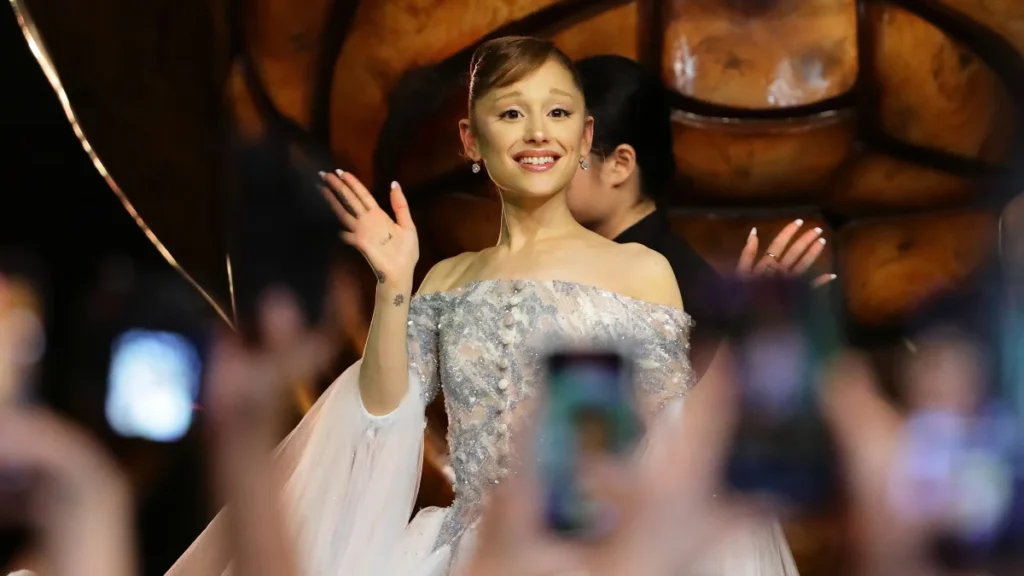
Wen, however, seems unfazed. On social media, he refers to himself as the “Troll Most Hated” and has previously posted videos of similar stunts — including rushing stages at concerts by Katy Perry, The Weeknd and The Chainsmokers, as well as interrupting live sporting events.
Singapore, known for its strict public conduct laws, acted swiftly — something legal analysts say is consistent with the country’s public safety policies.
For fans worldwide, the situation serves as another reminder that celebrity interactions — even those meant as jokes — can cross boundaries, trigger trauma, and lead to real consequences.
As excitement builds for Wicked: For Good, starring Grande and Erivo, many hope the conversation shifts back to the film — not the frightening red-carpet moment that briefly overshadowed it.










Entertainment
Hollywood’s Strangest New Trend? Fans Say KJ Apa Kevin James and Timothée Chalamet Are Secretly Living Double Lives Online…
From TikTok teachers to viral rappers, a wave of alleged celebrity alter egos has the internet asking: is this creative freedom or a sign of something deeper?

Hollywood stars have always loved reinvention. New accents, new bodies, new personas for every role. But now, a growing number of fans believe some actors are taking that transformation off-screen — and straight onto social media.
Across TikTok, whispers are growing louder: are famous actors secretly running viral accounts under fake names, pretending to be everyday people? The theories may sound absurd at first, but once you fall down the rabbit hole, it’s hard to look away.
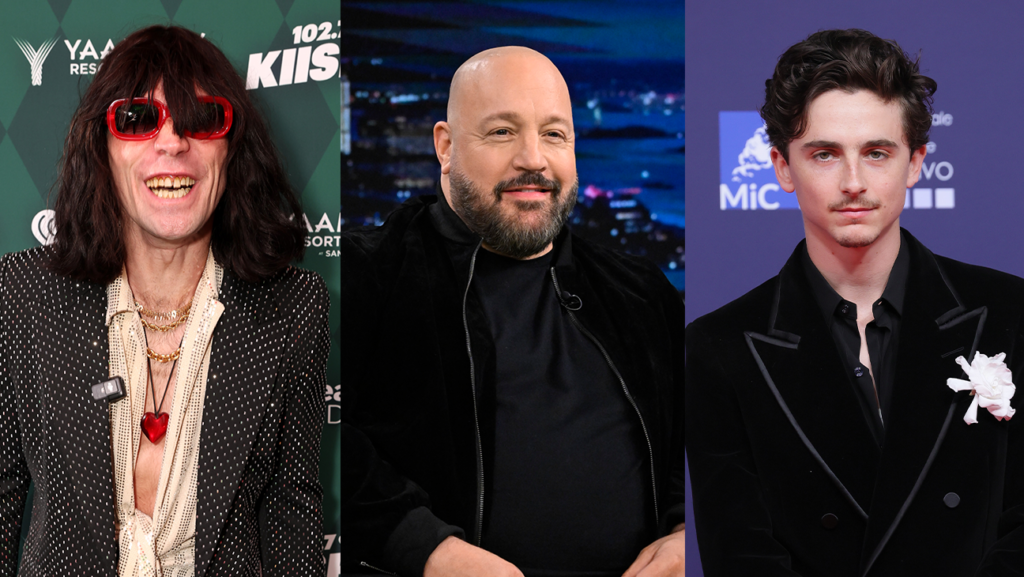
Fans are convinced that stars like KJ Apa, Kevin James, and Timothée Chalamet are behind some of the platform’s most bizarre and beloved online personas — including Mr. Fantasy, Mr. Taylor, and rapper EsDeeKid.
Is this just internet imagination at work, or has Hollywood found a new playground?
Let’s start with the most oddly wholesome case.
One of TikTok’s most recognizable faces right now is Mr. Taylor, an elementary school art teacher who greets his audience with the same line every time:
“Hey guys! Mr. Taylor here.”
ALSO READ : Younghoe Koo Explains Botched Field Goal After Slip: “The Ball Was Moving So I Pulled Up”
With over 800,000 followers, the account features motivational pep talks, gentle life advice, and surprisingly impressive artwork. On the surface, it’s harmless and calming — exactly the kind of content people crave during uncertain times.
But fans can’t stop pointing out the similarities between Mr. Taylor and Kevin James — best known for Paul Blart: Mall Cop and The King of Queens. The facial expressions. The voice. The timing. The comedic warmth.
Some commenters joke that this is “Paul Blart after early retirement.” Others insist it’s James experimenting with a quieter, more sincere persona far removed from Hollywood expectations.
Kevin James himself hasn’t confirmed or denied anything — which, of course, only fuels the speculation.
Then there’s EsDeeKid, a low-fi rapper whose laid-back delivery and chaotic energy have caught the attention of Gen Z users. Fans swear the cadence, humor, and facial structure match none other than Timothée Chalamet, the Oscar-nominated star of Dune and Call Me by Your Name.
Chalamet, known for his unpredictable red carpet moments and internet-savvy charm, has long been considered “chronically online adjacent.” To his fans, the idea that he’d secretly experiment with a rap alter ego feels… plausible.
And finally, Mr. Fantasy — a mysterious persona many believe is tied to KJ Apa, the Riverdale actor who has quietly stepped back from the nonstop spotlight in recent years. The theory suggests Mr. Fantasy allows Apa to create without the baggage of fandom expectations or studio pressure.
So why now?
Some argue this trend is a creative rebellion — actors escaping brand deals, box office pressure, and constant scrutiny by starting fresh as nobodies online. Others wonder if it’s a subtle response to a slowing entertainment industry, where traditional stardom no longer guarantees relevance.
There’s also something deeply human at play.
Social media offers anonymity, immediacy, and control — three things celebrities rarely have. Creating an alter ego means freedom. No press tours. No critics. No legacy to protect.
As platforms like TikTok blur the line between celebrity and everyday life, these alleged secret accounts reflect a larger cultural shift: fame is no longer about being known by everyone — it’s about being believed by someone.
Whether these theories are true or just another example of the internet entertaining itself, one thing is clear: audiences are fascinated by the idea that their favorite stars might be hiding in plain sight.
And maybe that’s the real fantasy — not that Hollywood has gone insane, but that even the most famous people still want to log on and pretend to be normal.
Entertainment
Ryan Coogler Explains Why He Turned Down the Academy Invite… “Judging Movies Is Stressful for Me”
The Sinners director says his decision wasn’t about anger or politics — it was about avoiding comparison culture in an industry he deeply loves

In an industry obsessed with awards, rankings, and “best of” lists, Ryan Coogler has quietly taken a different path — and he’s finally explaining why.
The acclaimed filmmaker recently clarified that his decision to decline an invitation to join the Academy of Motion Picture Arts and Sciences in 2016 was “not out of animosity,” but rooted in something far more personal: discomfort with judging other people’s work.
“It’s not out of animosity,” Coogler told The New York Times. “And I’m not good at judging things, bro. The act of ‘Hey, pick the best thing’ is very stressful for me, even when there’s no stakes involved.”
At a time when Academy membership is seen as both an honor and a gateway to industry influence, Coogler’s choice stood out — especially given his rapid rise following Fruitvale Station, Creed, and later Black Panther. But according to the director, the glitz and prestige were never the point.
ALSO READ : Younghoe Koo Explains Botched Field Goal After Slip: “The Ball Was Moving So I Pulled Up”
Coogler explained that what draws him to filmmaking isn’t the tuxedos, red carpets, or awards-season politics, but the labor behind the scenes — the crews, craftspeople, and long hours that actually bring stories to life.
“People see the tuxedo, they see the red carpet,” he said, “but it’s real blue-collar folks making these movies happen.”
This perspective isn’t new for Coogler. In a 2021 conversation with The Hollywood Reporter, he expressed similar discomfort with the idea of pitting films against one another, saying he doesn’t subscribe to the mindset of comparison.
“I don’t buy into this versus that, or ‘this movie wasn’t good enough to make this list,’” Coogler said at the time. “I love movies. … For me, that’s good enough.”
Rather than aligning himself with voting bodies or prestige-driven institutions, Coogler has said that if he’s going to participate in organizations, they should be ones that directly support workers.
“If I’m going to be a part of organizations, they’re going to be labor unions,” he explained, emphasizing priorities like family stability, healthcare, and collective well-being over exposure or accolades.

Ironically, this philosophy hasn’t kept him out of awards conversations.
Coogler’s latest film, Sinners, is already being positioned as a major force heading into the 2026 Academy Awards. According to Scott Feinberg, executive editor of awards at The Hollywood Reporter, the film is projected to be a heavyweight contender across multiple categories.
Industry forecasts suggest Sinners could earn Coogler his first-ever Best Director nomination, alongside potential nods for Best Picture, Best Original Screenplay, and Best Actor for Michael B. Jordan, a longtime collaborator whose performances have been central to Coogler’s career.
The contrast is striking: a director who avoids judging others’ films may soon find his own work under the Academy’s brightest spotlight.
Yet Coogler seems at peace with that contradiction. His stance isn’t anti-awards — it’s anti-reduction. He resists the idea that art needs to be ranked to be valued, or that love for cinema must come with a ballot.
In an era when awards often dominate creative conversations, Coogler’s refusal to play judge feels quietly radical — a reminder that for some filmmakers, the work itself is the only metric that matters.
Entertainment
USC Scripter Awards Shake Up the Race: ‘Peter Hujar’s Day’ Stuns as Nominee, ‘Slow Horses’ Makes It Four in a Row…
From surprise film contenders to historic TV milestones, the 38th USC Scripter Awards spotlight the year’s most compelling adaptations

The awards season loves its front-runners. But every year, it also leaves room for surprises—and this time, the USC Scripter Awards delivered one that few saw coming.
On Monday, USC Libraries announced the nominees for the 38th annual USC Scripter Awards, honoring the finest screen adaptations from literary works. While expected heavyweights made the list, the nomination of Peter Hujar’s Day instantly became the most talked-about moment, emerging as an unlikely contender in the film adaptation category.
At the same time, Apple TV+’s acclaimed series Slow Horses secured its fourth consecutive nomination for best TV adaptation—an achievement that quietly places the show among the most consistently recognized literary adaptations on television.
What the Scripter Awards celebrate
Unlike most Hollywood honors, the Scripter Awards uniquely recognize both the screenwriters and the original authors whose works inspired the adaptations. This year’s nominees were selected from a competitive field of 43 film adaptations and 64 television adaptations.
Winners will be revealed at a black-tie ceremony on Sunday, February 22, 2026, held in the Town & Gown ballroom on the University of Southern California campus.
ALSO READ : Amy Schumer and Chris Fischer Split After 7 Years of Marriage — Inside Their ‘Cohesive’ and Amicable Divorce
The jury is chaired by Howard Rodman, vice president of the Academy of Motion Picture Arts and Sciences, and includes an eclectic mix of critics, authors, screenwriters, producers, and academics—among them Leonard Maltin, Justin Chang, Eric Roth, Janet Fitch, and Jonathan Lethem.
Film adaptation nominees: prestige meets surprise
This year’s film adaptation finalists reflect a blend of prestige filmmaking and bold literary choices:
- Guillermo del Toro for Netflix’s Frankenstein, based on Mary Shelley’s Frankenstein; or, the Modern Prometheus
- Chloé Zhao and Maggie O’Farrell for Hamnet, adapted from O’Farrell’s novel
- Paul Thomas Anderson for Warner Bros.’ One Battle After Another, based on Thomas Pynchon’s Vineland
- Ira Sachs for Peter Hujar’s Day, adapted from Linda Rosenkrantz’s book
- Clint Bentley and Greg Kwedar for Netflix’s Train Dreams, based on Denis Johnson’s novella
Among these, Peter Hujar’s Day stands out. With a relatively modest awards-season footprint—aside from multiple Independent Spirit Awards nominations—the film surpassed far higher-profile contenders. Its inclusion signals the jury’s willingness to reward nuanced writing over sheer industry momentum.
Familiar faces with unfinished business
Several nominees arrive with Scripter history behind them. Zhao previously won the award for Nomadland in 2020. Bentley and Kwedar were nominated last year for Sing Sing. Del Toro earned earlier recognition for Guillermo del Toro’s Pinocchio, the first animated nominee in Scripter history.
And then there’s Anderson, returning to Pynchon territory after earlier nominations for There Will Be Blood and Inherent Vice. For awards watchers, his latest nod reinforces his reputation as one of cinema’s most literary filmmakers.

TV adaptation race: history in the making?
On the television side, nominees include episodes from Dark Winds, Death by Lightning, Dept. Q, Slow Horses, and Wolf Hall: The Mirror and the Light.
Particular attention has turned toward Peter Straughan, who won best film adaptation at the most recent Scripter Awards for Conclave. This year, he’s nominated for best TV adaptation for Wolf Hall: The Mirror and the Light—giving him a chance to become the first person ever to win Scripter honors in both film and television categories.
Meanwhile, Slow Horses’ fourth straight nomination underscores its rare consistency, proving that long-form literary adaptations can sustain both critical quality and audience engagement season after season.
Why these nominations matter
The Scripter Awards often function as a quiet predictor of broader industry respect, especially among writers and filmmakers who value storytelling above spectacle. By elevating both mainstream and unexpected works, this year’s lineup sends a clear message: adaptation is not about scale—it’s about interpretation.
As February approaches, the question is no longer just who will win, but what these choices say about where storytelling is headed. And if Peter Hujar’s Day’s surprise nomination is any indication, subtle, literary films may still have the loudest voice in the room.

This Film Will Make You Uncomfortable And That’s Exactly Why America Needs to See Torn

Hollywood’s Strangest New Trend? Fans Say KJ Apa Kevin James and Timothée Chalamet Are Secretly Living Double Lives Online…

Ryan Coogler Explains Why He Turned Down the Academy Invite… “Judging Movies Is Stressful for Me”

USC Scripter Awards Shake Up the Race: ‘Peter Hujar’s Day’ Stuns as Nominee, ‘Slow Horses’ Makes It Four in a Row…

Hollywood Stunned by Rob Reiner and Michele Singer Deaths: “Legend Isn’t a Big Enough Word…”

1-Iran Issues Dire Warning to Israel and Defies Trump on Nukes: “We’re Ready to Strike Deep Inside”

Donald Trump’s net worth reveals the fortune behind the former US President and business mogul

Caitlin Clark Sidelined with Quad Strain, Set to Miss Two Weeks of WNBA Action

Elon Musk Breaks Ranks with Trump Over ‘Big, Beautiful’ Tax Bill

Golden Glory: Team USA Wins First Standalone Ice Hockey World Championship in 91 Years

Miss Jamaica Suffers Terrifying Fall Off Miss Universe Stage; Rushed to Hospital on Stretcher in Viral Video

Moana Live-Action Teaser Sparks Outrage as Fans Call Disney’s Move a ‘Clear Money Grab’ — What Went Wrong?

Ryan Gosling’s Project Hail Mary Trailer Stuns Fans with a Mysterious Alien Ally and a Mission That Could Save Earth

Apple delays Jessica Chastain thriller The Savant about domestic extremism after recent US violence

Avatar 3, Fire and Ash trailer reveals Jake Sully’s family facing terrifying new Na’vi enemies with deadly fire powers
-

 US News1 week ago
“She Never Made It Out…” Albany House Fire Claims Woman’s Life as Family Pleads for Help to Bring Her Home
-

 Entertainment1 week ago
XG Star Cocona Shares a Brave Truth at 20 — “I Was Born Female, But That Label Never Represented Who I Truly Am…”
-
 Entertainment1 week ago
Samba Schutte Reveals the Surprise Cameo in Pluribus That “Nobody Saw Coming”… and Why John Cena Was Perfect for the Role
-

 Tech1 week ago
After Losing Over $70 Billion, Mark Zuckerberg Finally Admits His Biggest Bet Is “Not Working” – Meta Plans Massive Cuts to Metaverse Budget
-

 Politics6 days ago
“If I Can’t Beat Jimmy Kimmel, I Shouldn’t Be President…” Trump Drops Bold Claim Ahead of Hosting Kennedy Center Honors
-
 Entertainment1 week ago
Nika & Madison stuns global audiences as director Eva Thomas reveals why “resilience, not fear, drives Indigenous women on the run”
-

 Entertainment6 days ago
Judi Dench breaks silence on Harvey Weinstein and Kevin Spacey “I imagine he’s done his time…” — Hollywood stunned by her unexpected stand
-

 Entertainment1 week ago
Mandy Moore Signs On for a Bold New Peacock Erotic Thriller — “A Twisted Game Where the Student Becomes the Teacher…”