
World News
Lindsay Clancy Trial: Could Postpartum Psychosis Lead to an Insanity Verdict? ‘This Case Is About This Defendant’
The Massachusetts murder trial has placed postpartum psychosis, criminal responsibility and the limits of the mental health system at the centre of a deeply emotional courtroom battle.

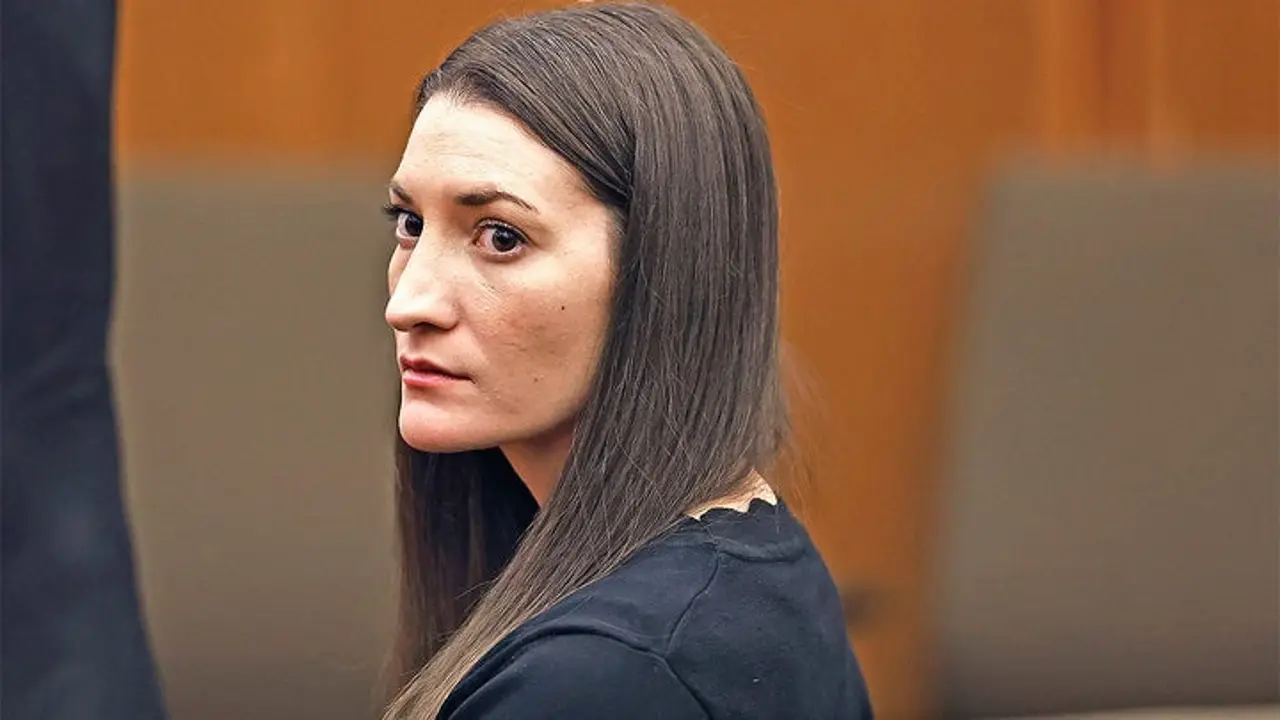
The trial of Lindsay Clancy has brought one of the most difficult questions in criminal law into sharp focus: when a person suffering from a severe mental illness commits a violent act, how should the justice system determine whether they are criminally responsible?
The case has drawn intense attention because both sides agree on the basic facts surrounding the deaths of Clancy’s three children. The dispute is over what was happening inside her mind at the time—and whether her mental state means she should be held legally responsible.
Clancy’s defence argues that she was suffering from postpartum psychosis, a rare and serious psychiatric condition that can develop after childbirth. Prosecutors, however, contend that she acted intentionally and remains criminally responsible for her actions.
The trial is therefore expected to centre heavily on psychiatric evidence, the events leading up to the killings and the question of whether Clancy understood the nature and consequences of what she was doing.

A family tragedy at the heart of the trial
According to testimony presented in court, Clancy’s mental health deteriorated significantly after the birth of her third child.
Her former husband, Patrick Clancy, testified that she began experiencing intrusive thoughts about harming her children and thoughts of suicide. He described the situation as confusing because her behaviour could appear normal one moment and deeply troubling the next.
Patrick told jurors that he never saw his wife physically harm the children before the killings.
The testimony also described a lengthy effort to obtain psychiatric care. Clancy reportedly sought treatment from specialists, was prescribed several medications and eventually spent time in a psychiatric hospital.
Her defence maintains that these interventions failed to prevent her condition from worsening.
Nineteen days after leaving the hospital, Clancy killed her three children at the family’s Massachusetts home, according to the prosecution’s case.
She then attempted to take her own life by jumping from a second-storey window. She survived but remains paralysed from the waist down.
Defence says postpartum psychosis changed everything
Clancy’s attorney Kevin Reddington has argued that his client was suffering from postpartum psychosis and bipolar disorder.
The defence has also claimed that certain medications prescribed after the birth of her third child may have aggravated her mental condition.
According to the defence, Clancy experienced hallucinations and heard voices instructing her to kill her children before taking her own life.
Reddington told jurors that Clancy loved her children and that her actions must be understood in the context of a severe psychiatric illness.
The defence’s central argument is not that the children were not killed. Rather, it is that Clancy’s mental state meant she should not be considered criminally responsible for their deaths.
Prosecutors strongly reject the insanity argument
The prosecution has offered a sharply different interpretation.
Prosecutor Shanan Buckingham argued that Clancy acted deliberately and with full criminal responsibility.
Buckingham told the jury that this was not a case involving a woman actively experiencing psychosis but instead a case about the actions of the defendant herself.
The prosecution’s position will be crucial as jurors consider whether Clancy’s mental illness reached the legal threshold required for a verdict of not guilty by reason of insanity.
If convicted of murder, Clancy could face life imprisonment without parole. If she is found not guilty because she lacked criminal responsibility due to mental illness, she would instead be committed to a state mental health facility.
The emotional testimony of a grieving father
Patrick Clancy’s testimony has provided jurors with a deeply personal account of the family’s final days together.
The children—Cora, 5, Dawson, 3, and eight-month-old Callan—were described through their personalities and interests.
Cora loved princesses. Dawson was fascinated by fire trucks and Paw Patrol. Callan, still a baby, was remembered by his father as a happy child.
Patrick told the court that the family attempted to return to normal life after Lindsay’s discharge from psychiatric care.
They celebrated Cora’s birthday and visited attractions together. Jurors were also shown video of Lindsay playing with the children.
Patrick said he believed her condition had improved.
On the day of the killings, he described Clancy as appearing to be in a particularly good mood. She took Cora to a medical appointment while he stayed home with the younger children.
The couple exchanged photographs of their children during the day. Later, Clancy reportedly spent time with the children, including building a snowman and working on art projects.
Then Patrick left the house to run errands.
What happened afterward became the central tragedy at the heart of the trial.
What is postpartum psychosis?
Postpartum psychosis is an uncommon but extremely serious psychiatric condition that can occur following childbirth.
Unlike the much more common postpartum depression, postpartum psychosis can involve hallucinations, delusions, paranoia and a severe break from reality.
Medical experts cited in the case have said it affects an estimated one to two women per 1,000 births.
Importantly, the overwhelming majority of women experiencing postpartum psychosis do not harm themselves or their children.
However, experts say that in severe cases, a person may develop beliefs that are completely disconnected from reality.
Dr. Nicole Cirino of Baylor College of Medicine has explained that some women experiencing postpartum psychosis may genuinely believe they are protecting or saving their children.
That medical perspective could become highly relevant as jurors examine the defence’s argument.
The case of Andrea Yates
One of the most widely known cases involving postpartum psychosis is that of Andrea Yates, who killed her five children in Texas in 2001.
Yates’ lawyers argued that she suffered from postpartum psychosis and believed that killing her children would save them from eternal punishment.
Her original murder conviction was later overturned. During a subsequent trial, she was found not guilty by reason of insanity and committed to a state mental health facility.
The case became a landmark in discussions surrounding maternal mental health and the criminal justice system.
The Clancy trial has inevitably drawn comparisons with Yates, although the legal circumstances and evidence in the two cases are not identical.
A wider conversation about maternal mental health
Beyond the courtroom, the case has renewed discussion about how society recognises and treats severe mental health conditions following childbirth.
Mental health advocates have argued that postpartum psychosis remains poorly understood and that early diagnosis and intervention can be critical.
The case also raises difficult questions about the relationship between medical treatment and criminal law.
At what point does a serious mental illness affect a person’s ability to understand reality? And when does that condition meet the legal standard for a finding of insanity?
Those questions will ultimately be for the jury to consider based on the evidence presented during the trial.
For the families involved, however, the legal arguments cannot erase the enormous human tragedy.
As the courtroom proceedings continue, the Lindsay Clancy case is likely to remain a closely watched examination of mental illness, criminal responsibility and the devastating consequences that can occur when severe psychiatric disorders go untreated or inadequately managed.


World News
ICE Arrests Southwest Airlines Flight Attendant at Work Over Alleged Visa Overstay: ‘He Was Building a Stable Life’
Jamaican national Lorenzo Thompson was arrested in Nashville after U.S. immigration authorities alleged that he remained in the country after his visa expired in 2021. His supporters say he was working toward citizenship and had a pending asylum case.

A Southwest Airlines flight attendant has been arrested by U.S. immigration authorities while reportedly on duty, sparking concern among his supporters and drawing attention to the increasingly strict immigration enforcement in the United States.
Lorenzo Thompson, a Jamaican citizen, was arrested on July 14 in Nashville, Tennessee, according to reports. U.S. Immigration and Customs Enforcement (ICE) said Thompson entered the United States in April 2021 on a visa that expired several months later.
According to the agency, Thompson did not leave the country after his visa expired and remained in the United States.
An ICE spokesperson said Thompson would remain in custody while his immigration proceedings continue. The agency has described the case as an immigration violation involving an alleged visa overstay.
The arrest has drawn a response from the flight attendant’s union and immigration advocates, who have offered a different perspective on Thompson’s circumstances.
ICE says Thompson overstayed his visa
According to U.S. Immigration and Customs Enforcement (ICE), Thompson entered the country on April 17, 2021. His visa was reportedly valid until October 16 of the same year.
Officials allege that he remained in the United States after the visa expired and failed to depart.
ICE has also promoted a voluntary self-deportation programme that offers eligible undocumented immigrants financial assistance and transportation to leave the United States.
The agency has urged people who are in the country illegally to use the programme rather than face arrest and deportation proceedings.

Flight attendants’ union responds to arrest
The arrest has also attracted attention from TWU Local 556, the union representing Southwest Airlines flight attendants.
In a statement shared on social media, the union said that every member deserves to be treated with dignity and respect. It also expressed support for Thompson and his family during what it described as a difficult period.
The union’s response highlights the uncertainty surrounding the case as Thompson’s immigration proceedings move forward.
Supporters say he was seeking citizenship
Meanwhile, the Labor Council for Latin American Advancement (LCLAA) said Thompson had been working toward obtaining U.S. citizenship.
The organisation described him as a dedicated flight attendant who had positively impacted many people through his work.
An online crowdfunding campaign has also been launched to help cover Thompson’s legal expenses. According to the campaign, Thompson came to the United States from Jamaica while seeking safety from what supporters described as life-threatening abuse.
The campaign further claims that he has no criminal record and was pursuing a legal pathway toward remaining in the country. It also states that he has a pending asylum case.
These claims, however, represent the position of Thompson’s supporters and have not been independently verified in the information available about the case.
What happens next?
Thompson is expected to remain in ICE custody while his immigration proceedings continue. The outcome of those proceedings could determine whether he remains in the United States or is ordered to leave the country.
The case comes amid a broader debate over immigration enforcement in the United States, where federal authorities have increased scrutiny of individuals who violate immigration laws.
For now, the situation remains unresolved. ICE maintains that Thompson overstayed his visa and failed to depart, while his supporters argue that he was attempting to build a life in the United States and pursue a legal route toward citizenship.
As the legal process unfolds, the case is likely to draw further attention from immigration advocates, labour organisations and the wider public.
World News
Trump Faces a Fresh Legal Setback as Judge Orders Financial Details in $10 Billion BBC Lawsuit: ‘A Window Into His Business Empire…’
A US magistrate judge has ruled that Donald Trump must provide detailed financial information as his massive defamation lawsuit against the BBC moves deeper into the discovery process. The decision could expose details about the business interests tied to his family trust.

Donald Trump is facing a potentially uncomfortable disclosure battle in his $10 billion legal fight against the BBC, after a US federal magistrate judge ruled that financial information linked to his businesses can be sought as part of the case.
The decision could give the broadcaster an unusual look into the finances and business interests connected to Trump’s family trust — an outcome that could become one of the most closely watched aspects of the lawsuit.
The ruling came during a discovery hearing and represents a significant development in a case that began with a dispute over how a 2024 BBC documentary presented footage from Trump’s speech on January 6, 2021.
Why Is Trump Being Asked to Reveal Financial Records?
At the heart of the dispute is the question of whether the documentary caused financial or reputational damage to Trump.
Trump’s lawsuit argues that the BBC’s editing of his speech harmed him and his business interests. According to earlier court filings, his legal team claimed the broadcaster’s actions caused “direct harm” to the value of his brand, properties and businesses.
That argument has now become a key point in the discovery battle.
The BBC can argue that if Trump claims his businesses suffered because of the documentary, then financial records may be relevant to determining whether that damage actually occurred.
The broadcaster is reportedly seeking information that could help establish whether Trump’s wealth and business interests grew rather than declined following the documentary’s broadcast.
The Documentary At the Centre of the $10 Billion Battle
The lawsuit stems from the documentary “Trump, A Second Chance,” which featured footage from Trump’s speech delivered before the January 6 attack on the US Capitol.
The controversy centred on an edited sequence that combined separate portions of Trump’s speech. The resulting clip created the impression that Trump had directly urged his supporters to march toward the Capitol and “fight like hell” in a continuous statement.
The BBC later apologised for the editing, acknowledging that the sequence had created a misleading impression. However, the broadcaster has continued to reject Trump’s legal claims and has argued that the lawsuit lacks a valid legal basis.
Trump’s lawsuit seeks billions of dollars in damages, making it an extraordinary legal confrontation between a sitting US president and one of the world’s best-known public broadcasters.
Trump Team Looks for Another Route
The financial disclosure ruling could create a difficult choice for Trump’s lawyers.
According to reports from the hearing, Trump’s legal team is considering amending the lawsuit to narrow the alleged damage to reputational harm rather than claiming that the documentary damaged his businesses.

That strategy could potentially reduce the relevance of extensive financial records to the case.
For now, however, the BBC is able to pursue financial information connected to Trump’s business interests as part of the discovery process. Trump’s lawyers are expected to challenge the decision.
The development also highlights a broader risk that can emerge when a defamation plaintiff places financial damage at the centre of a legal claim: the plaintiff’s own financial records can become relevant evidence.
BBC Also Gets Access to Trump’s Inner Circle
The financial disclosures are not the only significant development.
The court has also allowed the BBC to subpoena members of Trump’s inner circle as it seeks evidence relating to his thoughts and intentions surrounding the January 6 speech.
Those who could face subpoenas reportedly include Donald Trump Jr., Steve Bannon and Stephen Miller, among other people connected to the president.
The BBC’s goal is to gather evidence that could help it defend itself against Trump’s claims and establish what he intended when he delivered the speech at the centre of the dispute.
A Lawsuit That Could Reveal More Than Expected
The case has now developed into an unusual legal battle with consequences extending far beyond the original documentary controversy.
Trump has frequently used litigation to challenge media organisations and reporting he considers damaging. But lawsuits involving alleged financial harm can also force plaintiffs to open their own records to scrutiny.
That is precisely what makes the latest ruling so significant.
The legal fight is no longer only about what the BBC broadcast. It could also involve questions about Trump’s business performance, the value of his brand and the financial interests held through his business structures.
The BBC has previously argued that the lawsuit should be dismissed, including on questions concerning jurisdiction and whether the documentary was actually broadcast or made available in the United States. The broadcaster has maintained that it will defend the case.
For Trump, the latest ruling creates a new legal challenge: while pursuing a $10 billion claim against the BBC, his own financial empire could become part of the evidence examined in court.
And that could make this already high-profile courtroom battle even more consequential.
The case remains ongoing, and the latest ruling does not represent a final decision on whether Trump will ultimately win or lose his claims against the BBC.
World News
Taco Bell quietly pulls iceberg lettuce after parasite outbreak grows: CDC tracking thousands of Cyclospora cases across the US
A regional outbreak linked to shredded iceberg lettuce supplied by Taylor Farms has prompted Taco Bell to remove the ingredient from affected locations, while health officials continue investigating a wider surge in Cyclospora infections.

A food safety investigation unfolding across the United States has placed Taco Bell at the center of a growing public health concern after shredded iceberg lettuce served at select restaurants was linked to a regional outbreak of cyclosporiasis, an intestinal illness caused by the microscopic parasite Cyclospora cayetanensis.
According to the U.S. Centers for Disease Control and Prevention (CDC), nearly 7,000 Cyclospora cases have either been confirmed or remain under investigation nationwide since May 1. Health officials say confirmed infections are already more than six times higher than those reported during the same period last year, with at least 141 people hospitalized.
The outbreak connected to Taco Bell is believed to be concentrated in the Midwestern United States, where contaminated shredded iceberg lettuce supplied by Taylor Farms has emerged as the leading suspected source.
Hundreds of Cases Across Four States
The CDC has identified at least 400 confirmed illnesses associated with the regional outbreak spanning Michigan, Ohio, West Virginia, and Kentucky. Investigators believe these are the states where the affected Taco Bell restaurants received the contaminated lettuce, although officials have not ruled out the possibility that the produce may have reached additional locations.
Health experts stress that investigations remain active and additional findings could expand the scope of the outbreak.
Michigan Becomes the Epicentre
Among the affected states, Michigan has reported the highest number of illnesses during the ongoing investigation.
The Michigan Department of Health and Human Services has recorded more than 4,300 Cyclospora-related cases while interviewing over 1,000 individuals in an effort to trace the common source of infection.
Officials said lettuce and other salad greens consistently appeared during patient interviews. Although investigators cannot confirm that every reported illness originated from the same exposure, they noted that the unusually sharp rise in infections strongly indicates a single, widespread outbreak.
If confirmed, experts believe this could become the largest Cyclospora outbreak ever documented in the United States.
Taco Bell Removes Lettuce Nationwide
Responding to discussions with public health authorities, Taco Bell announced it has voluntarily removed the potentially affected shredded iceberg lettuce from restaurants in the impacted states.
The fast-food chain also confirmed that the ingredient supplied by the implicated vendor will be indefinitely removed from its nationwide supply chain and replaced with alternative supplies.
The company described the decision as a precautionary measure aimed at protecting customers while the investigation continues.

What Is Cyclospora?
Cyclospora is a microscopic parasite that infects the digestive system after people consume contaminated food or water.
Unlike many foodborne illnesses, cyclosporiasis is not commonly spread from one person to another. Instead, outbreaks are frequently linked to fresh produce such as leafy greens, herbs, berries, and vegetables that are eaten raw.
People infected with Cyclospora may experience symptoms including:
- Watery diarrhea
- Stomach cramps
- Bloating
- Fatigue
- Nausea
- Loss of appetite
Symptoms may persist for several weeks without proper treatment.
Taylor Farms Faces Fresh Scrutiny
The investigation has once again drawn attention to Taylor Farms, one of the largest fresh produce suppliers in the United States.
Although the company has not publicly commented on the latest findings, its products have previously been associated with major food safety investigations, including:
- A 2024 E. coli outbreak linked to slivered onions.
- A 2013 Cyclospora outbreak involving contaminated lettuce.
Authorities have not announced any nationwide food recall, and investigators continue working to determine exactly how widely the affected produce was distributed.
Multiple Investigations Still Underway
Federal and state health agencies say several Cyclospora investigations are currently active across the country. Some involve the large Midwest outbreak, while others relate to isolated state clusters or individual cases that have yet to be connected.
Officials continue tracing supply chains and interviewing patients to determine whether additional restaurants, grocery stores, or distributors may have received contaminated produce.
Consumers who recently ate at Taco Bell restaurants in the affected states and develop persistent gastrointestinal symptoms are advised to seek medical attention promptly.
As investigators gather more evidence, health authorities say further updates are expected in the coming weeks.

Vita Vea Wants Out of Tampa Bay: Two-Time Pro Bowl Star Requests Buccaneers Trade After Contract Talks Stall

Marlins End 12-Game Nightmare in Stunning Fashion: ‘Playoff-Type’ Comeback Stuns Phillies After Wheeler and Duran Fall

‘Go Ball, Please!’ Ceddanne Rafaela’s First Career Grand Slam Powers Red Sox to 10th Straight Road Win

Lindsay Clancy Trial: Could Postpartum Psychosis Lead to an Insanity Verdict? ‘This Case Is About This Defendant’

Chelsea Begin Xabi Alonso Era in Style: Joao Pedro Hat-Trick Powers Blues Past Western Sydney Wanderers

1-Iran Issues Dire Warning to Israel and Defies Trump on Nukes: “We’re Ready to Strike Deep Inside”

Donald Trump’s net worth reveals the fortune behind the former US President and business mogul

Sen. Elizabeth Warren Calls It a ‘Cesspool of Corruption’ — Here’s Why Senators Are Now Fighting Back Against the DOJ’s Live Nation Deal That Left Every Fan Betrayed…

“She Never Made It Out…” Albany House Fire Claims Woman’s Life as Family Pleads for Help to Bring Her Home

“Tomás Rodríguez Net Worth 2025: Panama’s Gold Cup Goal‑Machine’s Surprising Fortune Revealed”

Miss Jamaica Suffers Terrifying Fall Off Miss Universe Stage; Rushed to Hospital on Stretcher in Viral Video

Moana Live-Action Teaser Sparks Outrage as Fans Call Disney’s Move a ‘Clear Money Grab’ — What Went Wrong?

Ryan Gosling’s Project Hail Mary Trailer Stuns Fans with a Mysterious Alien Ally and a Mission That Could Save Earth

Apple delays Jessica Chastain thriller The Savant about domestic extremism after recent US violence

Avatar 3, Fire and Ash trailer reveals Jake Sully’s family facing terrifying new Na’vi enemies with deadly fire powers
-

 Sports1 week ago
India Spotted Him Before the World Did: How Ferran Torres’ Journey From Mumbai to World Cup Glory Came Full Circle…
-

 Sports1 week ago
Lionel Messi’s Last Dance? 2026 World Cup Final Could Rewrite Football History With These Records…
-

 Sports1 week ago
Where Is Lionel Messi? Argentina Return Home After FIFA World Cup Heartbreak, But Captain’s Absence Sparks Questions
-

 Sports1 week ago
Spain Won the FIFA World Cup 2026 But the Biggest Story Wasn’t on the Pitch… Here’s What Football Lost Along the Way
-

 Entertainment1 week ago
Washington, D.C. Cracks Down on Ticket Scalpers… New Law Could Change How Fans Buy Concert and Sports Tickets
-

 Entertainment1 week ago
Will This End Sky-High Concert Ticket Prices? Massachusetts Introduces Noah Kahan-Backed Anti-Scalping Legislation
-

 Sports1 week ago
Argentina Under Fire After World Cup Final: Why Did Lionel Messi and Teammates Walk Away During Spain’s Trophy Celebration?
-

 Entertainment1 week ago
Lorde Criticizes Spotify’s AI Features, Questions the Future of Music Interpretation