
Weather
Alaska Summer Surprises Storms Heat and Wild Weather Ahead
From rare Juneau storms to historic Fairbanks heat, Alaska’s next 5 days pack unexpected weather.


 Today Today | 80°54° | Increasing cloudiness with a thunderstorm in spots this afternoon |
| Wednesday | 68°52° | Mostly cloudy and not as warm; a thunderstorm in spots in the afternoon |
 Thursday Thursday | 73°54° | Times of clouds and sun with a stray thunderstorm |
| Friday | 80°56° | Mostly cloudy |
| Saturday | 78°57° | Pleasant with clouds and sunshine |
| Sunday | 78°55° | Pleasant with times of sun and clouds |
 Monday Monday | 73°54° | Morning showers; otherwise, cloudy |
Alaskans, buckle up—your summer forecast is anything but typical. Over the next five days, varied weather patterns will sweep across the state from Juneau to Fairbanks and Anchorage. Expect sudden thunderstorms, your first-ever heat advisory, and the usual Alaskan sunshine swings.
It all starts with Monday’s shock: a rare severe thunderstorm in Juneau, complete with 60 mph wind gusts, penny-sized hail, and the city’s first-ever severe thunderstorm warning. This isn’t summer drizzle—meteorologists say it’s fueled by low pressure riding over mountains, and satellite-tracked lightning, not radar, caught the event. That tells you just how unpredictable—and potent—Alaska’s weather can get.
In the Interior, Fairbanks is set to hit the mid‑80s, prompting Alaska’s first-ever heat advisory for June—a territory historically unprepared for heat above 85°F. While not record-breaking, this alerts locals to stay vigilant: few homes have A/C, and heatwaves link to health risks including cardiovascular stress.
The advisory emphasizes that “heat is the deadliest form of extreme weather,” and infrastructures here are built for cold, not summer surges.
Meanwhile, Anchorage and Southcentral will see more classic Alaskan weather: highs in the 60s, scattered showers, and lingering haze from interior wildfires. Expect cloud cover, early-evening haze, and the chance for brief afternoon sun helping skies clear—until the next round of sprinkles rolls through.
Looking ahead through next week, temps remain pleasant to warm (70s Interior, 60s coastal) with scattered storms inland and lighter showers toward the coast. This seasonal pattern—sunshine-then-downpour—reflects Alaska’s rugged geography and proximity to Pacific moisture.


Weather
Storms, Flash Floods and Hail Batter UAE as Rare Intense Weather System Hits — Roads Turn Into Rivers, Bus Services Suspended
Dubai, Sharjah, Abu Dhabi and Ajman All Affected as Over 90mm of Rain Falls Within Hours — Authorities Issue Safety Guidelines Amid Regional Tensions
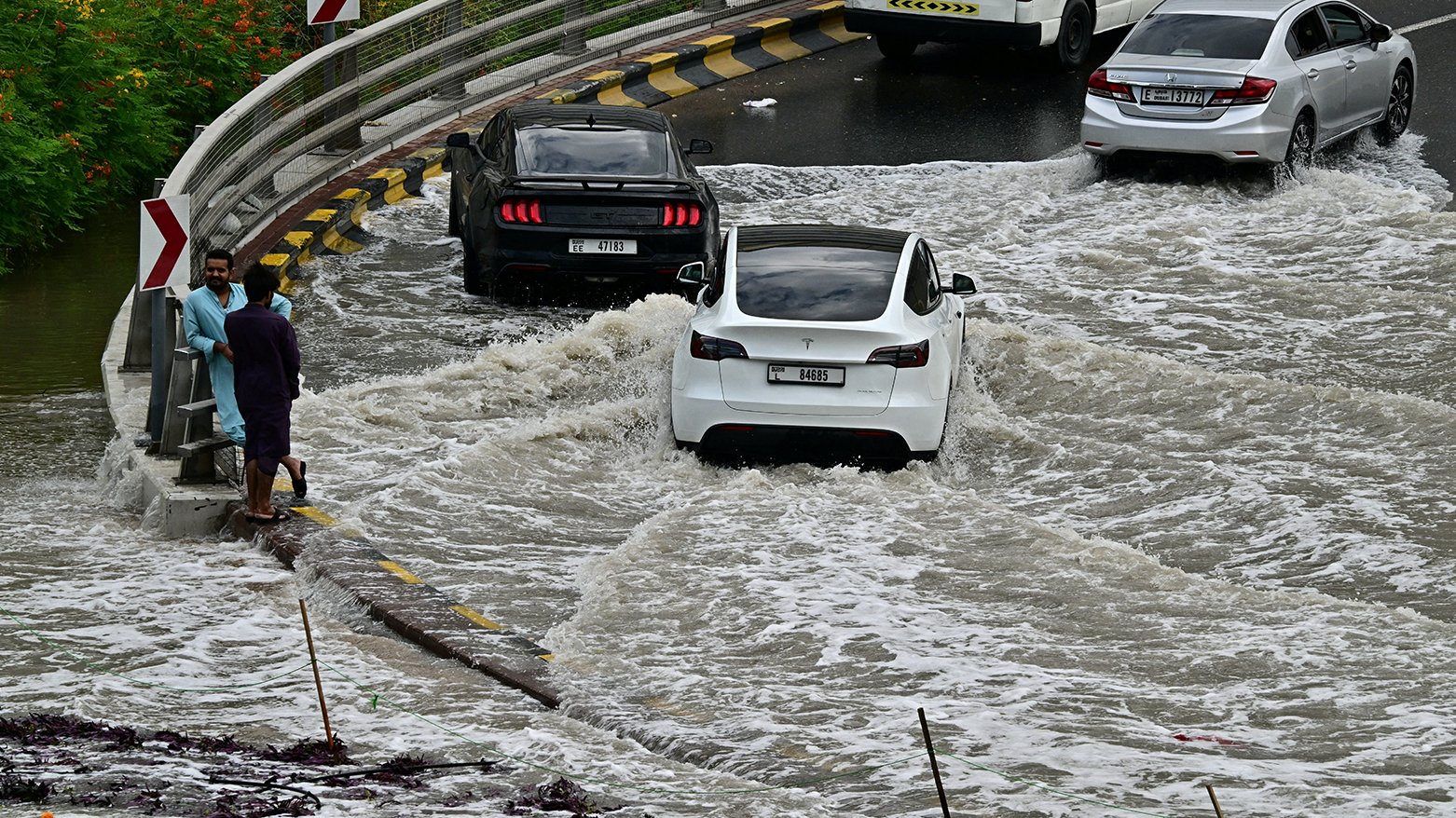
The United Arab Emirates is battling an extraordinary weather crisis. Heavy rain, thunderstorms, hailstorms and flash floods have swept across the country, submerging roads, disrupting transport and forcing authorities to issue urgent public safety advisories. The severe weather comes at an already tense moment for the region, as the ongoing West Asia conflict continues to cast a shadow over Gulf nations.
What Hit the UAE?
Social media accounts shared visuals of what was described as a “rare, intense storm” that brought with it showers, hail and flash floods — with more than 90 millimetres of rain falling within just a few hours in some areas. Roads in multiple emirates were transformed into rivers, severely disrupting traffic and daily life. Hindustan Times was unable to independently verify the authenticity of all circulating visuals at the time of reporting.
The Dubai Media Office confirmed that the country would continue to experience unstable weather conditions, with rainfall of varying intensity accompanied at times by lightning and thunder. Strong winds were also expected to raise dust and sand, significantly reducing visibility across the region. Sea conditions were described as light to moderate in both the Arabian Gulf and the Sea of Oman.
City by City — The Damage
Dubai issued comprehensive safety guidelines urging residents to stay away from valleys, flood-prone areas and places where rainwater tends to accumulate. Authorities also warned against visiting mountainous areas or venturing out to sea.
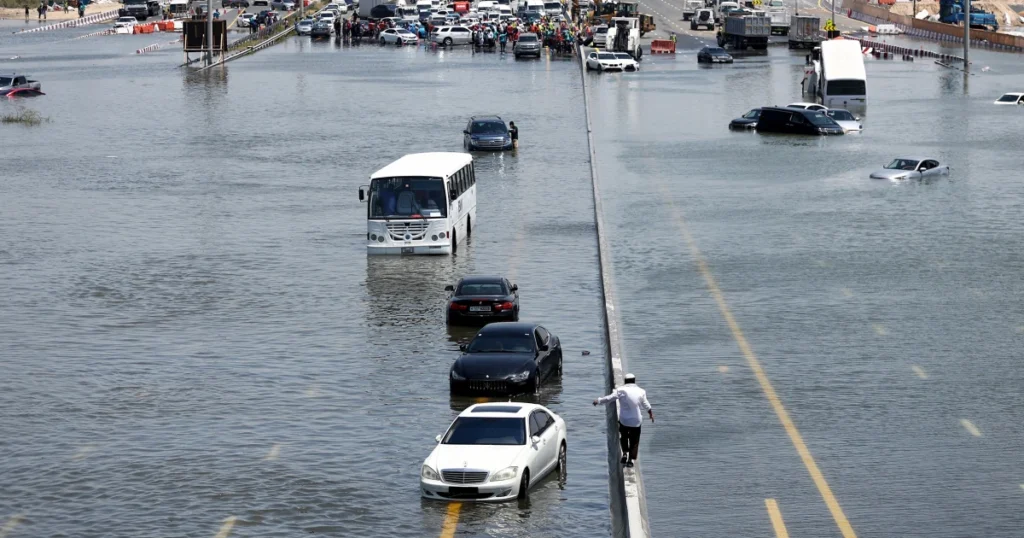
Sharjah saw roads submerged under floodwaters, prompting advisories urging residents to remain indoors until conditions improved.
In Abu Dhabi, police reduced speed limits on key roads as a precautionary safety measure.
Municipal teams in Ajman were deployed around the clock to manage the rapidly developing situation on the ground.
Ras Al Khaimah took the additional step of announcing remote work for government employees on March 27 due to the severity of the weather.
Transport Disrupted Across Emirates
The storm’s impact on public transport was significant. Bus services connecting Dubai, Sharjah and Ajman were temporarily suspended, while road closures were reported in several areas across the country, according to Khaleej Times. Gulf News also reported on the widespread disruption caused by road submersion in Sharjah.
Official Safety Guidelines
Authorities in Dubai issued the following guidelines for residents navigating the dangerous conditions — stay away from valleys, flood-prone areas and locations where rainwater may accumulate; avoid mountainous areas; do not go to sea; exercise caution while driving and reduce speed; follow official government channels for accurate and timely updates; and contact emergency services whenever needed.
How Long Will It Last?
According to the UAE’s National Centre of Meteorology, the unstable weather system was expected to continue affecting the country at least until Friday night, with further rainfall likely in some areas.
Storm Arrives Amid Regional Tensions
The timing of this weather crisis adds another layer of complexity to an already difficult situation. The UAE sits in a region where geopolitical tensions are running at their highest levels in years, with the West Asia conflict affecting Gulf nations economically and strategically. For residents and authorities alike, managing a severe domestic weather emergency while navigating an uncertain regional environment is no small challenge.
Dainik Diary will continue to monitor the situation in the UAE as conditions develop.
Weather
Weather Alert: First Snowfall of the Season Slows DC Commute, Triggers Widespread School Closures and Delays
Up to 3 inches of snow fell across the D.C. region Friday morning, causing hazardous roads, multiple crashes, and significant disruptions for schools and commuters.
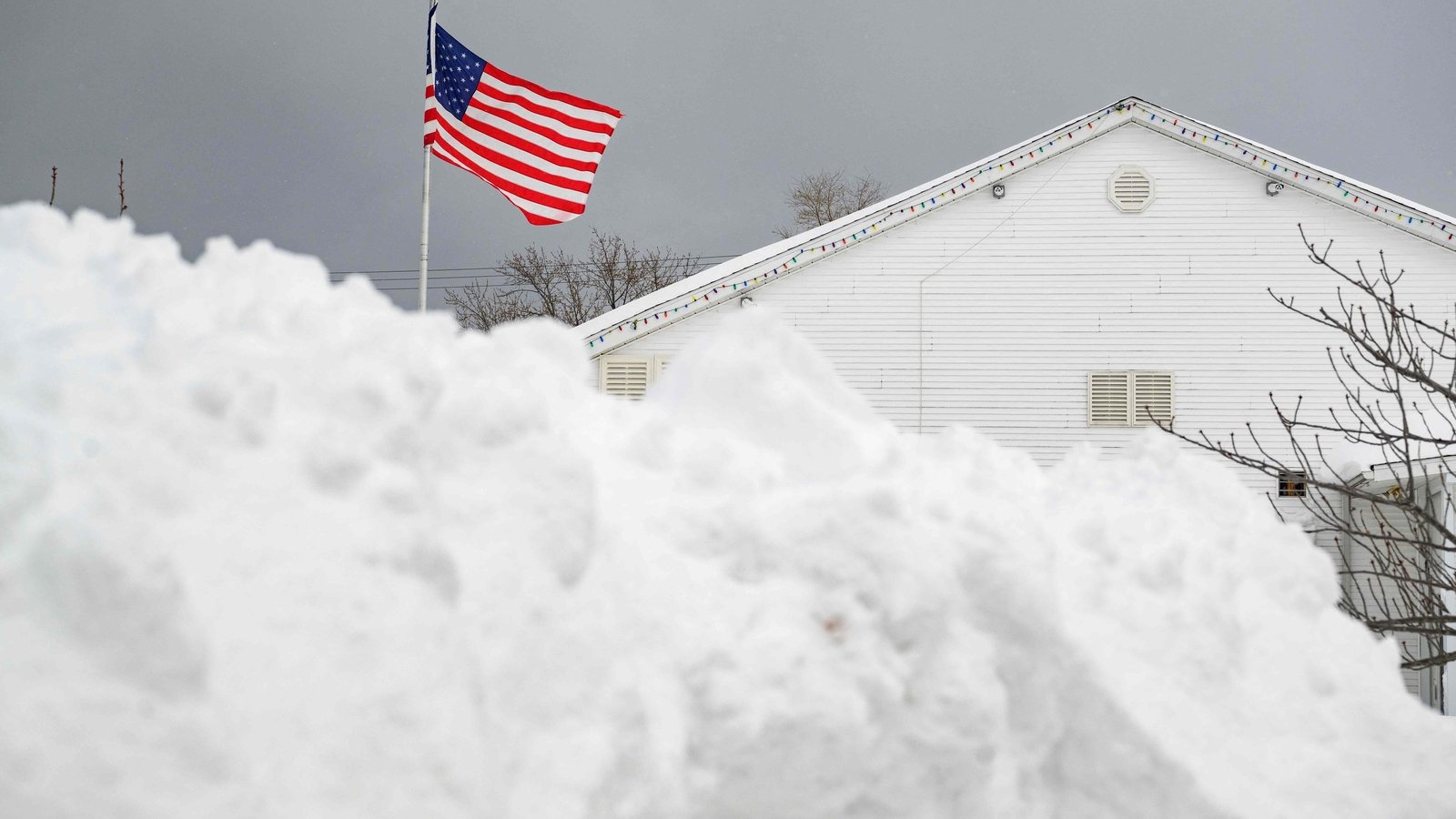
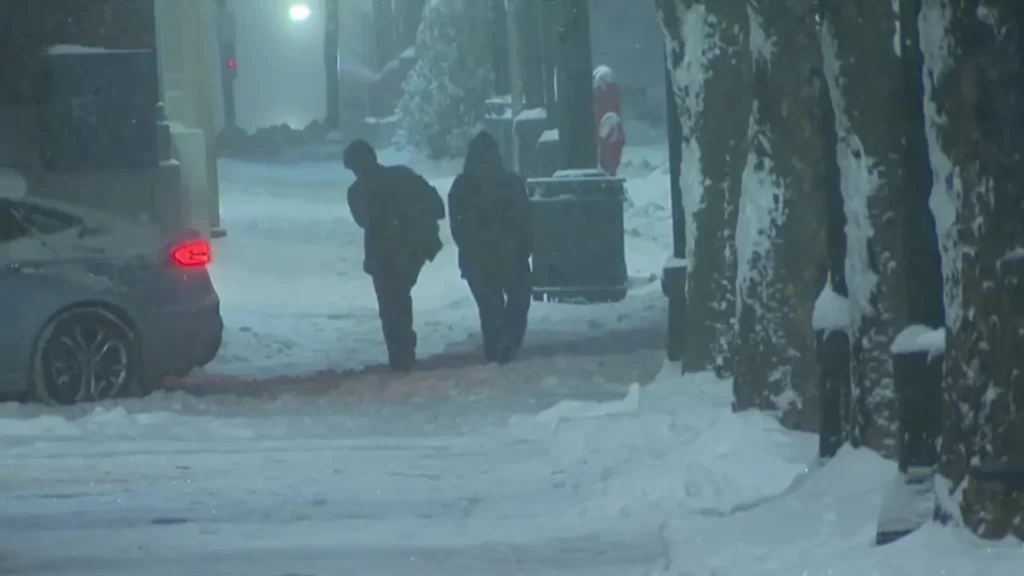
Storm Team4 declared a Weather Alert Friday morning as the D.C. metro area woke up to its first widespread snowfall of the season — a system that brought 1 to 3 inches to many neighborhoods and created a messy, slow-moving commute across the region.
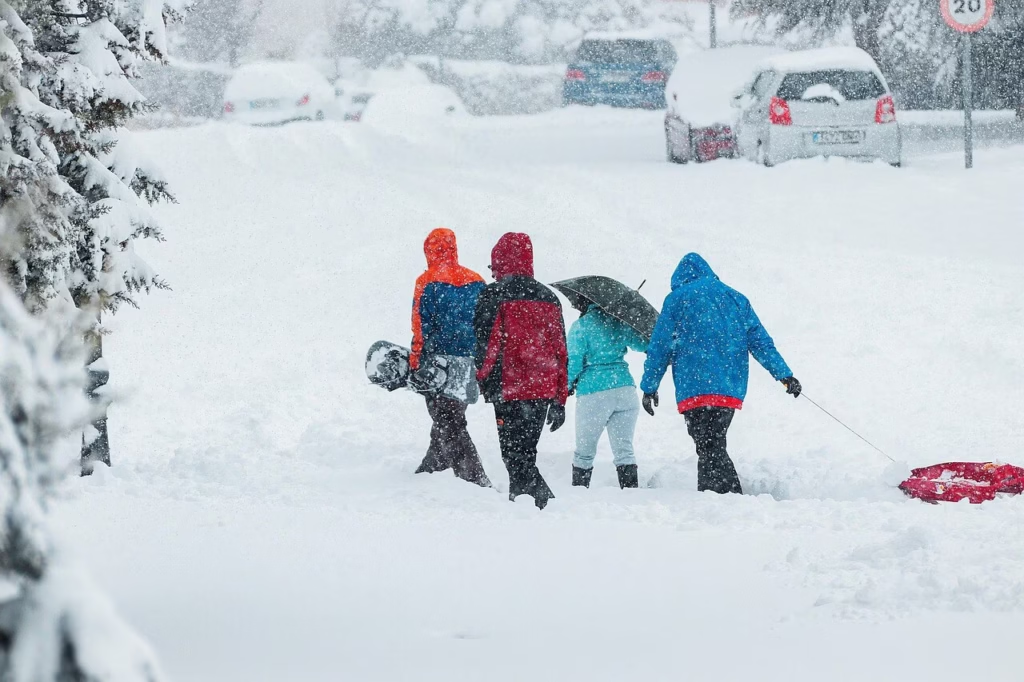
By 8 a.m., large, fluffy snowflakes were falling steadily over downtown Washington, suburban Maryland, and northern Virginia. The snowfall wasn’t particularly heavy, but its timing — right in the middle of the morning rush — led to difficult travel conditions and numerous disruptions.
Meteorologist Chuck Bell emphasized that timing, not totals, was the core issue.
“It’s not the amount of snow, it’s when it’s happening,” Bell said, as delays mounted across major highways and school systems.
Roads Treated, but Crashes and Congestion Build
Road crews pretreated major routes Thursday evening, yet snow still caused slick spots and slow traffic from the earliest morning hours.
- Snow was sticking along Interstate 95 near Stafford, Virginia, as early as 5 a.m.
- Fredericksburg crews reported treating icy patches throughout the morning.
- In La Plata, Maryland, flakes piled up quickly, reducing visibility.
Several crashes were reported across Montgomery County, including a major incident that blocked all northbound lanes of I-270 at Maryland Route 189, forcing traffic onto the shoulder and causing heavy delays.
In Solomons, Maryland, the Thomas Johnson Bridge was shut down in both directions after multiple vehicle crashes, according to Calvert County officials.
When Will the Snow End?
Snow will taper into flurries through Friday afternoon, ending around sunset for most locations.
Cold weekend temperatures — running 20 degrees below normal — will help the snow stick around, especially on untreated surfaces.
The National Weather Service issued a winter weather advisory for the DC metro through 4 p.m., although meteorologists expect it may be canceled early as the system moves out.
Residents are urged to allow extra travel time, consider public transit, or work remotely if possible.
School Closures and Delays Across the Region
The snowfall prompted widespread closures and delays, particularly south of the District.
Virginia – Schools CLOSED
- Culpeper County
- Fauquier County
- Fredericksburg
- Loudoun County
- Manassas Park
- Orange County
- Page County
- Shenandoah County
- Spotsylvania County
- Stafford County
Virginia – Two-Hour DELAY
- Alexandria Public Schools
- Falls Church City Public Schools
- Fairfax County Public Schools
Maryland – Schools CLOSED
- Prince George’s County Public Schools
Maryland – Two-Hour DELAY
- Anne Arundel County Public Schools
- Calvert County Public Schools
Maryland – On Time
- Montgomery County Public Schools (advising extra caution for drivers and students)
Residents can continue checking the school closings page for updated schedules.
How Local Agencies Prepared
Washington, D.C.
- Activated an Extreme Cold Alert through 9 a.m. Friday
- Deployed the District Snow Team to pretreat and salt major roads
- Encourages residents to call 202-399-7093, 311, or 911 if someone needs shelter or appears in danger
Virginia
- VDOT pretreated major roads Thursday
- Drivers are urged to slow down and give road crews plenty of space
Maryland
- The State Highway Administration applied pretreatment on interstates
- Snow plows and salt trucks were active before and during the morning commute
- Montgomery County DOT focused on emergency and priority routes
Impact Beyond the Metro Area
Not all regions were affected equally.
Areas farther out, such as:
- Frederick County
- Washington County
- Far western Maryland
…may see little or no accumulation.
But for those in Lower Montgomery County, Prince George’s County, and Northern Virginia, extra caution was essential as the morning commute remained slow and hazardous.
World News
7 Key Figures Who Helped Expose Australia’s ‘Cruel and Crude’ Robodebt Scheme
From whistleblowers to journalists, a new documentary reveals how the Robodebt scandal was finally brought down.

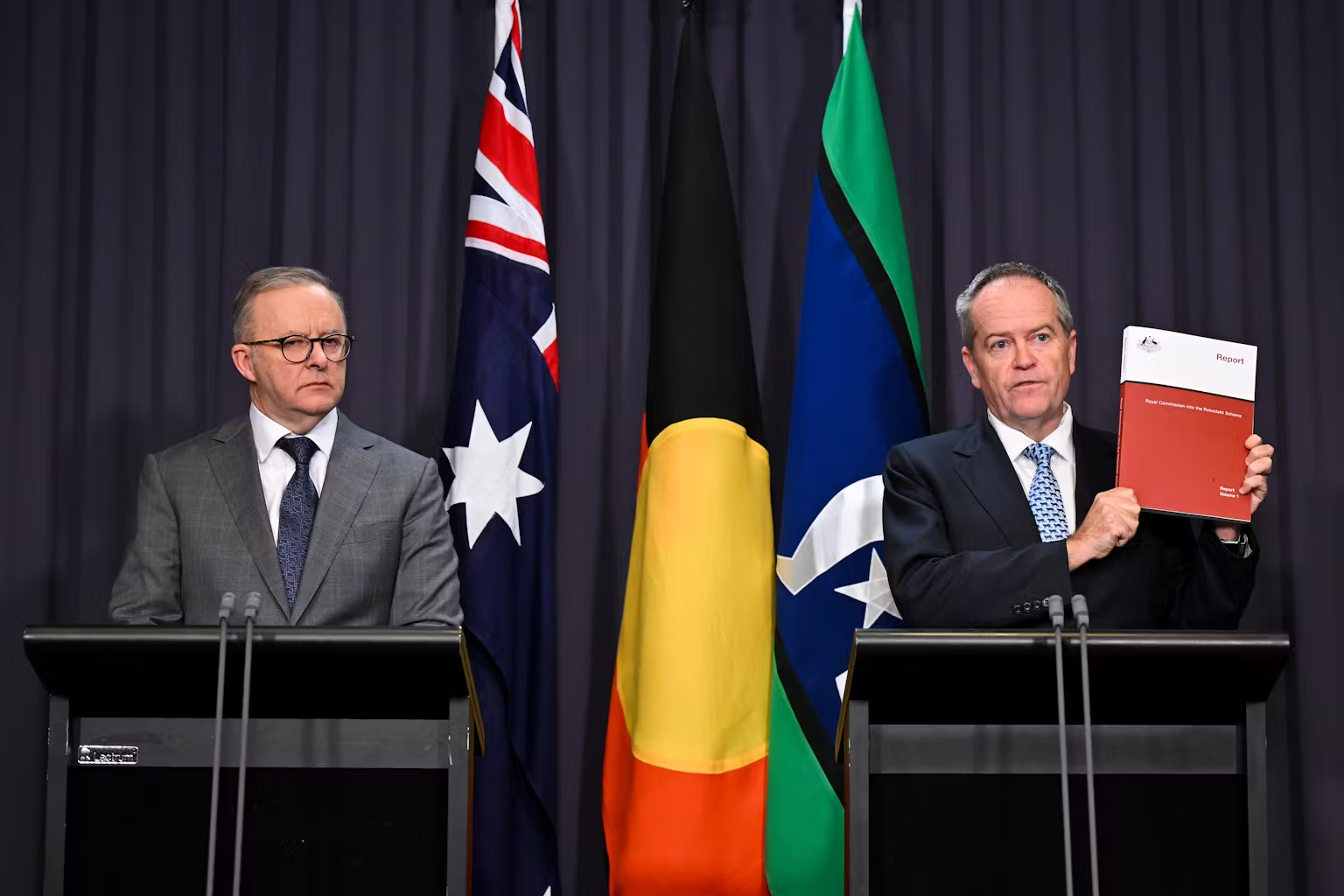
When Guardian Australia first broke the story in late 2016, the Robodebt scheme was just beginning to unravel. At the time, the Coalition government dismissed concerns, labeling the investigation as left-leaning journalism. Almost a decade later, those early warnings have now been immortalized in a powerful new documentary, The People vs Robodebt, airing on SBS.
The three-part hybrid documentary-drama goes beyond headlines. It highlights not only the illegal nature of the scheme but also the extraordinary people who risked their careers and reputations to expose it.
A Scheme Built on “Income Averaging”
The Robodebt program, formally introduced in 2015, used automated income averaging to calculate supposed debts owed to Centrelink recipients. Rather than using actual earnings data, the system averaged annual income, leading to incorrect—and often devastating—debt notices.
In July 2023, the Royal Commission condemned the scheme as “crude and cruel,” “neither fair nor legal,” and a “costly failure of public administration.” The fallout was immense: not only did it devastate thousands of welfare recipients, but it also shattered public trust in automated governance.
The Journalists Who Wouldn’t Let Go
At the center of the exposé was Christopher Knaus, a reporter for Guardian Australia. Branded as a “leftwing journo” by government strategists, Knaus persisted, publishing exclusives that revealed how deeply flawed the system was. His reporting was supported by tips from victims and whistleblowers within Centrelink itself.
Knaus was later joined by Luke Henriques-Gomes, whose sustained coverage helped keep the story in the spotlight. Together, they gave a voice to victims and challenged the government narrative pushed by more compliant media outlets.
A Media Insider Turns
The documentary also features Rachelle Miller, a former Liberal Party of Australia staffer. Initially responsible for framing Knaus as partisan, Miller later admitted she realized the scheme was unfair. She now acknowledges how government-friendly outlets, including News Corp tabloids and The Australian, were fed selective stories to protect the Coalition’s welfare crackdown.
Victims Who Refused to Be Silent
Behind the statistics are real human tragedies. Among the most heartbreaking is the story of Rhys Cauzzo, a 28-year-old part-time florist who took his own life after being pursued for $17,000 in alleged debts. His mother, Jenny Miller, has become one of the most powerful voices in the fight against Robodebt.

Shockingly, after Rhys’s death, the Department of Human Services released his personal Centrelink information to the media in an attempt to smear him. The royal commission later confirmed that Cauzzo’s debt was unlawfully calculated—just like the hundreds of thousands of others.
Activists and Lawyers
Digital activists and welfare advocacy groups amplified victim stories online, sparking grassroots outrage. Lawyers played a critical role too, spearheading a class action that ultimately forced the government to settle. Earlier this month, the government agreed to pay $475 million in additional compensation to around 450,000 victims, marking the largest class action settlement in Australian history.
The Role of Documentary Storytelling
Executive producer Michael Cordell explains why he felt compelled to revisit the scandal. “It was a morally bankrupt scheme,” he said. “But despite the devastation it caused, it hadn’t caught the wider public imagination. We wanted to change that.”
Using dramatized scenes alongside interviews, The People vs Robodebt ensures the human toll is front and center. It’s not just policy failure—it’s about empathy, or the lack thereof, in the political system.
Why This Story Still Matters
The Robodebt scandal is more than a cautionary tale about flawed automation. It’s a stark reminder of what happens when governments prioritize cost-cutting over compassion. It also shows the power of journalism, whistleblowing, and persistence in the face of official denial.
For Australians who endured harassment and wrongful debt collection, this documentary isn’t just about the past—it’s about justice, accountability, and preventing future failures.
Final Word
At its core, The People vs Robodebt is about ordinary people standing against a powerful government apparatus. From journalists like Knaus and Henriques-Gomes, to grieving parents like Jenny Miller, to insiders like Rachelle Miller, their courage collectively dismantled a system described as “neither fair nor legal.”
All three episodes of The People vs Robodebt are now streaming on SBS On Demand, airing weekly at 7.30 pm.
For the latest updates on this and other global stories, visit www.DailyGlobalDiary.com.

Why ‘Resident Evil’s’ Bold Ending Surprised Austin Abrams

New York Judge Hands Harvey Weinstein a 15-Year Prison Sentence

Austin Abrams Explains the Shocking Final Twist in ‘Resident Evil’

The actor discusses Guy Gardner’s corporate-backed superhero status and his expanding role in James Gunn’s DC Universe.

Nathan Fillion Unpacks Guy Gardner’s Corporate Heroism in ‘Lanterns’

1-Iran Issues Dire Warning to Israel and Defies Trump on Nukes: “We’re Ready to Strike Deep Inside”

Sen. Elizabeth Warren Calls It a ‘Cesspool of Corruption’ — Here’s Why Senators Are Now Fighting Back Against the DOJ’s Live Nation Deal That Left Every Fan Betrayed…

Donald Trump’s net worth reveals the fortune behind the former US President and business mogul

Gucci bets on Demna to revive fading glamour as Milan fashion week opens with bold film surprise

“Tomás Rodríguez Net Worth 2025: Panama’s Gold Cup Goal‑Machine’s Surprising Fortune Revealed”

Miss Jamaica Suffers Terrifying Fall Off Miss Universe Stage; Rushed to Hospital on Stretcher in Viral Video

Moana Live-Action Teaser Sparks Outrage as Fans Call Disney’s Move a ‘Clear Money Grab’ — What Went Wrong?

Ryan Gosling’s Project Hail Mary Trailer Stuns Fans with a Mysterious Alien Ally and a Mission That Could Save Earth

Apple delays Jessica Chastain thriller The Savant about domestic extremism after recent US violence

Avatar 3, Fire and Ash trailer reveals Jake Sully’s family facing terrifying new Na’vi enemies with deadly fire powers
-

 Entertainment1 week ago
Cynthia Nixon’s Support Draws Attention as Christine Marinoni Secures NYC Education Post
-

 Entertainment1 week ago
Disney’s Live-Action ‘Moana’ Wins Early Praise After Premiere: Is This the Studio’s Best Remake Yet? Fans Say ‘It Captures the Magic…’
-

 Entertainment7 days ago
‘Spider-Man: Brand New Day’ Swings to No. 1 at the Domestic Box Office
-
 Entertainment1 week ago
The star discusses the bold choices behind the film’s closing moments and what they mean for his character’s journey.
-

 Entertainment1 week ago
Nick Reiner Will Not Face Death Penalty in Parents’ Killing Case DA Reveals Why…
-

 Entertainment1 week ago
Venice Falls for ‘Possible Love’ as Lee Chang-dong Makes a Powerful Comeback
-

 Entertainment7 days ago
TIFF Debut of ‘Musk’ Comes With a Defiant Message
-

 Entertainment1 week ago
Can Disney’s Live-Action Moana Win Over Audiences? Dwayne Johnson Returns as Maui