
Entertainment
Ariana Grande tests positive for COVID just days before Wicked: For Good release… and after dramatic red-carpet scare in Singapore
The singer shared the health update moments after wrapping a global press tour with Cynthia Erivo — a tour that already made headlines when a fan breached security to grab her on the carpet.


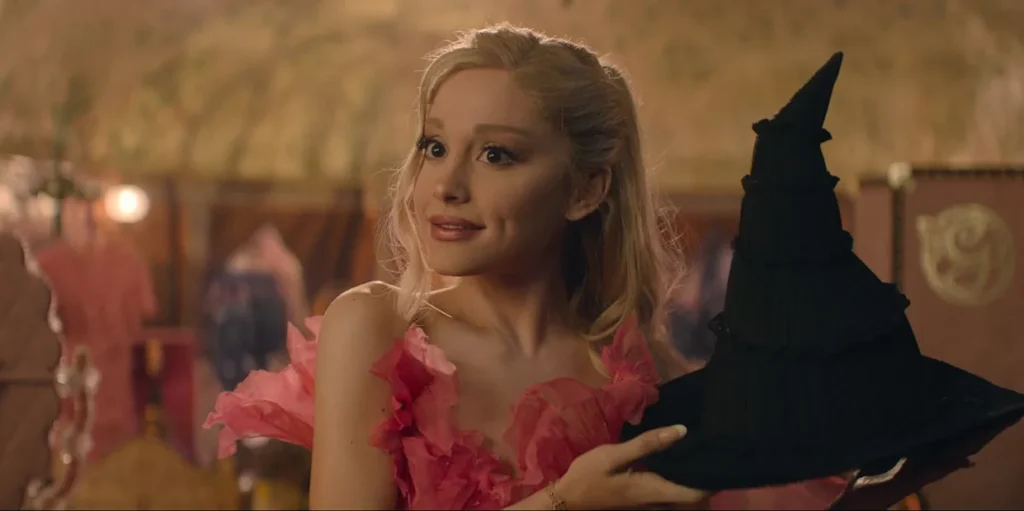
Pop icon Ariana Grande has revealed she has tested positive for COVID-19 — and the timing couldn’t be more stressful. The actress-singer is in the final stretch of promoting one of the year’s most anticipated films, Wicked: For Good, directed by Jon M. Chu.
On Thursday, Grande took to her Instagram Stories and posted a behind-the-scenes photo from her recent appearance on The Tonight Show Starring Jimmy Fallon. Beneath a shot of her twirling her “Glinda wand,” she wrote:
“Moments before COVID.”
The update comes after she and co-star Cynthia Erivo completed a whirlwind global press tour for the musical blockbuster — the second installment in Universal’s adaptation of the beloved Wicked Broadway phenomenon.
Grande plays Glinda the Good Witch, while Erivo takes on the iconic role of Elphaba, the Wicked Witch of the West. The film hits North American theaters on November 21, just ahead of Thanksgiving weekend.
ALSO READ : UpGrad in talks to acquire Unacademy at $300–400 million, marking major edtech shake-up
A press tour filled with glamour — and one terrifying moment
While the tour has been full of fan celebrations and musical nostalgia, it also faced an unexpected scare in Singapore. During the film’s red-carpet event, an overenthusiastic fan broke through the security barrier and aggressively lunged forward to hug Grande.
Erivo immediately stepped between them, physically pushing the fan back while wrapping her arm protectively around her co-star.
Michelle Yeoh, who also stars in the film, helped stabilize the shaken singer as guards rushed in.
Speaking on the Today show, Erivo explained her instinctive response:
“I wasn’t really thinking. I just wanted to make sure my friend was safe.”
She added:
“I’m sure he didn’t mean harm, but you never know with those things… my first instinct was to make sure she was OK.”
The moment went viral across social platforms, with fans praising Erivo’s quick reaction and the cast’s unity.
COVID diagnosis comes at a crucial moment for the film
With Wicked: For Good tracking for a record-breaking Thanksgiving opening, Grande’s unexpected health setback adds another layer of tension to the pre-release buzz.
Early forecasts from The Hollywood Reporter predict a $120 million-plus domestic opening and over $200 million worldwide — a staggering potential debut that would mark the strongest opening for any Broadway musical adaptation in cinematic history.
While Grande has not announced whether the diagnosis will impact upcoming promotional plans, fans flooded her comment sections with support and wishes for a fast recovery.
Industry insiders say her absence — even temporarily — may shift some publicity duties toward Erivo and Yeoh, but the film’s momentum remains strong.
Ariana assures fans: health first, magic next
Though she didn’t share additional details regarding her symptoms, Grande’s post carried her trademark mix of humor and vulnerability — a reminder that even during major career moments, she remains grounded and connected to her audience.
Her co-stars have also expressed their support privately and publicly, with many noting the importance of rest as the film’s release approaches.
For now, Grande is staying off the press circuit as she recovers — and fans are hoping she’ll be healthy enough to celebrate the film’s historic debut in person.


Entertainment
Teyana Taylor Had the Classiest Reaction to Losing at the Oscars — So Why Are People Attacking Her for It…
She lost, she clapped, she celebrated the winner — and somehow that became a controversy. Teyana Taylor has a few words for the people who have a problem with grace.

Losing an Oscar in front of a global television audience is not a small thing. It is one of the most publicly exposed moments of professional disappointment that exists in the entertainment industry — your face broadcast to millions, every flicker of emotion studied, every reaction catalogued and replayed. Most people in that seat choose neutrality. The polite smile. The composed nod. The careful performance of not-quite-feeling what you are absolutely feeling.
Teyana Taylor did not choose neutrality. She chose something rarer and considerably more difficult: she was genuinely happy for the woman who beat her. And for reasons that reveal far more about the critics than they do about Taylor herself, that choice became the most talked-about moment of her Oscars night.
The Night Itself
Taylor arrived at the Dolby Theatre in Hollywood as a nominated actress — a sentence that still carries real weight when you consider the trajectory that produced it. A Newark-born artist who broke through as a dancer and vocalist, who built a fiercely loyal following through music and sheer force of personality, who then pivoted into dramatic acting with enough conviction to earn recognition from the most prestigious awards body in the film industry.
ALSO READ : “She Never Made It Out…” Albany House Fire Claims Woman’s Life as Family Pleads for Help to Bring Her Home
Her performance in One Battle After Another had drawn genuine critical attention throughout the awards season. The Best Supporting Actress nomination was not a token gesture — it was a recognition of real, substantive work from an artist who had spent years proving to an industry full of sceptics that she was more than any single label it had tried to attach to her.
When Amy Madigan was announced as the winner, Taylor’s reaction was immediate and unguarded. She celebrated. Warmly, visibly, without the careful management of expression that most cameras-on nominees default to in that moment. For Taylor, it appeared to be completely natural — one artist recognising another’s achievement with the kind of generosity that the entertainment industry publicly champions and privately rarely practices.
Then the Internet Got Involved
Within hours, a segment of social media had decided that Taylor’s reaction was a problem. The criticism came from multiple directions simultaneously — some accused her of performing happiness she did not feel, others suggested her visible celebration was somehow undignified, and a particularly strange contingent seemed to feel that showing genuine warmth for a competitor was a betrayal of some unspoken competitive code.
It was, by any reasonable assessment, a remarkable thing to be criticised for. And Teyana Taylor — who has never, in any chapter of her public life, demonstrated the slightest inclination to absorb criticism quietly when she believes it to be unjust — was not about to start now.
“Sore Losers” — The Clap Back Heard Round the Internet
Taylor addressed her critics with the directness that has always been her signature. The phrase she reached for — “sore losers” — was pointed, perfectly chosen, and landed with the precision of someone who understood exactly the irony she was deploying. She was the nominee who had not won. She was the one who had every conventional justification for disappointment. And yet the people behaving like sore losers were the ones on the outside, criticising her for not performing the resentment they apparently expected.
Her message, stripped to its essence, was this: she was raised to celebrate excellence wherever she finds it. Amy Madigan — a veteran actress whose career stretches back decades and whose body of work across film and television represents the kind of sustained, underrecognised craft that the industry perpetually underpays in attention — deserved her flowers. Taylor gave them. If that makes certain people uncomfortable, the discomfort belongs to them.

It is the kind of public statement that works precisely because it requires no defensiveness. Taylor is not explaining herself. She is not softening the edges of her position for an audience she is trying to win over. She is simply, clearly, stating what she believes and leaving the critics to sit with what their reaction to her joy says about them.
Who Is Amy Madigan, and Why Does the Win Matter
Part of what gives Taylor’s celebration its particular resonance is the identity of the woman she was celebrating. Amy Madigan is not a newcomer collecting an early-career trophy. She is a Chicago-born actress who has been delivering exceptional work since the 1980s — perhaps most recognisable to mainstream audiences for her role in Field of Dreams opposite Kevin Costner, and to more discerning viewers for a career’s worth of television and independent film performances that have consistently outpaced the recognition afforded to them.
Her Oscar win is, for many industry observers, a long-overdue accounting. The kind of win that people in the business recognise as corrective — the industry catching up with talent it should have honoured sooner. That Teyana Taylor, a fellow artist who had skin in the game that night, saw it that way too and responded accordingly is not a performance of graciousness. It reads, in context, as a genuine recognition of something real.
The Double Standard Nobody Wants to Name
There is a conversation sitting just beneath the surface of this entire episode that deserves to be had directly. The scrutiny applied to Teyana Taylor‘s reaction — the speed with which her visible joy was reframed as either fake or inappropriate — exists within a much older pattern of Black women in entertainment being held to impossible, contradictory standards of public behaviour.
Too reserved and you are cold. Too expressive and you are performing. Celebrate a competitor and you are suspect. Keep your feelings private and you are arrogant. The goalposts do not just move — they are never in the same place twice, and they are never positioned in good faith.
Taylor — who came up through G.O.O.D. Music, built a music career of genuine artistic distinction, directed acclaimed visual projects, and fought her way into serious dramatic acting on her own terms — has navigated this kind of scrutiny at every stage. She has, consistently and without apology, refused to let it dictate how she moves through the world.
Her response to the “sore losers” is simply the latest iteration of a posture she has maintained her entire career: clear-eyed, unbothered, and entirely her own.
The Bottom Line
Amy Madigan won a well-deserved Oscar. Teyana Taylor celebrated her for it. A corner of the internet manufactured a controversy from an act of genuine human warmth. And Taylor, as she tends to do, handled the manufactured controversy better than it deserved to be handled.
In a room full of people performing emotions for cameras, she felt one naturally and showed it honestly. The critics called it a problem. She called them sore losers. History will almost certainly agree with her.
Entertainment
Sean Penn Won His Third Oscar on Sunday — Then Vanished. Now We Think We Know Exactly Where He Was and Who He Was With…
While Hollywood celebrated at after-parties and acceptance speeches echoed across social media, Sean Penn was apparently somewhere else entirely — doing exactly what you would expect Sean Penn to do.

Only Sean Penn could win his third Academy Award on a Sunday night and make the bigger story about where he went afterwards.
That is not a criticism. It is, if anything, the most Sean Penn thing that has ever happened — and in a career that has included two previous Oscars, a marriage to Madonna, a self-directed trip to interview El Chapo for Rolling Stone magazine, and years of frontline humanitarian work in places most Hollywood actors wouldn’t visit even for a well-compensated film shoot, that is saying something.
So: where was Sean Penn on Oscar night? The mystery, it seems, has been solved. And the answer tells you everything you need to know about who this man actually is beneath the awards and the mythology and the occasionally combustible public persona.
First — The Award Itself
Let’s not gloss over what happened before the disappearing act, because it was genuinely remarkable.
Sean Penn has now won three Academy Awards for Best Actor — a distinction that places him in extraordinarily rare company in the history of the Oscars. His first came in 2004 for Mystic River, Clint Eastwood‘s devastating adaptation of Dennis Lehane‘s novel, in which Penn played a man haunted by childhood trauma and consumed by grief and rage. His second arrived in 2009 for Milk, Gus Van Sant‘s biography of Harvey Milk — the pioneering gay rights activist and San Francisco politician — a performance so transformative that it remains one of the most celebrated biographical portrayals in modern cinema.
ALSO READ : “She Never Made It Out…” Albany House Fire Claims Woman’s Life as Family Pleads for Help to Bring Her Home
A third Oscar is not just another trophy. It is a statement about longevity, craft, and the kind of sustained creative ambition that most actors — however talented — simply cannot maintain across decades of a career. Daniel Day-Lewis has three. Meryl Streep has three. The company Penn now formally shares is vanishingly small.
And yet, at the party that follows the winning of such an award — the Governors Ball, the after-parties, the industry celebrations that stretch through the Beverly Hills night — Sean Penn was, by all accounts, conspicuously absent.
Nobody seemed to know where he was. And that, almost immediately, became the story.
The Disappearance That Launched a Thousand Theories
In the age of Instagram and real-time celebrity tracking, it is genuinely unusual for a major Oscar winner to simply vanish from the post-ceremony circuit without explanation. The red carpet cameras track arrivals. The party photographers document the celebrations. Publicists manage the evening’s narrative with military precision.
Sean Penn apparently did not get that memo — or, more likely, got it and filed it in the bin.
Speculation circulated quickly. Had he left Los Angeles? Was he making a statement about the ceremony itself — another year of Hollywood self-congratulation while the world outside was fracturing? Was there a personal matter? A health concern? Had Sean Penn, in the most Sean Penn move imaginable, simply decided that an Oscar party was less important than something else and acted accordingly?
The answer, when it emerged, was both completely surprising and entirely predictable — which is perhaps the best possible description of Sean Penn as a human being.
The Friend. The Documentary. The Explanation.
According to sources piecing together Penn’s Oscar night movements, the actor — fresh from accepting one of the entertainment industry’s highest honours — appears to have spent at least part of his evening visiting a friend and former documentary subject.
This requires a brief detour into the part of Sean Penn‘s biography that his film work sometimes overshadows: his life as a genuinely committed, sometimes reckless, always serious political actor in the non-fictional sense of the word.
Penn is not a celebrity who attaches his name to causes for the publicity. He shows up. After Hurricane Katrina devastated New Orleans in 2005, Penn was photographed personally steering a boat through floodwater, rescuing stranded residents — an image that captured something real about a man who, whatever his faults, does not treat humanitarian impulse as a photo opportunity. After the 2010 Haiti earthquake, Penn founded CORE — the Community Organized Relief Effort — and spent years leading on-the-ground disaster response operations that by most accounts saved thousands of lives.

He has made documentary films. He has cultivated relationships with political figures — some celebrated, some deeply controversial — that most Hollywood actors would never risk. His interview with El Chapo for Rolling Stone in 2016, conducted in secret in the Mexican jungle while the drug lord was a fugitive, generated international headlines and a significant security controversy, but it also demonstrated something about Penn that his critics rarely credit: a genuine, if sometimes dangerously expressed, desire to understand the world beyond the comfortable boundaries of celebrity life.
The “friend and former documentary subject” he apparently visited on Oscar night fits this pattern exactly. A man who has spent decades building relationships with people who exist far outside the Hollywood orbit — relationships based on shared purpose or political alignment or simple human connection — chose, on one of the biggest nights of his professional life, to spend time with one of those people rather than work the room at an industry party.
What This Says About Sean Penn — The Man, Not the Myth
Sean Penn has never been easy to write about fairly, because the caricature on both sides is so powerful.
To his admirers, he is the last real movie star — a man of fierce intelligence, genuine moral courage, and artistic seriousness in an industry increasingly dominated by franchise product and carefully managed personal brands. To his detractors, he is a self-aggrandising provocateur whose political adventures are a form of narcissism dressed up as conscience.
The truth, as with most interesting people, is considerably more complicated than either version.
What the Oscar night disappearance reveals — and the explanation that has emerged confirms — is that Penn operates according to a personal value system that genuinely does not place the entertainment industry’s rituals at the top of the hierarchy. He will accept the award — he earned it, and he knows it — but he will not pretend that the party afterwards is the most important thing he could be doing with his evening.
There is something almost old-fashioned about that. The Hollywood Golden Age had its own version of this type — actors like Paul Newman and Marlon Brando who were genuinely, uncomplicatedly more interested in the world outside the studio than in the machinery of celebrity maintenance. Penn is a direct descendant of that tradition — messy, occasionally maddening, always impossible to ignore.
Three Oscars. One Exit. No Apologies.
In the final analysis, what happened on Oscar night is a very small story with a very large implication.
Sean Penn won a historic third Academy Award. He accepted it. And then he left — not to another party, not to a press line, not to the carefully choreographed machinery of award season victory laps — but to see a person he cared about, in a private capacity, on his own terms.
In a Hollywood that has become almost entirely defined by the performance of authenticity rather than the thing itself, that choice — unglamorous, unexplained, quietly defiant — might be the most interesting thing Sean Penn has done in years.
And in its own strange way, it is entirely deserving of the man who once paddled a boat through a flooded American city, spent years rebuilding a devastated Caribbean nation, and sat across a jungle table from one of the world’s most wanted criminals — all because he decided it was what needed doing.
Three Oscars. One exit into the night. Absolutely zero apologies.
That is Sean Penn. That has always been Sean Penn. And whatever you think of him, that consistency is, at this point, its own kind of achievement.
Daily Global Diary will continue to cover the 2025 awards season and the stories behind the headlines.
Entertainment
Kevin Costner and Jake Gyllenhaal Already Had Our Attention — Now ‘Honeymoon With Harry’ Just Added a Rising Star Who Changes Everything…
Sarah Pidgeon — the actress Hollywood cannot stop casting — is in talks to join one of Amazon MGM Studios’ most anticipated films, and the ensemble is starting to look genuinely unmissable.

There are films you hear about and think: interesting. And then there are films where, with every new casting announcement, the anticipation quietly doubles — where the ensemble being assembled starts to feel less like a movie and more like an event.
Honeymoon With Harry at Amazon MGM Studios has been building toward that second category for a while now. Kevin Costner anchoring the project. Jake Gyllenhaal alongside him. Directors Glenn Ficarra and John Requa — the team behind Crazy, Stupid, Love and Focus — at the helm.
And now, according to reports, Sarah Pidgeon is in talks to join the cast.
If you don’t yet have that name memorised, you will soon. Hollywood has been making sure of it.
Who Is Sarah Pidgeon — and Why Is Everyone Casting Her?
Sarah Pidgeon has had the kind of recent career trajectory that casting directors talk about in quiet, slightly awed tones.
She first came to wider attention through The Wilds — the Amazon Prime Video survival drama in which she played Leah Rilke, one of a group of teenage girls stranded on a deserted island after a plane crash. It was a role that demanded emotional range, physical commitment, and the ability to carry scenes of genuine psychological complexity — and Pidgeon delivered on all three counts in ways that made people sit up and take notice.
ALSO READ : “She Never Made It Out…” Albany House Fire Claims Woman’s Life as Family Pleads for Help to Bring Her Home
But it is her most recent high-profile project that has truly put her on the map in a way that cannot be overstated.
Pidgeon stars in Love Story: John F. Kennedy Jr. & Carolyn Bessette — the deeply anticipated drama exploring the relationship between JFK Jr. and Carolyn Bessette-Kennedy, one of the most glamorous, scrutinised, and ultimately tragic love stories in American public life. Playing Carolyn Bessette — a woman of extraordinary poise, complexity, and private suffering who was thrust into one of the most relentless media spotlights of the 1990s — is not a small undertaking.
It requires an actress who can carry the weight of a real person’s story with both precision and humanity, who can convey what it felt like to be perpetually photographed, perpetually judged, perpetually reduced to an image, while the private reality of a life was something altogether different and more painful.
That Amazon MGM Studios is now circling Pidgeon for Honeymoon With Harry — another project on their own platform — suggests that the studio has seen something in her work that has made her a priority. And given the calibre of the company she’d be joining, that confidence appears entirely mutual.
What We Know About ‘Honeymoon With Harry’
Details about the film’s full plot remain relatively close to the chest, as is customary at this stage of production. What has been confirmed is the essential setup — and it is, on its surface, the kind of premise that sounds deceptively simple and almost certainly isn’t.
The title alone — Honeymoon With Harry — implies something about the intersection of romance, family, and the kind of complication that makes for genuinely watchable cinema. The involvement of directors Glenn Ficarra and John Requa is the clearest signal of tonal intent.
Ficarra and Requa are filmmakers with a very specific gift: they make films that feel emotionally genuine without being saccharine, that are funny without sacrificing weight, and that use the mechanics of romantic and family storytelling to explore something more complicated underneath. Crazy, Stupid, Love — their 2011 film starring Steve Carell, Ryan Gosling, Julianne Moore, and Emma Stone — remains one of the most warmly regarded romantic comedies of the past fifteen years precisely because it trusted its audience with adult emotional complexity.
Focus, their 2015 film starring Will Smith and Margot Robbie, demonstrated that they could operate in a different register entirely — slicker, more stylised, more plot-driven — without losing their feel for character and chemistry.

The combination of their sensibility with the specific energies of Kevin Costner, Jake Gyllenhaal, and now potentially Sarah Pidgeon is genuinely intriguing — because each of those three performers brings something completely different to the table.
Kevin Costner: The Comeback That Wasn’t Really a Comeback
Kevin Costner does not need a comeback. He never really went away.
Yes, there was a period in the 2000s and early 2010s when the actor who had defined a particular strain of American masculine idealism — in Field of Dreams, Dances With Wolves, The Bodyguard, Bull Durham — seemed to recede from the cultural foreground. But Yellowstone, the Paramount Network drama in which Costner played John Dutton, the patriarch of a Montana ranching dynasty, did not just revive his career. It confirmed something that his most loyal admirers had always maintained: that Costner at his best is doing something that very few actors can do — embodying a particular kind of American gravity, a weight of landscape and history and masculine sorrow, that feels completely authentic because, in his case, it largely is.
His departure from Yellowstone — amid reported tensions with Paramount over his ambitious Horizon: An American Saga project — generated significant headlines. But Costner has consistently demonstrated that he operates on his own terms, for better and occasionally for worse. Honeymoon With Harry represents his next major studio move, and the choice of a Ficarra-Requa project suggests an interest in territory that is warmer and more intimate than the epic Western landscapes of Horizon.
Jake Gyllenhaal: An Actor Who Cannot Stop Surprising
If Kevin Costner represents one kind of screen gravity, Jake Gyllenhaal represents something more volatile and harder to categorise.
From Donnie Darko to Brokeback Mountain to Nightcrawler to Prisoners to the recent Road House remake — a film that divided critics but demonstrated Gyllenhaal’s genuine willingness to commit fully to whatever register a project requires — he is an actor whose choices consistently resist easy classification.
Gyllenhaal brings to any ensemble an energy that is both intensely present and slightly unpredictable — qualities that, in the right film with the right director, produce genuinely electric screen chemistry. Alongside Costner‘s groundedness and Pidgeon’s emerging ability to carry emotional weight with quiet authority, the combination has real potential.
Sarah Pidgeon and the Anatomy of a Star in the Making
What makes Sarah Pidgeon‘s potential casting in Honeymoon With Harry particularly interesting is the question of dynamic.
She is, by the current logic of Hollywood, a rising star being placed in a film alongside two established, significantly older male leads. That framing — young actress, veteran actors — could suggest a supporting role, a romantic interest, a plot function rather than a fully realised character.
But Ficarra and Requa’s track record suggests they would not bring an actress of Pidgeon’s calibre into a project without giving her something genuinely substantial to do. Their films consistently feature female characters with real agency and complexity — women who drive the story rather than simply responding to it.
If the casting talks conclude successfully, watch for Pidgeon’s role to be more central to the film’s emotional architecture than the initial announcement might imply. That appears to be the direction her career is headed — and the people making decisions about Honeymoon With Harry seem to be making them with that trajectory firmly in mind.
An Ensemble Worth Watching
Amazon MGM Studios has been building its prestige film slate with notable ambition, and Honeymoon With Harry looks increasingly like one of its signature bets. A director duo with a proven gift for commercial emotional filmmaking. A veteran movie star reasserting his big-screen presence. One of his generation’s most interesting actors at the height of his powers. And a young actress whose moment appears to be arriving at considerable speed.
The talks are ongoing. The casting is not yet confirmed. But the shape of something genuinely exciting is becoming visible — and when Kevin Costner, Jake Gyllenhaal, and Sarah Pidgeon are all potentially in the same film, directed by the people behind Crazy, Stupid, Love, the appropriate response is attention.
Full, undivided attention.

‘A New COVID Variant Enters the US…’ Mutated BA.3.2 Strain Detected at San Francisco Airport Raises Fresh Questions

‘Cheaper Gas This Summer?’ US Expands E15 Fuel Sales… What It Means for Drivers and Prices

Tom Selleck’s Legendary ‘Magnum P.I.’ Ferrari Heads to Auction… and It’s the One Everyone Dreamed Of

Teyana Taylor Had the Classiest Reaction to Losing at the Oscars — So Why Are People Attacking Her for It…

Sean Penn Won His Third Oscar on Sunday — Then Vanished. Now We Think We Know Exactly Where He Was and Who He Was With…

1-Iran Issues Dire Warning to Israel and Defies Trump on Nukes: “We’re Ready to Strike Deep Inside”

Donald Trump’s net worth reveals the fortune behind the former US President and business mogul

“She Never Made It Out…” Albany House Fire Claims Woman’s Life as Family Pleads for Help to Bring Her Home

Caitlin Clark Sidelined with Quad Strain, Set to Miss Two Weeks of WNBA Action

“Tomás Rodríguez Net Worth 2025: Panama’s Gold Cup Goal‑Machine’s Surprising Fortune Revealed”

Miss Jamaica Suffers Terrifying Fall Off Miss Universe Stage; Rushed to Hospital on Stretcher in Viral Video

Moana Live-Action Teaser Sparks Outrage as Fans Call Disney’s Move a ‘Clear Money Grab’ — What Went Wrong?

Ryan Gosling’s Project Hail Mary Trailer Stuns Fans with a Mysterious Alien Ally and a Mission That Could Save Earth

Apple delays Jessica Chastain thriller The Savant about domestic extremism after recent US violence

Avatar 3, Fire and Ash trailer reveals Jake Sully’s family facing terrifying new Na’vi enemies with deadly fire powers
-
 Entertainment6 days ago
Cannes 2026 Hasn’t Announced a Single Film Yet — But the Whisper Network Is Already Pointing to These Names and It’s Exciting…
-
 Entertainment1 week ago
Amy Poehler and Sterlin Harjo Are Getting One of Television’s Highest Honours — and the Reason Why Says Everything About Where Storytelling Is Headed…
-

 Entertainment6 days ago
Almodóvar, Lars von Trier, Joel Coen and More — The Films That Could Own Cannes 2026 Are Already Generating Serious Buzz and the List Is…
-

 Entertainment1 week ago
Oscars 2026 Red Carpet Shockers: Zendaya’s Late Arrival, Jessie Buckley’s Grace Kelly Tribute… and Chase Infiniti Owning the Night
-

 Politics1 week ago
“Trump Reveals ‘Early Stage Breast Cancer’ Diagnosis of Susie Wiles… But Says Her ‘Strength Says Everything’”
-

 Entertainment6 days ago
Lollapalooza 2026 Just Dropped Its Most Surprising Lineup Yet — and the One Historic Thing Nobody Is Talking About Is the Real Story…
-

 Health1 week ago
“Kent Meningitis Tragedy: Second Student Dies as Outbreak Sparks Hospital Emergency…”
-

 Entertainment1 week ago
Lisa Kudrow Brings Valerie Cherish Back From the Dead — But This Time, Her Co-Star Is an AI and the Humiliation Is Real…