
Entertainment
BBC Boss Finally Explains Why the Racial Slur Was Never Cut From the BAFTA Broadcast — “No One in the Truck Even Heard It…”
Outgoing BBC Director-General Tim Davie has broken his silence on the BAFTA-Tourette’s controversy, calling it “a genuine error” — but his explanation has raised even more questions about how it was allowed to air at all.


It has been two weeks since the 2026 BAFTA Film Awards handed British television one of its most uncomfortable and widely debated moments in recent memory. And now, finally, the man at the top of the BBC has sat down — in writing, before the UK government — and tried to explain exactly how a racial slur ended up broadcast into millions of living rooms without anyone pressing a single button to stop it.
The answer, as it turns out, is both simpler and more troubling than most people expected: nobody in the broadcast truck heard it happen.
What Actually Happened That Night
To understand the explanation, you need to understand the sequence of events. The 2026 BAFTA Film Awards were airing on a two-hour delay on the BBC — which, crucially, should have given the edit team a significant window to catch and remove anything that crossed a broadcast line before it reached viewers at home.
Among those present at the ceremony was John Davidson, a Tourette’s campaigner whose nominated documentary I Swear chronicles his experience growing up with the condition in Scotland. Davidson was in the room representing his film — a deeply personal project about living with a syndrome that, for some people, manifests in involuntary vocalisations including offensive words entirely beyond the speaker’s conscious control.
ALSO READ : “She Never Made It Out…” Albany House Fire Claims Woman’s Life as Family Pleads for Help to Bring Her Home
As Michael B. Jordan and Delroy Lindo took the stage to present, Davidson experienced a Tourette’s episode. A racial slur — the N-word — was shouted. The live feed captured it. And then, somehow, it made it through the entire broadcast chain and onto the BBC’s transmission without being removed.
“A Genuine Error” — The BBC’s Explanation
Outgoing BBC Director-General Tim Davie addressed the UK government’s Culture, Media and Sport Committee in a formal letter on Friday, laying out the broadcaster’s initial findings.
His central explanation was stark: “No one in the on-site broadcast truck heard it when they were watching the live feed.”
He elaborated: “Because no one in the broadcast truck was aware it was on the live feed, there was therefore no editorial decision made to leave the language in.”
In other words — this was not a judgment call that went wrong. It was not a case of someone weighing the editorial merits of inclusion versus removal and landing on the wrong side. According to Davie, the slur simply passed through without anyone realising it was there. A missed moment. A gap in the monitoring process. What he called, plainly, “a genuine error.”
For an organisation of the BBC‘s size and experience — with decades of live broadcast expertise and a two-hour delay that was specifically designed to allow for exactly this kind of editorial intervention — that explanation will strike many as inadequate, even if it is honest.
The Second Incident: What the Edit Team Did Catch
What makes Davie’s account particularly revealing is what happened later the same evening. When Wunmi Mosaku — star of Sinners — took the stage to accept her Best Supporting Actress award, Davidson experienced another Tourette’s episode and shouted a second racial slur.
This time, the edit team caught it. The outburst was removed, Davie confirmed, “immediately from the version of the ceremony that would be broadcast later that evening.”
The contrast between the two incidents is the heart of the story. The system worked the second time. It demonstrably failed the first. And the question that the Culture, Media and Sport Committee — and the broader public — is now pressing is: why?
The Fallout: Two Weeks and Counting
The controversy has not faded quietly. If anything, it has grown more complex as the days have passed.
John Davidson himself broke his silence, saying he was “deeply mortified” if anyone believed his Tourette’s tics were in any way intentional — a statement that deserves to be taken at face value, because that is precisely how Tourette’s syndrome works. The condition is neurological, the vocalisations are involuntary, and Davidson’s presence at the BAFTAs was specifically tied to a film that exists to educate people about that reality.
BAFTA issued a detailed apology to all parties involved. The incident became a topic of conversation at the NAACP Image Awards. It inspired a sketch on Saturday Night Live. And it prompted The Hollywood Reporter to ask a question that cuts to the cultural core of the whole mess: is there a US-UK gap in Tourette’s education?

That question matters. Because the reactions on both sides of the Atlantic have been noticeably different — shaped, at least in part, by different levels of public familiarity with what Tourette’s syndrome actually is and how it manifests. In the UK, where awareness campaigns have been more sustained, there has been broader public sympathy for Davidson’s position. In some American commentary, the involuntary nature of the vocalisations has been less consistently foregrounded.
What This Reveals About Live Broadcast in the Modern Era
Strip away the celebrity names and the awards night glamour, and what you are left with is a very specific institutional failure — one that the BBC now has to account for publicly and structurally.
The two-hour delay exists for a reason. It is the safety net. It is the mechanism that allows a broadcaster to catch what slips through the live feed — the accidental, the unexpected, the genuinely unforeseen. On the night of the BAFTA Film Awards, that safety net partially held and partially failed, for reasons that Davie’s letter begins to explain but does not fully resolve.
The Culture, Media and Sport Committee will almost certainly want more than a letter. Questions about monitoring protocols, staffing in the broadcast truck, and what systemic changes the BBC intends to implement are all reasonable next steps — and the public, given the nature of the incident, has every right to expect them.
The Human Cost Underneath the Institutional Story
It would be easy — and wrong — to let the institutional conversation swallow the human one entirely.
John Davidson went to the BAFTAs as a filmmaker, as someone whose life’s experience had been turned into art, as a person proud enough of that art to sit in the room while it was considered for one of the industry’s most prestigious honours. He left the evening at the centre of a controversy that his own neurological condition generated without his knowledge or consent.
Michael B. Jordan and Delroy Lindo were on stage presenting when it happened. Wunmi Mosaku was accepting an award when it happened again.
None of them asked to be part of this story. And yet here they all are, two weeks later, still in it — because a monitoring system at one of the world’s most respected broadcasters had a gap in it at exactly the wrong moment.
Tim Davie called it “a genuine error.” That is probably true. It is also, given everything that followed, a genuinely insufficient place to stop.







Entertainment
How ‘Avengers: Endgame’ Returned to Cinemas and Reclaimed Box Office Glory
Renewed ticket sales send Marvel’s 2019 finale past ‘Avatar’ to lead the all-time global chart again.
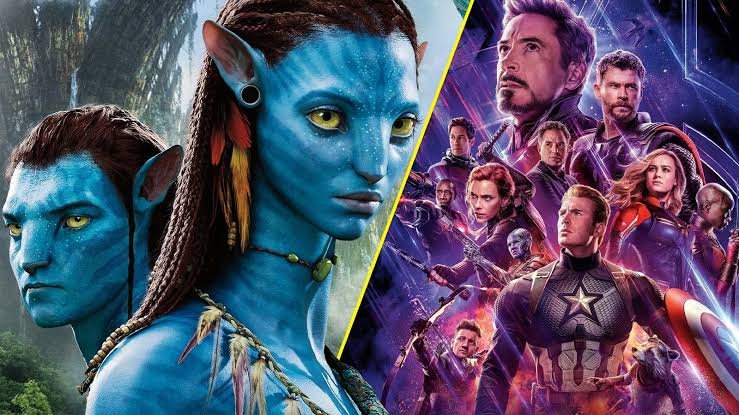
Seven years after its original release, Avengers: Endgame has unfinished business at the box office.
The Marvel Studios blockbuster has overtaken James Cameron’s Avatar to become the highest-grossing film worldwide once again. According to The Walt Disney Company’s October 4 announcement, Endgame now holds an estimated $2.9255 billion, narrowly ahead of Avatar’s $2.9237 billion. That puts just $1.8 million between two of cinema’s biggest hits.
The lead is small. The comeback, however, is substantial: a film released in 2019 has drawn enough fresh ticket sales to rewrite the all-time chart.
The ‘Encore’ release that tipped the balance
The latest theatrical run, titled Avengers Endgame: Encore, has earned $126 million worldwide, according to TheWrap. That includes $36.2 million in North America and $89.8 million from international markets—the extra business that pushed the film back into first place.
Audiences also had a reason to return beyond revisiting a familiar blockbuster. TheWrap reports that the reissue features a modified ending and three new scenes during and after the credits, connected to Avengers: Doomsday. The release therefore serves two purposes: bringing an established favourite back to cinemas and giving viewers a bridge to the next Avengers story.
ALSO READ : Emmy Nominations Announcement Gets a Star Twist… Liza Colón-Zayas & Jeff Hiller Set to Reveal 2026 TV Nominees
A rivalry with a history of reversals
This is another change of leadership in a box office contest that has lasted for years.
Endgame first displaced Avatar in 2019. Cameron’s science-fiction epic regained the crown following its Chinese re-release in 2021. Now, another theatrical return has swung the result in Marvel’s favour. Re-releases have become a decisive part of the competition, extending both films’ earning lives well beyond their original runs.
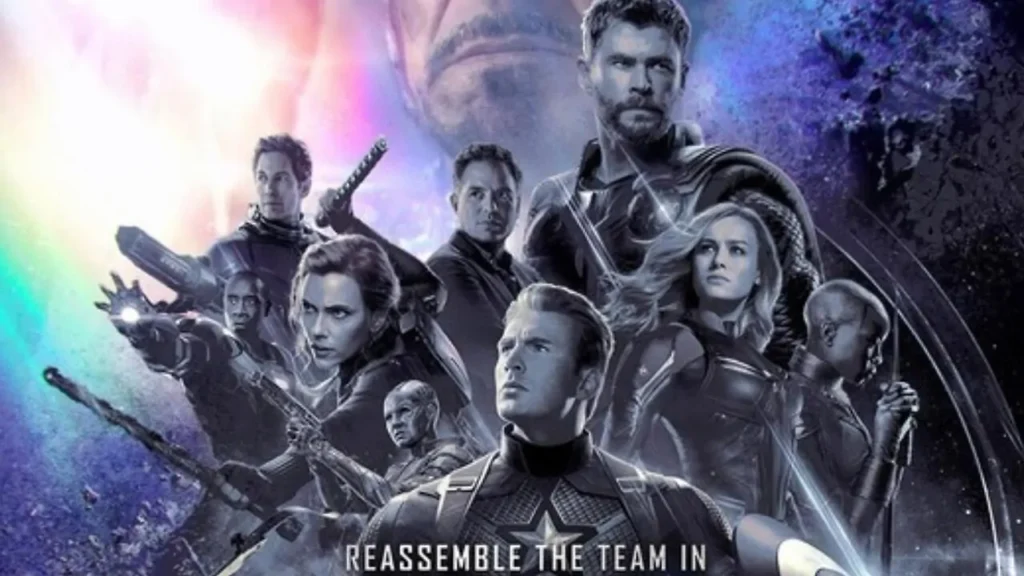
The distinction matters: this is the record for worldwide theatrical revenue without adjustment for inflation, including re-release earnings. It measures money collected rather than the number of tickets sold.
Why ‘Endgame’ matters to ‘Doomsday’
The timing gives Marvel’s comeback an added significance. Avengers: Doomsday is scheduled to reach cinemas on December 18, 2026, and Disney has positioned Endgame as an important foundation for that next chapter.
Explaining the connection, Anthony Russo said: “You really need to pick the story up from where you left it in Endgame.”
That makes this return more than a victory lap. A film remembered for closing a major chapter of Marvel’s story is now helping introduce the next one—and, along the way, has taken back Hollywood’s most closely watched box office title.
Entertainment
Tom Cruise’s ‘Digger’ Faces a Tough Opening: Could ‘Verity’ Take the Lead?
Cruise’s star power meets a fresh box office challenge as the Colleen Hoover adaptation emerges as a formidable rival.
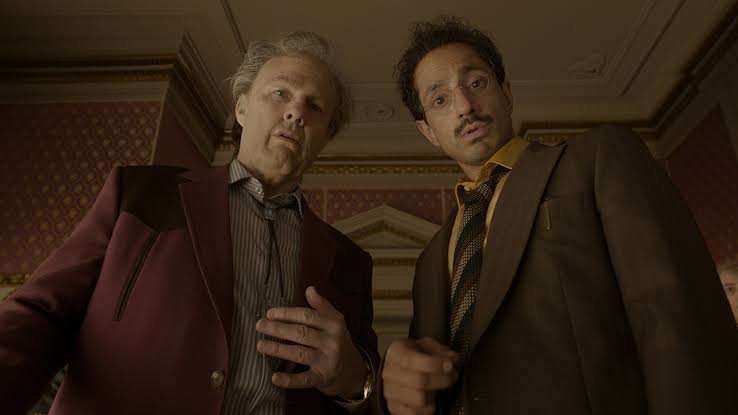
Tom Cruise has spent years persuading audiences to watch him attempt the impossible. With Digger, the challenge is different: convincing moviegoers to embrace an eccentric, darkly comic character who bears little resemblance to his familiar action heroes.
Directed by Alejandro González Iñárritu, the film arrives in US cinemas on October 2, 2026, carrying considerable expectations. Cruise plays Digger Rockwell, an oil tycoon confronting a catastrophe connected to his company’s actions. It is a conspicuous departure for an actor whose recent screen identity has been shaped by spectacular stunts and blockbuster franchises.
Yet the conversation before release has increasingly turned from Cruise’s transformation to a more uncomfortable question: how many people will buy a ticket?
ALSO READ : Emmy Nominations Announcement Gets a Star Twist… Liza Colón-Zayas & Jeff Hiller Set to Reveal 2026 TV Nominees
A costly film facing a modest opening
According to Koimoi’s September 30 report, Digger was tracking for a North American opening below $15 million, against a reported production cost of approximately $125 million. These are reported estimates, rather than confirmed earnings or a final accounting of the film’s costs.
That gap explains the concern surrounding Warner Bros.. An expensive production needs sustained attendance, and a subdued debut would place greater pressure on subsequent weekends and overseas markets.
An opening forecast cannot establish a film’s eventual profit or loss. It can, however, reveal how much work remains for the campaign.
Reviews have complicated the pitch
The critical response has been sharply divided. People reported reactions ranging from admiration for the film’s audacity and Cruise’s commitment to criticism of its scale, coherence and tone.
For potential ticket buyers, that creates an uncertain proposition. Cruise’s presence attracts attention, but attention does not automatically translate into enthusiasm for an unfamiliar kind of film.

The promotional campaign has leaned into that disagreement. The Guardian described advertising that places harsh reactions alongside praise, using the controversy itself to generate interest. Whether that approach encourages curiosity or deepens hesitation remains an open question.
Why ‘Verity’ makes the weekend more intriguing
The Hollywood Reporter expects Digger to open substantially behind Verity, the Amazon MGM Studios adaptation of Colleen Hoover’s novel. hollywoodreporter.com
Starring Anne Hathaway, Dakota Johnson and Josh Hartnett, Verity is also scheduled to open on October 2. Its psychological-thriller premise centres on a writer who discovers a disturbing manuscript while completing another author’s book series.
From a marketing perspective, an established novel and a recognisable thriller setup could offer a more immediate hook. Digger, by comparison, asks audiences to take a greater leap into unfamiliar territory.
The audience verdict is still ahead
Cruise has clearly committed to that leap. At the London premiere, Reuters reported that his transformation involved prosthetics and a padded bodysuit, alongside a demanding performance.
The commercial outcome remains unresolved. Strong audience recommendations could give Digger momentum beyond its initial forecasts. A weak response would make its financial challenge harder.
For now, the film’s biggest suspense lies beyond the screen: whether curiosity about Cruise’s unusual gamble becomes an opening-weekend ticket purchase.
Entertainment
‘Verity’ Could Outopen ‘Digger’: Why Tom Cruise Faces a Tough Contest
The competing releases raise a compelling question: which film will persuade more audiences to buy a ticket?
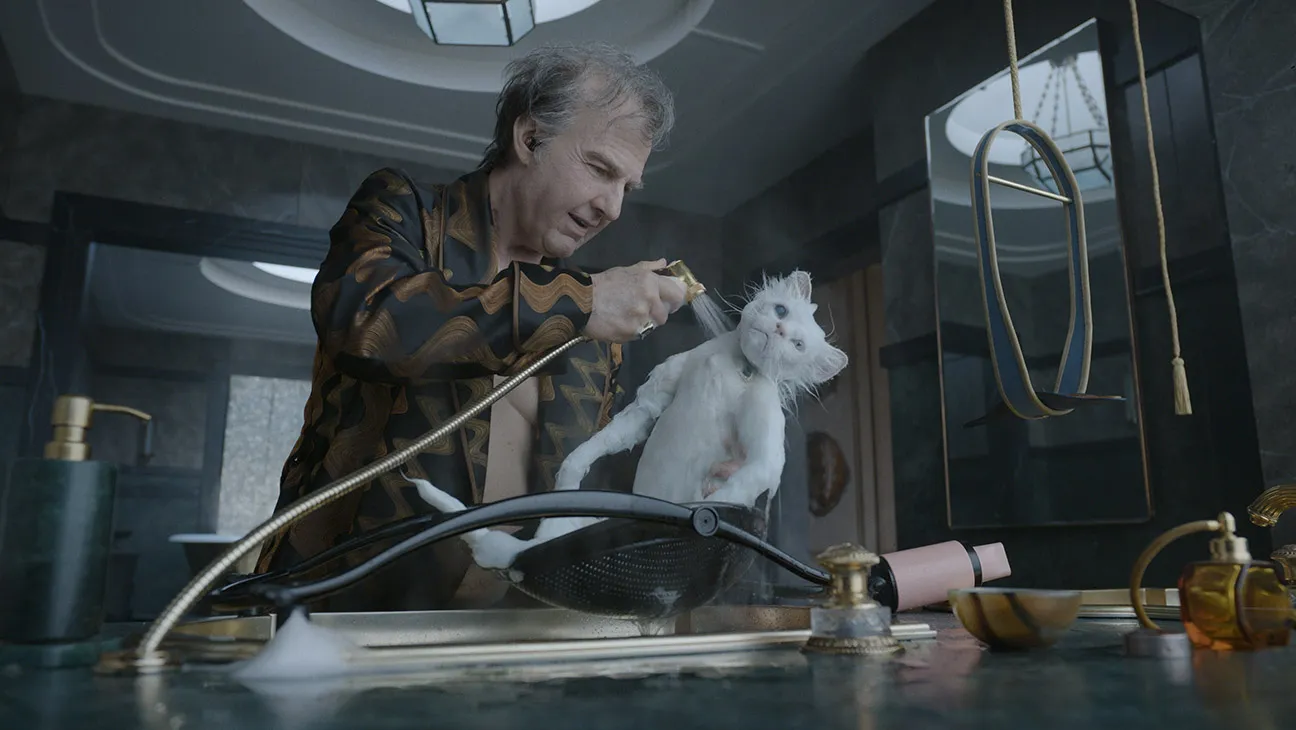
Tom Cruise has spent years persuading audiences to watch him attempt the impossible. With Digger, the challenge is different: convincing moviegoers to embrace an eccentric, darkly comic character who bears little resemblance to his familiar action heroes.
Directed by Alejandro González Iñárritu, the film arrives in US cinemas on October 2, 2026, carrying considerable expectations. Cruise plays Digger Rockwell, an oil tycoon confronting a catastrophe connected to his company’s actions. It is a conspicuous departure for an actor whose recent screen identity has been shaped by spectacular stunts and blockbuster franchises.
Yet the conversation before release has increasingly turned from Cruise’s transformation to a more uncomfortable question: how many people will buy a ticket?
ALSO READ : Emmy Nominations Announcement Gets a Star Twist… Liza Colón-Zayas & Jeff Hiller Set to Reveal 2026 TV Nominees
A costly film facing a modest opening
According to Koimoi’s September 30 report, Digger was tracking for a North American opening below $15 million, against a reported production cost of approximately $125 million. These are reported estimates, rather than confirmed earnings or a final accounting of the film’s costs.
That gap explains the concern surrounding Warner Bros.. An expensive production needs sustained attendance, and a subdued debut would place greater pressure on subsequent weekends and overseas markets.
An opening forecast cannot establish a film’s eventual profit or loss. It can, however, reveal how much work remains for the campaign.
Reviews have complicated the pitch
The critical response has been sharply divided. People reported reactions ranging from admiration for the film’s audacity and Cruise’s commitment to criticism of its scale, coherence and tone.
For potential ticket buyers, that creates an uncertain proposition. Cruise’s presence attracts attention, but attention does not automatically translate into enthusiasm for an unfamiliar kind of film.
The promotional campaign has leaned into that disagreement. The Guardian described advertising that places harsh reactions alongside praise, using the controversy itself to generate interest. Whether that approach encourages curiosity or deepens hesitation remains an open question.
Why ‘Verity’ makes the weekend more intriguing
The Hollywood Reporter expects Digger to open substantially behind Verity, the Amazon MGM Studios adaptation of Colleen Hoover’s novel. hollywoodreporter.com
Starring Anne Hathaway, Dakota Johnson and Josh Hartnett, Verity is also scheduled to open on October 2. Its psychological-thriller premise centres on a writer who discovers a disturbing manuscript while completing another author’s book series.
From a marketing perspective, an established novel and a recognisable thriller setup could offer a more immediate hook. Digger, by comparison, asks audiences to take a greater leap into unfamiliar territory.
The audience verdict is still ahead
Cruise has clearly committed to that leap. At the London premiere, Reuters reported that his transformation involved prosthetics and a padded bodysuit, alongside a demanding performance.
The commercial outcome remains unresolved. Strong audience recommendations could give Digger momentum beyond its initial forecasts. A weak response would make its financial challenge harder.
For now, the film’s biggest suspense lies beyond the screen: whether curiosity about Cruise’s unusual gamble becomes an opening-weekend ticket purchase.

How ‘Avengers: Endgame’ Returned to Cinemas and Reclaimed Box Office Glory

Tom Cruise’s ‘Digger’ Faces a Tough Opening: Could ‘Verity’ Take the Lead?

‘Verity’ Could Outopen ‘Digger’: Why Tom Cruise Faces a Tough Contest

‘Endgame’ Returns to No. 1 ‘Avatar’ Loses Its Box Office Throne

Mark Zuckerberg Faces a New Hollywood Reckoning Why Aaron Sorkin’s Film Hits Closer to Home

1-Iran Issues Dire Warning to Israel and Defies Trump on Nukes: “We’re Ready to Strike Deep Inside”

Sen. Elizabeth Warren Calls It a ‘Cesspool of Corruption’ — Here’s Why Senators Are Now Fighting Back Against the DOJ’s Live Nation Deal That Left Every Fan Betrayed…

Gucci bets on Demna to revive fading glamour as Milan fashion week opens with bold film surprise

Donald Trump’s net worth reveals the fortune behind the former US President and business mogul

“Tomás Rodríguez Net Worth 2025: Panama’s Gold Cup Goal‑Machine’s Surprising Fortune Revealed”

Miss Jamaica Suffers Terrifying Fall Off Miss Universe Stage; Rushed to Hospital on Stretcher in Viral Video

Moana Live-Action Teaser Sparks Outrage as Fans Call Disney’s Move a ‘Clear Money Grab’ — What Went Wrong?

Ryan Gosling’s Project Hail Mary Trailer Stuns Fans with a Mysterious Alien Ally and a Mission That Could Save Earth

Apple delays Jessica Chastain thriller The Savant about domestic extremism after recent US violence
