
Entertainment
Billy Porter Kept a Terrifying Secret for Months — Now He’s Finally Talking About the Three Days He Says He Technically Died, and the Truth Is Heartbreaking…
The Tony and Emmy-winning icon has opened up about his terrifying sepsis battle for the first time — calling himself a “walking miracle” and leaving fans emotional across the world.


There are moments in a person’s life that divide everything into before and after. For Billy Porter, that moment came quietly, without a red carpet or a spotlight — just a hospital bed, a body shutting down, and three days that, by his own account, he should not have survived.
The Tony Award and Emmy Award winner — the man who turned a tuxedo gown at the 2019 Oscars into a cultural moment, who made Pray Tell on Pose one of the most beloved characters in recent television history — has now broken his silence on a health crisis so severe that he is describing himself, with complete sincerity, as a “walking miracle.”
Porter had sepsis. And for three days, he says, he was clinically dead.
“Dead for Three Days”
Let that phrase sit for a moment, because Porter did not reach for it lightly. This is a man who has spent a career choosing words with precision and power — on Broadway stages, on television sets, on red carpets where every inch of his presence was a deliberate artistic statement. When Billy Porter says he was “dead for three days,” he means it in the most visceral, literal sense he can communicate.
ALSO READ : “She Never Made It Out…” Albany House Fire Claims Woman’s Life as Family Pleads for Help to Bring Her Home
Sepsis is not a condition most people think about until it is happening to someone they love — or to themselves. It is the body’s extreme response to an infection, a catastrophic chain reaction in which the immune system turns against its own tissues and organs. It kills approximately 270,000 Americans every year. It can move from manageable to life-threatening within hours. And it is, for many of its survivors, the closest they have ever come to not being here at all.
For Porter, the infection progressed to the point where his body was, by medical reckoning, no longer sustaining life in the way a living body should. Three days. Whatever was happening in the outside world — the projects, the performances, the relentless forward motion of a career built on pushing through every obstacle — none of it existed for him during those seventy-two hours.
He came back. But the person who came back had been changed by what he saw on the other side of that line.
A Life Built on Surviving
To understand why Porter’s revelation lands with such particular weight, you have to understand who he was before the hospital — and what it cost to become that person.

Billy Porter grew up in Pittsburgh, Pennsylvania, the child of a deeply religious household, navigating his identity as a gay Black man in environments that were not always safe or welcoming for either of those things simultaneously. He pursued musical theatre with the kind of determination that only makes sense when the stage is the one place in the world where you feel completely real.
Broadway took a long time to recognise him the way he deserved. He worked for years — good work, serious work — before Kinky Boots in 2013 gave him the role of Lola and, with it, the Tony Award for Best Actor in a Musical. The performance was a revelation. The award was long overdue.
Then came Pose on FX — Ryan Murphy‘s landmark drama set in the New York ballroom culture of the late 1980s and early 1990s, a show that centred Black and Latino LGBTQ+ characters in a way American television had never quite done before. Porter’s portrayal of Pray Tell — mentor, master of ceremonies, human being fighting his own battles while holding everyone else’s world together — earned him the Primetime Emmy Award for Outstanding Lead Actor in a Drama Series in 2019, making him the first openly gay Black man to win in that category.
He had already survived so much — professional rejection, personal pain, public battles with his identity and his faith — before sepsis ever entered the picture.
The Oscars Gown and the Man Beneath It
It is impossible to write about Billy Porter without returning to that image: the Christian Siriano tuxedo gown at the 2019 Academy Awards, the velvet, the train, the absolute unbothered confidence with which he wore it and owned every room he entered in it. The photograph became one of the defining images of that year — a statement about gender, fashion, identity, and the freedom to simply be yourself in front of the entire world.
What people saw was the boldness. What they perhaps didn’t see — what most of us never see about anyone — was the accumulation of everything it took to get to that moment. The years of fighting to be seen. The private health struggles that would later become public. The ongoing work of existing, loudly and without apology, in an industry and a world that does not always make that easy.
The man in the gown and the man on the hospital bed are the same man. That’s the part of the story that the sepsis revelation makes impossible to ignore.
“A Walking Miracle”
Porter has described himself, in the aftermath of his recovery, as a “walking miracle.” It is the kind of phrase that can sound like a cliché until you remember the specific context in which it is being used — a man who was clinically dead for three days is now standing, breathing, speaking, performing, existing.
That is, by any reasonable definition, miraculous.
Sepsis survivors frequently describe the experience as profoundly disorienting — a collision with mortality so direct and so sudden that the world on the other side of it looks different, sometimes permanently. Priorities shift. The things that seemed urgent before the hospital can seem almost abstract afterward. The ordinary acts of being alive — waking up, moving through a day, speaking to another person — carry a weight they didn’t have before.
Porter hasn’t shared every detail of his recovery, and he is under no obligation to do so. What he has shared is enough: that it was serious, that it was life-threatening, that he was not expected by his own body to survive it, and that he did.
Why This Story Matters Beyond the Headlines
Sepsis remains one of the most underreported medical emergencies in public consciousness. It does not have a single high-profile awareness month. It does not generate the same fundraising machinery as cancer or heart disease, despite killing at comparable scale. Many people who experience it do not recognise the symptoms until the condition has already become critical.
When someone with Billy Porter‘s platform speaks openly about their sepsis battle — using words like “dead for three days” that cut through the medical jargon and land with immediate human force — it does something genuinely useful. It makes the condition real to audiences who might otherwise never think about it until they or someone they love is already in a hospital bed.
That is, in its own way, consistent with everything Porter has always done: use visibility as a tool, use honesty as a weapon, and refuse to pretend that the difficult parts of life aren’t happening just because they’re uncomfortable to discuss.
He was dead for three days. He came back. And he is, characteristically, not keeping it to himself.




Entertainment
‘Avatar Aang: The Last Airbender’ Review: Beautifully Animated, Emotionally Inconsistent
The latest chapter in the Avatar universe captivates with its artistry, even as its storytelling misses key opportunities.

Few animated franchises have earned the enduring admiration enjoyed by Avatar: The Last Airbender. Its rich world-building, unforgettable characters and emotional storytelling made it a modern classic, setting an exceptionally high standard for every new chapter that followed.
That legacy continues with Avatar Aang: The Last Airbender, an animated feature that revisits the world fans have loved for years. While the film impresses with spectacular visuals and ambitious action sequences, its storytelling doesn’t always match the artistic brilliance on display.
From the opening moments, the movie showcases remarkable animation, bringing the Four Nations to life with vibrant colors, fluid movement and cinematic scale. The elemental bending sequences are particularly striking, combining technical precision with imaginative choreography that feels worthy of the franchise’s reputation.
ALSO READ : Sen. Elizabeth Warren Calls It a ‘Cesspool of Corruption’ — Here’s Why Senators Are Now Fighting Back Against the DOJ’s Live Nation Deal That Left Every Fan Betrayed…
Visually, the film rarely misses a beat.
However, as the story unfolds, the screenplay struggles to maintain the emotional depth that defined the original television series. Character development often feels rushed, while key emotional moments arrive without the narrative buildup needed to leave a lasting impact.
Returning voice actors, including Eric Nam and Steven Yeun, deliver committed performances that bring warmth and sincerity to their characters. They are joined by an impressive ensemble featuring Dave Bautista, Taika Waititi, Geraldine Viswanathan and Academy Award winner Ke Huy Quan, adding significant star power to the production.
Despite the talented cast, the film occasionally prioritizes spectacle over substance. Large-scale action scenes are visually captivating, but they sometimes come at the expense of quieter moments that once gave the franchise its emotional resonance.

Fans of the original series may also notice that the balance between humor, philosophy and personal growth feels less refined than before. The television series excelled at allowing its characters to evolve naturally over time, whereas the film’s faster pace leaves some relationships feeling underexplored.
Still, there is plenty for longtime followers to appreciate. Familiar locations, references to beloved characters and beautifully crafted world-building reinforce why the Avatar universe continues to captivate audiences across generations.
For newcomers, the movie offers an accessible introduction to one of animation’s most celebrated fantasy worlds. Its visual achievements alone make it a worthwhile theatrical experience, even if the narrative occasionally struggles to maintain momentum.
Ultimately, Avatar Aang: The Last Airbender is a film of contrasts. It succeeds as a technical showcase filled with breathtaking animation and memorable voice performances, yet falls short of fully capturing the emotional storytelling that made the original series legendary.
For fans, the journey remains enjoyable—but it also serves as a reminder that even the most spectacular visuals cannot entirely replace the power of a deeply compelling story.
Entertainment
‘It’s Become a Tradition’: Kevin Feige Reveals Adam Driver Has Turned Down Multiple Marvel Roles…
‘It’s Become a Tradition’: Kevin Feige Reveals Adam Driver Has Turned Down Multiple Marvel Roles…

For years, fans have imagined Adam Driver stepping into the Marvel Cinematic Universe (MCU). His name has frequently surfaced in casting rumors for some of Marvel’s biggest characters, but according to Kevin Feige, those discussions have never led to a deal.
Speaking candidly about the long-running speculation, the Marvel Studios president joked that Driver’s repeated decisions to decline Marvel roles have become something of a “tradition.” The light-hearted remark highlights just how often the Oscar-nominated actor has been considered for projects within the superhero franchise.
Although Feige did not reveal which specific characters Driver was offered, the actor has long been viewed by fans as an ideal choice for several complex Marvel villains and antiheroes. His commanding screen presence and emotionally layered performances have made him a popular name in fan-casting discussions across social media.
ALSO READ : Sen. Elizabeth Warren Calls It a ‘Cesspool of Corruption’ Here’s Why Senators Are Now Fighting Back Against the DOJ’s Live Nation Deal That Left Every Fan Betrayed…
Driver, however, has consistently charted a different path.
Rather than joining another sprawling superhero universe, he has focused on filmmaker-driven projects, collaborating with some of cinema’s most respected directors. Over the years, he has worked with acclaimed names including Martin Scorsese, Ridley Scott, Noah Baumbach, Leos Carax and Michael Mann, building a filmography known more for artistic range than franchise commitments.
That doesn’t mean Driver is unfamiliar with blockbuster success.
The actor became a global star through Star Wars, where he portrayed the conflicted villain Kylo Ren in Disney’s sequel trilogy. His performance earned widespread praise and proved his ability to anchor one of the world’s biggest entertainment franchises.
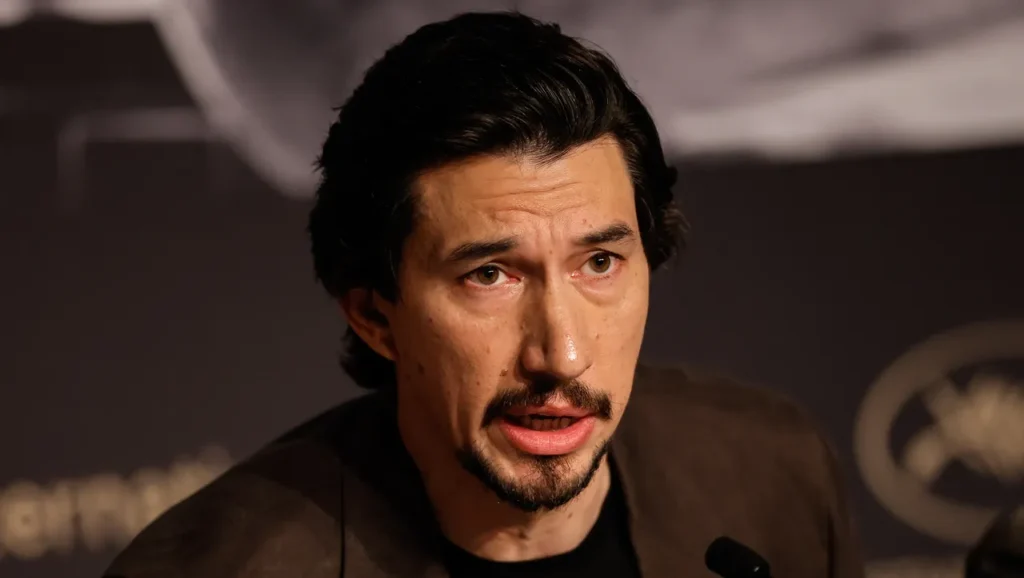
Because of that experience, many believed a move to Marvel was only a matter of time. Yet Feige’s latest comments suggest Driver has remained consistent in politely passing on every opportunity that has come his way.
Marvel Studios, meanwhile, continues expanding its cinematic universe with new heroes, villains and multiverse storylines, regularly attracting some of Hollywood’s biggest names. Even so, Driver’s absence has become one of the franchise’s longest-running casting mysteries.
Whether that changes in the future remains uncertain. Feige’s humorous comments leave the door open, but for now, Driver appears content pursuing projects that align with his personal creative interests rather than joining another interconnected superhero saga.
As Marvel continues searching for the next generation of iconic characters, one question still lingers among fans: will Adam Driver eventually accept the call—or will saying “no” remain part of the tradition?
Entertainment
Locarno to Honor James Gray With Career Leopard: Why the Festival Calls Him ‘The Last Great Novelist of American Cinema’…
Acclaimed filmmaker James Gray will receive the prestigious Career Leopard award at the Locarno Film Festival, celebrating a body of work praised for its literary depth, emotional storytelling, and timeless cinematic vision.

One of contemporary cinema’s most respected storytellers is set to receive one of the industry’s highest honors. James Gray, the acclaimed American filmmaker behind a string of critically celebrated dramas, will be presented with the Career Leopard at the Locarno Film Festival in recognition of his remarkable contribution to world cinema.
The announcement places Gray among an elite group of filmmakers whose artistic achievements have left a lasting impact on international filmmaking. The Career Leopard is one of the festival’s most prestigious lifetime achievement honors, awarded to directors whose work has significantly shaped the language of cinema.
Explaining the decision, Giona A. Nazzaro, Artistic Director of the Locarno Film Festival, described Gray as “the last great novelist of American cinema.” He praised the filmmaker’s ability to weave emotionally rich narratives that draw inspiration from the Jewish diaspora, classic film noir, and literary traditions spanning Russian and North American literature.
ALSO READ : Sen. Elizabeth Warren Calls It a ‘Cesspool of Corruption’ — Here’s Why Senators Are Now Fighting Back Against the DOJ’s Live Nation Deal That Left Every Fan Betrayed…
Throughout his career, James Gray has earned widespread recognition for creating deeply personal stories centered on family, identity, ambition, loyalty, and moral conflict. His films often blend intimate character studies with sweeping emotional themes, resulting in works that resonate long after the credits roll.
Among his best-known films are The Yards, We Own the Night, Two Lovers, The Lost City of Z, and Ad Astra. Across these productions, Gray has developed a signature style that favors nuanced performances, layered storytelling, and emotionally grounded narratives over spectacle.

The Locarno Film Festival, held annually in Switzerland, is regarded as one of the world’s oldest and most influential film festivals. It has built a reputation for championing visionary filmmakers, independent cinema, and artistic innovation while honoring directors whose work continues to shape global filmmaking.
Gray’s recognition reflects not only his achievements in American cinema but also his influence on filmmakers and audiences worldwide. His work has consistently explored universal themes through deeply human stories, earning praise from critics and film enthusiasts alike.
For many in the industry, the Career Leopard acknowledges a filmmaker whose commitment to thoughtful storytelling has remained unwavering in an era increasingly dominated by franchise blockbusters and large-scale commercial productions. His films continue to demonstrate that character-driven narratives can leave an enduring cultural impact.
As James Gray prepares to receive the honor in Locarno, the award serves as both a celebration of his past achievements and recognition of a filmmaker whose influence continues to inspire new generations of directors.
Daily Global Diary will continue covering major announcements from the international film festival circuit as the awards season unfolds.

‘Avatar Aang: The Last Airbender’ Review: Beautifully Animated, Emotionally Inconsistent

‘It’s Become a Tradition’: Kevin Feige Reveals Adam Driver Has Turned Down Multiple Marvel Roles…

Locarno to Honor James Gray With Career Leopard: Why the Festival Calls Him ‘The Last Great Novelist of American Cinema’…

‘The Two Week Wait’ Set to Stir Hearts: Daniel Ings and Jessica Brown Findlay Join Olivia Grant’s Emotional Directorial Debut Ahead of Festival Premiere

Apple TV+ One Tony Away From Historic EGOT Achievement With Schmigadoon!

1-Iran Issues Dire Warning to Israel and Defies Trump on Nukes: “We’re Ready to Strike Deep Inside”

Sen. Elizabeth Warren Calls It a ‘Cesspool of Corruption’ — Here’s Why Senators Are Now Fighting Back Against the DOJ’s Live Nation Deal That Left Every Fan Betrayed…

Donald Trump’s net worth reveals the fortune behind the former US President and business mogul

“She Never Made It Out…” Albany House Fire Claims Woman’s Life as Family Pleads for Help to Bring Her Home

“Tomás Rodríguez Net Worth 2025: Panama’s Gold Cup Goal‑Machine’s Surprising Fortune Revealed”

Miss Jamaica Suffers Terrifying Fall Off Miss Universe Stage; Rushed to Hospital on Stretcher in Viral Video

Moana Live-Action Teaser Sparks Outrage as Fans Call Disney’s Move a ‘Clear Money Grab’ — What Went Wrong?

Ryan Gosling’s Project Hail Mary Trailer Stuns Fans with a Mysterious Alien Ally and a Mission That Could Save Earth

Apple delays Jessica Chastain thriller The Savant about domestic extremism after recent US violence

Avatar 3, Fire and Ash trailer reveals Jake Sully’s family facing terrifying new Na’vi enemies with deadly fire powers
-

 Entertainment1 week ago
How ‘Southern Hospitality’ Quietly Became Bravo’s Secret Powerhouse and Why Everyone Is Talking About Season 4 Drama
-
 Entertainment1 week ago
Himesh Patel’s Unexpected Journey From ‘Yesterday’ to Christopher Nolan’s Next Big Adventure
-

 Entertainment1 week ago
Emma D’Arcy and Matt Smith Promise a ‘Bloodbath’ in House of the Dragon Season 3 And That’s Not the Most Shocking Part
-

 Entertainment1 week ago
BFI Names Isabel Davis as New Filmmaking Fund Director: She’s Now in Charge of a £20 Million Budget… and One of UK Cinema’s Toughest Jobs
-

 Entertainment1 week ago
Quentin Tarantino Refused to Watch Beyond Toy Story 3… So Why Does Toy Story 5 Believe the Story Isn’t Over Yet?
-
 Entertainment1 week ago
Is 24 Jump Street Finally Happening… Jonah Hill and Channing Tatum Set to Return as Ice Cube Talks Heat Up
-

 Entertainment1 week ago
Paramount+ Makes Power Move Signing Matt Shakman to Direct Legal Thriller ‘Discretion’ as Hollywood Buzz Intensifies
-
 Entertainment1 week ago
Greta Lee Says She’s Cherishing Every Moment as Her Hollywood Career Reaches New Heights