
Entertainment
California Vowed to Stop the Paramount–Warner Bros. Merger—Why Did It Back Down?
Political pressure, an uncertain antitrust trial and divisions among the merger’s opponents reportedly helped drive the surprise settlement.


For months, California presented itself as the most formidable obstacle standing between Paramount Skydance and its proposed acquisition of Warner Bros. Discovery.
California Attorney General Rob Bonta, joined by attorneys general from 11 other states, filed an antitrust lawsuit in July seeking to block the deal. The coalition warned that combining two of Hollywood’s most powerful entertainment businesses could weaken competition, reduce employment opportunities and give the merged company greater control over film distribution, cable television and streaming.
Then came the reversal.
Instead of taking the case through a potentially explosive trial, California and the other participating states accepted a settlement that cleared a major legal hurdle for the merger. The Writers Guild of America also resolved its parallel challenge, even while maintaining that the combination could still damage writers and the wider entertainment industry.
So, what changed?
The courtroom outcome was never guaranteed
California had built an ambitious case, but antitrust litigation—particularly in the rapidly changing entertainment market—can be unpredictable.
The states argued that the combined company would control roughly 27% of the market for films distributed to American cinemas, about 30% of blockbuster-film distribution and approximately 27% of basic cable channels. Paramount rejected that interpretation, insisting that regulators were relying on an outdated picture of competition that did not adequately account for companies such as Netflix, Amazon and The Walt Disney Company.
ALSO READ : Cynthia Nixon’s Support Draws Attention as Christine Marinoni Secures NYC Education Post
Taking the dispute to trial would therefore have been a gamble for both sides. California could have won an order blocking the transaction—but it also risked losing the case and walking away without any enforceable protections for workers, theatres or consumers.
A settlement allowed the states to secure immediate commitments instead of betting everything on a judge’s final ruling.
Paramount’s possible California exit raised the political stakes
The legal dispute was never confined to the courtroom.
Led by chief executive David Ellison, Paramount reportedly considered moving important operations away from California as its confrontation with Bonta intensified. Tennessee was among the locations discussed, according to reports.
That possibility created a deeply uncomfortable political calculation. California officials could continue fighting a merger they believed threatened Hollywood—or risk being blamed if one of the industry’s most recognisable studios moved jobs and investment elsewhere.
Governor Gavin Newsom reportedly helped mediate between the two sides. Paramount’s potential departure would have been both an economic setback and a symbolic blow for a state already struggling to prevent film and television production from migrating to cheaper locations.
Paramount put $1.5 billion on the table
The decisive breakthrough came through a series of commitments designed to make settlement politically and economically defensible.
Paramount agreed to increase domestic film-production spending by at least $300 million annually compared with its 2025 level—a minimum additional investment of $1.5 billion over five years.
The merged company must also release at least 30 theatrical films annually during the settlement’s first two years, rising to 32 films per year during the following three years. Its yearly slate must include at least four independent films, while a minimum of 20% must qualify as major tentpole releases.
Failure to meet the annual release requirement could cost the company $30 million for every missing film, with much of that money directed towards entertainment workers, industry programmes and antitrust enforcement.
The agreement additionally requires the preservation of both companies’ physical studio lots, compliance with existing collective-bargaining agreements and annual investment in workforce training, education and community arts initiatives.
The coalition was no longer completely united
Another crucial factor was the growing tension within the alliance opposing the merger.
Not every participating state shared the same appetite for a lengthy and expensive trial. Some officials reportedly viewed enforceable production and labour commitments as a practical victory, while others preferred stronger structural remedies—such as forcing Paramount to sell channels, studios or other assets.

Outside the coalition, Iowa and Montana even sought intervention from the United States Supreme Court against the states’ challenge.
The Writers Guild faced a similar strategic problem. Once the government plaintiffs chose settlement, the union would have been required to continue an enormously expensive and complicated antitrust case largely on its own. The WGA said it still believed the merger would harm the industry, but acknowledged the financial reality of proceeding without government enforcement agencies beside it.
The settlement protects theatres and newsrooms—but only temporarily
Under the agreement, the legacy Paramount and Warner Bros. businesses must negotiate basic-cable carriage agreements independently for five years. Information barriers are also intended to prevent either side from exploiting the other company’s confidential licensing data.
Fees charged to cinema operators must remain flat for three years, providing temporary protection against sudden increases after the merger.
The company must also establish an independent editorial board covering CBS News and CNN. The board is intended to protect fact-based reporting and editorial autonomy as two major American news organisations come under the same corporate leadership.
However, critics argue that these behavioural safeguards are no substitute for maintaining competition. Most of the commitments expire after three to five years, and Paramount was not required to sell any significant studio, television network or entertainment franchise.
Bonta insists the settlement is not an endorsement
Bonta has attempted to draw a careful distinction between accepting the settlement and supporting the merger.
Calling the agreement “not a vote of support,” he acknowledged that the acquisition does not necessarily serve competition well. His defence is that the negotiated conditions deliver measurable benefits—more production, financial penalties for missed targets and additional oversight—that might have disappeared entirely if California lost at trial.
The decision still represents a dramatic retreat from the state’s original demand to block the transaction. It also delivers a major victory to Ellison, who can now bring HBO, Paramount+, CNN, CBS and two historic film studios under one corporate umbrella.
Paramount was facing another powerful deadline: it could have owed Warner Bros. Discovery shareholders approximately $7 million for every day the deal remained unfinished after September 30. That ticking financial clock encouraged the company to improve its offer—but it also intensified pressure on every party to find an agreement.
California did not suddenly conclude that the merger was harmless. It settled because the alternative involved political danger, a divided alliance, enormous litigation costs and an uncertain courtroom verdict.
The state extracted billions in production commitments and several temporary protections. Paramount, however, secured the prize that mattered most: permission to create one of the most powerful media conglomerates in Hollywood history.
Whether that bargain protects Hollywood—or merely postpones the consequences of consolidation—will become clear only after the cameras start rolling.








Entertainment
How ‘Avengers: Endgame’ Returned to Cinemas and Reclaimed Box Office Glory
Renewed ticket sales send Marvel’s 2019 finale past ‘Avatar’ to lead the all-time global chart again.

Seven years after its original release, Avengers: Endgame has unfinished business at the box office.
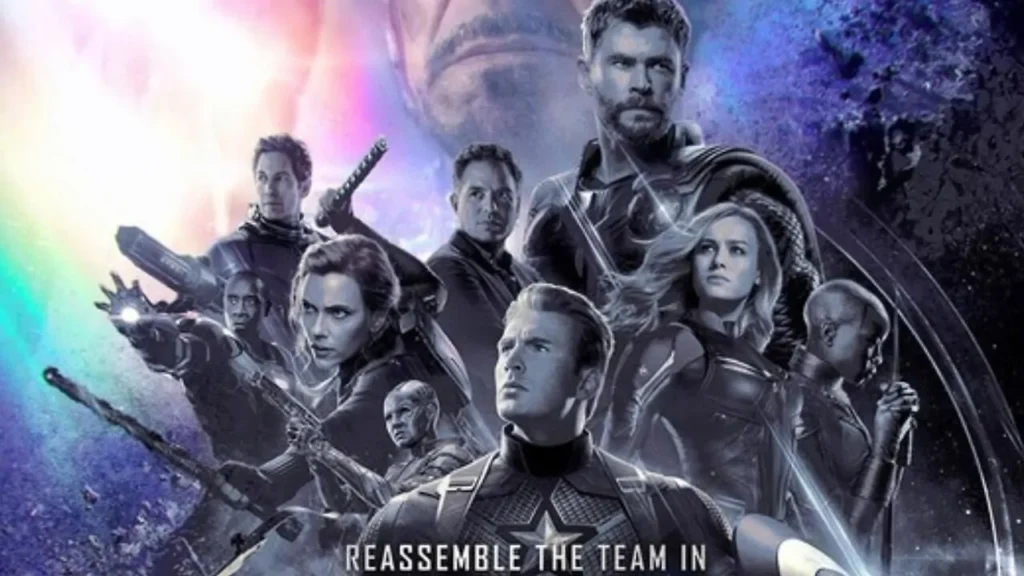
The Marvel Studios blockbuster has overtaken James Cameron’s Avatar to become the highest-grossing film worldwide once again. According to The Walt Disney Company’s October 4 announcement, Endgame now holds an estimated $2.9255 billion, narrowly ahead of Avatar’s $2.9237 billion. That puts just $1.8 million between two of cinema’s biggest hits.
The lead is small. The comeback, however, is substantial: a film released in 2019 has drawn enough fresh ticket sales to rewrite the all-time chart.
The ‘Encore’ release that tipped the balance
The latest theatrical run, titled Avengers Endgame: Encore, has earned $126 million worldwide, according to TheWrap. That includes $36.2 million in North America and $89.8 million from international markets—the extra business that pushed the film back into first place.
Audiences also had a reason to return beyond revisiting a familiar blockbuster. TheWrap reports that the reissue features a modified ending and three new scenes during and after the credits, connected to Avengers: Doomsday. The release therefore serves two purposes: bringing an established favourite back to cinemas and giving viewers a bridge to the next Avengers story.
ALSO READ : Emmy Nominations Announcement Gets a Star Twist… Liza Colón-Zayas & Jeff Hiller Set to Reveal 2026 TV Nominees
A rivalry with a history of reversals
This is another change of leadership in a box office contest that has lasted for years.
Endgame first displaced Avatar in 2019. Cameron’s science-fiction epic regained the crown following its Chinese re-release in 2021. Now, another theatrical return has swung the result in Marvel’s favour. Re-releases have become a decisive part of the competition, extending both films’ earning lives well beyond their original runs.
The distinction matters: this is the record for worldwide theatrical revenue without adjustment for inflation, including re-release earnings. It measures money collected rather than the number of tickets sold.
Why ‘Endgame’ matters to ‘Doomsday’
The timing gives Marvel’s comeback an added significance. Avengers: Doomsday is scheduled to reach cinemas on December 18, 2026, and Disney has positioned Endgame as an important foundation for that next chapter.
Explaining the connection, Anthony Russo said: “You really need to pick the story up from where you left it in Endgame.”
That makes this return more than a victory lap. A film remembered for closing a major chapter of Marvel’s story is now helping introduce the next one—and, along the way, has taken back Hollywood’s most closely watched box office title.
Entertainment
Tom Cruise’s ‘Digger’ Faces a Tough Opening: Could ‘Verity’ Take the Lead?
Cruise’s star power meets a fresh box office challenge as the Colleen Hoover adaptation emerges as a formidable rival.
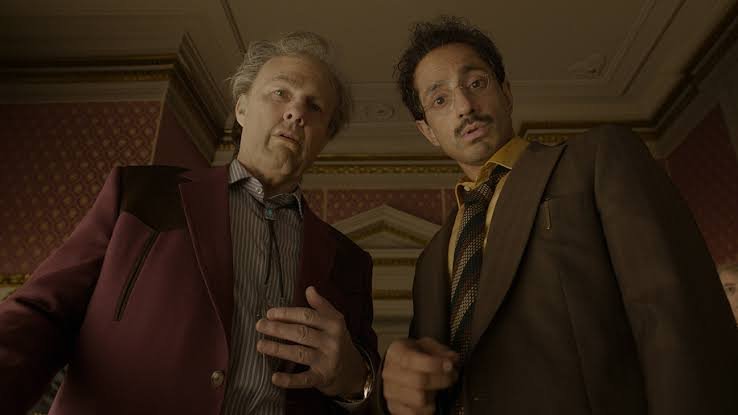
Tom Cruise has spent years persuading audiences to watch him attempt the impossible. With Digger, the challenge is different: convincing moviegoers to embrace an eccentric, darkly comic character who bears little resemblance to his familiar action heroes.
Directed by Alejandro González Iñárritu, the film arrives in US cinemas on October 2, 2026, carrying considerable expectations. Cruise plays Digger Rockwell, an oil tycoon confronting a catastrophe connected to his company’s actions. It is a conspicuous departure for an actor whose recent screen identity has been shaped by spectacular stunts and blockbuster franchises.
Yet the conversation before release has increasingly turned from Cruise’s transformation to a more uncomfortable question: how many people will buy a ticket?
ALSO READ : Emmy Nominations Announcement Gets a Star Twist… Liza Colón-Zayas & Jeff Hiller Set to Reveal 2026 TV Nominees
A costly film facing a modest opening
According to Koimoi’s September 30 report, Digger was tracking for a North American opening below $15 million, against a reported production cost of approximately $125 million. These are reported estimates, rather than confirmed earnings or a final accounting of the film’s costs.
That gap explains the concern surrounding Warner Bros.. An expensive production needs sustained attendance, and a subdued debut would place greater pressure on subsequent weekends and overseas markets.
An opening forecast cannot establish a film’s eventual profit or loss. It can, however, reveal how much work remains for the campaign.
Reviews have complicated the pitch
The critical response has been sharply divided. People reported reactions ranging from admiration for the film’s audacity and Cruise’s commitment to criticism of its scale, coherence and tone.
For potential ticket buyers, that creates an uncertain proposition. Cruise’s presence attracts attention, but attention does not automatically translate into enthusiasm for an unfamiliar kind of film.

The promotional campaign has leaned into that disagreement. The Guardian described advertising that places harsh reactions alongside praise, using the controversy itself to generate interest. Whether that approach encourages curiosity or deepens hesitation remains an open question.
Why ‘Verity’ makes the weekend more intriguing
The Hollywood Reporter expects Digger to open substantially behind Verity, the Amazon MGM Studios adaptation of Colleen Hoover’s novel. hollywoodreporter.com
Starring Anne Hathaway, Dakota Johnson and Josh Hartnett, Verity is also scheduled to open on October 2. Its psychological-thriller premise centres on a writer who discovers a disturbing manuscript while completing another author’s book series.
From a marketing perspective, an established novel and a recognisable thriller setup could offer a more immediate hook. Digger, by comparison, asks audiences to take a greater leap into unfamiliar territory.
The audience verdict is still ahead
Cruise has clearly committed to that leap. At the London premiere, Reuters reported that his transformation involved prosthetics and a padded bodysuit, alongside a demanding performance.
The commercial outcome remains unresolved. Strong audience recommendations could give Digger momentum beyond its initial forecasts. A weak response would make its financial challenge harder.
For now, the film’s biggest suspense lies beyond the screen: whether curiosity about Cruise’s unusual gamble becomes an opening-weekend ticket purchase.
Entertainment
‘Verity’ Could Outopen ‘Digger’: Why Tom Cruise Faces a Tough Contest
The competing releases raise a compelling question: which film will persuade more audiences to buy a ticket?

Tom Cruise has spent years persuading audiences to watch him attempt the impossible. With Digger, the challenge is different: convincing moviegoers to embrace an eccentric, darkly comic character who bears little resemblance to his familiar action heroes.
Directed by Alejandro González Iñárritu, the film arrives in US cinemas on October 2, 2026, carrying considerable expectations. Cruise plays Digger Rockwell, an oil tycoon confronting a catastrophe connected to his company’s actions. It is a conspicuous departure for an actor whose recent screen identity has been shaped by spectacular stunts and blockbuster franchises.
Yet the conversation before release has increasingly turned from Cruise’s transformation to a more uncomfortable question: how many people will buy a ticket?
ALSO READ : Emmy Nominations Announcement Gets a Star Twist… Liza Colón-Zayas & Jeff Hiller Set to Reveal 2026 TV Nominees
A costly film facing a modest opening
According to Koimoi’s September 30 report, Digger was tracking for a North American opening below $15 million, against a reported production cost of approximately $125 million. These are reported estimates, rather than confirmed earnings or a final accounting of the film’s costs.
That gap explains the concern surrounding Warner Bros.. An expensive production needs sustained attendance, and a subdued debut would place greater pressure on subsequent weekends and overseas markets.
An opening forecast cannot establish a film’s eventual profit or loss. It can, however, reveal how much work remains for the campaign.
Reviews have complicated the pitch
The critical response has been sharply divided. People reported reactions ranging from admiration for the film’s audacity and Cruise’s commitment to criticism of its scale, coherence and tone.
For potential ticket buyers, that creates an uncertain proposition. Cruise’s presence attracts attention, but attention does not automatically translate into enthusiasm for an unfamiliar kind of film.
The promotional campaign has leaned into that disagreement. The Guardian described advertising that places harsh reactions alongside praise, using the controversy itself to generate interest. Whether that approach encourages curiosity or deepens hesitation remains an open question.
Why ‘Verity’ makes the weekend more intriguing
The Hollywood Reporter expects Digger to open substantially behind Verity, the Amazon MGM Studios adaptation of Colleen Hoover’s novel. hollywoodreporter.com
Starring Anne Hathaway, Dakota Johnson and Josh Hartnett, Verity is also scheduled to open on October 2. Its psychological-thriller premise centres on a writer who discovers a disturbing manuscript while completing another author’s book series.
From a marketing perspective, an established novel and a recognisable thriller setup could offer a more immediate hook. Digger, by comparison, asks audiences to take a greater leap into unfamiliar territory.
The audience verdict is still ahead
Cruise has clearly committed to that leap. At the London premiere, Reuters reported that his transformation involved prosthetics and a padded bodysuit, alongside a demanding performance.
The commercial outcome remains unresolved. Strong audience recommendations could give Digger momentum beyond its initial forecasts. A weak response would make its financial challenge harder.
For now, the film’s biggest suspense lies beyond the screen: whether curiosity about Cruise’s unusual gamble becomes an opening-weekend ticket purchase.

How ‘Avengers: Endgame’ Returned to Cinemas and Reclaimed Box Office Glory

Tom Cruise’s ‘Digger’ Faces a Tough Opening: Could ‘Verity’ Take the Lead?

‘Verity’ Could Outopen ‘Digger’: Why Tom Cruise Faces a Tough Contest

‘Endgame’ Returns to No. 1 ‘Avatar’ Loses Its Box Office Throne

Mark Zuckerberg Faces a New Hollywood Reckoning Why Aaron Sorkin’s Film Hits Closer to Home

1-Iran Issues Dire Warning to Israel and Defies Trump on Nukes: “We’re Ready to Strike Deep Inside”

Sen. Elizabeth Warren Calls It a ‘Cesspool of Corruption’ — Here’s Why Senators Are Now Fighting Back Against the DOJ’s Live Nation Deal That Left Every Fan Betrayed…

Gucci bets on Demna to revive fading glamour as Milan fashion week opens with bold film surprise

Donald Trump’s net worth reveals the fortune behind the former US President and business mogul

“Tomás Rodríguez Net Worth 2025: Panama’s Gold Cup Goal‑Machine’s Surprising Fortune Revealed”

Miss Jamaica Suffers Terrifying Fall Off Miss Universe Stage; Rushed to Hospital on Stretcher in Viral Video

Moana Live-Action Teaser Sparks Outrage as Fans Call Disney’s Move a ‘Clear Money Grab’ — What Went Wrong?

Ryan Gosling’s Project Hail Mary Trailer Stuns Fans with a Mysterious Alien Ally and a Mission That Could Save Earth

Apple delays Jessica Chastain thriller The Savant about domestic extremism after recent US violence
