
Automobile
Chevrolet’s Big 5-Year Plan Has a Surprise: Camaro Could Return, New Sedan Coming and Corvette Set for a Makeover…
General Motors is reshaping Chevrolet’s product strategy through 2030, slowing parts of its EV push while bringing more attention to hybrids, updated combustion engines and a possible return to the passenger-car market.


Chevrolet appears to be rewriting its automotive playbook for the second half of the decade.
Instead of pushing ahead with an all-electric future at full speed, the American automaker is reportedly preparing a more flexible product strategy that will keep petrol-powered vehicles and hybrids firmly in the picture — while continuing to invest in electric models.
The five-year roadmap through 2030 reflects a changing reality for the car industry.
Electric vehicle adoption has not accelerated as quickly as many manufacturers once expected, while the removal of federal EV tax credits has added another challenge for automakers trying to make electric models more affordable for customers.
For Chevrolet, the answer appears to be a balancing act.
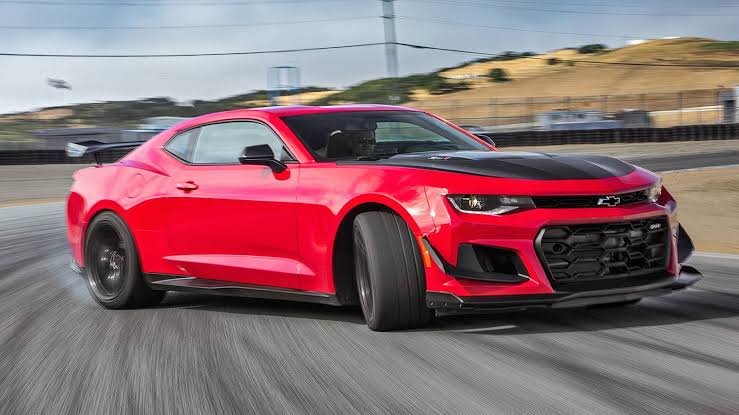
And somewhere in that strategy could be one of the biggest surprises of all: the return of the Camaro.
Is the Camaro Really Coming Back?
The most intriguing part of Chevrolet’s reported product roadmap is the planned return to the passenger-car market around 2028.
The company is reportedly working on an all-new rear-wheel-drive sports sedan, a move that would be unusual in an era when crossovers and SUVs dominate the market.
But the bigger question is what badge this new sedan could wear.
Speculation suggests the four-door model could become the next chapter in the Chevrolet Camaro story.
The iconic muscle car disappeared from Chevrolet’s lineup after the 2023 model year, leaving fans wondering whether the nameplate would ever return.
At the time, Scott Bell, Chevrolet’s Vice President of Global Chevrolet, hinted that the story might not be over.
“While we are not announcing an immediate successor today, rest assured, this is not the end of Camaro’s story,” Bell said previously.
Those words have continued to fuel speculation.
Over the past few years, rumours have suggested that the Camaro could return as an electric vehicle or even as a crossover.
Now, the idea of a four-door sports sedan could offer Chevrolet an opportunity to reinvent the nameplate while maintaining its performance-oriented identity.
Such a model could also serve as a spiritual successor to both the outgoing two-door Camaro and the discontinued Chevrolet Malibu.
A New Sedan Could Share Its DNA With Buick and Cadillac
The reported rear-wheel-drive sedan is expected to be built at General Motors’ Lansing Grand River Assembly Plant in Michigan.
The model could reportedly share its platform and underlying architecture with future vehicles from GM’s other brands, including a new Buick sedan and the next-generation Cadillac CT5.
That strategy could allow General Motors to spread development and manufacturing costs across multiple products.
The timing also appears significant.
GM is reportedly preparing to retire the compact Cadillac CT4 after the 2026 model year, potentially creating room in its portfolio for a new generation of rear-wheel-drive sedans.
If the reports prove accurate, Chevrolet could once again have a performance-focused passenger car in its lineup — although this time, it may have four doors instead of two.
For Camaro fans, that could be both exciting and controversial.
A four-door Camaro would be a dramatic departure from the classic coupe formula, but it could also give the nameplate a chance to survive in a market that has increasingly moved away from traditional sports cars.
Chevrolet Is Not Abandoning Petrol Engines
While the Camaro speculation has grabbed attention, the broader message from Chevrolet’s five-year plan is clear: internal-combustion engines are not disappearing anytime soon.
The automaker is reportedly extending the life of its profitable petrol-powered trucks and SUVs while developing newer generations of combustion engines.
That approach reflects the reality of the American car market, where full-size pickups and large SUVs remain major contributors to automaker profits.
Instead of forcing customers to make an immediate switch to fully electric vehicles, Chevrolet appears to be preparing a wider range of powertrain choices.
That includes traditional petrol engines, hybrids, plug-in hybrids and fully electric vehicles.
The strategy could give customers more flexibility while the market continues to evolve.
New Silverado Brings Bigger Engines and a Huge Screen
Chevrolet’s pickup strategy remains central to its future.
The company has already unveiled a new-generation Chevrolet Silverado 1500, which is expected to enter production in October ahead of its arrival as a 2027 model-year vehicle.
The new pickup is set to feature new 5.7-litre and 6.6-litre Gen 6 engines, along with a massive 60-inch display inside the cabin.
The first customer deliveries are expected toward the end of 2026.
The Silverado’s continued importance also explains why Chevrolet is not rushing to abandon combustion-powered trucks.
For many American buyers, pickup trucks remain essential work and lifestyle vehicles, and the transition to electric power is proving more complicated than initially expected.
Silverado EV Is Staying in the Game
Despite the slower EV transition, Chevrolet is not walking away from electric trucks.
The Silverado EV is expected to remain part of the company’s lineup.
That decision comes as competitors adjust their own strategies.
Ford has moved away from its original plans for the F-150 Lightning’s long-term positioning, while Ram has reportedly shifted its strategy for an electric pickup toward a range-extended approach.
Chevrolet’s decision to keep the Silverado EV alive suggests that the company still sees a future for electric pickups — even if that future arrives more gradually than initially predicted.
Plug-In Hybrids Could Become the Middle Ground
One of the most interesting parts of Chevrolet’s strategy is the planned expansion of plug-in hybrid technology.
The company is reportedly preparing plug-in hybrid versions of some of its most important trucks and SUVs.
The Silverado and Equinox are among the vehicles expected to receive plug-in hybrid variants, potentially around 2028.
For Chevrolet, plug-in hybrids could provide a bridge between petrol and electric power.
Drivers would be able to use electric power for shorter journeys while retaining an internal-combustion engine for longer trips.
That flexibility could appeal to customers who are interested in electrification but remain concerned about charging infrastructure, range or the cost of switching completely to an EV.
Trax and Blazer EV Also Get Updates
Chevrolet’s smaller crossover lineup is not being ignored.
The affordable Chevrolet Trax is reportedly scheduled to receive a mid-cycle refresh around 2028.
The Blazer EV is also expected to undergo an update around the same period.
Meanwhile, the affordable Chevrolet Bolt is expected to continue as part of the brand’s electric vehicle portfolio.
Together, these models show that Chevrolet’s strategy is not about choosing petrol over electric.
Instead, the company appears to be building a portfolio that can adapt to different customer preferences.
A New Commercial Van Is Also in the Works
Beyond passenger vehicles, General Motors is reportedly working on a new Chevrolet commercial van in partnership with Hyundai.
The project could give Chevrolet another opportunity to expand in the growing commercial vehicle market.
Electric vans are becoming increasingly important for businesses looking to reduce operating costs, but the commercial sector also has demanding requirements for range, payload and uptime.
A flexible powertrain strategy could therefore prove valuable as the market develops.
Chevrolet’s New Strategy Could Be Its Most Realistic Yet
The automotive industry spent much of the past decade moving toward an all-electric future.
But the transition has not been as quick or as straightforward as many expected.
Chevrolet’s reported five-year roadmap appears to acknowledge that reality.
The company is continuing to invest in EVs while simultaneously extending combustion engines, introducing plug-in hybrids and refreshing its traditional trucks and SUVs.
And then there is the Camaro.
If the reports are accurate, Chevrolet could be preparing to bring the legendary nameplate back in a form that nobody would have expected a few years ago — a four-door, rear-wheel-drive sports sedan.
Whether that car actually wears the Camaro badge remains to be seen.
But one thing is becoming increasingly clear: Chevrolet’s future may not be fully electric, at least not yet.
And if the company’s five-year plan plays out as reported, the next few years could bring a very different Chevrolet lineup — one where a familiar muscle-car name, a new sedan and a redesigned Corvette all have a role to play…



Automobile
Tesla’s FSD Hits a European Roadblock: France Says ‘Not Yet’ Over Safety Concerns as EU Decision Looms…
France has become the first EU government to publicly oppose Tesla’s Full Self-Driving system in its current form, raising fresh questions over whether the technology can secure wider approval across Europe.
A major roadblock has emerged for Tesla’s ambitious driver-assistance technology in Europe.
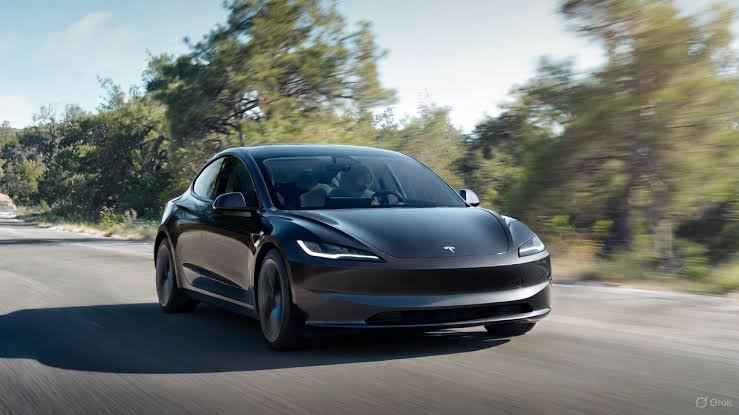
France has publicly opposed the use of Tesla’s Full Self-Driving (FSD) system on European Union roads in its current form, citing concerns over safety and the balance between technological progress and road risk.
The decision marks the first known public rejection by an EU government of a Dutch-led effort to secure broader European approval for the technology.
The development could become a significant hurdle for Elon Musk‘s electric vehicle company as it attempts to expand the reach of its advanced driver-assistance software across one of the world’s most tightly regulated automotive markets.
France’s position comes at a crucial time, with a possible EU-wide decision reportedly expected later this year.
France Says Tesla FSD Is Not Ready Yet
France’s Transport Minister Philippe Tabarot said the country recognises the technological advances offered by Tesla’s system but believes the current safety trade-offs are not sufficient to justify approval.
The French government has therefore taken the position that Tesla’s FSD should not yet be authorised in its present form.
The concerns are significant because the system is designed to handle several driving functions, including accelerating, braking and steering.
However, the technology remains a driver-assistance system, rather than a fully autonomous driving solution.
The human driver is still expected to remain alert and ready to take control whenever necessary.
That distinction is likely to be at the centre of the debate as European regulators assess whether the system is safe enough for wider deployment.
France Becomes First Public EU Opponent
France’s opposition is particularly notable because several other European countries have already moved in the opposite direction.
The Netherlands provisionally approved Tesla’s FSD technology for use on Dutch roads in April.
That decision was followed by similar moves from Belgium, Denmark, Estonia and Lithuania, all of which reportedly backed the technology ahead of a potential vote on broader EU approval.
France’s rejection now introduces a significant disagreement within the bloc.
While the Netherlands has taken the lead in pushing the technology forward, France believes more work is required before the system can be considered safe enough.
French officials have also indicated that other European countries may share similar concerns, although they have not publicly identified those nations.
Sweden has previously been reported as another country that could oppose approval.
If more EU members adopt France’s position, the path toward bloc-wide approval could become considerably more complicated.

Tesla CEO Elon Musk Pushes Back
Tesla CEO Elon Musk responded strongly to France’s position.
In a statement on X, Musk argued that delaying approval of FSD in France would “cost lives”.
The response highlights the fundamentally different positions being taken by Tesla and regulators.
Tesla has long argued that advanced driver-assistance technologies can improve road safety by reducing human error.
Regulators, however, must assess not only the potential benefits but also how drivers interact with increasingly sophisticated automated systems.
The central question is therefore not simply whether the technology works.
It is whether drivers can safely rely on it, understand its limitations and intervene when necessary.
That debate is becoming increasingly important as driver-assistance systems become more capable.
What Exactly Does Tesla’s FSD Do?
Despite its name, Tesla’s Full Self-Driving system does not currently make a vehicle completely autonomous.
Instead, it is an advanced driver-assistance technology that can perform several driving tasks while the driver remains responsible for supervising the vehicle.
Depending on the system’s capabilities and local regulations, FSD can assist with functions such as steering, acceleration and braking.
The driver must still be prepared to intervene.
This distinction has created an ongoing debate around the terminology used by the automotive industry.
Safety authorities in different countries have increasingly focused on ensuring that drivers do not mistakenly believe that advanced assistance systems allow them to stop paying attention to the road.
That issue could become one of the biggest factors influencing the European regulatory debate.
Why Europe Matters So Much to Tesla
The European market is strategically important for Tesla.
The company’s electric vehicles have faced a challenging period in the region, with registrations experiencing a significant decline before showing signs of recovery.
FSD is therefore seen as more than just a technological feature.
For Tesla, advanced software could become an important selling point and a potentially valuable source of recurring revenue.
If the company can secure wider regulatory approval in Europe, it could strengthen the appeal of its vehicles and potentially generate additional software-related income.
But regulatory resistance could slow down that expansion.
EU Vote Could Decide the Next Chapter
The Netherlands-led approval process could eventually lead to a wider European decision.
A possible EU vote is expected to take place later this year, although the exact timing and outcome remain uncertain.
France’s opposition means the debate is unlikely to be straightforward.
The country is continuing technical discussions with the Netherlands and other European governments, suggesting that the door to further negotiations remains open.
For Tesla, that could provide an opportunity to address regulators’ concerns.
But the company will likely face increasing pressure to demonstrate that its technology can deliver meaningful safety benefits without encouraging drivers to become overly reliant on automated assistance.
The Bigger Battle Over Self-Driving Technology
The disagreement over Tesla FSD reflects a much larger debate unfolding across the automotive industry.
Car manufacturers are racing to develop increasingly sophisticated systems that can handle more aspects of driving.
At the same time, governments and safety authorities are trying to determine where the line should be drawn between driver assistance and genuine autonomous driving.
Tesla is one of the most prominent companies in this race, making every regulatory decision involving its technology closely watched by the industry.
France’s message is clear for now: technological progress alone is not enough.
The safety case must also be convincing.
As Europe moves toward a possible decision on Tesla’s FSD technology, the outcome could have consequences well beyond the French market.
For Tesla, the question is no longer simply how advanced its software can become.
It is whether European regulators believe the technology is ready for the roads — and France has made its answer clear, at least for now: not yet…
Automobile
Ford Says Goodbye to Boring Cars? Custom Garage Lets Owners Turn Mustang, F-150, Maverick and Bronco Into Something Wild…
Ford Custom Garage is bringing factory-backed performance upgrades, custom graphics, suspension kits and styling packages directly to dealerships, giving buyers a new way to personalize some of the brand’s biggest icons.

Ford appears to be taking a very different approach to the car business — and its latest idea could be a dream come true for enthusiasts who have always wanted to personalize their vehicles without stepping into the uncertain world of aftermarket modifications.
The automaker’s new Ford Custom Garage program is effectively turning its dealerships into a kind of performance and customization playground.
Owners of iconic models such as the Ford Mustang, Ford F-150, Ford Maverick and Ford Bronco can choose from a growing range of upgrades, including wheels, decals, interior touches, suspension components and engine performance parts.
The biggest attraction?
These upgrades are designed to be installed through Ford’s dealer network and covered by a factory-backed warranty.
For buyers who want their vehicles to feel more personal — and perhaps more powerful — the message is simple: you may not need to go searching for an aftermarket shop anymore.
Ford Wants to Move Beyond the “Boring-Car Business”
The strategy reflects a broader change in the way Ford sees itself.
The company has been increasingly focused on vehicles with strong identities and passionate customer followings rather than trying to compete in every possible market segment.
Jim Farley, Ford’s CEO, previously described the strategy as moving away from the “boring-car business” and toward an “iconic-vehicle business.”
Ford Custom Garage appears to fit neatly into that philosophy.
The idea is not simply to sell a car or truck.
Instead, the company wants customers to buy a platform and then personalize it according to their own taste.
Ryan Long, Ford Racing Parts Planning Supervisor, explained the thinking behind the program by pointing to the fact that every customer has different preferences.
That could mean a more aggressive suspension setup for one buyer, extra horsepower for another or simply a unique set of wheels and graphics for someone else.
The approach is somewhat reminiscent of Porsche, which has built a business around allowing customers to heavily personalize their cars through factory options.
Ford is now bringing a similar philosophy into the world of performance pickups, off-road SUVs and muscle cars.
Mustang FP800S: Nearly Supercar-Level Power
Among the most eye-catching offerings is the Mustang FP800S package.
The upgrade takes the already powerful Mustang GT and pushes its 5.0-litre Coyote V8 to an astonishing 810 horsepower.
That is a huge leap over the standard Mustang GT’s output.
It also puts the modified Mustang surprisingly close to the power figures of far more expensive performance machines.
The package isn’t only about adding horsepower.
The Mustang FP800S can also be equipped with performance-focused suspension upgrades, including active magnetic-ride shocks.
Drivers can choose between Normal, Sport and Track settings to alter the car’s ride and handling characteristics.
Ford also offers visual upgrades, including distinctive wheels and carbon-fibre components such as a rear wing.
The result is a Mustang that can be configured to look and feel substantially different from a standard showroom car.
For enthusiasts, that’s the real appeal.
Instead of buying a Mustang and immediately heading to an aftermarket tuner, buyers can potentially create a more personalised performance car through Ford’s own ecosystem.
The F-150 Gets Its Own 700-HP Treatment
The customization program isn’t limited to sports cars.
Ford’s legendary F-150 also gets an aggressive performance package.
The FP700S package is designed for F-150 variants powered by the 5.0-litre Coyote V8.
The package reportedly adds a combination of performance and visual upgrades, including a lowered suspension, special wheels and tyres, graphics, fender badging and a front splitter.
The truck can also be equipped with an upgraded exhaust system.
The result is a more dramatic interpretation of America’s best-selling pickup formula.
The F-150 may be built for work and utility, but Ford is clearly betting that plenty of customers also want their trucks to have personality.
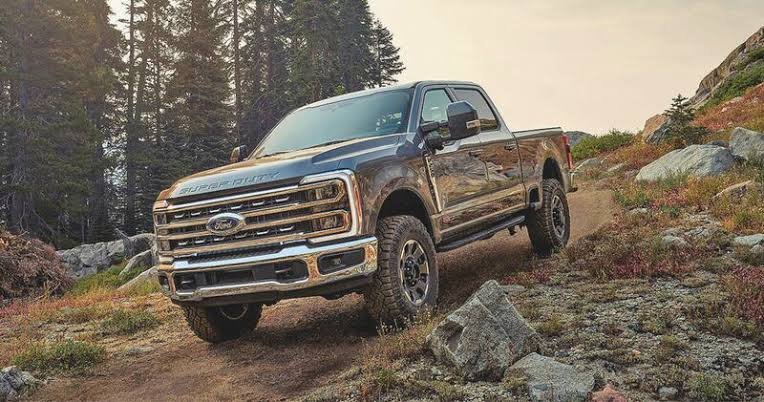
And, judging by the Custom Garage approach, Ford is happy to give them exactly that.
Maverick Gets a 300-HP Performance Upgrade
The smaller Ford Maverick is another major beneficiary of the Custom Garage strategy.
The compact pickup has already developed a strong following, thanks to its combination of affordability, practicality and available hybrid power.
But Ford is now offering enthusiasts a way to give the Maverick considerably more attitude.
The SV300T package is designed for Maverick models equipped with the 2.0-litre turbocharged four-cylinder engine.
The package reportedly increases output to around 300 horsepower, while also adding suspension upgrades and performance hardware.
Ford has also added visual changes, including a front splitter, special wheels and graphics.
The philosophy behind the package is particularly interesting.
Rather than turning the Maverick into an expensive luxury performance truck, Ford appears to be trying to recreate the character of affordable performance cars such as the discontinued Fiesta ST and Focus ST.
That could make the Maverick an even more interesting proposition for younger buyers and enthusiasts.
Bronco Owners Get More Ways to Go Off-Road
The Ford Bronco may already be one of the most customizable vehicles in the company’s lineup, but Custom Garage is adding even more options.
The program includes several appearance and performance themes, including bronze, matte black and grey finishes.
For serious off-road enthusiasts, the ORV package is likely to attract the most attention.
The package includes features such as:
- 35-inch off-road tyres
- A 2-inch suspension lift
- Upgraded Fox shocks
- Skid plates
- Steel bumpers
Ford is effectively bringing the look and capability of a professionally modified off-road Bronco into its own dealer ecosystem.
The approach also puts the program in competition with specialist aftermarket companies that already offer dealer-installed performance upgrades.
One example is RTR Vehicles, founded by professional drifter Vaughn Gittin Jr., which has developed its own performance packages for Ford vehicles.
Ford’s advantage is obvious: customers can potentially get a highly customised vehicle without worrying about whether an aftermarket modification could complicate warranty coverage.
More Power, More Personality
Ford Custom Garage is ultimately about something that car enthusiasts have always understood — people don’t just buy vehicles for transportation.
They buy them because they like how they look.
They like how they sound.
They like how they feel when they accelerate or tackle a corner.
And sometimes, they simply want their truck or SUV to look different from the one parked next door.
The program allows Ford to tap into that emotional side of vehicle ownership while also creating another potential revenue stream through accessories and performance parts.
It also strengthens the connection between the customer and the brand long after the initial vehicle purchase.
The Bigger Picture for Ford
Ford’s Custom Garage strategy could be more important than it initially appears.
The modern automotive industry is moving rapidly toward electrification, software and increasingly standardised vehicle platforms.
But Ford is also recognising that there is still a huge market for customers who want mechanical performance, distinctive styling and the freedom to customise.
The company’s approach appears to be a balancing act.
On one side, Ford is developing electric vehicles and new technologies.
On the other, it is investing heavily in the emotional appeal of its most recognisable products — Mustang, F-150, Maverick and Bronco.
That could be a smart strategy.
The enthusiast market may be smaller than the mainstream car market, but passionate customers often become some of the strongest brand advocates.
And with Ford Custom Garage, the automaker is essentially saying that buying a Ford doesn’t have to be the end of the customization journey.
It could just be the beginning.
For anyone looking at a Mustang, F-150, Maverick or Bronco and thinking, “I wish it had a little more of this…”, Ford now appears to have an answer.
And if the program continues to expand, the next big question is obvious: which Ford icon gets the wildest factory-backed transformation yet?
Automobile
Honda Teases a Tougher New Ridgeline Pickup as CR-V Takes U.S. Sales Crown for the First Time…
Honda has confirmed that a next-generation Ridgeline pickup will return to U.S. production after a temporary shutdown, while the CR-V has emerged as America’s best-selling vehicle through the first half of the year.

Honda is preparing to give its Ridgeline pickup truck a major rethink — and the next-generation model could be significantly tougher than the outgoing version.
The Japanese automaker has confirmed that a new Honda Ridgeline will be built in the United States after production of the current-generation pickup temporarily stops later this year.
The announcement comes at an interesting time for Honda.
While the Ridgeline has struggled to keep pace with America’s best-selling midsize pickups, the company’s popular Honda CR-V has achieved something far more impressive.
For the first time ever, the CR-V has reportedly become the best-selling vehicle in the United States during the first half of the year.
The contrast between the two models highlights Honda’s changing position in the American automotive market — with the CR-V dominating the mainstream crossover segment while the Ridgeline prepares for a major transformation.
New Ridgeline Will Return to U.S. Production
Honda has confirmed that the next-generation Ridgeline will be produced in the United States.
However, customers will have to wait.
Production of the current pickup is expected to temporarily stop later this year at Honda’s manufacturing facility in Alabama.
Assembly is then expected to resume at the same facility within approximately two years, potentially around 2028.
The temporary production stoppage has attracted attention because the future of the Ridgeline had been uncertain.
Reports had previously suggested that regulatory and emissions requirements could affect the truck’s production plans.
Honda’s latest announcement, however, appears to settle at least one important question: the Ridgeline is not going away.
Instead, it is coming back with a new generation.
Honda Promises a More Rugged Pickup
The biggest clue about the next Ridgeline comes from Lance Woelfer, Vice President of Auto Sales at American Honda Motor.
Speaking about the future of the truck, Woelfer said the company wants to continue serving customers who have remained loyal to the Ridgeline.
But he also revealed that Honda wants to bring something different to the next model.
One of the key priorities, according to Woelfer, is “increased ruggedness” and “even more capability”.
That could represent a significant shift for the Ridgeline.
The current truck has traditionally been known for its smooth driving characteristics and car-like road manners rather than the heavy-duty, off-road personality associated with traditional American pickups.
The next-generation model could therefore be designed to appeal to a broader audience.
Will the New Ridgeline Get a Traditional Truck Frame?
One of the biggest questions surrounding the next-generation Ridgeline is whether Honda will change the truck’s underlying architecture.
The current Ridgeline is built using a unibody construction, meaning the body and frame are integrated.
This approach gives the truck a smoother ride and more crossover-like driving characteristics.
Most traditional pickups in the United States, however, use a body-on-frame design.
This construction is generally associated with higher towing capability, durability and off-road performance.
When asked whether the next Ridgeline could move to a body-on-frame platform, Woelfer declined to provide details.
He did, however, acknowledge the importance of the traditional truck architecture in the pickup’s history.
That leaves the door open for speculation.
If Honda does move the Ridgeline toward a more traditional truck platform, it could dramatically change the model’s position in the American pickup market.
But even if Honda keeps the unibody structure, improvements to suspension, towing capability, ground clearance and off-road technology could make the new truck considerably more capable.
For now, Honda is keeping those details under wraps.
Ridgeline Sales Remain Far Behind the Toyota Tacoma
The need for a stronger Ridgeline becomes clearer when its sales figures are compared with the competition.
Ridgeline sales reportedly declined by around 3% during the first half of the year.
Since 2021, Honda has sold roughly 41,000 to 52,000 Ridgeline pickups annually.
That is a respectable figure for a niche model, but it remains far behind the segment leader.
The Toyota Tacoma, for example, sold more than 270,000 units in 2025.
The difference shows just how difficult it is for Honda to compete in America’s highly competitive midsize pickup segment.
A tougher, more capable Ridgeline could help close that gap.
Honda may be hoping that buyers who previously dismissed the Ridgeline as too soft or too car-like will reconsider the truck when the next generation arrives.
CR-V Reaches a Historic Milestone
While the Ridgeline prepares for a comeback, Honda’s CR-V is enjoying a very different kind of success.
The compact crossover reportedly led U.S. vehicle sales during the first half of the year for the first time in its history.
CR-V sales increased by approximately 6% compared with the same period last year.
The result is particularly notable because the CR-V is competing in one of America’s most crowded and competitive vehicle categories.
The crossover’s performance has also been helped by production challenges affecting some of its biggest rivals.
The Ford F-Series pickup family and Toyota RAV4 crossover have traditionally been among the strongest-selling vehicles in the U.S. market.
However, production bottlenecks reportedly affected both models during the first half of the year.
The CR-V was able to take advantage of that disruption and move into the top spot.
Honda’s U.S. Strategy Is Entering a New Phase
The Ridgeline announcement and CR-V sales milestone tell two very different stories about Honda’s American business.
The CR-V is already a mainstream success, benefiting from strong demand for compact crossovers.
The Ridgeline, meanwhile, remains a challenger in a pickup market dominated by established names.
Honda’s decision to make the next Ridgeline more rugged could be an attempt to change that equation.
The company does not necessarily need to turn the Ridgeline into a traditional heavy-duty truck.
Instead, it could make the pickup more capable while preserving the smooth driving characteristics that have always separated it from competitors.
That could give Honda a unique position between a traditional pickup and a crossover.

A New Ridgeline Could Arrive Around 2028
With production expected to stop temporarily later this year and resume within two years, the next-generation Ridgeline could arrive around 2028.
Honda has not yet revealed the full specifications, design or powertrain details of the new truck.
It has also not confirmed whether the pickup will move to a body-on-frame platform.
But the message from Honda is clear.
The Ridgeline is getting another chance — and this time, the automaker appears determined to make it tougher, more capable and more appealing to traditional pickup buyers.
At the same time, the CR-V is proving that Honda already knows how to win the American market.
Now the big question is whether the next Ridgeline can turn Honda’s promising pickup story into a genuine sales success.
The truck may be taking a temporary break.
But if Honda delivers on its promise of “increased ruggedness,” the Ridgeline’s next chapter could look very different indeed…

Trump Faces Fresh Iran War Rebuke as House Votes to Curb His War Powers: ‘Americans Are Sick of…’

ICE Arrests Southwest Airlines Flight Attendant at Work Over Alleged Visa Overstay: ‘He Was Building a Stable Life’

Diego Pavia Waived by Ravens: Heisman Runner-Up’s NFL Dream Takes Another Twist… What Happens Next?

Richard Carapaz Strikes Again! Ecuadorian Star Goes Solo to Win Tour de France Stage 18 as Pogacar Keeps Yellow…

Tesla’s FSD Hits a European Roadblock: France Says ‘Not Yet’ Over Safety Concerns as EU Decision Looms…

1-Iran Issues Dire Warning to Israel and Defies Trump on Nukes: “We’re Ready to Strike Deep Inside”

Donald Trump’s net worth reveals the fortune behind the former US President and business mogul

Sen. Elizabeth Warren Calls It a ‘Cesspool of Corruption’ — Here’s Why Senators Are Now Fighting Back Against the DOJ’s Live Nation Deal That Left Every Fan Betrayed…

“She Never Made It Out…” Albany House Fire Claims Woman’s Life as Family Pleads for Help to Bring Her Home

“Tomás Rodríguez Net Worth 2025: Panama’s Gold Cup Goal‑Machine’s Surprising Fortune Revealed”

Miss Jamaica Suffers Terrifying Fall Off Miss Universe Stage; Rushed to Hospital on Stretcher in Viral Video

Moana Live-Action Teaser Sparks Outrage as Fans Call Disney’s Move a ‘Clear Money Grab’ — What Went Wrong?

Ryan Gosling’s Project Hail Mary Trailer Stuns Fans with a Mysterious Alien Ally and a Mission That Could Save Earth

Apple delays Jessica Chastain thriller The Savant about domestic extremism after recent US violence

Avatar 3, Fire and Ash trailer reveals Jake Sully’s family facing terrifying new Na’vi enemies with deadly fire powers
-

 Sports1 week ago
Lionel Messi vs Diego Maradona: Is Argentina’s World Cup Hero Finally Above The Legend? Bhaichung Bhutia Gives His Verdict…
-

 Entertainment1 week ago
John Mulaney Makes Comedy History at Wrigley Field… Surprise Guests David Letterman and More Join Legendary Chicago Night
-

 Sports1 week ago
Thomas Tuchel Survives After England’s World Cup Heartbreak… FA Makes Major Decision on Manager’s Future
-

 Sports1 week ago
Fact Check: Did Cristiano Ronaldo Confirm He Will Play in the 2030 FIFA World Cup?
-

 Sports1 week ago
Messi vs Yamal… World Cup Final Delivers the Dream Showdown as Argentina and Spain Set for Historic Clash
-

 Sports1 week ago
Spain Already Have an Edge Over England? The Key Advantage That Could Decide a Potential World Cup Final
-

 Sports1 week ago
FIFA World Cup 2026 Final Referee Revealed: Why Slavko Vinčić Could Be Argentina’s Biggest Concern Against Spain
-

 Sports1 week ago
Thomas Müller Questions Thomas Tuchel’s Big Decision… Germany Legend Reacts After England’s World Cup Final Dream Ends