
World News
Inside Copenhagen’s Secret Anarchist Commune Where Cannabis Is Legal, a Bear Named Rikke Drank Alcohol, and 50 Years of ‘No Rules’ Have Somehow… Worked
A new documentary by a director who was literally born inside the walls of Christiania pulls back the curtain on one of the world’s most radical — and surprisingly functional — social experiments, and its lessons couldn’t be more relevant right now.

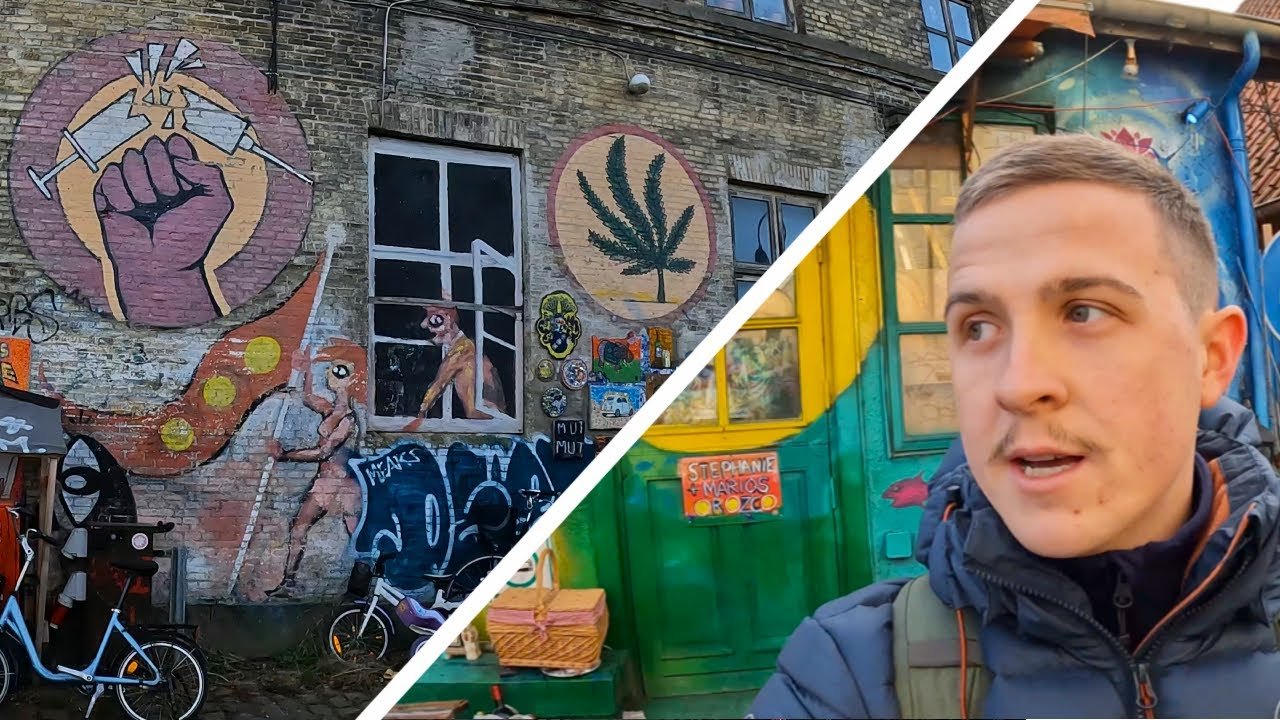
There are places in the world that exist somewhere between legend and reality — places you’ve heard about, half-disbelieved, and quietly wondered whether they could possibly be as extraordinary as people say. Christiania is one of those places. And after more than fifty years of operating as a self-governing anarchist commune in the heart of one of Europe’s most civilised capitals, it still manages to surprise.
Now, for the first time, the story of this remarkable community is being told from the inside — literally. Director Karl Friis Forchhammer, who was born and raised within Christiania’s distinctly boundary-free boundaries, has made his documentary debut with a film simply titled Christiania, premiering at CPH:DOX, Copenhagen’s prestigious international documentary festival. And if you think you already know what Christiania is — a hippie enclave, a drugs haven, a relic of 1970s idealism — the film is about to complicate that picture considerably.
What Exactly Is Christiania?
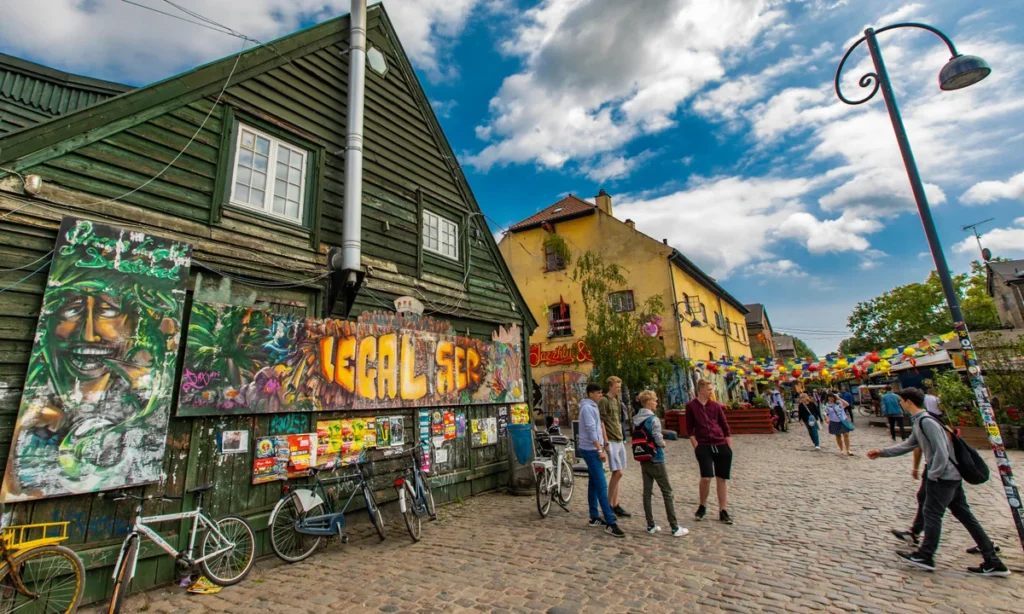
For those unfamiliar, a brief orientation. Freetown Christiania is a self-proclaimed autonomous neighbourhood occupying roughly 34 hectares of former military barracks in the Christianshavn district of Copenhagen, Denmark. It was established in 1971 when a group of squatters, activists, and free-thinkers broke through a fence and began occupying the abandoned site. They declared it a “free town” — a place operating outside the normal rules of Danish society, with its own social norms, its own governance structures, and its own relationship with the law.
ALSO READ : “She Never Made It Out…” Albany House Fire Claims Woman’s Life as Family Pleads for Help to Bring Her Home
Today, approximately 900 people call Christiania home. It has its own businesses, restaurants, music venues, art spaces, and a famous — or infamous, depending on your perspective — open cannabis market known as Pusher Street. It has survived decades of political pressure, police raids, legal battles with the Danish government, and internal crises that would have torn most communities apart. And it has done all of this while practising something genuinely radical: consensus democracy, in which every major decision must be agreed upon by the entire community before it can be implemented.
No majority rule. No elected representatives making decisions behind closed doors. Everyone. In agreement. Before anything happens.
If that sounds impossibly slow and impractical, you’re not wrong. But Christiania is still there, which suggests it might also be onto something.
The Bear, the Cannabis, and the Things Nobody Tells You
The detail that has captured the imagination of everyone who has heard about this documentary is, understandably, Rikke — an actual bear who lived in Christiania and, according to community lore, developed a taste for alcohol. It sounds like the kind of detail a screenwriter would invent to add colour to a story that didn’t need it. But Christiania has always had a talent for producing realities that outpace fiction.
Rikke is, in many ways, a perfect symbol for what Christiania represents to the outside world: something wild and untamed living in an unlikely place, operating by rules nobody else follows, somehow surviving against all odds. The bear’s presence in the documentary is not just anecdotal colour — it is a window into the kind of community that attracts extraordinary things precisely because it refuses to be ordinary.
Then there is the cannabis question — the one that dominates almost every mainstream conversation about Christiania and which, Forchhammer suggests, obscures far more than it illuminates. Yes, Pusher Street exists. Yes, cannabis has been openly sold there for decades in a grey legal space that the Danish authorities have managed with varying degrees of tolerance and periodic crackdowns. But reducing Christiania to its drug market is a bit like reducing Amsterdam to its red-light district — technically accurate in the narrowest sense, and deeply misleading in every sense that actually matters.
What the film is really about, according to its director, is the governance model. The radical, maddening, occasionally miraculous practice of making decisions together — truly together, not the parliamentary approximation of togetherness that most democracies offer, but the real, slow, sometimes excruciating thing.
A Director Born Inside the Experiment
What makes Christiania different from the many journalistic and documentary treatments the commune has received over the decades is the perspective Forchhammer brings. He did not arrive as an outsider trying to understand an alien world. He grew up in it. The people on screen are not subjects to him — they are, in many cases, family, neighbours, people who shaped his understanding of what community could mean.
That intimacy brings both advantages and challenges. The advantages are obvious: access, trust, a camera welcomed into spaces and conversations that would be closed to an outsider. The challenges are subtler but equally real. How do you make a film about the place that made you, with enough critical distance to be honest about its failures as well as its achievements? How do you serve the story when the story is also, in some sense, your own?
Forchhammer has spoken about wanting to make a film that could be watched and engaged with by people across the entire political spectrum — not just those who arrive already sympathetic to Christiania’s anarchist ethos, but also those who are sceptical, critical, or simply curious. That is an ambitious editorial goal, and it reflects something important about the documentary’s broader ambitions: this is not a love letter to a commune. It is an honest examination of what happens when people try — really try — to live differently.
Why Christiania Matters in 2026
There is a reason this film is premiering now, at this particular moment in global politics. Across the world, trust in democratic institutions is at historic lows. Polarisation is extreme. The sense that governments represent the interests of the powerful rather than the many is widespread and, in many cases, well-founded.
Into that landscape, Christiania arrives as a genuinely provocative question mark. Not an answer — its model is too specific, too rooted in a particular time and place and culture to be exported wholesale. But a question: what if governance started from genuine consensus? What if communities made decisions together, slowly, with everyone at the table, until something that everyone could live with emerged?
Denmark itself consistently ranks among the world’s happiest and most functional societies, and while Christiania’s relationship with the Danish state has been turbulent, it exists within a broader culture that values collective decision-making, social trust, and what Danes call hygge — a concept of communal warmth and togetherness that is almost the opposite of the atomised, competitive individualism that defines so many other Western societies.
Forchhammer’s film arrives, then, not as nostalgia for 1970s idealism, but as a live dispatch from an ongoing experiment that, against all reasonable expectations, is still running. Still arguing. Still reaching for consensus. Still housing 900 people who have chosen, every day, to try to live by different rules.
Whether that experiment is inspiring or cautionary — or, more likely, both at once — is exactly the kind of question a great documentary should leave you sitting with long after the credits roll.
Rikke the bear would probably have had strong opinions. But then, in Christiania, everyone does.


World News
Chicago Erupts in Celebration as Obama Presidential Center Opens… Thousands Gather for Historic Star-Studded Moment
A wave of pride sweeps through Chicago as the Obama Presidential Center opens, drawing massive crowds and global attention to the South Side.

Chicago witnessed a moment of national pride and emotional celebration as the long-awaited Obama Presidential Center officially held its star-studded opening ceremony, drawing thousands of people to the city’s South Side.
While the formal event was attended by dignitaries and invited guests, several thousand residents gathered just a few blocks away, turning nearby streets into an open-air viewing zone to be part of the historic occasion.
The center, dedicated to the legacy of former U.S. President Barack Obama, represents not just a museum or archive, but a broader civic space aimed at education, leadership development, and community engagement. For many locals, the opening felt deeply personal — a reflection of Chicago’s own journey alongside Obama’s rise from community organizer to the White House.
ALSO READ : Sen. Elizabeth Warren Calls It a ‘Cesspool of Corruption’ — Here’s Why Senators Are Now Fighting Back Against the DOJ’s Live Nation Deal That Left Every Fan Betrayed…
The ceremony was attended by prominent figures from politics, culture, and entertainment, making it a truly global event. Supporters described the atmosphere as “electric yet emotional,” with cheers erupting as highlights of Obama’s presidency were showcased on large screens.
Residents who couldn’t access the main venue still found ways to participate. Families, students, and longtime Chicago residents stood along streets, watching the proceedings on public displays, waving flags, and capturing the moment on their phones.

Local officials praised the turnout, calling it a powerful reminder of the city’s connection to Obama’s story. Community leaders also emphasized that the Obama Presidential Center is expected to boost tourism and revitalize parts of the South Side, bringing long-term economic and cultural benefits.
The event also sparked nostalgia, with many recalling Obama’s early political days in Chicago, where he served as a civil rights attorney before becoming one of the most influential global leaders of the 21st century.
As the celebrations continue, the opening of the center is already being described as a defining moment in Chicago’s modern history — one that blends politics, legacy, and community pride into a single unforgettable day.
World News
Conflicting Notes Deepen Mystery… Nancy Guthrie Disappearance Case Takes Shocking Turn as Questions Mount
Two contradictory messages about Nancy Guthrie’s fate—one claiming abduction, another alleging death—have left investigators and media outlets scrambling for clarity amid rising uncertainty.

A troubling and deeply confusing situation has emerged surrounding Nancy Guthrie, the mother of Savannah Guthrie, co-anchor of NBC’s Today show. In the days following her reported disappearance, local media stations received not one—but two separate notes—each presenting conflicting claims about what may have happened to her.
According to early reports, the first communication suggested that Nancy Guthrie had been abducted. However, the second note, sent shortly afterward, claimed something even more alarming—that she had died following the alleged abduction. The contradictory nature of these messages has left authorities and the public with more questions than answers.
As of now, officials have not independently verified the authenticity of either note, and investigations remain ongoing. Law enforcement agencies are reportedly treating both communications with caution, as they work to determine whether the messages are credible or part of a broader attempt to mislead investigators.
ALSO READ : Sen. Elizabeth Warren Calls It a ‘Cesspool of Corruption’ — Here’s Why Senators Are Now Fighting Back Against the DOJ’s Live Nation Deal That Left Every Fan Betrayed…
Nancy Guthrie, who is known as the mother of Savannah Guthrie, has largely remained out of the public spotlight despite her daughter’s high-profile career in broadcast journalism. Savannah herself is a well-known American journalist and attorney, best recognized for her role on NBC’s Today, where she has interviewed world leaders, celebrities, and major newsmakers.
The conflicting reports have understandably drawn attention due to Savannah Guthrie’s public profile and influence in American media. However, officials have urged the public and media outlets to avoid speculation until verified information is available.

At this stage, authorities are focusing on tracing the origin of the letters and determining whether they were sent from a legitimate source or fabricated entirely. Digital forensics teams are also believed to be involved in analyzing the communications for potential leads.
While details remain unclear, the situation highlights how quickly misinformation or unverified claims can escalate in high-profile cases—especially when tied to public figures.
For now, the mystery surrounding Nancy Guthrie’s whereabouts continues, with investigators working to separate fact from confusion in a case that has already captured widespread attention.
World News
Keir Starmer Resigns as UK Prime Minister: Political Earthquake Hits Britain Amid Ongoing Post-Brexit Struggles…
Britain faces renewed uncertainty as Keir Starmer steps down, becoming the sixth UK leader to exit in a decade while economic pressure deepens.

In a dramatic political development that has sent shockwaves through Westminster, Keir Starmer has officially resigned as the Prime Minister of the United Kingdom. The unexpected announcement marks yet another chapter in Britain’s turbulent political era, as the country continues to grapple with long-standing economic and social challenges following Brexit.
According to political sources in Downing Street, the resignation comes amid mounting pressure over economic stagnation, rising cost of living, and internal party disagreements that have steadily weakened the government’s standing over recent months.
Starmer’s exit makes him the sixth British leader to step down in just 10 years — a striking indicator of the political instability that has defined modern UK governance. Analysts suggest that the frequent leadership changes have undermined investor confidence and slowed down long-term policy planning across key sectors including healthcare, energy, and trade.
ALSO READ : Sen. Elizabeth Warren Calls It a ‘Cesspool of Corruption’ — Here’s Why Senators Are Now Fighting Back Against the DOJ’s Live Nation Deal That Left Every Fan Betrayed…
The United Kingdom has been struggling to regain economic momentum since its departure from the European Union. While Brexit was promised as a pathway to sovereignty and economic freedom, critics argue that it has instead led to trade disruptions, labour shortages, and rising inflationary pressure.
Opposition figures have already begun reacting to the news. Several MPs from the Labour Party expressed concern over the timing of the resignation, warning that Britain may now enter another phase of political uncertainty just as global markets remain fragile.

Political historian Dr. Emily Carter noted that “this level of turnover at the highest office reflects a deeper structural instability within British politics, not just individual leadership challenges.”
Meanwhile, international reactions are expected to follow, with global leaders closely watching how the UK manages its next transition of power. The UK Government is expected to announce an interim leadership arrangement in the coming days, while preparations for a potential leadership contest are already underway.
As the nation absorbs this political shock, one question dominates public discussion — who will be next to lead Britain out of its prolonged uncertainty?

Hollywood Stars or Dancing Chaos? Marek Eben Opens Up on Hosting KVIFF Ceremonies: ‘Which One Is More Stressful… I Still Can’t Decide’

‘A Lion at My Back’: Teenage Asylum Seeker & Cypriot Woman Form Unlikely Bond in Karlovy Vary Drama That’s Turning Heads…

Virginie Efira to Be Honoured at Locarno… ‘Bold Yet Thoughtful’ Star Set for Prestigious Leopard Club Award

‘I’m Done With the GOP’: Tucker Carlson’s Explosive Split With Trump Era Republicans Sends Shockwaves Through MAGA Base…

UFC Fighter Josh Hokit Defends ‘Michelle Obama Comment’: ‘It Was Meant as a Compliment… Freedom of Speech Is the Point’

1-Iran Issues Dire Warning to Israel and Defies Trump on Nukes: “We’re Ready to Strike Deep Inside”

Donald Trump’s net worth reveals the fortune behind the former US President and business mogul

“She Never Made It Out…” Albany House Fire Claims Woman’s Life as Family Pleads for Help to Bring Her Home

“Tomás Rodríguez Net Worth 2025: Panama’s Gold Cup Goal‑Machine’s Surprising Fortune Revealed”

Younghoe Koo Explains Botched Field Goal After Slip: “The Ball Was Moving So I Pulled Up”

Miss Jamaica Suffers Terrifying Fall Off Miss Universe Stage; Rushed to Hospital on Stretcher in Viral Video

Moana Live-Action Teaser Sparks Outrage as Fans Call Disney’s Move a ‘Clear Money Grab’ — What Went Wrong?

Ryan Gosling’s Project Hail Mary Trailer Stuns Fans with a Mysterious Alien Ally and a Mission That Could Save Earth

Apple delays Jessica Chastain thriller The Savant about domestic extremism after recent US violence

Avatar 3, Fire and Ash trailer reveals Jake Sully’s family facing terrifying new Na’vi enemies with deadly fire powers
-

 Entertainment1 week ago
BIFAN Unveils Its Most Unpredictable Lineup Yet: Why ‘Obsession’ and ‘Teenage Sex and Death at Camp Miasma’ Are Already Turning Heads…
-
 Technology1 week ago
YouTube says ‘enough is enough’… Faceless AI Channels lose reach as algorithm shift hits ‘AI slop’ wave
-

 Entertainment1 week ago
Why Did Vasana Montgomery Leave ‘Love Island USA’? Her First Public Statement Reveals More…
-

 Entertainment1 week ago
Will BTS Reunite on Stage? Ariana Grande, Bad Bunny, Olivia Rodrigo and The Weeknd Fuel 2026’s Most Anticipated Concert Tour Race…
-

 Entertainment1 week ago
‘There’s No Secret Formula’: Gail Simmons Opens Up About How ‘Top Chef’ Winners Are Really Chosen… and Why Fans Often Get It Wrong
-

 Entertainment1 week ago
“After ‘Backrooms’ Shocked Hollywood… These YouTubers Could Be the Next Box Office Goldmine”
-

 Sports1 week ago
New York Knicks Set for Special ‘Tonight Show’ Episode… Jalen Brunson, Karl-Anthony Towns & Stars Join Jimmy Fallon in Surprise NBA Crossover
-

 Entertainment1 week ago
A New Door for Writers? Roadmap Writers and Aevitas Launch Program That Could Change How Emerging Authors Break Into Publishing