
News
Eileen Higgins Becomes First Democratic Mayor of Miami in Nearly 30 Years, Marking a Historic Political Shift
The 61-year-old former county commissioner wins with 59% votes, becomes Miami’s first woman mayor, and signals a decisive new direction for the city


Miami has entered a new political era. Eileen Higgins, a Democrat and former county commissioner, has won the city’s mayoral race, becoming the first Democrat to hold the position in almost three decades and the first woman ever elected as mayor of Miami.
Her victory—securing 59% of the vote in a decisive runoff—defeated Republican candidate Emilio Gonzalez, who had received high-profile endorsements from former President Donald Trump and Florida Governor Ron DeSantis, but finished with 41%.
Speaking to supporters during her election night celebration, Higgins said,
“Miami chose a new direction… you chose competence over chaos.”
Her message echoed throughout a city that has long leaned Republican at the local political level, making her win even more significant.

A Historic Win and the Start of a New Chapter
At 61, Higgins has made history as Miami’s first female mayor, a milestone widely highlighted across U.S. media.
She told her supporters that the election results, while historic, are just the beginning.
“This marks the beginning of the work ahead,” she said.
Her priorities include addressing Miami’s growing concerns over immigration policies, affordable housing, governance, and inclusivity.
Higgins campaigned on promises to build a city “that belongs to everyone,” a clear contrast to the tone adopted by her opponent.
Her message resonated strongly among voters in a city where more than half of the population consists of immigrants or first-generation Americans.
Higgins vs Trump-Backed Gonzalez: A Clear Contrast
Although the race was technically non-partisan, the political contrast between the candidates was unmistakable.
- Gonzalez was openly backed by Donald Trump and Governor Ron DeSantis.
- Higgins was supported by prominent Democrats, including former U.S. Transportation Secretary Pete Buttigieg.
In an interview with El Pais, Higgins highlighted her opposing stance on immigration, saying,
“He [Trump] and I have very different points of view on how we should treat our residents, many of whom are immigrants.”
During the mayoral debate, she criticized the former president’s immigration enforcement policies as “inhumane and cruel.”
Still, she emphasized a willingness to collaborate on shared goals, telling CBS News,
“When we disagree, I’ll make my voice heard.”

Democrats Riding Momentum After Multiple Wins
Higgins’ victory follows a wave of Democratic wins in the first major elections of President Trump’s second term.
Recent victories include:
- Zohran Mamdani defeating independent Andrew Cuomo in the New York City mayoral race
- Abigail Spanberger flipping Virginia’s governor’s seat from Republican to Democrat
- Mikie Sherrill winning the governor’s race in New Jersey
Higgins now replaces outgoing mayor Francis Suarez, who briefly sought the Republican presidential nomination.
Miami’s mayoral win continues a trend of Democrats gaining ground in traditionally challenging territories.





News
NASA Fuels Moon Rocket for First Crewed Lunar Mission in Over 50 Years — Artemis II Ready for Historic Liftoff
Four astronauts — including the first woman and first Black astronaut bound for the moon — are set to fly around the lunar surface for the first time since Apollo 17 in 1972.
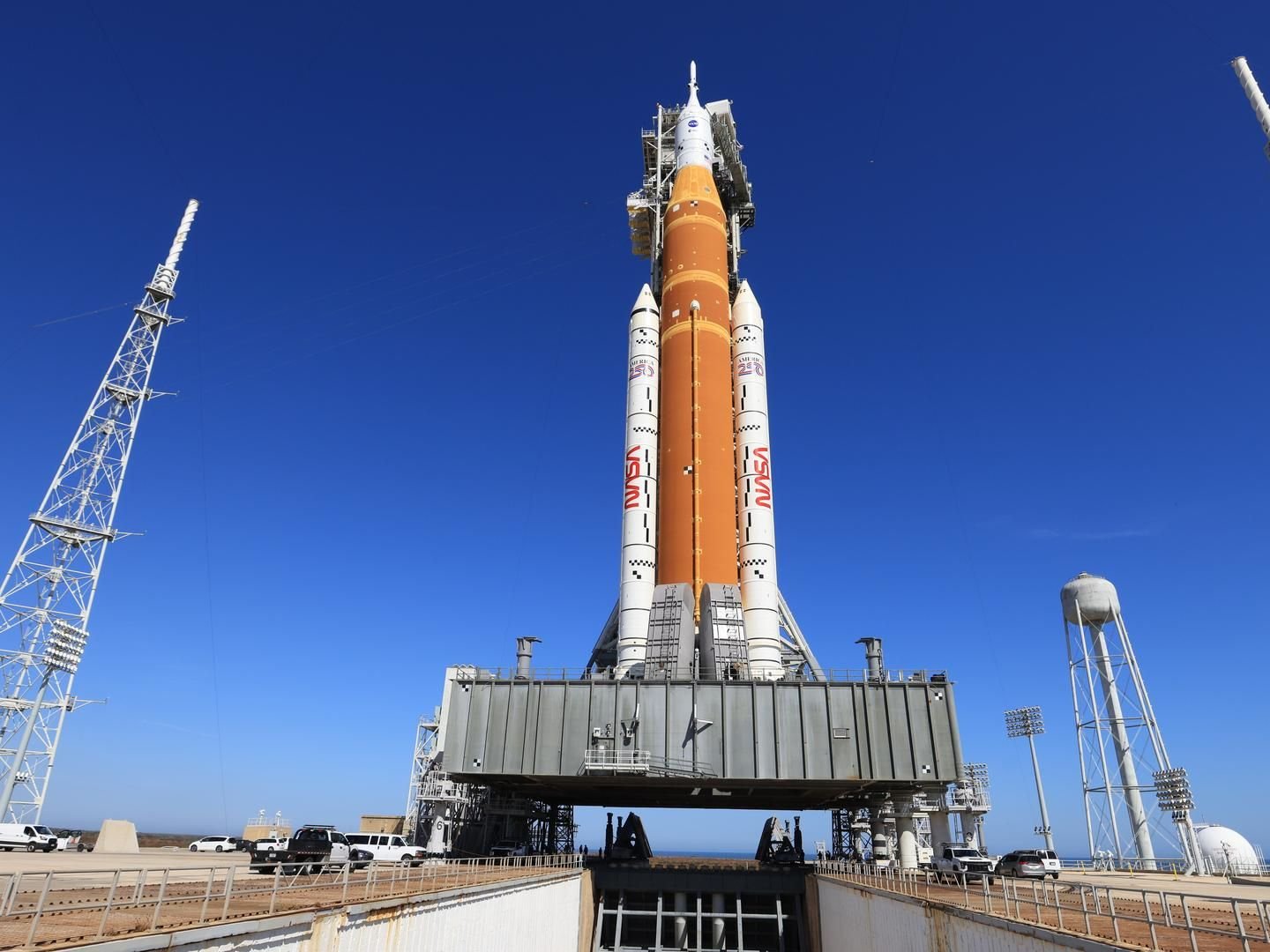
For the first time in more than half a century, humanity is going back to the moon — and this time, it’s not just a dream on a drawing board. NASA fueled its massive moon rocket on Wednesday, setting the stage for an evening liftoff that could mark one of the most significant moments in space exploration history.
The Fueling Milestone
Tensions ran high as hydrogen fuel began flowing into the towering 32-storey Space Launch System (SLS) rocket hours before the planned launch. The anxiety was understandable — dangerous hydrogen leaks had erupted during a countdown test earlier this year, forcing a lengthy and frustrating delay for the entire Artemis program.
But Wednesday brought better news. No significant leaks were detected as the fueling process wrapped up successfully. The launch team loaded more than 700,000 gallons (approximately 2.6 million liters) of fuel into the rocket standing on the pad — a monumental step that cleared the way for the Artemis II crew to board.
“It Is Time to Fly”
On the eve of the launch, mission commander Reid Wiseman summed up the mood perfectly with a post on X: “It is time to fly.” Favorable weather conditions were forecast for the launch window, adding to the optimism surrounding the mission.
Who Is Flying — and Why It Matters
The Artemis II crew consists of four astronauts — three Americans and one Canadian — making this mission historic in more ways than one.
- Reid Wiseman — Mission Commander
- Christina Koch — the first woman ever destined for a lunar mission
- Victor Glover — the first Black astronaut bound for the moon
- Jeremy Hansen — a Canadian Space Agency astronaut who will become the first non-U.S. citizen ever to launch to the moon
Each of these milestones carries enormous symbolic weight — and together, they represent a crew that truly reflects the broadening horizons of human space exploration.
No Landing, But a Record-Breaking Journey
The Artemis II mission will not land on the moon — that milestone is being saved for Artemis III. Instead, the crew will fly around the moon without stopping or orbiting, then head straight back toward Earth for a Pacific Ocean splashdown.

What makes this journey extraordinary is the sheer distance involved. The astronauts will travel approximately 4,000 miles (6,400 kilometres) beyond the moon — setting a new record for the farthest any human has ever traveled from Earth. The last time humans came anywhere close was during Apollo 17 in December 1972 — more than 50 years ago.
The Bigger Picture: A Permanent Moon Base
Artemis II is not just a one-off mission — it is the opening chapter of NASA’s far more ambitious plan. The space agency is working toward establishing a permanent base near the lunar south pole, with a crewed moon landing targeted for 2028.
NASA Administrator Jared Isaacman captured the spirit of the moment with a post on X: “The next era of exploration begins.”
A Royal Send-Off
The goodwill messages have been pouring in from around the world. England’s King Charles III personally wrote to Canadian astronaut Jeremy Hansen, calling the moment historic. In his letter, the King wrote that Hansen stands “as a bridge between nations and generations” — a sentiment that echoes the spirit of the entire Artemis program.
For those of us watching from Earth, there is something deeply moving about this moment. A new generation of astronauts is carrying forward the torch lit by Neil Armstrong and Buzz Aldrin — and this time, the plan is not just to visit, but to stay.
The moon is calling. And humanity is finally answering.
News
Kid Rock’s Mansion Flyby Sparks US Army Probe… What Really Happened Over Tennessee Skies?
Kid Rock shares helicopter video, United States Army launches review over Apache flyby near Nashville home


A quiet weekend in Tennessee turned unexpectedly controversial after a viral video by Kid Rock triggered an official response from the United States Army.
The video, posted on social media, shows two AH-64 Apache helicopters hovering near the musician’s sprawling hilltop residence in the Nashville area—an unusual sight that quickly raised eyebrows online and within military circles.
A Viral Moment That Raised Questions
In the now widely circulated footage, Kid Rock, whose real name is Robert Ritchie, is seen standing poolside, gesturing toward the helicopters as they hover briefly before flying off.
The scene had a cinematic quality—complete with a replica of the Statue of Liberty visible nearby—adding to the spectacle.
But what seemed like a patriotic moment quickly turned into a matter of official concern.
US Army Steps In
Shortly after the video gained traction, the United States Army confirmed that an administrative review had been launched.
According to Army spokesperson Montrell Russell, the helicopters were part of a routine training exercise passing through the region. However, the proximity to a private residence—and the public attention it generated—prompted a deeper look.
“An administrative review is underway to assess the mission and verify compliance with regulations and airspace requirements,” Russell said.
Another Army official, Jonathon Bless, emphasized that the military takes such incidents seriously, especially when they involve potential impact on local communities.
Politics, Patriotism, and Public Reaction
The situation became even more layered when viewers noticed the political undertones in Kid Rock’s post.
A known supporter of Donald Trump, the musician included a caption that referenced ongoing political tensions, including a jab at Gavin Newsom.
At the same time, he struck a patriotic tone, writing: “God Bless America and all those who have made the ultimate sacrifice to defend her.”
This mix of patriotism and politics fueled debate online, with some praising the moment as a display of national pride, while others questioned whether military resources were being used appropriately.

Routine Drill or Something More?
Military officials have clarified that the helicopters were on a designated training route, a common practice for maintaining operational readiness.
However, incidents like this highlight the fine line between routine military operations and public perception—especially when they intersect with high-profile individuals.
The presence of AH-64 Apache helicopters, known for their combat capabilities, hovering near a celebrity’s home inevitably draws attention, even if no rules were technically broken.
The Bigger Picture
This episode underscores how quickly a routine event can spiral into a national talking point in the age of social media.
For the United States Army, the review is not just about compliance—it’s also about maintaining public trust.
For Kid Rock, it’s another moment in a career that often blends entertainment, politics, and controversy.
And for the public, it raises a simple but important question: where should the line be drawn between routine military activity and its visibility in civilian life?
What Happens Next?
As the review continues, the Army has assured that “appropriate action” will be taken if any violations are found.
Whether this turns out to be a minor procedural check or something more significant, one thing is certain—the skies over Tennessee have sparked a conversation that goes far beyond a single flyby.
For More Update- DAILY GLOBAL DIARY
News
Trump Says Strait of Hormuz Closure ‘Doesn’t Affect’ the US — But Then Extends the Deadline and Threatens to ‘Knock Out’ Iran’s Power Plants…
At a White House briefing, Trump blamed European allies for not backing the US in the Iran war while quietly extending the strike pause to 10 days — and Iran says it never asked for one

In a press briefing that raised more questions than it answered, US President Donald Trump made a striking claim on Thursday — that the virtual closure of the Strait of Hormuz, a waterway through which roughly one-fifth of the world’s oil and gas travels, simply doesn’t affect the United States.
The remark came as Trump lashed out at European allies for failing to extend what he called “ample support” to Washington in its ongoing war against Iran — and it landed like a thunderclap in the middle of a global energy crisis that millions of people are living through right now.
‘We Have a Big, Fat, Beautiful Ocean’
Trump’s exact words, delivered at the White House, were characteristically blunt:
“We are there to protect Europe from Russia. In theory it doesn’t affect us, we have a big, fat, beautiful ocean. But we are there to protect NATO, but they are not there to protect us.”
The comment was aimed squarely at NATO allies who Trump believes are free-riding on American military power — but the line about the Strait of Hormuz not affecting the US drew immediate attention. The waterway’s virtual closure by Iran has triggered a global energy disruption, with countries across Europe, Asia, and beyond reporting severe fuel and cooking gas shortages.
The 10-Day Pause — and Iran’s Denial
Even as Trump downplayed the strategic importance of the Strait of Hormuz to the US, he simultaneously announced an extension of his pause on strikes against Iran’s energy infrastructure — now stretched to 10 days, pushed to April 6.
Speaking to Fox News, Trump claimed Iran had come to his administration asking for more time — framing it as a sign of Tehran’s desperation:
“They said to me very nicely, through my people, ‘Could we have more time?’ Because we’re talking about tomorrow night, which is pretty quick, and if they don’t do what they have to do, I will knock out their power plants.”
But there’s a problem. Mediators who spoke to the Wall Street Journal said Iran did not request the 10-day pause — directly contradicting Trump’s account. Iran has also flatly denied engaging in any negotiations with Washington, despite Trump’s insistence that talks are going “very well.”
‘Iran Is Begging to Make a Deal’
Just one day after Tehran publicly rejected Trump’s 15-point ceasefire plan, the president took to his Truth Social account to declare that Iran was “begging to make a deal” — and urged Iranian leaders to “get serious soon” about negotiations.
“Talks are ongoing and, despite erroneous statements to the contrary by the Fake News Media, and others, they are going very well,” Trump wrote.
Iran has not named any negotiators. Trump has not identified who is representing Tehran in these alleged talks. The credibility gap is widening by the day.

The Bigger Picture — Ground Troops and Growing Stakes
The 10-day pause on strikes comes amid reports that the US is preparing for a possible ground invasion — with approximately 10,000 ground troops reportedly being positioned for potential deployment to the Middle East. The original five-day pause announced earlier this week has now been doubled, with April 6 as the new deadline for Iran to meet Trump’s conditions.
What those conditions are in full remains unclear — but the threat is explicit: miss the deadline, and Iran’s power plants are next.
A Contradiction the World Is Watching
Trump’s claim that the Strait of Hormuz closure “doesn’t affect” the US sits uneasily alongside the reality that global oil markets remain in turmoil, energy prices are surging worldwide, and American consumers are not immune to what happens when one-fifth of the world’s energy supply is choked off.
Whether this was a strategic message to NATO allies, a negotiating posture toward Iran, or simply an off-the-cuff remark — the world is watching what comes next on April 6.
And this time, the deadline comes with a very specific threat attached.

Dave Coulier Reveals Cancer Treatment Changed His Voice and Appearance… ‘Full House’ Fans Are Emotional Over His Honest Update

IATSE Goes on Strike Against ‘CoComelon: The Melon Patch’ Accuses Producers of Trying to Hire ‘Scabs’ Instead of Paying Fair Wages to Crew…

Harry Potter Returns Sooner Than Expected… HBO Quietly Greenlights Season 2 With ‘Chamber of Secrets’ Twist

Eric Dane’s Last ‘Euphoria’ Scene… What He Was Hiding Will Break You

She Saw It Coming…: Never-Heard Princess Diana Tapes Surface, Leaving Royal Watchers Stunned

1-Iran Issues Dire Warning to Israel and Defies Trump on Nukes: “We’re Ready to Strike Deep Inside”

Donald Trump’s net worth reveals the fortune behind the former US President and business mogul

“She Never Made It Out…” Albany House Fire Claims Woman’s Life as Family Pleads for Help to Bring Her Home

“Tomás Rodríguez Net Worth 2025: Panama’s Gold Cup Goal‑Machine’s Surprising Fortune Revealed”

Caitlin Clark Sidelined with Quad Strain, Set to Miss Two Weeks of WNBA Action

Miss Jamaica Suffers Terrifying Fall Off Miss Universe Stage; Rushed to Hospital on Stretcher in Viral Video

Moana Live-Action Teaser Sparks Outrage as Fans Call Disney’s Move a ‘Clear Money Grab’ — What Went Wrong?

Ryan Gosling’s Project Hail Mary Trailer Stuns Fans with a Mysterious Alien Ally and a Mission That Could Save Earth

Apple delays Jessica Chastain thriller The Savant about domestic extremism after recent US violence

Avatar 3, Fire and Ash trailer reveals Jake Sully’s family facing terrifying new Na’vi enemies with deadly fire powers
-

 Entertainment1 week ago
Seth Meyers Questions Trump’s White House Ballroom Move… “After Everything That Happened?”
-

 Entertainment1 week ago
“He Fights Like Fire But Feels Cold…” Yahya Abdul-Mateen II’s Netflix Revenge Drama Leaves Fans Divided
-

 Entertainment1 week ago
Hollywood Buzz This Week: ‘Remarkably Bright Creatures’ Arrives… Michael B. Jordan’s ‘Swapped’ Premiere Has Everyone Talking
-

 Entertainment1 week ago
Jimmy Kimmel Refuses to Back Down on Melania Trump Joke… “They Know Exactly What I Meant”
-

 Entertainment1 week ago
Prices Will Rise, Choices Will Shrink…: Paramount Faces Lawsuit That Could Shake Its Warner–Skydance Mega Deal
-

 Sports1 week ago
20 Years Later… Arsenal at the Brink of History: Arteta’s Men Storm into Champions League Final After 1-0 Thriller vs Atletico Madrid
-

 Sports1 week ago
Saka’s Moment of Glory Sends Arsenal to Champions League Final After 20 Years… but Can Arteta Finish the Job?
-

 Entertainment1 week ago
‘It Just Disappeared…’: Oscar for ‘Mr. Nobody Against Putin’ Lost Mid-Flight, Director Reveals Shocking Airline Mishap