
Tech
Google celebrates 27th birthday as a spelling mistake turns into the world’s biggest search engine

Almost every internet user around the globe interacts with Google daily — searching, mapping, emailing, or watching videos on YouTube, another Google-owned platform. But on its 27th birthday, celebrated on September 27, many still wonder: what does the name “Google” really mean, and how did it come to define the digital age?
The meaning behind Google
The name “Google” is actually derived from the mathematical term Googol — the number 1 followed by 100 zeros (10¹⁰⁰). The word was first coined by Milton Sirotta, the young nephew of American mathematician Edward Kasner, as a playful way to describe unimaginably large numbers.
For founders Larry Page and Sergey Brin, two Stanford University Ph.D. students in the late 1990s, the term reflected their ambition: to organize a seemingly infinite amount of information on the internet and make it accessible to everyone.
From BackRub to Google
Google wasn’t always Google. In 1996, Brin and Page created a search engine prototype and named it BackRub, referencing the system’s ability to analyze “backlinks” on web pages. But by 1997, the pair realized the name lacked the ambition and gravitas their project deserved.
Brainstorming led them to consider “Googolplex” — a number that is 1 followed by a Googol of zeros. Eventually, they settled on the shorter Googol. But fate, and a small spelling error, had other plans.
A typo that changed the internet
During the process of registering the website, graduate student Sean Anderson accidentally typed “Google” instead of “Googol” while checking domain availability. To everyone’s surprise, google.com was available. Larry Page immediately approved, and within hours the domain was officially registered.

What was once a typo became one of the most recognizable names — and companies — in human history.
The rise of a global giant
Google officially incorporated on September 4, 1998, though the company celebrates its birthday on September 27, marking key internal milestones. What started in a garage in Menlo Park, California, grew into a powerhouse that now dominates global search, advertising, cloud computing, and mobile operating systems through Android.
READ MORE : Google Gemini AI Prompts for Men Spark 7 Stunning Retro and Cinematic Photo Trends
In 2015, Google restructured under a new parent company, Alphabet Inc., with Indian-born executive Sundar Pichai appointed as CEO of both Google and Alphabet. Brin and Page remain influential insiders with significant voting power.
Today, Google processes over 8.5 billion searches per day, owns a portfolio of services including Gmail, Maps, and Drive, and is at the forefront of artificial intelligence with products like Gemini.
A name that became a verb
The misspelled name did more than build a brand — it became a verb. To “Google” something is now synonymous with searching for information online, a linguistic achievement that underscores its cultural dominance.
From a typo on a university campus to the backbone of the digital age, Google’s story shows how small accidents can shape history. On its 27th birthday, the company remains a giant not just of technology, but of modern language and daily life.










Tech
Why Disney’s OpenAI Alliance Is a Blueprint for the Future of AI Content Deals
Disney’s $1 billion investment in OpenAI reframes AI not as a threat to IP, but as the next evolution of merchandising, engagement, and brand control

When Disney announced a three-year alliance with OpenAI, including a reported $1 billion investment and licensing its iconic characters for use in AI-generated images and short videos, the deal left many observers puzzled. After all, recent content partnerships between OpenAI and platforms like Reddit have raised uncomfortable questions about whether the money is worth the long-term competitive and brand risks.
But Disney’s deal makes far more sense when viewed through a lens the company understands better than almost anyone: merchandising.
For decades, Disney has mastered the art of turning intellectual property into obsession, engagement, and spending. Toys, backpacks, lunchboxes, theme parks, movies, cruise lines — all are part of a tightly controlled ecosystem designed to keep fans immersed. With OpenAI, Disney isn’t abandoning that playbook. It’s updating it.
Instead of plastic figurines, the new merchandise is synthetic content — AI-generated images and videos created by fans themselves using ChatGPT and Sora, OpenAI’s text-to-video generator. Anyone can now generate Disney-adjacent creative output, but under rules that Disney helps define.
AI as the Next Merchandising Channel
At first glance, allowing fans to generate content featuring Disney characters may appear risky, especially for a company long known as a highly curated, “predator-free” brand sanctuary in an internet dominated by chaotic user-generated content — or what critics increasingly call “AI slop.”
Yet this is precisely why Disney’s approach stands out.
Rather than fighting AI outright, Disney is licensing its characters under controlled conditions, positioning itself inside the technology rather than outside it. In doing so, it gains something arguably more valuable than licensing fees: influence over how its IP is used.
OpenAI has publicly committed to “responsible use” of Disney’s content, reducing the risk of beloved characters being placed in offensive, bizarre, or legally risky scenarios — or interacting with rival corporate IPs in ways Disney cannot control.
At the same time, Disney has made it clear it will aggressively defend its characters elsewhere. The company recently sent a letter to Google demanding it stop using Disney characters in AI-generated content without permission. The message is clear: AI use is allowed — but only on Disney’s terms.
Strategic Upside Beyond Licensing
Beyond brand protection, the OpenAI alliance offers Disney several strategic advantages.
First, by taking an equity stake, Disney is effectively hitching its future to the first major AI mover in consumer-facing generative technology. If OpenAI becomes as foundational as search or social media, Disney isn’t just a customer — it’s a stakeholder.
Second, Disney gains access to OpenAI’s tools, opening new creative and operational possibilities across film, television, marketing, and theme park experiences. In an industry under constant pressure to produce more content faster, AI-assisted workflows could become a competitive necessity.
There is also a discovery angle. If fans create something genuinely magical using Disney IP, the company can surface that work on its streaming platforms or internal creative pipelines. Just as YouTube became a feeder system for Hollywood talent, AI could quietly become a testing ground for future Pixar, Marvel, or animation concepts.
Engagement Over Everything
Critics will argue that Disney is aligning itself with what many still see as the entertainment industry’s newest villain. And history suggests that user-generated ecosystems inevitably produce strange, uncomfortable, or downright bizarre content.
But Disney’s calculus is simple: engagement beats purity.
Even if some brand dilution occurs, the upside of keeping millions of users actively interacting with Disney characters — thinking about them, remixing them, and emotionally investing in them — far outweighs the risks. Every AI-generated image or short video becomes another touchpoint in the Disney funnel, nudging users toward movies, merchandise, theme parks, and subscriptions.
As the company has proven time and again, Disney doesn’t need to control every moment — it just needs to own the ecosystem those moments live in.
A Template for Future AI Deals
Ultimately, Disney’s OpenAI alliance may become the template for how major IP holders navigate the AI era. Rather than blocking generative tools outright or selling content libraries cheaply, Disney is treating AI as the next distribution and merchandising layer.
The pipeline that once ran from movies to toys to theme parks now runs through algorithms, prompts, and synthetic media. AI is no longer outside the business. It is part of the machine.
And if Disney’s history is any guide, once the House of Mouse embraces a platform, it rarely lets go.
Tech
After Losing Over $70 Billion, Mark Zuckerberg Finally Admits His Biggest Bet Is “Not Working” – Meta Plans Massive Cuts to Metaverse Budget
Meta’s multibillion-dollar Metaverse dream faces a harsh reset as Zuckerberg prepares to slash Reality Labs spending by 30% and shift focus toward AI superintelligence
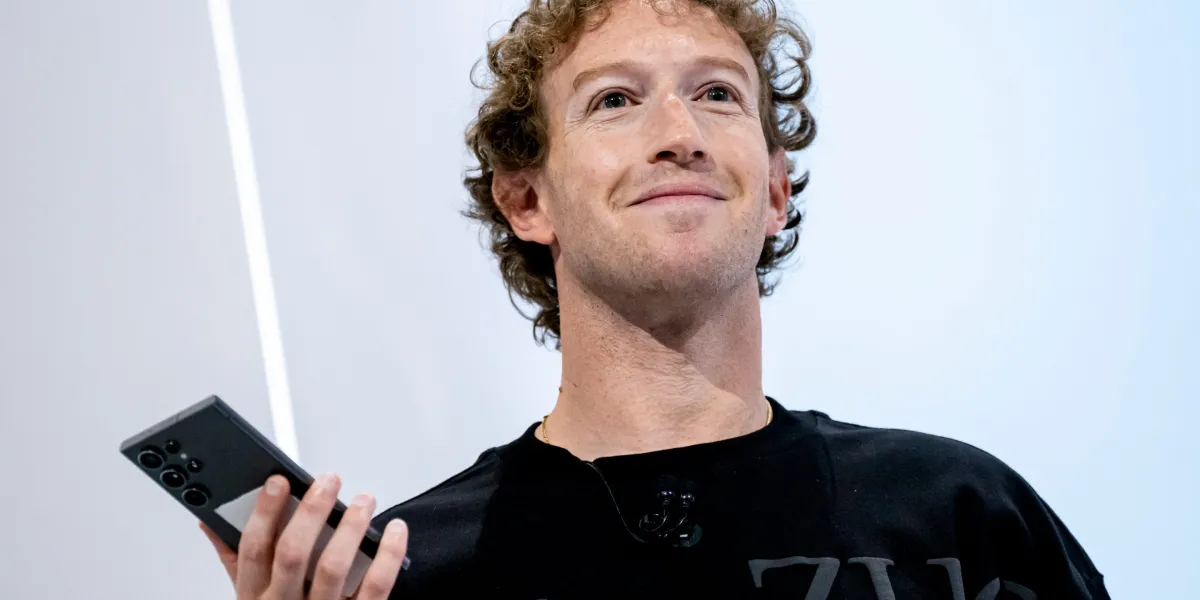
It has taken more than $70 billion in losses, multiple years of market skepticism, slow hardware adoption, and declining enthusiasm from consumers — but Mark Zuckerberg finally seems to be acknowledging what analysts have been predicting for months: Meta’s Metaverse gamble is not working as expected.
A new report from Bloomberg reveals that Meta is preparing to cut Reality Labs’ budget by nearly 30%, marking the most significant shift in strategy since the company rebranded from Facebook to Meta in 2021. These cuts are part of Meta’s 2026 annual budget plans, discussed at a series of executive meetings held last month at Zuckerberg’s Hawaii compound.
The move represents a dramatic retreat from the vision that defined Zuckerberg’s ambitions for the future — a world of interconnected virtual experiences accessed through VR headsets, smart glasses, and immersive environments.
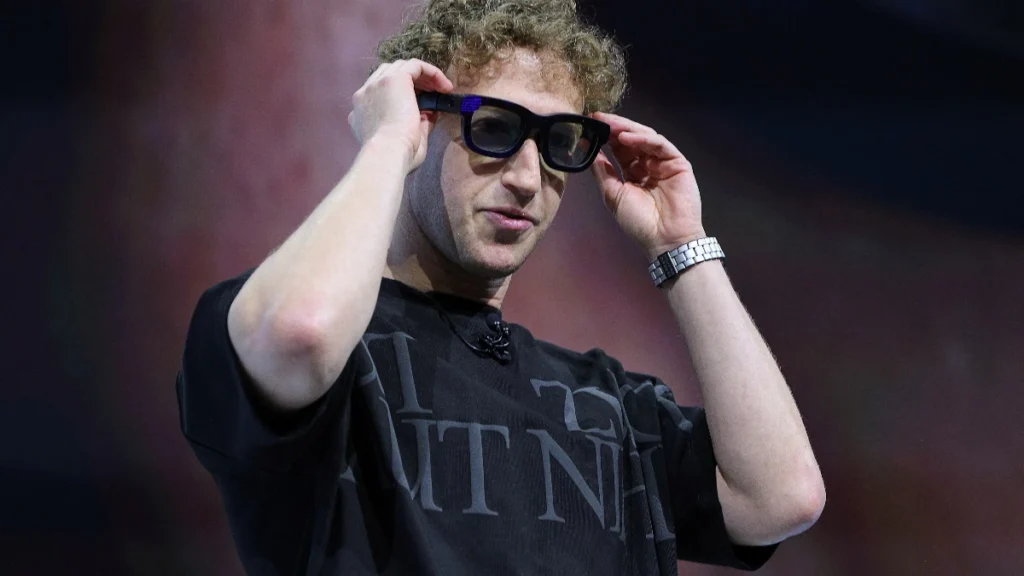
Reality Labs: A Costly Dream That Failed to Take Off
Reality Labs, the division responsible for Meta’s Metaverse ambitions, includes:
- VR hardware such as the Quest headsets
- Ray-Ban smart glasses developed with EssilorLuxottica
- Horizon Worlds, Meta’s VR social platform
- Upcoming AR glasses
Despite years of R&D and aggressive marketing, the Metaverse never reached mainstream adoption. Sales remained modest, interest faded, and Horizon Worlds failed to retain users beyond niche gaming communities.
Industry analysts say the lack of traction is undeniable. The Metaverse that Zuckerberg promised — a bustling, interconnected digital universe — simply hasn’t materialized.
The financial impact has been staggering:
$70+ billion in operating losses across four years, making it one of the most expensive product bets in tech history.
Not surprisingly, Meta’s stock jumped 4% after news of the possible budget cuts, signaling investor relief. As analyst Craig Huber put it:
“Smart move, just late… This is a major shift to align costs with a revenue outlook that never matched management’s expectations.”
With cuts as deep as 30%, layoffs are expected as soon as January, especially within the VR division.
A Company Pivoting Hard Toward AI Superintelligence
Meta’s Metaverse retreat isn’t happening in isolation — it comes at a time when the company is fighting to stay competitive in the global AI arms race.
After its Llama 4 model received a lukewarm response, Meta has ramped up spending and reorganized its AI divisions under the new Superintelligence Labs.
Key highlights of Meta’s AI pivot:
- Up to $72 billion committed in capital spending for AI initiatives this year
- Aggressive hiring across Silicon Valley, with multimillion-dollar offers made directly by Zuckerberg
- Plans to invest $600 billion in U.S. infrastructure and jobs over the next three years, largely for AI data centers
- A renewed push to build the compute infrastructure needed for future superintelligent systems
Zuckerberg openly stated during an earnings call that Meta is “front-loading capacity” to prepare for an AI-driven future.
Even Reality Labs is being reimagined through the AI lens — especially after Zuckerberg hired Alan Dye, a longtime Apple design executive, to lead a new creative studio within the division.
In a post on Threads, Zuckerberg said:
“We’re entering a new era where AI glasses and other devices will change how we connect with technology and each other.”
This statement alone signals how deeply AI will shape Meta’s hardware roadmap beyond the Metaverse.
The Irony: Meta Was Renamed for a Vision That Is Now Shrinking
When Facebook became Meta in October 2021, the reasoning was clear: the company wanted to symbolize its commitment to building the Metaverse.
Three years later, that same division is facing massive cuts.
The rebranding — once touted as the gateway to the “next chapter of the internet” — now represents one of the most expensive strategic misfires in tech history.
What Comes Next for Meta?
If the proposed budget cuts go through:
- VR development may significantly slow down
- Horizon Worlds could receive limited investment
- AR glasses may remain in early stages
- Meta will prioritize AI innovation over virtual reality
This shift doesn’t necessarily mean Meta is abandoning the Metaverse entirely — but it is no longer the company’s primary bet.
Zuckerberg’s new focus is clear:
AI superintelligence, compute hardware, and next-generation devices powered by AI.
And while the Metaverse may have faded from the spotlight, Meta’s aggressive push into AI signals a new chapter — one where Zuckerberg hopes the investment will pay off sooner rather than later.
Tech
Discord Checkpoint: How to Access the New Spotify-Style Recap Feature — Step-by-Step Guide
Discord’s 2025 activity recap, Checkpoint, is now live. Here’s how to find your personalized Wrapped-style summary on mobile and desktop.

Just like Spotify Wrapped and Apple Music Replay, Discord has now introduced its own year-end recap feature called Checkpoint—a personalized activity summary highlighting how you used the platform throughout 2025.
The feature officially rolled out on December 4, 2025, and many users have already begun sharing their Wrapped-style stats online.
If you haven’t checked your Discord Checkpoint yet, here’s a complete step-by-step guide on how to view it on mobile and desktop.
How to Check Discord Checkpoint (Mobile App)
Before you begin, ensure that your Discord app has been updated to the latest version.
Step 1: Update your Discord mobile app
Visit the App Store or Google Play Store and download the latest update.
Step 2: Open the app and tap your profile picture
Your profile icon is located at the bottom-right corner of the screen.
Step 3: Look for the Checkpoint tab
After tapping the profile icon, a new Checkpoint banner or tab should appear below your account details.
Step 4: Tap to view your recap
Your personalized Discord Checkpoint compilation will begin immediately—showing your activity highlights from 2025.
How to Check Discord Checkpoint (Desktop or Browser)
The recap is also accessible on both the Discord desktop app and the web version.
Step 1: Open Discord on PC
You can use the desktop app or simply log in via a browser.
Step 2: Look for the flag icon
On the top right corner of the window, you’ll see a small flag icon—this is the Checkpoint trigger.
Step 3: Click the icon
Once clicked, Discord will begin generating your Checkpoint recap automatically.
Why Isn’t My Discord Checkpoint Showing?
If you don’t see the feature yet, there are a few reasons why:
1. The rollout is gradual
Discord’s Checkpoint is not yet available to all users. Some accounts may receive access in the coming days.
2. Your app might need an update
On mobile, the feature is only available on the latest version of Discord.
3. Not enough user activity
If you haven’t used Discord enough throughout the year, the system may not have sufficient data to create a recap.

Liverpool vs Brighton, Chelsea vs Everton and More — Live Football Action as Premier League Drama Unfolds

Bryant Haines Set to Become One of College Football’s Highest-Paid Assistants After Indiana’s Dream Season

Sherrone Moore Fired and Arrested — Why Michigan Athletics Is Facing Its Biggest Culture Crisis Yet

League of Legends 2026 Swiftplay Gets a Massive Overhaul With Faster Games and Shocking Jungle Changes

Olivia Rodrigo Leaves Her Idol ‘Mind Blown’ With Stunning A Cappella Christmas Cover

1-Iran Issues Dire Warning to Israel and Defies Trump on Nukes: “We’re Ready to Strike Deep Inside”

Donald Trump’s net worth reveals the fortune behind the former US President and business mogul

Caitlin Clark Sidelined with Quad Strain, Set to Miss Two Weeks of WNBA Action

Elon Musk Breaks Ranks with Trump Over ‘Big, Beautiful’ Tax Bill

Golden Glory: Team USA Wins First Standalone Ice Hockey World Championship in 91 Years

Miss Jamaica Suffers Terrifying Fall Off Miss Universe Stage; Rushed to Hospital on Stretcher in Viral Video

Moana Live-Action Teaser Sparks Outrage as Fans Call Disney’s Move a ‘Clear Money Grab’ — What Went Wrong?

Ryan Gosling’s Project Hail Mary Trailer Stuns Fans with a Mysterious Alien Ally and a Mission That Could Save Earth

Apple delays Jessica Chastain thriller The Savant about domestic extremism after recent US violence

Avatar 3, Fire and Ash trailer reveals Jake Sully’s family facing terrifying new Na’vi enemies with deadly fire powers
-

 US News7 days ago
“She Never Made It Out…” Albany House Fire Claims Woman’s Life as Family Pleads for Help to Bring Her Home
-

 Entertainment1 week ago
“Detective, Psychologist, Anthropologist?” — Inside the Secret World of Casting Directors Behind ‘F1,’ ‘The Smashing Machine’ and ‘Marty Supreme’
-

 Entertainment6 days ago
XG Star Cocona Shares a Brave Truth at 20 — “I Was Born Female, But That Label Never Represented Who I Truly Am…”
-
 Entertainment6 days ago
Samba Schutte Reveals the Surprise Cameo in Pluribus That “Nobody Saw Coming”… and Why John Cena Was Perfect for the Role
-

 Entertainment1 week ago
Legendary Guitarist Steve Cropper Dies at 84… Tributes Pour In for the Soul Icon Behind ‘Green Onions’ and ‘Soul Man’
-
 Entertainment7 days ago
Nika & Madison stuns global audiences as director Eva Thomas reveals why “resilience, not fear, drives Indigenous women on the run”
-

 Politics5 days ago
“Billions and Billions Have Watched Them…” Trump Makes History Hosting Kennedy Center Honors and Praising Stallone, Kiss, and More
-

 Entertainment1 week ago
Hollywood Mourns as Cary-Hiroyuki Tagawa Passes Away at 75… Fans Say “Shang Tsung Lives Forever”