
Entertainment
‘Harry Potter Returns… but Not How You Remember’: HBO Drops First Look at New Series and Fans Are Already Talking
From a fresh cast to a deeper retelling, HBO’s ‘Harry Potter and the Philosopher’s Stone’ promises a bold new chapter for the wizarding world

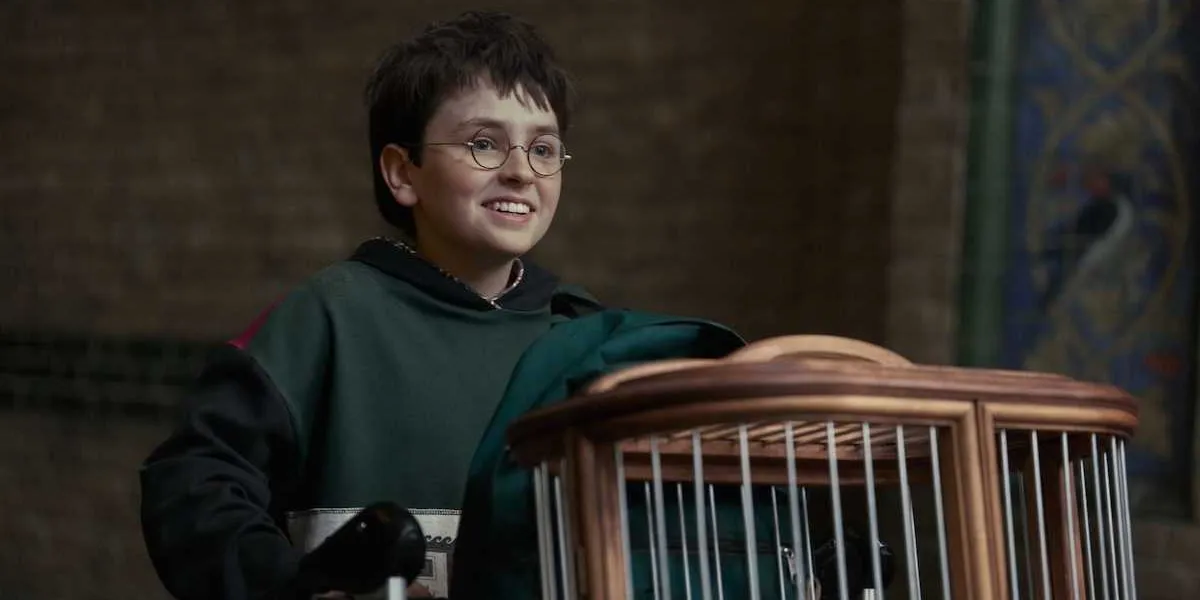
After years of speculation, anticipation, and a fair share of skepticism, the magic is finally taking shape again.
HBO has unveiled the first official images from its upcoming series Harry Potter and the Philosopher’s Stone, offering fans a glimpse into a reimagined version of one of the most beloved stories ever told.
And yes—it already feels different.
A New Harry, A New Beginning
At the center of it all is newcomer Dominic McLaughlin, stepping into the iconic role of Harry Potter. The first-look images show him in full Gryffindor attire, walking through Hogwarts corridors and even heading toward the Quidditch pitch—moments that instantly trigger nostalgia, yet carry a distinctly fresh tone.
Joining him are Arabella Stanton as Hermione Granger and Alastair Stout as Ron Weasley. Together, the trio seems ready to introduce a new generation to the magic of friendship, courage, and discovery.
Familiar Faces, Reimagined Roles
One of the biggest talking points is the casting of veteran actors in iconic roles.
- John Lithgow as Albus Dumbledore
- Janet McTeer as Minerva McGonagall
- Paapa Essiedu as Severus Snape
- Nick Frost as Rubeus Hagrid
Each casting choice has sparked conversations online—some excited, some cautious—but all undeniably curious.
A Story We Know… Told Differently
The series is based on the original book by J. K. Rowling, but this isn’t just a remake—it’s being pitched as a more detailed and faithful adaptation.
With more screen time than a film, the creators aim to explore storylines, characters, and emotional arcs that were previously left out.
Behind the scenes, the project is led by Francesca Gardiner as showrunner and Mark Mylod—known for his work on Succession—as director and executive producer.

The Magic of Nostalgia Meets Modern Storytelling
From Platform 9¾ to the Hogwarts Express, the first images suggest that HBO is carefully balancing nostalgia with reinvention.
We see Harry arriving with Hedwig, walking alongside his friends, and stepping into the magical world for the first time—all moments fans know by heart. Yet, there’s a cinematic polish and emotional depth that hints at a more immersive experience.
Release Date and What to Expect
The series is set to premiere on Christmas Day 2026, a strategic release that aligns perfectly with the franchise’s long-standing holiday appeal.
Produced in collaboration with Warner Bros. Television and Brontë Film and TV, the show carries the weight of massive expectations.
Fans React: Excitement Meets Caution
Rebooting something as iconic as Harry Potter is never easy.
For many fans, the original film series defined their childhood. For others, this new adaptation is an opportunity to experience the story in a richer, more detailed way.
The big question remains:
Can this series capture the same magic—or will it create something entirely new?
A New Era for the Wizarding World
What’s clear is that HBO isn’t just revisiting the past—it’s attempting to redefine it.
With a fresh cast, expanded storytelling, and a commitment to the original material, this series could either become the next global phenomenon… or face the weight of its own legacy.
Either way, one thing is certain—the world will be watching.
For More Update- DAILY GLOBAL DIARY






Entertainment
Druski’s Bold ‘White Face’ Sketch Sparks Buzz: “Fans Praise Makeup, Critics Prepare Backlash…”
Viral comedian Druski takes aim at conservative culture with a parody inspired by Erika Kirk, leaving the internet divided—but impressed.
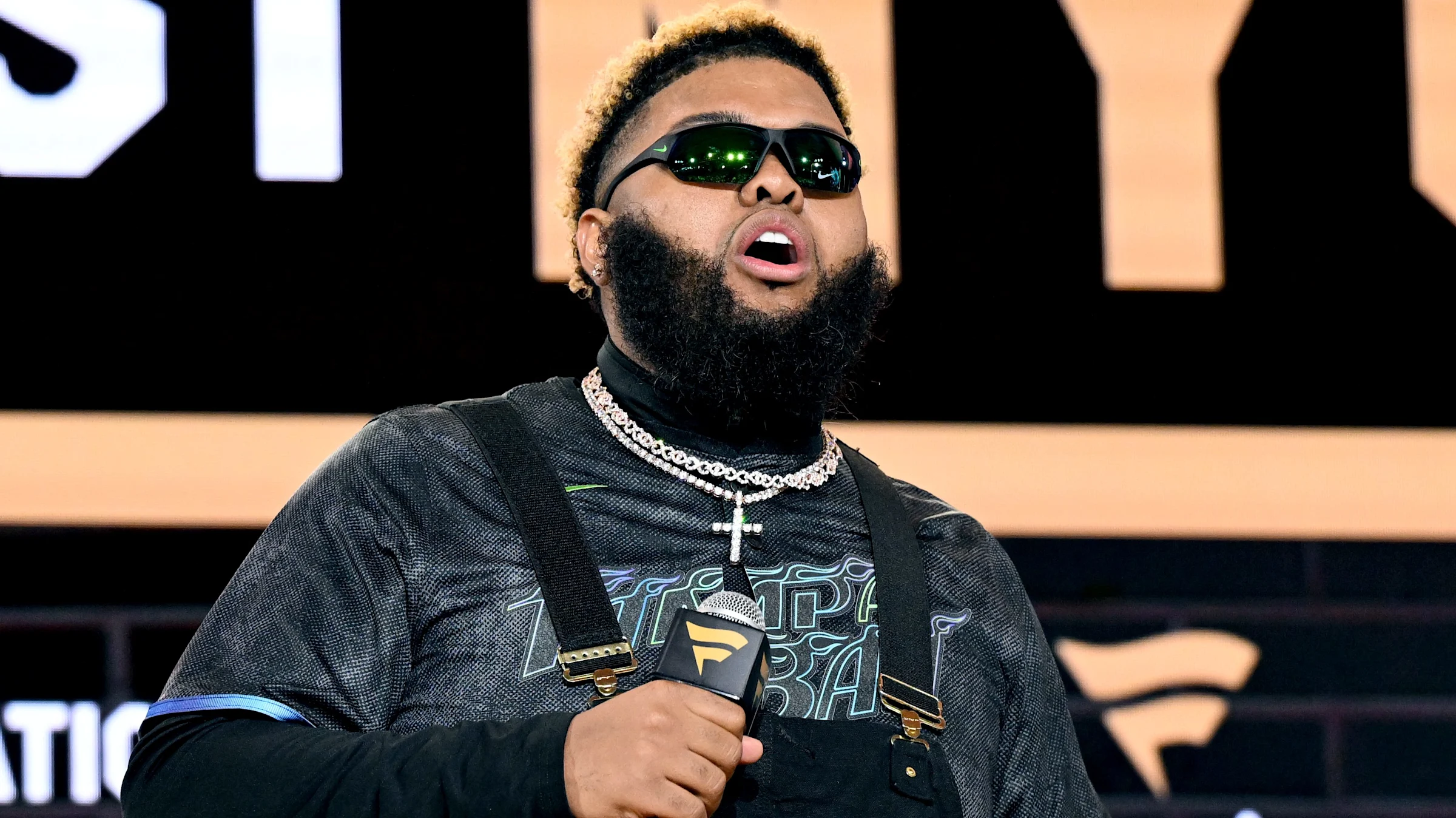
In the ever-evolving world of internet comedy, few creators understand timing and shock value quite like Druski. His latest sketch—dropped without warning, as always—has once again ignited conversations across social media, blending humor, controversy, and surprisingly, admiration for behind-the-scenes artistry.
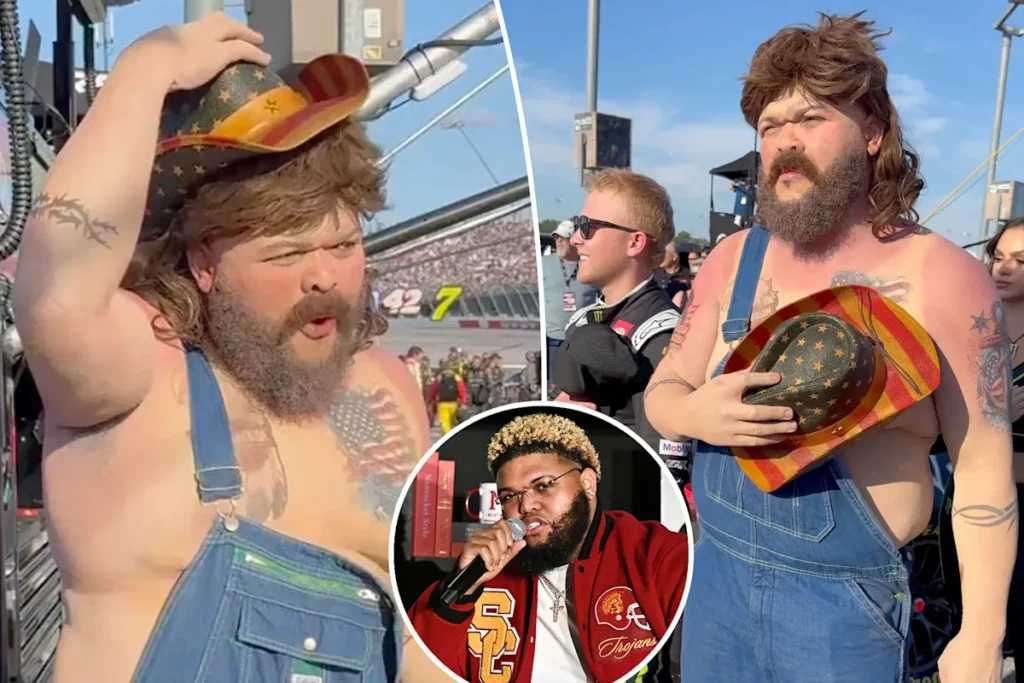
The viral comedian’s new video, provocatively titled around the behavior of conservative women in America, features Druski in heavy prosthetics, portraying a character widely believed to be inspired by Erika Kirk. The resemblance is striking—not just in wardrobe and styling, but in mannerisms that closely mimic the public persona associated with Kirk following the passing of Charlie Kirk.
A Sketch Built on Visual Comedy
What sets this sketch apart is its reliance on visual storytelling rather than punchlines. From walking into scenes with theatrical flair to exaggerated everyday activities like drive-thru visits and pilates sessions, Druski leans heavily on body language and situational irony. There are few spoken jokes—but that’s precisely what makes it land.
It’s a style that has become synonymous with Druski’s brand: unpredictable, slightly uncomfortable, and instantly shareable. Within minutes of its release, the video began circulating widely, proving once again that the comedian has mastered the algorithm-driven attention economy.
The Makeup That Stole the Show
While the sketch itself sparked debate, one element received near-universal praise—the makeup. Fans flooded comment sections applauding the transformation, with many noting that the prosthetics and styling elevated the parody to another level.
In fact, some viewers argued that the makeup team deserves as much recognition as the performer himself. The detailed execution allowed Druski to fully disappear into the character, making the satire both more convincing and more provocative.
Humor Meets Controversy
Of course, not everyone is laughing.
Druski has never shied away from controversial themes, and this sketch is no exception. By stepping into sensitive territory—touching on politics, identity, and public figures—he has once again opened himself up to criticism, particularly from conservative audiences.
Some critics are already labeling the performance as offensive, with familiar debates around satire, race, and representation resurfacing. Comparisons have even been drawn to past controversies involving “white face” portrayals in comedy, suggesting that the backlash could grow in the coming days.
Yet, for longtime followers of Druski, this reaction is hardly surprising. His career has been built on pushing boundaries and testing where humor intersects with discomfort.
The Druski Formula: Shock, Drop, Repeat
Part of what makes Druski so effective is his unpredictability. Unlike traditional comedians who tease upcoming content, he drops sketches without warning—turning each release into a viral event.
This strategy keeps audiences engaged and ensures that every video feels like a surprise. It’s a formula that has worked repeatedly, helping him maintain millions of views and a loyal fan base across platforms.
And while backlash may come and go, one thing remains consistent: people are watching.

A Reflection of Internet Culture
Beyond the laughs and criticism, this sketch highlights a larger trend in digital entertainment—where comedy is no longer just about humor, but also commentary.
Creators like Druski are shaping conversations, not just reacting to them. By blending satire with cultural references, they’re turning short-form content into a powerful medium for expression.
Whether you find the sketch hilarious or problematic, it’s hard to deny its impact. In today’s online world, sparking conversation is often just as valuable as delivering a punchline.
For More Update- DAILY GLOBAL DIARY
Entertainment
Teyana Taylor Had the Classiest Reaction to Losing at the Oscars — So Why Are People Attacking Her for It…
She lost, she clapped, she celebrated the winner — and somehow that became a controversy. Teyana Taylor has a few words for the people who have a problem with grace.


Losing an Oscar in front of a global television audience is not a small thing. It is one of the most publicly exposed moments of professional disappointment that exists in the entertainment industry — your face broadcast to millions, every flicker of emotion studied, every reaction catalogued and replayed. Most people in that seat choose neutrality. The polite smile. The composed nod. The careful performance of not-quite-feeling what you are absolutely feeling.
Teyana Taylor did not choose neutrality. She chose something rarer and considerably more difficult: she was genuinely happy for the woman who beat her. And for reasons that reveal far more about the critics than they do about Taylor herself, that choice became the most talked-about moment of her Oscars night.
The Night Itself
Taylor arrived at the Dolby Theatre in Hollywood as a nominated actress — a sentence that still carries real weight when you consider the trajectory that produced it. A Newark-born artist who broke through as a dancer and vocalist, who built a fiercely loyal following through music and sheer force of personality, who then pivoted into dramatic acting with enough conviction to earn recognition from the most prestigious awards body in the film industry.
ALSO READ : “She Never Made It Out…” Albany House Fire Claims Woman’s Life as Family Pleads for Help to Bring Her Home
Her performance in One Battle After Another had drawn genuine critical attention throughout the awards season. The Best Supporting Actress nomination was not a token gesture — it was a recognition of real, substantive work from an artist who had spent years proving to an industry full of sceptics that she was more than any single label it had tried to attach to her.
When Amy Madigan was announced as the winner, Taylor’s reaction was immediate and unguarded. She celebrated. Warmly, visibly, without the careful management of expression that most cameras-on nominees default to in that moment. For Taylor, it appeared to be completely natural — one artist recognising another’s achievement with the kind of generosity that the entertainment industry publicly champions and privately rarely practices.
Then the Internet Got Involved
Within hours, a segment of social media had decided that Taylor’s reaction was a problem. The criticism came from multiple directions simultaneously — some accused her of performing happiness she did not feel, others suggested her visible celebration was somehow undignified, and a particularly strange contingent seemed to feel that showing genuine warmth for a competitor was a betrayal of some unspoken competitive code.
It was, by any reasonable assessment, a remarkable thing to be criticised for. And Teyana Taylor — who has never, in any chapter of her public life, demonstrated the slightest inclination to absorb criticism quietly when she believes it to be unjust — was not about to start now.
“Sore Losers” — The Clap Back Heard Round the Internet
Taylor addressed her critics with the directness that has always been her signature. The phrase she reached for — “sore losers” — was pointed, perfectly chosen, and landed with the precision of someone who understood exactly the irony she was deploying. She was the nominee who had not won. She was the one who had every conventional justification for disappointment. And yet the people behaving like sore losers were the ones on the outside, criticising her for not performing the resentment they apparently expected.
Her message, stripped to its essence, was this: she was raised to celebrate excellence wherever she finds it. Amy Madigan — a veteran actress whose career stretches back decades and whose body of work across film and television represents the kind of sustained, underrecognised craft that the industry perpetually underpays in attention — deserved her flowers. Taylor gave them. If that makes certain people uncomfortable, the discomfort belongs to them.

It is the kind of public statement that works precisely because it requires no defensiveness. Taylor is not explaining herself. She is not softening the edges of her position for an audience she is trying to win over. She is simply, clearly, stating what she believes and leaving the critics to sit with what their reaction to her joy says about them.
Who Is Amy Madigan, and Why Does the Win Matter
Part of what gives Taylor’s celebration its particular resonance is the identity of the woman she was celebrating. Amy Madigan is not a newcomer collecting an early-career trophy. She is a Chicago-born actress who has been delivering exceptional work since the 1980s — perhaps most recognisable to mainstream audiences for her role in Field of Dreams opposite Kevin Costner, and to more discerning viewers for a career’s worth of television and independent film performances that have consistently outpaced the recognition afforded to them.
Her Oscar win is, for many industry observers, a long-overdue accounting. The kind of win that people in the business recognise as corrective — the industry catching up with talent it should have honoured sooner. That Teyana Taylor, a fellow artist who had skin in the game that night, saw it that way too and responded accordingly is not a performance of graciousness. It reads, in context, as a genuine recognition of something real.
The Double Standard Nobody Wants to Name
There is a conversation sitting just beneath the surface of this entire episode that deserves to be had directly. The scrutiny applied to Teyana Taylor‘s reaction — the speed with which her visible joy was reframed as either fake or inappropriate — exists within a much older pattern of Black women in entertainment being held to impossible, contradictory standards of public behaviour.
Too reserved and you are cold. Too expressive and you are performing. Celebrate a competitor and you are suspect. Keep your feelings private and you are arrogant. The goalposts do not just move — they are never in the same place twice, and they are never positioned in good faith.
Taylor — who came up through G.O.O.D. Music, built a music career of genuine artistic distinction, directed acclaimed visual projects, and fought her way into serious dramatic acting on her own terms — has navigated this kind of scrutiny at every stage. She has, consistently and without apology, refused to let it dictate how she moves through the world.
Her response to the “sore losers” is simply the latest iteration of a posture she has maintained her entire career: clear-eyed, unbothered, and entirely her own.
The Bottom Line
Amy Madigan won a well-deserved Oscar. Teyana Taylor celebrated her for it. A corner of the internet manufactured a controversy from an act of genuine human warmth. And Taylor, as she tends to do, handled the manufactured controversy better than it deserved to be handled.
In a room full of people performing emotions for cameras, she felt one naturally and showed it honestly. The critics called it a problem. She called them sore losers. History will almost certainly agree with her.
Entertainment
Sean Penn Won His Third Oscar on Sunday — Then Vanished. Now We Think We Know Exactly Where He Was and Who He Was With…
While Hollywood celebrated at after-parties and acceptance speeches echoed across social media, Sean Penn was apparently somewhere else entirely — doing exactly what you would expect Sean Penn to do.

Only Sean Penn could win his third Academy Award on a Sunday night and make the bigger story about where he went afterwards.
That is not a criticism. It is, if anything, the most Sean Penn thing that has ever happened — and in a career that has included two previous Oscars, a marriage to Madonna, a self-directed trip to interview El Chapo for Rolling Stone magazine, and years of frontline humanitarian work in places most Hollywood actors wouldn’t visit even for a well-compensated film shoot, that is saying something.
So: where was Sean Penn on Oscar night? The mystery, it seems, has been solved. And the answer tells you everything you need to know about who this man actually is beneath the awards and the mythology and the occasionally combustible public persona.
First — The Award Itself
Let’s not gloss over what happened before the disappearing act, because it was genuinely remarkable.
Sean Penn has now won three Academy Awards for Best Actor — a distinction that places him in extraordinarily rare company in the history of the Oscars. His first came in 2004 for Mystic River, Clint Eastwood‘s devastating adaptation of Dennis Lehane‘s novel, in which Penn played a man haunted by childhood trauma and consumed by grief and rage. His second arrived in 2009 for Milk, Gus Van Sant‘s biography of Harvey Milk — the pioneering gay rights activist and San Francisco politician — a performance so transformative that it remains one of the most celebrated biographical portrayals in modern cinema.
ALSO READ : “She Never Made It Out…” Albany House Fire Claims Woman’s Life as Family Pleads for Help to Bring Her Home
A third Oscar is not just another trophy. It is a statement about longevity, craft, and the kind of sustained creative ambition that most actors — however talented — simply cannot maintain across decades of a career. Daniel Day-Lewis has three. Meryl Streep has three. The company Penn now formally shares is vanishingly small.
And yet, at the party that follows the winning of such an award — the Governors Ball, the after-parties, the industry celebrations that stretch through the Beverly Hills night — Sean Penn was, by all accounts, conspicuously absent.
Nobody seemed to know where he was. And that, almost immediately, became the story.
The Disappearance That Launched a Thousand Theories
In the age of Instagram and real-time celebrity tracking, it is genuinely unusual for a major Oscar winner to simply vanish from the post-ceremony circuit without explanation. The red carpet cameras track arrivals. The party photographers document the celebrations. Publicists manage the evening’s narrative with military precision.
Sean Penn apparently did not get that memo — or, more likely, got it and filed it in the bin.
Speculation circulated quickly. Had he left Los Angeles? Was he making a statement about the ceremony itself — another year of Hollywood self-congratulation while the world outside was fracturing? Was there a personal matter? A health concern? Had Sean Penn, in the most Sean Penn move imaginable, simply decided that an Oscar party was less important than something else and acted accordingly?
The answer, when it emerged, was both completely surprising and entirely predictable — which is perhaps the best possible description of Sean Penn as a human being.
The Friend. The Documentary. The Explanation.
According to sources piecing together Penn’s Oscar night movements, the actor — fresh from accepting one of the entertainment industry’s highest honours — appears to have spent at least part of his evening visiting a friend and former documentary subject.
This requires a brief detour into the part of Sean Penn‘s biography that his film work sometimes overshadows: his life as a genuinely committed, sometimes reckless, always serious political actor in the non-fictional sense of the word.
Penn is not a celebrity who attaches his name to causes for the publicity. He shows up. After Hurricane Katrina devastated New Orleans in 2005, Penn was photographed personally steering a boat through floodwater, rescuing stranded residents — an image that captured something real about a man who, whatever his faults, does not treat humanitarian impulse as a photo opportunity. After the 2010 Haiti earthquake, Penn founded CORE — the Community Organized Relief Effort — and spent years leading on-the-ground disaster response operations that by most accounts saved thousands of lives.

He has made documentary films. He has cultivated relationships with political figures — some celebrated, some deeply controversial — that most Hollywood actors would never risk. His interview with El Chapo for Rolling Stone in 2016, conducted in secret in the Mexican jungle while the drug lord was a fugitive, generated international headlines and a significant security controversy, but it also demonstrated something about Penn that his critics rarely credit: a genuine, if sometimes dangerously expressed, desire to understand the world beyond the comfortable boundaries of celebrity life.
The “friend and former documentary subject” he apparently visited on Oscar night fits this pattern exactly. A man who has spent decades building relationships with people who exist far outside the Hollywood orbit — relationships based on shared purpose or political alignment or simple human connection — chose, on one of the biggest nights of his professional life, to spend time with one of those people rather than work the room at an industry party.
What This Says About Sean Penn — The Man, Not the Myth
Sean Penn has never been easy to write about fairly, because the caricature on both sides is so powerful.
To his admirers, he is the last real movie star — a man of fierce intelligence, genuine moral courage, and artistic seriousness in an industry increasingly dominated by franchise product and carefully managed personal brands. To his detractors, he is a self-aggrandising provocateur whose political adventures are a form of narcissism dressed up as conscience.
The truth, as with most interesting people, is considerably more complicated than either version.
What the Oscar night disappearance reveals — and the explanation that has emerged confirms — is that Penn operates according to a personal value system that genuinely does not place the entertainment industry’s rituals at the top of the hierarchy. He will accept the award — he earned it, and he knows it — but he will not pretend that the party afterwards is the most important thing he could be doing with his evening.
There is something almost old-fashioned about that. The Hollywood Golden Age had its own version of this type — actors like Paul Newman and Marlon Brando who were genuinely, uncomplicatedly more interested in the world outside the studio than in the machinery of celebrity maintenance. Penn is a direct descendant of that tradition — messy, occasionally maddening, always impossible to ignore.
Three Oscars. One Exit. No Apologies.
In the final analysis, what happened on Oscar night is a very small story with a very large implication.
Sean Penn won a historic third Academy Award. He accepted it. And then he left — not to another party, not to a press line, not to the carefully choreographed machinery of award season victory laps — but to see a person he cared about, in a private capacity, on his own terms.
In a Hollywood that has become almost entirely defined by the performance of authenticity rather than the thing itself, that choice — unglamorous, unexplained, quietly defiant — might be the most interesting thing Sean Penn has done in years.
And in its own strange way, it is entirely deserving of the man who once paddled a boat through a flooded American city, spent years rebuilding a devastated Caribbean nation, and sat across a jungle table from one of the world’s most wanted criminals — all because he decided it was what needed doing.
Three Oscars. One exit into the night. Absolutely zero apologies.
That is Sean Penn. That has always been Sean Penn. And whatever you think of him, that consistency is, at this point, its own kind of achievement.
Daily Global Diary will continue to cover the 2025 awards season and the stories behind the headlines.

“She Made Them Believe in Love… Then Took Everything”: Model’s Dating Scam Shocks UK Court

“America Will Never Give Up the Moon…”: NASA’s Bold Artemis Reset Signals New Space Race Reality

“I Just Want Peace…”: Noelia Castillo’s 601-Day Euthanasia Wait Sparks Emotional Debate Across Spain

Druski’s Bold ‘White Face’ Sketch Sparks Buzz: “Fans Praise Makeup, Critics Prepare Backlash…”

‘Harry Potter Returns… but Not How You Remember’: HBO Drops First Look at New Series and Fans Are Already Talking

1-Iran Issues Dire Warning to Israel and Defies Trump on Nukes: “We’re Ready to Strike Deep Inside”

Donald Trump’s net worth reveals the fortune behind the former US President and business mogul

“She Never Made It Out…” Albany House Fire Claims Woman’s Life as Family Pleads for Help to Bring Her Home

Caitlin Clark Sidelined with Quad Strain, Set to Miss Two Weeks of WNBA Action

“Tomás Rodríguez Net Worth 2025: Panama’s Gold Cup Goal‑Machine’s Surprising Fortune Revealed”

Miss Jamaica Suffers Terrifying Fall Off Miss Universe Stage; Rushed to Hospital on Stretcher in Viral Video

Moana Live-Action Teaser Sparks Outrage as Fans Call Disney’s Move a ‘Clear Money Grab’ — What Went Wrong?

Ryan Gosling’s Project Hail Mary Trailer Stuns Fans with a Mysterious Alien Ally and a Mission That Could Save Earth

Apple delays Jessica Chastain thriller The Savant about domestic extremism after recent US violence

Avatar 3, Fire and Ash trailer reveals Jake Sully’s family facing terrifying new Na’vi enemies with deadly fire powers
-
 Entertainment7 days ago
Cannes 2026 Hasn’t Announced a Single Film Yet — But the Whisper Network Is Already Pointing to These Names and It’s Exciting…
-

 Entertainment1 week ago
Amy Poehler and Sterlin Harjo Are Getting One of Television’s Highest Honours — and the Reason Why Says Everything About Where Storytelling Is Headed…
-

 Entertainment7 days ago
Almodóvar, Lars von Trier, Joel Coen and More — The Films That Could Own Cannes 2026 Are Already Generating Serious Buzz and the List Is…
-

 Entertainment1 week ago
Oscars 2026 Red Carpet Shockers: Zendaya’s Late Arrival, Jessie Buckley’s Grace Kelly Tribute… and Chase Infiniti Owning the Night
-

 Entertainment1 week ago
Lisa Kudrow Brings Valerie Cherish Back From the Dead — But This Time, Her Co-Star Is an AI and the Humiliation Is Real…
-

 Entertainment2 days ago
Broadway Shake-Up: Samira Wiley Steps Away From ‘Proof’… Kara Young Steps In at the Last Moment
-

 Entertainment7 days ago
Lollapalooza 2026 Just Dropped Its Most Surprising Lineup Yet — and the One Historic Thing Nobody Is Talking About Is the Real Story…
-

 Politics1 week ago
“Trump Reveals ‘Early Stage Breast Cancer’ Diagnosis of Susie Wiles… But Says Her ‘Strength Says Everything’”