
Entertainment
Kevin Feige Opens Up About the Last Time He Saw Chadwick Boseman — and What He Said Has Left Marvel Fans Completely Speechless…
The most powerful man in Hollywood speaks candidly about grief, legacy, and why he deliberately stays off the internet — in a conversation that is as human as it is revealing.

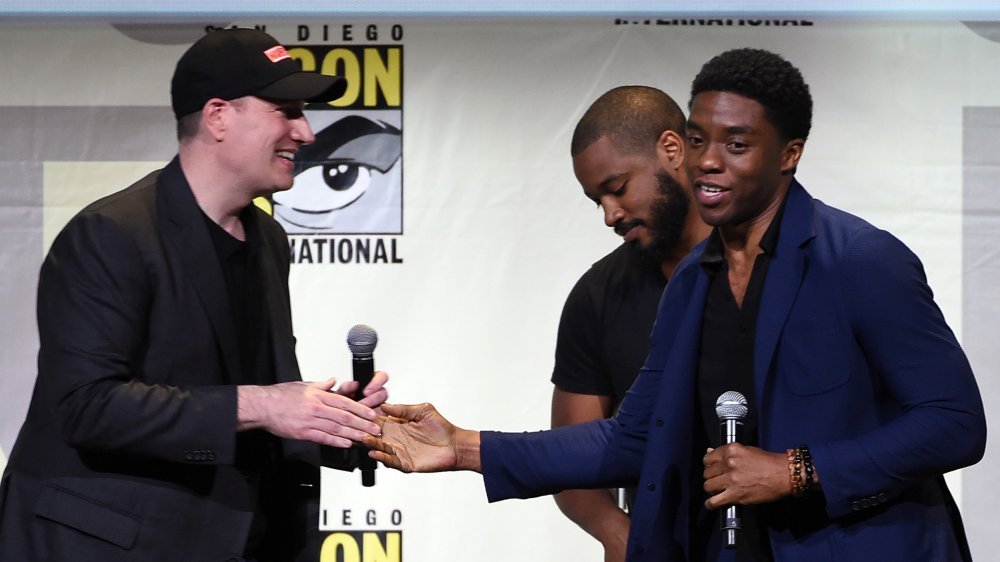
There are interviews, and then there are the ones that stay with you. The ones where someone with a great deal to protect — professionally, emotionally, institutionally — decides, for whatever reason, to let the guard down just enough that you see the actual person underneath the title. Kevin Feige‘s recent conversation, in which he spoke about avoiding internet discourse and — more quietly, more devastatingly — about the last time he saw Chadwick Boseman, is that kind of interview.
Read it once and you get the information. Read it again and you start to feel the weight of what he’s carrying.
The Man Who Built the MCU — and What That Actually Costs
Kevin Feige is, by any reasonable measure, the most consequential producer in the history of popular cinema. As the President of Marvel Studios and Chief Creative Officer of Marvel Entertainment, he has overseen a cinematic universe that has grossed more than $30 billion at the global box office — a number so large it stops feeling real. He has shepherded more than thirty films across a seventeen-year narrative arc, managed the creative egos and contractual complexities of dozens of A-list actors, and navigated the transition of Marvel Studios from a scrappy independent operation to the crown jewel of the Walt Disney Company‘s entertainment empire.
ALSO READ : “She Never Made It Out…” Albany House Fire Claims Woman’s Life as Family Pleads for Help to Bring Her Home
What that kind of sustained creative responsibility does to a person — the toll of being perpetually, publicly accountable for decisions that are parsed, debated, and dissected by millions of people before the films are even finished — is something Feige almost never discusses directly. He is, by professional reputation, one of the most disciplined interview subjects in Hollywood: warm, engaged, occasionally funny, and absolutely masterful at saying a great deal while revealing very little.
Which is precisely why this conversation is worth examining so carefully. Because in it, he revealed something.
Why Feige Stays Away From the Internet — And Why That’s Harder Than It Sounds
The discourse around the Marvel Cinematic Universe online is, to put it gently, intense. Every casting choice, every trailer frame, every perceived continuity error, every creative direction — all of it is subject to immediate, often furious, frequently contradictory analysis across Reddit, X, YouTube, and every other corner of the internet that has claimed a stake in what Marvel does next.
Feige has been, for years, a known abstainer from that particular circus. He doesn’t have a public social media presence of any consequence. He doesn’t respond to fan theories. He doesn’t engage with the take economy that has built entire media channels around praising or burying his decisions in real time.
In this conversation, he articulated why — and the reasoning is more considered than simple avoidance.
The internet, as Feige seems to understand it, is not a representative sample of anything. The voices that are loudest in any online fandom discourse are not the voices of the full audience — they are the voices of the most activated fraction of it, the people whose investment is so high that they have structured significant portions of their identity around the property. That is a very particular kind of audience relationship, and it is not the relationship that most people watching a Marvel film in a theater on opening night have with the material.
Making creative decisions in response to the loudest online voices, rather than in service of the full audience — including the casual viewer, the first-timer, the parent sitting next to their child watching a superhero fly for the first time — is, in Feige’s implicit framing, a form of creative distortion. The algorithm rewards outrage and hyperbole. The cinema rewards something slower, quieter, and harder to manufacture.
Staying off the internet, in other words, is not a luxury for Feige. It is a discipline. A deliberate act of creative self-preservation in an environment specifically designed to destabilize it.
Chadwick Boseman: The Memory That Changes Everything
And then there is the other part of this conversation. The part that has nothing to do with box office or discourse management or franchise strategy. The part about Chadwick Boseman.
Boseman died in August 2020, at the age of forty-three, from colon cancer — a diagnosis he had received in 2016 and which he kept almost entirely private for the four years during which he continued to work at a pace that, knowing what we now know, feels almost incomprehensible. He filmed Avengers: Infinity War, Avengers: Endgame, 21 Bridges, Da 5 Bloods, and Ma Rainey’s Black Bottom — for which he received a posthumous Academy Award nomination — while managing a terminal diagnosis that only his closest family members knew about.
The world found out he was gone and found out he had been sick at the same moment. The shock of his death was compounded by the revelation of how long he had been carrying it.
For Kevin Feige — who worked with Boseman from the very beginning of the Black Panther project, who shepherded that film through production and watched it become not just a commercial phenomenon but a genuine cultural milestone — the loss was, by any reading of how he speaks about it, profound and personal in a way that transcends the professional.
When he describes the last time he saw Chadwick Boseman, the tone of the conversation shifts entirely. The careful, calibrated producer voice recedes. What’s left is something quieter and more real — a person describing the specific texture of a memory that they will carry for the rest of their life, knowing that they didn’t know, in that moment, that it was the last one.
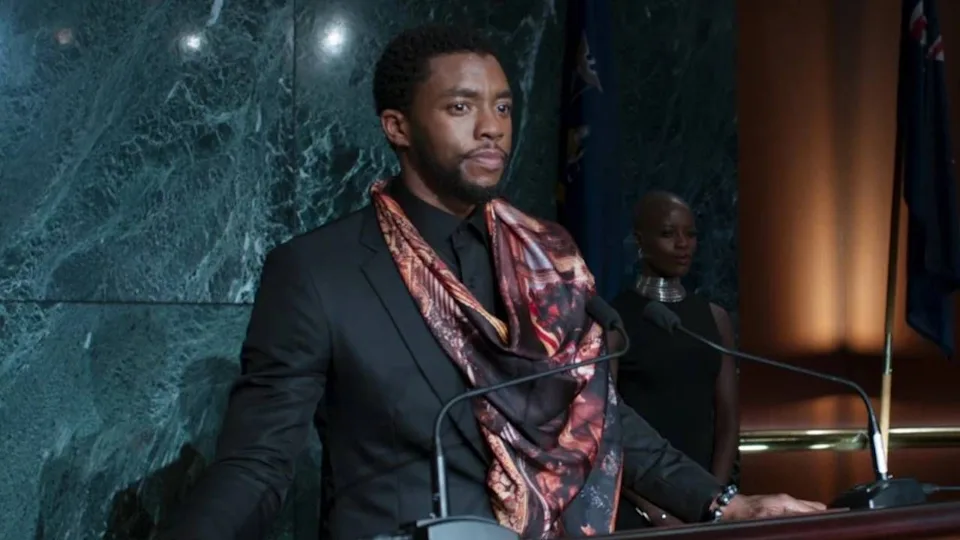
That is one of the most particular kinds of grief there is. The grief of a last conversation you didn’t know was a last conversation. The grief of ordinary moments that became, retroactively, extraordinary through loss.
Feige does not perform this grief for the camera. He doesn’t reach for the eloquent tribute language that public figures deploy when they want to honor someone without actually exposing themselves. He speaks about Boseman the way someone speaks about a person they genuinely miss — with specificity, with the small details that only actually matter to the person telling the story, with a quality of attention that cannot be faked.
What Boseman Meant to the MCU — and What Can Never Be Replaced
Black Panther, released in 2018 and directed by Ryan Coogler, was not just a superhero film. It was, in a very real sense, a demonstration of what popular cinema could do when it decided to take its audience seriously — when it brought the full resources of a major studio to a story centered on Black identity, African heritage, and the politics of power in a way that had never been attempted at that scale before.
Boseman’s portrayal of T’Challa was the spine of that film. His physicality, his regal stillness, his ability to make nobility feel lived-in rather than performed — these qualities gave the film its moral center. Without him, the world of Wakanda would have been beautiful architecture with no one inside it.
Black Panther: Wakanda Forever, Coogler’s 2022 sequel, was built entirely around the reality of his absence — a film that processed collective grief in real time, that asked its audience to mourn alongside its characters. It is one of the most unusual studio films ever made, and its emotional weight rests entirely on how genuinely Boseman was loved by the people who made both films.
Feige’s comments about him are consistent with everything that Boseman’s collaborators have said in the years since his death. This was not a man who people worked with. He was someone people were genuinely changed by.
The MCU’s Next Chapter — Built on What Came Before
The conversation around Feige’s internet avoidance and his memories of Boseman arrives at a moment when Marvel Studios is navigating what might be its most consequential period since the original Avengers assembled on screen in 2012.
The post-Endgame MCU has been, by any honest measure, uneven. The volume of content — across both film and the Disney+ series slate — stretched the studio’s creative bandwidth in ways that have been debated at length, both online and in the trades. The challenge of building a new generational story to replace the Infinity Saga has proven more difficult than the casual success of that saga’s construction might have suggested.
Feige knows all of this. He reads the box office. He sits in test screenings. He understands, better than anyone, what is working and what needs to be rebuilt.
What his comments in this conversation suggest is that he is approaching that rebuilding with the same discipline he has always brought to the work — tuning out the noise, staying focused on the story rather than the discourse, and holding close the memories of what this universe meant at its highest points.
Chadwick Boseman was one of those highest points. And the fact that Feige is still reaching for that memory — still letting it sit in a conversation without rushing past it — tells you something important about where his compass is pointed.
Not toward the algorithm. Toward the thing the algorithm can never replicate.
Kevin Feige is the President of Marvel Studios and Chief Creative Officer of Marvel Entertainment. Chadwick Boseman passed away on August 28, 2020.








Entertainment
The Hollywood Reporter Dominates SoCal Journalism Awards With 44 Wins… Inside the Night It Left Competitors Behind
With 20 first-place victories and top honors across reporting, criticism, and audio journalism, The Hollywood Reporter emerged as the biggest winner at the 2026 SoCal Journalism Awards.

The 2026 SoCal Journalism Awards delivered a standout night for The Hollywood Reporter, which secured an impressive 44 total honors, including 20 first-place wins, more than any other media outlet at the ceremony.
The results underline the publication’s continued influence in entertainment journalism, spanning breaking news coverage, in-depth reporting, film criticism, and audio storytelling.
Held on Sunday night, the awards highlighted excellence across Southern California’s competitive media landscape, but it was The Hollywood Reporter that clearly set the benchmark.
Top Honors Across Multiple Categories
Among the most notable achievements, Gary Baum and Seth Abramovitch were jointly recognized with Journalist of the Year honors, reflecting their standout reporting and investigative work throughout the year.
Baum’s work has long been recognized for its depth in cultural and investigative storytelling, while Abramovitch continues to be a key voice in Hollywood reporting, known for his industry access and sharp editorial insight.
In film criticism, David Rooney earned the award for Best Film Critic, reinforcing his reputation as one of the most respected voices in contemporary cinema analysis.
ALSO READ : Sen. Elizabeth Warren Calls It a ‘Cesspool of Corruption’ — Here’s Why Senators Are Now Fighting Back Against the DOJ’s Live Nation Deal That Left Every Fan Betrayed…
Meanwhile, Scott Feinberg, executive editor of awards coverage and host of Awards Chatter, received recognition as Best Audio Anchor/Host, highlighting the publication’s growing strength in podcast and audio journalism.
A Strong Year for Entertainment Journalism
The awards reflect a broader moment of evolution in entertainment media, where traditional reporting, digital storytelling, and podcasting increasingly intersect.
The Hollywood Reporter has expanded its reach in recent years beyond print and web journalism, investing heavily in multimedia formats, including video interviews, podcasts, and long-form investigative features.
Its success at the SoCal Journalism Awards signals how effectively the publication has adapted to a rapidly changing media environment while maintaining editorial depth.
A Competitive Media Landscape
The SoCal Journalism Awards bring together a wide range of Southern California news organizations, recognizing excellence in categories spanning reporting, photography, design, audio, and digital innovation.

This year’s strong performance by The Hollywood Reporter places it ahead of other regional and national outlets competing in the entertainment journalism space.
Industry observers note that the publication’s consistent award performance reflects both its legacy and its ongoing evolution under modern digital demands.
Journalism Leaders Recognized
Beyond individual awards, the recognition of multiple journalists across categories highlights the depth of talent within the organization.
From investigative reporting to cultural criticism, The Hollywood Reporter continues to maintain a strong editorial bench that contributes to its influence within Hollywood and beyond.
The combination of seasoned journalists and emerging voices has helped the outlet maintain its position as one of the most authoritative sources for entertainment industry coverage.
The Bigger Picture for Media Excellence
The 2026 SoCal Journalism Awards also underscore the growing importance of multimedia journalism.
With audiences consuming news across multiple platforms, outlets like The Hollywood Reporter are increasingly recognized not just for written reporting, but also for audio, video, and digital storytelling formats.
This year’s results highlight how journalism success is no longer defined by a single medium, but by the ability to engage audiences across multiple channels.
A Standout Year
With 44 total awards, including category wins across reporting, criticism, and audio storytelling, The Hollywood Reporter clearly stood out as the dominant force of the night.
For the newsroom, the recognition serves as both validation and momentum heading into another year of competitive entertainment coverage.
As the media landscape continues to evolve, the publication’s performance at the 2026 SoCal Journalism Awards reinforces its position at the forefront of Hollywood journalism.
Entertainment
Johnny Knoxville’s Summer Camp Comedy ‘Tiny Fugitives’ Locks Fall Release… Seth Rogen’s Latest Project Could Be This Season’s Surprise Hit
A chaotic summer camp adventure starring Johnny Knoxville is officially heading to audiences this fall after Inaugural Entertainment secured domestic distribution rights for the Seth Rogen-produced comedy.

A new comedy packed with mischief, mayhem and summer camp chaos is preparing to make its way to theaters.
Johnny Knoxville’s upcoming feature Tiny Fugitives has officially secured a fall release window, marking a significant milestone for the project as Inaugural Entertainment acquires domestic distribution rights. The film, produced by comedy heavyweight Seth Rogen, has already begun generating industry buzz thanks to its unusual premise and experienced creative team.
Set against the backdrop of a summer camp, the movie promises a mix of adventure, humor and unpredictable situations that could make it one of the more talked-about comedy releases of the season.
A Story Fueled by Summer Camp Chaos
At its core, Tiny Fugitives revolves around the kind of disorder that can only happen when young imaginations collide with limited supervision.
While filmmakers have kept many story details under wraps, the film is described as a comedy centered on escalating chaos at a summer camp. The setting provides fertile ground for unexpected adventures, hilarious misunderstandings and the kind of youthful energy that has long made camp-based stories popular with audiences.
ALSO READ : Sen. Elizabeth Warren Calls It a ‘Cesspool of Corruption’ — Here’s Why Senators Are Now Fighting Back Against the DOJ’s Live Nation Deal That Left Every Fan Betrayed…
The combination of camp-life nostalgia and offbeat humor has already sparked curiosity among moviegoers looking for something different from traditional studio comedies.
Michael Lewen Brings His Vision to the Screen
The project comes from writer-director Michael Lewen, who has steadily built a reputation for character-driven storytelling and fresh comedic perspectives.
With Tiny Fugitives, Lewen appears to be leaning into a more energetic and chaotic style while still maintaining the emotional elements that often help comedy resonate with audiences.
Industry insiders suggest that the film balances humor with heartfelt moments, creating a story that appeals across generations rather than relying solely on slapstick comedy.
Johnny Knoxville Returns to What He Does Best
Few performers are as closely associated with controlled chaos as Johnny Knoxville.
The actor and entertainer became a global sensation through the Jackass franchise, where his fearless approach to comedy helped redefine a generation of entertainment.
Over the years, Knoxville has expanded his career beyond stunt-driven projects, taking on acting roles in both independent and mainstream productions. However, Tiny Fugitives appears to tap into the unpredictable energy that first made him a household name.
For longtime fans, the film could represent a welcome return to the comedic style that established his career.
Seth Rogen’s Continued Influence in Comedy
The involvement of Seth Rogen adds another layer of anticipation to the project.
As a producer, writer and actor, Rogen has been behind some of the most successful comedy titles of the past two decades, including Superbad, This Is the End and Pineapple Express.

His reputation for supporting original comedic voices has made him one of the industry’s most influential creative figures, and his participation signals confidence in the film’s potential.
Distribution Deal Marks a Major Step Forward
The acquisition of domestic rights by Inaugural Entertainment represents a key development for Tiny Fugitives.
Securing a distribution partner is often one of the most important stages in a film’s journey to audiences. The move ensures the movie will have a clear path to release while increasing its visibility within an increasingly competitive entertainment market.
Industry analysts note that comedy films face growing pressure from streaming platforms, making strong theatrical distribution partnerships more valuable than ever.
A Comedy to Watch This Fall
As anticipation builds, Tiny Fugitives is shaping up to be one of the more intriguing comedy releases on the fall calendar.
The combination of Johnny Knoxville’s signature comedic style, Seth Rogen’s production expertise and Michael Lewen’s creative vision offers a promising formula for audiences seeking laughter and adventure.
Whether it becomes a breakout hit remains to be seen, but one thing is certain: a summer camp has never looked this chaotic.
Entertainment
Christopher Nolan’s ‘The Odyssey’ Finally Sets Sail… But It Was a Giant Trojan Horse That Stole the Spotlight in London
A towering Trojan horse, screaming fans, and an A-list cast led by Tom Holland, Zendaya, Matt Damon, Anne Hathaway, and Robert Pattinson turned Leicester Square into a spectacle as Christopher Nolan unveiled his most ambitious film yet.

The world premiere of Christopher Nolan’s highly anticipated epic The Odyssey transformed London’s Leicester Square into a scene worthy of ancient mythology on Tuesday night.
With a massive Trojan horse dominating the red carpet area and thousands of fans gathering for a glimpse of Hollywood’s biggest stars, the event marked the first public screening of Nolan’s latest cinematic undertaking—a sprawling three-hour adaptation inspired by the legendary Greek tale.
The atmosphere was electric long before the cast arrived. Crowds lined the streets, cameras flashed nonstop, and excitement reached fever pitch as one celebrity after another stepped onto the carpet.
A Star-Studded Cast Draws Massive Crowds
Among the biggest attractions of the evening were Tom Holland and Zendaya, whose appearance triggered deafening cheers from fans packed around the venue.
The pair were joined by an impressive ensemble that included Matt Damon, Anne Hathaway, and Robert Pattinson, creating one of the most star-powered red carpets London has seen in recent years.
ALSO READ : Emmy Nominations Announcement Gets a Star Twist… Liza Colón-Zayas & Jeff Hiller Set to Reveal 2026 TV Nominees
For many attendees, the premiere felt less like a film launch and more like a global entertainment event. Fans waited hours for a chance to catch a glimpse of their favorite actors, many waving posters, memorabilia, and copies of Nolan’s previous films.
Christopher Nolan’s Most Ambitious Journey Yet?
Following the monumental success of Oppenheimer, expectations surrounding Nolan’s next project have been extraordinarily high.
Known for pushing cinematic boundaries with films such as Inception, Interstellar, and The Dark Knight, the Oscar-winning filmmaker has built a reputation for delivering large-scale storytelling combined with emotional depth.
With The Odyssey, Nolan turns his attention to one of history’s most enduring tales—the journey of Odysseus and his long, perilous voyage home following the Trojan War.
Industry observers believe the film could become one of the most significant cinematic releases of the year, not only because of its scale but also because of the extraordinary talent assembled both in front of and behind the camera.

The Trojan Horse That Became the Night’s Symbol
While the celebrities generated plenty of excitement, the evening’s most talked-about visual may have been the gigantic Trojan horse standing proudly over Leicester Square.
The installation served as a dramatic tribute to the ancient story that inspired the film and quickly became a favorite backdrop for photographers, fans, and media outlets covering the event.
Its presence helped blur the line between mythology and modern cinema, creating a memorable image that perfectly captured the scale and ambition of Nolan’s latest project.
First Reactions Begin to Build Anticipation
As guests entered the theater for the first screening, anticipation reached its peak. While audiences worldwide will have to wait to see the film, the premiere successfully established The Odyssey as one of the most talked-about releases of the season.
For Christopher Nolan, whose films consistently become cultural events, the London premiere was another reminder of his unique ability to turn a movie release into a global spectacle.
Whether The Odyssey ultimately joins the ranks of his most celebrated works remains to be seen, but one thing became clear in Leicester Square: the voyage has officially begun, and the world is watching.

The Hollywood Reporter Dominates SoCal Journalism Awards With 44 Wins… Inside the Night It Left Competitors Behind

Johnny Knoxville’s Summer Camp Comedy ‘Tiny Fugitives’ Locks Fall Release… Seth Rogen’s Latest Project Could Be This Season’s Surprise Hit

Christopher Nolan’s ‘The Odyssey’ Finally Sets Sail… But It Was a Giant Trojan Horse That Stole the Spotlight in London

ABC Pushes Back Against FCC Over ‘The View’… Says the Show Hasn’t Changed, ‘The Political Climate Has’

Toronto Film Festival Opens With ‘Being Heumann’—Could Sian Heder’s Latest Be the Next Awards Season Breakout?

1-Iran Issues Dire Warning to Israel and Defies Trump on Nukes: “We’re Ready to Strike Deep Inside”

Sen. Elizabeth Warren Calls It a ‘Cesspool of Corruption’ — Here’s Why Senators Are Now Fighting Back Against the DOJ’s Live Nation Deal That Left Every Fan Betrayed…

Donald Trump’s net worth reveals the fortune behind the former US President and business mogul

“Tomás Rodríguez Net Worth 2025: Panama’s Gold Cup Goal‑Machine’s Surprising Fortune Revealed”

“She Never Made It Out…” Albany House Fire Claims Woman’s Life as Family Pleads for Help to Bring Her Home

Miss Jamaica Suffers Terrifying Fall Off Miss Universe Stage; Rushed to Hospital on Stretcher in Viral Video

Moana Live-Action Teaser Sparks Outrage as Fans Call Disney’s Move a ‘Clear Money Grab’ — What Went Wrong?

Ryan Gosling’s Project Hail Mary Trailer Stuns Fans with a Mysterious Alien Ally and a Mission That Could Save Earth

Apple delays Jessica Chastain thriller The Savant about domestic extremism after recent US violence

Avatar 3, Fire and Ash trailer reveals Jake Sully’s family facing terrifying new Na’vi enemies with deadly fire powers
-

 Entertainment1 week ago
Why Is America Turning 9/25 Into Dolly Parton Day? The Touching Meaning Behind the Date Revealed
-

 Tech1 week ago
Apple unveils iPhone 18 Pro series with a camera upgrade users have waited years for: Here’s what changed
-

 Entertainment1 week ago
Summer House Cast Celebrates First Emmy Nomination, Calls It Surreal
-

 Entertainment1 week ago
Beyoncé Ends Two-Year Music Hiatus With ‘Morning Dew’… Fans Wonder If a Bigger Announcement Is Coming
-
 Entertainment1 week ago
Hollywood’s New Box-Office Saviours: Curry Barker Joins Guillermo del Toro’s Elite Circle
-
 Entertainment1 week ago
‘The Gentlemen’ Season 2 Ending Explained by Theo James
-

 Entertainment1 week ago
Emmy Awards 2026 Predictions: First Post-Nominations Forecast Spotlights the Early Favorites
-
 Entertainment5 days ago
Telluride’s Mystery Screening Revealed as Nathan Fielder’s Elizabeth Holmes Documentary