
Sports
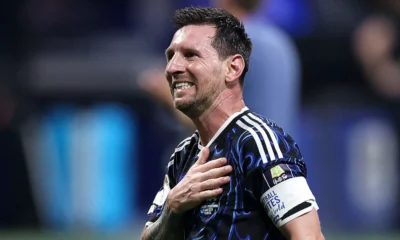
Lionel Messi’s Emotional Message After Argentina Reach World Cup Final… ‘Diego Is Watching From Above’
After guiding Argentina to the FIFA World Cup 2026 final, Lionel Messi remembered football legend Diego Maradona with an emotional tribute that touched fans around the world.


Argentina’s historic run at the FIFA World Cup 2026 has reached another unforgettable milestone, but for Lionel Messi, the achievement carried a deeper emotional meaning.
Following Argentina’s semifinal victory over England, Messi paid tribute to national football icon Diego Maradona, saying that the legendary figure was still watching over the team.
“Diego is watching from above,” Messi said, dedicating a part of Argentina’s success to the man who remains one of the most important figures in the country’s football history.
The emotional moment came after Argentina secured their place in the World Cup final, continuing a remarkable era for the national team. For millions of Argentine supporters, the connection between Messi and Maradona represents more than football—it represents two generations of greatness carrying the hopes of an entire nation.
ALSO READ : ‘This Doesn’t Have to Be Goodbye’: Fox Broadcasters Make Emotional Plea After Belgium Ends U.S. World Cup Dream
Maradona, who led Argentina to World Cup glory in 1986, has remained a symbol of passion, creativity, and national pride. Even after his passing in 2020, his influence continues to be felt throughout Argentine football, with players often speaking about the inspiration he provided.
For Messi, comparisons with Maradona have followed him throughout his career. Both players carried enormous expectations while representing Argentina on the world stage, and both became symbols of their country’s football identity.
The semifinal victory over England national football team added another memorable chapter to Argentina’s World Cup journey. Messi played a crucial leadership role, helping his team overcome a strong opponent and move one step closer to lifting the most prestigious trophy in international football.

The Argentine captain has previously spoken about his admiration for Maradona and the impact he had on generations of players. While Messi has created his own legacy through record-breaking achievements, including multiple Ballon d’Or awards, Maradona’s place in Argentine football history remains unique.
The tribute also highlighted the emotional side of Argentina’s campaign. Beyond tactics and results, the team has repeatedly spoken about playing for their supporters, their country, and the legends who helped shape Argentine football.
As Argentina prepares for the World Cup final, Messi’s words have added another powerful storyline to an already historic tournament. Whether they lift the trophy or not, the bond between Messi, Maradona, and Argentina’s football heritage will remain one of the defining narratives of this generation.
For fans watching around the world, Messi’s tribute was a reminder that football is not only about victories—it is also about memories, inspiration, and the legends who continue to live through the game.









Sports
MLB Second Half Begins: Phillies Face Mets as Trade Deadline Drama and New Payroll Tracker Take Center Stage
Baseball returns after the All-Star break with a crucial Phillies-Mets showdown, fresh trade deadline buzz, and a powerful new payroll tracking tool for fans.

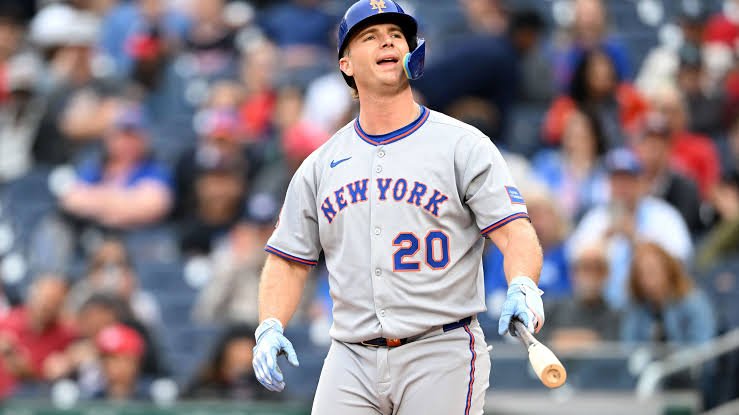
Major League Baseball is back, and the second half of the 2026 season is set to begin with a high-stakes National League East clash between the Philadelphia Phillies and the New York Mets. As the playoff race begins to intensify, teams are preparing for a defining stretch that could shape their postseason hopes.
The opening matchup after the MLB All-Star break carries extra significance for Philadelphia. A win over the Mets would pull the Phillies level with the division-leading Atlanta Braves in the win column, adding another twist to one of baseball’s most competitive divisions.
Phillies Counting on Aaron Nola Despite Tough Season
Veteran right-hander Aaron Nola will take the mound for Philadelphia, hoping to turn around a difficult campaign. Nola enters the second half with a 5.75 ERA, well below the standards he has established over his MLB career.
Under interim manager Don Mattingly, the Phillies have managed Nola’s workload carefully, typically limiting him to around five innings and approximately 85 pitches in an effort to keep him effective while reducing strain.
The Mets, meanwhile, will hand the ball to promising young pitcher Christian Scott, who heads into the game with growing confidence after delivering one of his strongest outings before the All-Star break. Scott shut down the Kansas City Royals across five scoreless innings, giving New York optimism heading into the second half.
Trade Deadline Countdown Gains Momentum
While the action returns to the field, attention is also shifting toward the upcoming MLB Trade Deadline, where front offices across the league are expected to make aggressive moves.
Several clubs remain firmly in playoff contention, while others may look to strengthen their rosters for a postseason push or begin reshaping for the future. With every passing game, buyers and sellers will become more clearly defined, making the coming weeks among the busiest on the baseball calendar.
Analysts expect contenders in both leagues to closely monitor pitching depth, bullpen reinforcements, and offensive upgrades as the deadline approaches.
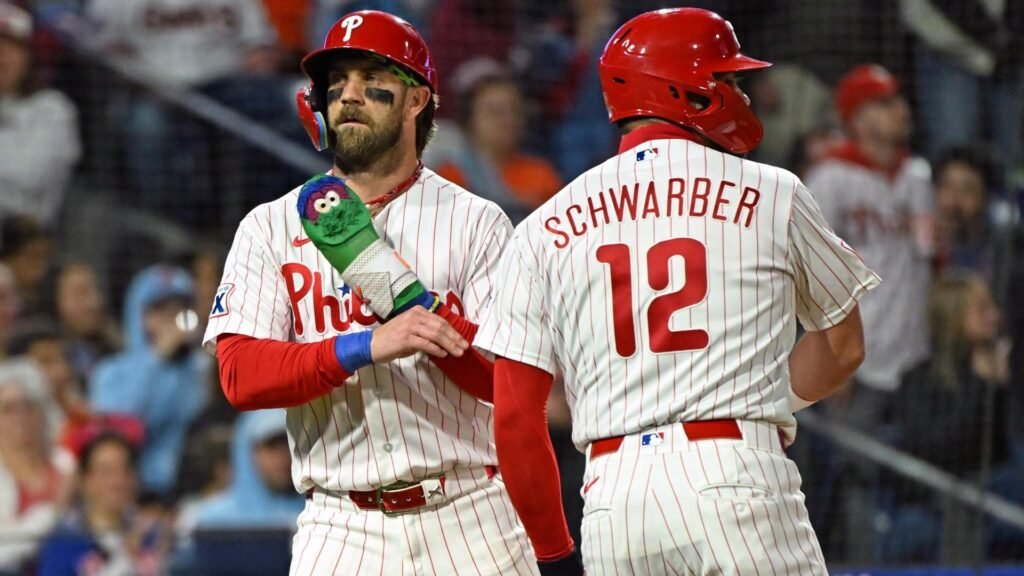
New MLB Payroll Tracker Offers Fans Greater Transparency
Adding another layer of insight for baseball enthusiasts, a brand-new MLB Payroll Tracker has officially launched, providing one of the most comprehensive public databases of team payroll information.
Developed in partnership with baseball payroll expert Ethan Hullihen, the tool delivers updated payroll figures multiple times each week, helping fans better understand how financial decisions influence roster construction, free-agent signings, and trade deadline strategies.
The new resource is expected to become a valuable reference for fans, analysts, and media following one of baseball’s busiest periods.
Second Half Promises Intense Playoff Race
The league resumes with several tightly contested division races already taking shape. Before the restart, four American League clubs had already crossed the 50-win mark, while the National League Central featured four teams reaching the same milestone—highlighting just how competitive the 2026 campaign has become.
With playoff positioning on the line, trade speculation heating up, and stars returning from the All-Star festivities, baseball fans can expect an exciting finish to the regular season.
As the Phillies and Mets kick off the second half, every victory—and every roster decision—will carry increasing importance in the race toward October.
Sports
Spain Already Have an Edge Over England? The Key Advantage That Could Decide a Potential World Cup Final
England are yet to secure their place in the FIFA World Cup 2026 final, but football analysts believe Spain may already hold a subtle tactical advantage if the two European giants meet for the trophy.
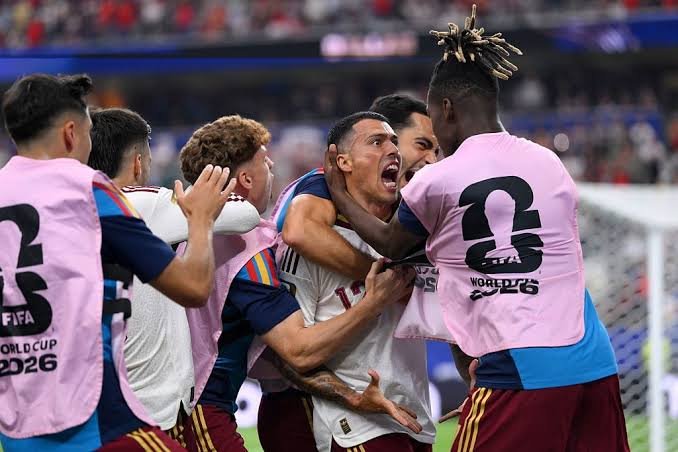
The FIFA World Cup 2026 is approaching its decisive stage, and while the semi-finals remain the immediate focus, football experts have already begun discussing a possible final between Spain national football team and England national football team.
If both sides progress, fans could witness one of the most anticipated World Cup finals in recent history. Ahead of that possibility, analysts have identified several areas where Spain could enjoy a slight advantage over the Three Lions.
Spain’s Midfield Control Could Be Crucial
One of Spain’s biggest strengths throughout the tournament has been its ability to dominate possession and dictate the tempo of matches.
With technically gifted midfielders capable of keeping the ball under pressure, Spain has consistently controlled games by limiting opponents’ opportunities. Their patient passing style allows them to wear down defensive structures before creating openings in dangerous areas.
Against a disciplined England side, maintaining possession could prove to be one of Spain’s most valuable weapons.
ALSO READ : ‘This Doesn’t Have to Be Goodbye’: Fox Broadcasters Make Emotional Plea After Belgium Ends U.S. World Cup Dream
Youthful Fearlessness Meets Tournament Experience
Spain has successfully blended experienced internationals with an exciting new generation of talent led by Lamine Yamal.
The teenager’s creativity and confidence have added unpredictability to Spain’s attack, while the squad’s experienced core has provided stability during high-pressure knockout matches.
England, meanwhile, also boasts exceptional talent, with leaders such as Harry Kane and Jude Bellingham capable of influencing the biggest occasions.
England’s Strengths Cannot Be Overlooked
Although Spain may possess certain tactical advantages, England remains one of the tournament’s strongest and most balanced teams.
The Three Lions have demonstrated defensive organisation, attacking versatility and impressive squad depth throughout the competition. Their ability to transition quickly from defence to attack makes them particularly dangerous against possession-based opponents.
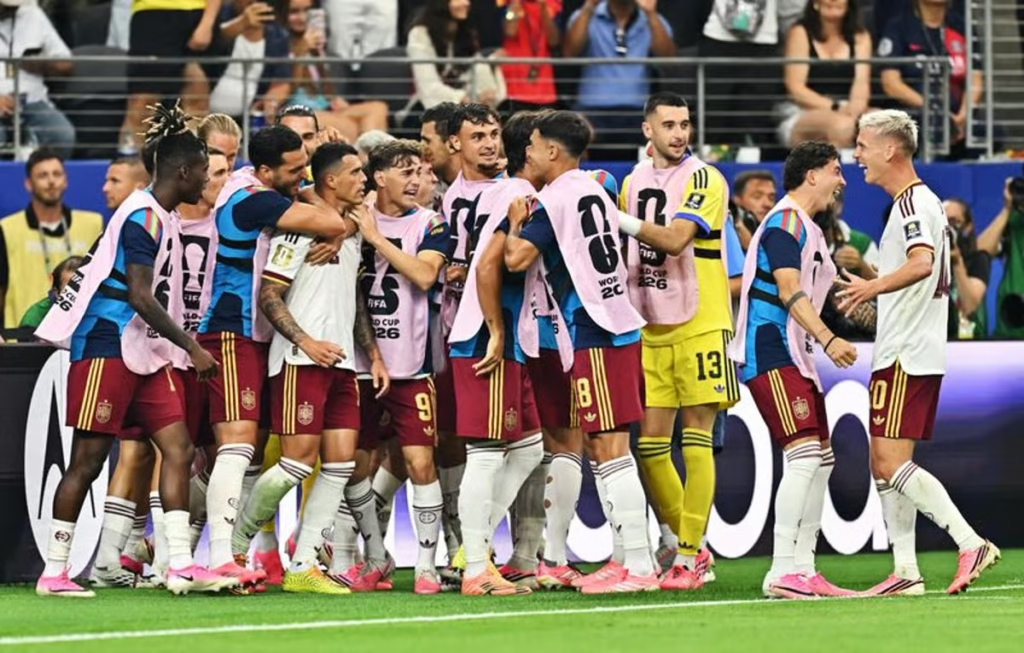
England’s physical presence and flexibility across multiple formations could neutralise some of Spain’s traditional strengths.
Fine Margins Decide World Cup Finals
History has repeatedly shown that World Cup finals are rarely won through statistics alone.
Individual brilliance, tactical adjustments, substitutions and moments of composure often separate champions from runners-up. While Spain’s control in midfield may give them an edge on paper, England possesses enough quality to challenge any opponent over 90 minutes.
Should the two nations meet in the final, the contest would likely be decided by execution rather than reputation.
First, the Semi-Finals
For now, any discussion of a Spain-England final remains hypothetical.
Both teams must first overcome their respective semi-final opponents before dreaming of lifting football’s most prestigious trophy. If they do reach the final, however, supporters can expect a tactical battle between two of Europe’s finest footballing nations, where even the smallest advantage could prove decisive.
Sports
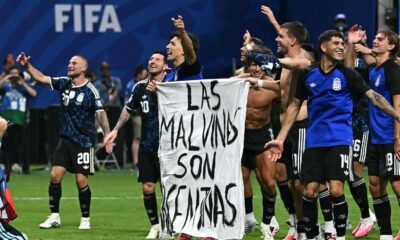
Argentina’s World Cup Celebration Sparks FIFA Investigation… Entire Team Could Face Sanctions Over Controversial Banner
Argentina’s players may face disciplinary action after displaying a political message related to the Falkland Islands, known as the Malvinas in Argentina, following their FIFA World Cup 2026 semifinal victory over England.
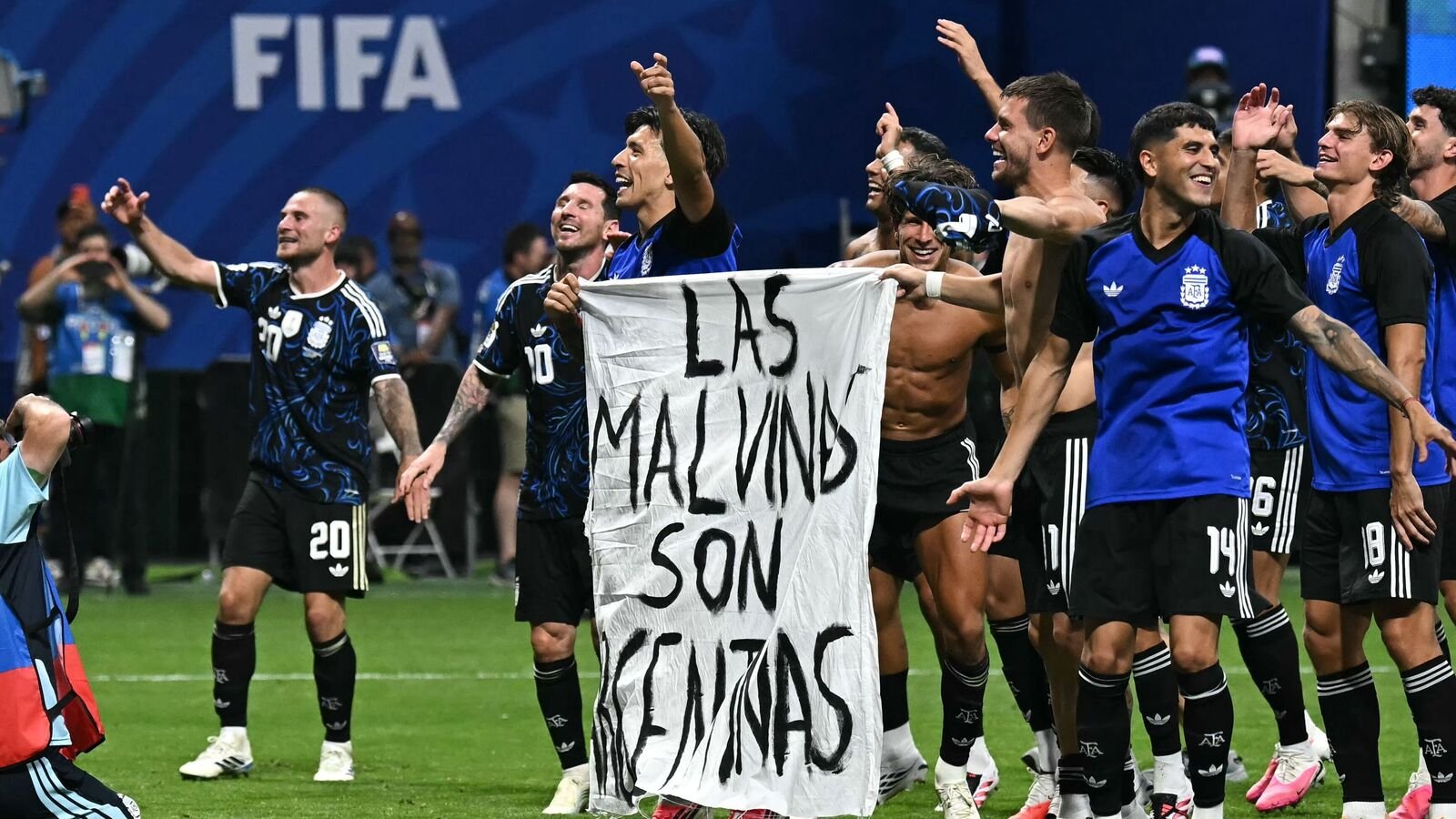
Argentina’s celebrations after their dramatic FIFA World Cup 2026 semifinal victory over England have been overshadowed by a potential disciplinary issue, with reports suggesting that the entire squad could face action from world football’s governing body FIFA.
The controversy centers around a banner displayed by members of the Argentina national football team that carried the message “The Malvinas are Argentine”, referring to the Falkland Islands, a long-disputed territory between Argentina and the United Kingdom.
The display took place during post-match celebrations following Argentina’s semifinal win over England national football team, adding a political dimension to an otherwise historic football moment.
According to FIFA regulations, players and teams are prohibited from displaying political, ideological, or similar messages during official competitions. The governing body’s disciplinary committee is expected to review the incident before deciding whether any sanctions should be imposed.
ALSO READ : ‘This Doesn’t Have to Be Goodbye’: Fox Broadcasters Make Emotional Plea After Belgium Ends U.S. World Cup Dream
The possible punishment could range from fines to other disciplinary measures, depending on FIFA’s assessment of the situation. However, the final decision will only be made after an official review of the circumstances surrounding the banner’s appearance.
The Malvinas/Falkland Islands dispute remains one of the most sensitive political issues in Argentina and the United Kingdom. Argentina claims sovereignty over the islands, while the United Kingdom administers the territory. The disagreement led to the Falklands War in 1982, a conflict that continues to influence public sentiment in both nations.
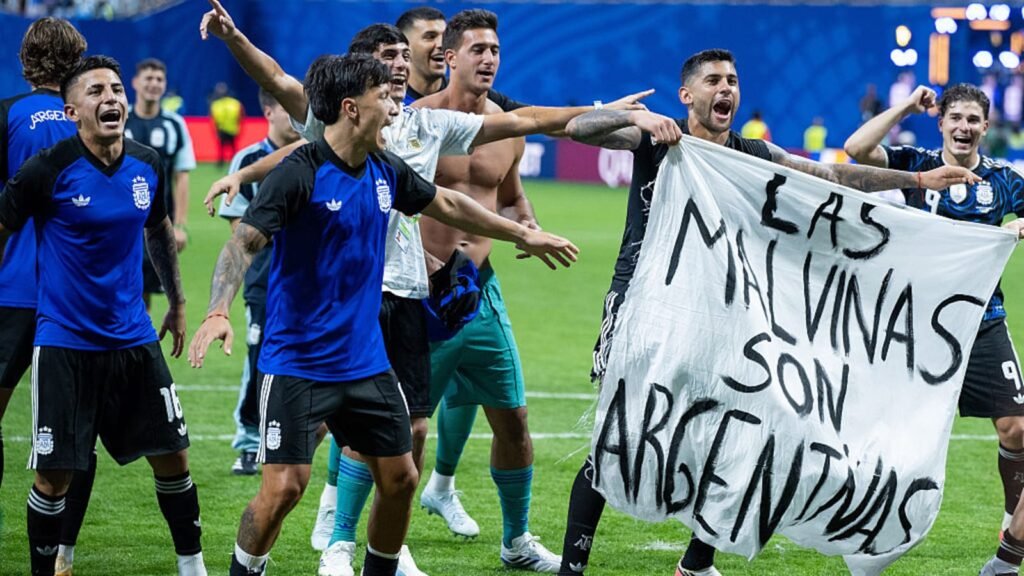
For Argentina, the World Cup semifinal victory was celebrated as another major achievement in the country’s football history. Led by superstar Lionel Messi, the team has enjoyed a golden era of success, winning major international titles and becoming one of the most dominant sides in world football.
However, the latest controversy has shifted attention away from sporting achievements and toward the boundaries between football and political expression. FIFA has historically maintained strict rules against political messaging inside stadiums and during official competitions, aiming to keep matches focused on sport.
Argentina’s football authorities and players have not yet received a final ruling, and supporters are waiting to see how FIFA handles the situation. The incident adds another chapter to the long and complex sporting rivalry between Argentina and England.
As the disciplinary process develops, the football world will closely follow whether FIFA chooses a financial penalty or takes stronger action against the reigning champions.

MLB Second Half Begins: Phillies Face Mets as Trade Deadline Drama and New Payroll Tracker Take Center Stage

Trump’s Primetime Election Speech Sparks Fresh Debate: ‘Broken System’ Warning Raises Questions Ahead of 2026 Midterms

Taco Bell quietly pulls iceberg lettuce after parasite outbreak grows: CDC tracking thousands of Cyclospora cases across the US

‘G.I. Joe’ Gets a Surprise New Commander… Danny McBride Takes the Director’s Chair for Paramount’s Reboot

Spain Already Have an Edge Over England? The Key Advantage That Could Decide a Potential World Cup Final

1-Iran Issues Dire Warning to Israel and Defies Trump on Nukes: “We’re Ready to Strike Deep Inside”

Donald Trump’s net worth reveals the fortune behind the former US President and business mogul

“She Never Made It Out…” Albany House Fire Claims Woman’s Life as Family Pleads for Help to Bring Her Home

“Tomás Rodríguez Net Worth 2025: Panama’s Gold Cup Goal‑Machine’s Surprising Fortune Revealed”

Younghoe Koo Explains Botched Field Goal After Slip: “The Ball Was Moving So I Pulled Up”

Miss Jamaica Suffers Terrifying Fall Off Miss Universe Stage; Rushed to Hospital on Stretcher in Viral Video

Moana Live-Action Teaser Sparks Outrage as Fans Call Disney’s Move a ‘Clear Money Grab’ — What Went Wrong?

Ryan Gosling’s Project Hail Mary Trailer Stuns Fans with a Mysterious Alien Ally and a Mission That Could Save Earth

Apple delays Jessica Chastain thriller The Savant about domestic extremism after recent US violence

Avatar 3, Fire and Ash trailer reveals Jake Sully’s family facing terrifying new Na’vi enemies with deadly fire powers
-

 Entertainment1 week ago
Robert Pattinson Reveals the Surprising ‘Twilight’ Connection Behind His Villain Role in Christopher Nolan’s ‘The Odyssey’
-

 Entertainment1 week ago
‘Abbott Elementary’ and ‘Shrinking’ Lead AAFCA TV Honors as New Categories Draw Attention
-
 Sports1 week ago
Lionel Messi’s Missed Penalty Creates Unwanted World Cup Record… But Does One Moment Really Change His Legendary Legacy?
-

 Entertainment1 week ago
Edinburgh Film Festival Chief Reflects on Surprise Success and a New Chapter for the Event
-
 Sports1 week ago
“We’ve Been Disrespected”: Belgium’s Emotional World Cup Victory Over USA Was About More Than Football… and the Message Was Loud and Clear
-

 Entertainment1 week ago
Netflix and Toho Revive a Forgotten Monster With an Untouchable New Villain
-

 Sports1 week ago
“Before Me, Portugal Hadn’t Won Anything”: Cristiano Ronaldo Fires Back After World Cup Exit… and His Emotional Words Spark Fresh Debate
-

 Sports1 week ago
France Coach Didier Deschamps Breaks Silence on Argentina Referee Panel Row… “Let Us Hope Officials Are as Good as Letexier”