
Entertainment
While Her Brother David Ellison Takes Over Paramount, Megan Ellison Is Quietly Building Something at Annapurna That Hollywood Should Be Very Nervous About…
After a landmark Sundance sale and two major new hires, the famously bold producer behind some of cinema’s most daring films is revving Annapurna’s engines again — and this time, insiders say, she is playing a longer, more strategic game than ever before.

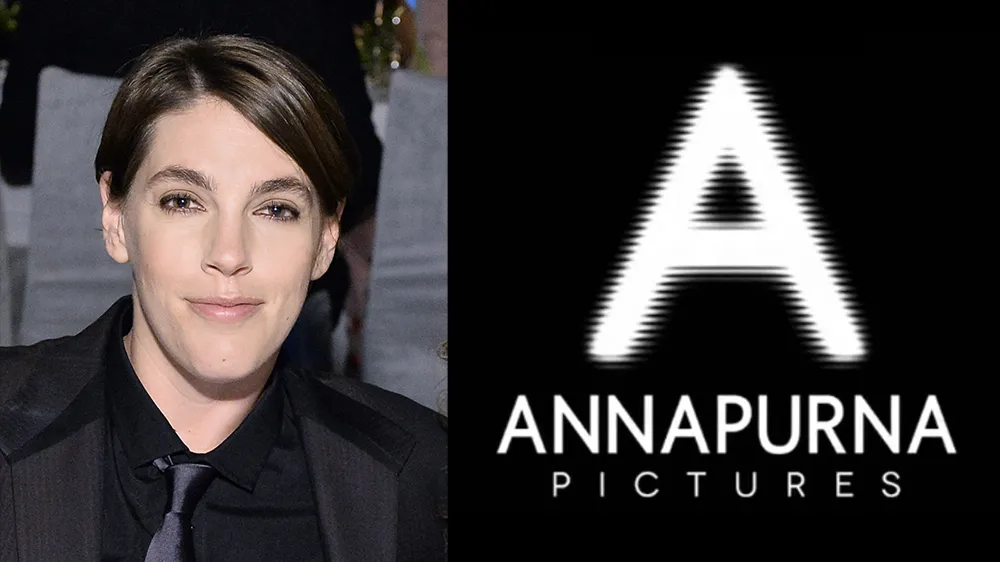
In a town that cannot stop talking about David Ellison — the Skydance Media founder who completed his seismic takeover of Paramount Pictures and immediately became Hollywood’s most discussed power broker — it would be easy to overlook what his sister is doing.
That would be a mistake.
Megan Ellison, the founder and driving force behind Annapurna Pictures, is hiring. She is reorganizing. She is, by all available evidence, preparing to make a serious and sustained run at the kind of cinematic ambition that once made Annapurna the most exciting independent production company in the business — and then some.
This is not a pivot. It is not a reinvention. It is, if anything, a return — but a return with sharper tools, harder-won experience, and a clearer strategic vision than the one that launched the company in its first extraordinary chapter.
Who Is Megan Ellison — And Why Does She Matter?
To understand what is happening at Annapurna Pictures right now, you need to understand what Megan Ellison has already done — because the story of what she built in the company’s first decade is one of the most genuinely remarkable in modern Hollywood.
ALSO READ : Younghoe Koo Explains Botched Field Goal After Slip: “The Ball Was Moving So I Pulled Up”
Ellison is the daughter of Larry Ellison, the Oracle co-founder whose personal fortune has consistently placed him among the wealthiest individuals on the planet. She could have done anything with that inheritance. She chose cinema — not the comfortable, commercially safe kind, but the fiercely ambitious, director-driven, risk-embracing kind that major studios had largely stopped funding.
She founded Annapurna Pictures in 2011 and immediately began writing checks for films that nobody else would finance. The Master by Paul Thomas Anderson. Zero Dark Thirty and Detroit by Kathryn Bigelow. Her by Spike Jonze. American Hustle by David O. Russell. Inherent Vice. Phantom Thread.
The list reads like a syllabus for a masterclass in contemporary American cinema. And Megan Ellison made it happen — not by chasing commercial formulas or following trends, but by backing filmmakers she believed in at the level of artistic vision and then largely getting out of their way.
She won an Academy Award for Best Picture as a producer on Her. She earned additional nominations. She became, in a relatively short space of time, one of the most respected producers in an industry that does not hand that status out easily.
The Turbulence — and the Sundance Comeback
The years that followed were not without difficulty. Annapurna navigated a period of significant financial restructuring that generated considerable industry gossip and no shortage of premature obituaries from people who should have known better than to count Megan Ellison out.
The company diversified — into Annapurna Television, into theatrical releasing, into interactive entertainment. Some moves worked brilliantly. Others were more complicated. The overhead of running a fully vertically integrated entertainment company, it turned out, was considerable — even with substantial personal resources behind it.

And then came Sundance.
Earlier this year, Annapurna arrived at the Sundance Film Festival and delivered what insiders have described as a splashy, confident, statement-making sale — the kind of acquisition that signals not just commercial competence but genuine creative authority. The kind of move that makes other buyers in a room recalibrate their understanding of who they are competing against.
It was, by any reading, a declaration. Megan Ellison and Annapurna were back in the conversation. Not limping back. Walking back — with purpose.
The New Hires That Signal Serious Intent
But declarations need infrastructure. And this is where the current chapter gets genuinely interesting.
Megan Ellison has hired Chelsea Barnard and Matthew Budman as co-heads of film at Annapurna — a dual appointment that speaks volumes about the structure she is building and the ambitions she is pursuing.
Chelsea Barnard brings to the role a reputation as one of the sharper creative executives working in independent film — someone with genuine taste, strong filmmaker relationships, and the particular skill of identifying material early, before the rest of the industry has caught up. In a business where everyone is competing for the same small pool of genuinely exceptional projects, that quality of early recognition is worth more than almost any other professional attribute.
Matthew Budman brings complementary strengths — a background that balances creative development with the practical, structural intelligence required to run a production slate at serious scale. The combination of Barnard and Budman as co-heads suggests Ellison is not simply hiring talent — she is deliberately constructing a leadership team designed to function as a coherent unit, with complementary skills rather than duplicated ones.
This is, in the language of Hollywood organizational design, a sophisticated move. It distributes authority in a way that prevents the single points of failure that have destabilized other ambitious independents. It creates internal creative dialogue — the productive tension of two talented people who see the world slightly differently but are working toward the same goal.
And it signals, unambiguously, that Annapurna is gearing up for volume — for the kind of active, ambitious development slate that requires real leadership depth rather than a single executive stretched across too many projects.
The Ellison Siblings and Hollywood’s New Power Map
It is impossible to discuss Megan Ellison‘s current moves without at least acknowledging the broader Ellison family context — because the dynamic between the two siblings has become one of the more fascinating subplots in the current Hollywood power landscape.
David Ellison — described in industry circles as Hollywood’s resident mergers and acquisitions king — completed his Skydance–Paramount merger after months of complicated negotiations and public controversy, emerging as the controlling force behind one of the oldest and most storied studios in the history of American cinema.
His approach to Paramount has been, broadly speaking, that of a businessman with genuine Hollywood ambitions — someone who understands the commercial mechanics of the studio system and intends to run them efficiently while also producing films that matter culturally.
Megan Ellison‘s approach has always been different — more personal, more director-driven, more willing to accept commercial uncertainty in exchange for artistic distinction. She has never been interested in running a studio the way studios have traditionally been run. She has been interested in backing the kind of filmmakers who push the form forward, even when — especially when — the commercial logic is unclear.
The two Ellisons are not in competition. Their ambitions occupy different parts of the ecosystem. But together, they represent something genuinely interesting: a single family whose combined footprint now spans both the old-guard studio system and the independent production space that has historically served as its creative conscience.
What Annapurna’s Next Chapter Could Look Like
Based on everything currently visible — the Sundance sale, the co-head appointments, the quiet but unmistakable energy around the company’s development activities — the outlines of Annapurna‘s next chapter are beginning to take shape.
Expect a renewed focus on director-driven cinema — the kind of ambitious, auteur-led projects that defined the company’s first golden era and that remain genuinely underserved in the current marketplace, where streaming economics have pushed most major studios toward franchise properties and away from the mid-budget prestige drama that Annapurna has always done best.
Expect a more structured approach to development and production — with Barnard and Budman in place to build a slate with genuine depth, rather than the more opportunistic, deal-by-deal approach that characterized some of the company’s more turbulent periods.
And expect Megan Ellison herself to remain what she has always been at the center of the enterprise: the person whose taste, whose instincts, and whose genuine love of cinema — not as a business but as an art form — sets the tone for everything the company touches.
The filmmakers who have worked with her over the years — Paul Thomas Anderson, Spike Jonze, Kathryn Bigelow and others — have spoken consistently about one quality that distinguishes Ellison from other producers with comparable resources: she actually cares about the work itself.
In an industry that frequently treats film as a delivery vehicle for intellectual property and franchise extensions, that quality — simple, almost old-fashioned — remains genuinely rare. And genuinely powerful.
Hollywood, Take Notice
The entertainment industry has spent the past two years obsessively focused on David Ellison and what his Paramount stewardship means for the future of the traditional studio system.
It might want to start paying equal attention to what his sister is building a few miles away on her own terms, at her own pace, with her own vision — and with a track record that, measured purely by the quality and cultural endurance of what she has put on screen, is arguably the more impressive of the two.
Megan Ellison is hiring. Annapurna is building. And if the past is any guide to the future, the films that result from this particular rebuild are going to remind everyone — again — exactly why this company matters.
Watch this space. Closely.





Entertainment
From ‘Euphoria’ to the Recording Studio: Storm Reid Reveals the Story Behind Her Debut Single ‘Clean Sweep’
The actress-turned-singer is stepping into music with confidence, opening up about creative freedom, personal growth, and moving beyond the world of Euphoria.

For years, audiences have watched Storm Reid captivate screens with emotionally powerful performances. Now, the rising Hollywood star is embracing a new challenge—music.
The actress has officially entered the recording world with her debut single, Clean Sweep, a project that represents far more than a simple career expansion. For Reid, the song symbolizes self-discovery, artistic freedom, and a willingness to explore new creative territory without waiting for approval from others.
Speaking about her musical journey, Reid explained that she has spent considerable time searching for her own sound while learning to trust her instincts as an artist. The result is a debut release that reflects both confidence and curiosity as she continues to evolve beyond acting.
The move comes during a pivotal moment in Reid’s career. Having gained international recognition through projects including HBO’s Euphoria, the actress is now navigating the next phase of her professional life as the acclaimed drama approaches its conclusion.
Known for portraying Gia Bennett, the younger sister of Zendaya’s character Rue, Reid became an important part of the show’s emotional foundation. Her performance earned praise from critics and fans alike, helping establish her as one of Hollywood’s most promising young talents.
ALSO READ : Sen. Elizabeth Warren Calls It a ‘Cesspool of Corruption’ — Here’s Why Senators Are Now Fighting Back Against the DOJ’s Live Nation Deal That Left Every Fan Betrayed…
Yet while Euphoria remains a significant chapter in her story, Reid appears eager to broaden her creative horizons.
Rather than viewing music as a side project, she has approached it as another form of storytelling. Much like acting, songwriting and recording allow her to connect with audiences through emotion, vulnerability, and personal experience.
Industry observers note that Reid joins a growing number of performers who successfully transition between multiple creative disciplines. However, what sets her apart is her commitment to authenticity. Instead of chasing trends, she has emphasized the importance of discovering a sound that feels genuinely her own.

The release of Clean Sweep also arrives at a time when fans are increasingly interested in seeing artists break traditional career boundaries. For Reid, that freedom appears central to her artistic philosophy.
By giving herself permission to experiment and create without external expectations, she has opened the door to opportunities that may have once seemed outside her comfort zone.
As conversations continue about the future of Euphoria, Reid’s focus remains firmly on growth. Whether through film, television, or now music, she is building a career defined not by limitations but by exploration.
With Clean Sweep, Storm Reid isn’t simply releasing a song—she is introducing audiences to a new side of herself. And if her acting career is any indication, this latest chapter may only be the beginning.
Entertainment
A Quiet Place Makers’ Secret Sci-Fi Script Lands Big Studio Deal… Steven Spielberg Joins as Producer in Shocking Move
Filmmaking duo Scott Beck & Bryan Woods team up with Steven Spielberg as their mysterious new high-concept sci-fi project heads to Amblin Entertainment and Universal Pictures.

The creative minds behind A Quiet Place are heading back into the sci-fi space with a new high-concept project that has already generated serious Hollywood buzz.
Filmmakers Scott Beck and Bryan Woods have reportedly sold a mysterious original spec script that will be developed as a major science-fiction feature under Amblin Entertainment and Universal Pictures.
While plot details are being tightly guarded, insiders describe the project as a “high-concept sci-fi thriller,” a genre the duo has already proven successful in with their breakout hit A Quiet Place. The secrecy surrounding the script has only intensified industry curiosity, with speculation building around its tone, scale, and narrative direction.
ALSO READ : Sen. Elizabeth Warren Calls It a ‘Cesspool of Corruption’ — Here’s Why Senators Are Now Fighting Back Against the DOJ’s Live Nation Deal That Left Every Fan Betrayed…
Adding significant weight to the project is the involvement of legendary filmmaker Steven Spielberg, who is attached as a producer through Amblin Entertainment. Spielberg’s participation instantly elevates the project’s profile, signaling strong studio confidence in the script’s potential.
The collaboration marks another strategic partnership between Amblin and Universal Pictures, two studios that have long been central to some of the most influential sci-fi and adventure films in Hollywood history. With Spielberg’s legacy in genre-defining storytelling and Beck & Woods’ modern horror-thriller sensibilities, expectations are already high.

Industry insiders suggest the script sparked a competitive internal interest before landing at Amblin, a common occurrence when original high-concept ideas emerge from established creators. However, the exact reasons behind the project’s appeal remain undisclosed—intentionally preserved to maintain suspense around its premise.
Beck and Woods first gained major recognition with A Quiet Place, a film that redefined modern horror through silence-driven tension and emotional storytelling. Their continued collaboration in the sci-fi space indicates a strong commitment to blending intimate human drama with large-scale speculative concepts.
As development begins, no casting or production timeline has been officially announced. Still, with Spielberg attached and two studios backing the vision, the project is already shaping up to be one of the most closely watched sci-fi developments in Hollywood.
For now, the biggest mystery remains the simplest question: what exactly is the story?
Entertainment
Morgan Freeman Enters Music Scene With Powerful Blues Project Alongside Taj Mahal & Keb’ Mo’… “A Journey Into America’s Soul”
The legendary actor produces and narrates a new blues album featuring Taj Mahal and Keb’ Mo’, celebrating the deep emotional roots of American music and culture.

Hollywood icon Morgan Freeman is stepping into a deeply personal new creative chapter—this time far away from the movie set and into the world of music. The Oscar-winning actor is producing and narrating a new blues-focused album that aims to capture what he calls “the sound of America’s past and present.”
The project brings together two legendary musicians, Taj Mahal and Keb’ Mo’, both widely respected for preserving and evolving traditional blues music for modern audiences. Together, the trio is crafting a musical journey that explores the emotional and cultural roots of the blues genre.
Described as more than just an album, the project is being framed as a storytelling experience—one that traces the history of blues from its early origins to its modern interpretations. Freeman’s narration is expected to guide listeners through themes of struggle, resilience, and cultural identity.
ALSO READ : Sen. Elizabeth Warren Calls It a ‘Cesspool of Corruption’ — Here’s Why Senators Are Now Fighting Back Against the DOJ’s Live Nation Deal That Left Every Fan Betrayed…
Speaking about the project’s vision, Freeman emphasized that blues music is not just entertainment, but a living archive of history. The album aims to highlight “the heartbeat of a culture that refused to be forgotten,” blending spoken word storytelling with soulful performances.
Industry insiders say the collaboration stands out not only because of its star power, but because of its intention. Unlike commercial music releases, this project leans heavily into cultural preservation, positioning blues as a foundational force in American music history.

The involvement of Taj Mahal, known for his decades-long dedication to blues innovation, and Keb’ Mo’, a Grammy-winning artist recognized for modernizing the genre, adds both authenticity and emotional depth to the project. Their combined artistry ensures the album is rooted in tradition while still feeling relevant to today’s listeners.
For Morgan Freeman, whose Wikipedia profile highlights a career spanning over five decades, this project is another example of his continued interest in narration-driven storytelling beyond film. His distinctive voice—often associated with wisdom and reflection—now becomes the guiding thread of a musical narrative.
As anticipation builds, fans are already calling the project one of the most unique crossovers between Hollywood and American music culture in recent years. Whether it becomes a chart success or a cultural milestone, the collaboration is already drawing attention for its heartfelt mission: to remind the world where the blues began—and why it still matters.

From ‘Euphoria’ to the Recording Studio: Storm Reid Reveals the Story Behind Her Debut Single ‘Clean Sweep’

A Quiet Place Makers’ Secret Sci-Fi Script Lands Big Studio Deal… Steven Spielberg Joins as Producer in Shocking Move

Morgan Freeman Enters Music Scene With Powerful Blues Project Alongside Taj Mahal & Keb’ Mo’… “A Journey Into America’s Soul”

Bruce Springsteen’s Tribeca Moment Goes Viral… ‘Boss’ Honors Protesters as Bono & Patti Smith Deliver Surprise Stage Powerhouse

Keir Starmer Resigns as UK Prime Minister: Political Earthquake Hits Britain Amid Ongoing Post-Brexit Struggles…

1-Iran Issues Dire Warning to Israel and Defies Trump on Nukes: “We’re Ready to Strike Deep Inside”

Donald Trump’s net worth reveals the fortune behind the former US President and business mogul

“She Never Made It Out…” Albany House Fire Claims Woman’s Life as Family Pleads for Help to Bring Her Home

“Tomás Rodríguez Net Worth 2025: Panama’s Gold Cup Goal‑Machine’s Surprising Fortune Revealed”

Younghoe Koo Explains Botched Field Goal After Slip: “The Ball Was Moving So I Pulled Up”

Miss Jamaica Suffers Terrifying Fall Off Miss Universe Stage; Rushed to Hospital on Stretcher in Viral Video

Moana Live-Action Teaser Sparks Outrage as Fans Call Disney’s Move a ‘Clear Money Grab’ — What Went Wrong?

Ryan Gosling’s Project Hail Mary Trailer Stuns Fans with a Mysterious Alien Ally and a Mission That Could Save Earth

Apple delays Jessica Chastain thriller The Savant about domestic extremism after recent US violence

Avatar 3, Fire and Ash trailer reveals Jake Sully’s family facing terrifying new Na’vi enemies with deadly fire powers
-

 Entertainment1 week ago
CBS News Shakes Up ‘60 Minutes’ as Sharyn Alfonsi Is Fired… Inside the Overhaul Rocking Television Journalism
-

 Entertainment1 week ago
BIFAN Unveils Its Most Unpredictable Lineup Yet: Why ‘Obsession’ and ‘Teenage Sex and Death at Camp Miasma’ Are Already Turning Heads…
-

 Technology6 days ago
YouTube says ‘enough is enough’… Faceless AI Channels lose reach as algorithm shift hits ‘AI slop’ wave
-

 Entertainment1 week ago
‘Sex and the City’ Star Quietly Left Hollywood for Costa Rica… What She’s Writing There Has Fans Shocked
-

 Entertainment1 week ago
“These Films Are Saving Hollywood…” Jason Blum and James Wan Reveal Why ‘Obsession’ and ‘Backrooms’ Could Change Horror Forever
-

 Entertainment1 week ago
Fans Refused to Let Him Go: John Reardon Returns to ‘Hudson & Rex’ Season 9 After Massive Viewer Backlash
-

 Entertainment6 days ago
Why Did Vasana Montgomery Leave ‘Love Island USA’? Her First Public Statement Reveals More…
-

 Entertainment1 week ago
‘There’s No Secret Formula’: Gail Simmons Opens Up About How ‘Top Chef’ Winners Are Really Chosen… and Why Fans Often Get It Wrong