
Business
Nvidia posts $46.7B revenue surge but admits “zero sales to China” Trump’s export rules reshaped its H20 chip business
Nvidia
beat Wall Street expectations with a 56% jump in quarterly revenue, while confirming that not a single H20 processor was shipped to China amid strict Donald Trump
-era export controls.


The global chip war between the United States and China hasn’t slowed down Nvidia. In fact, the company has just posted record earnings for its fiscal second quarter of 2026 — even as one of its flagship processors, the H20, recorded zero sales to China.
ALSO READ : Fenwick says it is not to blame for FTX collapse denies being “key player” in Sam Bankman Fried fraud scheme
On Wednesday, Nvidia announced $46.7 billion in revenue, representing a 6% increase from the previous quarter and an eye-popping 56% jump year-on-year. Net income came in at $26.4 billion, with profit margins reaching 72.4% — levels most tech firms can only dream of.
Earnings per share (EPS) stood at $1.08 (GAAP) and $1.05 (non-GAAP). Yet despite the blockbuster results, Nvidia’s stock slipped about 3.3% in after-hours trading, as investors weighed geopolitical risks.
Zero sales to China
The headline revelation from the report: “There were no H20 sales to China-based customers in the second quarter,” Nvidia confirmed.
The H20 processor, a scaled-down version of the H100 AI chip, was designed specifically for the Chinese market to comply with U.S. restrictions. But tougher export controls introduced by the Trump administration earlier this year halted shipments entirely.
In January, Donald Trump’s White House tightened rules on the sale of high-performance AI chips to China, citing national security concerns. Export licenses and compliance fees — totaling around $5.5 billion — brought shipments to a standstill.
By August, however, the administration reversed course. Sales were allowed to resume on one unusual condition: Nvidia would have to hand over 15% of all H20 revenue from China to the U.S. government.
Nvidia’s global dominance
Despite the China freeze, Nvidia remains the world’s most valuable publicly traded company, boasting a market capitalization of $4.4 trillion. Its GPUs dominate the fields of artificial intelligence, data centers, and high-performance computing, making it a cornerstone of U.S. technological leadership.
The company’s chips have become so strategically important that they are now considered critical assets in Washington’s broader effort to stay ahead in the AI arms race against Beijing.
Rising geopolitical tension
For China, the absence of H20 deliveries underscores how dependent its tech ecosystem remains on U.S. chipmakers. For the United States, the episode highlights how companies like Nvidia have become not just commercial entities but also geopolitical tools.
Export controls are now part of a larger economic tug-of-war, with semiconductors at the very center. Analysts say this dual role — as a profit engine and a national security pawn — is likely to define Nvidia’s business strategy for years to come.
Looking ahead
While Nvidia is thriving financially, the political climate could change again. If further restrictions are imposed, China may accelerate efforts to build its own alternatives to Nvidia’s hardware, potentially reshaping the competitive landscape.
For now, though, Nvidia remains firmly in control of the AI chip market — even if its H20 line is yet to find a way past U.S. regulators and into the hands of Chinese customers.













Business
Tesla Cybertruck Branded a ‘Historic Flop’ as Shares Crash After Earnings Miss: Elon Musk’s Big Bet Faces Fresh Questions…
Tesla’s Cybertruck is facing growing criticism after sales fell sharply short of Elon Musk’s ambitious target, while disappointing Q2 earnings and rising spending sent the company’s shares sharply lower.


The Tesla Cybertruck was supposed to redefine the electric pickup truck. Instead, the futuristic vehicle is now facing an uncomfortable comparison with one of the most infamous failures in automotive history.
A recent report has argued that the Cybertruck could be a bigger commercial flop than the Ford Edsel, particularly when comparing the ambitious sales expectations set by the companies with what they actually achieved.
The comparison comes at a particularly difficult time for Tesla, which has seen its stock suffer a sharp decline following disappointing second-quarter earnings and growing concerns over its spending, profitability and future growth strategy.
From 250,000 Trucks to a Fraction of the Target
When Tesla CEO Elon Musk introduced the Cybertruck, expectations were enormous. Musk had projected that the electric pickup could eventually reach annual sales of around 250,000 units and described it as one of Tesla’s most important products.
The reality has been dramatically different.
According to figures cited in recent reports, the Cybertruck sold roughly one-sixth of Musk’s projected annual target during its first full year. Sales subsequently declined further, putting the vehicle under increasing pressure in the highly competitive US automobile market.
The comparison with the Ford Edsel is particularly damaging.
Ford launched the Edsel in 1957 with expectations of selling around 200,000 units during its first year. The model ultimately sold less than one-third of that target, and its unusual styling became permanently associated with one of the biggest commercial failures in the history of the American automobile industry.
The Cybertruck’s sales performance, when measured against its original expectations, has now invited similar scrutiny.
Cybertruck Sales Continue to Slide
The latest sales figures paint a worrying picture for Tesla’s electric pickup.
According to data attributed to Cox Automotive, Cybertruck sales reached 38,965 units in 2024 before falling to 20,237 units in 2025—a decline of approximately 48%.
The decline became even more severe towards the end of 2025. Fourth-quarter sales reportedly fell to 4,140 units, down more than 68% from 12,991 vehicles during the same period a year earlier.
The situation did not improve in early 2026.
The Cybertruck reportedly recorded just 3,519 deliveries during the first quarter of the year, its lowest quarterly figure to date. By May 2026, only around 7,133 Cybertrucks had been registered in the United States, according to data cited from S&P Global Mobility.
The figures are particularly notable because the Cybertruck was designed to become a major part of Tesla’s growth story.

Instead, the vehicle has struggled to generate the kind of momentum that Tesla initially hoped for.
Tesla’s Stock Takes a Major Hit
The Cybertruck’s troubles are arriving alongside broader concerns about Tesla’s financial performance.
Tesla shares fell 17.81% during the week ending July 24, closing at around $313.03. The stock also experienced a sharp single-session decline following the company’s earnings announcement, reportedly falling about 14% and touching an 11-month low.
The second-quarter results help explain why investors reacted so negatively.
Tesla reported revenue of $28.24 billion, representing a year-on-year increase of more than 25%. Vehicle deliveries also reached a record 480,126 units.
However, the headline revenue growth was overshadowed by weaker profitability.
Adjusted earnings per share came in at $0.33, below the consensus estimate of approximately $0.54. Operating income plunged nearly 57% to $398 million, while free cash flow swung to a deficit of approximately $1.09 billion.
At the same time, Tesla’s operating expenses surged 47% to $4.35 billion.
The company has been spending heavily on artificial intelligence infrastructure, research and development and employee stock compensation, while also preparing for major projects involving autonomous vehicles, robotics and AI.
The $25 Billion Spending Question
Tesla’s ambitious plans are not getting any smaller.
The company expects full-year capital expenditure to exceed $25 billion, with significant investments planned for projects including Optimus humanoid robots, the Cybercab autonomous vehicle and AI data centres.
For Tesla, the strategy represents a bet that future technologies will eventually generate growth large enough to justify today’s enormous spending.
But investors appear to be demanding clearer evidence that these investments can translate into sustainable profits.
The Cybertruck’s disappointing performance adds another layer to that debate.
While Tesla continues to have a strong position in the global EV industry, the Cybertruck shows how difficult it can be to turn an ambitious product vision into a mass-market success.
Is the Cybertruck Really the Biggest Automotive Flop?
Calling the Cybertruck the biggest flop in automotive history is ultimately a matter of interpretation, especially because it remains a relatively new vehicle and Tesla has not abandoned the model.
The comparison with the Edsel, however, highlights a different issue: the enormous gap between expectations and reality.
The Cybertruck has attracted attention because of its radical design, unconventional stainless-steel body and strong association with Musk’s personal vision. But attention does not automatically translate into sales.
For Tesla, the challenge now is to prove that the Cybertruck can find a sustainable place in the electric pickup market while the company simultaneously invests billions in AI, autonomous driving and robotics.
The coming quarters could therefore be crucial.
If Cybertruck sales stabilise and Tesla’s newer technologies begin generating meaningful revenue, the current criticism may eventually look premature. But if sales continue to decline while costs rise, the vehicle’s reputation as one of the industry’s most ambitious—and disappointing—experiments could become increasingly difficult to shake.
For now, the Cybertruck’s biggest problem may not simply be how many units it sells. It is the distance between what Tesla promised and what the market has delivered.
And that is precisely why the comparison with the Edsel has started to gain attention.
Business
Ford Q2 Results Preview: GM Just Raised Its Outlook—Now All Eyes Are on What Ford Says Next…
After General Motors boosted its financial guidance, investors are watching closely to see whether Ford follows suit despite weaker vehicle sales, softer EV demand and rising cost pressures.
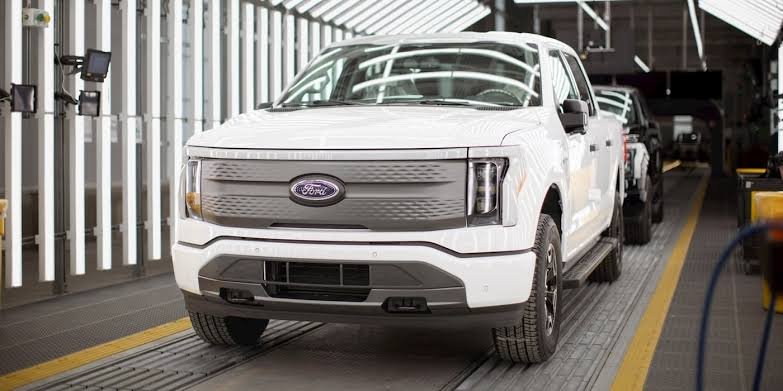
The spotlight is now firmly on Ford Motor Company as investors prepare for its second-quarter results, with one question dominating the conversation: will the American automaker raise its full-year financial outlook after rival General Motors delivered a more optimistic update?
The answer could matter more than Ford’s headline sales numbers.
Ford enters its Q2 results with a complicated mix of challenges and opportunities. Vehicle sales have weakened, electric vehicle demand has slowed and the company continues to deal with inflationary pressures and higher costs. At the same time, its retail market share has shown signs of resilience, while its long-term strategy is increasingly focused on building smaller and more affordable EVs.
That makes the company’s upcoming guidance especially important.
GM’s Move Raises the Pressure
Last week, General Motors raised its outlook while outlining several assumptions behind the updated forecast. The company expects pricing to improve by roughly 0.5%, while losses from electric vehicles could improve by between $1 billion and $1.5 billion.
GM also factored in regulatory benefits estimated at $500 million to $700 million, while gross tariff costs were projected at $2.5 billion to $3.5 billion. Commodity inflation, including higher DRAM costs, was another concern, with the impact estimated at $1.5 billion to $2 billion.
That move has naturally created expectations that Ford could make a similar adjustment when it reports its own results.
For investors, however, the bigger question is whether Ford’s underlying business is strong enough to justify a more confident outlook.
Sales Numbers Tell Only Part of the Story
Earlier this month, Ford reported a 10.3% decline in second-quarter US sales, with deliveries falling to 549,200 vehicles.
The weakness was broad-based. Electric vehicle sales dropped sharply, while F-Series pickups and SUVs also recorded declines. The company was additionally dealing with the discontinuation of two models, adding another layer of pressure to the quarterly numbers.
Ford’s first-half sales fell 9.6% to slightly above 1 million vehicles.
However, the automaker offered an important qualification. Excluding the phase-outs of the Escape and Lincoln Corsair, along with a 69% reduction in daily rental sales, Ford estimated that its second-quarter sales would actually have increased by around 0.5%.
The company also said its estimated June retail market share increased by 0.2 percentage points to 12.3%.
That figure could give investors some comfort, particularly if Ford can demonstrate that its core retail business remains healthy despite weaker overall volumes.
F-Series Remains a Key Test
One of the biggest areas to watch will be the performance of Ford’s F-Series pickup business.
The company had already warned that its first-half 2026 EBIT would be weaker than the second half of the year. Temporary aluminium sourcing for F-Series pickups has been putting pressure on costs, with production expected to normalise later in the year.
The upcoming results should therefore offer a clearer picture of whether those temporary pressures are easing as expected.
If the F-Series franchise continues to face weakness, investors could question whether Ford has enough momentum to raise its full-year outlook. On the other hand, stronger pricing, improving production economics or better-than-expected demand could give the company room to follow GM’s lead.
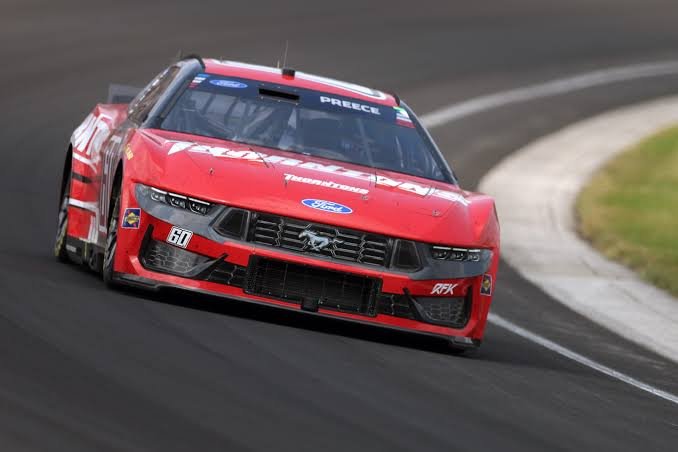
Ford’s EV Strategy Is Changing
Ford’s electric vehicle strategy is also undergoing a major shift.
Rather than relying heavily on expensive first-generation EV products, the company is moving towards a new platform focused on smaller and more affordable electric vehicles. The goal is to develop models that can become profitable much earlier in their product life cycle.
The strategy represents a significant change from products such as the Ford Mustang Mach-E and the now-cancelled F-150 Lightning.
The timing, however, is challenging.
Demand for EVs has weakened in the near term following the loss of federal tax credits in the United States. That puts additional pressure on Ford to demonstrate that its new approach can deliver sustainable returns without relying heavily on incentives.
Investors will be looking for clues about how quickly Ford can move from its current EV challenges to a more profitable electric vehicle business.
Spending Plans Remain in Focus
Ford’s capital expenditure plans are another important part of the Q2 discussion.
The company is expected to maintain annual capital expenditure of approximately $9.82 billion, broadly within its previously announced guidance range of $9.5 billion to $10.5 billion.
That spending reflects the investment required to support Ford’s product development, manufacturing operations and transition towards its next generation of vehicles.
The challenge is balancing those investments against a business environment where vehicle demand is uneven and costs remain elevated.
The Guidance Could Matter More Than the Sales
For Ford investors, the upcoming earnings report may ultimately be less about how many vehicles the company sold and more about what management says about the months ahead.
If Ford raises its guidance, investors could be willing to look beyond the recent decline in sales volumes and focus instead on improving margins, cost controls and the strength of its core business.
But if Ford keeps its existing outlook unchanged, the market may interpret that cautiously. It could suggest that the F-Series business has not fully recovered, or that inflation, warranty expenses and other costs continue to limit the company’s ability to improve profitability.
In many ways, the upcoming results are therefore about expectations.
GM has already shown investors that it sees enough strength to become more optimistic. Now Ford has the opportunity to explain whether it is ready to do the same—or whether the road ahead remains more complicated than it appears.
For shareholders, the message from Ford’s Q2 report may be simple: the numbers matter, but the guidance could matter even more.
Business
Alphabet’s Earnings Looked Strong… So Why Did Google’s Parent Company Shock Investors?
Alphabet beat Wall Street expectations on revenue and earnings, but soaring AI spending, a huge capital expenditure increase and negative free cash flow have investors questioning whether the AI boom is becoming too expensive.

Alphabet, the parent company of Google, delivered a set of quarterly results that appeared impressive on paper. Revenue beat expectations. Earnings per share came in ahead of forecasts. Profitability remained strong.
And yet, investors were not convinced.
Alphabet shares fell in after-hours trading on Wednesday, turning what should have been a straightforward earnings victory into a much more complicated story for the technology giant.
The reaction highlights a growing concern spreading across financial markets: How much money can the world’s biggest technology companies continue pouring into artificial intelligence before investors start demanding clearer returns?
Strong Results, But Investors Still Hit the Sell Button
At first glance, Alphabet’s second-quarter performance appeared to give shareholders plenty to celebrate.
The company exceeded Wall Street expectations for revenue and earnings per share, while several other key financial measures also came in stronger than analysts had anticipated.
But the stock’s reaction suggested that investors were looking beyond the headline numbers.
Alphabet is the first major hyperscaler to report results during the current earnings season, meaning its performance is being closely watched as a potential indicator of how the broader AI investment cycle is unfolding.
The question is no longer whether companies such as Alphabet are investing heavily in AI. They clearly are.
The bigger question is whether those investments will eventually generate enough revenue and profit to justify their enormous cost.
Alphabet Raises Its AI Spending Plans
One of the biggest warning signs for investors was Alphabet’s updated capital expenditure guidance.
The company now expects to spend between $195 billion and $205 billion in capital expenditure this year, raising its previous forecast of $180 billion to $190 billion.
That figure is also significantly above the roughly $187.1 billion expected by Wall Street analysts, according to FactSet data.
The spending is largely connected to the infrastructure required to support Alphabet’s ambitious AI plans, including computing capacity, data centres and other technology investments.
For Alphabet, the logic is straightforward: AI requires enormous amounts of computing power, and companies that want to remain competitive must invest heavily in infrastructure.
For investors, however, the equation is more complicated.
Every additional billion dollars spent today raises the pressure on Alphabet to demonstrate that its AI products will eventually produce returns large enough to justify the investment.
The Free Cash Flow Problem
Perhaps the most striking development was Alphabet’s free cash flow position.
The company reportedly recorded a quarter of negative free cash flow, meaning it spent more cash than the business generated during the period.

That is particularly notable because Alphabet has historically been one of the world’s most cash-generative technology companies.
According to FactSet data, the quarter marked the first time the company had recorded negative free cash flow since Google went public in 2004.
The numbers underline just how dramatically the AI investment cycle is changing the financial profile of the technology industry.
Alphabet spent almost $45 billion on capital expenditures during the quarter, roughly twice the amount it spent during the same period a year earlier.
The company is effectively spending at an extraordinary pace to build the infrastructure it believes will power the next generation of AI services.
But Wall Street is beginning to ask a difficult question: When will the returns arrive?
Profit Margins Add Another Layer of Concern
Alphabet’s operating margin increased by 1.6 percentage points year over year to 34%.
That is a positive result in isolation.
However, the figure was lower than the previous quarter, offering little relief to investors concerned about the profitability of the company’s growing AI investments.
The worry is not that Alphabet is currently unprofitable. Far from it.
Instead, investors are trying to determine whether rising AI-related expenses will eventually put sustained pressure on margins.
Building AI infrastructure is extraordinarily expensive. Data centres require huge investments in chips, energy, networking equipment and specialised facilities.
The more Alphabet spends, the more successful its AI businesses must become to maintain the company’s historically strong financial performance.
A Surprising Boost to Net Income
Another unusual element in Alphabet’s results was the impact of investment gains.
The company’s net income increase was reportedly driven overwhelmingly by an unrealised investment gain of approximately $99 billion on equity securities.
Alphabet did not provide details on which securities were responsible for the gain.
However, the company has previously been known to have invested in SpaceX, the aerospace company founded by Elon Musk, back in 2015.
That means investors need to look carefully at the underlying business performance rather than relying solely on the headline net income figure.
Unrealised investment gains can significantly affect reported earnings, but they do not necessarily represent cash generated by Alphabet’s core operations.
The Bigger AI Investment Question
The Alphabet results arrive at a critical moment for the technology industry.
Over the past few years, investors have poured money into companies positioned to benefit from the artificial intelligence revolution. Alphabet, Microsoft, Amazon and Meta have all committed enormous sums to AI infrastructure.
The expectation is that these investments will eventually create powerful new revenue streams.
Alphabet has already been integrating AI into Google Search, cloud computing and a growing range of products.
But the scale of spending is now reaching a level where investors want more than promises of future growth.
They want evidence.
They want to know whether AI-powered search will generate enough advertising revenue to offset potential changes in how people access information. They want to know whether cloud customers will spend enough on AI services to justify the infrastructure costs. And they want to know whether the technology can eventually produce margins comparable to Alphabet’s traditional businesses.
Why Investors May Be Getting Nervous
There was no single disastrous figure in Alphabet’s latest results that clearly explains the negative stock reaction.
Instead, the concerns appear to be cumulative.
Higher capital expenditure.
Negative free cash flow.
Heavy AI infrastructure spending.
Operating margins that are not expanding fast enough to reassure investors.
And a growing need to prove that today’s enormous AI investments will translate into tomorrow’s profits.
For years, the market rewarded technology companies for spending aggressively on future growth.
Now, investors may be entering a new phase in which they are asking a tougher question: Show us the returns.
The Bottom Line
Alphabet’s latest earnings report was not a disaster. In many respects, the company delivered a strong quarter and beat Wall Street expectations.
But the stock’s decline suggests that the bar has become much higher.
For Alphabet and other AI leaders, simply growing revenue may no longer be enough. Investors increasingly want to see that the enormous costs of building the AI economy can eventually be converted into sustainable cash flow and long-term profits.
The AI race is clearly accelerating.
But Alphabet’s latest results show that the financial market may be starting to wonder whether the price of winning that race is becoming too high.

Harry Styles Scraps São Paulo Concert Following Tour Illness

Inside Venice Film Festival’s Biggest Talking Points: Hollywood, AI and the Fight for Gender Equality

Venice Film Festival to Close With Giovanni Veronesi’s Historical Drama ‘Dio Ride’

Paramount–Warner Bros. Merger Pause Extended Amid Ongoing Legal Proceedings

Pedro Pascal’s ‘Behemoth!’ Set for Prestigious NY Film Festival Premiere… Tony Gilroy’s Mystery Drama Is Already Building Awards Buzz

1-Iran Issues Dire Warning to Israel and Defies Trump on Nukes: “We’re Ready to Strike Deep Inside”

Donald Trump’s net worth reveals the fortune behind the former US President and business mogul

Sen. Elizabeth Warren Calls It a ‘Cesspool of Corruption’ — Here’s Why Senators Are Now Fighting Back Against the DOJ’s Live Nation Deal That Left Every Fan Betrayed…

“She Never Made It Out…” Albany House Fire Claims Woman’s Life as Family Pleads for Help to Bring Her Home

“Tomás Rodríguez Net Worth 2025: Panama’s Gold Cup Goal‑Machine’s Surprising Fortune Revealed”

Miss Jamaica Suffers Terrifying Fall Off Miss Universe Stage; Rushed to Hospital on Stretcher in Viral Video

Moana Live-Action Teaser Sparks Outrage as Fans Call Disney’s Move a ‘Clear Money Grab’ — What Went Wrong?

Ryan Gosling’s Project Hail Mary Trailer Stuns Fans with a Mysterious Alien Ally and a Mission That Could Save Earth

Apple delays Jessica Chastain thriller The Savant about domestic extremism after recent US violence

Avatar 3, Fire and Ash trailer reveals Jake Sully’s family facing terrifying new Na’vi enemies with deadly fire powers
-

 Entertainment1 week ago
Himesh Patel Lands Christopher Nolan Project After Yesterday Breakthrough
-

 Entertainment1 week ago
Taylor Swift and Travis Kelce’s Rumored Madison Square Garden Wedding Has Fans Asking: ‘Could This Really Be Happening?’
-

 Entertainment1 week ago
Emilia Clarke’s ‘Next Life’ Asks a Fascinating Question About Love and Destiny—But Does It Have the Answers?
-

 Entertainment1 week ago
Spencer Pratt Slams Gavin Newsom and Rob Bonta Over Paramount Lawsuit
-

 Politics5 days ago
Todd Blanche Clears Major Senate Hurdle After Scrapping $1.8 Billion Fund—Will Confirmation Finally Move Forward?
-

 Sports1 week ago
Lionel Messi Returns Home After Argentina’s Heartbreaking World Cup Final Defeat to Spain
-

 Entertainment1 week ago
25 Years Later, Middle-earth Returns: Elijah Wood and ‘Lord of the Rings’ Stars Set for a Nostalgic Reunion at CCXP
-

 Entertainment1 week ago
“It’s a Bloodbath” Emma D’Arcy and Matt Smith Tease House of the Dragon Season 3 as Fans Brace for the Biggest War Yet
Jess Nolan
August 28, 2025 at 4:05 PM
I was suggested this web site by my cousin Im not sure whether this post is written by him as no one else know such detailed about my trouble You are incredible Thanks
Norma Ledner
August 28, 2025 at 7:32 PM
Its like you read my mind You appear to know so much about this like you wrote the book in it or something I think that you can do with a few pics to drive the message home a little bit but instead of that this is excellent blog A fantastic read Ill certainly be back
Dave Zulauf
August 28, 2025 at 7:32 PM
Your blog is a breath of fresh air in the often stagnant world of online content. Your thoughtful analysis and insightful commentary never fail to leave a lasting impression. Thank you for sharing your wisdom with us.
Elvera Ratke
August 29, 2025 at 12:09 AM
Nice blog here Also your site loads up fast What host are you using Can I get your affiliate link to your host I wish my web site loaded up as quickly as yours lol