
Entertainment
“Be Good to the Roxy!”: How Ryan Murphy’s ‘Love Story’ Recreates the Raw Magic of 1990s New York… and Why Fans Are Obsessed
From gritty nightlife to iconic downtown venues, Ryan Murphy’s new series Love Story dives deep into the chaotic romance and culture of 1990s New York City — and the attention to detail is turning heads.


Television producer Ryan Murphy has built a reputation for transforming real-life cultural moments into compelling television. From the chilling crime storytelling of American Crime Story to the stylish drama of Pose, Murphy’s projects are known for their bold visuals and meticulous historical detail.
Now, with his latest project Love Story, Murphy is transporting viewers back to one of the most vibrant eras in American pop culture: New York City in the 1990s.
But this isn’t just another nostalgic drama.
According to early reactions from viewers and critics, the series captures the spirit of that era with uncanny accuracy — from the underground club scene to the unpredictable romance that defined the city’s creative circles.
And at the center of it all is a legendary nightlife landmark: The Roxy.
ALSO READ : Younghoe Koo Explains Botched Field Goal After Slip: “The Ball Was Moving So I Pulled Up”
A Love Letter to 1990s Downtown Culture
In the 1990s, New York City was experiencing a cultural transformation.
The gritty edge of the late 1980s still lingered, but the city’s creative communities were exploding with new energy — particularly in neighborhoods like SoHo, East Village, and Lower East Side.
Artists, musicians, filmmakers, and fashion designers mingled in clubs and loft apartments, creating a chaotic but inspiring atmosphere.
Murphy’s Love Story taps directly into that environment.
The show’s characters navigate messy relationships, artistic ambition, and the seductive pull of nightlife — all set against the neon glow of downtown Manhattan.
For viewers who lived through the era, the show feels like stepping back in time.
The Legendary Roxy Nightclub
One of the most talked-about elements of the series is its recreation of The Roxy, a venue that became synonymous with New York nightlife.
Originally famous as a roller-skating disco in the late 1970s, the club later evolved into one of the city’s most influential party spaces.
By the 1990s, The Roxy had become a cultural hub where music, fashion, and art collided.
Murphy’s show portrays the venue as more than just a nightclub.
It’s a symbol of the city’s restless creativity — a place where friendships were formed, careers were launched, and romances began under flashing lights and pounding music.
The phrase “Be good to the Roxy,” often repeated in the series, reflects the almost mythical status the club held for those who frequented it.
Ryan Murphy’s Signature Storytelling Style
For Ryan Murphy, capturing the atmosphere of a specific cultural moment has always been part of his storytelling approach.
His work often blends drama with visually rich world-building.
Shows like Glee and American Horror Story became global hits partly because of Murphy’s ability to create distinctive worlds that feel immersive and alive.
With Love Story, he appears to be applying that same technique to a historical setting.
Production designers reportedly studied photographs, fashion magazines, and archival footage from the era to ensure the show accurately reflected the look and feel of 1990s downtown culture.
From vintage street posters to authentic club lighting, every detail helps recreate the atmosphere of the time.
Why the 1990s Still Fascinate Audiences
Nostalgia for the 1990s has grown significantly in recent years.
Music, fashion, and television from the era have all experienced renewed popularity.
Shows like Friends continue to attract new audiences decades after their original broadcast, while fashion trends such as oversized jackets and minimalist streetwear have returned to runways and social media.
Part of the fascination comes from the era’s unique position in history.
The 1990s were the last decade before the internet and social media fundamentally changed how people connected with each other.
For artists and young creatives in cities like New York City, nightlife venues served as social networks in the most literal sense.
Clubs were where ideas spread, collaborations formed, and cultural movements began.
Murphy’s series attempts to capture that spirit — reminding audiences what life looked like before smartphones and digital culture reshaped everyday interactions.
A Story About Love and Ambition
While the show’s historical setting has attracted attention, Love Story ultimately revolves around relationships.
The characters navigate complicated romances while chasing their artistic dreams in a city that can be both inspiring and unforgiving.
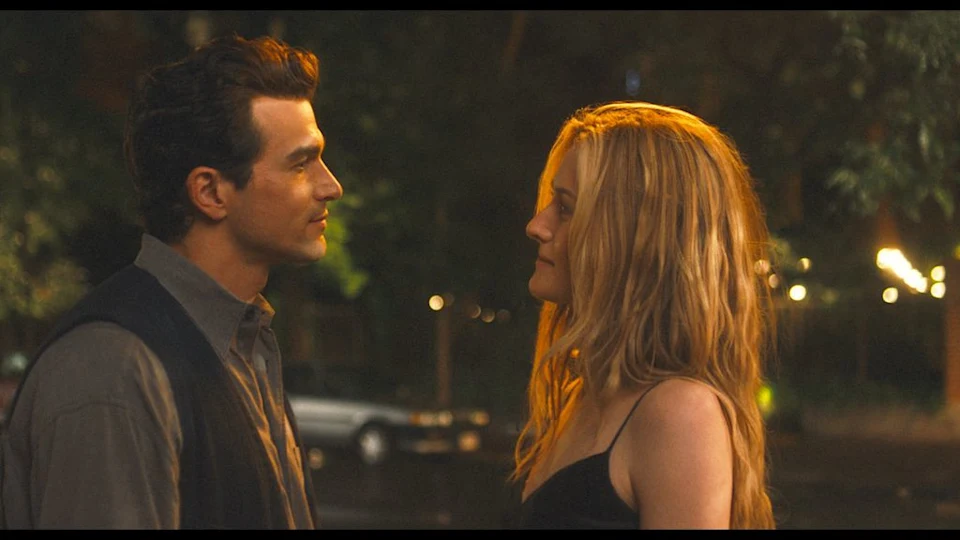
That combination of love, ambition, and nightlife chaos mirrors the experiences of countless real-life artists who flocked to New York City during the decade.
Murphy’s storytelling often focuses on emotional intensity, and this series appears to follow that pattern — blending romance with moments of heartbreak, jealousy, and self-discovery.
Recreating an Era With Precision
Television critics have already praised the show’s visual authenticity.
Costumes reflect the era’s eclectic style — mixing thrift-store fashion with high-end designer pieces.
Music selections include the alternative rock, house, and dance tracks that defined downtown nightlife.
And the city itself is portrayed not just as a backdrop but as a living character within the story.
Murphy has always been known for grand storytelling, but with Love Story, he seems to be channeling something more personal — a nostalgic tribute to a time when New York’s creative scene was raw, unpredictable, and electric.
Why ‘Love Story’ Could Become a Cultural Moment
Television shows set in specific historical periods often resonate when they capture more than just visual aesthetics.
They must convey the emotional spirit of the time.
If early reactions are any indication, Love Story may have succeeded in doing exactly that.
By blending romance, music, and nightlife culture, the series recreates a moment when the city felt like the center of the creative universe.
And with Ryan Murphy at the helm, the show has the potential to become another defining entry in his already impressive catalog of television hits.
For viewers curious about what 1990s New York City really felt like — messy, glamorous, and endlessly alive — Love Story might be the closest thing to stepping into a time machine.





Entertainment
Why ‘Resident Evil’s’ Bold Ending Surprised Austin Abrams
Abrams explains why the video game adaptation’s unexpected finale could divide audiences while pushing the franchise in a fresh direction.

After spending an entire night outrunning zombies, mutated creatures and almost certain death, Bryan appears to have finally completed the impossible.
Then Resident Evil pulls the floor out from beneath him.
The medical courier played by Austin Abrams reaches Raccoon City General Hospital with the substance needed to create a potential cure. But before doctors can save him, his infection takes control, transforming the film’s unlikely hero into the very kind of monster he has spent the story trying to escape.
For Abrams, the ending was shocking when he first encountered it in the script—but it was also precisely the kind of creative gamble he expected from writer-director Zach Cregger.
“I was surprised by it,” the actor said, while praising Cregger for taking such a bold chance with a character audiences had followed and supported throughout the movie.
What happens to Bryan in the final moments?
Bryan begins the film as an ordinary medical courier rather than a trained soldier or experienced action hero. His routine assignment becomes a nightmare when he is instructed to carry a mysterious medical package to Raccoon City.
The package is later revealed to contain material required to synthesise a cure for the rapidly spreading outbreak caused by the Umbrella Corporation.
ALSO READ : Cynthia Nixon’s Support Draws Attention as Christine Marinoni Secures NYC Education Post
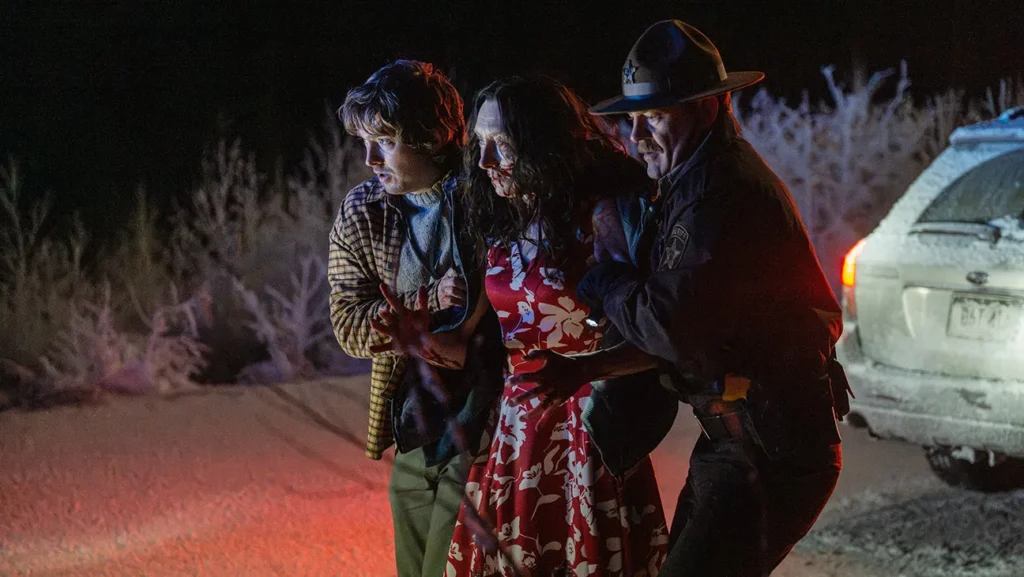
During his journey, Bryan encounters an infected child inside a camper van. He attempts to help her, but she mutates and bites his arm, passing the infection to him.
By the time Bryan reaches the hospital, the damage has visibly spread through his body. He still manages to deliver the package, allowing scientists to produce the cure, but his transformation accelerates before they can administer it.
Tentacles burst from his body as he becomes a grotesque amalgamation and attacks the scientists. During the chaos, the newly created cure falls from a hospital skybridge. The movie never reveals whether it survives the plunge.
The ending also reframes the entire film as an origin story. Bryan is not the conventional protagonist who survives the outbreak and returns home. Instead, he becomes one of the monsters that players might encounter and eliminate without ever knowing the human being it once was.
Austin Abrams calls the ending a major creative risk
Abrams understood that viewers would spend the movie rooting for Bryan precisely because he was so unprepared.
He is frightened, makes mistakes and reacts more like an ordinary person than a polished action hero. Even his screams were deliberately designed to separate him from the fearless protagonists normally found in blockbuster survival stories.
That human vulnerability makes the conclusion considerably more painful.
Abrams described the decision to follow Bryan for the entire film only to deny him salvation as “risky and gutsy.” He believes many contemporary productions are reluctant to kill a popular central character without offering audiences some form of emotional relief.
Cregger does the opposite. Bryan does not receive a miraculous cure, a heroic final victory or even the comfort of knowing that his last message reached the person he loved.
Abrams admired the filmmaker’s willingness to let the tragedy hurt rather than cushioning it with a reassuring final revelation.
Michelle may never learn that Bryan changed
The emotional centre of the ending is not the failed cure or even Bryan’s transformation. It is the voice message he records for his partner, Michelle.
Earlier in the story, Bryan responds poorly after learning that she is pregnant. Fear and uncertainty cause him to make her believe he does not want to build a family with her.
His horrific journey through Raccoon City gradually changes that perspective.
At the hospital, believing he may not survive, Bryan records a deeply personal message. He finally admits that he loves Michelle, wants the baby and is ready to face parenthood alongside her.
However, the film never confirms that the message was successfully transmitted.
Abrams considers that uncertainty an essential part of the tragedy. Michelle may continue believing that Bryan rejected their future together, never knowing that he overcame his fear and chose her before his death.
“He changed and got better, but no one will ever know about it,” Abrams explained.
That unresolved emotional thread makes Bryan’s fate more than a standard horror-film death. His internal transformation towards maturity arrives just moments before the physical infection destroys what remains of him.
Bryan’s fate is not presented as punishment
Some viewers may interpret the ending as karmic punishment for Bryan’s initial response to Michelle’s pregnancy. Abrams, however, does not believe his character deserves what happens to him.
Throughout the film, Bryan repeatedly attempts to help other people. He responds to an injured police officer, tries to rescue the infected child and refuses to abandon the medical package even as his own condition deteriorates.
His actions are imperfect, but they reveal an ordinary man gradually discovering courage under impossible circumstances.
The outbreak does not reward that growth. It consumes him anyway.
That cruelty reflects the wider world of Resident Evil, where infection is indiscriminate and good intentions offer no protection. Bryan does not become a monster because he failed a moral test; he becomes one because he was unlucky enough to be bitten.
Cregger wanted an inexperienced, believable survivor
Cregger designed Bryan as a contrast to skilled game characters such as Leon S. Kennedy.
Rather than possessing tactical training and remarkable combat abilities, Bryan functions as an avatar for the average person suddenly dropped into a survival-horror game. He is reasonably capable but frequently overwhelmed, confused and terrified.
Cregger said the character was intended to reflect how a normal person might authentically react when confronted by a mutated dog, an infected child or a city collapsing into violence.
Abrams embraced that approach and deliberately avoided making Bryan appear traditionally heroic. The actor wanted every frightened reaction, panicked decision and awkward attempt at survival to feel grounded.
The movie even allows Bryan’s familiarity with video games to help him. When he finally fires an accurate shot during a crucial moment, he triumphantly credits gaming—briefly turning a long-standing criticism of video games into one of the film’s biggest jokes.
A physically punishing production
Bryan’s ordeal was demanding for Abrams both emotionally and physically.
The production required extensive running, complex timing and multiple night shoots. One of its most dangerous sequences involved a body-sized blood bag weighing approximately 150 pounds dropping close to the actor as he raced through the streets.
Cregger later admitted that the prop came dangerously near Abrams. The actor said he did not fully appreciate how close it had been during filming because he was concentrating on completing the shot.
The intense production continued Abrams’ run of physically challenging films after Weapons and Whalefall. Yet the actor’s existing trust in Cregger proved important.
Their collaboration began with Weapons, when Abrams remained attached to the project despite strike-related scheduling complications. That loyalty ultimately led to their reunion on Resident Evil.
Will the ending lead to another film?
The conclusion leaves several possibilities open.
The cure’s condition remains unknown, the outbreak has not been contained and Bryan’s mutated form could theoretically return as a creature in a future story. However, no direct sequel has been officially confirmed.
Cregger has acknowledged having ideas about where the story could go next, but the film avoids an obvious post-credits tease. For now, Bryan’s journey stands as a bleak, self-contained tragedy.
That refusal to provide easy reassurance is exactly what Abrams respects about the ending. Bryan completes his mission, confronts his fear of becoming a father and discovers genuine courage—but he still does not escape.
In a franchise built around survival, Cregger’s most surprising decision was reminding audiences that sometimes courage is real, redemption is meaningful—and neither is enough to keep someone alive.
Entertainment
New York Judge Hands Harvey Weinstein a 15-Year Prison Sentence
Weinstein spoke about his mistakes in court as the case reached its latest turning point.

A Manhattan judge sentenced Harvey Weinstein to 15 years in prison on Wednesday for sexually assaulting former television production assistant Miriam Haley at his apartment in 2006. The sentence follows years of trials, appeals and testimony from Haley, who again addressed the court before the decision.
“I am not a perfect person. But I am a person who has made mistakes,” Weinstein said in court, according to The Hollywood Reporter. He apologised for the harm his past conduct had caused, while continuing to deny that he had sexually assaulted anyone. Haley described the lasting effect of the assault on her sense of security. “It’s a life sentence for me,” she told the judge.
ALSO READ : Emmy Nominations Announcement Gets a Star Twist… Liza Colón-Zayas & Jeff Hiller Set to Reveal 2026 TV Nominees
Judge Curtis Farber handed down the sentence after a jury found Weinstein guilty in 2025 of a first-degree criminal sex act against Haley. Prosecutors had sought a 20-year term. Weinstein’s lawyers asked for leniency, citing the 74-year-old’s serious health problems and the more than six years he has already spent in custody. He is expected to appeal.
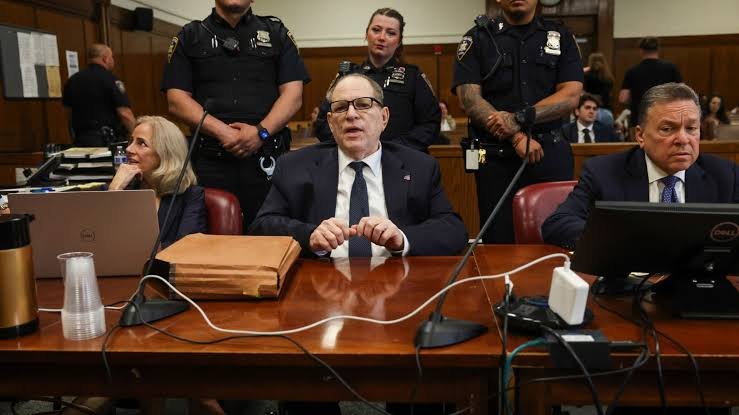
The case returned to court because New York’s highest court overturned Weinstein’s 2020 conviction, ruling that he had not received a fair trial. That original verdict, which also involved a rape charge brought by Jessica Mann, had led to a 23-year sentence. At the later retrial, jurors convicted Weinstein in Haley’s case but acquitted him of a separate charge involving Kaja Sokola. Prosecutors eventually dropped the unresolved charge involving Mann after another jury failed to reach a verdict.
Weinstein also awaits resentencing in a separate California case. An appeals court upheld his conviction there but set aside the original 16-year sentence. For Haley, Wednesday’s decision closes another chapter in a legal process that has required her to recount the assault repeatedly over six years.
Entertainment
Austin Abrams Explains the Shocking Final Twist in ‘Resident Evil’
The star discusses the bold choices behind the film’s closing moments and what they mean for his character’s journey.

After spending an entire night outrunning zombies, mutated creatures and almost certain death, Bryan appears to have finally completed the impossible.
Then Resident Evil pulls the floor out from beneath him.
The medical courier played by Austin Abrams reaches Raccoon City General Hospital with the substance needed to create a potential cure. But before doctors can save him, his infection takes control, transforming the film’s unlikely hero into the very kind of monster he has spent the story trying to escape.
For Abrams, the ending was shocking when he first encountered it in the script—but it was also precisely the kind of creative gamble he expected from writer-director Zach Cregger.
“I was surprised by it,” the actor said, while praising Cregger for taking such a bold chance with a character audiences had followed and supported throughout the movie.
What happens to Bryan in the final moments?
Bryan begins the film as an ordinary medical courier rather than a trained soldier or experienced action hero. His routine assignment becomes a nightmare when he is instructed to carry a mysterious medical package to Raccoon City.
The package is later revealed to contain material required to synthesise a cure for the rapidly spreading outbreak caused by the Umbrella Corporation.
ALSO READ : Cynthia Nixon’s Support Draws Attention as Christine Marinoni Secures NYC Education Post
During his journey, Bryan encounters an infected child inside a camper van. He attempts to help her, but she mutates and bites his arm, passing the infection to him.
By the time Bryan reaches the hospital, the damage has visibly spread through his body. He still manages to deliver the package, allowing scientists to produce the cure, but his transformation accelerates before they can administer it.
Tentacles burst from his body as he becomes a grotesque amalgamation and attacks the scientists. During the chaos, the newly created cure falls from a hospital skybridge. The movie never reveals whether it survives the plunge.
The ending also reframes the entire film as an origin story. Bryan is not the conventional protagonist who survives the outbreak and returns home. Instead, he becomes one of the monsters that players might encounter and eliminate without ever knowing the human being it once was.
Austin Abrams calls the ending a major creative risk
Abrams understood that viewers would spend the movie rooting for Bryan precisely because he was so unprepared.
He is frightened, makes mistakes and reacts more like an ordinary person than a polished action hero. Even his screams were deliberately designed to separate him from the fearless protagonists normally found in blockbuster survival stories.
That human vulnerability makes the conclusion considerably more painful.
Abrams described the decision to follow Bryan for the entire film only to deny him salvation as “risky and gutsy.” He believes many contemporary productions are reluctant to kill a popular central character without offering audiences some form of emotional relief.
Cregger does the opposite. Bryan does not receive a miraculous cure, a heroic final victory or even the comfort of knowing that his last message reached the person he loved.
Abrams admired the filmmaker’s willingness to let the tragedy hurt rather than cushioning it with a reassuring final revelation.
Michelle may never learn that Bryan changed
The emotional centre of the ending is not the failed cure or even Bryan’s transformation. It is the voice message he records for his partner, Michelle.
Earlier in the story, Bryan responds poorly after learning that she is pregnant. Fear and uncertainty cause him to make her believe he does not want to build a family with her.
His horrific journey through Raccoon City gradually changes that perspective.
At the hospital, believing he may not survive, Bryan records a deeply personal message. He finally admits that he loves Michelle, wants the baby and is ready to face parenthood alongside her.
However, the film never confirms that the message was successfully transmitted.
Abrams considers that uncertainty an essential part of the tragedy. Michelle may continue believing that Bryan rejected their future together, never knowing that he overcame his fear and chose her before his death.
“He changed and got better, but no one will ever know about it,” Abrams explained.
That unresolved emotional thread makes Bryan’s fate more than a standard horror-film death. His internal transformation towards maturity arrives just moments before the physical infection destroys what remains of him.
Bryan’s fate is not presented as punishment
Some viewers may interpret the ending as karmic punishment for Bryan’s initial response to Michelle’s pregnancy. Abrams, however, does not believe his character deserves what happens to him.
Throughout the film, Bryan repeatedly attempts to help other people. He responds to an injured police officer, tries to rescue the infected child and refuses to abandon the medical package even as his own condition deteriorates.
His actions are imperfect, but they reveal an ordinary man gradually discovering courage under impossible circumstances.
The outbreak does not reward that growth. It consumes him anyway.
That cruelty reflects the wider world of Resident Evil, where infection is indiscriminate and good intentions offer no protection. Bryan does not become a monster because he failed a moral test; he becomes one because he was unlucky enough to be bitten.
Cregger wanted an inexperienced, believable survivor
Cregger designed Bryan as a contrast to skilled game characters such as Leon S. Kennedy.
Rather than possessing tactical training and remarkable combat abilities, Bryan functions as an avatar for the average person suddenly dropped into a survival-horror game. He is reasonably capable but frequently overwhelmed, confused and terrified.
Cregger said the character was intended to reflect how a normal person might authentically react when confronted by a mutated dog, an infected child or a city collapsing into violence.
Abrams embraced that approach and deliberately avoided making Bryan appear traditionally heroic. The actor wanted every frightened reaction, panicked decision and awkward attempt at survival to feel grounded.
The movie even allows Bryan’s familiarity with video games to help him. When he finally fires an accurate shot during a crucial moment, he triumphantly credits gaming—briefly turning a long-standing criticism of video games into one of the film’s biggest jokes.
A physically punishing production
Bryan’s ordeal was demanding for Abrams both emotionally and physically.
The production required extensive running, complex timing and multiple night shoots. One of its most dangerous sequences involved a body-sized blood bag weighing approximately 150 pounds dropping close to the actor as he raced through the streets.
Cregger later admitted that the prop came dangerously near Abrams. The actor said he did not fully appreciate how close it had been during filming because he was concentrating on completing the shot.
The intense production continued Abrams’ run of physically challenging films after Weapons and Whalefall. Yet the actor’s existing trust in Cregger proved important.
Their collaboration began with Weapons, when Abrams remained attached to the project despite strike-related scheduling complications. That loyalty ultimately led to their reunion on Resident Evil.
Will the ending lead to another film?
The conclusion leaves several possibilities open.
The cure’s condition remains unknown, the outbreak has not been contained and Bryan’s mutated form could theoretically return as a creature in a future story. However, no direct sequel has been officially confirmed.
Cregger has acknowledged having ideas about where the story could go next, but the film avoids an obvious post-credits tease. For now, Bryan’s journey stands as a bleak, self-contained tragedy.
That refusal to provide easy reassurance is exactly what Abrams respects about the ending. Bryan completes his mission, confronts his fear of becoming a father and discovers genuine courage—but he still does not escape.
In a franchise built around survival, Cregger’s most surprising decision was reminding audiences that sometimes courage is real, redemption is meaningful—and neither is enough to keep someone alive.

Why ‘Resident Evil’s’ Bold Ending Surprised Austin Abrams

New York Judge Hands Harvey Weinstein a 15-Year Prison Sentence

Austin Abrams Explains the Shocking Final Twist in ‘Resident Evil’

The actor discusses Guy Gardner’s corporate-backed superhero status and his expanding role in James Gunn’s DC Universe.

Nathan Fillion Unpacks Guy Gardner’s Corporate Heroism in ‘Lanterns’

1-Iran Issues Dire Warning to Israel and Defies Trump on Nukes: “We’re Ready to Strike Deep Inside”

Sen. Elizabeth Warren Calls It a ‘Cesspool of Corruption’ — Here’s Why Senators Are Now Fighting Back Against the DOJ’s Live Nation Deal That Left Every Fan Betrayed…

Donald Trump’s net worth reveals the fortune behind the former US President and business mogul

Gucci bets on Demna to revive fading glamour as Milan fashion week opens with bold film surprise

“Tomás Rodríguez Net Worth 2025: Panama’s Gold Cup Goal‑Machine’s Surprising Fortune Revealed”

Miss Jamaica Suffers Terrifying Fall Off Miss Universe Stage; Rushed to Hospital on Stretcher in Viral Video

Moana Live-Action Teaser Sparks Outrage as Fans Call Disney’s Move a ‘Clear Money Grab’ — What Went Wrong?

Ryan Gosling’s Project Hail Mary Trailer Stuns Fans with a Mysterious Alien Ally and a Mission That Could Save Earth

Apple delays Jessica Chastain thriller The Savant about domestic extremism after recent US violence

Avatar 3, Fire and Ash trailer reveals Jake Sully’s family facing terrifying new Na’vi enemies with deadly fire powers
-
 Entertainment1 week ago
Cynthia Nixon’s Support Draws Attention as Christine Marinoni Secures NYC Education Post
-

 Entertainment1 week ago
Disney’s Live-Action ‘Moana’ Wins Early Praise After Premiere: Is This the Studio’s Best Remake Yet? Fans Say ‘It Captures the Magic…’
-

 Entertainment7 days ago
‘Spider-Man: Brand New Day’ Swings to No. 1 at the Domestic Box Office
-

 Entertainment1 week ago
‘Minions & Monsters’ Faces Unexpected Box Office Reality… Why Is the Beloved Franchise Opening Slower Than Expected?
-

 Entertainment1 week ago
Nick Reiner Will Not Face Death Penalty in Parents’ Killing Case DA Reveals Why…
-

 Entertainment1 week ago
Nick Reiner Spared Possible Death Sentence in Parents’ Murder Case
-

 Entertainment7 days ago
TIFF Debut of ‘Musk’ Comes With a Defiant Message
-

 Entertainment1 week ago
The Hollywood Reporter Sweeps SoCal Journalism Awards With 44 Wins