
Automobile
Shelby Super Snake Auction Stuns at $101,500 Bid: Why This 830-HP Mustang May Not Be the Perfect Road-Trip Beast After All…
A 2025 Shelby Super Snake convertible with just 121 miles failed to meet its reserve at auction, but its eye-watering power comes with premium-fuel demands, summer-only tires, limited luggage room and warranty questions that long-distance buyers cannot ignore.


A barely driven 2025 Shelby Super Snake has become the centre of attention after an auction ended without a sale, offering a fascinating glimpse into the reality of owning an 830-horsepower performance car beyond the glamour of its price tag.
The Race Red convertible had covered just 121 miles when it went under the hammer on Bring a Trailer. The bidding eventually reached $101,500, but the seller’s reserve was not met.
That figure is particularly interesting when compared with the car’s stated $176,060 suggested retail price. However, it would be misleading to describe the difference as a confirmed loss in value. The car did not sell at $101,500, and the listing did not establish what the owner originally paid.
For anyone dreaming of using a Shelby Super Snake as a cross-country touring machine, the auction offers a bigger lesson. The headline price is only one part of the ownership equation.
There is the cost of premium fuel, the limitations of summer performance tires, the convertible’s luggage capacity and questions surrounding warranty coverage.
In other words, this is a car built to turn heads and deliver extraordinary performance — but taking it on a long road trip requires considerably more planning than simply filling the tank and hitting the highway.
The $101,500 bid was not the final sale price
The Shelby Super Snake attracted considerable attention during the auction, collecting 15 bids, 4,272 views and 479 watchers before the bidding ended.
The highest disclosed bid stood at $101,500, while the reserve remained unmet.
The seller and highest bidder may have had an opportunity to continue discussions after the auction, but there was no publicly confirmed transaction at the time of the reported update.
That distinction matters.
The difference between the $176,060 sticker price and the $101,500 bid works out to $74,560, or roughly 42.35%. But that does not mean the car has officially depreciated by that amount.
A sticker price is not necessarily the price the original owner paid, while an unsuccessful auction bid is not a completed market transaction.
Potential buyers also need to consider additional expenses such as taxes, registration, transportation and insurance. For someone buying the car in another state, even the cost of getting it home could become a significant part of the ownership bill.
830 horsepower comes with a fuel requirement
The real attraction of the Shelby Super Snake is sitting under the hood.
The car uses a Whipple-supercharged 5.0-litre V8 producing more than 830 horsepower when running on 93-octane fuel.
That kind of power is impressive, but it also makes fuel planning more important.
A driver travelling through remote areas cannot simply assume that every fuel station will offer the required premium grade. Long-distance owners should therefore plan fuel stops carefully and follow the manufacturer’s minimum-octane recommendations.
Fuel economy is another unknown.
The auction listing did not provide a specific fuel-economy figure for the modified Super Snake. Using fuel figures from a standard factory Ford Mustang GT would not necessarily provide an accurate picture because the Shelby conversion adds forced induction, additional cooling hardware and a different calibration.
For a serious road-trip budget, actual owner fuel records or conservative estimates would be a better guide.
Summer tires could change your travel plans
The car’s performance credentials are further reinforced by its Michelin Pilot Sport 4S tires mounted on 20-inch forged magnesium wheels.
But there is an important catch.
The Pilot Sport 4S is a summer performance tire, making it much better suited to warm, dry conditions than snow and ice.
That means a winter road trip through snowy mountain regions may not be the ideal environment for this particular setup.
A buyer planning to drive the Super Snake across different climates should inspect the tire condition, tread depth, manufacturing dates and sidewalls before setting off.
Those checks become especially important with a car that has barely travelled more than 100 miles. Low mileage does not automatically mean the tires are ready for a long-distance journey.

Anyone considering a winter setup should also consult a qualified tire professional and verify wheel, brake and size compatibility before making changes.
The trunk may be the biggest road-trip compromise
A convertible looks like a natural choice for a scenic road trip.
The problem begins when you start packing.
Factory specifications for the 2025 Ford Mustang GT convertible list 10.3 cubic feet of trunk space, compared with 13.3 cubic feet for the fastback. The convertible also has four seats, but the rear compartment is unlikely to be the first choice for adults travelling long distances.
The Shelby’s upgraded audio system, including a 12-speaker Bang & Olufsen setup with a trunk-mounted subwoofer, also needs to be considered when planning luggage.
For two people travelling for a few days, soft luggage may be the easiest solution. But anyone planning a week-long holiday should physically test the bags before committing to the trip.
The best approach is simple: bring the actual luggage you plan to use and see how much fits.
After all, an 830-horsepower Mustang is not much fun on a road trip if half the luggage has to stay behind.
Warranty questions could matter to second-hand buyers
Warranty coverage is another area that deserves careful attention.
Shelby American advertises a three-year or 36,000-mile limited warranty for the Super Snake, with the coverage described as being for the original owner only. The company’s materials also warn that certain modifications or installed equipment could affect the original factory powertrain warranty.
That means a second-hand buyer should not assume that a 121-mile car automatically comes with comprehensive warranty protection.
Before purchasing, buyers should ideally obtain the vehicle’s VIN, Shelby build documentation, warranty paperwork, service history and Ford window sticker.
It is also worth confirming directly with the relevant manufacturers or authorized service providers what coverage remains available for that specific vehicle.
For someone planning to immediately drive the car across several states, knowing where warranty or specialist support can be obtained could prove extremely valuable.
The Super Snake is equipped for highway miles — but it demands respect
Despite its compromises, the Shelby Super Snake is not without the equipment needed for long journeys.
The auction car reportedly features Ford Co-Pilot360 Assist+, factory navigation, dual-zone climate control, a heated steering wheel and a premium audio system.
The car also benefits from MagneRide dampers and Shelby-specific suspension upgrades, designed to deliver a more focused driving experience.
Driver-assistance technology can make long highway journeys more comfortable, but it does not change the fundamental nature of the vehicle.
This is still a high-performance machine with extraordinary power.
The Super Snake reportedly sends that power through a six-speed manual transmission, paired with a Torsen differential and 3.73:1 gearing.
For an owner picking up the vehicle and immediately embarking on a long journey, it would be sensible to spend time becoming familiar with the clutch, braking performance, steering modes and throttle response before tackling unfamiliar mountain roads or challenging weather.
The real cost of owning an 830-horsepower road-trip car
The failed auction does not necessarily tell us whether the Shelby Super Snake is a bargain or an overpriced collectible.
What it does highlight is the difference between buying a spectacular performance car and actually living with one.
For a prospective owner, the checklist should go well beyond the auction price.
Premium fuel, summer tires, luggage capacity, warranty coverage, transport costs and a thorough mechanical inspection all deserve attention.
The Super Snake’s low mileage makes it undeniably attractive, while its open-air design, powerful V8 and advanced suspension make it easy to imagine cruising along a scenic highway.
But the same qualities that make it exciting also create practical limitations.
The public auction result remains straightforward: the $101,500 bid did not meet the seller’s reserve, meaning the car was not confirmed as sold at that price.
Whether the Shelby eventually finds a buyer, spends more time in a collector’s garage or finally becomes the road-trip machine it appears capable of being remains to be seen.
One thing is certain, though: 830 horsepower can make a road trip unforgettable — but it can also make preparation a lot more important.


Automobile
Tesla Cybercab Launches Without a Steering Wheel — But a US Safety Investigation Has Already Begun
Tesla’s futuristic two-seat Robotaxi is starting public rides in Austin, Texas, even as federal regulators examine whether a vehicle without traditional controls can meet existing safety standards.
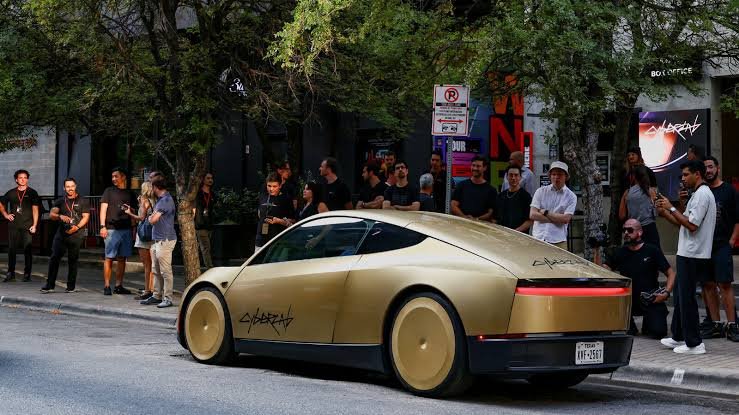
Tesla has taken another major step toward its autonomous driving ambitions with the Cybercab, a striking two-seat vehicle designed without one of the most familiar features of any car: a steering wheel.
The futuristic Tesla Cybercab also does away with traditional brake and accelerator pedals, placing the entire driving experience in the hands of autonomous technology. But just as the vehicle begins picking up members of the public in Austin, Texas, it has found itself facing an important question — does a car with no human driving controls meet current US safety rules?
The answer is now being examined by the National Highway Traffic Safety Administration (NHTSA).
Tesla Cybercab begins public rides in Austin
The Cybercab’s arrival marks a significant moment for Tesla, which has spent years promoting a future built around self-driving vehicles and autonomous ride-hailing services.
Tesla enthusiasts reportedly gathered in downtown Austin as the company introduced public rides in the driverless vehicle. The Cybercab is expected to play a central role in Tesla’s growing Robotaxi network, which is being developed across selected locations in Texas and Florida.
Unlike a conventional car, however, the Tesla Cybercab has been designed specifically for autonomous transportation. There is no steering wheel waiting for a human driver to take over and no pedals beneath the passenger compartment.
That bold design is exactly what makes the vehicle stand out — and what has now attracted regulatory attention.
US regulators investigate Tesla’s unusual design
The National Highway Traffic Safety Administration is examining whether the Cybercab complies with federal motor vehicle safety standards.
The challenge for Tesla is that many existing regulations were written for a world where every vehicle had a human sitting behind the wheel.
Traditional safety requirements include equipment that may appear unnecessary in a fully autonomous vehicle, including steering-related controls, brake pedals, windshield wipers and rearview mirrors.
For now, however, many of those long-standing rules remain in effect.
Federal regulators are working on updates to vehicle safety standards to make it easier for genuinely driverless vehicles to operate legally on public roads. The changes could eventually reshape how autonomous cars are designed and approved in the United States.

A big test for Tesla’s Robotaxi ambitions
For Tesla, the Cybercab is more than just another electric vehicle. It represents the company’s vision of a future where passengers can summon a car without needing anyone in the driver’s seat.
The vehicle is expected to operate as part of Tesla’s autonomous ride-hailing ecosystem, potentially competing with other companies working on driverless transportation services.
But the timing of the federal investigation shows just how difficult the transition to fully autonomous mobility could be.
Technology may be moving faster than regulations, and companies such as Tesla now face the challenge of proving that radically different vehicles can operate safely within rules originally designed for conventional cars.
The road ahead for the Cybercab
Tesla’s decision to launch the Cybercab publicly while regulators examine its compliance will make the vehicle one of the most closely watched autonomous transportation projects in the world.
Supporters see the Cybercab as a glimpse of the future — a purpose-built Robotaxi that could change urban transportation. Critics and regulators, meanwhile, are likely to focus on a simpler question: what happens when the technology encounters a situation where there is no steering wheel and no human driver ready to intervene?
The Cybercab’s journey has only just begun, but one thing is already clear: Tesla‘s most futuristic vehicle is entering the real world under intense scrutiny.
Whether it becomes a breakthrough moment for autonomous transport or a major regulatory challenge could shape the future of driverless cars far beyond Austin.
Automobile
Ford’s First Electrified Bronco Is Coming: Basecamp Promises Up to 900km Range Without Range Anxiety
Ford has confirmed the Bronco Basecamp for Australia and New Zealand, bringing a new range-extender electric powertrain that combines dual electric motors with a petrol generator for an impressive claimed range of up to 900km.

Ford is taking one of its most recognisable SUV names into electrified territory.
The American automaker has officially confirmed the Ford Bronco Basecamp, its first electrified Bronco, for Australia and New Zealand. The new SUV is scheduled to arrive in both markets during the second half of 2027.
But this is not a conventional hybrid—and it is not a typical petrol-powered SUV either.
The Bronco Basecamp will use what Ford describes as a “super-hybrid” system, built around electric motors and a large battery, with a petrol engine playing a very different role from the one buyers might expect.
A petrol engine that does not drive the wheels
The biggest talking point of the Bronco Basecamp is its range-extender electric powertrain.
The SUV uses dual electric motors powered by a usable 49kWh battery. Supporting the battery is a 1.5-litre turbocharged petrol engine, but there is an important difference—the petrol engine does not directly power the wheels.
Instead, it works purely as an onboard generator, producing electricity to help extend the vehicle’s overall driving range.
That means the driving experience remains fundamentally electric, while the petrol engine helps reduce concerns about running out of charge on longer journeys.
For drivers who like the idea of an EV but remain worried about charging infrastructure during road trips or remote travel, the concept could offer an interesting middle ground.
Up to 900km of claimed range
According to Ford, the Bronco Basecamp is expected to deliver a combined driving range of approximately 800km to 900km on the WLTP test cycle.
That is a substantial figure for an SUV carrying the Bronco badge, particularly considering the vehicle is designed around electrified propulsion rather than a traditional combustion-only setup.
Ford has not yet confirmed a separate official electric-only driving range for the Australian market.
However, overseas information suggests that the Bronco Basecamp could potentially travel more than 190km using electric power alone before the petrol generator is required to support the system.
The final specifications for Australia and New Zealand could differ, so buyers will have to wait for closer-to-launch confirmation.

Ford’s ‘super-hybrid’ could appeal to adventurous buyers
The Ford Bronco name has long been associated with adventure and rugged capability.
That makes the Basecamp’s powertrain particularly interesting.
Traditional electric vehicles can offer strong performance and quiet driving, but charging availability can become a concern when travelling far away from major cities. A range-extender setup attempts to address that problem by combining battery-powered driving with an onboard source of electricity.
For Australian and New Zealand buyers who regularly travel long distances, the Bronco Basecamp’s claimed 800-900km combined range could be one of its strongest selling points.
The system also represents a different approach to electrification from conventional hybrids, where a petrol engine can directly help drive the wheels.
Australia and New Zealand to get the new Bronco in 2027
Ford has confirmed that the Bronco Basecamp will become a new model line for the brand in Australia and New Zealand.
The local launch is currently planned for the second half of 2027.
While there is still plenty of time before the SUV reaches dealerships, Ford’s confirmation gives buyers an early look at how the company plans to expand the Bronco family.
Electrification is becoming increasingly important across the global automotive industry, but different markets have different needs. The Bronco Basecamp appears designed for customers who want the benefits of electric driving without relying entirely on public charging infrastructure for long-distance travel.
Is this the best of both worlds?
That may ultimately be the biggest question surrounding the new Bronco Basecamp.
A large 49kWh battery, dual electric motors and a petrol generator could provide an appealing compromise between conventional petrol SUVs and fully electric vehicles.
The electric motors handle the driving, while the petrol engine steps in only to generate electricity when additional range is needed.
On paper, that gives the SUV the quiet and responsive character associated with electric propulsion while also providing extra confidence for longer trips.
Of course, pricing, performance, off-road capability and final market specifications will play a major role in determining how successful the Bronco Basecamp becomes.
For now, one thing is clear: Ford is preparing to give the iconic Bronco a very different kind of powertrain—and a claimed range of up to 900km could make plenty of people take notice.
With its Australian and New Zealand arrival still more than a year away, the Ford Bronco Basecamp will be a vehicle worth watching as the industry searches for new ways to bridge the gap between petrol power and full electrification.
Automobile
Elon Musk’s Tesla Cybercab Hits the Road Without a Steering Wheel — But Regulators Are Already Asking Questions
Tesla has begun offering paid Cybercab rides in Austin, pushing its vision of a driverless future forward while the NHTSA examines whether the futuristic vehicle can meet federal safety standards.

Tesla has taken one of its boldest steps yet toward a fully autonomous future, rolling out paid rides in its futuristic Cybercab robotaxi—a vehicle designed without a conventional steering wheel, pedals or mirrors.
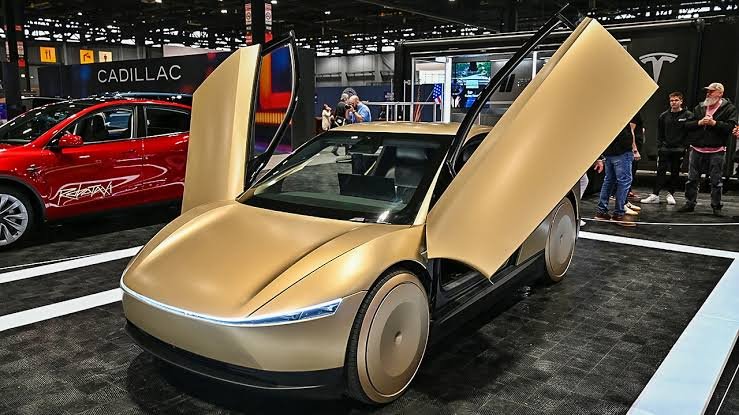
But just as the golden, butterfly-door vehicle began attracting attention on the streets of Austin, Texas, a major regulatory question emerged.
The National Highway Traffic Safety Administration (NHTSA) said it had opened an audit involving around 1,000 Cybercab vehicles to examine how Tesla determined that the unconventional cars comply with federal vehicle-safety requirements.
The development puts Elon Musk and Tesla on a potentially difficult collision course with regulators—and raises a much bigger question: Can a car built without traditional driving controls legally become a mainstream vehicle on American roads?
Tesla’s Cybercab arrives with a radically different design
The Cybercab is central to Musk’s ambitious plan to transform Tesla from primarily an electric-car manufacturer into a company focused heavily on artificial intelligence, robotics and autonomous transportation.
Unlike a conventional vehicle, the Cybercab has no steering wheel for a human driver to grab in an emergency. There are no pedals and no traditional mirrors either.
Instead, Tesla is betting that its autonomous driving technology can handle the entire journey.
The futuristic two-seat vehicle, with its distinctive golden exterior and butterfly-style doors, represents perhaps the clearest example yet of Musk’s long-standing belief that self-driving technology will eventually replace human drivers in many forms of transportation.
Tesla has already been operating a limited paid robotaxi service using its popular Tesla Model Y vehicles in Texas and Florida.
Those vehicles, however, still have conventional manual controls and, in some cases, human backup drivers.
The Cybercab takes the concept several steps further.
NHTSA moves quickly after Tesla’s rollout
Just hours after Tesla marked the Cybercab rollout in downtown Austin, the NHTSA announced that it was examining approximately 1,000 of the vehicles.
The issue lies in the fact that many existing federal vehicle-safety standards were created decades ago with human drivers in mind.
Those standards generally assume that vehicles will have equipment such as steering controls and other manual driving systems.
That creates a complicated regulatory challenge for Tesla.
In the United States, automakers generally have the ability to self-certify that their vehicles comply with federal safety requirements before placing them on public roads.
Unlike some countries, manufacturers do not necessarily need to receive advance approval from regulators for every new vehicle model.
Critics argue that this system could create a major grey area for a vehicle as unconventional as the Cybercab.
“Tesla historically has tested limits and pushed boundaries”
Autonomous-vehicle experts believe Tesla’s history of aggressively challenging conventional industry expectations could play an important role in what happens next.
Philip Koopman, an engineering professor at Carnegie Mellon University and an autonomous-vehicle safety expert, suggested that Tesla could test the limits of existing regulations.
“Tesla historically has tested limits and pushed boundaries on regulations,” Koopman said.
That approach has become a defining feature of Musk’s companies.
From electric vehicles and reusable rockets to satellite internet and artificial intelligence, Musk has repeatedly pursued technologies that move faster than the regulatory systems created to govern them.
The Cybercab could now become another major example.
Can a car without pedals legally meet safety standards?
The biggest challenge for Tesla is straightforward: federal safety regulations were largely written for vehicles operated by humans.
A car with no steering wheel or pedals appears fundamentally different from the vehicles those rules were originally designed to regulate.
Michael Brooks, executive director of the Center for Auto Safety, questioned whether the Cybercab could reasonably be considered compliant with the existing Federal Motor Vehicle Safety Standards.
Meanwhile, regulators are working on changes that could eventually make it easier for genuinely driverless vehicles to operate commercially.
However, creating and implementing new regulations can take years.
Tesla, on the other hand, appears eager to move now.
That difference in timing could become the heart of the coming battle.
Tesla says its self-driving technology is getting safer
Tesla has consistently defended its autonomous-driving technology and said versions of its Full Self-Driving software are designed to improve road safety.
The company has argued that its technology can perform significantly more safely than human drivers under certain conditions.
Tesla’s Austin robotaxi service has also operated without a reported fatal accident.
However, questions remain about how reliably autonomous systems can handle the enormous variety of situations encountered on public roads.
Former employees and safety experts have raised concerns about the challenges self-driving systems can face during complicated or unexpected driving situations.
Bryant Walker Smith, a law professor at the University of South Carolina who focuses on autonomous-driving regulation, questioned whether publicly available information demonstrates that Tesla is ready to deploy a fully automated vehicle without conventional controls across a broad range of conditions.
For Tesla, proving that the technology works consistently may be just as important as winning the regulatory argument.
A possible legal battle could be coming
Vehicles that do not fully comply with existing federal safety standards can apply for special exemptions through the NHTSA.
But those exemptions can limit how many vehicles an automaker is allowed to deploy each year.
Tesla’s engineering chief Lars Moravy has previously suggested that the Cybercab would not face such a deployment cap, though the details of Tesla’s regulatory strategy remain unclear.
That uncertainty has fueled speculation about whether Tesla is relying on self-certification to put the Cybercab on public roads.
The situation has similarities to another autonomous-vehicle company.
Zoox, owned by Amazon, previously faced regulatory scrutiny over its own driverless vehicle, which also lacks conventional driving controls.
Zoox initially attempted to self-certify its vehicle before regulatory intervention led to changes in its approach. The company later received federal approval for limited commercial deployment.
Tesla’s path could prove considerably more contentious.
Former NHTSA officials have suggested that a serious disagreement over Tesla’s self-certification could eventually end up in court.
And history shows that regulatory agencies do not always win those legal battles.
Elon Musk’s biggest transportation gamble yet?
The Cybercab is much more than another Tesla vehicle.
It represents a massive bet on Musk’s belief that the future of transportation will be dominated by autonomous machines.
Tesla’s market valuation—around $1.4 trillion according to the information surrounding the rollout—reflects the enormous expectations investors have placed on that future.
Musk has promised that Cybercab production will grow rapidly, and Tesla previously suggested the vehicle could eventually be sold for less than $30,000.
But before millions of driverless Cybercabs can realistically fill American streets, Tesla may first have to answer some difficult questions.
Are existing safety rules flexible enough to accommodate a vehicle without a steering wheel?
Can Tesla legally self-certify the Cybercab?
And perhaps most importantly: Is the technology truly ready for the unpredictable reality of public roads?
For now, Tesla’s Cybercab rollout has delivered exactly what many expected from Elon Musk—an ambitious technological leap, enormous public attention and a fresh confrontation with the limits of regulation.
The robotaxi revolution may have arrived in Austin, but the battle over who gets to decide when it is ready for the rest of America may only just be beginning.

With ‘Lanterns’ and ‘Man of Tomorrow’ ahead, Fillion teases fresh layers to DC’s most unpredictable Green Lantern.

Alex Gibney’s ‘Musk’ Makes North American Premiere at TIFF

‘Carrie’ Returns to Haunt a New Generation—but Is Eight Episodes Too Much?

Is Tom Cruise’s Star Power Enough to Give ‘Digger’ a Winning Start?

David Ellison Names Paramount–Warner Bros. Leadership Team: Who’s in Charge?

1-Iran Issues Dire Warning to Israel and Defies Trump on Nukes: “We’re Ready to Strike Deep Inside”

Sen. Elizabeth Warren Calls It a ‘Cesspool of Corruption’ — Here’s Why Senators Are Now Fighting Back Against the DOJ’s Live Nation Deal That Left Every Fan Betrayed…

Gucci bets on Demna to revive fading glamour as Milan fashion week opens with bold film surprise

Donald Trump’s net worth reveals the fortune behind the former US President and business mogul

“Tomás Rodríguez Net Worth 2025: Panama’s Gold Cup Goal‑Machine’s Surprising Fortune Revealed”

Miss Jamaica Suffers Terrifying Fall Off Miss Universe Stage; Rushed to Hospital on Stretcher in Viral Video

Moana Live-Action Teaser Sparks Outrage as Fans Call Disney’s Move a ‘Clear Money Grab’ — What Went Wrong?

Ryan Gosling’s Project Hail Mary Trailer Stuns Fans with a Mysterious Alien Ally and a Mission That Could Save Earth

Apple delays Jessica Chastain thriller The Savant about domestic extremism after recent US violence

Avatar 3, Fire and Ash trailer reveals Jake Sully’s family facing terrifying new Na’vi enemies with deadly fire powers
-

 Entertainment1 week ago
Toronto Film Festival Picks ‘Being Heumann’ as Its Opener… Is Sian Heder About to Deliver Another Awards Season Sensation?
-

 Entertainment1 week ago
Anne Schedeen, ‘ALF’ Star and Beloved TV Mom, Dies at 77… Fans Remember Her Wit and Legacy
-

 Entertainment6 days ago
One Big Win for Taylor Swift, Seven for Madonna: Inside the 2026 VMAs
-

 Entertainment1 week ago
Emmy Rossum Says Her Shameless Role Followed Her Into Real-Life Dates
-

 Entertainment1 week ago
‘Resident Evil’ Star Austin Abrams Opens Up About the Film’s Daring Finale
-
 Entertainment1 week ago
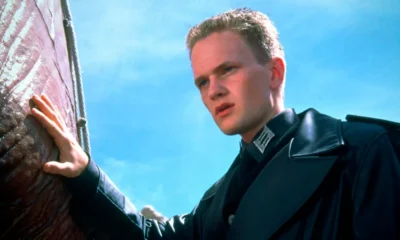
Paul Verhoeven Warns Trump Over ‘Starship Troopers’-Inspired Space Force Uniforms: ‘They Should Be Aware…’
-

 Entertainment1 week ago
‘I Will Not Watch It’: Tomi Adeyemi Distances Herself From ‘Children of Blood and Bone’ Film… Why the Bestselling Author Is ‘Officially Separating’ Her Name
-

 Entertainment1 week ago
‘Abbott Elementary’ and ‘Shrinking’ Dominate AAFCA TV Honors… But Two New Categories Are Stealing Attention