
Entertainment
Sky’s $2.1 Billion ITV Deal Could Redraw European TV… Is the ‘Get Big or Get Left Behind’ Era Finally Here?
A landmark acquisition signals a new chapter for Europe’s television industry as regulators warm to media consolidation amid fierce competition from global streaming giants.

Europe’s television industry is entering what many analysts describe as its most transformative phase in decades. The proposed $2.1 billion acquisition of ITV by Sky Group has become more than just another corporate deal—it represents a powerful signal that the continent’s media landscape is rapidly changing.
For years, large-scale mergers among European broadcasters faced significant regulatory hurdles. Competition authorities were often reluctant to approve transactions that could reduce market diversity. However, the rise of global streaming platforms has dramatically altered the conversation.
Industry experts now believe European broadcasters need greater scale to compete with international entertainment powerhouses.
Why the Sky–ITV Deal Matters
The proposed acquisition would create one of Europe’s largest television and content businesses, combining Sky’s pay-TV and streaming operations with ITV’s extensive production capabilities and free-to-air broadcasting network.
ALSO READ : Sen. Elizabeth Warren Calls It a ‘Cesspool of Corruption’ — Here’s Why Senators Are Now Fighting Back Against the DOJ’s Live Nation Deal That Left Every Fan Betrayed…
Supporters argue that bigger media companies will be better equipped to invest in premium programming, sports rights, news coverage, and original productions while remaining competitive in a market increasingly dominated by global digital platforms.
The deal also reflects growing confidence that European regulators are taking a more flexible approach toward consolidation than they did in previous decades.
Streaming Has Changed the Rules
The television industry has undergone enormous disruption over the past decade.
Global streaming leaders such as Netflix, Disney+, Amazon Prime Video, and Max have fundamentally reshaped viewer habits, content investment, and advertising markets.
Traditional broadcasters have found themselves competing not only with each other but also with companies investing billions of dollars annually in original films, television series, and international expansion.
Against that backdrop, mergers like Sky’s proposed ITV acquisition are increasingly viewed as strategic necessities rather than optional growth opportunities.
A Shift in Regulatory Thinking
For nearly two decades, European competition regulators generally approached major media mergers with caution.
Today, policymakers appear to recognize that fragmented national broadcasters face growing pressure from multinational streaming companies with far greater financial resources.

Rather than focusing solely on domestic competition, regulators are increasingly considering the broader global marketplace, where European companies compete against technology-driven entertainment giants operating across multiple continents.
If approved, the Sky–ITV transaction could encourage additional consolidation across Europe, prompting broadcasters in countries such as Germany, France, Spain, and Italy to explore similar partnerships.
What This Means for Viewers
For audiences, larger media groups could translate into increased investment in local programming, stronger streaming platforms, and improved access to premium entertainment.
However, some industry observers caution that fewer independent broadcasters could also reduce competition in certain markets, potentially affecting advertising, pricing, and programming diversity.
The long-term impact will depend on how regulators balance market competition with the industry’s need to remain globally competitive.
A New Era for European Television
Whether the Sky–ITV acquisition ultimately receives final approval or not, it has already become a defining moment for the European media sector.
The message is becoming increasingly clear: in an entertainment market dominated by global streaming giants, size, investment capacity, and international reach are emerging as critical factors for survival.
The era of “get big or get left behind” may no longer be a prediction—it is rapidly becoming the new reality for European television.







Entertainment
Taylor Swift won Video of the Year at the 2026 VMAs. So how did Madonna leave with seven trophies?
Swift claimed the night’s top video prize, while Madonna led all winners at the Snoop Dogg-hosted ceremony in Los Angeles.
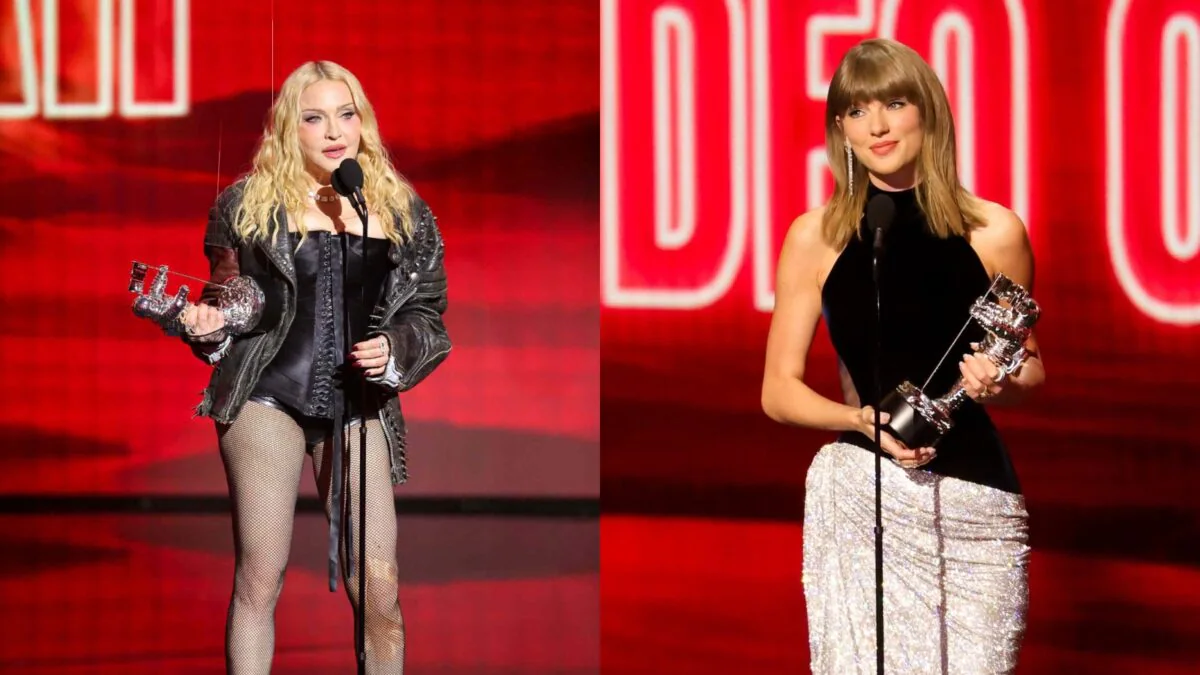
The biggest prize went to Taylor Swift, but the biggest haul belonged to Madonna. At the 2026 MTV Video Music Awards, Swift won Video of the Year for “The Fate of Ophelia,” while Madonna finished the night with seven awards.
The ceremony took place on Sunday, September 27, at the Peacock Theater in Los Angeles, with Snoop Dogg as host. Madonna collected three of her awards during the televised show: Artist of the Year, Best Dance for “Confessions II – The Film,” and Best Collaboration for “Bring Your Love” with Sabrina Carpenter.
ALSO READ : ‘This Doesn’t Have to Be Goodbye’: Fox Broadcasters Make Emotional Plea After Belgium Ends U.S. World Cup Dream
Swift took the top video prize
Swift’s Video of the Year win was only part of her night. She also won Best Direction for “Opalite” and received the inaugural Artist Director Honors, recognising her work behind the camera. The honours added another chapter to a VMA career that has increasingly celebrated her as both a performer and a director.

Madonna’s wins reached across performance and filmmaking. Alongside her three televised awards, “Confessions II – The Film” won Best Cinematography, Best Choreography and Best Long Form Video. Her album Confessions II took Best Album, bringing her total to seven. She also returned to the VMA stage as a performer for the first time in 23 years.
There were other names to celebrate. BTS won Song of the Year for “Swim,” Best K-Pop for “SWIM” and Best Group. Sienna Spiro was named Best New Artist, while LISA won Best Pop for “Dream” featuring Kentaro Sakaguchi.
For Swift, it was a night crowned by the award every Video of the Year nominee wanted. For Madonna, it was a sweeping return to the VMA spotlight: seven trophies and a performance that brought her back to the show’s stage after more than two decades.
Entertainment
Chuck Lorre’s Award Night Began With Charity and Ended in Political Debate
Recognized for supporting meals for people facing serious illness, he used his speech to address Trump and the Democrats.
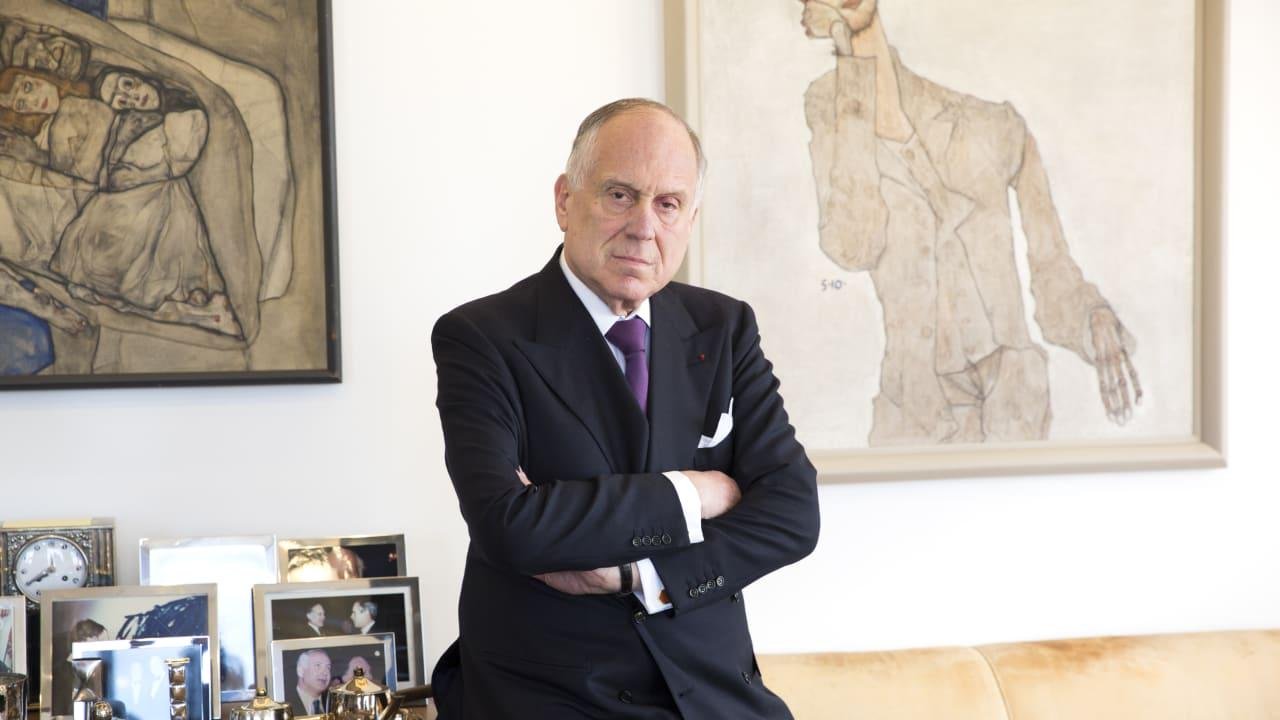
Chuck Lorre was meant to be accepting an award for his philanthropy. He used the microphone for something considerably less conventional: a speech that took swipes at Donald Trump, Melania Trump, the political left and Robert F. Kennedy Jr..
The television producer spoke on Saturday, September 26, at Project Angel Food’s Angel Awards in Los Angeles. His daughter, director Nikki Lorre, presented him with the Founders Angel Award, the organisation’s highest honour and one it has given only once before in its 37-year history.
Lorre began by acknowledging the pressure on a comedy writer to get laughs. Then he turned to politics. He said he wanted a government more concerned with people’s health and welfare, before launching into a profane joke about President Trump. He also made a harsh personal remark about the first lady, contrasting her with Michelle Obama. The comments were part of Lorre’s routine, rather than claims established by the event.
ALSO READ : ‘This Doesn’t Have to Be Goodbye’: Fox Broadcasters Make Emotional Plea After Belgium Ends U.S. World Cup Dream
His criticism did not stop with Republicans
Lorre urged the Democratic National Committee to move away from what he called “far-left woke culture” and seek a “common sense middle ground” with working-class voters. He quickly turned that point into another joke, this time targeting Kennedy over vaccination. His remarks moved between political argument and punchline, with little interest in the polite script of an awards acceptance speech.

The setting gave the speech another dimension. Project Angel Food prepares and delivers medically tailored meals for people facing serious illnesses in Los Angeles County. Lorre’s family foundation helped make its expanded kitchen and campus possible; according to the organisation, the project increased its annual meal-production capacity from 1.5 million to more than 4.5 million. The gala raised more than $1 million, according to the event coverage.
Lorre may have delivered the night’s most provocative lines, but the award recognised work with a practical effect: helping the charity put more meals in the hands of people who need them.
Entertainment
‘Avatar’ Overtaken: ‘Avengers: Endgame’ Is Back on Top
Marvel’s return to the big screen reshapes the race for the highest-grossing film of all time.
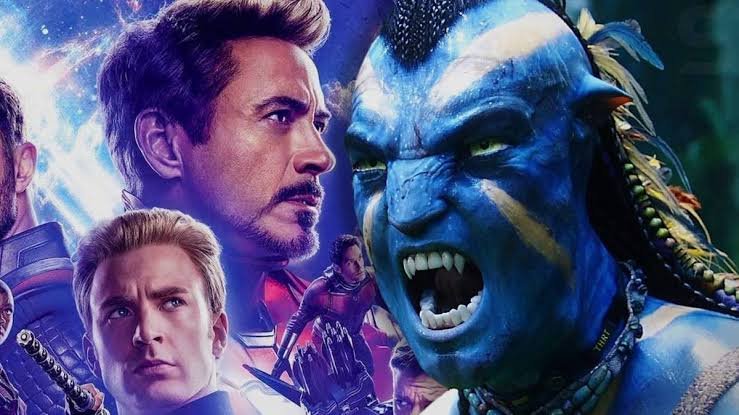
Seven years after its original release, Avengers: Endgame has unfinished business at the box office.
The Marvel Studios blockbuster has overtaken James Cameron’s Avatar to become the highest-grossing film worldwide once again. According to The Walt Disney Company’s October 4 announcement, Endgame now holds an estimated $2.9255 billion, narrowly ahead of Avatar’s $2.9237 billion. That puts just $1.8 million between two of cinema’s biggest hits.
The lead is small. The comeback, however, is substantial: a film released in 2019 has drawn enough fresh ticket sales to rewrite the all-time chart.
The ‘Encore’ release that tipped the balance
The latest theatrical run, titled Avengers Endgame: Encore, has earned $126 million worldwide, according to TheWrap. That includes $36.2 million in North America and $89.8 million from international markets—the extra business that pushed the film back into first place.
Audiences also had a reason to return beyond revisiting a familiar blockbuster. TheWrap reports that the reissue features a modified ending and three new scenes during and after the credits, connected to Avengers: Doomsday. The release therefore serves two purposes: bringing an established favourite back to cinemas and giving viewers a bridge to the next Avengers story.
ALSO READ : Emmy Nominations Announcement Gets a Star Twist… Liza Colón-Zayas & Jeff Hiller Set to Reveal 2026 TV Nominees
A rivalry with a history of reversals
This is another change of leadership in a box office contest that has lasted for years.
Endgame first displaced Avatar in 2019. Cameron’s science-fiction epic regained the crown following its Chinese re-release in 2021. Now, another theatrical return has swung the result in Marvel’s favour. Re-releases have become a decisive part of the competition, extending both films’ earning lives well beyond their original runs.
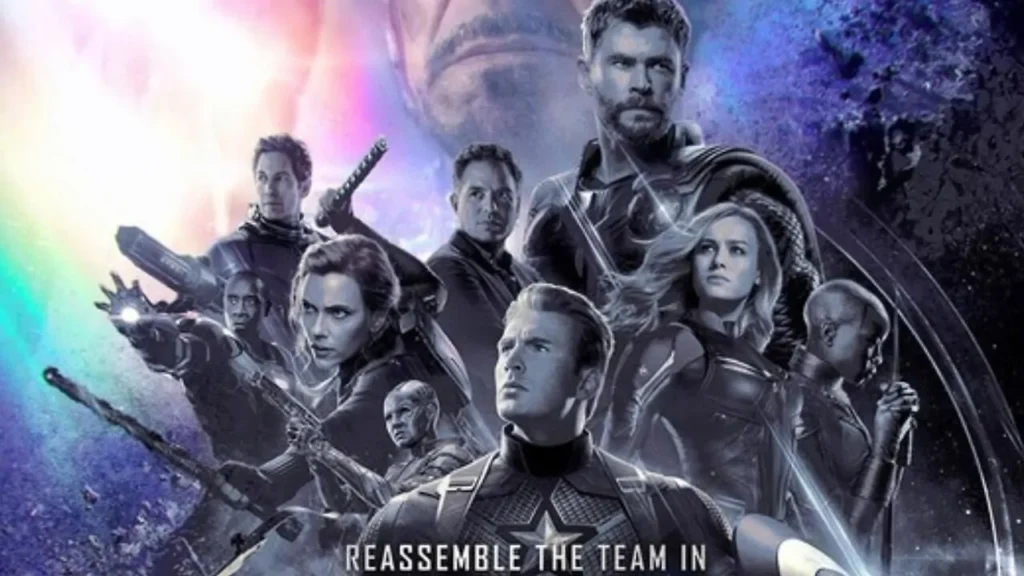
The distinction matters: this is the record for worldwide theatrical revenue without adjustment for inflation, including re-release earnings. It measures money collected rather than the number of tickets sold.
Why ‘Endgame’ matters to ‘Doomsday’
The timing gives Marvel’s comeback an added significance. Avengers: Doomsday is scheduled to reach cinemas on December 18, 2026, and Disney has positioned Endgame as an important foundation for that next chapter.
Explaining the connection, Anthony Russo said: “You really need to pick the story up from where you left it in Endgame.”
That makes this return more than a victory lap. A film remembered for closing a major chapter of Marvel’s story is now helping introduce the next one—and, along the way, has taken back Hollywood’s most closely watched box office title.

Taylor Swift won Video of the Year at the 2026 VMAs. So how did Madonna leave with seven trophies?

Chuck Lorre’s Award Night Began With Charity and Ended in Political Debate

‘Avatar’ Overtaken: ‘Avengers: Endgame’ Is Back on Top

David Ellison Sets the Leadership Direction for Paramount–Warner Bros.

‘The Social Reckoning’ Puts Mark Zuckerberg’s Power Under the Microscope

1-Iran Issues Dire Warning to Israel and Defies Trump on Nukes: “We’re Ready to Strike Deep Inside”

Sen. Elizabeth Warren Calls It a ‘Cesspool of Corruption’ — Here’s Why Senators Are Now Fighting Back Against the DOJ’s Live Nation Deal That Left Every Fan Betrayed…

Gucci bets on Demna to revive fading glamour as Milan fashion week opens with bold film surprise

Donald Trump’s net worth reveals the fortune behind the former US President and business mogul

“Tomás Rodríguez Net Worth 2025: Panama’s Gold Cup Goal‑Machine’s Surprising Fortune Revealed”

Miss Jamaica Suffers Terrifying Fall Off Miss Universe Stage; Rushed to Hospital on Stretcher in Viral Video

Moana Live-Action Teaser Sparks Outrage as Fans Call Disney’s Move a ‘Clear Money Grab’ — What Went Wrong?

Ryan Gosling’s Project Hail Mary Trailer Stuns Fans with a Mysterious Alien Ally and a Mission That Could Save Earth

Apple delays Jessica Chastain thriller The Savant about domestic extremism after recent US violence

Avatar 3, Fire and Ash trailer reveals Jake Sully’s family facing terrifying new Na’vi enemies with deadly fire powers
-

 Entertainment1 week ago
One Big Win for Taylor Swift, Seven for Madonna: Inside the 2026 VMAs
-

 Entertainment1 week ago
Beyoncé Ends Two-Year Music Silence With ‘Morning Dew’ Is a New Album Next?
-

 Entertainment1 week ago
‘Spider-Man: Brand New Day’ Breaks All-Time Domestic Box Office Record
-

 Entertainment1 week ago
Rosalía Turned the Kia Forum Into a Movie Set… Inside the Stunning ‘Lux’ Tour Performance That Left Los Angeles Spellbound
-

 Entertainment1 week ago
From Amazon to Neon: The Fight to Bring ‘Artificial’ to Audiences
-

 Entertainment1 week ago
Tom Cruise’s ‘Digger’ Has Awards Ambitions—But Can It Deliver at the Box Office?
-

 Entertainment1 week ago
Ella Hunt’s Breakout Year: How the Rising Star Is Conquering TV and Music
-

 Entertainment1 week ago
‘The Social Reckoning’ takes aim at an influential tech mogul, entering territory Hollywood rarely explores so directly.