
United States
South Carolina About to Sizzle And Surprise You Next 5 Days
Brace for sizzling days and sudden downpours across the Palmetto State in the next five days


 Today Today | 94°73° | Mostly sunny |
 Thursday Thursday | 93°71° | Times of clouds and sun with a thunderstorm in spots in the afternoon |
| Friday | 94°73° | Partly sunny with a thunderstorm in spots in the afternoon |
| Saturday | 94°72° | Mostly sunny and humid; a thunderstorm in spots in the afternoon |
| Sunday | 95°74° | Partly sunny |
Get ready, South Carolina: Mother Nature is dialing up the drama this week. Starting Wednesday, June 18, Columbia will see a bright, sun‑drenched day with highs around 94 °F (34 °C) and lows settling in at a warm 73 °F (23 °C). Sunscreen and cold drinks? You’re going to want them.
But don’t put those umbrellas away just yet. Forecasts signal “afternoon thunderstorms in spots” Thursday through Saturday, with daytime temps climbing between 93–94 °F (34 °C). These pop‑up storms will offer brief, refreshing breaks — but don’t let them catch you off guard if you’re planning outdoor outings.
Sunday, June 22, brings a sigh of relief: more consistent sun returns with a still‑steamy high near 95 °F (35 °C) and a sultry low around 74 °F (23 °C). Locals and visitors alike can take advantage of this window—perfect for a paddle down the Congaree River or a stroll through Finlay Park.
This week’s pattern echoes June’s historic climate ups and downs: blazing humidity by day, stormy afternoons sprinkled with unpredictable showers. Columbia’s summer mean in June typically sits around 80 °F, with plenty of moisture and sunshine to go around.








Art
“United Airlines Defies Turbulence: Q2 Profits Soar on Cheap Fuel, Loyalty Surge”
United AirlinesUnited Airlines Q2 Earnings Beat Expectations as Fuel Costs Drop, Loyalty Rises
Despite revenue miss, United beats EPS forecast with help from low fuel prices and rising premium, cargo, and loyalty revenue streams.


United Airlines is proving that sometimes, it’s not just about how many passengers fill the seats — it’s about how well you fly through economic headwinds. In its latest earnings report for Q2 2025, United Airlines beat profit estimates, thanks to falling fuel costs, strong loyalty revenue, and growth in premium and cargo segments, even as its total revenue fell slightly short of expectations.

The Chicago-based carrier posted adjusted earnings per share (EPS) of $3.87, narrowly beating the Zacks Consensus Estimate and staying within the company’s forecast range of $3.25–$4.25. However, the figure represented a 6.5% decline from the same period last year — a reminder that challenges remain.
Total operating revenue came in at $15.2 billion, below the expected $15.4 billion, but still up 1.7% year-over-year. This growth, United emphasized, was supported by gains across a diverse mix of business channels, from premium cabins and cargo to Basic Economy and frequent flyer programs.
“Our second-quarter performance was more proof that the United Next strategy is working,” said CEO Scott Kirby. “The world is less uncertain today than it was during the first six months of 2025, and that gives us confidence about a strong finish to the year.”

Breaking Down the Numbers
United’s passenger revenue, which accounted for nearly 91% of the total revenue, rose 1.1% year-over-year to $13.8 billion. Meanwhile, the airline transported 46,186 passengers during the quarter — a 4.1% increase from Q2 2024.
Other revenue categories saw even more robust growth:
- Cargo revenue climbed 3.8%, reaching $430 million
- Loyalty program revenue surged 8.7%, fueled by continued strength in United’s MileagePlus program
- Premium cabin revenue rose 5.6%, as more passengers opted for comfort and upgraded services
- Basic Economy revenue also edged up 1.7%, showing balanced demand across cabin types
“We’re seeing the benefits of a revenue model that doesn’t rely on just one source — and that’s critical in today’s airline landscape,” noted a senior United analyst.
Table of Contents
Fuel Prices Drop, Margins Rise
One of the biggest boosts to United’s profitability in Q2 came from the 15.3% drop in average fuel prices, which fell to $2.34 per gallon. While fuel gallons consumed were up 4.7%, the cost savings were significant enough to widen pre-tax margins and help offset a softer revenue performance.
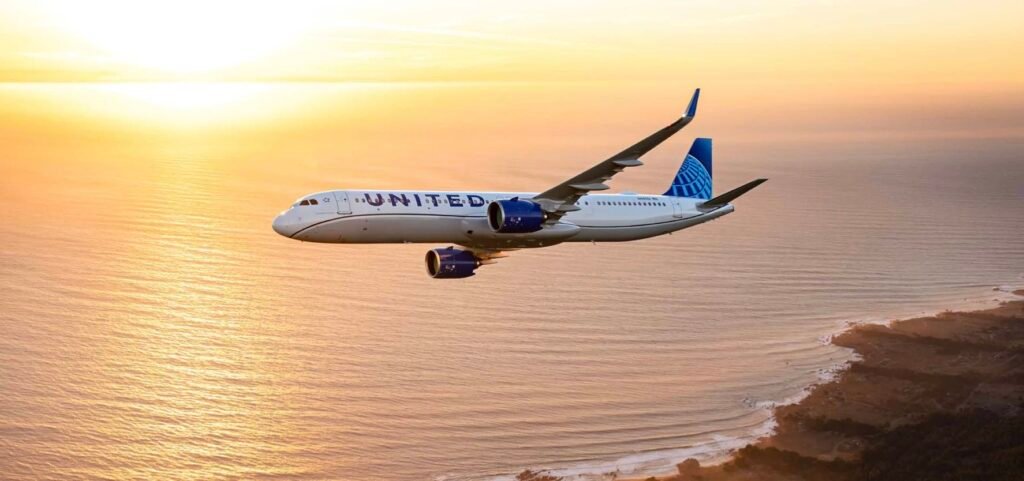
Still, there were some operational concerns. United’s capacity (measured in available seat miles) grew 5.9%, but traffic (measured in revenue passenger miles) increased only 4.5%. This imbalance led to a 1.1 percentage point drop in load factor, bringing it to 83.1% — a decent figure, but slightly below expectations.
More notably, the airline’s passenger revenue per available seat mile (PRASM) dropped 4.5%, and total revenue per available seat mile (RASM) declined 4%. These declines were attributed to competitive pricing pressures and route rebalancing efforts.
“This is a margin story,” said one aviation analyst. “Fuel was the cushion, and United used it wisely.”
Looking Ahead: Stability and Strategic Growth
Despite the revenue miss, Kirby struck a decidedly optimistic tone, pointing to a positive shift in demand that began in early July. He anticipates another inflection point in the airline industry’s supply by mid-August, potentially setting up a strong second half of the year.
United says it will continue investing in its premium product offerings, boosting its loyalty program engagement, and optimizing routes as part of its broader United Next growth strategy.

“We’re not just playing defense anymore,” Kirby added. “We’re building momentum — not only in bookings, but in the way our business is structured for resilience.”
Conclusion: Profitable Despite the Pressures
While many in the airline industry are still recovering from economic turbulence, United Airlines has shown an ability to adapt, diversify, and lean into operational efficiency. With multiple income streams firing — from cargo to premium and loyalty — and fuel prices creating unexpected tailwinds, United looks set to remain one of the most stable players in global aviation in the months ahead.www.dailyglobaldiary.com
United States
United Airlines Reports Soaring Demand and Rising Profits as Shares Surge (3%)
With improved geopolitics and rising bookings, United Airlines boosts outlook and plans more premium seats — is the aviation boom officially back?

United Airlines is flying high once again — literally and financially.
In a strong earnings update that surprised many on Wall Street, the Chicago-based airline revealed a significant recovery in booking trends, gaining pricing power for the first time since February. The result? A 3% surge in United’s stock price and a wave of optimism that may signal a broader resurgence across the airline industry.
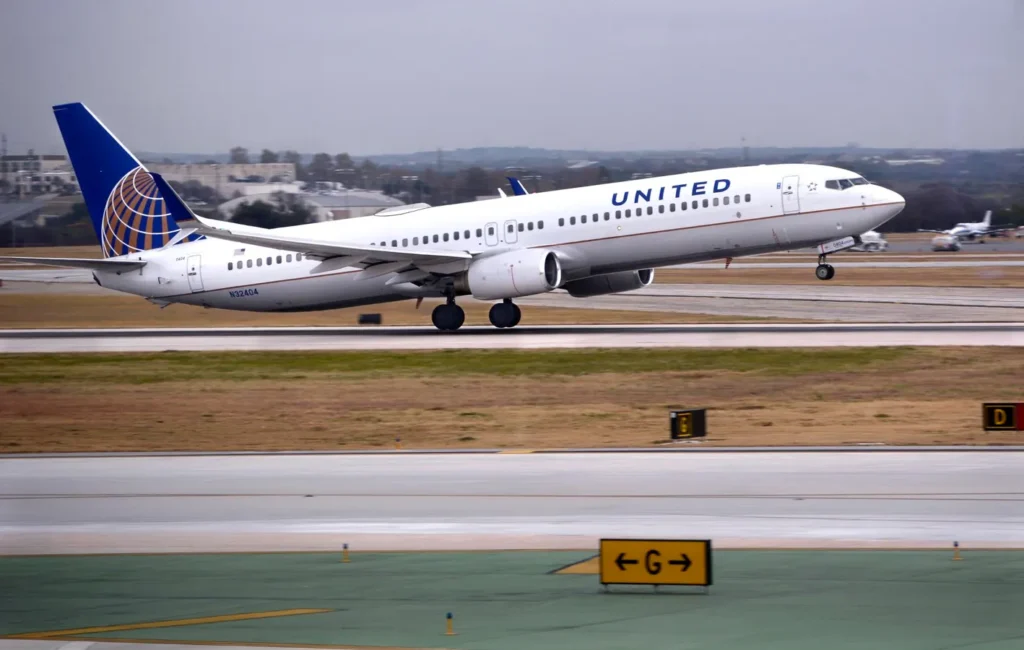
“Demand feels to us like it has inflected upward and is returning toward the normal trend line,” said Scott Kirby, CEO of United Airlines, during Thursday’s earnings call with analysts.
The company now forecasts an adjusted profit of $9 to $11 per share for 2025, and executives say even that may be a conservative estimate if current momentum continues.
What’s Fueling the Rebound?
Multiple tailwinds appear to be working in United’s favor. According to Kirby, recent improvements in geopolitical stability — particularly in the Middle East — and the passage of former President Donald Trump’s tax and spending bill have played a significant role in reviving business travel and consumer confidence.
“As uncertainty has declined, we’ve seen an improvement in book revenue, including a double-digit acceleration in business demand,” Kirby added.
The airline industry’s decision to cut unprofitable flights has also helped boost airfares, creating a supply-demand dynamic similar to what we saw last year, when ticket prices surged and airline stocks rallied.
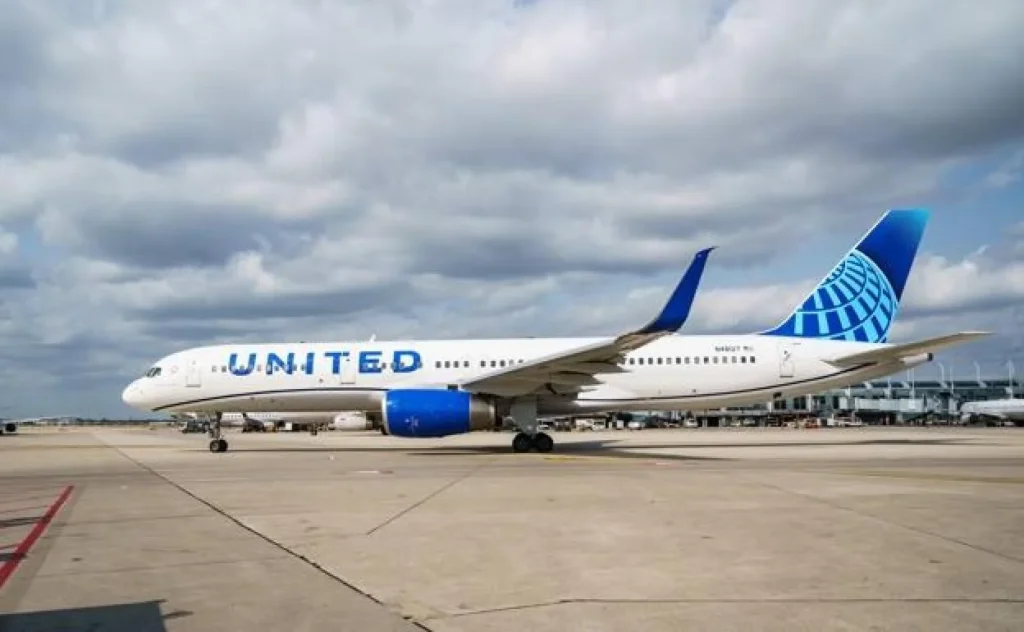
“From a supply perspective, it’s déjà vu all over again,” said Kirby. “This is almost the exact same setup that we had a year ago.”
Industry Peers Feel the Lift
United wasn’t the only winner on the board Thursday. Delta Air Lines, American Airlines, and Alaska Airlines also saw modest gains following United’s upbeat commentary, as investors gained confidence that the travel demand recovery is not just real — it’s accelerating.
Table of Contents
Premium Pays Off
One of the most interesting highlights from United’s earnings report was the continued growth in premium cabin revenue, which was up 6% year-over-year in Q2. The revenue per available seat mile (RASM) gap between premium and non-premium passengers grew by 6 percentage points, reinforcing the idea that travelers — especially business clients — are willing to pay more for comfort and flexibility.
Encouraged by these numbers, United plans to further invest in premium products and increase capacity in higher-margin routes. That means more lie-flat seats, exclusive lounges, and personalized services in the near future for frequent flyers.
Looking Ahead
While tariff uncertainties remain, Kirby expressed confidence that businesses have developed strategies to navigate them. Combined with rational flight scheduling and rising yields, United expects a strong second half of 2025, particularly if geopolitical risks continue to fade.
So what’s next for United?
With demand rebounding, pricing power returning, and premium products in the spotlight, the airline seems poised to outpace rivals in profitability — especially as it continues to diversify revenue streams and leverage its global network.
The airline that weathered pandemic turbulence is now cruising at a new altitude — and investors are paying attention.
Conclusion: A Rebound With Altitude
From business hubs like Chicago, New York, and San Francisco, to global gateways across the Atlantic and Pacific, United is aiming to be more than just a legacy carrier — it’s positioning itself as the premium global airline of the future.
As demand continues to build, and with business travel roaring back faster than anticipated, United is sending a clear message to investors and competitors alike: the skies are no longer uncertain — they’re full of opportunity.
Visit our site at for more news : www.dailyglobaldiary.com
Texas
Tears and Terror in Texas as 11 Camp Girls Vanish in Floods That Have Already Taken 70 Lives
As families pray and search teams race against time, Texas faces relentless rain and heartbreak with dozens still missing in the Hill Country disaster zone.

What began as a summer escape for dozens of girls at Camp Mystic along the Guadalupe River in Kerr County has turned into every parent’s worst nightmare. As of Sunday morning, eleven young campers and one counselor remain missing following the catastrophic floods that have swept through Central Texas, pushing the confirmed death toll to at least 70—with many still unaccounted for.
Texas Governor Greg Abbott described the flooding as “horrendously ravaging”, with water reaching the tops of cabins and entire communities submerged. “We won’t stop until we find every girl who was in those cabins,” the Governor vowed on social media, echoing the agony felt across the state.
“We’re kind of saturated now,” said Jason Runyen, a meteorologist with the National Weather Service (NWS), adding that more rain was expected in areas already overwhelmed by flooding. Flash flood watches remain in effect for millions across Central Texas, including Austin and the San Antonio region.
The devastating toll of the floods continues to rise:
- 59 deaths were confirmed in Kerr County alone, including 21 children.
- Additional fatalities occurred in Travis County (4), Burnet County (3), Kendall County (2), Tom Green County (1), and Williamson County (1).
- 13 people are still missing in Travis County, which includes the city of Austin.
Among the deceased is a 27-year-old man who died a hero, punching through a trailer window in a desperate effort to save his family. The heartbreak extends to the identification process as 22 victims, including four children, have yet to be identified.
Camp Mystic, long cherished for its rustic beauty and strong community, is now the site of a desperate search effort and an agonizing wait for hundreds of families and alumni. “The silence is unbearable,” said one parent waiting near the site.
This disaster has struck the heart of the Texas Hill Country, a region celebrated for its natural beauty but also nicknamed “Flash Flood Alley” for its vulnerability to sudden and violent downpours. What draws many to the scenic rivers and rolling hills has now turned lethal.
As search-and-rescue teams scour muddy waters and debris-strewn fields, the only constant is the hope that some of the missing may yet be found alive.
For now, Texas holds its breath, united in grief, hope, and resilience.

Liverpool vs Brighton, Chelsea vs Everton and More — Live Football Action as Premier League Drama Unfolds

Bryant Haines Set to Become One of College Football’s Highest-Paid Assistants After Indiana’s Dream Season

Sherrone Moore Fired and Arrested — Why Michigan Athletics Is Facing Its Biggest Culture Crisis Yet

League of Legends 2026 Swiftplay Gets a Massive Overhaul With Faster Games and Shocking Jungle Changes

Olivia Rodrigo Leaves Her Idol ‘Mind Blown’ With Stunning A Cappella Christmas Cover

1-Iran Issues Dire Warning to Israel and Defies Trump on Nukes: “We’re Ready to Strike Deep Inside”

Donald Trump’s net worth reveals the fortune behind the former US President and business mogul

Caitlin Clark Sidelined with Quad Strain, Set to Miss Two Weeks of WNBA Action

Elon Musk Breaks Ranks with Trump Over ‘Big, Beautiful’ Tax Bill

Golden Glory: Team USA Wins First Standalone Ice Hockey World Championship in 91 Years

Miss Jamaica Suffers Terrifying Fall Off Miss Universe Stage; Rushed to Hospital on Stretcher in Viral Video

Moana Live-Action Teaser Sparks Outrage as Fans Call Disney’s Move a ‘Clear Money Grab’ — What Went Wrong?

Ryan Gosling’s Project Hail Mary Trailer Stuns Fans with a Mysterious Alien Ally and a Mission That Could Save Earth

Apple delays Jessica Chastain thriller The Savant about domestic extremism after recent US violence

Avatar 3, Fire and Ash trailer reveals Jake Sully’s family facing terrifying new Na’vi enemies with deadly fire powers
-

 US News1 week ago
“She Never Made It Out…” Albany House Fire Claims Woman’s Life as Family Pleads for Help to Bring Her Home
-

 Entertainment6 days ago
XG Star Cocona Shares a Brave Truth at 20 — “I Was Born Female, But That Label Never Represented Who I Truly Am…”
-

 Entertainment6 days ago
Samba Schutte Reveals the Surprise Cameo in Pluribus That “Nobody Saw Coming”… and Why John Cena Was Perfect for the Role
-

 Entertainment1 week ago
Nika & Madison stuns global audiences as director Eva Thomas reveals why “resilience, not fear, drives Indigenous women on the run”
-

 Tech1 week ago
After Losing Over $70 Billion, Mark Zuckerberg Finally Admits His Biggest Bet Is “Not Working” – Meta Plans Massive Cuts to Metaverse Budget
-

 Sports5 days ago
Dodgers Stun MLB With Blockbuster Move, Sign Elite Closer Edwin Díaz to Three-Year, $69 Million Deal
-

 Entertainment4 days ago
Teyana Taylor wakes up to a Golden Globe call at 5 a.m.… ‘Am I dreaming right now?’ — and why she’s already begging Paul Thomas Anderson for more
-

 Politics5 days ago
“Billions and Billions Have Watched Them…” Trump Makes History Hosting Kennedy Center Honors and Praising Stallone, Kiss, and More