
Entertainment
Hollywood Takes On Big Tech: Inside Sorkin’s ‘The Social Reckoning’
The film invites audiences to reconsider Zuckerberg’s legacy through questions of corporate power and public responsibility.

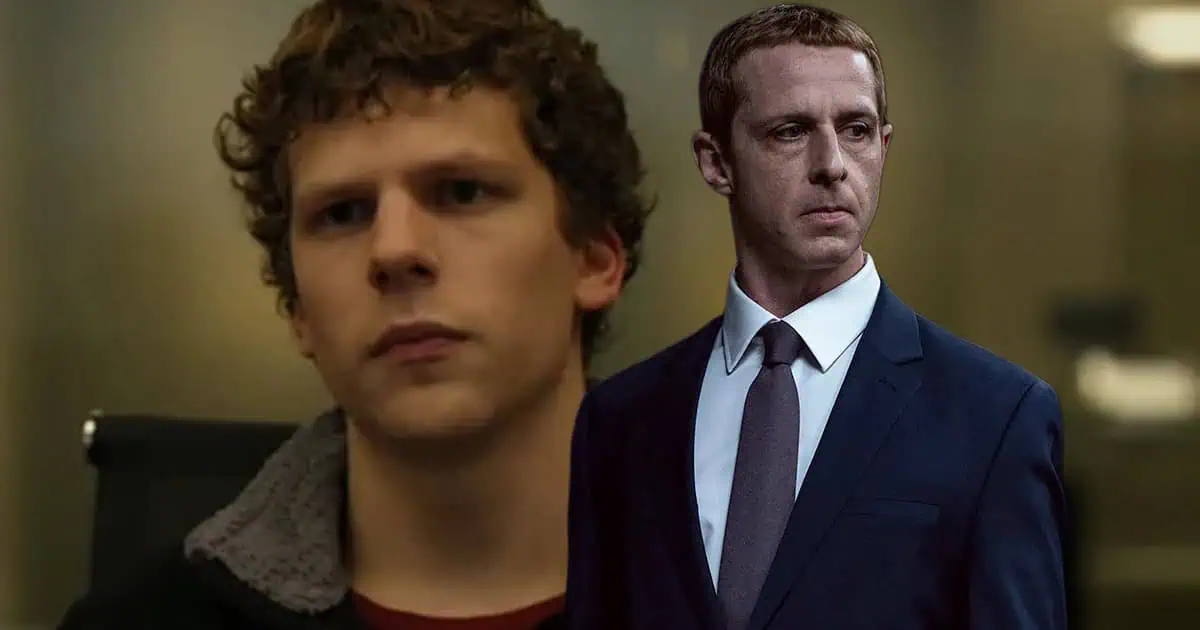
Sixteen years after The Social Network turned Facebook’s beginnings into gripping cinema, Aaron Sorkin is returning to the company with a different question: what happened after it became so powerful?
His new film, The Social Reckoning, centres on whistleblower Frances Haugen and journalist Jeff Horwitz. Sony Pictures describes it as a companion piece to the 2010 film, with a story built around an employee’s decision to expose closely guarded corporate information.
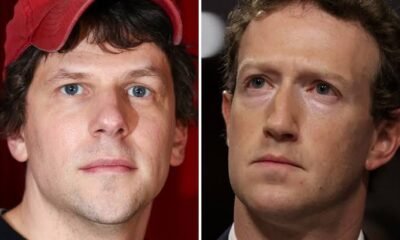
Jeremy Strong takes over the role of Mark Zuckerberg. The Hollywood Reporter characterises his portrayal as sharply villainous, particularly in its treatment of profit and responsibility.
ALSO READ : Emmy Nominations Announcement Gets a Star Twist… Liza Colón-Zayas & Jeff Hiller Set to Reveal 2026 TV Nominees
From Facebook’s beginnings to its public consequences
The film draws inspiration from The Facebook Files, the 2021 Wall Street Journal investigation based on internal documents disclosed by Haugen.
In an interview with Vanity Fair, Sorkin explained the distinction between his two films: “The Social Network was about how Facebook was invented, and The Social Reckoning is what it’s become.”
Mikey Madison plays Haugen, while Jeremy Allen White portrays Horwitz. Their characters bring the story’s attention to the people challenging the institution, rather than solely to the man who built it.
That change gives the premise its tension. An employee has information she believes the public should see. A reporter must investigate it. Across from them stands a company with the resources to defend itself.
A pointed screening location
The film’s first public preview also carried a striking connection to its predecessor.
The San Francisco Chronicle reported that Sorkin presented The Social Reckoning at the Cinemark Century Mountain View 16 on September 16, less than 10 miles from Meta’s headquarters. Current and former Facebook employees were among the audience.
It was the same theatre Zuckerberg had booked to watch The Social Network with friends and employees in 2010. The location brought Sorkin’s return to Facebook unusually close to the people and company behind the story.
A drama about the people who speak up
Sorkin both writes and directs the new film. Alongside its central trio, the cast includes Wunmi Mosaku, Betty Gilpin, Billy Magnussen and Bill Burr.
Sony’s synopsis places Haugen and Horwitz at the heart of a risky effort to reveal the social network’s secrets. It is a dramatisation inspired by real events; its characterisations should be understood as the filmmakers’ interpretation.
The premise makes accountability personal: who decides to speak, who listens, and what happens when challenging an employer becomes a public confrontation?
The Social Reckoning is scheduled to open in US theatres on October 9, 2026, according to Sony.








Entertainment
Does ‘Carrie’ Work Better as a Series? Mike Flanagan Revisits the Horror Classic
Summer H. Howell and Samantha Sloyan play the daughter and mother at the heart of King’s devastating story.
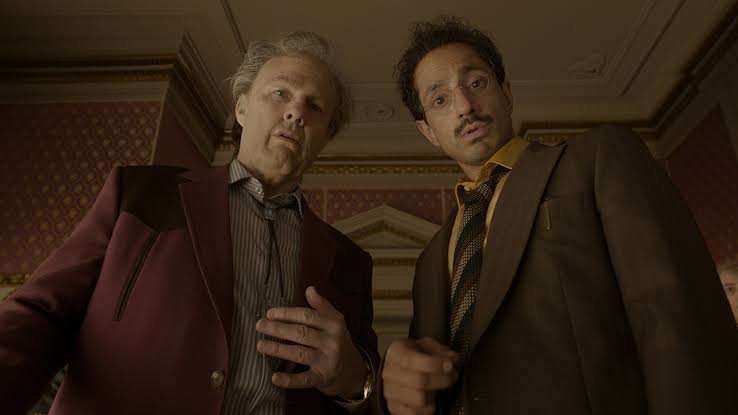
The frightening thing about Carrie has always been how much of its horror feels ordinary. Before the supernatural powers come the humiliation, the isolation and the adults who make a vulnerable teenager’s life unbearable.
Now, Mike Flanagan is bringing that story to Prime Video as an eight-episode series, scheduled to premiere on October 7, 2026. His adaptation revisits Stephen King’s 1974 novel with a contemporary setting and more room to explore the people surrounding its troubled protagonist.
The early critical discussion turns on a familiar problem for streaming adaptations: a longer story can offer greater depth, but does greater depth necessarily make it more compelling?
Summer H. Howell and Samantha Sloyan lead the new adaptation
Summer H. Howell plays Carrie White, the sheltered teenager whose telekinetic abilities emerge amid bullying and abuse. Samantha Sloyan portrays Margaret White, her controlling, religiously fanatical mother.
ALSO READ : Emmy Nominations Announcement Gets a Star Twist… Liza Colón-Zayas & Jeff Hiller Set to Reveal 2026 TV Nominees
The Daily Beast’s review praises the adaptation’s emotional approach, describing a Carrie who has more social confidence and a Margaret whose fears incorporate contemporary conspiracy thinking. It also highlights the use of a documentary-style framework to revisit the tragedy.
Those changes suggest an adaptation interested in the environment that produces Carrie’s suffering, as well as the suffering itself. The mother-daughter relationship remains central to that story: home offers Carrie another source of fear when she desperately needs protection.
The bullying follows Carrie onto her phone
One of the clearest updates involves social media harassment.
According to The Verge, an anonymous Instagram account becomes a tool for tormenting Carrie. The review argues that this digital dimension gives the familiar story renewed relevance.
The implication is unsettling. Cruelty that once depended on a school corridor or a crowded classroom can now travel further, gather an audience and remain visible long after the original incident.
For a story built around public humiliation, that is a meaningful change in setting rather than a merely cosmetic update.
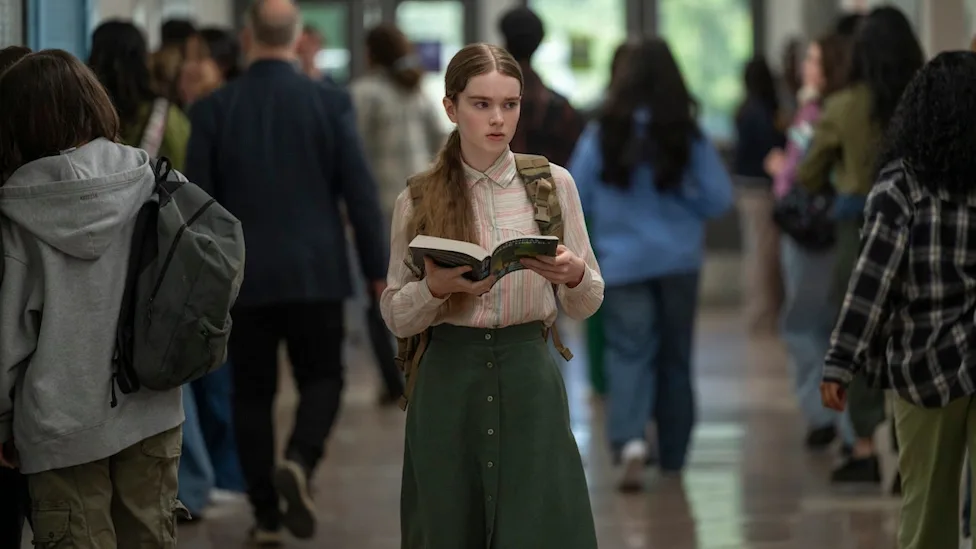
More time means more possibilities—and more scrutiny
The longer format also gives supporting characters greater attention. The New York Post’s review welcomes the additional development of figures including Margaret White and Chris Hargensen, while noting that some new material could divide viewers.
The Hollywood Reporter’s review headline, meanwhile, acknowledges Flanagan’s ability to expand the classic while questioning whether expansion was necessary.
That distinction matters. Explaining more about a character can enrich a tragedy; it can also interrupt its momentum. An adaptation of Carrie must balance the desire to understand its world with the pressure of a story moving towards catastrophe.
There are reservations about the supernatural additions, too. The Verge questions a subplot connecting Carrie’s abilities to King’s wider fictional universe, arguing that it weakens her agency.
A familiar tragedy with a contemporary question
Flanagan arrives with substantial experience adapting King, including Gerald’s Game and Doctor Sleep. His latest project gives him a different challenge: finding fresh emotional territory in a story many viewers already know.
Early reviews offer reasons for interest, particularly the modern treatment of bullying and the expanded character work. They also leave a question hanging over the series: will eight episodes bring viewers closer to Carrie, or put more distance between them and the devastating simplicity of her story?
Entertainment
‘Endgame’ Wins Again A Cinema Return Changes the All-Time Box Office Chart
The Marvel blockbuster moves back into first place as audiences revisit its superhero showdown.
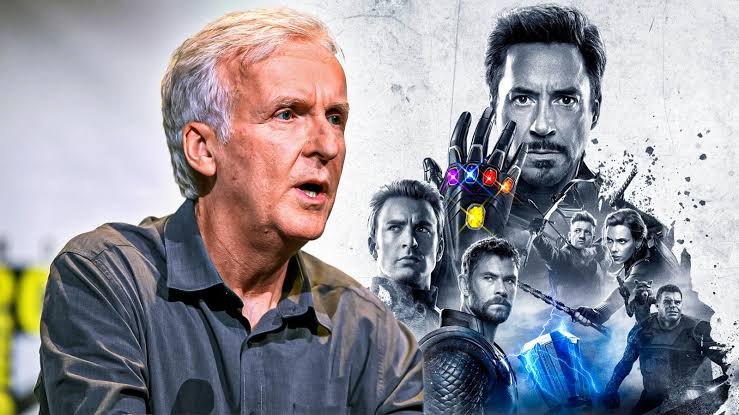
Seven years after its original release, Avengers: Endgame has unfinished business at the box office.
The Marvel Studios blockbuster has overtaken James Cameron’s Avatar to become the highest-grossing film worldwide once again. According to The Walt Disney Company’s October 4 announcement, Endgame now holds an estimated $2.9255 billion, narrowly ahead of Avatar’s $2.9237 billion. That puts just $1.8 million between two of cinema’s biggest hits.
The lead is small. The comeback, however, is substantial: a film released in 2019 has drawn enough fresh ticket sales to rewrite the all-time chart.
The ‘Encore’ release that tipped the balance
The latest theatrical run, titled Avengers Endgame: Encore, has earned $126 million worldwide, according to TheWrap. That includes $36.2 million in North America and $89.8 million from international markets—the extra business that pushed the film back into first place.
Audiences also had a reason to return beyond revisiting a familiar blockbuster. TheWrap reports that the reissue features a modified ending and three new scenes during and after the credits, connected to Avengers: Doomsday. The release therefore serves two purposes: bringing an established favourite back to cinemas and giving viewers a bridge to the next Avengers story.
ALSO READ : Emmy Nominations Announcement Gets a Star Twist… Liza Colón-Zayas & Jeff Hiller Set to Reveal 2026 TV Nominees
A rivalry with a history of reversals
This is another change of leadership in a box office contest that has lasted for years.
Endgame first displaced Avatar in 2019. Cameron’s science-fiction epic regained the crown following its Chinese re-release in 2021. Now, another theatrical return has swung the result in Marvel’s favour. Re-releases have become a decisive part of the competition, extending both films’ earning lives well beyond their original runs.
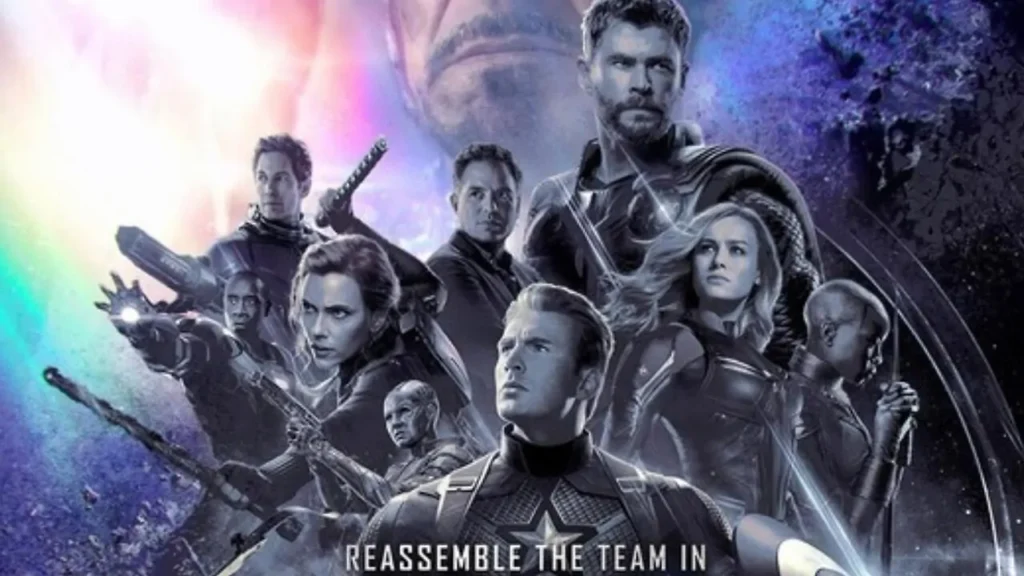
The distinction matters: this is the record for worldwide theatrical revenue without adjustment for inflation, including re-release earnings. It measures money collected rather than the number of tickets sold.
Why ‘Endgame’ matters to ‘Doomsday’
The timing gives Marvel’s comeback an added significance. Avengers: Doomsday is scheduled to reach cinemas on December 18, 2026, and Disney has positioned Endgame as an important foundation for that next chapter.
Explaining the connection, Anthony Russo said: “You really need to pick the story up from where you left it in Endgame.”
That makes this return more than a victory lap. A film remembered for closing a major chapter of Marvel’s story is now helping introduce the next one—and, along the way, has taken back Hollywood’s most closely watched box office title.
Entertainment
Amazon Stepped Away From ‘Artificial’: How the Film Found a Home at Neon
The director and his leading man discuss bringing a powerful tech figure to the screen—and fighting for their film.
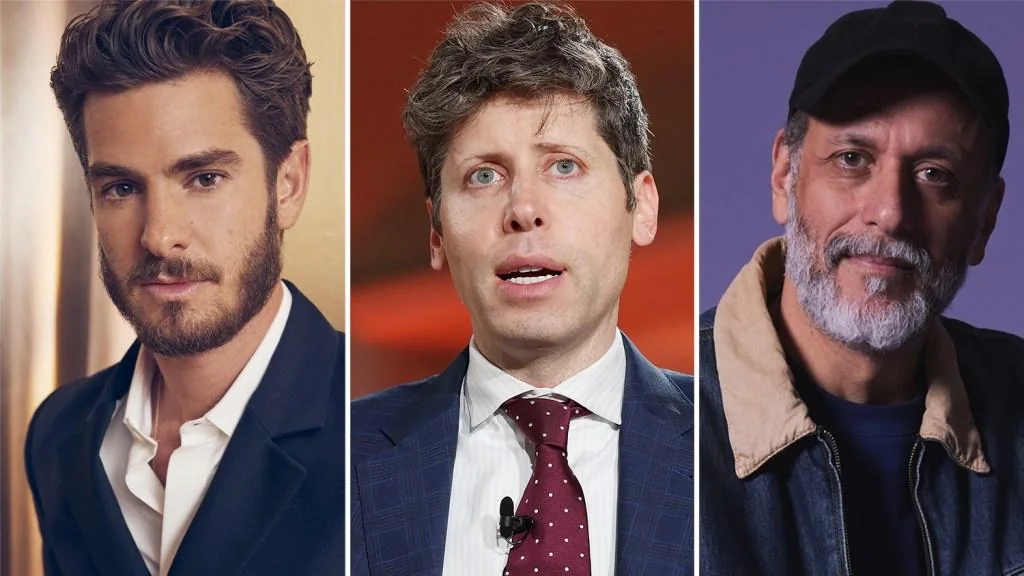
A film about powerful technology executives became caught up in the business relationships surrounding them.
Luca Guadagnino’s Artificial, starring Andrew Garfield as Sam Altman, was developed at Amazon MGM Studios. But when the studio decided against releasing it, the filmmakers faced an uncertain future. Neon eventually acquired worldwide theatrical distribution rights, giving the project a route to audiences.
The move attracted scrutiny because of Amazon’s financial relationship with OpenAI. TheWrap reported that Amazon’s withdrawal followed a $50 billion investment in the AI company through a cloud computing partnership.
That timing prompted questions about conflicting commercial interests. It does not, however, establish the reason for the studio’s decision. Amazon’s public explanation was that the film would benefit from another distributor, while expressing support for Guadagnino and helping the production find a new home.
ALSO READ : Emmy Nominations Announcement Gets a Star Twist… Liza Colón-Zayas & Jeff Hiller Set to Reveal 2026 TV Nominees
The people behind the technology
Artificial explores the relationship between Altman and OpenAI co-founder Ilya Sutskever, played by Yura Borisov. Its dramatic territory is the collision between idealism, ambition and the consequences of building increasingly powerful technology.
According to Vulture’s account, screenwriter Simon Rich developed the project with urgency, and filming took place largely in northern Italy. The production’s emphasis on personal relationships gives its technological subject a recognisably human centre: people making decisions whose consequences extend far beyond themselves.
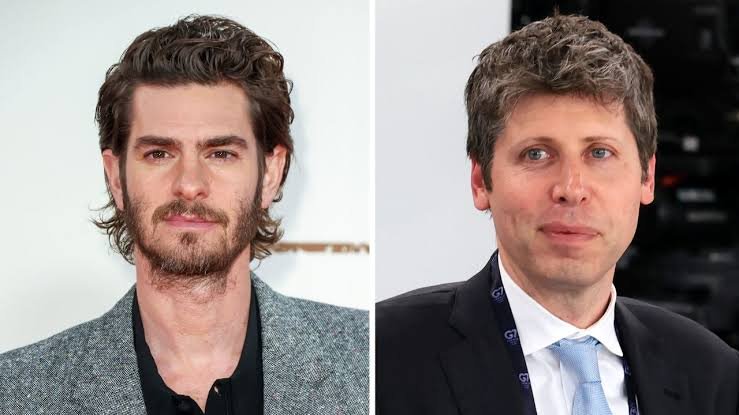
Garfield’s transformation went beyond appearances
In an interview with The Hollywood Reporter, Guadagnino described abandoning elaborate facial prosthetics after early tests. Garfield instead worked with Altman’s movements, posture and walk, supported by restrained makeup.
The director also chose to shoot on 35mm film, placing live performances at the centre of a story about artificial intelligence. Producer Jennifer Fox told the publication that the film’s assertions underwent extensive vetting. That remains the production’s account of its research process, rather than an independent endorsement of every dramatised scene.
A new home, and an unresolved question
Garfield welcomed the fact that Amazon allowed the film to move elsewhere. Fox, meanwhile, described the withdrawal as surprising after a collaborative production relationship.
Neon’s involvement resolved the immediate distribution problem. The wider question remains open: how freely can filmmakers examine influential companies when those companies also help finance and distribute entertainment? Artificial’s journey has made that question part of the conversation before audiences even enter the cinema.

Does ‘Carrie’ Work Better as a Series? Mike Flanagan Revisits the Horror Classic

‘Endgame’ Wins Again A Cinema Return Changes the All-Time Box Office Chart

Amazon Stepped Away From ‘Artificial’: How the Film Found a Home at Neon

Who Will Run Paramount–Warner Bros.? Inside Ellison’s Executive Picks

Hollywood Takes On Big Tech: Inside Sorkin’s ‘The Social Reckoning’

1-Iran Issues Dire Warning to Israel and Defies Trump on Nukes: “We’re Ready to Strike Deep Inside”

Sen. Elizabeth Warren Calls It a ‘Cesspool of Corruption’ — Here’s Why Senators Are Now Fighting Back Against the DOJ’s Live Nation Deal That Left Every Fan Betrayed…

Donald Trump’s net worth reveals the fortune behind the former US President and business mogul

Gucci bets on Demna to revive fading glamour as Milan fashion week opens with bold film surprise

“Tomás Rodríguez Net Worth 2025: Panama’s Gold Cup Goal‑Machine’s Surprising Fortune Revealed”

Miss Jamaica Suffers Terrifying Fall Off Miss Universe Stage; Rushed to Hospital on Stretcher in Viral Video

Moana Live-Action Teaser Sparks Outrage as Fans Call Disney’s Move a ‘Clear Money Grab’ — What Went Wrong?

Ryan Gosling’s Project Hail Mary Trailer Stuns Fans with a Mysterious Alien Ally and a Mission That Could Save Earth

Apple delays Jessica Chastain thriller The Savant about domestic extremism after recent US violence

Avatar 3, Fire and Ash trailer reveals Jake Sully’s family facing terrifying new Na’vi enemies with deadly fire powers
-
 Entertainment1 week ago
Sean Evans Opens Up on ‘Hot Ones’ Success, Keke Palmer Chemistry and the Viral DJ Khaled Moment
-
 Entertainment5 days ago
Anne Schedeen, ‘ALF’ Star and Beloved TV Mom, Dies at 77… Fans Remember Her Wit and Legacy
-

 Entertainment5 days ago
Toronto Film Festival Picks ‘Being Heumann’ as Its Opener… Is Sian Heder About to Deliver Another Awards Season Sensation?
-

 Entertainment1 week ago
Chuck Lorre Praised for Philanthropy, Then Challenges Both Sides of Politics
-
 Entertainment1 week ago
What Hollywood Knows About Leadership That Harvard Wants Students to Learn… The Surprising Power of Storytelling
-

 Entertainment1 week ago
A Charity Gala, a Rare Honour and a Speech With No Political Restraint
-

 Entertainment7 days ago
Chuck Lorre Honoured at Angel Awards, Then Takes Aim at Trump and Democrats
-

 Entertainment1 week ago
The actor discusses Guy Gardner’s corporate-backed superhero status and his expanding role in James Gunn’s DC Universe.