
Business
Wall Street Ends Mixed as Hopes Rise for U.S. Shutdown Deal — “Investors Breathe Cautious Relief Amid Economic Jitters”
The Dow Jones and S&P 500 edge higher while the Nasdaq slips, as Wall Street digests signals of progress in Washington’s shutdown stalemate and weighs the economic fallout from weak consumer sentiment.

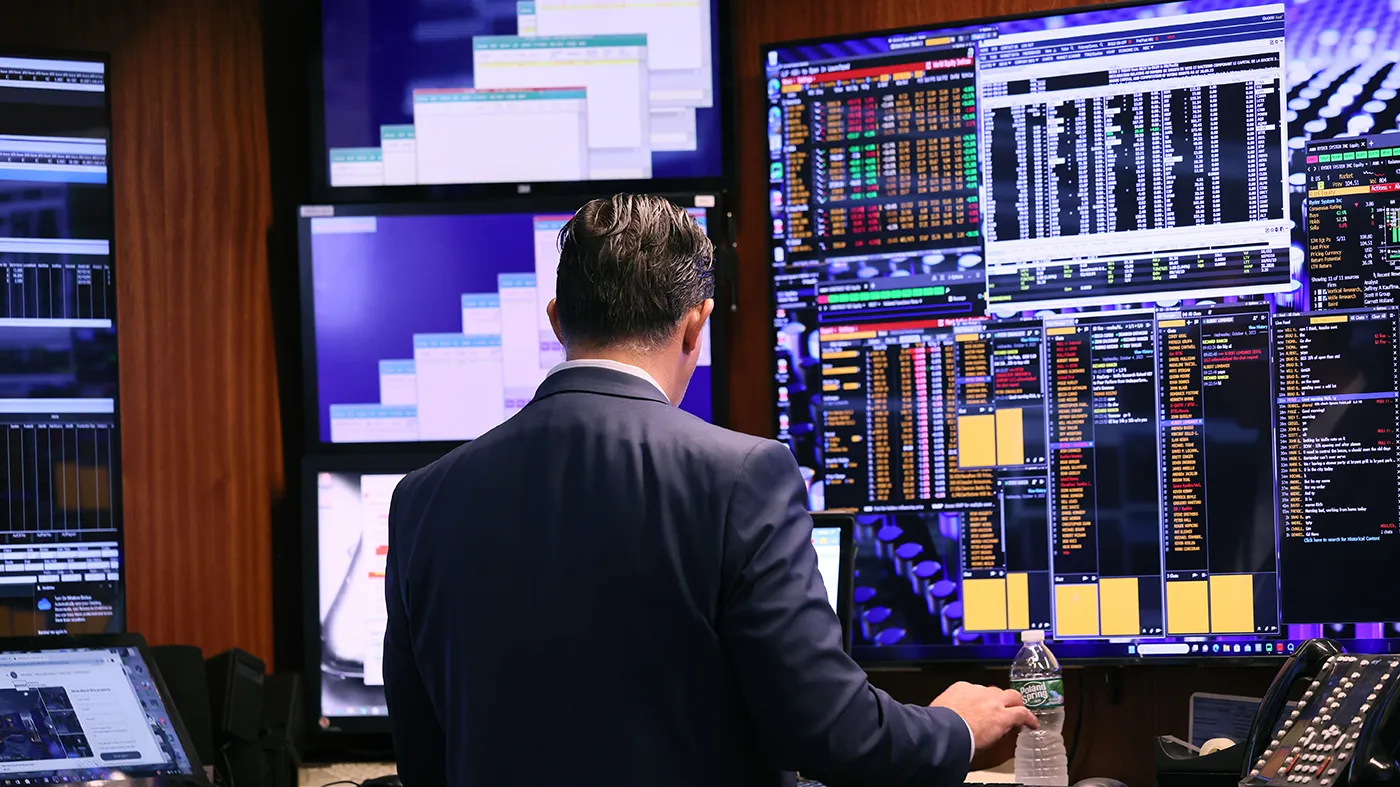
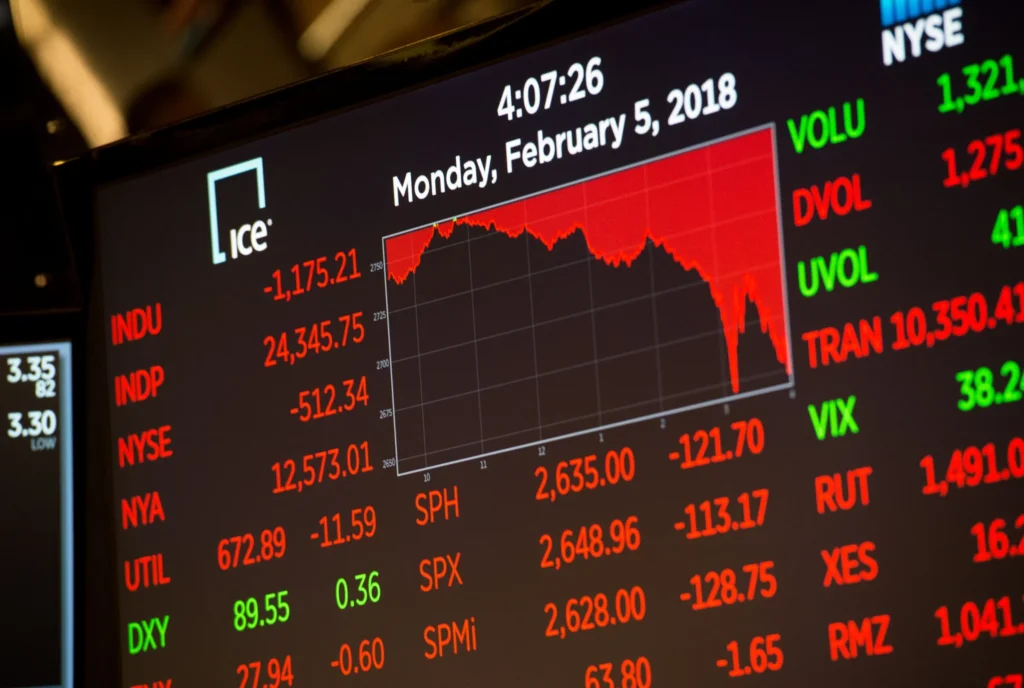
After a week marked by wild swings, Wall Street ended Friday’s session on a mixed note, with the Dow Jones Industrial Average and S&P 500 clawing back late gains while the Nasdaq Composite closed slightly lower. Investors appeared cautiously optimistic as reports emerged suggesting movement toward ending what has now become the longest federal government shutdown in U.S. history.
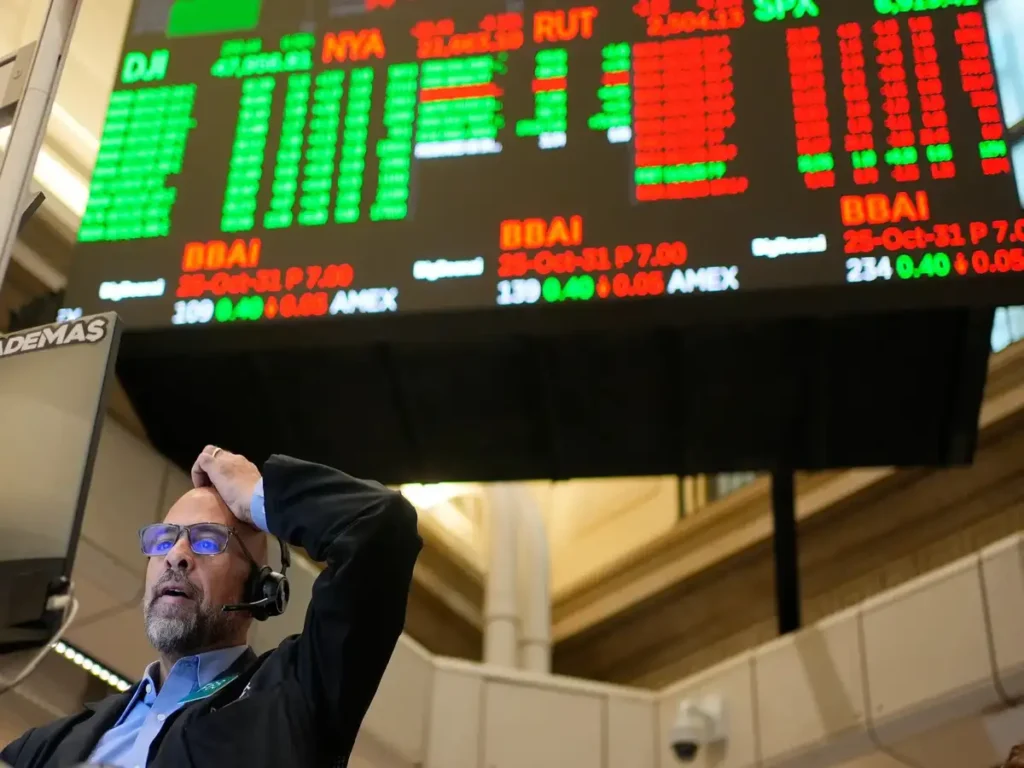
For much of the day, all three indexes were sharply lower, pressured by ongoing economic uncertainty, elevated tech stock valuations, and fading consumer confidence. But as word spread that congressional negotiators were inching closer to a resolution, sentiment turned around in the final hour of trading.
“A resolution to the shutdown will clearly improve sentiment, particularly at a time when the margin of error is narrow,” said Terry Sandven, Chief Equity Strategist at U.S. Bank Wealth Management. “Stocks are at all-time highs and valuations are elevated. If this gets resolved, that’s one less worry for investors.”
Nasdaq Lags as Tech Stocks Cool Off
The Nasdaq recorded its steepest weekly decline since early spring, dragged down by mounting concerns over artificial intelligence-related stocks that have driven much of 2025’s rally. Names like Nvidia, Microsoft, and Alphabet saw profit-taking after months of relentless gains.
Analysts say that while enthusiasm for AI remains strong, sky-high valuations are prompting investors to rotate into more defensive sectors like utilities and healthcare.
“Ups and downs and periods of consolidation are part of the normal ebb and flow of a bull market,” Sandven added, hinting that a cooling-off period for tech might actually be healthy in the long run.
Shutdown Fallout and Consumer Pessimism
Economic anxiety remains front and center as the shutdown’s ripple effects deepen. The University of Michigan’s Consumer Sentiment Index for November fell to its lowest level in more than three years. Participants’ views of current conditions hit a historic low, reflecting widespread frustration and uncertainty.
Since President Donald Trump began his second term in 2024, overall sentiment has declined nearly 30%, signaling eroding public confidence in the government’s ability to manage fiscal and political crises.
Economists warn that the shutdown — now well beyond the 30-day mark — has halted the release of critical economic data, leaving Federal Reserve policymakers “flying blind” as they navigate the delicate balance between price stability and full employment.
“Flying in the dark without economic data is weighing on investors,” said Ryan Detrick, Chief Market Strategist at Carson Group. “We know earnings were solid, but housing remains weak, and the lack of clarity adds another layer of risk.”
Market Outlook: Hope with a Side of Caution
Despite near-term worries, analysts believe Wall Street’s underlying fundamentals remain strong. Corporate earnings for the third quarter exceeded expectations, and the labor market — while showing signs of softening — continues to demonstrate resilience.
However, investors are bracing for volatility ahead. If the government impasse persists or inflation data surprises on the upside, markets could see another correction. Conversely, a quick political resolution could pave the way for a year-end rally as confidence returns.
“Investors have been remarkably patient,” noted Detrick. “But if Washington doesn’t deliver soon, that patience may wear thin.”
The Bigger Picture
The standoff in Washington underscores a recurring theme in U.S. markets: political gridlock weighing on financial stability. As history shows, once a compromise is reached, equities tend to rebound sharply. The question now is whether this time will be any different — or if prolonged dysfunction will test Wall Street’s resilience further.
For now, all eyes remain on Capitol Hill — and the ticking clock of America’s economic pulse.
For more Update http://www.dailyglobaldiary.com












Business
Target Apologizes and Pulls Halloween Costume After Backlash: “We Know We Got This Wrong”
The retailer removed the controversial children’s costume after critics said its design evoked blackface imagery, prompting Target to issue a public apology.
Target has apologized and removed a Halloween costume from sale after the product faced criticism over imagery that some observers said evoked blackface.
The controversy quickly drew attention online, with critics arguing that the costume’s design carried offensive racial imagery. In response, Target acknowledged the concerns and confirmed that the product had been pulled.
“We know we got this wrong, and we are deeply sorry,” the retailer said in its apology.
The company also said removing the costume was an important first step and that it would review how the product made it into its Halloween assortment.
Target pulls controversial Halloween costume
The controversy comes as Target ramps up its Halloween offerings for the 2026 season.
The retailer’s Halloween range includes costumes, decorations and other seasonal products aimed at families and children. The company has also promoted merchandise connected to popular entertainment franchises, making Halloween one of its major seasonal retail campaigns.
However, one costume quickly became the focus of criticism after shoppers and commentators raised concerns about its appearance.
Critics said the design evoked imagery associated with blackface, a historically racist practice in which Black people were caricatured through exaggerated appearance and makeup.
Rather than continue selling the disputed product, Target removed it from its assortment and issued an apology.
Target says it is looking into what happened
The retailer’s response did not stop with the product’s removal.
Target said it was looking closely at how the costume reached its stores and online assortment and what changes might be necessary to prevent a similar situation in the future.
That review could become particularly important because Halloween merchandise often involves visual jokes, cultural references and representations of different communities.
A product that appears harmless to one audience can carry a very different meaning to another.

Why the controversy matters for Target
The incident highlights the challenges major retailers face when developing and approving seasonal merchandise.
Companies such as Target operate enormous product ranges, with items often sourced from numerous designers, manufacturers and suppliers. The approval process therefore has to consider not only commercial appeal but also cultural sensitivity.
For consumers, the episode also shows how quickly concerns about a product can spread once it attracts attention online.
Target’s decision to remove the costume and apologize is likely to keep the focus on its internal review rather than on the continued sale of the disputed item.
Target’s Halloween business continues
Despite the controversy surrounding the costume, Target’s wider Halloween campaign remains underway.
The retailer has continued promoting Halloween decorations, costumes, candy and other seasonal products as it competes for consumers’ holiday spending.
For the company, however, the incident serves as a reminder that product selection can carry reputational consequences well beyond the price tag.
For now, the message from Target is straightforward: the controversial costume has been removed, the company has apologized, and it says it is examining how the mistake happened.
Business
Tesla Stock Jumps 5.1% After Robotaxi Approval in Las Vegas: Is Elon Musk’s Big Bet Finally Paying Off…?
Tesla shares climbed sharply after Clark County approved the company for up to 5,000 robotaxis in Las Vegas, while its electric Semi truck prepares for a European debut.

Tesla shares ended Friday, August 21, 2026, on a strong note, gaining 5.1% after investors received fresh news about two of the electric-car maker’s most closely watched projects — robotaxis and its all-electric Semi truck.
The stock’s rise came as Clark County, Nevada, approved Tesla to operate as many as 5,000 robotaxis in Las Vegas. At the same time, the company confirmed plans to showcase its electric Semi truck at an international transportation expo in Germany, ahead of its planned European expansion.
For investors, the announcements offered another glimpse into the businesses that Tesla hopes will eventually become major parts of its future.
Tesla gets approval for up to 5,000 Las Vegas robotaxis
The biggest immediate catalyst for Tesla stock was the approval in Clark County.
The decision allows Tesla, Waymo and Uber to begin operating robotaxi services in Las Vegas. Together, the three companies could eventually place as many as 8,000 robotaxis on local roads over the coming year.
Tesla received the largest individual allocation, with approval covering up to 5,000 vehicles.
The development is significant because Tesla has been pushing aggressively into autonomous transportation. The company believes robotaxis could eventually become a major business alongside its traditional vehicle operations.
For shareholders, however, the key question remains how quickly these services can move from regulatory approval and testing into large-scale commercial operations.
Electric Tesla Semi gets European spotlight
Tesla also provided investors with another reason to look beyond its current vehicle business.
The company plans to showcase its all-electric Tesla Semi at an international transportation expo in Germany as it prepares for a European launch.
The Semi is an important part of Tesla’s commercial-vehicle ambitions. A successful expansion into Europe could give the company another market for its electric heavy-duty truck while strengthening its position in the rapidly evolving commercial EV sector.
The European debut is therefore being watched closely, although the source material does not provide a specific date for the truck’s wider commercial rollout.

Why Tesla stock reacted so strongly
The reaction from investors was notable because both developments involve businesses that are still in relatively early stages.
Tesla’s robotaxi approval gives the company a larger regulatory opening in one of the world’s major tourism and transportation markets. Meanwhile, the European Semi plans suggest Tesla is continuing to expand its ambitions beyond passenger cars.
The S&P 500 and Nasdaq Composite both gained around 0.4% on Friday, meaning Tesla’s 5.1% rise significantly outpaced the broader market.
That indicates the company-specific news played an important role in the stock’s move.
Tesla’s biggest opportunity could also be its biggest risk
Despite the excitement, there is another side to the story.
Tesla’s valuation increasingly reflects expectations surrounding businesses that have not yet reached their full potential. Robotaxis, in particular, represent a major future opportunity, but large-scale autonomous transportation still faces regulatory, technological and operational challenges.
The same applies to the Semi. Although Tesla has already developed the vehicle, its long-term contribution to the company’s financial performance will depend on production, deliveries and successful expansion into new markets.
In other words, Friday’s announcement gives Tesla investors something to be excited about — but it does not automatically guarantee that these future businesses will deliver the enormous returns currently being anticipated.
A crucial moment for Tesla’s robotaxi ambitions
The Las Vegas approval nevertheless represents an important milestone for Tesla.
Having permission to operate thousands of vehicles gives the company an opportunity to test whether its autonomous driving ambitions can work at a much larger scale in a major US city.
If Tesla can successfully expand its robotaxi network, the potential business could eventually look very different from the company’s traditional car-selling model.
For now, investors appear willing to reward progress.
Tesla’s 5.1% gain on Friday shows that Wall Street is paying close attention whenever the company makes another move toward its autonomous future.
The bigger question is whether these announcements are the beginning of a genuinely new revenue engine for Tesla — or simply another round of expectations that will take years to turn into reality.
Business
Elon Musk’s $40 Trillion Debt Warning Returns to Spotlight as Bitcoin Surges: ‘Very’ Worried Ray Dalio Says…
Billionaire investor Ray Dalio has renewed concerns about a potential US debt crisis and suggested investors consider diversification into gold and a small allocation of Bitcoin.

The debate over America’s growing debt burden has taken another dramatic turn, with billionaire investor Ray Dalio warning that a serious debt crisis could arrive sooner than many expect. His comments have also brought renewed attention to earlier warnings from Elon Musk about the long-term sustainability of US government finances.
The discussion comes as Bitcoin continues to attract attention from investors looking for alternatives to traditional financial assets. While Musk has previously voiced strong concerns about the US dollar and government debt, Dalio’s latest warning has added fresh weight to the broader debate.
Ray Dalio Predicts Debt Crisis Could Come Sooner
Dalio, the founder of Bridgewater Associates, has warned that the United States could face a significant debt problem if its current fiscal path remains unchanged.
In a post on X, Dalio estimated that a debt crisis could potentially arrive within the next few years, while stressing that his prediction was uncertain.
His warning comes alongside calls for major changes to America’s fiscal position, including reducing government spending, increasing tax revenues and lowering interest rates.
Dalio has previously explored the long-term consequences of excessive debt in his book How Countries Go Broke: The Big Cycle, where he examines how debt accumulation can eventually put pressure on major economies.
Why Elon Musk’s $40 Trillion Warning Is Back in Focus
Elon Musk has repeatedly raised concerns about the scale of US government debt.
The Tesla and SpaceX chief has previously described America’s debt trajectory as unsustainable and warned that the country could eventually face serious financial consequences if spending continues to rise faster than government revenues.
The figures involved are enormous. Musk has previously highlighted America’s multi-trillion-dollar debt burden while discussing the possibility of a future financial crisis.
His comments have often been controversial, particularly when they involve the future of the US dollar and alternative assets such as Bitcoin.
However, Dalio’s latest remarks have shifted the conversation back toward the question of how investors should prepare if government debt and inflationary pressures become increasingly difficult to manage.
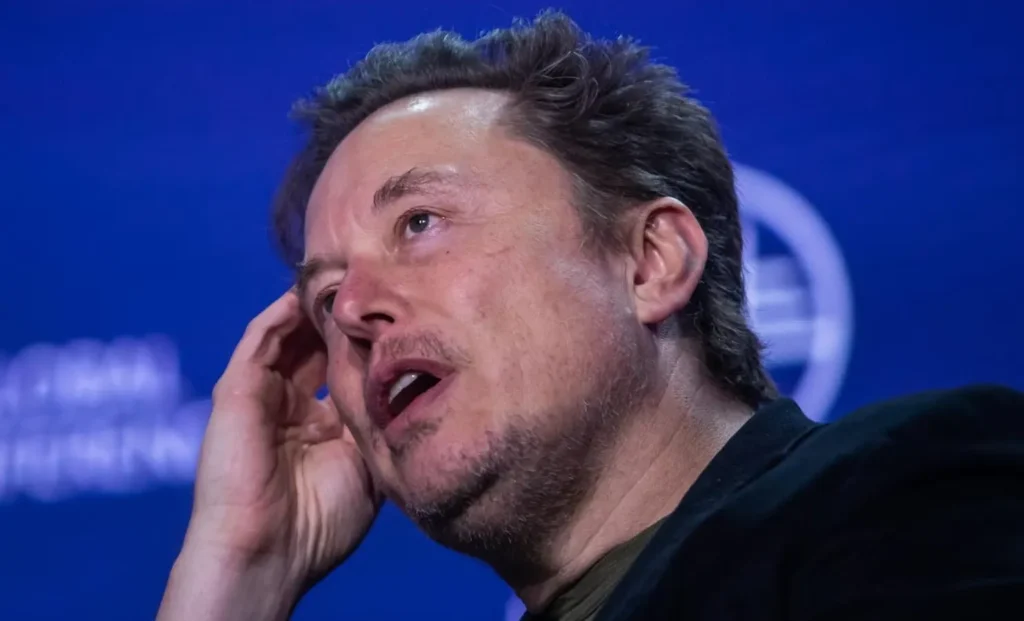
Dalio Suggests Gold and Bitcoin as Part of Diversification
Rather than suggesting that investors abandon traditional financial markets altogether, Dalio has advocated diversification across different asset classes and countries.
He has specifically highlighted gold and Bitcoin as assets that could play a role in a diversified portfolio.
Dalio suggested that holding a relatively small percentage of wealth in gold could potentially reduce overall portfolio risk. He also mentioned Bitcoin as another asset investors could consider, although his comments do not amount to a prediction that Bitcoin must rise indefinitely.
That distinction is important because Bitcoin remains a highly volatile asset.
Bitcoin Gets Another Boost From Macro Concerns
The renewed discussion about government debt comes at a time when Bitcoin is once again attracting strong market attention.
For crypto investors, concerns about government borrowing, currency depreciation and inflation can strengthen the argument for scarce digital assets. Bitcoin’s fixed supply is one of the primary reasons supporters describe it as a potential alternative store of value.
But the relationship between debt fears and Bitcoin prices is not straightforward.
Bitcoin can experience sharp price movements based on interest rates, liquidity, investor sentiment, regulation and broader economic conditions. A warning about the US debt situation therefore does not automatically mean that Bitcoin prices will continue rising.
What Could Trigger a US Debt Crisis?
Dalio’s concerns focus on the underlying imbalance between government spending, tax revenue and the cost of servicing debt.
If interest payments continue consuming a larger share of government resources, policymakers could face increasingly difficult choices.
Higher interest rates can make borrowing more expensive, while persistent deficits require the government to continue issuing debt.
For investors, the bigger concern is what happens if markets begin demanding significantly higher yields to hold US government debt. That could increase borrowing costs even further and create additional pressure on the economy.
Musk and Dalio Share a Similar Concern — But Not the Same Investment View
Although Elon Musk and Ray Dalio have both expressed concerns about America’s debt trajectory, their approaches are not identical.
Musk has been particularly outspoken about government spending and the long-term strength of fiat currencies.
Dalio’s approach is more focused on diversification and managing portfolio risk across different asset classes and geographic regions.
His latest comments therefore offer a more measured message to investors: rather than betting everything on one asset, diversify and reduce exposure to areas that could be particularly vulnerable during a debt crisis.
The Bigger Question for Investors
The most important takeaway is not necessarily whether a $40 trillion debt crisis arrives next year or several years from now.
The bigger question is how governments, central banks and investors respond to rising debt levels.
For investors, the warnings from Musk and Dalio serve as a reminder that debt, interest rates and currency stability can have a significant impact on financial markets.
Bitcoin may benefit from growing demand for alternative assets, but it also carries substantial volatility and risk. Gold, equities, bonds and other assets each respond differently to changing economic conditions.
For now, the debt debate is far from over — and with Bitcoin back in the spotlight, Wall Street and crypto investors will be watching closely to see whether concerns about America’s finances become a larger market story.

How ‘Avengers: Endgame’ Returned to Cinemas and Reclaimed Box Office Glory

Tom Cruise’s ‘Digger’ Faces a Tough Opening: Could ‘Verity’ Take the Lead?

‘Verity’ Could Outopen ‘Digger’: Why Tom Cruise Faces a Tough Contest

‘Endgame’ Returns to No. 1 ‘Avatar’ Loses Its Box Office Throne

Mark Zuckerberg Faces a New Hollywood Reckoning Why Aaron Sorkin’s Film Hits Closer to Home

1-Iran Issues Dire Warning to Israel and Defies Trump on Nukes: “We’re Ready to Strike Deep Inside”

Sen. Elizabeth Warren Calls It a ‘Cesspool of Corruption’ — Here’s Why Senators Are Now Fighting Back Against the DOJ’s Live Nation Deal That Left Every Fan Betrayed…

Gucci bets on Demna to revive fading glamour as Milan fashion week opens with bold film surprise

Donald Trump’s net worth reveals the fortune behind the former US President and business mogul

“Tomás Rodríguez Net Worth 2025: Panama’s Gold Cup Goal‑Machine’s Surprising Fortune Revealed”

Miss Jamaica Suffers Terrifying Fall Off Miss Universe Stage; Rushed to Hospital on Stretcher in Viral Video

Moana Live-Action Teaser Sparks Outrage as Fans Call Disney’s Move a ‘Clear Money Grab’ — What Went Wrong?

Ryan Gosling’s Project Hail Mary Trailer Stuns Fans with a Mysterious Alien Ally and a Mission That Could Save Earth

Apple delays Jessica Chastain thriller The Savant about domestic extremism after recent US violence

Avatar 3, Fire and Ash trailer reveals Jake Sully’s family facing terrifying new Na’vi enemies with deadly fire powers
-
 Entertainment1 week ago
Mark Zuckerberg Faces a New Hollywood Reckoning Why Aaron Sorkin’s Film Hits Closer to Home
-
 Entertainment1 week ago
How ‘Avengers: Endgame’ Returned to Cinemas and Reclaimed Box Office Glory
-

 Entertainment1 week ago
‘Avengers: Endgame’ Makes Box Office History Again With Cinema Comeback
-

 Entertainment1 week ago
The Unexpected Dating Challenge Emmy Rossum Faced During Shameless
-

 Entertainment1 week ago
Sorkin’s return to the subject connects a familiar Hollywood story with the continuing debate over technology’s influence.
-

 Entertainment1 week ago
From Amazon to Neon: The Fight to Bring ‘Artificial’ to Audiences
-

 Entertainment1 week ago
Mike Flanagan’s ‘Carrie’ Takes on a Classic: Is Bigger Really Better?
-
 Entertainment1 week ago
‘Verity’ Could Outopen ‘Digger’: Why Tom Cruise Faces a Tough Contest