
Politics
“Is Election Day a holiday?” The truth about November 4 that many Americans still get wrong
As Election Day 2025 arrives, many Americans are wondering if they’ll get the day off. Here’s what the law — and history — actually say about whether Election Day is a federal holiday in the United States.

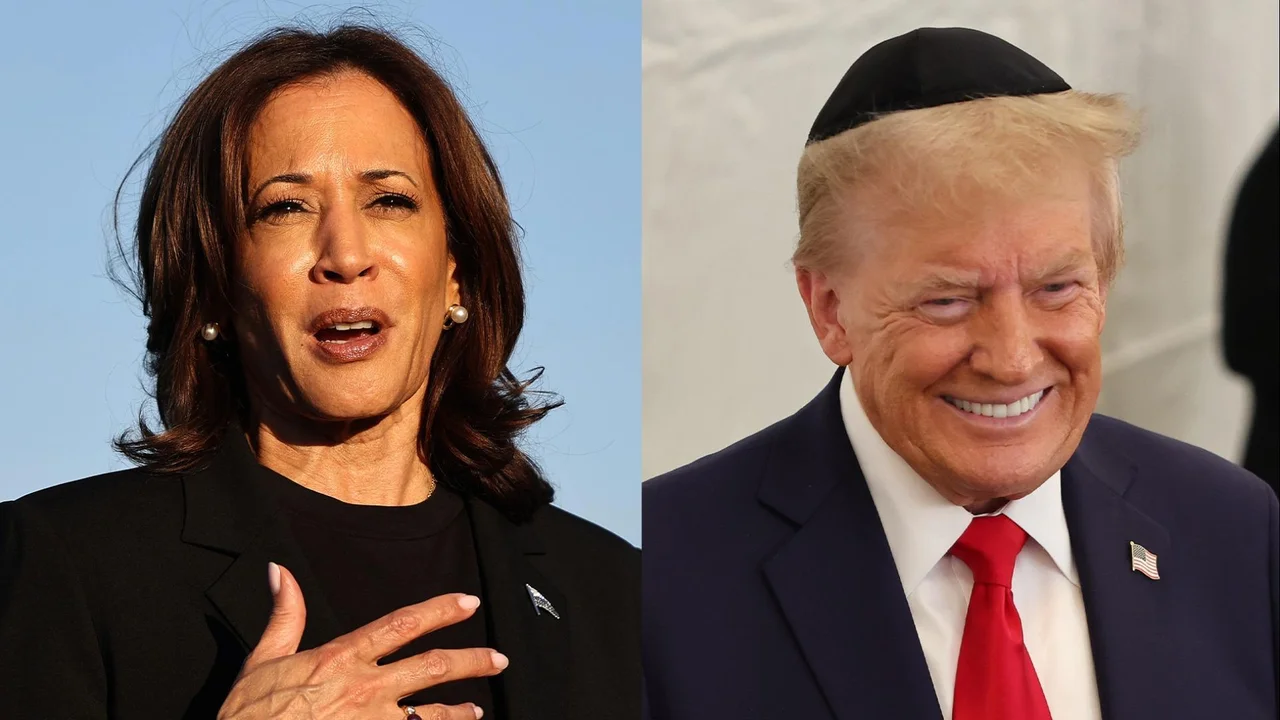
It’s Election Day 2025, and while this year’s ballot doesn’t include a presidential race, it’s still a major moment in American politics. Voters across New York City, New Jersey, Virginia, and California are heading to the polls to decide on key offices — including two governorships, a mayoral race, and an important redistricting measure that could reshape the political landscape ahead of next year’s Congressional midterms.
But as excitement builds, one question keeps popping up on social media and office group chats:
“Is Election Day a federal holiday?”
The short answer? No — at least not yet.
Why Election Day isn’t a federal holiday
Under current U.S. law, federal holidays are days designated by Congress and officially recognized by the federal government. On these days, non-essential government employees get paid leave, and federal offices, post offices, and many banks close their doors.
ALSO READ : Trump’s $300 Million White House Ballroom Sparks Uproar as Entire Fine Arts Commission Is Fired
Currently, there are 11 official federal holidays each year — from New Year’s Day and Independence Day to Thanksgiving and Christmas — plus one additional day every four years for the presidential inauguration.
However, Election Day is not one of them.
That means on Tuesday, November 4, 2025, banks, the New York Stock Exchange, major grocery stores, and retail chains will remain open. For most private-sector workers, it’s business as usual.
The long fight to make Election Day a holiday
The push to make Election Day a national holiday isn’t new. In fact, it dates back decades. Proponents argue that turning it into a federal holiday would give more Americans time to vote, especially those working long hours or juggling multiple jobs.
Several prominent political figures — including Bernie Sanders, Hillary Clinton, and Barack Obama — have supported the idea at different points, framing it as a way to strengthen democracy by increasing voter participation.
In recent years, even corporate America has taken notice. Companies like Patagonia, Twitter (X), and Nike have implemented policies giving employees paid time off to vote.
Still, efforts to make Election Day a federal holiday have repeatedly stalled in Congress, often along party lines. Critics argue that it would mostly benefit government workers — many of whom already have flexible schedules — while doing little for hourly wage earners. Others point out that early voting and mail-in ballots already give voters flexibility.
How states are taking matters into their own hands
While Election Day isn’t a federal holiday, several states have stepped up to make it one at the local level.
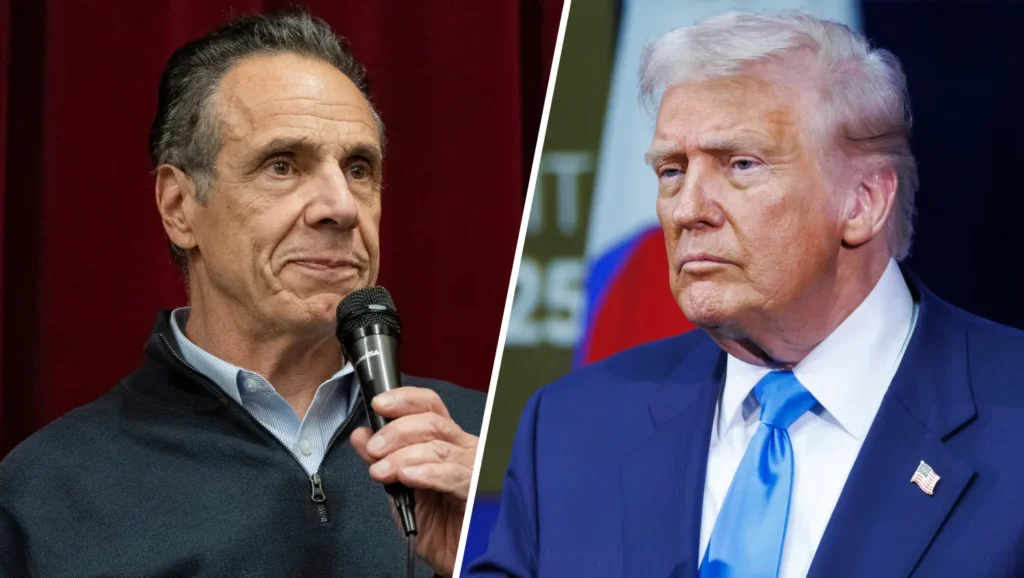
Currently, states like Delaware, Hawaii, Illinois, Kentucky, Louisiana, New York, and Virginia officially recognize Election Day as a public holiday, allowing state employees the day off.
For example, Governor Kathy Hochul of New York signed legislation reaffirming the state’s commitment to voter accessibility, ensuring that public offices close on Election Day to facilitate turnout.
Similarly, in Virginia, government offices remain closed, and schools often double as polling stations — a reminder that civic participation starts early.
Other states, such as California and New Jersey, have adopted policies requiring employers to give workers up to two hours of paid leave to cast their ballots.
How Election Day came to be
The United States has been holding Election Day on the first Tuesday after the first Monday in November since 1845, when Congress standardized the practice. Before that, states could choose their own election dates, leading to confusion and inconsistencies.
The November date was chosen for practical reasons: it avoided the harvest season for farmers and was far enough from winter weather that travel to polling stations remained manageable.
Today, the tradition continues — though the way Americans vote has evolved dramatically. From early voting and absentee ballots to digital registration, modern elections reflect a far more flexible and connected society.
Could this change in the future?
Many observers believe it’s only a matter of time before Election Day becomes a federal holiday. Public support for the idea is growing, especially among younger voters who see it as a necessary step toward broader participation.
President Joe Biden has expressed openness to the proposal, and several members of Congress, including Senator Amy Klobuchar and Representative Alexandria Ocasio-Cortez, have introduced bills advocating for it.
However, opponents continue to argue that the focus should be on expanding early voting, vote-by-mail, and automatic registration, rather than adding another paid day off for government employees.
Political analysts, such as Larry Sabato of the University of Virginia, note that while the symbolism of a national holiday would be powerful, the logistical and political hurdles remain significant.
What to expect on Election Day 2025
This year’s elections may not have the national spotlight of a presidential race, but they carry major implications. The outcomes in New York City, Virginia, and California will test both Democratic and Republican strategies heading into 2026.
For voters, the message is simple: don’t wait for a holiday — make time to vote. Whether by early ballot, absentee mail, or showing up at your polling place, your participation shapes the democracy that defines the United States.
And while Election Day may not be a federal holiday yet, the act of voting remains one of the most meaningful ways to celebrate the nation’s democratic spirit.
As one voter in Brooklyn put it, “It’s not about getting the day off — it’s about showing up.”







Politics
“Egg on Their Face”: DOJ’s Failed Trump Revenge Prosecutions Trigger Legal Embarrassment
From dismissed indictments to grand jury rejections, the Justice Department’s attempts to prosecute Trump critics have unraveled in dramatic fashion

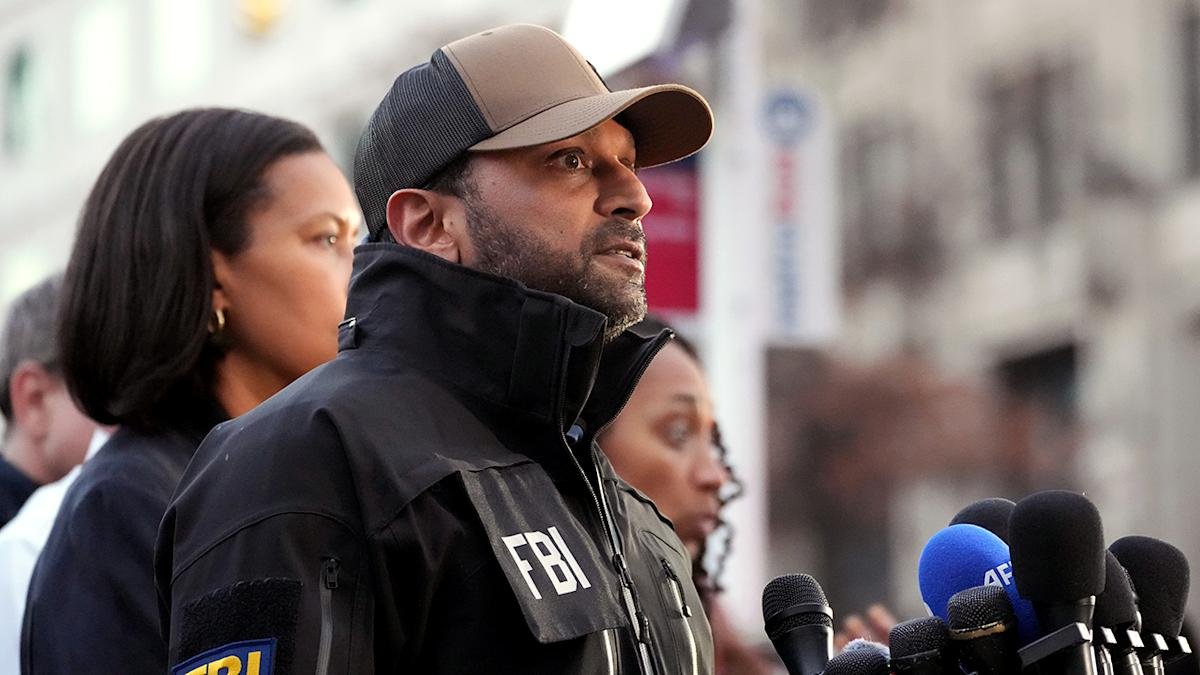
The U.S. Department of Justice (DOJ) is facing growing scrutiny and embarrassment after a string of high-profile failures tied to attempts to prosecute critics of President Donald Trump. What was meant to project strength and accountability has instead exposed deep cracks in federal prosecution strategy, according to legal experts and former prosecutors.
In a sequence of setbacks rarely seen in modern federal law enforcement, the DOJ has suffered dismissed indictments, blocked evidence, and, most strikingly, two federal grand juries refusing to indict one of its key targets — New York Attorney General Letitia James.
The most damaging blow came on December 11, when a second grand jury declined to issue charges against James, just days after another grand jury rejected the same effort. Her attorney, Abbe Lowell, called the outcome “unprecedented,” a sentiment echoed by multiple former federal prosecutors.
Earlier indictments against both James and former FBI Director James Comey were thrown out after a federal judge ruled that the special prosecutor who brought the cases, Lindsey Halligan, had been unlawfully appointed. Adding to the DOJ’s woes, a judge also blocked prosecutors from using key evidence against Comey, citing possible constitutional violations.
“This is an embarrassment,” said Neama Rahmani, a former federal prosecutor. “The last thing you want to be as a prosecutor is to be on the defensive — and that’s exactly what’s happening here.”
Trump’s Longstanding Vendettas
Trump’s hostility toward both Comey and James dates back years. He fired Comey in 2017 while the FBI was investigating potential links between Trump’s 2016 campaign and Russia. James later sued Trump in 2022 for civil fraud related to his real estate business, a case that deeply angered the former president.
In a September 20 social media post, Trump openly called for the prosecution of Comey, James, and Sen. Adam Schiff of California. While investigations were launched, results have been deeply underwhelming.
An NBC News report revealed that the DOJ’s investigation into Schiff has stalled entirely, with internal probes reportedly underway to examine how the case was mishandled. The DOJ has declined to comment on its performance in these matters.
Loyalty Over Experience
According to multiple reports, career prosecutors — including the interim U.S. attorney for the Eastern District of Virginia — had previously concluded the evidence against James and Comey was too weak to sustain charges. Trump publicly criticized and fired the U.S. attorney, later urging Attorney General Pam Bondi to appoint Lindsey Halligan, his former personal lawyer, despite her lack of prosecutorial experience.
Bondi acted swiftly, and Halligan secured indictments against both Comey and James. But the cases quickly collapsed.
In Comey’s case, Magistrate Judge William Fitzpatrick described a “disturbing pattern of profound investigative missteps,” including possible violations of the Fourth Amendment. Judge Cameron McGowan Currie, a Clinton appointee, ultimately dismissed all charges after ruling Halligan’s appointment unlawful.
“The prosecutions haven’t amounted to much in court,” said Carl Tobias, a law professor at the University of Richmond. “Except to harass them — which may have been the point.”
Grand Jury Rejections: A Rare Humiliation
Perhaps the most humiliating moment for the DOJ came when two separate grand juries rejected efforts to re-indict Letitia James. Legal experts stress how extraordinary this is.
Former federal prosecutor Mitchell Epner said he sought hundreds of indictments in his career and failed only once. “To go before two grand juries in a week and fail both times is humiliating and a repudiation of the prosecution,” he said.
Barbara McQuade, former U.S. attorney under President Barack Obama, was even more blunt:
“When prosecutors are selected based on loyalty rather than experience and integrity, this is the sort of garbage we can expect.”
Comey Case Still on Shaky Ground
The DOJ has suggested it may try to re-indict Comey, but significant hurdles remain. A federal judge has temporarily blocked prosecutors from using key evidence obtained during a separate 2017 investigation, ruling it may have been seized unconstitutionally.
Even if that hurdle is cleared, prosecutors face another problem: time. The original indictment was issued just days before the statute of limitations expired. Comey’s defense team argues that because the indictment was void, the government cannot rely on the usual six-month extension for refiling charges.
“The DOJ — and Halligan in particular — have egg on their face,” Rahmani said. “These are massive failures by the Justice Department.”
A Pattern of Collapse
What emerges from this saga is not just a legal defeat, but a broader institutional reckoning. From judicial rebukes to grand jury resistance, the DOJ’s efforts against Trump’s perceived enemies have collapsed under scrutiny.
Instead of delivering accountability, the prosecutions have raised uncomfortable questions about politicization, competence, and abuse of power — questions that now hang heavily over the Justice Department itself.
Politics
Bill Maher Sparks Fiery Clash With Ana Kasparian on Israel as Question About ‘That Dress’ Escalates Debate
“Where would you live in the Middle East… in that dress?” Bill Maher’s question turns tense as Ana Kasparian pushes back on his assumptions.
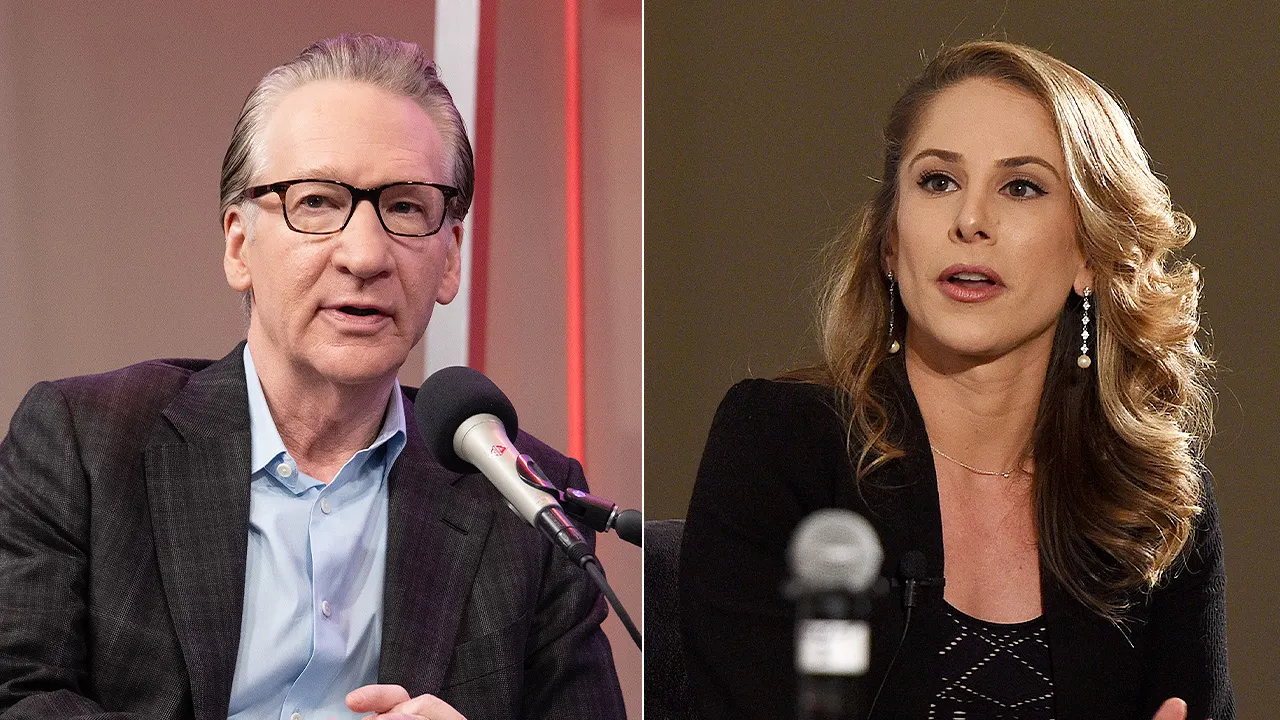
A casual, free-flowing podcast conversation quickly morphed into a heated geopolitical debate when comedian and commentator Bill Maher clashed with Ana Kasparian of The Young Turks during her recent appearance on his show, Club Random.
What began as a typical Maher-style discussion — part politics, part humor, part provocation — took a sharper turn when the topic shifted to the Middle East and whether a Western woman would feel comfortable living there.
Maher, who often stresses that he is not formally aligned with any political organization, posed a hypothetical question to Kasparian:
“Ana, you’ve got to go live in the Middle East… where would you live?”
He began listing countries one by one — Pakistan, Egypt, Jordan, Lebanon, Syria — adding commentary that blended sarcasm with dark humor. Kasparian immediately challenged his characterization of Syria, pointing out that parts of the country are still controlled by extremist groups.
ALSO READ : Kylie Jenner and Timothée Chalamet Steal the Spotlight in Matching Orange Looks at Marty Supreme Premiere
But Maher barreled on, even referencing Yemen “under Houthi rule,” before pivoting to Israel.
“Tel Aviv or the West Bank — Ramallah is wonderful in the fall, it gets lovely,” Maher said. What followed, however, pushed the discussion into far more personal territory.
Looking directly at Kasparian’s outfit, Maher asked:
“What city would you live in? What do you think you’d be comfortable in that dress?”
The remark noticeably shifted the tone of the conversation. Kasparian, known for her direct style on The Young Turks, pushed back firmly, suggesting Maher was oversimplifying deeply complex cultures and ignoring regional differences in laws, norms and women’s rights.
Maher defended his approach, insisting he was speaking about general realities in the region, not making personal judgments. But by this point, the exchange had clearly escalated beyond a casual hypothetical.
A Debate That Mirrors a Larger Global Divide
The tense moment reflected a broader, ongoing debate playing out across social media and political circles: How does the West talk about the Middle East without flattening its complexity?
Kasparian argued that sweeping generalizations — especially about women’s freedoms — feed into stereotypes that oversimplify lived experiences. Maher countered that refusing to acknowledge differences in legal and cultural realities is equally misleading.
As clips of the exchange circulated online, reactions were predictably polarized. Supporters of Maher praised him for “saying the uncomfortable truth,” while fans of Kasparian applauded her for challenging what they viewed as reductive framing.
Why This Exchange Matters
Both Maher and Kasparian command large online audiences. Maher hosts the long-running HBO show Real Time with Bill Maher, while Kasparian reaches millions through TYT’s digital platforms. Their confrontation — part humor, part philosophy, part geopolitics — reflects how discussions about Israel, women’s rights, and Middle Eastern politics have become flashpoints in Western media.
It also highlights something deeper: When conversations about geopolitics intersect with identity and personal appearance, the tension is almost inevitable.
And on Club Random, tension is something Maher rarely shies away from.
Politics
“If I Can’t Beat Jimmy Kimmel, I Shouldn’t Be President…” Trump Drops Bold Claim Ahead of Hosting Kennedy Center Honors
At a pre-event gathering, President Donald Trump predicted record-breaking ratings — and took a sharp swipe at late-night host Jimmy Kimmel.
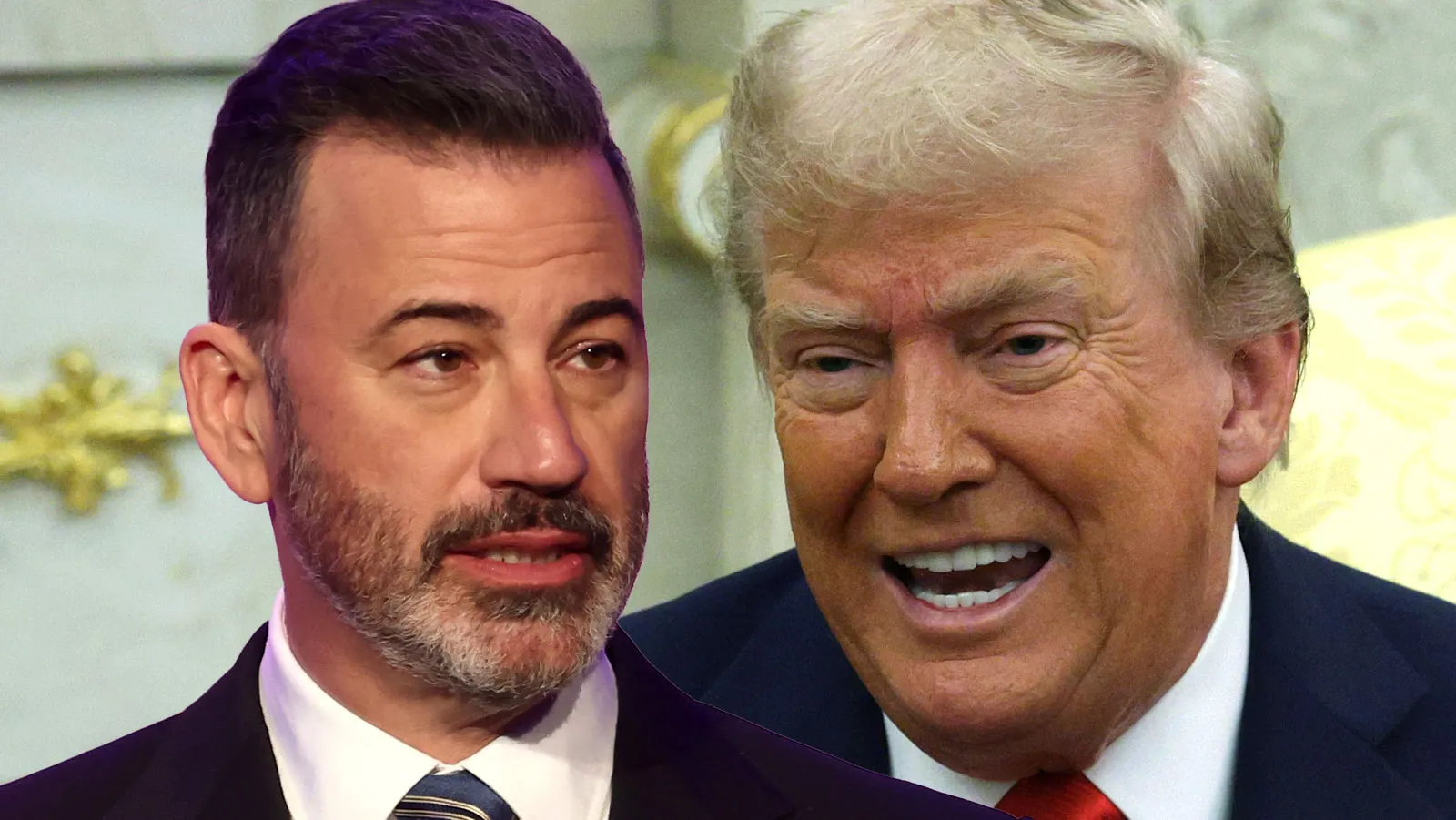
On the eve of hosting the prestigious Kennedy Center Honors, Donald Trump did what he often does best — make headlines before the event even begins. Speaking confidently at a pre-show gathering, Trump made several bold predictions about the upcoming ceremony, including one that instantly went viral.
“I believe this will be the highest-rated show they’ve ever done,” he told attendees, referring to the televised broadcast that will air later this month on CBS and Paramount+. With characteristic bravado, Trump added that while the awards have seen strong viewership in the past, “there’s nothing like what’s gonna happen tomorrow night.”
But it wasn’t his ratings prediction that raised eyebrows — it was his jab at late-night host Jimmy Kimmel.
“I’ve watched some of the people that host,” Trump said with a smirk. “Jimmy Kimmel was horrible. And if I can’t beat out Jimmy Kimmel in terms of talent, then I don’t think I should be president.”
ALSO READ : “Treylon Burks Stuns NFL With Gravity-Defying One-Handed TD… Fans Say ‘This Is His Odell Moment’”
Those in the room reacted with a mixture of laughter and surprise. Trump, who has a long-running feud with several late-night comedians, seemed to relish the moment. Though Kimmel has never actually hosted the Kennedy Center Honors, he did appear in the 2012 ceremony during a tribute to David Letterman — a detail Trump apparently glossed over.
Kimmel, meanwhile, has hosted the Academy Awards, the Primetime Emmys, and fronts his long-running late-night show Jimmy Kimmel Live! Yet Trump’s comment implied he expected comparisons to be inevitable — and not necessarily favorable from the mainstream press.
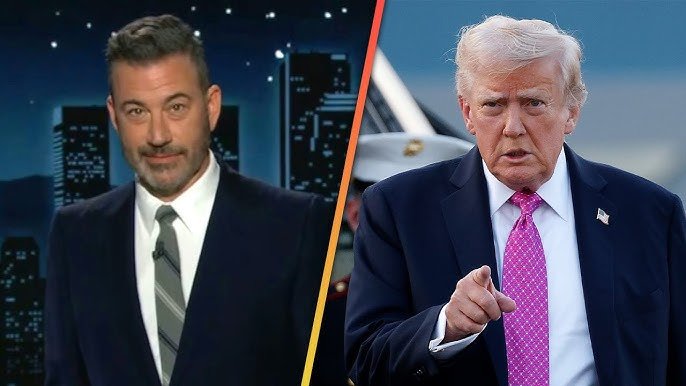
“We never had a president hosting the awards before,” Trump reminded the audience. “This is a first. I’m sure they’ll give me great reviews, right? They’ll say, ‘He was horrible. He was terrible.’ No, we’ll do fine.”
His tone shifted briefly toward sincerity as he thanked the attendees and spoke about the emotional weight of the upcoming evening.
“This is a special night,” he said. “By the end of these two days, you’re gonna say this is one of the most special days in your life.”
But even in the sentimentality, Trump couldn’t resist one more prediction — that several guests had already told him the day felt life-changing.
With Trump’s boldness, the anticipation around the Honors ceremony is higher than ever — not only for the performances, but to see just how the president’s first hosting attempt will unfold on stage. One thing is certain: the broadcast won’t lack drama, humor, or spectacle.

Liverpool vs Brighton, Chelsea vs Everton and More — Live Football Action as Premier League Drama Unfolds

Bryant Haines Set to Become One of College Football’s Highest-Paid Assistants After Indiana’s Dream Season

Sherrone Moore Fired and Arrested — Why Michigan Athletics Is Facing Its Biggest Culture Crisis Yet

League of Legends 2026 Swiftplay Gets a Massive Overhaul With Faster Games and Shocking Jungle Changes

Olivia Rodrigo Leaves Her Idol ‘Mind Blown’ With Stunning A Cappella Christmas Cover

1-Iran Issues Dire Warning to Israel and Defies Trump on Nukes: “We’re Ready to Strike Deep Inside”

Donald Trump’s net worth reveals the fortune behind the former US President and business mogul

Caitlin Clark Sidelined with Quad Strain, Set to Miss Two Weeks of WNBA Action

Elon Musk Breaks Ranks with Trump Over ‘Big, Beautiful’ Tax Bill

Golden Glory: Team USA Wins First Standalone Ice Hockey World Championship in 91 Years

Miss Jamaica Suffers Terrifying Fall Off Miss Universe Stage; Rushed to Hospital on Stretcher in Viral Video

Moana Live-Action Teaser Sparks Outrage as Fans Call Disney’s Move a ‘Clear Money Grab’ — What Went Wrong?

Ryan Gosling’s Project Hail Mary Trailer Stuns Fans with a Mysterious Alien Ally and a Mission That Could Save Earth

Apple delays Jessica Chastain thriller The Savant about domestic extremism after recent US violence

Avatar 3, Fire and Ash trailer reveals Jake Sully’s family facing terrifying new Na’vi enemies with deadly fire powers
-

 US News1 week ago
“She Never Made It Out…” Albany House Fire Claims Woman’s Life as Family Pleads for Help to Bring Her Home
-

 Entertainment6 days ago
XG Star Cocona Shares a Brave Truth at 20 — “I Was Born Female, But That Label Never Represented Who I Truly Am…”
-
 Entertainment6 days ago
Samba Schutte Reveals the Surprise Cameo in Pluribus That “Nobody Saw Coming”… and Why John Cena Was Perfect for the Role
-
 Entertainment1 week ago
Nika & Madison stuns global audiences as director Eva Thomas reveals why “resilience, not fear, drives Indigenous women on the run”
-

 Tech1 week ago
After Losing Over $70 Billion, Mark Zuckerberg Finally Admits His Biggest Bet Is “Not Working” – Meta Plans Massive Cuts to Metaverse Budget
-

 Entertainment5 days ago
“America Under a Dictatorship?” New ‘The Boys’ Trailer Teases a Terrifying Final Season… and Billy Butcher’s Last Stand
-

 Entertainment1 week ago
Guillermo del Toro earns Britain’s highest film honor: BFI Fellowship announced… the director says “This is the honor of a lifetime”
-

 Entertainment1 week ago
New York Film Critics Circle 2025 winners shock Hollywood: ‘One Battle After Another’ crowned Best Film… but the real surprises came elsewhere