
News
Deel Accuses Rippling of Spying and Impersonating Customers to Steal Trade Secrets
The ongoing legal battle between HR tech rivals takes a dramatic turn as Deel files fresh allegations against Rippling for corporate espionage

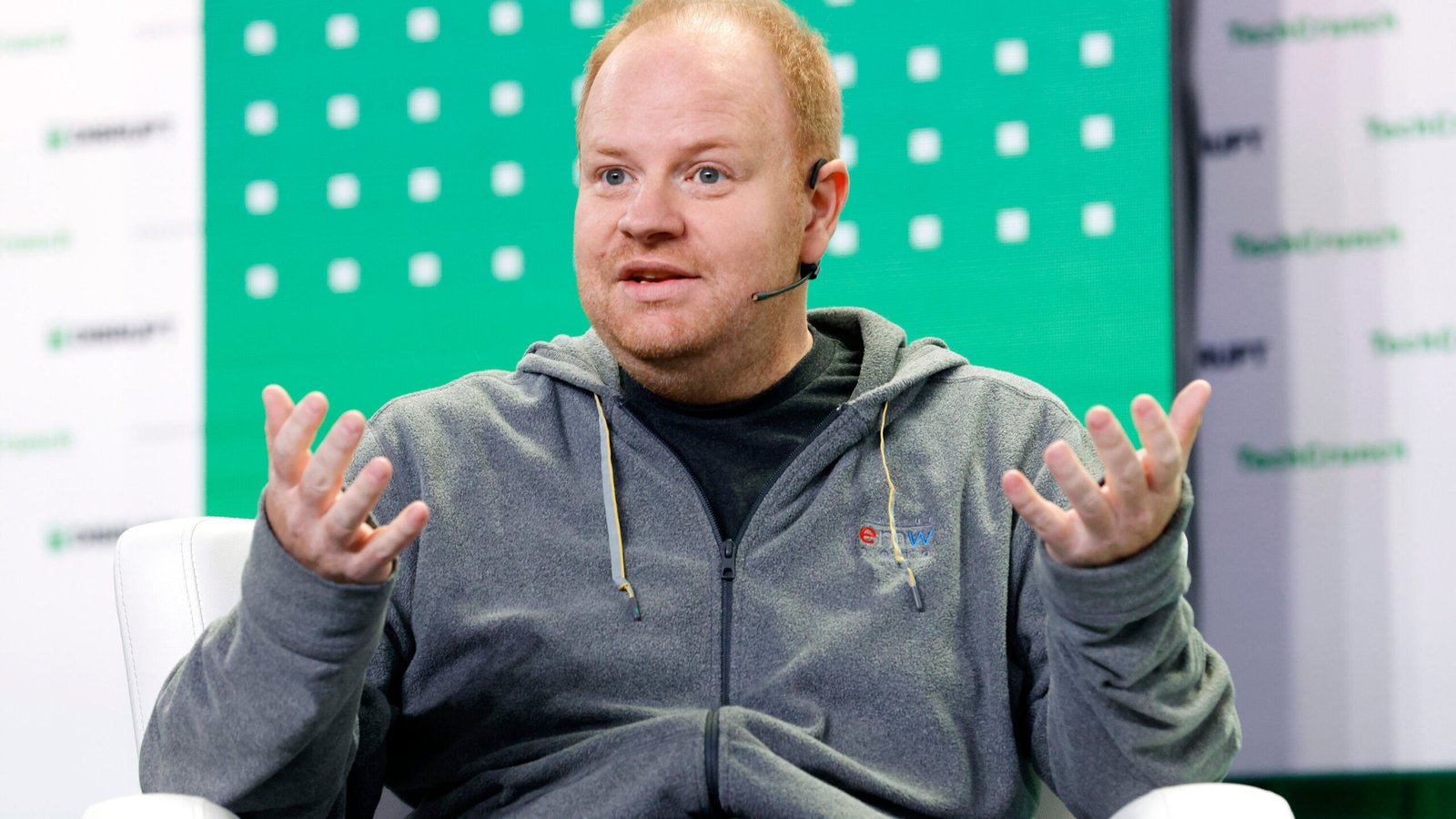
The high-stakes rivalry between HR tech companies Deel and Rippling has taken a fresh and dramatic turn with Deel’s latest legal filing. In its amended complaint, Deel has accused Rippling of corporate espionage, claiming that a Rippling employee impersonated a legitimate Deel customer to access sensitive company information and steal trade secrets. This accusation is a retaliation to Rippling’s own legal actions, which began in March after a Rippling employee testified in an Irish court, admitting to spying for Deel.
The legal battle, which could easily be mistaken for a Hollywood thriller, centers around what both companies are calling the theft of proprietary business information. Deel claims that Rippling’s employee, who held the title of Competitive Intelligence, spent six months impersonating a Deel customer to meticulously analyze and record the company’s global products and business operations. Deel’s complaint goes further, alleging that this was done for Rippling’s benefit, offering them an unfair advantage over their competitor.
Rippling’s legal team has strongly denied the allegations, and a spokesperson stated that the company is investigating how the alleged spying took place. According to Rippling, their commitment to fair competition and ethical standards remains unwavering, and they expect full compliance with their internal policies. Despite this, Deel has continued to push its case, accusing Rippling’s CEO, Parker Conrad, of seeking “petty revenge” on Deel and its investors. Deel’s amended complaint even explores Conrad’s history at Zenefits, claiming that his anger toward Andreessen Horowitz (Deel’s backer) may be behind Rippling’s aggressive tactics.
The drama deepens with allegations that Rippling planted false claims about Deel in the press and with U.S. regulators in 2023. This includes an investigation initiated by U.S. Senator Adam Schiff, who questioned Deel’s classification of workers, following a Business Insider investigation. Deel, however, denied any wrongdoing and suggested that the matter had been resolved through discussions with Schiff.
In addition to the corporate espionage claims, Deel’s latest filing has included a financial detail that paints a picture of the company’s continued growth. Deel revealed it has been profitable for years and is now generating over $1 billion in annual revenue, despite these legal challenges.
The case is further complicated by the fact that both companies have used their own methods of “spying” on one another. Rippling has accused Deel of hiring an employee to gather sensitive information from Rippling’s internal networks, with the individual admitting to leaking company data. Meanwhile, Deel has argued that Rippling’s tactics are more subtle, involving the impersonation of a customer to access confidential business practices.
With both sides locked in a legal standoff, this case could set a significant precedent in the tech industry on the limits of corporate intelligence and competitive behavior. How the courts rule on the issue of corporate espionage — especially in the age of customer data and product access — remains to be seen.













Tech
Mike Novogratz’s Galaxy Bets Big on AI at Texas Helios Campus $15B Revenue Expected
From Bitcoin mining to powering AI supercomputing, Galaxy Digital transforms its Helios facility with a mega-deal that could reshape the future of AI infrastructure.


Mike Novogratz’s Galaxy Digital has secured a staggering $1.4 billion loan facility to supercharge the expansion of its Helios AI datacenter campus in Texas, signaling a bold shift from cryptocurrency mining into the rapidly booming artificial intelligence sector.
The company announced on Friday that the loan—covering nearly 80% of construction costs for the first phase—will be supported by an additional $350 million in equity from Galaxy itself. According to filings with the U.S. Securities and Exchange Commission, the facility matures on August 15, 2028 and is secured against all assets of Galaxy Helios I, a subsidiary dedicated to the project.
At the heart of this expansion is a 15-year partnership with CoreWeave, a rapidly growing GPU cloud provider. CoreWeave, which recently made headlines with its $9 billion all-stock acquisition of Core Scientific, will lease up to 800 megawatts of capacity at the Helios site to fuel its AI and high-performance computing (HPC) operations.
Galaxy estimates this deal alone could generate more than $1 billion in annual revenue adding up to $15 billion over the contract’s lifespan. “The Helios campus is uniquely positioned to deliver the kind of scale AI companies now demand,” the company said, highlighting its vision to ultimately reach a 3.5 gigawatt capacity, leaving an additional 2.7 gigawatts available for other clients.
Crypto-native firms pivoting toward AI infrastructure as global capital flows increasingly chase artificial intelligence. Interestingly, both Galaxy Digital and CoreWeave share crypto roots—Helios was initially acquired for Bitcoin mining back in 2022, while CoreWeave itself began as an Ethereum mining outfit before evolving into an AI powerhouse.
The move also illustrates what many analysts describe as a convergence between digital assets infrastructure and AI computing power, a pairing that could shape the next era of digital economies.
For Novogratz, who has long been known for bold bets in finance and technology, this could mark his most significant pivot yet. With Wall Street pouring billions into AI compute, his gamble on Helios may position Galaxy Digital as a key player in the AI infrastructure race.
News
Josh Giddey’s Three-Word Message To Thunder After NBA Finals Win Leaves Fans Emotional: ‘Congrats To The Guys…’
After watching his former team lift the 2025 NBA Championship trophy, Josh Giddey’s simple yet heartfelt Instagram story proves some bonds never fade.


Josh Giddey might wear a Chicago Bulls jersey now, but part of his heart clearly still beats for Oklahoma City.
Just minutes after the Thunder clinched the 2025 NBA Championship, defeating the Indiana Pacers 103-91 in an electrifying Game 7, Giddey surprised fans with a rare and touching gesture: he posted a simple message on his Instagram story — “congrats to the guys”.
For many Thunder fans, those few words carried the weight of three seasons of memories. Giddey, who was traded last summer in a high-profile deal that brought defensive ace Alex Caruso to OKC, had always been a fan favorite for his selfless style of play and humble demeanor.
Interestingly, while Giddey thrived in Chicago — averaging an impressive 14.6 points, 8.1 rebounds, and 7.2 assists per game — it was Caruso’s defensive grit that proved pivotal in guiding Oklahoma City to its first NBA title in over a decade. Some fans even joked online that the trade was the final puzzle piece.
Despite being moved out of OKC’s long-term vision, Giddey’s stats this season put him in elite company. As the Bulls proudly highlighted, he was one of only three players — alongside LeBron James and Nikola Jokic — to notch over 1,000 points, 500 rebounds, and 500 assists. At just 22, Giddey’s best days are undoubtedly ahead.
Fans on social media were quick to react. One popular post on X summed up the sentiment: “I can’t imagine anyone more motivated than Josh Giddey right now… your old team wins a title right after trading you — now prove them wrong!”
While the Thunder celebrate a championship summer, and Caruso enjoys hero status, Giddey seems focused on carving out his own legacy in Chicago. But his understated message shows there’s no bitterness — just love for old teammates who achieved the dream.
As the offseason begins, one thing is certain: Josh Giddey’s story with Oklahoma City isn’t just a chapter — it’s an ongoing saga that fans will watch with pride, no matter which uniform he wears.
Australia Government
Big Changes Are Coming to Buy Now Pay Later in Australia and It Could Hit Your Wallet Hard
New government regulations aim to rein in Buy Now Pay Later services like Afterpay and Zip — here’s what it means for your spending habits

In a move set to reshape how millions of Australians shop online and in-store, the federal government has announced sweeping new regulations targeting the booming Buy Now Pay Later (BNPL) sector. Services like Afterpay, Zip, and Klarna—once the darlings of easy consumer credit—will soon face tighter rules that align them more closely with traditional credit products.
Under the proposed changes, BNPL platforms will be regulated under the Credit Act, meaning they’ll need to run proper credit checks, provide clearer disclosures, and meet responsible lending obligations—just like banks and credit card providers. This marks a significant departure from the current self-regulation model that critics say allowed young consumers to rack up debt with minimal oversight.
According to Financial Services Minister Stephen Jones, the overhaul is designed to protect Australians from falling into debt traps. “Buy Now Pay Later should not mean Buy Now Suffer Later,” he said in a public statement. The Minister emphasized that while the government isn’t looking to ban BNPL services, it is committed to ensuring they are “safe, transparent, and fair.”
The reforms come amid growing concern over the financial stress linked to BNPL usage, especially among Australians aged 18 to 35. Reports from consumer advocacy groups like CHOICE and Financial Counselling Australia indicate that many users are missing payments, incurring late fees, or using multiple BNPL platforms at once—creating a snowball effect of invisible debt.
BNPL providers have responded with cautious support. Afterpay and Zip issued statements acknowledging the need for consumer protections but warned that over-regulation could hinder innovation and limit access for low-risk users. The sector has grown explosively in the past five years, now used by over 7 million Australians, and plays a major role in the retail economy.
So what does this mean for you? If you’re someone who relies on BNPL for everyday purchases or big-ticket items, expect more rigorous checks before approval. Your ability to spend using these services may decrease, but you’ll also benefit from greater transparency and accountability. For others, these changes could spell the end of impulse-driven, interest-free shopping sprees.
The new laws are expected to be introduced to Parliament later this year and could take effect as early as 2026. In the meantime, Australians are being urged to review their BNPL usage, read the fine print, and prepare for a shift that might bring both pain and protection to how they manage their money.

How ‘Avengers: Endgame’ Returned to Cinemas and Reclaimed Box Office Glory

Tom Cruise’s ‘Digger’ Faces a Tough Opening: Could ‘Verity’ Take the Lead?

‘Verity’ Could Outopen ‘Digger’: Why Tom Cruise Faces a Tough Contest

‘Endgame’ Returns to No. 1 ‘Avatar’ Loses Its Box Office Throne

Mark Zuckerberg Faces a New Hollywood Reckoning Why Aaron Sorkin’s Film Hits Closer to Home

1-Iran Issues Dire Warning to Israel and Defies Trump on Nukes: “We’re Ready to Strike Deep Inside”

Sen. Elizabeth Warren Calls It a ‘Cesspool of Corruption’ — Here’s Why Senators Are Now Fighting Back Against the DOJ’s Live Nation Deal That Left Every Fan Betrayed…

Gucci bets on Demna to revive fading glamour as Milan fashion week opens with bold film surprise

Donald Trump’s net worth reveals the fortune behind the former US President and business mogul

“Tomás Rodríguez Net Worth 2025: Panama’s Gold Cup Goal‑Machine’s Surprising Fortune Revealed”

Miss Jamaica Suffers Terrifying Fall Off Miss Universe Stage; Rushed to Hospital on Stretcher in Viral Video

Moana Live-Action Teaser Sparks Outrage as Fans Call Disney’s Move a ‘Clear Money Grab’ — What Went Wrong?

Ryan Gosling’s Project Hail Mary Trailer Stuns Fans with a Mysterious Alien Ally and a Mission That Could Save Earth

Apple delays Jessica Chastain thriller The Savant about domestic extremism after recent US violence
