
Entertainment
BAFTA Games Awards 2026 Longlists Drop: Fans Stunned as ‘Indiana Jones and the Great Circle’ and ‘F1 25’ Race Ahead… What Missed the Cut?
A record 64 titles make the longlist as BAFTA promises a “celebration of creative excellence”—but the competition this year is fiercer than ever.


The global gaming community woke up to excitement — and a few surprises — as the BAFTA Games Awards unveiled its 2026 longlists, spotlighting 64 standout titles competing across 17 categories. The full awards ceremony is set for April 17 in London, marking one of the biggest celebrations of game development talent anywhere in the world.
This year’s longlist features a diverse mix of blockbuster franchises, indie breakthroughs, and genre-defining sequels. Leading early conversations are titles like Indiana Jones and the Great Circle, developed under the legendary Lucasfilm Games banner; the high-speed sim F1 25, a jewel for fans of the Formula One franchise; and the highly anticipated Jurassic World Evolution 3, expanding the iconic universe created by Universal Pictures.
“A moment to spotlight the creativity and craft…”
In an official statement, Tara Saunders, chair of BAFTA’s Games Committee, emphasized how meaningful this year’s list is — not just for studios, but for the wider industry.
“The BAFTA Games Awards longlists offer a fantastic opportunity to spotlight the creativity and craft shaping this year’s games… It’s a moment to acknowledge the remarkable work recognized by our 1,700 BAFTA games members,” she said.
ALSO READ : “Treylon Burks Stuns NFL With Gravity-Defying One-Handed TD… Fans Say ‘This Is His Odell Moment’”
Her message reflects the scale of the selection process. More than 1,700 BAFTA members, all working professionals, reviewed and debated titles from an enormous pool of 255 eligible games released between Nov. 16, 2024, and Nov. 14, 2025.
The longlist itself spans everything from narrative adventures and VR innovations to family-friendly hits and experimental indie projects — a testament to how rapidly the medium is evolving.
What happens next? Voting begins in 2026
BAFTA confirmed that official nominations will be announced March 12, following a two-tier voting process:
- BAFTA members will vote for Best Game and British Game categories starting February.
- Specialist BAFTA juries — consisting of veteran designers, directors, writers, composers and producers — will determine nominees for all remaining categories.
This system ensures a balance between broad industry opinion and expert, craft-focused judgment. In past years, this combination has elevated hits like God of War Ragnarök and Baldur’s Gate 3 to sweeping victories.
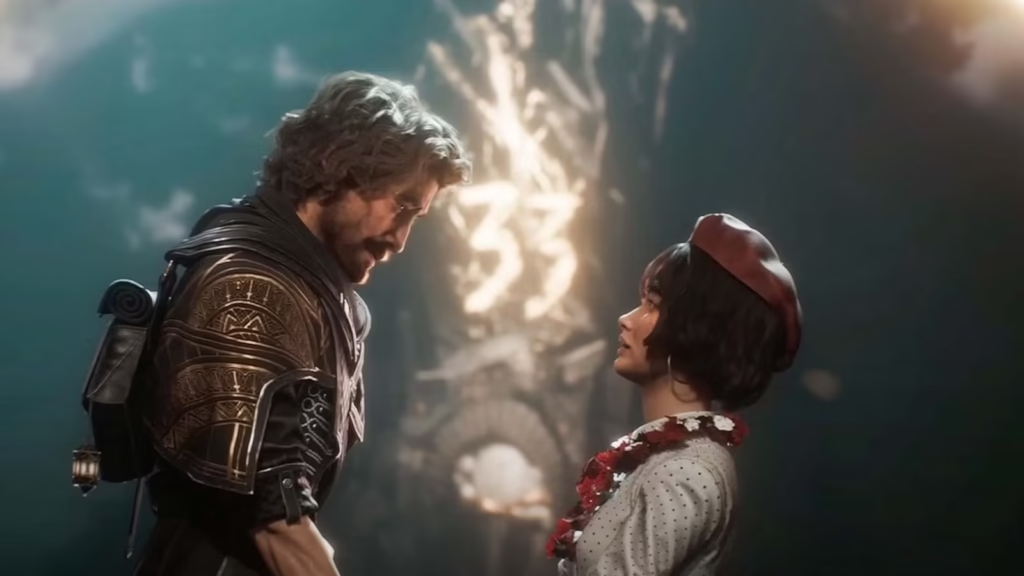
A holiday season full of longlist discoveries
BAFTA teased that the 64 listed games are perfect for players looking to explore new titles over the holiday downtime. From cinematic epics to unexpected indie gems, the variety suggests that 2025–2026 has been one of gaming’s most creatively ambitious years in recent memory.
Gamers have already taken to social media, with discussions exploding on X and Reddit over which titles deserved their spot — and which snubs sting the most. While the official longlists are public, BAFTA has not yet released the full breakdown by category, fueling even more speculation ahead of the March announcement.
A landmark year for game creators
As anticipation builds, one thing is clear: this year’s BAFTA Games Awards will highlight not just the most successful releases, but the developers, writers, sound designers, composers, animators, and creative teams pushing the boundaries of what games can be.
With April 17 marked firmly on industry calendars, the race to secure a BAFTA nomination — and ultimately the golden mask trophy — is officially underway.


Entertainment
Hollywood Doors Remain Closed for Susan Sarandon, Actress Claims
The Academy Award winner says her outspoken political stance has resulted in lost projects and fewer opportunities.
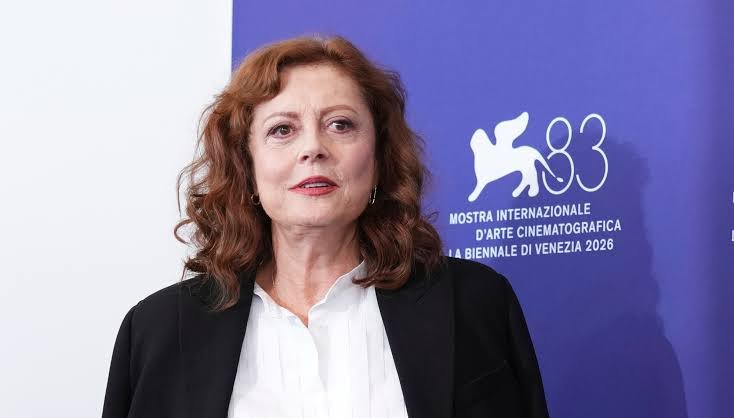
Oscar-winning actress Susan Sarandon has claimed that her outspoken support for Palestinians continues to affect her career, revealing that film roles have recently been withdrawn and some agencies are still advising people not to hire her.
The 79-year-old actress addressed the professional consequences of her political activism during a press conference at the Venice Film Festival. Sarandon was attending the festival to promote her latest Italian film, The Echo Chamber.
“I’ve still had movies taken away recently,” Sarandon told reporters, adding that agencies were telling people not to hire her. She described the situation as part of the entertainment industry’s existing “power structure.” Reuters reported her remarks from the Venice press conference.
Sarandon says she feels more welcome internationally
Although Sarandon believes resistance to hiring her remains strong within sections of Hollywood, she said her experience outside the United States has been noticeably different.
ALSO READ : Sen. Elizabeth Warren Calls It a ‘Cesspool of Corruption’ — Here’s Why Senators Are Now Fighting Back Against the DOJ’s Live Nation Deal That Left Every Fan Betrayed…
The actress suggested that public understanding of the conflict and America’s relationship with Israel had changed considerably since 2023. However, according to Sarandon, that broader shift has not necessarily been reflected within major Hollywood studios and talent agencies.
She claimed that the barriers were not limited to her alone, indicating that other entertainment figures had also encountered professional difficulties after publicly criticising Israel or supporting Palestinian rights.
Despite those challenges, Sarandon said she continues to feel welcomed by international audiences and filmmakers.
Why was Susan Sarandon dropped by UTA?
The controversy dates back to November 2023, when Sarandon participated in a pro-Palestine rally in New York City following the October 7 Hamas attack on Israel and the beginning of the war in Gaza.
During the rally, she made remarks comparing the fear experienced by Jewish Americans at the time with the discrimination and violence faced by Muslims in the United States.
The comments drew intense criticism, with many arguing that her wording appeared to minimise the long history of antisemitic persecution. Soon afterwards, United Talent Agency confirmed that it was no longer representing the actress. The agency’s decision was widely reported in November 2023.
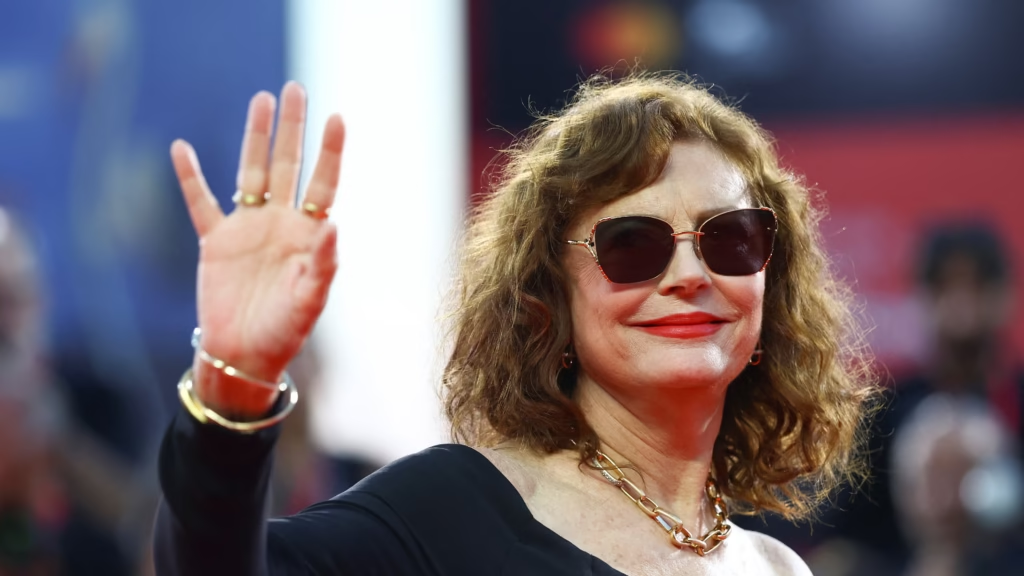
Sarandon later apologised for the phrasing of her statement, describing it as a serious mistake. She acknowledged that her words could have wrongly suggested Jewish people had not previously experienced persecution.
Her apology, however, did not amount to a withdrawal of her support for Palestinian civilians. She reiterated her commitment to peace, justice and compassion while calling for dialogue between people holding opposing views.
‘The Echo Chamber’ director reportedly ignored warnings
Sarandon is now appearing in The Echo Chamber, directed by Italian filmmaker Andrea Pallaoro.
At the Venice press conference, she thanked Pallaoro for casting her despite what she described as warnings against working with her. The actress suggested that the director had chosen to judge her on her work rather than the pressure surrounding her political views.
The film has additional significance because it was adapted from the final screenplay written by acclaimed Italian filmmaker Bernardo Bertolucci, who died in 2018.
In The Echo Chamber, Sarandon portrays an ageing singer attempting to revive her career. Her character hires a music producer recovering from drug addiction to help create a comeback album.
The film is among the titles competing for the prestigious Golden Lion at the 83rd Venice International Film Festival. Its Italian theatrical release is scheduled for September 10.
Political controversy follows Sarandon’s long career
Sarandon has maintained a politically outspoken public profile for decades, frequently involving herself in anti-war movements, election campaigns and human-rights causes.
Her film career includes celebrated performances in Thelma & Louise, Bull Durham, The Rocky Horror Picture Show and Stepmom. She won the Academy Award for Best Actress for her portrayal of Sister Helen Prejean in the 1995 drama Dead Man Walking.
Her latest comments have once again revived the debate over whether actors should face professional consequences for their political statements.
Supporters argue that performers should not be denied opportunities for expressing political opinions, while critics maintain that public figures must remain accountable when their words are considered offensive or harmful.
Sarandon, for her part, appears determined to continue working without distancing herself from her broader political beliefs. Her presence at Venice—and the applause that reportedly followed her remarks—suggests that while some Hollywood doors may have closed, she continues to find support elsewhere.
Entertainment
Telluride’s Mystery Screening Revealed as Nathan Fielder’s Elizabeth Holmes Documentary
Nathan Fielder and Lance Oppenheim received extraordinary access to the disgraced Theranos founder before she entered prison—but their documentary reportedly takes a twist nobody saw coming.
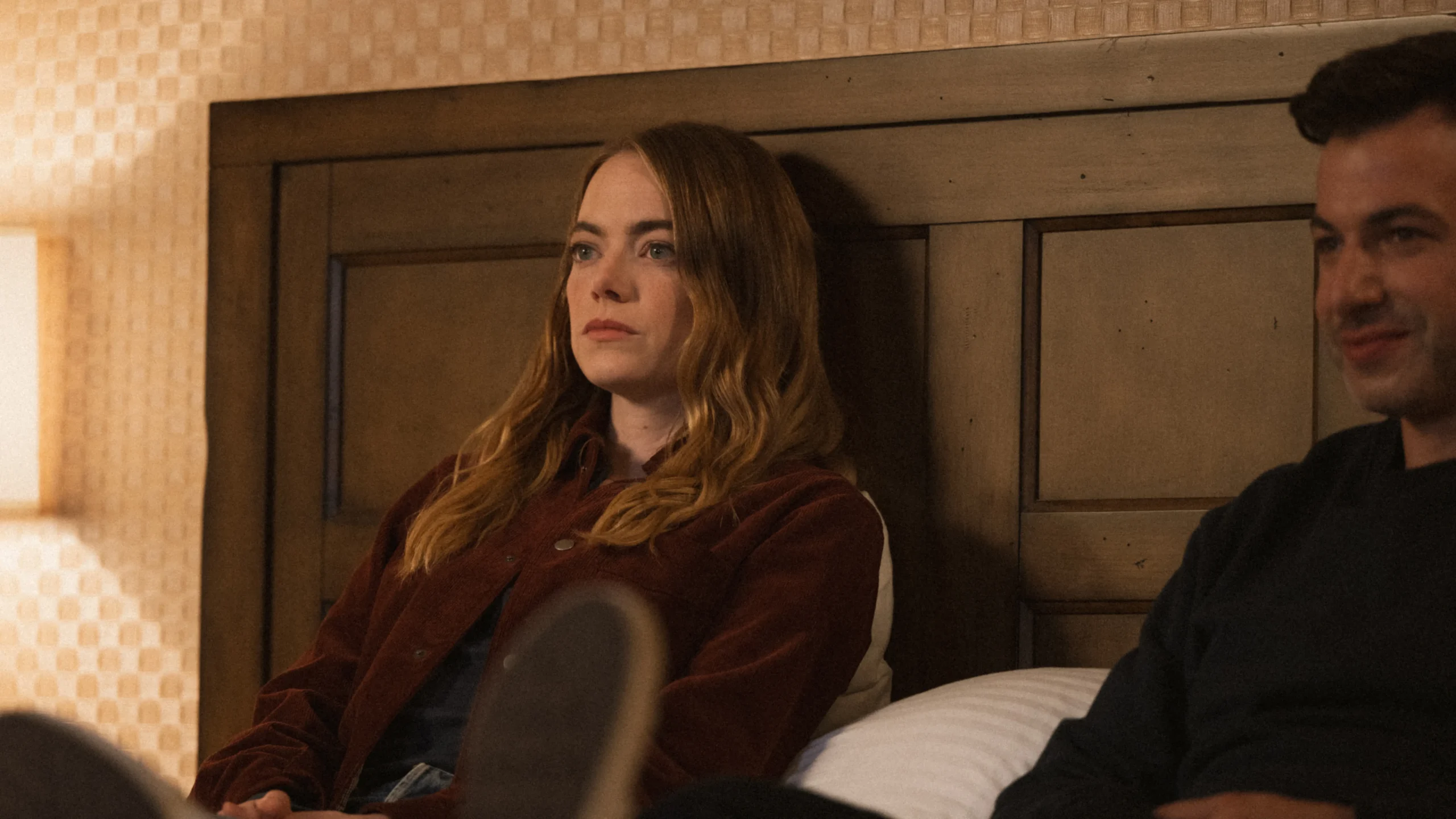
After days of speculation, the mystery surrounding the Telluride Film Festival’s secret screening has finally been solved—and the answer is every bit as unexpected as audiences had hoped.
The surprise film was You Can See Everything, a new documentary about convicted Theranos founder Elizabeth Holmes. It is co-directed by Nathan Fielder and Lance Oppenheim, with independent studio A24 preparing to release it in cinemas in October 2026.
The film was unveiled on Sunday night inside Telluride’s Werner Herzog Theatre. Until festival director Julie Huntsinger announced its title, the audience had not been told what it was about—or even who had made it.
Shortly after the screening, A24 released the documentary’s first teaser, officially bringing one of the year’s most closely guarded film projects into public view.
Elizabeth Holmes invites cameras into her private life
You Can See Everything begins 34 days before Holmes is due to report to federal prison.
With her freedom running out, the former Silicon Valley executive invites a sceptical documentary crew to record her daily life. The filmmakers receive unusually intimate access to Holmes, her husband Billy Evans and their two children at the family’s San Diego home.
ALSO READ : Sen. Elizabeth Warren Calls It a ‘Cesspool of Corruption’ — Here’s Why Senators Are Now Fighting Back Against the DOJ’s Live Nation Deal That Left Every Fan Betrayed…
Fielder does not remain safely behind the camera. Known for deliberately blurring the boundaries between documentary, performance and psychological experiment in projects such as The Rehearsal, he becomes an active participant in the story.
According to an account of the screening, Fielder temporarily lived with Holmes and her family during the final days before she entered prison. That proximity allows the documentary to study not only the public figure already familiar from headlines but also the carefully controlled private world surrounding her. Vanity Fair reported details from the secret Telluride premiere.
What happened to Theranos?
Holmes founded Theranos in 2003 with the promise of transforming medical testing. The company claimed it could perform numerous laboratory tests using only a small amount of blood collected through a finger prick.
Those claims helped turn Holmes into one of Silicon Valley’s most celebrated entrepreneurs, while Theranos attracted prominent investors and achieved a multibillion-dollar valuation.
The company’s reputation later collapsed after investigations raised serious questions about the reliability and capabilities of its technology.
In January 2022, Holmes was convicted of defrauding Theranos investors. She was subsequently sentenced to 135 months—or 11 years and three months—in federal prison, according to the US Department of Justice.
She began serving her sentence in 2023.
Why make another Elizabeth Holmes documentary?
Holmes’ dramatic rise and collapse have already been explored through podcasts, books, documentaries and scripted television.

Alex Gibney’s 2019 HBO documentary The Inventor: Out for Blood in Silicon Valley investigated the Theranos scandal, while The Dropout, starring Amanda Seyfried, turned the story into an award-winning Hulu miniseries.
That familiarity initially created an obvious question at Telluride: what could another film possibly reveal?
The answer appears to lie in the level of access Holmes gave Fielder and Oppenheim. Rather than simply reconstructing the history of Theranos, You Can See Everything examines Holmes as she prepares to surrender her freedom—and apparently attempts to challenge the public narrative surrounding her.
Holmes and Evans reportedly told the filmmakers they wanted unrestricted documentation of their lives. However, the documentary gradually becomes more complicated as questions emerge about image management, control and who might be manipulating whom.
Documentary reportedly takes a shocking turn
Running approximately 174 minutes, the film follows Holmes beyond the period immediately preceding her imprisonment. What begins as an intimate portrait reportedly develops into a far stranger three-year filmmaking journey.
One of the documentary’s biggest surprises involves the appearance of a well-known Hollywood actress. Fielder and Oppenheim asked Telluride audience members not to reveal her identity so future viewers could experience the unexpected moment themselves.
The filmmakers have also acknowledged that the experience did not provide them with simple answers about Holmes.
Fielder reportedly told the audience that he was still attempting to understand what he had experienced during production. That uncertainty could become the documentary’s greatest strength: instead of presenting Holmes as an easily explained subject, the film appears to examine how narratives are created, performed and controlled.
Access reportedly became more difficult
Although the project began with promises of open access, tensions appear to have developed during production.
Fielder said Evans later attempted to exercise greater influence over the filmmaking process, contributing to a breakdown in communication. Holmes and Evans were aware that the documentary existed but had reportedly not watched the completed version before its Telluride screening.
The directors also contacted several former colleagues and people connected to Holmes’ past. Many reportedly declined to participate, leaving Fielder and Oppenheim to navigate a story shaped by both remarkable access and significant absence.
When will ‘You Can See Everything’ be released?
A24 has confirmed that You Can See Everything will be released exclusively in cinemas in October 2026, although an exact theatrical date has not yet been announced.
The brief teaser offers only a carefully measured glimpse of the project, preserving many of the revelations that surprised the Telluride audience.
That secrecy feels entirely appropriate. Holmes built her public identity around confidence, vision and a promise that few outsiders could independently verify. Placing her opposite Fielder—a filmmaker fascinated by performance, control and uncomfortable reality—creates an unusually unpredictable confrontation.
After the secret screening, one thing is clear: You Can See Everything is not being positioned as a conventional retelling of the Theranos scandal. It is attempting to show what happens when one of America’s most scrutinised public figures is given another opportunity to tell her story—and a deeply sceptical filmmaker refuses to simply accept it.
Entertainment
Emmys 2026: First Post-Nominations Forecast Reveals the New Front-Runners… But the Biggest Surprises May Still Be Ahead
With the Emmy nominations now locked in, the awards race has entered its most unpredictable stage as early favorites battle emerging contenders across television’s biggest categories.
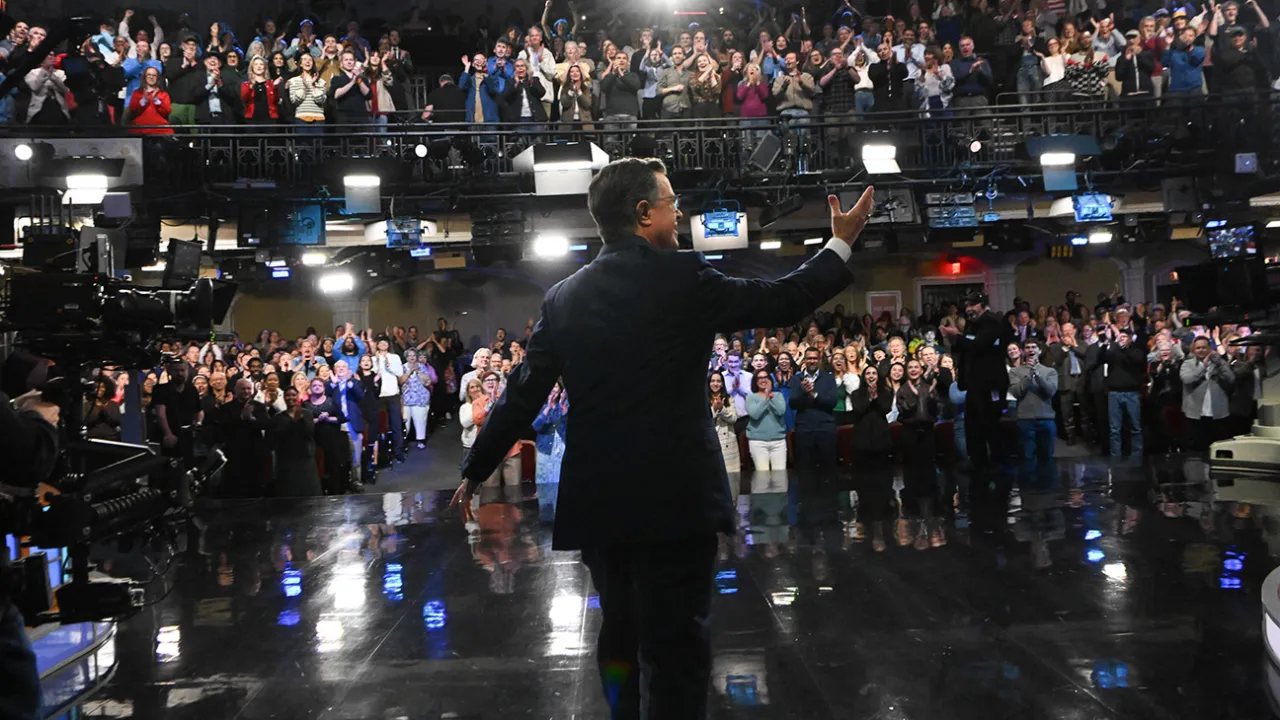
The race for the 2026 Primetime Emmy Awards has officially entered a new phase following the announcement of this year’s nominations. With the contenders now locked in, industry analysts have begun reassessing the competition, and the first major post-nominations forecast suggests that while a few favorites have strengthened their positions, many of the biggest awards remain highly competitive.
According to the latest industry analysis, the nomination announcements have significantly altered momentum across several categories. Some shows that entered awards season with strong expectations have cemented their status as front-runners, while others now face tougher competition after unexpected nomination performances.
The revised predictions cover more than 60 Emmy categories, reflecting how nomination totals, industry buzz, critical acclaim, and voting trends could influence the final results when Emmy voters cast their ballots.
ALSO READ : Sen. Elizabeth Warren Calls It a ‘Cesspool of Corruption’ — Here’s Why Senators Are Now Fighting Back Against the DOJ’s Live Nation Deal That Left Every Fan Betrayed…
One of the biggest takeaways from the updated forecast is that momentum matters. Productions earning broad support across acting, writing, directing, and technical categories often enjoy a considerable advantage during final voting. A series recognized across multiple departments typically signals widespread appreciation from Television Academy members.
However, Emmy history has repeatedly shown that nomination success does not always translate into victory. In several previous ceremonies, presumed favorites have been overtaken by late-surging competitors whose popularity grew during the final voting window.
This year’s race appears particularly unpredictable in several drama and comedy categories, where multiple critically acclaimed productions continue to divide industry opinion. Limited series and television movie competitions also remain among the most closely watched battles, with performances from established stars drawing significant attention.

Streaming platforms once again dominate much of the conversation. Companies including Netflix, Apple TV+, HBO, Disney+, and Hulu continue to compete aggressively for television’s highest honors, reflecting the industry’s ongoing shift toward premium streaming content.
Several acclaimed performers are also expected to headline the race after earning nominations for standout performances over the past television season. Their campaigns are expected to intensify as awards season progresses, with studios launching interviews, promotional events, and screenings aimed at Emmy voters.
Industry experts caution that post-nominations forecasts should be viewed as an early snapshot rather than a final verdict. Emmy voting has produced numerous surprises over the years, particularly when voter preferences shift during the final weeks before winners are announced.
Another factor likely to influence the outcome is campaign visibility. Studios and streaming services traditionally increase promotional efforts after nominations are revealed, hoping to keep their shows fresh in voters’ minds. Strategic marketing, critical discussions, and positive audience reception can all contribute to last-minute momentum.
For television fans, the nominations have already sparked lively debates across social media, with supporters celebrating breakthrough performances while questioning notable omissions. Such conversations often add another layer of intrigue to awards season, even though they have limited influence on the Academy’s final vote.
As anticipation builds toward the Emmy Awards ceremony, the competition remains remarkably fluid. While a handful of productions currently lead the conversation, history suggests that unexpected victories are always possible.
With dozens of categories still too close to call, the coming weeks will determine whether today’s favorites can maintain their advantage—or whether a surprise contender will emerge to steal television’s biggest prize.

Hollywood Doors Remain Closed for Susan Sarandon, Actress Claims

Telluride’s Mystery Screening Revealed as Nathan Fielder’s Elizabeth Holmes Documentary

Emmys 2026: First Post-Nominations Forecast Reveals the New Front-Runners… But the Biggest Surprises May Still Be Ahead

Juliette Binoche Looks Back at Her Oscar Shock And Finally Reveals the Dream She’s Ready to Chase

‘Love Island USA’ Continues Streaming Dominance as Week Two Viewership Soars

1-Iran Issues Dire Warning to Israel and Defies Trump on Nukes: “We’re Ready to Strike Deep Inside”

Sen. Elizabeth Warren Calls It a ‘Cesspool of Corruption’ — Here’s Why Senators Are Now Fighting Back Against the DOJ’s Live Nation Deal That Left Every Fan Betrayed…

Donald Trump’s net worth reveals the fortune behind the former US President and business mogul

“Tomás Rodríguez Net Worth 2025: Panama’s Gold Cup Goal‑Machine’s Surprising Fortune Revealed”

“She Never Made It Out…” Albany House Fire Claims Woman’s Life as Family Pleads for Help to Bring Her Home

Miss Jamaica Suffers Terrifying Fall Off Miss Universe Stage; Rushed to Hospital on Stretcher in Viral Video

Moana Live-Action Teaser Sparks Outrage as Fans Call Disney’s Move a ‘Clear Money Grab’ — What Went Wrong?

Ryan Gosling’s Project Hail Mary Trailer Stuns Fans with a Mysterious Alien Ally and a Mission That Could Save Earth

Apple delays Jessica Chastain thriller The Savant about domestic extremism after recent US violence

Avatar 3, Fire and Ash trailer reveals Jake Sully’s family facing terrifying new Na’vi enemies with deadly fire powers
-
 Entertainment1 week ago
Hollywood’s New Box-Office Saviours Revealed: How Curry Barker Joined Guillermo del Toro’s Elite Circle
-

 Entertainment1 week ago
Why Is America Celebrating Dolly Parton Day on 9/25? The Sweet Meaning Revealed
-

 Entertainment6 days ago
Creative Arts Emmys Night Two Winners: ‘Widow’s Bay’ Dominates, but Rob Reiner’s Emotional Victory Steals the Spotlight
-

 Tech5 days ago
Apple unveils iPhone 18 Pro series with a camera upgrade users have waited years for: Here’s what changed
-

 Entertainment1 week ago
‘The Gentlemen’ Goes Dark: Theo James Unpacks Season 2’s Shocking End
-

 Entertainment1 week ago
America Honors a Country Music Icon With Dolly Parton Day on September 25
-

 Entertainment1 week ago
Tupac Murder Convict Keffe D Breaks Silence: “I’m Not a Killer”
-
 Entertainment1 week ago
Dan Trachtenberg’s Animated Horror-Comedy ‘Freddy the 13th’ Lands 2028 Release Date