
Entertainment
Tupac Murder Convict Keffe D Breaks Silence: “I’m Not a Killer”
Despite his conviction, Keffe D insists he played no role in the fatal Las Vegas shooting of Tupac Shakur.


Nearly three decades after the fatal shooting of hip-hop icon Tupac Shakur, the only person ever brought to trial over the killing has been convicted. Yet Duane “Keffe D” Davis continues to insist that the jury reached the wrong conclusion.
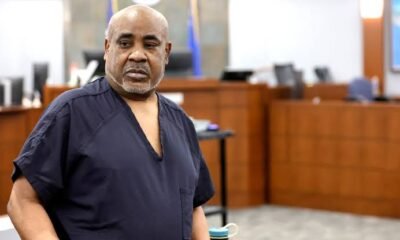
Speaking from custody following the verdict, the 63-year-old former gang leader appeared remarkably confident about his future despite the possibility of spending the rest of his life behind bars.
“I’m a good man. I’m a good person. I’m not no f***ing killer,” Davis told The Hollywood Reporter in his first interview after being convicted.
The defiant declaration arrives after a Clark County jury found Davis guilty of first-degree murder with the use of a deadly weapon. Jurors reportedly deliberated for approximately three hours before reaching their decision on August 31, 2026.
Davis remains confident about an appeal
Davis suggested that he is not consumed by the possibility of receiving a life sentence because he expects the conviction to be overturned on appeal.
ALSO READ : Sen. Elizabeth Warren Calls It a ‘Cesspool of Corruption’ — Here’s Why Senators Are Now Fighting Back Against the DOJ’s Live Nation Deal That Left Every Fan Betrayed…
That optimism does not change his immediate legal position. He remains convicted, is being held without bail and is scheduled to be sentenced on October 13. He could receive a life sentence for his role in one of the most closely followed murder cases in music history.
Shortly after the verdict was delivered, Davis informed the court that he wanted to appeal. His legal team has also indicated that it intends to challenge the conviction.
The appeal is expected to focus heavily on the admissibility and interpretation of Davis’ previous statements, which became the centrepiece of the prosecution’s case.
What happened to Tupac Shakur?
Tupac was shot on September 7, 1996, while travelling in a BMW driven by Marion “Suge” Knight near the Las Vegas Strip.
A white Cadillac pulled alongside their vehicle at a red light before someone inside opened fire. Tupac was struck multiple times and died from his injuries six days later at the age of 25. Knight was wounded but survived.
Earlier that evening, Tupac, Knight and members of their entourage had been involved in a fight at the MGM Grand. The man attacked during that confrontation was Orlando “Baby Lane” Anderson, Davis’ nephew.
Prosecutors argued that the drive-by shooting was an act of retaliation for Anderson’s beating.
Prosecutors did not accuse Davis of pulling the trigger
A crucial part of the case is that prosecutors did not claim Davis personally fired the shots that killed Tupac.
Instead, they described him as the organiser or “shot-caller” who obtained the firearm and helped set the revenge attack in motion. Under Nevada law, a person can be held criminally responsible for murder even if another participant physically carried out the shooting.
Davis had previously acknowledged being inside the Cadillac from which the shots were fired. In recorded interviews and his 2019 memoir, Compton Street Legend, he also described handing a gun to passengers seated in the back of the vehicle.
Those accounts ultimately became some of the prosecution’s strongest evidence. The jury convicted Davis of orchestrating the killing rather than acting as the gunman. Reuters reported that the other three occupants of the Cadillac have since died.
Defence said Davis exaggerated stories for money
Davis’ attorneys argued that his previous statements were not reliable confessions. They claimed he exaggerated or invented details to gain attention and earn money from interviews, documentaries and his memoir.
The defence also questioned the absence of conventional physical evidence directly connecting Davis to the crime scene. His lawyers portrayed the investigation as flawed and argued that prosecutors had built their case around stories their client told years after the shooting.

The jury ultimately rejected that argument.
Prosecutors maintained that Davis repeatedly described his involvement across different interviews and settings. They presented portions of his memoir, recorded conversations and earlier police interviews to support their allegation that he arranged the retaliatory attack.
According to the Associated Press, Davis’ own accounts revived an investigation that had remained unresolved for decades.
Davis rejects Sean ‘Diddy’ Combs allegation
Davis also addressed the long-running speculation surrounding Sean “Diddy” Combs, previously known as Puff Daddy.
In earlier interviews, Davis had claimed that Combs once offered money for the deaths of Tupac and Suge Knight. However, during his latest conversation, he rejected that version of events, saying: “Puff never offered me no f***ing million dollars.”
Combs has repeatedly denied having any involvement in Tupac’s murder. Authorities have never named him as a suspect or person of interest in the case.
The distinction is important because decades of rumours, documentaries and online theories have often blurred the line between verified evidence and speculation surrounding Tupac’s death.
A verdict that closes one chapter—not the entire story
For Tupac’s family and millions of fans, the conviction represents the most significant legal development since the rapper was killed in 1996. No one had previously been convicted in connection with the shooting.
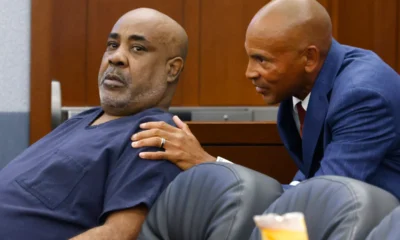
Tupac’s sister, Sekyiwa Shakur, was seen becoming emotional after the verdict was announced, while Davis’ family also reacted visibly inside the courtroom.
The decision may provide a measure of legal accountability, but the case is far from finished. Davis’ expected appeal could bring renewed arguments over protected interviews, the reliability of his memoir and the lack of surviving witnesses from the Cadillac.
For now, however, the verdict stands. Davis has been convicted of orchestrating the attack that killed one of hip-hop’s most influential artists—even as he continues to tell the world that he is not a killer.








Entertainment
The Story Behind ‘Artificial’: Amazon’s Withdrawal and Neon’s Rescue
Andrew Garfield and Luca Guadagnino discuss the ambitious Sam Altman film and its unexpected journey from Amazon to Neon.

A film about powerful technology executives became caught up in the business relationships surrounding them.
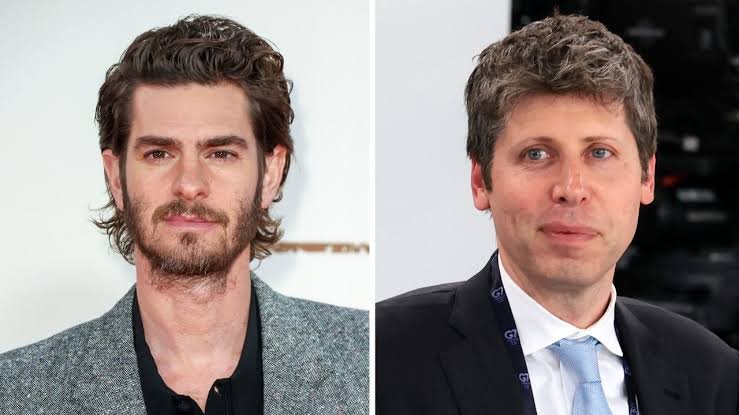
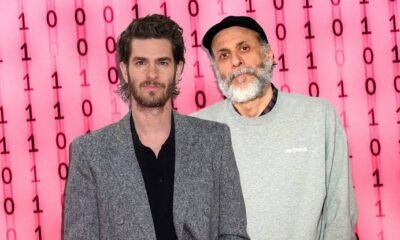
Luca Guadagnino’s Artificial, starring Andrew Garfield as Sam Altman, was developed at Amazon MGM Studios. But when the studio decided against releasing it, the filmmakers faced an uncertain future. Neon eventually acquired worldwide theatrical distribution rights, giving the project a route to audiences.
The move attracted scrutiny because of Amazon’s financial relationship with OpenAI. TheWrap reported that Amazon’s withdrawal followed a $50 billion investment in the AI company through a cloud computing partnership.
That timing prompted questions about conflicting commercial interests. It does not, however, establish the reason for the studio’s decision. Amazon’s public explanation was that the film would benefit from another distributor, while expressing support for Guadagnino and helping the production find a new home.
ALSO READ : Emmy Nominations Announcement Gets a Star Twist… Liza Colón-Zayas & Jeff Hiller Set to Reveal 2026 TV Nominees
The people behind the technology
Artificial explores the relationship between Altman and OpenAI co-founder Ilya Sutskever, played by Yura Borisov. Its dramatic territory is the collision between idealism, ambition and the consequences of building increasingly powerful technology.
According to Vulture’s account, screenwriter Simon Rich developed the project with urgency, and filming took place largely in northern Italy. The production’s emphasis on personal relationships gives its technological subject a recognisably human centre: people making decisions whose consequences extend far beyond themselves.
Garfield’s transformation went beyond appearances
In an interview with The Hollywood Reporter, Guadagnino described abandoning elaborate facial prosthetics after early tests. Garfield instead worked with Altman’s movements, posture and walk, supported by restrained makeup.
The director also chose to shoot on 35mm film, placing live performances at the centre of a story about artificial intelligence. Producer Jennifer Fox told the publication that the film’s assertions underwent extensive vetting. That remains the production’s account of its research process, rather than an independent endorsement of every dramatised scene.
A new home, and an unresolved question
Garfield welcomed the fact that Amazon allowed the film to move elsewhere. Fox, meanwhile, described the withdrawal as surprising after a collaborative production relationship.
Neon’s involvement resolved the immediate distribution problem. The wider question remains open: how freely can filmmakers examine influential companies when those companies also help finance and distribute entertainment? Artificial’s journey has made that question part of the conversation before audiences even enter the cinema.
Entertainment
Meet David Ellison’s Leadership Picks for Hollywood’s New Giant
The leadership announcement offers a first look at who will oversee the next chapter of Paramount–Warner Bros.

The next chapter for Paramount and Warner Bros. Discovery now has a leadership roster — and several familiar names will be taking on considerably bigger responsibilities.
David Ellison and Ynon Kreiz announced their senior executive team on October 5, ahead of the anticipated completion of Paramount’s acquisition of Warner Bros. Discovery. The combined company will be called Skydance, with executives from both businesses overseeing its film, television, streaming and news operations. The appointments are contingent on the transaction closing.
The approximately $110 billion deal is expected to close on October 6, according to TheWrap. The announcement offers a clearer picture of how Ellison intends to run the enlarged business: retain established creative leaders while placing them within a new corporate structure.
ALSO READ : Emmy Nominations Announcement Gets a Star Twist… Liza Colón-Zayas & Jeff Hiller Set to Reveal 2026 TV Nominees
Bigger responsibilities for film and streaming chiefs
Dana Goldberg and Josh Greenstein will become co-chairs of the Skydance Motion Picture Group, overseeing a film portfolio that brings together Paramount Pictures and Warner Bros..
Meanwhile, Casey Bloys will serve as co-chair and chief content officer of Skydance’s direct-to-consumer division. George Cheeks will hold the corresponding creative leadership position at Skydance TV.
JB Perrette will span both divisions as co-chair and chief business officer, pairing the content leaders with an executive responsible for the commercial side of television and streaming.
For audiences, these appointments matter because the executives will help shape what gets commissioned, produced and distributed. The announcement itself does not establish changes to subscription prices, release schedules or individual programmes.
CNN and CBS News keep separate leadership
One closely watched decision concerns the company’s newsrooms.
Mark Thompson will remain chairman and editor-in-chief of CNN Worldwide, while Bari Weiss stays editor-in-chief of CBS News. Both will report directly to Ellison and Kreiz.

Reuters reported that the arrangement addresses concerns about Weiss potentially overseeing CNN. Thompson also told employees that he expected to retain his existing editorial responsibilities. Questions remain about how the news operations will function within the combined business, including the practical authority of an editorial independence board agreed under an antitrust settlement.
DC leadership stays in place
For DC Studios, the announcement preserves the partnership of James Gunn and Peter Safran as co-chairmen.
At the corporate level, Ellison will concentrate on long-term strategy, creative direction and investment decisions. Kreiz will handle day-to-day management and integration, with Andy Gordon serving as president. Paramount said a fuller executive leadership list would follow after closing.
The roster provides continuity at several prominent brands. The harder work begins when those leaders must turn a combined organisation into a functioning business — balancing creative ambitions with the demands of integration.
Entertainment
Aaron Sorkin Takes On Mark Zuckerberg Again in ‘The Social Reckoning’
The film’s critique reaches beyond one executive to examine the wider implications of the business he built.
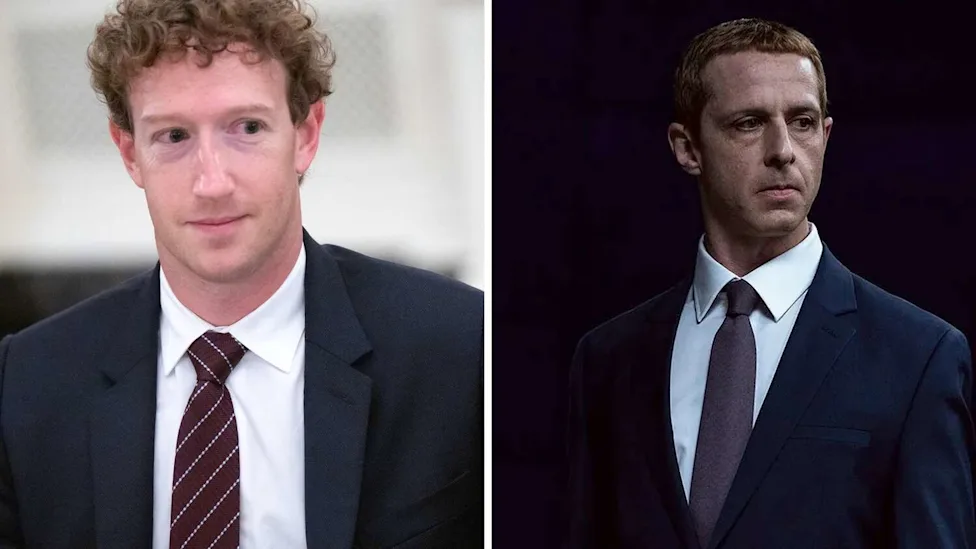
Sixteen years after The Social Network turned Facebook’s beginnings into gripping cinema, Aaron Sorkin is returning to the company with a different question: what happened after it became so powerful?
His new film, The Social Reckoning, centres on whistleblower Frances Haugen and journalist Jeff Horwitz. Sony Pictures describes it as a companion piece to the 2010 film, with a story built around an employee’s decision to expose closely guarded corporate information.
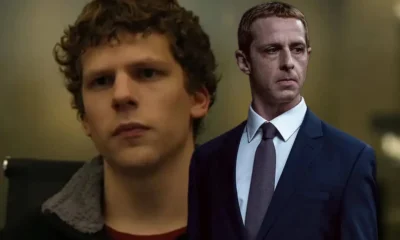
Jeremy Strong takes over the role of Mark Zuckerberg. The Hollywood Reporter characterises his portrayal as sharply villainous, particularly in its treatment of profit and responsibility.
ALSO READ : Emmy Nominations Announcement Gets a Star Twist… Liza Colón-Zayas & Jeff Hiller Set to Reveal 2026 TV Nominees
From Facebook’s beginnings to its public consequences
The film draws inspiration from The Facebook Files, the 2021 Wall Street Journal investigation based on internal documents disclosed by Haugen.
In an interview with Vanity Fair, Sorkin explained the distinction between his two films: “The Social Network was about how Facebook was invented, and The Social Reckoning is what it’s become.”
Mikey Madison plays Haugen, while Jeremy Allen White portrays Horwitz. Their characters bring the story’s attention to the people challenging the institution, rather than solely to the man who built it.
That change gives the premise its tension. An employee has information she believes the public should see. A reporter must investigate it. Across from them stands a company with the resources to defend itself.
A pointed screening location
The film’s first public preview also carried a striking connection to its predecessor.
The San Francisco Chronicle reported that Sorkin presented The Social Reckoning at the Cinemark Century Mountain View 16 on September 16, less than 10 miles from Meta’s headquarters. Current and former Facebook employees were among the audience.
It was the same theatre Zuckerberg had booked to watch The Social Network with friends and employees in 2010. The location brought Sorkin’s return to Facebook unusually close to the people and company behind the story.
A drama about the people who speak up
Sorkin both writes and directs the new film. Alongside its central trio, the cast includes Wunmi Mosaku, Betty Gilpin, Billy Magnussen and Bill Burr.
Sony’s synopsis places Haugen and Horwitz at the heart of a risky effort to reveal the social network’s secrets. It is a dramatisation inspired by real events; its characterisations should be understood as the filmmakers’ interpretation.
The premise makes accountability personal: who decides to speak, who listens, and what happens when challenging an employer becomes a public confrontation?
The Social Reckoning is scheduled to open in US theatres on October 9, 2026, according to Sony.

The Story Behind ‘Artificial’: Amazon’s Withdrawal and Neon’s Rescue

Meet David Ellison’s Leadership Picks for Hollywood’s New Giant

Aaron Sorkin Takes On Mark Zuckerberg Again in ‘The Social Reckoning’

Olivia Rodrigo’s Happiest Chapter Is Becoming Her Biggest Story

Years after ‘The Social Network,’ Zuckerberg’s story offers Hollywood a different set of questions about power.

1-Iran Issues Dire Warning to Israel and Defies Trump on Nukes: “We’re Ready to Strike Deep Inside”

Sen. Elizabeth Warren Calls It a ‘Cesspool of Corruption’ — Here’s Why Senators Are Now Fighting Back Against the DOJ’s Live Nation Deal That Left Every Fan Betrayed…

Gucci bets on Demna to revive fading glamour as Milan fashion week opens with bold film surprise

Donald Trump’s net worth reveals the fortune behind the former US President and business mogul

“Tomás Rodríguez Net Worth 2025: Panama’s Gold Cup Goal‑Machine’s Surprising Fortune Revealed”

Miss Jamaica Suffers Terrifying Fall Off Miss Universe Stage; Rushed to Hospital on Stretcher in Viral Video

Moana Live-Action Teaser Sparks Outrage as Fans Call Disney’s Move a ‘Clear Money Grab’ — What Went Wrong?

Ryan Gosling’s Project Hail Mary Trailer Stuns Fans with a Mysterious Alien Ally and a Mission That Could Save Earth

Apple delays Jessica Chastain thriller The Savant about domestic extremism after recent US violence

Avatar 3, Fire and Ash trailer reveals Jake Sully’s family facing terrifying new Na’vi enemies with deadly fire powers
-

 Entertainment1 week ago
One Big Win for Taylor Swift, Seven for Madonna: Inside the 2026 VMAs
-
 Entertainment1 week ago
Beyoncé Ends Two-Year Music Silence With ‘Morning Dew’ Is a New Album Next?
-
 Entertainment1 week ago
‘Spider-Man: Brand New Day’ Breaks All-Time Domestic Box Office Record
-

 Entertainment1 week ago
Rosalía Turned the Kia Forum Into a Movie Set… Inside the Stunning ‘Lux’ Tour Performance That Left Los Angeles Spellbound
-
 Entertainment1 week ago
From Amazon to Neon: The Fight to Bring ‘Artificial’ to Audiences
-
 Entertainment1 week ago
Ella Hunt’s Breakout Year: How the Rising Star Is Conquering TV and Music
-

 Entertainment1 week ago
Tom Cruise’s ‘Digger’ Has Awards Ambitions—But Can It Deliver at the Box Office?
-
 Entertainment1 week ago
‘The Social Reckoning’ takes aim at an influential tech mogul, entering territory Hollywood rarely explores so directly.